From Surf Wiki (app.surf) — the open knowledge base
Nizam of Hyderabad
Historic monarch of the Hyderabad State of India

Historic monarch of the Hyderabad State of India
| Field | Value | |
|---|---|---|
| royal_title | Nizam-ul-Mulk | |
| realm | Hyderabad Deccan | |
| coatofarms | Hyderabad Coat of Arms.jpg | |
| coatofarmscaption | Coat of Arms of the Hyderabad | |
| style | His Exalted Highness | |
| heir_apparent | ||
| heir_presumptive | ||
| first_monarch | Chin Qilich Khan | |
| last_monarch | Mir Osman Ali Khan | |
| formation | 31 July 1724 | |
| abolition | 17 September 1948 | |
| residence | Chowmahalla Palace | |
| appointer | Hereditary | |
| pretender | Azmet Jah | |
| image2 | Asaf Jah I.jpg | caption2=First to reign |
| Chin Qilich Khan | ||
| 31 July 17241 June 1748 |
Chin Qilich Khan 31 July 17241 June 1748}}
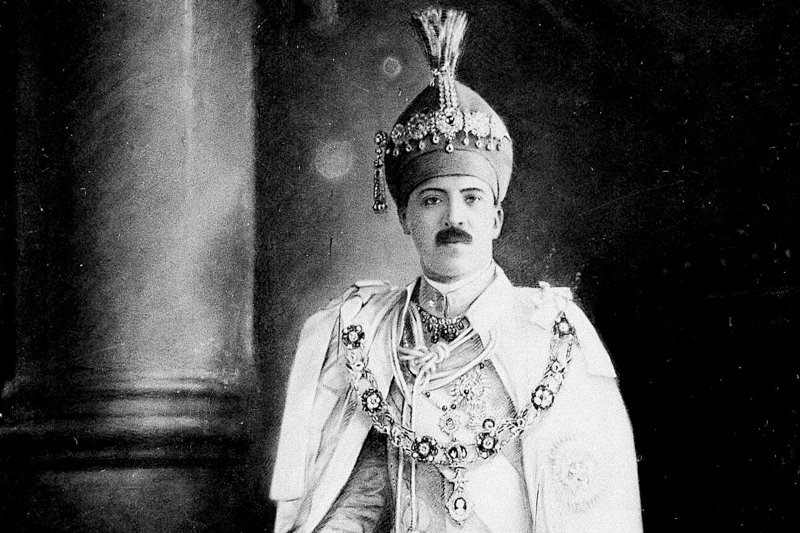
Nizam of Hyderabad was the title of the ruler of Hyderabad State ( part of the Indian state of Telangana, the Marathwada Region of Maharashtra, and the Kalyana-Karnataka region of Karnataka). Nizam is a shortened form of (; ), and was the title bestowed upon Asaf Jah I when he was appointed Viceroy of the Deccan by the Mughal emperor Farrukhsiyar. In addition to being the Mughal viceroy (Naib) of the Deccan, Asaf Jah I was also the premier courtier of the Mughal Empire until 1724, when he established an independent realm based in Hyderabad, but in practice, continued to recognise the nominal authority of the emperor.
The Asaf Jahi dynasty was founded by Chin Qilich Khan (Asaf Jah I), who served as a Naib of the Deccan sultanates under the Mughal Empire from 1713 to 1721. He intermittently ruled the region after Emperor Aurangzeb's death in 1707. In 1724 Mughal control weakened, and Asaf Jah became virtually independent. The titular Nizams fought with the Marathas since the 1720s, which resulted in the Nizam paying a regular tax (Chauth) to the Marathas. The Nizam later accepted British suzerainty after the defeat at Kharda and supported the British in its war against the Marathas.
When the English East India Company achieved paramountcy over the Indian subcontinent, they allowed the Nizams to continue to rule their princely states as client kings. The Nizams retained internal power over Hyderabad State until 17 September 1948, when Hyderabad was integrated into the new Indian Union.{{cite web |access-date= 16 September 2018 |archive-date= 30 December 2018 |archive-url=https://web.archive.org/web/20181230191656/https://www.thenewsminute.com/article/day-year-how-hyderabad-became-part-union-india-88407 |url-status= live
The Asaf Jahi dynasty had only seven recognized rulers, but there was a period of 13 unstable years after the rule of the first Nizam when two of his sons, Nasir Jung and Salabath Jung, and his grandson, Muzafur Jung, ruled. They were never officially recognised as rulers. The seventh and last Nizam, Mir Osman Ali Khan, fell from power when India annexed Hyderabad State in 1948 in Operation Polo. Today, the title is held by his great grandson, pretender Azmet Jah.
History
Etymology
The title Nizam comes from the Persian نظام /nɪˈzɑːm/, which itself is derived from Arabic niẓām which means "order" or "arrangement", and was typically given to high ranking state officials.
Descent
According to Sir Roper Lethbridge in The Golden Book of India (1893), the Nizams are lineally descended from the First Caliph Abu Bakr, the successor of the Islamic prophet Muhammed. The family of Nizams in India is descended from Abid Khan, a Persian from Samarkand, whose lineage is traced to Sufi Shihab-ud-Din Suhrawardi (1154–91) of Suhraward in Iran. In the early 1650s, on his way to hajj, Abid Khan stopped in Deccan, where the young prince Aurangzeb, then Governor of Deccan, cultivated him. Abid Khan returned to the service of Aurangzeb to fight in the succession wars of 1657–58. After Aurangzeb's enthronement, Abid Khan was richly rewarded and became Aurangzeb's favourite nobleman. His son Ghazi Uddin Khan was married to Safiya Khanum, the daughter of the former imperial Grand Vizier (prime minister) Sa'dullah Khan. Mir Qamaruddin Khan, the founder of the line of Nizams, was born of the couple, thus descending from two prominent families of the Mughal court.
Ghazi Uddin Khan rose to become a General of the Emperor Aurangzeb and played a vital role in conquering Bijapur and Golconda Sultanates of Southern India in 1686. He also played a key role in thwarting the rebellion by Prince Akbar and alleged rebellion by Prince Mu`azzam.[[File:India1760 1905.jpg|thumb|Map of India in 1760. Part of the southern area in green was ruled by the Nizam.|alt=]]After Aurangzeb's death and during the war of succession, Qamaruddin and his father remained neutral thus escaping the risk of being on the losing side; they remained marginal players in the Mughal court during the reigns of Bahadur Shah I (1707–12) and Jahandar Shah (1712–13). Their successor Farrukhsiyar (1713–19) appointed Qamaruddin the governor of Deccan in 1713, awarding him the title Nizam-ul-Mulk. However, the governorship was taken away two years later and Qamaruddin withdrew to his estate in Moradabad. Under the next emperor, Muhammad Shah (1719–48), Qamaruddin accepted the governorship of Deccan for the second time in 1721. The next year, following the death of his uncle Muhammad Amin Khan, a power-broker in the Mughal Court, Qamaruddin returned to Delhi and was made the wazir (prime minister). According to historian Faruqui, his tenure as prime minister was undermined by his opponents and a rebellion in Deccan was engineered against him. In 1724, the Nizam returned to Deccan to reclaim his base, in the process making a transition to a semi-independent ruler.
Reign
In 1724, Asaf Jah I defeated Mubariz Khan to establish autonomy over the Deccan Suba, named the region Hyderabad Deccan, and started what came to be known as the Asaf Jahi dynasty. Subsequent rulers retained the title Nizam ul-Mulk and were referred to as Asaf Jahi Nizams, or Nizams of Hyderabad.
- Nizam I never formally declared independence from the Mughals; he still flew the Mughal flag, and was never crowned. In Friday prayers, the sermon would be conducted in the name of Aurangzeb, and this tradition continued until the end of Hyderabad State in 1948. The death of Asaf Jah I in 1748 resulted in a period of political unrest as his sons, backed by opportunistic neighbouring states and colonial foreign forces, contended for the throne. The accession of Asif Jah II, who reigned from 1762 to 1803, ended the instability. In 1768, he signed the treaty of Machilipatnam, surrendering the coastal region to the East India Company in return for a fixed annual rent.


Following the decline of the Mughal power, the region of Deccan saw the rise of the Maratha Empire. The titular Nizams themselves fought during the Mughal-Maratha Wars since the 1720s, which resulted in the Nizam paying a regular tax (Chauth) to the Marathas. The major battles fought between the Marathas and the Nizam include Palkhed, Bhopal, Rakshasbhuvan, and Kharda, in all of which the Nizam lost. Following the conquest of Deccan by Bajirao I and the imposition of Chauth by him, the Nizam essentially remained a tributary of the Marathas.

In 1805, after the East India Company's victory in the Second Anglo-Maratha War, the Nizam of Hyderabad came under their protection.. In 1858, the state of Hyderabad became part of the British Indian Empire as a princely state with full autonomy albeit under colonial rule and was subject to the British Crown.
From 1876 to 1948, the Nizam recognised the Crown as paramount ruler of India as the monarch of the United Kingdom simultaneously held the title of emperor of India (first held by Queen Victoria as empress and the last being George VI as emperor)
In 1903, the Berar region of the state was separated and merged into the Central Provinces of British India, to form the Central Provinces and Berar.
During the Second World War, 80,000 men who were raised by the Nizam to form a personal army under the Indian State Forces, known as the 19th Hyderabad Regiment served in Malaya, North Africa, Persia, Singapore and Burma
The last Nizam of Hyderabad state, Mir Osman Ali Khan crowned in 1911, had been the richest man in the world in his time. The Nizams developed the railway, introduced electricity, and developed roads, airways, irrigation and reservoirs; in fact, all major public buildings in Hyderabad City were built during his reign during the period of British rule in India. He pushed education, science, and the establishment of Osmania University forward.
In 1947, at the time of the partition of India, the British government offered the 565 princely states in the sub-continent the options of acceding to either India or Pakistan or remaining independent.
End of the dynasty
Main article: Annexation of Hyderabad
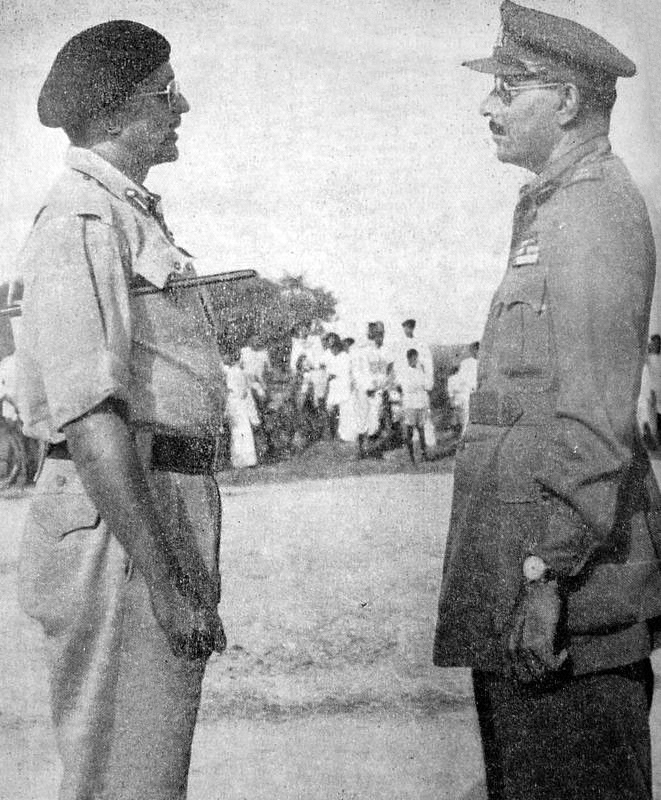
After the Independence of India in 1947, the Nizam of Hyderabad chose to join neither the Dominion of India nor the Dominion of Pakistan. He later declared Hyderabad an independent state as the third Dominion, attempting to become an independent monarchy in the British Commonwealth, sharing King George VI as head of state (since at that time members were required to share the king as head of state). Not only the Government of India, but George VI who was head of the organization, the last emperor of India before independence and most crucially, the incumbent monarch of India rejected the notion. After attempts by India to persuade the Nizam to accede to India failed, and due to large-scale atrocities committed by Razakars (who wanted the Nizam to accede Hyderabad to Pakistan) on the Hindu populace, the Indian government finally launched a military operation named Operation Polo. The Indian Army invaded Hyderabad on 13 September 1948 and defeated his untrained forces. The Nizam capitulated on 17 September 1948; that same afternoon he broadcast the news over the State radio network. The Nizam was forced to accept accession to the new Union of India. His abdication on 17 September 1948 ended the dynasty's ambitions. Nevertheless, he became the Rajpramukh postindependence based on public vote. He died on Friday, 24 February 1967.
All Nizams are buried in royal graves at the Makkah Masjid near Charminar in Hyderabad excepting the last, who wished to be buried beside his mother, in the graveyard of Judi Mosque facing King Kothi Palace.
State wealth

During the period of the Nizams' rule, Hyderabad became wealthy - thanks to the Golconda mines which were the only sources of diamonds in the world market at that time (apart from South African mines) making the 7th Nizam the richest person in the world. Osman Ali Khan, Asaf Jah VII and his family including Salar Jung I were taught by Nawab Sarwar Ul Mulk and Agha Mirza Baig Bahadur, who was his political advisor, and the senior-most salute state among the Indian princely states. It was spread over 223000 km2 in the Deccan, ruled by the Asaf Jahi dynasty. The Nizams were conferred with the title of His Exalted Highness, and "Faithful Ally of the British Government" for their roles in the Second and Third Anglo-Mysore Wars and the Indian Rebellion of 1857, becoming the only Indian prince to be given both these titles.
One example of the wealth of the Nizams is the Jewels of the Nizams, an international tourist attraction once displayed in Salar Jung Museum, but now locked in a Reserve Bank of India vault in Delhi. In 1948 Hyderabad state had an estimated population of 17 million (1.7 crore), and it generated an estimated annual revenue of £90,029,000.
The state had its currency known as the Hyderabadi rupee, until 1951. The pace at which the last Nizam Mir Osman Ali Khan amassed wealth made him one of the world's richest men in 1937, also known for his miserliness. He was estimated to be worth 660 crores (roughly 2 billion by the then exchange rates). According to the Forbes All-Time Wealthiest List of 2008, Nizam Mir Osman Ali Khan is the fifth richest man in recorded history per the figures, with an estimated worth of 210.8 billion adjusted by Forbes as per the growth of the US GDP since that period and the present exchange rate of the US dollar against the Indian rupee.
Institutions
The Nizams set up numerous institutions in the name of the dynasty including hospitals, schools, colleges, and universities that imparted education in Urdu. Inspired by the Indian Civil Service, the Nizams established their own local Hyderabad Civil Service.
Infrastructure
The Nizams commissioned engineering projects such as large reservoirs like Osman Sagar and Himayat Sagar. Survey work on the Nagarjuna Sagar Dam was also initiated during this time, although the actual work was completed under the aegis of the Government of India in 1969.
They also gave Hyderabad its railway network - the Nizam's Guaranteed State Railway which helped in setting up various industries.
Other landmarks include the Telangana High Court, City College, Public Gardens (formerly Bagh-e-Aaam), Jubilee Hall, Asafia Library, The Assembly building, Niloufer Hospital, the Osmania Arts College and the Osmania Medical College.
Interfaith Philanthropy
The 7th Nizam of Hyderabad, Mir Osman Ali Khan, was noted for his philanthropic support to Interfaith philanthropy specifically temples across the state. He donated ₹82,825 to the Sri Lakshmi Narasimha Swamy Temple at Yadagirigutta near Bhongir and ₹29,999 to the Sita Ramachandraswamy Temple at Bhadrachalam. He also provided an annual grant of ₹8,000 to the Tirupati Balaji Temple and contributed ₹50,000 towards the reconstruction of the Sitarambagh Temple in Hyderabad’s old city.
In addition, the 7th Nizam endowed approximately 1,525 acres of land to the Sita Rama Swami Temple at Devaryamjal. Beyond these individual grants, historical sources note that the Nizam donated over ₹97,000 in total and more than two lakh acres of land to various Hindu temples, reflecting his policy of interfaith patronage. His support extended to educational and religious institutions as well, including a donation of ₹1 lakh to Banaras Hindu University in 1939 and smaller annual grants to other temples and cultural organizations.
In 1932, there was a need for money for the publication of Mahabharata in the Bhandarkar Oriental Research Institute located in Pune. A formal request was made to the 7th Nizam, who granted Rs. 1000 per year for 11 years.
He also gave Rs 50,000 for construction of the guest house which stands today as "Nizam's guest house".
In addition to Hindu institutions and organizations, the 7th Nizam provided financial and land grants to churches, and gurudwaras. Notably, he laid the foundation stone for the Shrine of Our Lady of Health in Hyderabad in 1954 and supported its construction and land allocation for the church, which was inaugurated in 1959‑60. Contemporary accounts also record that he provided grants for the conservation of Sikh gurudwaras
Palaces
The Asaf Jahis were prolific builders. Their palaces are listed below:
- Chowmahalla Palace - Official residence of early Nizams
- Purani Haveli
- King Kothi Palace
- Mahboob Mansion
- Falaknuma Palace
- Bella Vista
- Hill Fort Palace
- Chiran Palace
- Saifabad Palace
- Hyderabad House, New Delhi
- Nizam Palace, Kolkata
List of Nizams of Hyderabad (1724–1948)
| Portrait | Titular name | Personal name | Date of birth | Nizam from | Nizam until | Date of death |
|---|---|---|---|---|---|---|
| [[File:Nizam-ul-mulk.jpg | 100px]] | Nizam-ul-Mulk, Asaf Jah I | ||||
| Mir Qamar-ud-din Khan | 20 August 1671 | 31 July 1724 | 1 June 1748 | |||
| [[File:Nasir Jung.jpg | 100px]] | Nasir Jung | ||||
| Mir Ahmed Ali Khan | 26 February 1712 | 1 June 1748 | 16 December 1750 | |||
| [[File:Muzaffar Jung.jpg | Muzaffar Jung | 100px]] | Muzaffar Jung | |||
| Mir Hidayat Muhi-ud-din Sa'adullah Khan | ? | 16 December 1750 | 13 February 1751 | |||
| [[File:Salabat Jung.jpg | 100px]] | Salabat Jung | ||||
| Mir Sa'id Muhammad Khan | 24 November 1718 | 13 February 1751 | 8 July 1762 | |||
| (deposed) | 16 September 1763 | |||||
| [[File:Mir Nizam Ali Khan.jpg | 100px]] | Nizam-ul-Mulk, Asaf Jah II | ||||
| Mir Nizam Ali Khan | 7 March 1734 | 8 July 1762 | 6 August 1803 | |||
| [[File:Sikandar Jah.jpg | 100px]] | Sikander Jah, Asaf Jah III | ||||
| Mir Akbar Ali Khan | 11 November 1768 | 6 August 1803 | 21 May 1829 | |||
| [[File:Nasir ud-Daula.jpg | 100px]] | Nasir-ud-Daula, Asaf Jah IV | ||||
| Mir Farqunda Ali Khan | 25 April 1794 | 21 May 1829 | 16 May 1857 | |||
| [[File:Afzal ud-Daula.jpg | 100px]] | Afzal-ud-Daula, Asaf Jah V | ||||
| Mir Tahniyath Ali Khan | 11 October 1827 | 16 May 1857 | 26 February 1869 | |||
| [[File:Asaf Jah VI.jpg | 100px]] | Asaf Jah VI | ||||
| Mir Mahbub Ali Khan | 17 August 1866 | 26 February 1869 | 29 August 1911 | |||
| [[File:Usman Ali Khan.jpg | 100px]] | Asaf Jah VII | ||||
| Mir Osman Ali Khan | 6 April 1886 | 29 August 1911 | 17 September 1948 | |||
| (deposed) | 24 February 1967 |
Descendants of the last Nizam
The last Nizam had 34 children, including 16 sons and 18 daughters
The Asaf Jahi dynasty followed the order of precedence of male primogeniture regardless of the mother's marital status or rank.
His eldest son was Azam Jah (21 February 1907 – 9 October 1970), was the Prince of Berar.
Whereas, his second son Moazzam Jah, married Princess Niloufer, a princess of the Ottoman Empire.
Family tree
- [[File:Simple silver crown.svg|15px]] I. Asaf Jah I, Yamin us-Sultanat, Rukn us-Sultanat, Jumlat ul-Mulk, Madar ul-Maham, Nizam ul-Mulk, Nizam ud-Daula, Khan-i-Dauran, Nawab Mir Ghazi ud-din Siddiqi, Khan Bahadur, Fath Jang, Sipah Salar, Nawab Subedar of the Deccan, 1st Nizam of Hyderabad (cr. 1720) (20 August 1671 – 1 June 1748). A senior governor and counsellor in the Imperial government. Defeated the Imperial forces on 19 June 1720 at Hasanpur and formed an independent state of his own. Confirmed in his possessions by Imperial firman and crowned on 31 July. Named Vice-Regent of the Mughal Empire by Emperor Muhammad Shah on 8 February 1722, secured the province of Berar on 11 October 1724 and formally made Hyderabad City his new capital on 7 December 1724.
- [[File:Simple silver crown.svg|15px]] II. Humayun Jah, Nizam ud-Daula, Nawab Mir Ahmad 'Ali Siddiqi, Khan Bahadur, Nasir Jang, Nawab Subedar of the Deccan, 2nd Nizam of Hyderabad (26 February 1712 – k. by the Nawab of Kadapa 16 December 1750; r. 1 June 1748 – 16 December 1750).
- Sahibzadi Khair un-nisa Begum. Married Nawab Talib Muhi ud-din Mutasawwil Khan Bahadur, Muzaffar Jang:
- [[File:Simple silver crown.svg|15px]] III. Nawab Hidayat Muhi ud-din Sa'adu'llah Siddiqi, Khan Bahadur, Muzaffar Jang, Nawab Subedar of the Deccan, 3rd Nizam of Hyderabad (k. by the Nawab of Kurnool 13 February 1751; r. 16 December 1750 – 13 February 1751).
- [[File:Simple silver crown.svg|15px]] IV. Amir ul-Mamalik, Asaf ud-Daula, Nawab Said Muhammad Siddiqi, Khan Bahadur, Zaffar Jang, Nawab Subadar of the Deccan, 4th Nizam of Hyderabad (November 1718 – 16 September 1763; r. 13 February 1751 – 8 July 1762). Deposed by his younger brother on 8 July 1762 and killed in prison the following year, aged 44.
- [[File:Simple silver crown.svg|15px]] V. Asaf Jah II, Nizam ul-Mulk, Nizam ud-Daula, Nawab Mir Nizam 'Ali Siddiqi, Khan Bahadur, Fath Jang, Sipah Salar, Nawab Subadar of the Deccan, 5th Nizam of Hyderabad (7 March 1734 – 6 August 1803; r. 8 July 1762 – 6 August 1803)
- [[File:Simple silver crown.svg|15px]] VI. Asaf Jah III, Muzaffar ul-Mamaluk, Nizam ul-Mulk, Nizam ud-Daula, Nawab Mir Akbar 'Ali Siddiqi, Khan Bahadur, Fulad Jang, 6th Nizam of Hyderabad (11 November 1768 – 21 May 1829; r. 6 August 1803 – 21 May 1829). The first of the dynasty to be officially granted the title of Nizam.
- [[File:Simple silver crown.svg|15px]] VII. Rustam-i-Dauran, Aristu-i-Zaman, Asaf Jah IV, Muzaffar ul-Mamaluk, Nizam ul-Mulk, Nizam ud-Daula, Nawab Mir Farkhanda 'Ali Siddiqi, Khan Bahadur [Gufran Manzil], Sipah Salar, Fath Jang, Ayn Waffadar Fidvi-i-Senliena, Iqtidar-i-Kishwarsitan Muhammad Akbar Shah Padshah-i-Ghazi, 7th Nizam of Hyderabad (25 April 1794 – 16 May 1857; r. 21 May 1829 – 16 May 1857).
- [[File:Simple silver crown.svg|15px]] VIII. Asaf Jah V, Nizam ul-Mulk, Afzal ud-Daula, Nawab Mir Tahniyat 'Ali Siddiqi, Khan Bahadur, 8th Nizam of Hyderabad, GCSI (11 October 1827 – 26 February 1869; r. 16 May 1857 – 26 February 1869). The first of the dynasty to come under British rule.
- [[File:Simple silver crown.svg|15px]] IX. Rustam-i-Dauran, Arustu-i-Zaman, Wal Mamaluk, Asaf Jah VI, Muzaffar ul-Mamaluk, Nizam ul-Mulk, Nizam ud-Daula, Nawab Mir Mahbub 'Ali Siddiqi, Khan Bahadur, Sipah Salar, Fath Jang, 6th Nizam of Hyderabad GCB, GCSI (17 August 1866 – 31 August 1911; r. 26 February 1869 – 31 August 1911). Succeeded his father on 26 February 1869, ruled under a regency until 5 February 1884, when he was invested with full ruling powers by the Viceroy of India.
- [[File:Simple silver crown.svg|15px]] X. Rustam-i-Dauran, Arustu-i-Zaman, Wal Mamaluk, Asaf Jah VII, Muzaffar ul-Mamaluk, Nizam ul-Mulk, Nizam ud-Daula, Nawab Mir Osman 'Ali Siddiqi, Khan Bahadur, Sipah Salar, Fath Jang, Faithful Ally of the British Government, 10th Nizam of Hyderabad and of Berar GCSI, GBE, Royal Victorian Chain, MP (6 April 1886 – 24 January 1967; r. 31 August 1911 – 26 January 1950). Granted the style of His Exalted Highness (1 January 1918), the title of Faithful Ally of the British Government (24 January 1918) and Nizam of Hyderabad and of Berar (13 November 1936). The last of the ruling Nizams; ruled absolutely from his accession until 19 September 1948, when the state was formally annexed to the Union. Maintained semi-ruling and semi-autonomous status from then until 23 November 1949, when he accepted the paramountcy of the new Indian government and Constitution and acceded to the Union. Formally lost his sovereignty, ending 230 years of Asaf Jahi rule, upon the formal promulgation of the Constitution on 26 January 1950. Served as Rajpramukh of the new Hyderabad State from 26 January 1950 until 31 October 1956, when the post was abolished. Served as a titular monarch from 26 January 1950 until his death.
- Azam Jah, Prince of Berar GCIE, GBE (21 February 1907 – 9 October 1970). Granted the title of His Highness the Prince of Berar (13 November 1936). Passed over in the line of succession in 1967 in favour of his elder son.
- [[File:Simple silver crown.svg|15px]] XI. Rustam-i-Dauran, Arustu-i-Zaman, Wal Mamaluk, Asaf Jah VIII, Muzaffar ul-Mamaluk, Nizam ul-Mulk, Nizam ud-Daula, Nawab Mir Barakat 'Ali Siddiqi, Khan Bahadur, Sipah Salar, Fath Jang, 11th Nizam of Hyderabad and Berar (6 October 1933 – 15 January 2023; 11th Nizam: 24 January 1967 – 28 December 1971; dynastic head and pretender since then). - Azmet Jah, Nawab Mir Muhammad Azmat 'Ali Siddiqi, Khan Bahadur (b. 23 June 1960; appointed Prince of Berar and heir apparent: 2002)
- [[File:Simple silver crown.svg|15px]] X. Rustam-i-Dauran, Arustu-i-Zaman, Wal Mamaluk, Asaf Jah VII, Muzaffar ul-Mamaluk, Nizam ul-Mulk, Nizam ud-Daula, Nawab Mir Osman 'Ali Siddiqi, Khan Bahadur, Sipah Salar, Fath Jang, Faithful Ally of the British Government, 10th Nizam of Hyderabad and of Berar GCSI, GBE, Royal Victorian Chain, MP (6 April 1886 – 24 January 1967; r. 31 August 1911 – 26 January 1950). Granted the style of His Exalted Highness (1 January 1918), the title of Faithful Ally of the British Government (24 January 1918) and Nizam of Hyderabad and of Berar (13 November 1936). The last of the ruling Nizams; ruled absolutely from his accession until 19 September 1948, when the state was formally annexed to the Union. Maintained semi-ruling and semi-autonomous status from then until 23 November 1949, when he accepted the paramountcy of the new Indian government and Constitution and acceded to the Union. Formally lost his sovereignty, ending 230 years of Asaf Jahi rule, upon the formal promulgation of the Constitution on 26 January 1950. Served as Rajpramukh of the new Hyderabad State from 26 January 1950 until 31 October 1956, when the post was abolished. Served as a titular monarch from 26 January 1950 until his death.
- [[File:Simple silver crown.svg|15px]] IX. Rustam-i-Dauran, Arustu-i-Zaman, Wal Mamaluk, Asaf Jah VI, Muzaffar ul-Mamaluk, Nizam ul-Mulk, Nizam ud-Daula, Nawab Mir Mahbub 'Ali Siddiqi, Khan Bahadur, Sipah Salar, Fath Jang, 6th Nizam of Hyderabad GCB, GCSI (17 August 1866 – 31 August 1911; r. 26 February 1869 – 31 August 1911). Succeeded his father on 26 February 1869, ruled under a regency until 5 February 1884, when he was invested with full ruling powers by the Viceroy of India.
- [[File:Simple silver crown.svg|15px]] VIII. Asaf Jah V, Nizam ul-Mulk, Afzal ud-Daula, Nawab Mir Tahniyat 'Ali Siddiqi, Khan Bahadur, 8th Nizam of Hyderabad, GCSI (11 October 1827 – 26 February 1869; r. 16 May 1857 – 26 February 1869). The first of the dynasty to come under British rule.
- [[File:Simple silver crown.svg|15px]] VII. Rustam-i-Dauran, Aristu-i-Zaman, Asaf Jah IV, Muzaffar ul-Mamaluk, Nizam ul-Mulk, Nizam ud-Daula, Nawab Mir Farkhanda 'Ali Siddiqi, Khan Bahadur [Gufran Manzil], Sipah Salar, Fath Jang, Ayn Waffadar Fidvi-i-Senliena, Iqtidar-i-Kishwarsitan Muhammad Akbar Shah Padshah-i-Ghazi, 7th Nizam of Hyderabad (25 April 1794 – 16 May 1857; r. 21 May 1829 – 16 May 1857).
- [[File:Simple silver crown.svg|15px]] VI. Asaf Jah III, Muzaffar ul-Mamaluk, Nizam ul-Mulk, Nizam ud-Daula, Nawab Mir Akbar 'Ali Siddiqi, Khan Bahadur, Fulad Jang, 6th Nizam of Hyderabad (11 November 1768 – 21 May 1829; r. 6 August 1803 – 21 May 1829). The first of the dynasty to be officially granted the title of Nizam.
The Nizams' daughters had been married traditionally to young men of the Paigah family. This family belonged to the Sunni sect of Islam.
italics – Considered pretenders by most historians; refrained from exercising traditional authority during their reigns.
Places, things named after and established by the Nizams
Places and things named after the Nizam include Nizamabad, a city and district in the state of Telangana; Jamia Nizamia, a university; the Nizam College; the Nizam's Museum; the Nizam's Guaranteed State Railway; the Nizam's Institute of Medical Sciences; the Jewels of the Nizams; the Nizam Diamond; the Nizam Sagar, HMAS Nizam, Nizamia observatory; the Nizam Club; the Nizam of Hyderabad necklace; the Nizam's Contingent; the Nizam Gate; the Nizam Palace; Government Nizamia General Hospital; and H.E.H. the Nizam's Charitable Trust.
References
Secondary sources
References
- (2007). "Dictionary of Battles and Sieges: P-Z". Bloomsbury Academic.
- (2005). "The State at War in South Asia". U of Nebraska Press.
- Nath Sen, Sailendra. (1994). "Anglo-Maratha Relations, 1785–96, Volume 2". Popular Prakashan.
- Sen, Sailendra Nath. (1994). "Anglo-Maratha Relations, 1785-96". Popular Prakashan.
- (9 September 2020). "Police Action: What happened in Hyderabad State during 1948 and beyond".
- (22 January 2023). "Azmet Jah coronated as ninth titular Nizam of Hyderabad".
- "Nizam". [[OxfordDictionaries.com]].
- Lethbridge, Roper. (1893). "The Golden Book of India". Aakar Books.
- Richards, J. F.. (1975). "The Hyderabad Karnatik, 1687–1707". [[Modern Asian Studies]].
- (2007). "Dictionary of Battles and Sieges: P-Z". Bloomsbury Academic.
- (2005). "The State at War in South Asia". U of Nebraska Press.
- Nath Sen, Sailendra. (1994). "Anglo-Maratha Relations, 1785-96, Volume 2". Popular Prakashan.
- "Top 10: Richest Men (of All Time)". inStash.
- "Police Action in Hyderabad State". AP State Portal.
- "The last Nizam - Hero or Villain?".
- (25 February 2018). "Floarl Tribute to Nizam VII".
- (24 February 2017). "In pictures: 50 years ago, a sea of people turned up for the death of Hyderabad's last Nizam".
- (22 February 1937). "Hyderabad:silver jubilee durbar". [[Time (magazine).
- (8 April 2017). "Why are Jewels Hyderabad Last Nizam Locked RBI Vault in Delhi".
- (30 August 1948). "Hyderabad:the holdout". [[Time (magazine).
- (20 February 2011). "Jewel in the crown: a palace fit for a Nizam". [[The Guardian]].
- [[History of the rupee]]
- Mahmood Bin, Muhammad. (1999). "A policeman ponders: memories and melodies of a varied life". A.P.H.Publishing Corporation.
- Rann Singh, Mann. (1996). "Tribes of India:ongoing challenges". MD Publication Pvt Ltd.
- Ifthekar, JS. (26 November 2017). "The wheel comes full circle…: A look back at the history of transportation in the city". Telangana Today.
- "Archived copy".
- (20 September 2010). "A 'miser' who donated generously".
- (28 May 2013). "Nizam gave funding for temples, and Hindu educational institutions".
- "Archived copy". [[The Hindu]].
- (22 May 2021). "Devaryamjal temple land case: Officials examine Nizam-era Pahanis".
- (18 August 2016). "Family members rue that Hyderabad has forgotten the last Nizam's contribution to the city".
- "Nizam's Guest House, Bhandarkar Oriental Research Institute, Pune".
- "Reminiscing the seventh Nizam's enormous contribution to education".
- "The Nizam of Hyderabad's Munificence {{!}} Ambassador Dr. Ausaf Sayeed".
- Mir Ayoob Ali Khan. (19 February 2018). "Last surviving son of Nizam, Fazal Jah, dies".
- "Last Surviving son of seventh Nizam passes away in Hyderabad".
- (20 July 2012). "Nizam's heirs seek Pakistani intervention to unfreeze bank account". indiatoday.
- Mohla, Anika. "From richest to rags in seven generations". The New Indian Express.
- (12 April 2008). "India finally settles £1million Nizam dispute".
- "A prince's ransom | the Guardian | guardian.co.uk".
- (10 July 2014). "India 1885-1947: The Unmaking of an Empire". Routledge.
- (13 April 2015). "Sultans of Deccan India, 1500–1700: Opulence and Fantasy". Metropolitan Museum of Art.
- "Niloufer, the beguiling princess of Hyderabad".
This article was imported from Wikipedia and is available under the Creative Commons Attribution-ShareAlike 4.0 License. Content has been adapted to SurfDoc format. Original contributors can be found on the article history page.
Ask Mako anything about Nizam of Hyderabad — get instant answers, deeper analysis, and related topics.
Research with MakoFree with your Surf account
Create a free account to save articles, ask Mako questions, and organize your research.
Sign up freeThis content may have been generated or modified by AI. CloudSurf Software LLC is not responsible for the accuracy, completeness, or reliability of AI-generated content. Always verify important information from primary sources.
Report