From Surf Wiki (app.surf) — the open knowledge base
Nilgiri Biosphere Reserve
International biosphere reserve of India

International biosphere reserve of India
| Field | Value |
|---|---|
| name | Nilgiri Biosphere Reserve |
| photo | Pic from Doddabetta Peak.jpg |
| photo_caption | Nilgiri Hills from the top of Doddabetta Peak |
| map_image | Nilgiris Biosphere Reserve.jpg |
| map | India Tamil Nadu#India Kerala#India |
| relief | 1 |
| location | South India |
| coordinates | |
| area_km2 | 5520 |
| established | 1986 |
| governing_body | Tamilnadu forest department, Karnataka forest department, Kerala forest department, Project Tiger |
| url | https://www.nbnaturepark.com/ |
Nilgiri Biosphere Reserve is a biosphere reserve in the Nilgiri Mountains of the Western Ghats in South India. It is the largest protected forest area in India, spreading across Tamil Nadu, Karnataka and Kerala. It includes the protected areas Mudumalai National Park, Mukurthi National Park, Sathyamangalam Wildlife Sanctuary in Tamil Nadu; Nagarhole National Park, Bandipur National Park, both in Karnataka; Silent Valley National Park, Aralam Wildlife Sanctuary, Wayanad Wildlife Sanctuary, and Karimpuzha Wildlife Sanctuary in Kerala.
An ecosystem of the hill ranges of Nilgiris and its surrounding environments covering a tract of over 5000 km2 was constituted as Nilgiris Biosphere Reserve by UNESCO in September 1986 under Man and Biosphere Programme. Nilgiris Biosphere Reserve is India's first and foremost biosphere reserves with a heritage, rich in flora and fauna. Tribal groups such as the Toda, Kotas, Irulla, Kurumba, Paniya, Adiyan, Edanadan Chettis, Allar, and Malayan are native to the reserve.
Etymology
The word Nilgiri is derived from the Tamil word neelam meaning blue and the Sanskrit word giri meaning mountain. It is thought that the bluish flowers of kurinji shrubs gave rise to the name.
History
In the 1970s, an area of around 5670 km2 in the Nilgiri Mountains was proposed to be included in the list of the biosphere reserves of India. This proposed area encompassed a forestry zone of 2290 km2, a core zone of 2020 km2, an agricultural zone of 1330 km², and a restoration zone of 30 km². Nilgiri Biosphere Reserve was established in September 1986 and is India's first biosphere reserve under UNESCO's Man and the Biosphere Programme.
Geography

Nilgiri Biosphere Reserve extends over an area of 5520 km2 from the eastern part of Kodagu District to Erode District in the east and to the Palakkad Gap in the south with an elevation of 80 to. It has a buffer zone of 4280 km2 and core areas of 1250.3 km2, comprising 701.8 km2 in Karnataka, 264.5 km2 in Kerala and 274 km2 in Tamil Nadu.
The reserve extends from the tropical and subtropical moist broadleaf forests, tropical moist forests of the western slopes of the Ghats to the tropical and subtropical dry broadleaf forests tropical dry forests on the east slopes. The rainfall range is 500-7000 mm per year. The reserve encompasses three ecoregions, the South Western Ghats moist deciduous forests, South Western Ghats montane rain forests, and South Deccan Plateau dry deciduous forests.
Flora

Nilgiri Biosphere Reserve harbours more than 3,700 plant species, including about 200 medicinal plants; the 132 endemic flowering plants are contained in the list of endemic plants in the Nilgiri Biosphere Reserve. Stunted evergreen trees grow in shola forest patches above 1800 m and are festooned with epiphytes.
Tall trees above a height of 18 m are used by the giant honey bees (Apis dorsata) for building nests, including the species Tetrameles nudiflora, Indian laurel (Ficus microcarpa), Coromandel ebony (Diospyros melanoxylon), yellow snake tree (Stereospermum tetragonum), rusty kamala (Mallotus tetracoccus) and Acrocarpus fraxinifolius. During the peak flowering season from January to May, at least 73 species blossom including teak (Tectona grandis), red cedar (Erythroxylum monogynum), hiptage (Hiptage benghalensis), large-flowered bay tree (Persea macrantha), zunna berry (Ziziphus rugosa) and creeping smartweed (Persicaria chinensis). They depend on pollination by giant honey bee, Asiatic honey bee (Apis cerana), red dwarf honey bee (A. florea) and Trigona bees.
Fauna
Birds
Nilgiri Biosphere Reserve harbours 14 bird species that are endemic to the Western Ghats. Other endemics and near-endemics include Nilgiri wood-pigeon, Malabar grey hornbill, Malabar parakeet, white-bellied treepie, white-bellied shortwing, grey-headed bulbul, grey-breasted laughingthrush, rufous babbler, black-and-rufous flycatcher, Nilgiri flycatcher, and Nilgiri pipit.
Mammals
Nilgiri Biosphere Reserve and adjacent areas host the largest Asian elephant (Elephas maximus) population in India, estimated at 5,750 individuals by 2007. Herds move in 562 – large home ranges and congregate at perennial water sources during the dry season.
Fauna includes over 100 species of mammals, 370 species of birds, 80 species of reptiles, about 39 species of fish, 31 amphibians and 316 species of butterflies. It is home to mammals such as the Bengal tiger, Indian leopard, chital deer, gaur, sambar deer, dhole, golden jackal, Indian boar, Nilgiri tahr, Indian spotted chevrotain, black buck, Asian palm civet, sloth bear, four-horned antelope, Nilgiri marten, Indian crested porcupine, Malabar giant squirrel, honey badger, Indian grey mongoose, Indian pangolin, Indian fox, smooth coated otter, and painted bat. Primates include the lion tailed macaque, Nilgiri langur, gray langur and bonnet macaque.
Amphibians and reptiles
Amphibians include purple frog, Silent valley brush frog, Malabar gliding frog, Beddomixalus. Around fifty percent of India's amphibian species are endemic to the region, and around ninety species of reptiles including the genera Brachyopihidium, Dravidogecko, Melanophidum, Ristella, Salea, Plectrurus, Teretrurus, and Xylophis.
Threats
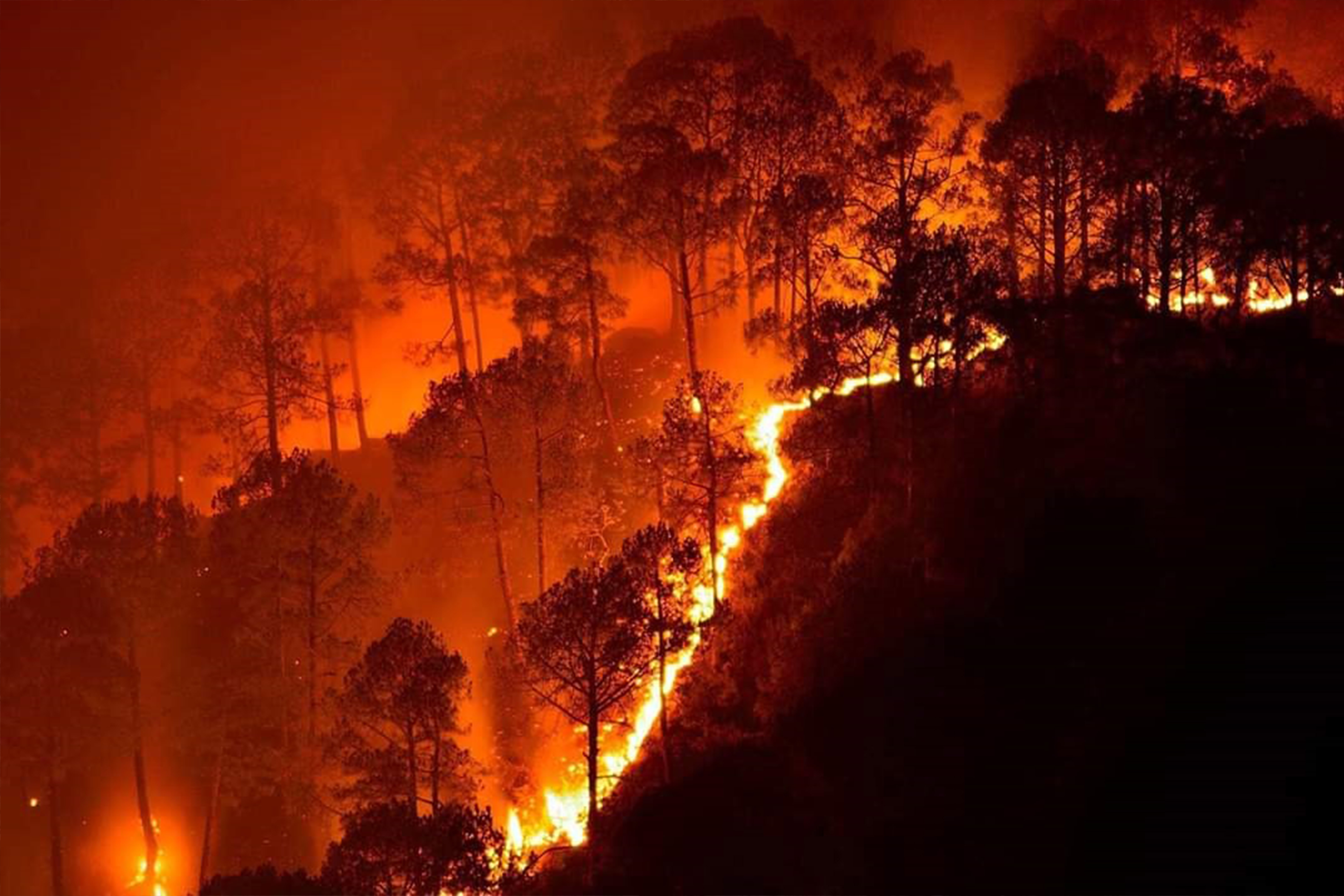
Shola forests outside protected areas are threatened by fragmentation, especially in the vicinity of settlements.
Poaching, deforestation, forest fires, and dangers to native tribes are the main threats. Despite poaching banned by law in 1972, people still tend to illegally hunt animals such as tigers, elephants, and chital for skin, fur or tusks.
References
References
- "About Nilgiri Biosphere Reserve (NBR)". Nilgiri Biosphere Reserve.
- (1977). "The Nilgiris: Weather and Climate of a Mountain Area in South India". Steiner.
- (1997). "Decline of a Montane Ecosystem". Kartik Shanker Centre for Ecological Sciences, Indian Institute of Science.
- Ranjit Daniels, R.J.. (1996). "The Nilgiri Biosphere Reserve: A Review of Conservation Status with Recommendations for a Wholistic Approach to Management". UNESCO South-South Co-operation Programme for Environmentally Sound Socio-Economic Development in the Humid Tropics.
- Wikramanayake, Eric D.. (2002). "Terrestrial ecoregions of the Indo-Pacific: a Conservation Assessment". Island Press.
- (2006). "Anthropogenic pressure on structure and composition of a shola forest in Kerala, India". Journal of Mountain Science.
- (2009). "Characteristics of trees used as nest sites by ''Apis dorsata'' (Hymenoptera, Apidae) in the Nilgiri Biosphere Reserve, India". Journal of Tropical Ecology.
- (2009). "Social bees and food plant associations in the Nilgiri Biosphere Reserve, India". Tropical Ecology.
- BirdLife International. (2017). "''Strophocincla cachinnans''".
- (2018). "Indian Hotspots". Springer.
- Jose, F.C.. (2012). "The 'living fossil' shola plant community is under threat in upper Nilgiris". Current Science.
This article was imported from Wikipedia and is available under the Creative Commons Attribution-ShareAlike 4.0 License. Content has been adapted to SurfDoc format. Original contributors can be found on the article history page.
Ask Mako anything about Nilgiri Biosphere Reserve — get instant answers, deeper analysis, and related topics.
Research with MakoFree with your Surf account
Create a free account to save articles, ask Mako questions, and organize your research.
Sign up freeThis content may have been generated or modified by AI. CloudSurf Software LLC is not responsible for the accuracy, completeness, or reliability of AI-generated content. Always verify important information from primary sources.
Report