From Surf Wiki (app.surf) — the open knowledge base
Ngāruawāhia
Town in Waikato, New Zealand
Town in Waikato, New Zealand
| Field | Value | |
|---|---|---|
| name | Ngāruawāhia | |
| settlement_type | Town | |
| total_type | Territorial | |
| image_skyline | Waikato-nga-750px.jpg | |
| image_caption | Waikato River passing through Ngāruawāhia | |
| mapframe | yes | |
| mapframe-zoom | 9 | |
| coordinates | ||
| dot_x | dot_y = | |
| subdivision_type | Country | |
| subdivision_name | New Zealand | |
| subdivision_type1 | Region | |
| subdivision_name1 | Waikato | |
| subdivision_type2 | District | |
| subdivision_name2 | Waikato District | |
| subdivision_type3 | Wards | |
| subdivision_name3 | ||
| subdivision_type4 | Community | |
| subdivision_name4 | Ngāruawāhia Community | |
| leader_title | Territorial Authority | |
| leader_name | Waikato District Council | |
| leader_title1 | Regional council | |
| leader_name1 | Waikato Regional Council | |
| leader_title2 | Mayor of Waikato | |
| leader_name2 | ||
| leader_title3 | Waikato MP and Taranaki-King Country MP | |
| leader_name3 | and | |
| leader_title4 | Hauraki-Waikato MP | |
| leader_name4 | ||
| seat_type | Electorates | |
| seat | ||
| parts_style | ||
| parts | ||
| p7 | ||
| established_title | ||
| area_footnotes | ||
| area_total_km2 | 11.86 | |
| population_footnotes | ||
| population_total | ||
| population_as_of | ||
| population_density_km2 | auto | |
| elevation_footnotes | ||
| timezone | NZST | |
| utc_offset | +12 | |
| timezone_DST | NZDT | |
| utc_offset_DST | +13 | |
| postal_code_type |
| mapframe-zoom = 9 Default is list if up to 5 items, coll if more than 5--
Ngāruawāhia () is a town in the Waikato region of the North Island of New Zealand. It is located 20 km north-west of Hamilton at the confluence of the Waikato and Waipā Rivers, adjacent to the Hakarimata Range. Ngāruawāhia is in the Hamilton Urban Area, the fourth largest urban area in New Zealand. The location was once considered as a potential capital of New Zealand.
Demographics
Ngāruawāhia covers 11.86 km2 and had an estimated population of as of with a population density of people per km2.
Ngāruawāhia had a population of 7,992 in the 2023 New Zealand census, an increase of 1,005 people (14.4%) since the 2018 census, and an increase of 2,310 people (40.7%) since the 2013 census. There were 3,951 males, 4,020 females and 21 people of other genders in 2,442 dwellings. 2.6% of people identified as LGBTIQ+. The median age was 31.7 years (compared with 38.1 years nationally). There were 2,022 people (25.3%) aged under 15 years, 1,707 (21.4%) aged 15 to 29, 3,489 (43.7%) aged 30 to 64, and 774 (9.7%) aged 65 or older.
People could identify as more than one ethnicity. The results were 55.4% European (Pākehā); 54.0% Māori; 6.4% Pasifika; 7.0% Asian; 0.9% Middle Eastern, Latin American and African New Zealanders (MELAA); and 1.6% other, which includes people giving their ethnicity as "New Zealander". English was spoken by 95.4%, Māori language by 17.8%, Samoan by 0.5%, and other languages by 7.1%. No language could be spoken by 3.0% (e.g. too young to talk). New Zealand Sign Language was known by 0.6%. The percentage of people born overseas was 12.7, compared with 28.8% nationally.
Religious affiliations were 28.1% Christian, 1.5% Hindu, 0.4% Islam, 4.9% Māori religious beliefs, 0.3% Buddhist, 0.5% New Age, and 1.4% other religions. People who answered that they had no religion were 56.3%, and 6.9% of people did not answer the census question.
Of those at least 15 years old, 936 (15.7%) people had a bachelor's or higher degree, 3,498 (58.6%) had a post-high school certificate or diploma, and 1,536 (25.7%) people exclusively held high school qualifications. The median income was $44,700, compared with $41,500 nationally. 456 people (7.6%) earned over $100,000 compared to 12.1% nationally. The employment status of those at least 15 was that 3,387 (56.7%) people were employed full-time, 651 (10.9%) were part-time, and 306 (5.1%) were unemployed.
| Name | Area | |||||||
|---|---|---|---|---|---|---|---|---|
| (km2) | Population | Density | ||||||
| (per km2) | Dwellings | Median age | Median | |||||
| income | New Zealand | 38.1 years | $41,500 | |||||
| Ngāruawāhia North | 2.92 | 2,634 | 902 | 777 | 31.2 years | $45,000 | ||
| Ngāruawāhia Central | 3.85 | 3,297 | 856 | 1,038 | 32.2 years | $43,500 | ||
| Ngāruawāhia South | 5.10 | 2,058 | 404 | 627 | 31.7 years | $46,400 |
History
Early history
The name Ngāruawāhia means "the opened food pits", which derives from a great feast in the 17th century. Te Ngaere, a Ngāti Tamainupō chief, and Heke-i-te-rangi, a Ngāti Maniapoto woman, had eloped and settled at Ngāruawāhia, causing a rift between their tribes. When their first child was born, Ngāti Maniapoto were invited to the celebration in an attempt to reconcile the tribes. Te Ngaere's father named the boy Te Mana-o-te-rangi in honour of Ngāti Maniapoto. Peace was established between the tribes, and Te Ngaere shouted "Wāhia ngā rua" (break open the food pits).
Invasion

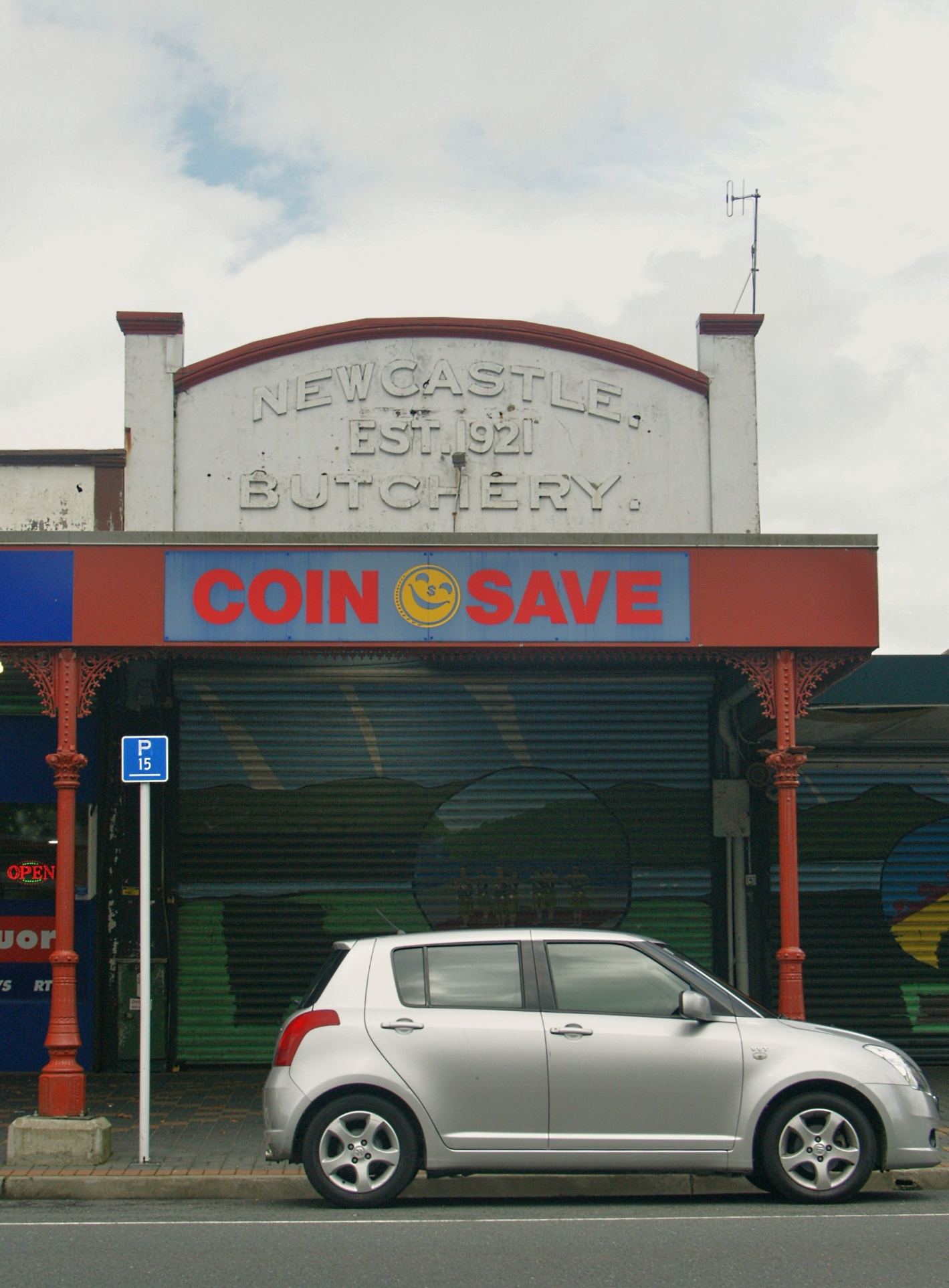
When Rangiriri pā was taken by General Cameron after a white flag of truce was flown, Cameron informed Māori that Governor Grey would only come to talk peace if his forces were allowed to enter Ngāruawāhia unopposed. Cameron entered a deserted Ngāruawāhia on 8 December 1863, but Grey never came to talk peace. Despite Māori protest, sales of confiscated land went ahead in 1864, shortly after the invasion. During the 19th century, Ngāruawāhia was named Queenstown and then Newcastle. However, the town returned to the original name in 1878.
20th century
A 100 hp gas power station was built in Herschell St in 1913 by the Town Board for lighting. It used Glen Massey coal, which was converted to gas in a Cambridge Patent Gas Producer (many were used about this time in Australasia) and used to drive a 2-cylinder gas engine. It closed in 1924. Much of the machinery was removed in 1950 and from 1954 the building was used as a scout hall.
Officers from the United States visited Ngāruawāhia during World War II and would share food at hāngī. Queen Elizabeth II has visited Ngāruawāhia on two occasions (1953 & 1974). On the latter occasion, then Māori Queen Dame Te Ātairangikaahu and her husband Whatumoana Paki welcomed Queen Elizabeth II to the local marae. The Great Ngaruawahia Music Festival was held in 1973, and featured many music acts, including some that went on to become internationally famous such as Black Sabbath and Split Enz. It was the first large outdoor music festival in New Zealand.
In 1980, Mayor Latta released a book about the history of the town titled 'Meeting of the Waters'.
In March 1998, a freight train derailed on the local North Island Main Trunk line's rail bridge across the Waikato River. The incident caused structural damage to the bridge.

Water supply
Until 1923 springs in Waipa Esplanade and Market Street were used. In April 1923 a reticulation scheme was opened, supplied by a dam on the Quarry Creek (now Mangarata Stream), 3/4 mi away, in the Hakarimatas. The concrete dam is 100 ft long and 26 ft high and now accessible by the Waterworks Walk from Brownlee Avenue, alongside Mangarata Stream. The population was then 1100 in 240 houses. By 1965 the population was 3,630, so water was instead pumped from the Waikato and from a deep bore, with a new reservoir and water treatment plant opened in 1965.
21st century
By April 2001, the damaged rail bridge was mended.
In 2008, Ngāruawāhia set a world record for the largest haka and by 2010 the town had its own community news.
In 2011, murals were installed for Ngāruawāhia's 150th anniversary in 2013 Ngaruawahia High School (which opened in 1963) celebrated its 50th anniversary in 2013.
In May 2016, Heather du Plessis-Allan (an NZME broadcaster) claimed that the "town is rotting". The broadcaster later accepted a challenge to visit the town and an article relating to the incident appeared on a Waikato Times front page. According to Waikato District Mayor Allan Sanson, du Plessis-Allan "really upset locals". In June 2016, local mayor Allan Sanson said du Plessis-Allan spent around three hours in the town, apologizing to residents.
In 2019, the name of the town was officially gazetted as Ngāruawāhia.
Infrastructure
Waikato River crossings

Until the Waikato invasion the rivers were the main transport routes, but, after the Great South Road and main trunk line were built, the rivers became barriers, which needed crossings.
As early as 1870 a public meeting called for a bridge, but a punt continued to be the main means of crossing the river until the road-rail bridge opened for traffic in 1876. So long as there were few trains, there was little complaint that gates closed 10 minutes before a train was due. However, by the 1900s road and rail traffic was increasing, averaging 20 trains, 275 pedestrians, 43 equestrians, 29 light vehicles, 18 milk carts, 6 wagons, and 55 stock a day in 1910.
1921 single-lane road bridge
A survey for a road bridge was done in 1911. Test borings for piles were done in 1912. The Ngāruawāhia Town Board and Waikato, Waipa, and Raglan County Councils agreed to share the cost in 1914. The State Advances office lent £2,500 for the bridge in 1915. Wartime shortages caused further delays, but by 1917 the new bridge was taking shape. Further delay occurred when additional piles had to be driven. The Minister reported the work well in hand in 1919, but then a temporary bridge, used in construction, was hit by a steamer. Work got under way again, £3,000 was in the Public Works Estimates and the bridge was reported complete in 1920, except for its approaches. The bridge opened in 1921 and, on 28 July 1921, was officially opened by the Minister of Public Works, J. G. Coates. It was 12 ft wide and 436 ft long, made up of 3 x 123 ft, a 43 ft and a 20 ft span. Two piers were in the river on 6 ft concrete cylinders sunk 37 ft below normal water-level. The others were reinforced concrete on concrete piling and the deck and trusses of Australian hardwood.
Complaints had been made about a single-lane bridge since before it was built, so, when the new NIMT bridge was built, the Main Highways Board leased the old one and added decking. The conversion was completed in early November 1931, allowing 2-way traffic. Single lane traffic was reinstated for a few months in 1936 to allow a 40 ft truss on the 1921 bridge to be replaced. Traffic was still increasing. In 1935 traffic between Ohinewai and Ngāruawāhia averaged 660 vehicles a day. By 1938 it had risen to 1,329.
1956 bridge
On 13 March 1953 a contract was let for a new steel truss bridge. An April 1955 photo shows two piers in the river. On 20 August 1955 the centre span was placed and a 1955 photo shows the bridge almost finished. The first car drove over the bridge on 19 October 1956. By 2008 17,392 vehicles a day were crossing the bridge. No more recent counts have been published, but, after the opening of the Taupiri link in 2013, traffic on the Great South Rd in Ngāruawāhia, was 12,467 in 2015, suggesting that traffic on the bridge has been reduced by about 5,000 vehicles a day.

Listed buildings
Ngāruawāhia's history is reflected in the number of its Listed Buildings –
Category 1 Turangawaewae House built in 1912–1919 as Te Kauhanganui building in a fusion of Arts and Crafts and traditional Māori styles;
Category 2 – Band Rotunda, Delta Tavern, Doctor's House, former bakery, former Flourmill Store, former Māori pā – Puke i Ahua, Grant's Chambers, 13 Lower Waikato Esplanade, 2 Old Taupiri Rd, Pioneer Gun Turret, Riverdale, St Paul's Church, War Memorial.
Community
Māori King movement

Ngāruawāhia is home to the Kīngitanga. The first Māori king, Pōtatau Te Wherowhero, was crowned at Ngāruawāhia in 1858 and was living there when he died two years later. The current Māori queen is Nga wai hono i te po; she acceded to the throne at Tūrangawaewae Marae following the death of her father in 2024.
Marae
Ngāruawāhia has two marae affiliated with the Waikato Tainui hapū of Ngāti Mahuta and Ngāti Te Weehi: Tūrangawaewae and its Mahinaarangi or Turongo meeting house, and Waikeri-Tangirau Marae.
Tribal Huk
A local gang is Tribal Huk, who have been seen as heroes by the community for providing lunches to schoolchildren in Ngāruawāhia, Hamilton and Huntly. In particular, they have been known for making sandwiches, which earned them the nickname "Sandwich Gang".
In October 2016, Tribal Huk president Jamie Pink started a movement against methamphetamine, known in New Zealand as "P". Waikato District Mayor Allan Sanson supported Pink's message to Ngāruawāhia methamphetamine dealers to either leave the town within 24 hours or "visits" would begin. The demand was also supported by members of the community who had gathered at a local meeting. According to a gang source, Ngāruawāhia became P free, but the Police Association stated that there was no evidence that P dealers had left Ngāruawāhia. There is additionally concern Pink has damaged the work that Tribal Huk did feeding a thousand Waikato schoolchildren.
In November 2016, another community meeting was held. Pink was not present.
Christianity
In the 1996 census, the majority of residents identified as Christian. A Bible is traditionally used during the crowning of a Māori monarch. In 1995, the Holy Trinity Anglican Church burned down, and a new church had been built in its place by 1998.
On the northern side of the Waipā River is the Christian Youth Camps (CYC), the largest youth camp site in New Zealand. CYC started in the early 1960s with large Easter conventions. Today there are two separate camp sites on 38 hectares of land. The camp offers school holiday camps throughout the year. During the terms, the camps are used by various groups, including schools, churches and sporting organisations.
Sport and recreation
Football (soccer)
Ngaruawahia United, known as "The Green Machine", is the local football (soccer) club, founded in 1968. Centennial Park serves as the home ground for the club, and has been the home venue for ASB Premiership side Waikato FC in past seasons.
Rugby league
The town's rugby league teams are Ngaruawahia Panthers and Tūrangawaewae. The 'Ngaruawahia Rugby League Club' is the oldest such club in the Waikato. Early games were played on varying venues, for instance Taupiri paddock and Paterson Park. The first major match for the town was held in August 1911 when they lost to Auckland 22 – 36 at the Caledonian Ground in Frankton. Ngaruawahia did however beat Hamilton United 27 – 4 in the first ever Northern Union game to be played at Hamilton's Steele Park in 1912. The senior team were Champion of Champions in 1956 and 1957.
Ngāruawāhia is the home of the rugby league team Turangawaewae RLC, which is named after the marae opposite the clubrooms.
River activities
The local regatta has been a fundamental event for the region for well over a century. An event is held every year in March on the Waikato River. The first regatta was an unofficial event in 1892, involving both Māori and Pākehā festivities. The regatta provided a means of association between two ethnic groups, socially and culturally. The first official regatta took place in 1896 and since then has grown to become one of New Zealand's largest aquatic festivals. During the centennial regatta in March 1996, over 48,000 people visited the town to see thousands of performers from a number of countries.
For many years, jumping off the rail bridge has been a tradition. However, organisations such as KiwiRail want the practice to end.
Hopuhopu
Main article: Hopuhopu camp
Hopuhopu is 5 km north of Ngāruawāhia. From 1853 Hopuhopu had a boys' mission school, which lost most of its pupils in 1862 and, by 1863, was reported as in disrepair. The mission house burnt down in 1886. An army camp was built on the mission site in the 1920s, including its own water supply, ammunition dumps and a railway siding. A 1925 photograph showed only one building and many tents, but a 1955 aerial photo showed the extent of building, which was largely complete by 1927. In 1993 the camp was returned to Waikato-Tainui, who converted it to their headquarters and Waikato-Tainui College for Research and Development.
Education
Ngaruawahia High School is the town's co-educational state secondary school, with a roll of as of . The school opened in 1963.
The town has two English-language state primary schools: Ngaruawahia School, with a roll of ; and Waipa School, with a roll of . Ngaruawahia School opened in 1886, with origins from 1869, and Waipa School opened in 1957.
St Paul's Catholic School is a co-educational state-integrated primary school, with a roll of . St Paul's opened in 1928.
Te Kura Kaupapa Māori o Bernard Fergusson is a co-educational Māori-language state primary school, with a roll of . It opened as Bernard Fergusson School in 1965.
Former residents
- Kelvin Cruickshank, television personality
- Martin Donnelly, cricketer
- Shaun Kenny-Dowall, rugby league player
- Inia Te Wiata, operatic singer and traditional carver
- Richard Tomlinson, MI6 officer
- Dallin Watene-Zelezniak, rugby league player
- Allan Wilson, biochemist
Notes
References
References
- [http://www.tourism.net.nz/new-zealand/about-new-zealand/regions/waikato/history.html Ngaruawahia – a small town with a big history]
- "Stats NZ Geographic Data Service".
- {{NZ census 2018. Ngāruawāhia North (172000), Ngāruawāhia Central (172100) and Ngāruawāhia South (172200)
- "Totals by topic for dwellings, (RC, TALB, UR, SA3, SA2, Ward, Health), 2013, 2018, and 2023 Censuses". Stats NZ – Tatauranga Aotearoa – Aotearoa Data Explorer.
- "Totals by topic for individuals, (RC, TALB, UR, SA3, SA2, Ward, Health), 2013, 2018, and 2023 Censuses". Stats NZ – Tatauranga Aotearoa – Aotearoa Data Explorer.
- "Totals by topic for individuals, (RC, TALB, UR, SA3, SA2, Ward, Health), 2013, 2018, and 2023 Censuses". Stats NZ - Tatauranga Aotearoa - Aotearoa Data Explorer.
- "Totals by topic for individuals, (RC, TALB, UR, SA3, SA2, Ward, Health), 2013, 2018, and 2023 Censuses". Stats NZ - Tatauranga Aotearoa - Aotearoa Data Explorer.
- "Totals by topic for individuals, (RC, TALB, UR, SA3, SA2, Ward, Health), 2013, 2018, and 2023 Censuses". Stats NZ - Tatauranga Aotearoa - Aotearoa Data Explorer.
- Swarbrick, Nancy. "[http://www.TeAra.govt.nz/en/waikato-places/5 Waikato places – Ngāruawāhia]". ''Te Ara – the Encyclopedia of New Zealand''. Updated 8 December 2011.
- (18 June 2010). "Heritage planners minutes". Waikato District Council.
- "Puke-i-aahua Pa Palisade, Ngaaruaawahia".
- O’Malley, Vincent. (June 2020). "Historical Report on Hamilton Street and City Names".
- (1864-09-30). "GOVERNMENT LAND SALE". New Zealander.
- Ian D. Robinson. (2010). "Waikato River Its People, Places & History". David Bateman Limited, New Zealand, 2009.
- "PUBLIC WORKS STATEMENT BY THE HON. J. G. COATES, MINISTER OF PUBLIC WORKS. (Appendix to the Journals of the House of Representatives, 1921-01-01)".
- "Appendix to the Journals of the House of Representatives 1922 Session PUBLIC WORKS STATEMENT BY THE HON. J. G. COATES, MINISTER OF PUBLIC WORKS.".
- (1912-10-13). ""Cambridge" Gas Producer". Sunday Times (Perth, WA : 1902 – 1954).
- "NGARUAWAHIA POWER STATION (Waikato Argus, 1914-03-17)".
- "PUBLIC WORKS STATEMENT BY THE HON. J. G. COATES, MINISTER OF PUBLIC WORKS. (Appendix to the Journals of the House of Representatives, 1924-01-01)".
- [https://nzhistory.govt.nz/media/photo/american-officer-and-tainui-kuia American officer and Tainui kuia] Retrieved 2016
- [http://ngaruawahia.com/about-ngaruawahia/history/1953-and-1974-queen-elizabeths-visits/ 1953 & 1974 – Queen Elizabeth’s Visits]
- [https://nzhistory.govt.nz/media/photo/maori-and-english-queens-1974 Māori and English Queens, 1974]
- [http://ngaruawahia.com/about-ngaruawahia/history/1973-the-great-ngaruawahia-music-festival/ 1973 – The Great Ngaruawahia Music Festival]
- Mark Smith. (2012). "Ngaruawahia 1980–2010 A Brief History". Lions Club of Ngaruawahia Incorporated Charitable Trust.
- "Mangarata Stream, Waikato".
- (23 Apr 1923). "NGARUAWAHIA'S WATER, NEW ZEALAND HERALD".
- (April 2013). "Hakarimata Tracks".
- "THE NEW ZEALAND OFFICIAL YEAR-BOOK, 1966".
- "WDC District Plan Review – Built Heritage Assessment Historic Overview – Ngaruawahia & District".
- (July 2010). "Top of the south aims for largest haka". [[Stuff (website).
- Aaron Leaman. (May 2011). "Murals set scene for 150th mark". [[Stuff (website).
- Belinda Feek. (May 2016). "Heather du Plessis-Allan accepts challenge to visit Ngaruawahia". [[The New Zealand Herald]].
- [http://www.stuff.co.nz/national/80605412/epic-front-page-prompts-heather-du-plessisallen-visit-to-ngaruawahia 'Epic front page' prompts Heather du Plessis-Allan visit to Ngaruawahia]
- [https://web.archive.org/web/20160601132424/http://www.newshub.co.nz/nznews/rotting-ngaruawahia-hits-back-at-heather-du-plessis-allan-2016053114#axzz4AGyHm96g 'Rotting' Ngaruawahia hits back at Heather du Plessis-Allan]
- Nancy El-Gamel. (June 2016). "Broadcaster Heather du Plessis-Allan gets a tour of 'rotting' Ngaruawahia". [[Stuff (website).
- {{LINZ. 32480. Ngāruawāhia. 2 August 2019
- "NEWCASTLE: PUBLIC MEETING. (Daily Southern Cross, 1870-10-26)".
- "NGARUAWAHIA BRIDGE. (Waikato Times, 1891-03-28)".
- "NGARUAWAHIA RAILWAY BRIDGE. (New Zealand Herald, 1904-06-27)".
- "Ngaruawahia Traffic Bridge (Waikato Argus, 1910-10-01)".
- "THE NGARUAWAHIA BRIDGE. (New Zealand Herald, 1910-10-01)".
- "PUBLIC WORKS STATEMENT. BY THE HON. RODERICK McKENZIE, MINISTER OF PUBLIC WORKS. 16th OCTOBER, 1911. (Appendix to the Journals of the House of Representatives)".
- (19 September 1912). "THE NEED FOR A NEW TRAFFIC BRIDGE ACROSS THE WAIKATO RIVER: BORING FOR FOUNDATIONS AT NGARUAWAHIA.".
- "NGARUAWAHIA BRIDGE. (New Zealand Herald, 1914-07-31)".
- More, David. (1976). "Waikato County 1876–1976". Wilson & Horton Ltd.
- Auckland Weekly News. (4 October 1917). "commencing the erection of a new bridge at Ngaruawahia".
- "Public Works Statement, By The Hon. Sir William Fraser, Kt. Bach., Minister of Public Works. 1 January 1918".
- "Public Works Statement. By the Hon. Sir William Fraser, Kt. Bach., Minister of Public Works 1 JANUARY 1919".
- "DAMAGE TO BRIDGE. (New Zealand Herald, 1919-05-30)".
- "ENGINEERS IN HAMILTON (Waikato Times, 1919-10-27)".
- "PUBLIC WORKS ESTIMATES (Waikato Times, 1920-10-23)".
- "Parliamentary Papers – Appendix to the Journals of the House of Representatives 1920".
- "NGARUAWAHIA BOROUGH (Waikato Times, 1921-07-22)".
- "NGARUAWAHIA BRIDGE (Waikato Times, 1921-07-29)".
- Latta, A. M.. (1980). "Meeting of the Waters".
- "Appendix to the Journals of the House of Representatives 1921".
- "BRIDGE AT NGARUAWAHIA. (New Zealand Herald, 1931-05-13)".
- "MAIN HIGHWAYS BOARD. (New Zealand Herald, 1931-10-30)".
- "WAIKATO COUNTY. (New Zealand Herald, 1931-11-12)".
- "Public Works Statement (By The Hon. C. E. Macmillan, Acting Minister of Public Works). 1 January 1932".
- "NGARUAWAHIA BRIDGE (New Zealand Herald, 1936-04-03)".
- "Appendix to the Journals of the House of Representatives – 1938 Public Works Statement (By The Hon. R. Semple, Minister of Public Works).".
- "www.trafficcounts.co.nz".
- "Waikato Expressway – Ngaruawahia Section Update – September 2010".
- (November 2016). "RAMM Traffic and Loading – GREAT SOUTH RD between ELLERY ST and GALILEO ST".
- "Turangawaewae House / Maori Parliament Building".
- "Band Rotunda".
- "Delta Tavern".
- "Bakery (Former)".
- "Flourmill Store (Former)".
- "Puke i Ahua".
- "Grant's Chambers".
- "House".
- "House".
- "Pioneer Gun Turret".
- "Riverdale".
- "St Paul's Church (Catholic)".
- "World War One and Two Memorial".
- Phillipa Yalden. "Ngaruawahia residents riled at columnist's 'town is rotting' comments". [[Stuff (website).
- Kerr, Florence. (5 September 2024). "New Māori monarch named: Queen Ngā Wai hono i te po Paki". Stuff.
- "Te Kāhui Māngai directory". [[Te Puni Kōkiri]].
- "Māori Maps". Te Potiki National Trust.
- (October 2016). "Tribal Huk members show they are good neighbours in Ngaruawahia". [[Stuff (website).
- "Shades of Bad? The changing face of NZ gang culture". [[Special Broadcasting Service]].
- Jo Lines-Mackenzie. (October 2016). "Ngaruawahia community on edge after gang unrest". [[Stuff (website).
- (October 2016). "Gang boss gives P dealers ultimatum".
- (October 2016). "Ngaruawahia gang leader tells drug dealers: Leave – or else". [[The New Zealand Herald]].
- (October 2016). "Tribal Huk clears Ngaruawahia of P dealers, as promised". Stuff.
- (October 2016). "There's no evidence that P dealers have left Ngaruawahia after Tribal Huk claims, says Police Association".
- (November 2016). "Strong police presence at Ngaruawahia community meeting". [[The New Zealand Herald]].
- (August 2006). "Tuheitia new Maori king". [[The New Zealand Herald]].
- "Centennial Park (Ngaruawahia)". Football Ground Map.
- "Centennial Park, Ngaruawahia (New Zealand)". worldfootball.net.
- (20 July 2012). "People matter most in lovely Ngaruawahia". [[Waikato Times]].
- [https://books.google.com/books?id=Cb-ZtwAACAAJ&q=ngaruawahia+rugby+league+1911-2011 Ngaruawahia Rugby League: 1911–2011, 100 Years Ngaruawahia Rugby League Football Club, 2011]
- [http://ngaruawahia.com/about-ngaruawahia/history/the-regatta/ The Regatta]
- Kelsey Wilkie. (4 November 2016). "Ending the bridge jumping tradition in Ngaruawahia". [[Stuff (website).
- "Waikato-Tainui College : Our Location".
- "MAORI SCHOOL LAND. (Auckland Star, 1921-11-24)".
- "NATIVE SCHOOLS. REPORTS OF INSPECTORS. (Appendix to the Journals of the House of Representatives, 1862-01-01)".
- "Parliamentary papers. (New Zealander, 1863-12-24)".
- "THE BURNING OF THE MISSION STATION AT HOPUHOPU. (New Zealand Herald, 1886-04-10)".
- "GREAT MILITARY CAMP. (Auckland Star, 1925-04-08)".
- "NGARUAWAHIA CAMP. (New Zealand Herald, 1925-08-31)".
- (19 February 1925). "CAMP OF THE FIRST BATTALION OF THE WAIKATO REGIMENT NEAR NGARUAWAHIA".
- (5 Apr 1955). "Hopuhopu Military Camp on the banks of the Waikato River with training grounds, barracks, residential housing and rugby field, farmland beyond".
- "Appendix to the Journals of the House of Representatives PUBLIC WORKS STATEMENT (BY THE HON. K. S. WILLIAMS, MINISTER OF PUBLIC WORKS).".
- (March 2017). "Ngaaruawaahia, Hopuhopu, Taupiri, Horotiu, Te Kowhai & Glen Massey Structure Plan".
- "Ngaruawahia High School Official School Website".
- "Ngaruawahia High School Ministry of Education School Profile". [[Ministry of Education (New Zealand).
- "Ngaruawahia High School Education Review Office Report". [[Education Review Office]].
- Pratt, Barbara. (1990). "Ngaruawahia High School 1963–1990".
- "Ngaruawahia School Official School Website".
- "Ngaruawahia School Ministry of Education School Profile". [[Ministry of Education (New Zealand).
- "Ngaruawahia School Education Review Office Report". [[Education Review Office]].
- "Waipa School Official School Website".
- "Waipa School Ministry of Education School Profile". [[Ministry of Education (New Zealand).
- "Waipa School Education Review Office Report". [[Education Review Office]].
- "Ngaruawahia Primary, 125, 1869 to 1994 [catalog entry]". National Library of New Zealand.
- "Historic Overview - Ngaruawahia & District". Waikato District Council.
- "St Paul's Catholic School Official School Website".
- "St Paul's Catholic School Ministry of Education School Profile". [[Ministry of Education (New Zealand).
- "St Paul's Catholic School Education Review Office Report". [[Education Review Office]].
- "Te Kura Kaupapa Māori o Bernard Fergusson Official School Website".
- "Te Kura Kaupapa Māori o Bernard Fergusson Ministry of Education School Profile". [[Ministry of Education (New Zealand).
- "Te Kura Kaupapa Māori o Bernard Fergusson Education Review Office Report". [[Education Review Office]].
- [http://www.stuff.co.nz/entertainment/tv-radio/85901382/kelvin-cruickshank-sensing-murder-im-sensing-comedy Kelvin Cruickshank is Sensing Murder? I'm sensing comedy]
This article was imported from Wikipedia and is available under the Creative Commons Attribution-ShareAlike 4.0 License. Content has been adapted to SurfDoc format. Original contributors can be found on the article history page.
Ask Mako anything about Ngāruawāhia — get instant answers, deeper analysis, and related topics.
Research with MakoFree with your Surf account
Create a free account to save articles, ask Mako questions, and organize your research.
Sign up freeThis content may have been generated or modified by AI. CloudSurf Software LLC is not responsible for the accuracy, completeness, or reliability of AI-generated content. Always verify important information from primary sources.
Report