From Surf Wiki (app.surf) — the open knowledge base
Newton (unit)
Unit of force in physics
Unit of force in physics
| Field | Value |
|---|---|
| name | newton |
| image | One Newton, illustrated (transparent background).svg |
| caption | Visualization of one newton of force |
| standard | SI |
| quantity | force |
| symbol | N |
| namedafter | Sir Isaac Newton |
| units1 | SI base units |
| inunits1 | 1 kg⋅m⋅s−2 |
| units2 | CGS units |
| inunits2 | 105 dyn |
| units3 | Imperial units |
| inunits3 | 1.000000 N |
The newton (symbol: N) is the unit of force in the International System of Units (SI). Expressed in terms of SI base units, it is 1 kg⋅m/s2, the force that accelerates a mass of one kilogram at one metre per second squared.
The unit is named after Isaac Newton in recognition of his work on classical mechanics, specifically his second law of motion.
Definition
A newton is defined as 1 kg⋅m/s2 (it is a named derived unit defined in terms of the SI base units). One newton is, therefore, the force needed to accelerate one kilogram of mass at the rate of one metre per second squared in the direction of the applied force.
The units "metre per second squared" can be understood as measuring a rate of change in velocity per unit of time, i.e. an increase in velocity by one metre per second every second.
In 1946, the General Conference on Weights and Measures (CGPM) Resolution 2 standardized the unit of force in the MKS system of units to be the amount needed to accelerate one kilogram of mass at the rate of one metre per second squared. In 1948, the 9th CGPM Resolution 7 adopted the name newton for this force. The MKS system then became the blueprint for today's SI system of units. The newton thus became the standard unit of force in the Système international d'unités (SI), or International System of Units.
The connection to Newton comes from Newton's second law of motion, which states that the force exerted on an object is directly proportional to the acceleration hence acquired by that object, thus: F = ma, where m represents the mass of the object undergoing an acceleration a. When using the SI unit of mass, the kilogram (kg), and SI units for distance metre (m), and time, second (s) we arrive at the SI definition of the newton: 1 kg⋅m/s2.
Examples
At average gravity on Earth (conventionally, g_\text{n} = ), a kilogram mass exerts a force of about 9.81 N.
- An average-sized apple with mass 200 g exerts about two newtons of force at Earth's surface, which we measure as the apple's weight on Earth. : 0.200 \text{ kg} \times 9.80665 \text{ m/s}^2 = 1.961\text { N}.
- An average adult exerts a force of about 608 N on Earth. : 62\text { kg} \times 9.80665 \text{ m/s}^2=608\text{ N} (where 62 kg is the world average adult mass).
Kilonewtons
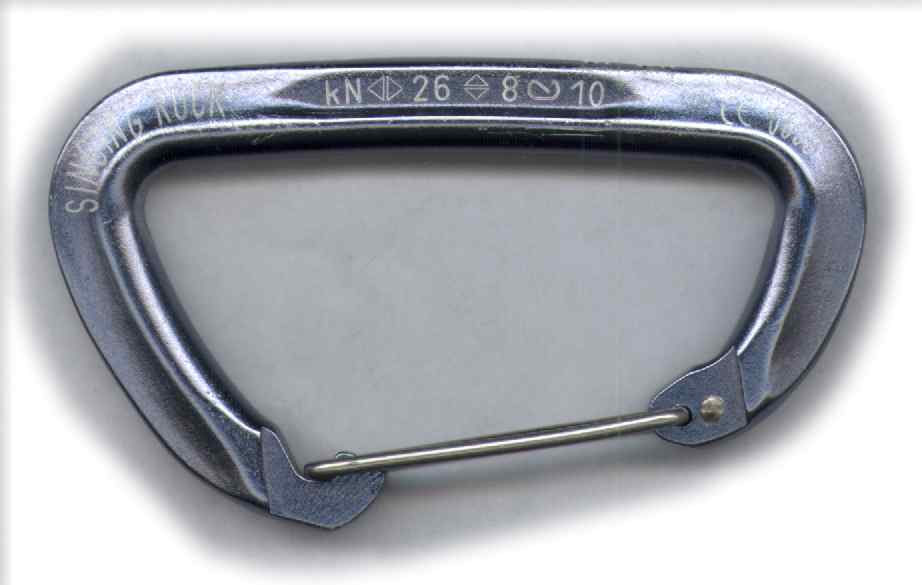
Large forces may be expressed in kilonewtons (kN), where . For example, the tractive effort of a Class Y steam train locomotive and the thrust of an F100 jet engine are both around 130 kN.
Climbing ropes are tested by assuming a human can withstand a fall that creates 12 kN of force. The ropes must not break when tested against 5 such falls.
Conversion factors
References
References
- Bureau International des Poids et Mesures. (2019). "The International System of Units (SI)". [[Bureau International des Poids et Mesures]] (BIPM).
- (17 December 2020). "Newton {{!}} unit of measurement". [[Encyclopædia Britannica]].
- (1977). "The International System of Units (SI)". [[U.S. Department of Commerce]], [[National Bureau of Standards]].
- (2019). "The International System of Units (SI)". [[National Institute of Standards and Technology.
- (2006). "Table 3. Coherent derived units in the SI with special names and symbols". [[International Bureau of Weights and Measures]].
- (18 June 2012). "The weight of nations: an estimation of adult human biomass". [[BMC Public Health]].
- Bright, Casandra Marie. "A History of Rock Climbing Gear Technology and Standards." (2014).
This article was imported from Wikipedia and is available under the Creative Commons Attribution-ShareAlike 4.0 License. Content has been adapted to SurfDoc format. Original contributors can be found on the article history page.
Ask Mako anything about Newton (unit) — get instant answers, deeper analysis, and related topics.
Research with MakoFree with your Surf account
Create a free account to save articles, ask Mako questions, and organize your research.
Sign up freeThis content may have been generated or modified by AI. CloudSurf Software LLC is not responsible for the accuracy, completeness, or reliability of AI-generated content. Always verify important information from primary sources.
Report