From Surf Wiki (app.surf) — the open knowledge base
New Zealand nuclear-free zone
Legal prohibition on nuclear energy or weapons within New Zealand
Legal prohibition on nuclear energy or weapons within New Zealand
In 1984, Prime Minister David Lange banned nuclear-powered or nuclear-armed ships from using New Zealand ports or entering New Zealand waters. Under the New Zealand Nuclear Free Zone, Disarmament, and Arms Control Act 1987, territorial sea, land and airspace of New Zealand became nuclear-free zones. This has since remained a part of New Zealand's foreign policy.
The act prohibits "entry into the internal waters of New Zealand 12 nautical miles (22.2 km, 13 statute miles) radius by any ship whose propulsion is wholly or partly dependent on nuclear power" and bans the dumping of radioactive waste into the sea within the nuclear-free zone, as well as prohibiting any New Zealand citizen or resident "to manufacture, acquire, possess, or have any control over any nuclear explosive device." The nuclear-free zone Act does not prohibit land-based nuclear power plants, nuclear research facilities, the use of radioactive isotopes, or other land-based nuclear activities. However, no such research facilities or power plants exist currently in New Zealand.
After the Disarmament and Arms Control Act was passed by the Lange-led Labour government, the United States government suspended its ANZUS obligations to New Zealand. The legislation was a milestone in New Zealand's development as a nation and seen as an important act of sovereignty, self-determination, and cultural identity. New Zealand's four-decade anti-nuclear campaign is the only successful movement of its type in the world which resulted in the nation's nuclear-weapon-free zone status being enshrined in legislation.{{cite book | author-link = David Lange
In 2021, Australia entered into AUKUS pact to get support in building nuclear submarines. In response, New Zealand's prime minister Jacinda Ardern announced that Australia's new submarines will be banned from entering New Zealand's long-standing nuclear-free zone.
Historical background
Initial seeds were sown for New Zealand's 1987 nuclear-free zone legislation in the late 1950s with the formation of the local Campaign for Nuclear Disarmament (CND) organisation between 1957 and 1959. In 1959, responding to rising public concern following the British hydrogen bomb tests in Australia and the Pacific, New Zealand voted in the UN to condemn nuclear testing while the UK, US and France voted against, and Australia abstained.{{cite web |archive-url=https://web.archive.org/web/20090104151611/http://www.executive.govt.nz/93-96/minister/pm/nuclear/east5.htm |archive-date=4 January 2009
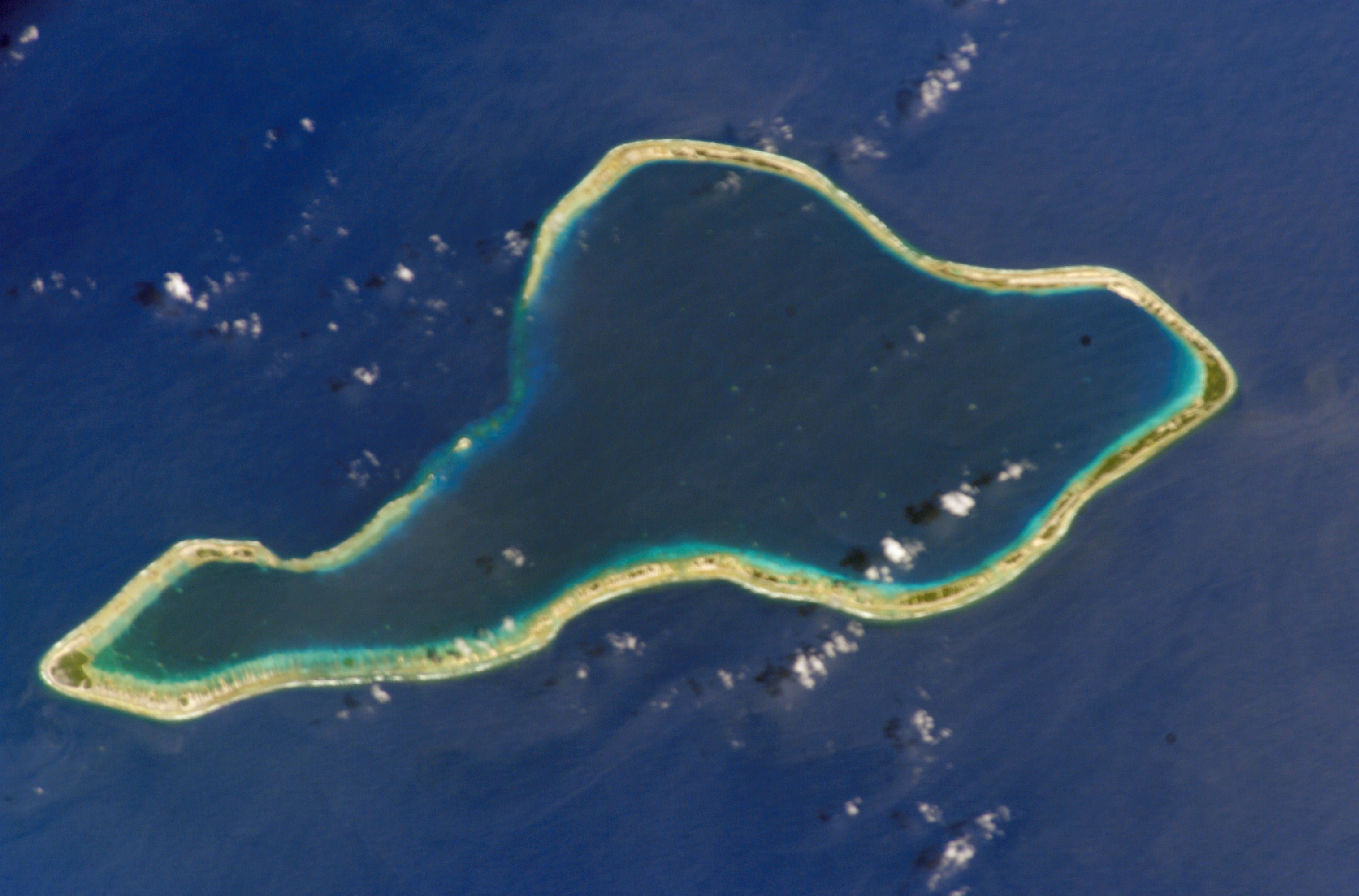
Mururoa atoll, and its sister atoll Fangataufa, in French Polynesia in the southern Pacific Ocean were officially established as a nuclear test site by France on 21 September 1962 and extensive nuclear testing occurred between 1966 and 1996. The first nuclear test, codenamed Aldébaran, was conducted on 2 July 1966 and forty-one atmospheric nuclear tests were conducted at Mururoa between 1966 and 1974.
In March 1976 over 20 anti-nuclear and environmental groups, including Greenpeace and Friends of the Earth, met in Wellington and formed a loose coalition called the Campaign for Non-Nuclear Futures (CNNF). The coalition's mandate was to oppose the introduction of nuclear power and to promote renewable energy alternatives such as wind, wave, solar and geothermal power. They launched Campaign Half Million. CNNF embarked on a national education exercise producing the largest petition against nuclear power in New Zealand's history with 333,087 signatures by October 1976. This represented over 10% of the country's total population of 3 million. At this time, New Zealand's only nuclear reactor was a small sub-critical reactor that had been installed at the School of Engineering of the University of Canterbury in 1962. It had been given by the United States' Atoms for Peace programme and was used for training electrical engineers in nuclear techniques.{{cite web |access-date= 2008-02-04
Regional anti-nuclear sentiment was consolidated in 1985 when eight of the thirteen South Pacific Forum nations signed the South Pacific Nuclear-Weapon-Free Zone Treaty or Treaty of Rarotonga.
Mururoa protests
Community inspired anti-nuclear sentiments largely contributed to the New Zealand Labour Party election victory under Norman Kirk in 1972. In June 1973, the International Court of Justice (pursuant to a case launched by Australia and New Zealand) ordered that the French cease atmospheric nuclear testing at Mururoa atoll while the case was being heard by the Court. However, the French ignored this ruling.
Mururoa was the site of numerous protests by various vessels, including the Rainbow Warrior. In a symbolic act of protest the Kirk government sent two of its navy frigates, and , into the test zone area in 1973. A Cabinet Minister (Fraser Colman) was randomly selected to accompany this official New Zealand Government protest fleet. This voyage included a number of local Kiwi peace organisations who had organised an international flotilla of protest yachts that accompanied the frigates into the Mururoa zone. Many of the early NZ peace activists and organisations were enthusiastic young hippies and students, many of whom were involved with the counter-culture and the original opposition to the Vietnam War movements.
Peace yachts attempting to disrupt the French tests sailed in coordinated protests through the Mururoa exclusion zones between 1972 and 1991. These included the voyage of the first joint Greenpeace-CND campaign in 1972 with David McTaggart, (who co-founded Greenpeace), on the yacht Vega (renamed Greenpeace III). This was followed in 1973 by a flotilla of yachts organised by the Peace Media with protest yachts Fri, Spirit of Peace, the Boy Roel, Magic Isle and the Tanmure.{{cite book
During numerous voyages to Mururoa atoll the protest yachts Fri, Vegas and Greenpeace were boarded by French commandos and members of their crew assaulted and arrested. In 1973 the Vega was rammed by a French military warship and David McTaggart was severely beaten by French military police. A major change in New Zealand society caused by these Pacific campaigns was the upsurge in pro anti-nuclear sentiments in New Zealand and, as a consequence, the eventual rise of its anti-nuclear policy in 1987.
According to French journalist Luis Gonzales-Mata in Actual magazine 1976, large numbers of Polynesians had been secretly sent on military flights to Paris for treatment for cancer. Tahitian activist Charlie Ching told a nuclear-free Pacific hui in Auckland in 1983 that more than 200 Tahitians had died from radiation-linked illnesses over 5 years. Due to the secrecy of health issues in French Polynesia, these figures remained impossible to confirm.
In August 2006 people of French Polynesia welcomed an official report by the French Government confirming the link between an increase in the cases of thyroid cancer and France's atmospheric nuclear tests in the territory since 1966.
Nuclear-free zone legislation
Despite the steady growth of the nuclear-free movement since the 1950s, the early 1980s National Party government was completely against tighter nuclear restrictions and instead sought closer ties with the United States, New Zealand's most powerful ally who possessed the largest nuclear arsenal in the world. Prime Minister Robert Muldoon had lost the support of some of the MPs from his own party over several environmental issues. In particular, maverick National Party Members of Parliament Marilyn Waring and Mike Minogue threatened the slight government majority. In 1984, the opposition New Zealand Labour Party proposed the nuclear-free zone legislation. Muldoon strongly opposed the proposal, fearing it might compromise New Zealand's national security. However, as he failed to secure Marilyn Waring's support on the issue, and as the National Party had a majority of only one, Muldoon decided to call a snap election, the 1984 New Zealand general election, stating that Waring's "feminist anti-nuclear stance" threatened his ability to govern. Muldoon was famously drunk when he announced the election, and ignored warnings from party president Sue Wood that the party organisation was unprepared for a campaign. The National Party lost the election, and the Labour Party formed a new government.

According to opinion polls taken before the 1984 election, 30 per cent of New Zealanders supported visits by US warships with a clear majority of 58 per cent opposed, and over 66 per cent of the population lived in locally declared nuclear-free zones. Following the victory of the New Zealand Labour Party in elections in 1984, Prime Minister David Lange barred nuclear-powered or nuclear-armed ships from using New Zealand ports or entering New Zealand waters. Reasons given were the dangers of nuclear weapons, continued nuclear testing in the South Pacific, and opposition to US President Ronald Reagan's policy of aggressively confronting the Soviet Union. Given that the United States Navy refused to confirm or deny the presence of nuclear weapons aboard ships, these laws essentially refused access to New Zealand ports for all United States Navy ships. In February 1985, a port-visit request by the United States for the USS Buchanan was refused by the New Zealand government on the basis that the Buchanan was capable of launching nuclear depth bombs. This refusal was viewed by the New Zealand public as an important statement of national sovereignty, illustrating a refusal to relax its anti-nuclear stance even at the behest of its more powerful allies. An opinion poll commissioned by the 1986 Defence Committee of Enquiry confirmed that 92 per cent now opposed nuclear weapons in New Zealand and 69 per cent opposed warship visits; 92 per cent wanted New Zealand to promote nuclear disarmament through the UN, while 88 per cent supported the promotion of nuclear-free zones.
Under the New Zealand Nuclear Free Zone, Disarmament, and Arms Control Act 1987 territorial sea and land of New Zealand became nuclear-free zones. The Act prohibits "entry into the internal waters of New Zealand 12 n. mi. (22.2 km/13-13/16 st. mi.) radius by any ship whose propulsion is wholly or partly dependent on nuclear power" and bans the dumping of radioactive waste into the sea within the nuclear-free zone, as well as prohibiting any New Zealand citizen or resident "to manufacture, acquire, possess, or have any control over any nuclear explosive device." Similar provisions were made for biological weapons. The crisis made front-page headlines for weeks in many American newspapers, while many leading American senators were quoted as expressing a deep sense of betrayal. However, David Lange did not withdraw New Zealand from ANZUS, although his government's policy led to the US's decision to suspend its treaty obligations to New Zealand. The legislation was a milestone in New Zealand's development as a nation and seen as an important act of sovereignty, self-determination and cultural identity.
New Zealand has long maintained an independent foreign policy initiative, with various Governments ignoring American and other countries' policy demands. While New Zealand meets its international responsibilities towards maintaining global peace, its pacifist based anti-nuclear stance reflects the mainstream ideology held by the majority of its residents. New Zealand's opposition to nuclear weapons is rooted in the belief that the proliferation of such weapons of mass destruction does not reflect an attempt to preserve peace in the form of a nuclear deterrent. New Zealand's nuclear-free zone option looks to remove the nation from under the nuclear umbrella.
Rainbow Warrior affair
Main article: Sinking of the Rainbow Warrior

Greenpeace continued an unrelenting protest offensive in French Polynesia until 1996. The Greenpeace vessel Rainbow Warrior was sunk by the French foreign intelligence agency (DGSE) while docked in Auckland harbour, New Zealand, on 10 July 1985.
It is often speculated that the sinking of the Rainbow Warrior was an act of revenge against Greenpeace and New Zealanders themselves for their successful campaigns to enforce a nuclear weapons test ban at Mururoa. When the French DGSE agents Commander Alain Mafart and Captain Dominique Prieur were captured in New Zealand and eventually sentenced to 10 years prison for their roles in sabotage of the Rainbow Warrior and manslaughter of Fernando Pereira, the French government threatened New Zealand with trade sanctions to the European Economic Community if the pair were not released.
Impact on diplomatic relationships
United States
New Zealand's nuclear movement had a major impact on diplomatic relationships with the United States. On 4 February 1985, Prime Minister David Lange declined a visit from the nuclear-capable USS Buchanan destroyer. The United States responded swiftly and stopped all intelligence flow to New Zealand. When the Labour government turned their policy into law with the New Zealand Nuclear Free Zone, Disarmament, and Arms Control Act 1987, New Zealand was effectively frozen out of ANZUS by the United States. New Zealand's diplomatic position was downgraded from being an ally to a "friend". Robert Muldoon called the Act the "ANZUS termination bill".
Despite this conflict, the bilateral trade and cultural relationship between the United States and New Zealand continued to flourish. The proportion of United States imports and exports in 1990 were greater than in 1984. Today, the ban on nuclear arms is no longer a factor straining United States and New Zealand diplomatic relations. The New Zealand Ministry of Foreign Affairs states that New Zealand and United States are close strategic partners, and they have a deep and longstanding friendship.
France
The French attack on the Rainbow Warrior "produced a sense of outrage and a serious deterioration in relations between New Zealand and France". France demanded New Zealand release the agents captured after the attack. To enforce their demand, the French Government threatened to strain New Zealand's access to the European market, and New Zealand exports to France were boycotted. Almost a year after the bombing, on 8 July 1986, United Nations Secretary-General Javier Pérez de Cuéllar announced, that New Zealand would receive an apology and compensation of $13 million from France. The attackers, Dominique Prieur and Alain Mafart were to serve their sentences in full on Hao Atoll in French Polynesia. However, both prisoners were released early and were celebrated on their arrival home to France.
In 2016, French prime minister Manuel Valls said the Rainbow Warrior bombing that took place 30 years ago was a huge mistake. France is now New Zealand's third largest trading partner within Europe. New Zealand exports goods worth more than $373 million to France and the French Pacific Islands every year, according to New Zealand Trade and Enterprise.
Australia
New Zealand has a very close and significant relationship with Australia. When New Zealand passed the New Zealand Nuclear Free Zone, Disarmament, and Arms Control Act 1987, Australia found itself torn between not offending its longstanding ally (New Zealand) and upsetting its more strategic relationship with the United States. The Australian Government was unwilling to adopt New Zealand's nuclear stand. In November 1987, the summit between the prime ministers of Australia and New Zealand avoided the discussion of nuclear policy and concentrated on strengthening economic ties between the nations. However, New Zealand's relationship with Australia was not strained. The end of the ANZUS alliance saw Australia and New Zealand embark on the Closer Defence Relations (CDR) in 1991.
On 15 September 2021, Australia entered into AUKUS pact. As per this, Australia will get support from UK and US to develop and deploy nuclear-powered submarines. New Zealand will prohibit Australian nuclear-powered submarines from entering its waters.
Pacific Islands
From a Pacific perspective, the military attack on the Rainbow Warrior only served to consolidate New Zealand's and the Pacific communities' nuclear-free zone ambitions. (Treaty of Rarotonga – South Pacific Nuclear Free Zone Treaty). The attack served to further isolate the French in that part of the world, which resulted in strong anti-French political campaigns for independence in Tahiti (see 2004 French Polynesian legislative election) and New Caledonia (see Politics of New Caledonia).
Japan
The breakdown of the ANZUS treaty placed considerable strain on the relationship between Japan and New Zealand, as the Japanese government placed importance on New Zealand's relationship with the United States. The absence of Japanese prime ministerial visits to New Zealand between 1982 and 1993 helps illustrate this unease.
Significance of the movement
Jack Vowles, Professor at Victoria University of Wellington, observed that the anti-nuclear movement allowed a "new materialism" to conquer in New Zealand politics. New Zealand's anti-nuclear movement was central to an upsurge in New Zealand nationalism. There was a sense of having to 'go it alone' after the Rainbow Warrior attack, because traditional allies such as the United States and Britain sat on their hands while France blocked New Zealand exports. The nuclear-free movement drew attention to the small nation, and allowed New Zealand to create its own foreign policies independent from other countries.
Anti-nuclear music
In 1982, a song called "French Letter" by New Zealand band Herbs came to express the country's anti-nuclear stance. The track, with lyrics telling the French to get out of the Pacific and 'no nukes' became a big hit and spent 11 weeks on the charts. Fourteen years later, it was re-recorded to garner support for the prevention of nuclear testing at Mururoa. Similarly, "No Nukes (The Second Letter)", "Nuclear Waste" and "Light of the Pacific" expressed much the same sentiment. "Chains", a hip-hop song by DLT featuring Che Fu, has lyrics criticizing the French for the same nuclear testing.
Recent developments

Under the fifth Labour government, its prime minister, Helen Clark, maintained New Zealand's nuclear-free zone status, a bipartisan position supported by the opposition New Zealand National Party. In a 2008 survey, 19% of New Zealanders favouring nuclear as a power source, more than both gas and coal power, but well behind wind, solar, geothermal and hydroelectricity.
The United States wants New Zealand to repeal its nuclear-free legislation, which would then allow U.S. warships carrying nuclear weapons to visit New Zealand ports. Pressure from the United States increased in 2006, with U.S. trade officials linking the repeal of the ban of American nuclear ships from New Zealand's ports to a potential free-trade agreement between the two countries. Brash quit politics after losing the 2005 election and "gone by lunchtime" became a political catchphrase in New Zealand.
Differences between the French and New Zealand governments now appear to be resolved with both countries enjoying positive trade and cultural exchanges.
On 8 June 2007 during Parliamentary debate on New Zealand's Nuclear-Free Legislations 20th Anniversary, the Hon Phil Goff (Minister for Disarmament and Arms Control) reaffirmed his Government's commitment to New Zealand's Nuclear-free Zone legislation. Phil Goff said,
I move, That this House note that 8 June 2007 is the 20th anniversary of the passing by this House of the New Zealand Nuclear Free Zone, Disarmament, and Arms Control Act 1987 and resolve that New Zealand should continue to work for a nuclear weapon – free world; and that, in striving for a world free of nuclear weapons, the House call for: the implementation and strengthening of the Nuclear Non-Proliferation Treaty, including the unequivocal undertaking made by nuclear weapon States in 2000 to move towards the total elimination of their nuclear arsenals; the expansion and strengthening of Nuclear-Weapon-Free Zones and a nuclear weapon – free Southern Hemisphere; the entry into force of the Comprehensive Nuclear-Test-Ban Treaty; the enactment of a Fissile Material Cut-off Treaty; and the universal implementation of nuclear non-proliferation instruments such as the International Convention for the Suppression of Acts of Nuclear Terrorism and United Nations Security Council Resolution 1540.
John Key promised in 2006, just after being elected leader of the National Party, that "the nuclear-free legislation will remain intact" for as long as he is the leader of the National Party.{{cite news |url=http://www.nzherald.co.nz/nz/news/article.cfm?c_id=1&objectid=10413300 |access-date=30 October 2011}}
In November 2016, became the first US warship to call in New Zealand in 33 years.
In 2017, New Zealand signed the United Nations Treaty on the Prohibition of Nuclear Weapons. The treaty aims to ban nuclear weapons amid tensions over North Korea's nuclear and missile tests. Foreign Affairs Minister Gerry Brownlee said the treaty is "consistent with New Zealand's long-standing commitment to international nuclear disarmament efforts".
Also in 2017, a New Zealand-led proposal to help identify North Korean ships in Pacific waters was accepted by leaders at the Pacific Islands Forum. Gerry Brownlee said he was prepared to use whatever intelligence capacity necessary to help identify and stop North Korean nuclear ships in the Pacific.
In 2018, New Zealand prime minister Jacinda Ardern reinstated the ministerial portfolio of Minister for Disarmament and Arms Control. Ardern stated that it is important that the Government acknowledges New Zealand's long-held anti-nuclear stance. "The pursuit of disarmament is as vital today as it was when Norman Kirk and David Lange proclaimed New Zealand's opposition to nuclear weapons and nuclear testing in the Pacific," she said.
In 2024, former American diplomat and foreign policy advisor John Bolton criticised New Zealand's nuclear-free posture, saying, "If you want to establish the taboo for nuclear weapons, okay, I get that, but for nuclear power itself, I just think it is a mistake.".
References
Bibliography
- Legal Challenges to Nuclear Weapons from Aotearoa/New Zealand, by Kate Dewes
- Stephen Kos, 1984, Interim Relief in the International Court: New Zealand and the Nuclear Test Cases, Victoria University Wellington Law Review.
References
- [[New Zealand Nuclear Free Zone, Disarmament, and Arms Control Act 1987]]
- "Nuclear Free Zone".
- Nicola Shepheard and Heather McCracken. (29 March 2009). "Nuke ship ban queried". [[The New Zealand Herald]].
- "New Zealand to join new nuclear disarmament treaty". The Beehive.
- link. (30 June 2006)
- (7 December 2022). "Nuclear Energy Prospects in New Zealand". World Nuclear Association.
- "Retail datasets". Electricity Market Information (EMI).
- (14 August 2005). "Lange's impact on NZ and world". BBC News.
- (2007). "Nuclear threat continues to grow, New Zealand warns on anniversary of anti-nuclear law".
- Temocin, Pinar. (2021). "From Protest to Politics: The Effectiveness of Civil Society in shaping the Nuclear-free Policy in Aotearoa New Zealand".
- (16 September 2021). "US, UK to arm Australia with nuclear-powered submarines, sending ripples across world".
- Elsie Locke, Peace People: A History of Peace Activities in New Zealand, p. 164
- "OBITUARY".
- Dewes, Kate. (11 November 2004). "Ordinary Citizens as Peacemakers". Disarmament and Security Centre, Christchurch.
- ["LCNP.org - Nuclear Disarmament and Non-Proliferation - NWFZ"](http://www.lcnp.org/disarmament/nwfz/NewZealandExperience.htm).
- Priestley, Rebecca. (2012). "Mad on Radium: New Zealand in the Atomic Age". Auckland University Press.
- "South Pacific Nuclear Free Zone Treaty".
- Dewes, Kate. "Legal Challenges to Nuclear Weapons from Aotearoa/New Zealand". Disarmament and Security Centre, Christchurch.
- [http://www.mururoavet.com/ Mururoa Nuclear Tests, RNZN protest Veterans - Home] {{webarchive. link. (23 July 2011)
- Elsa Caron, (ed.) 1974, Fri Alert (Caveman Press, Dunedin) The yacht Fri's own story of her protest voyage into the French Bomb Test Zone.
- link. (9 February 2012)
- (18 September 1995). "Dead-Serious Prank: A Greenpeace Operation".
- (14 March 2007). "Radio Australia - Pacific Beat - FRENCH POLYNESIA: Nuclear veterans welcome report's findings". [[ABC News (Australia).
- (10 February 2006). "Moruroa nuke report attacks France". [[1News.
- Vincent, Lindsay. (1 January 2006). "French accused of Pacific nuclear cover-up". [[The Guardian]].
- Field, Catherine. (6 October 2006). "French admit nuclear test fallout hit islands". [[The New Zealand Herald]].
- Lichfield, John. (4 August 2006). "France's nuclear tests in Pacific 'gave islanders cancer'". [[The Independent]].
- Clements, Kevin P.. (1988). "New Zealand's Role in Promoting a Nuclear-free Pacific". Journal of Peace Research.
- "History - NZ National Party".
- Gustafson, Barry, ''His Way, a biography of Robert Muldoon'', Auckland University Press, 2000, {{ISBN. 1-86940-236-7, p. 375
- "Archived copy".
- [http://www.newsweekly.com.au/articles/2002nov02_nz1.html NEW ZEALAND: US links free trade to repeal of NZ nuclear ships ban - 2 November 2002] {{webarchive. link. (15 April 2010)
- Great New Zealand Argument]
- (2010). "Why New Zealand Took Itself Out of ANZUS". [[Foreign Policy Analysis]].
- "United States and New Zealand". [[Ministry for Culture and Heritage]].
- Great New Zealand Argument]
- [http://www.greenpeace.org/new-zealand/about/bombing-of-the-rainbow-warrior] Greepeace account of rainbow Warrior sinking
- Brown, Paul. (15 July 2005). "Felling of a Warrior". The Guardian.
- [http://archive.greenpeace.org/comms/rw/pkspy.html The French Secret Service Agents - Where Are They Now?] {{webarchive. link. (5 February 2012)
- "USS Buchanan refused entry to New Zealand".
- (2018). "New Zealand and the World: Past, Present And Future". World Scientific.
- (1998). "Nuclear Free New Zealand: 1987 – From Policy to Legislation". Centre for Peace Studies.
- "History of US – NZ Relations".
- "United States of America".
- "Nuclear-free New Zealand".
- "Sinking the Rainbow Warrior".
- (2 July 2005). "Reality behind the Rainbow Warrior outrage". [[The New Zealand Herald]].
- (2 May 2016). "France's PM admits Greenpeace bombing 'huge mistake'".
- "France".
- "Australia".
- (December 1988). "New Zealand's Role in Promoting a Nuclear-Free Pacific". Journal of Peace Research.
- (2021-09-16). "China, France denounce U.S. nuclear sub pact with Britain, Australia".
- (16 September 2021). "Aukus submarines banned from New Zealand as pact exposes divide with western allies". [[The Guardian]].
- (8 July 2005). "Eyewitness to the Rainbow Warrior sinking: University of Waikato".
- (2015). "New Zealand's Identity and New Zealand-Japan Relations: 1945-2014".
- (1990). "Nuclear free New Zealand and rogernomics: The survival of a Labour government". Australian Journal of Political Science.
- (7 April 2008). "Nuclear power backed by 19%". [[1News.
- (6 May 2004). "Brash refuses to confirm or deny nuclear comments". [[The New Zealand Herald]].
- "New Zealand Parliament - General Debates".
- (2 September 2014). "Gone by lunchtime stoush erupts again". [[Radio New Zealand]].
- "New Zealand Parliament - Motions – Nuclear-Free Legislation—20th Anniversary".
- (21 September 2017). "NZ signs UN anti-nuke treaty". [[Newshub]].
- (9 August 2017). "New Zealand to intercept North Korean vessels in Pacific waters". [[Newshub]].
- (26 February 2018). "Jacinda Ardern revives disarmament and arms control role to stress anti-nuclear stance". [[The New Zealand Herald]].
- (2024-10-08). "NZ's staunch anti-nuclear policy "is a mistake", ex-Trump adviser John Bolton tells RNZ". [[Radio New Zealand]].
This article was imported from Wikipedia and is available under the Creative Commons Attribution-ShareAlike 4.0 License. Content has been adapted to SurfDoc format. Original contributors can be found on the article history page.
Ask Mako anything about New Zealand nuclear-free zone — get instant answers, deeper analysis, and related topics.
Research with MakoFree with your Surf account
Create a free account to save articles, ask Mako questions, and organize your research.
Sign up freeThis content may have been generated or modified by AI. CloudSurf Software LLC is not responsible for the accuracy, completeness, or reliability of AI-generated content. Always verify important information from primary sources.
Report