From Surf Wiki (app.surf) — the open knowledge base
New York Trust Company
American financial corporation (1904–1959)

American financial corporation (1904–1959)
The New York Trust Company was a large trust and wholesale-banking business that specialized in servicing large industrial accounts. The New York Trust Company merged with the Chemical Corn Exchange Bank, and the new entity eventually became known as Chemical Bank.
History
19th century


On April 3, 1889, the New York Security and Trust Company received its certificate of authorization and was formed with Charles S. Fairchild as the first president and "original capital" of $1,000,000. Fairchild, a former attorney general of New York under Governors Samuel J. Tilden and Lucius Robinson, was serving as the 38th United States Secretary of the Treasury under President Grover Cleveland immediately before the company's formation.
Fairchild previously was a partner in the Boston Brahmin investment banking firm of Lee, Higginson & Co.
20th century
In 1904, the New York Security and Trust Company merged with the Continental Trust Company (which had been organized in 1890) under the New York Security and Trust name but occupied the offices of Continental Trust in the Blair & Co. Building on Broad Street. The new firm had $3,000,000 in capital. Fairchild became chairman of the board of trustees, and the president of Continental, Otto T. Bannard, became president of the new entity, which was renamed the New York Trust Company the following year, effective March 1, 1905.
In January 1916, Mortimer N. Buckner, who had worked with Bannard at Continental since 1901, succeeded Bannard as president of the New York Trust Company, while Bannard assumed the newly created position of chairman of the board and of the executive committee.
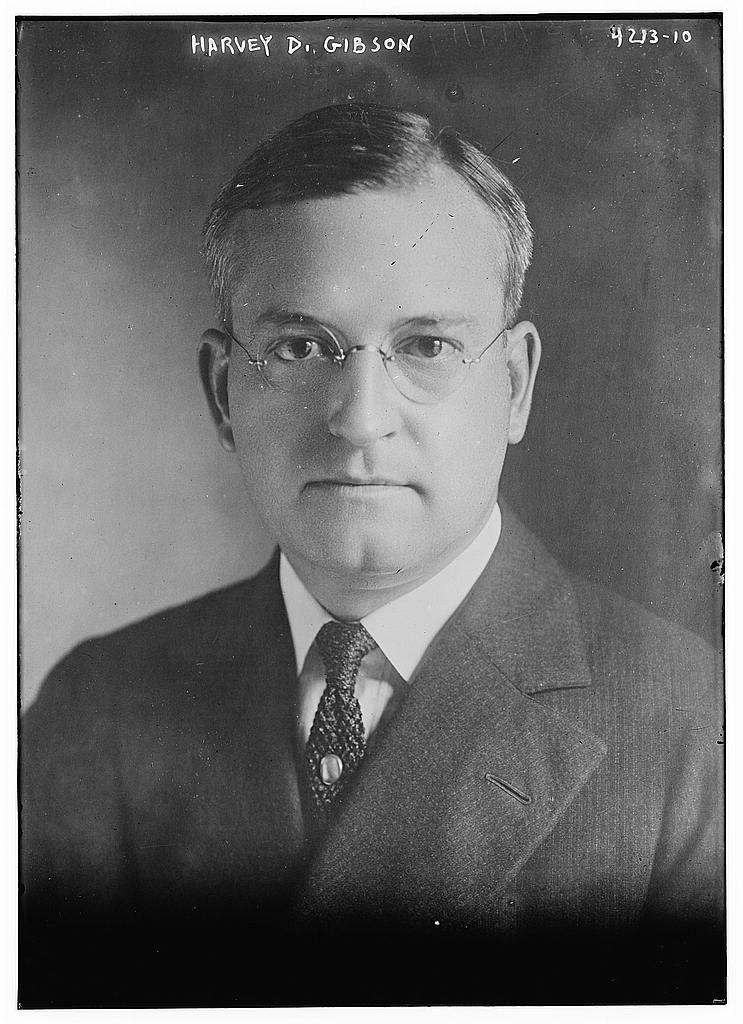
In December 1920, it was announced that the New York Trust Company, which was based at 24 Broad Street, would merge with Liberty National Bank of New York. Liberty, which had recently absorbed the Scandinavian Trust Company and was based out of the Equitable Building, had been formed in 1891. After the merger, Buckner succeeded Bannard as chairman of the board, and Harvey Dow Gibson, the former president of Liberty, became president of the New York Trust Company. Past presidents of Liberty included such prominent bankers as Henry P. Davison, Thomas Cochran, and Seward Prosser. The merged bank had capital of $10,000,000 and "undivided profits and surplus of nearly $20,000,000." It occupied offices that had been prepared for Liberty in the American Surety Company Building at 100 Broadway.
In 1921, the United States Supreme Court heard arguments on April 25 and 26, 1921, in New York Trust Co. v. Eisner, a case that involved the New York Trust Company as executors of the will of J. H. Purdy against M. Eisner. Justice Oliver Wendell Holmes Jr. delivered the opinion of the court on May 16, 1921, where the judgment was affirmed with costs.
In 1929, Artemus L. Gates succeeded Gibson as president of New York Trust, becoming "the youngest president of a large downtown New York bank." The 34-year-old Gates (who was the son-in-law of the late Henry P. Davison, a former Liberty National Bank president) had started his career in 1919 with Liberty National Bank, going to New York Trust after the 1920 merger and becoming a vice president in 1926. Gates became chairman of the executive committee, and Buckner remained chairman of the board of trustees.
As of June 30, 1941, New York Trust reported total assets of $694,659,000. In 1941, John E. Bierwirth succeeded Gates as president of New York Trust. Gates resigned the presidency after being appointed the Assistant Secretary of the Navy for Aeronautics by President Franklin D. Roosevelt.
In 1949, the New York Trust Company acquired the Fulton Trust Company of New York under the terms of a cash merger agreement involving a purchase price of $5,000,000 (i.e., $250 a share for 20,000 shares of Fulton Trust). Bierwith remained president of New York Trust, which had assets of $670,836,167, and Arthur J. Morris, the president of Fulton Trust (which had assets of $36,158,041), became a vice president of the new firm. Charles S. McVeigh, the chairman of Fulton Trust, and three other Fulton Trust trustees, namely Stephen C. Clark, Charles J. Nourse, and Walter N. Stillman, were added to the board of New York Trust, increasing it from eighteen members to twenty-two.
In late 1949, Bierwirth left New York Trust to assume the presidency of the National Distillers Products Corporation and was succeeded by Charles J. Stewart, who had been with New York Trust since 1930. Hulbert Aldrich served as director and president of the company from 1950 through 1959.
In 1952, the New York Trust Company management completed a merger deal with the Manufacturers Trust Company involving an exchange of 1 2/3 shares of Manufacturers Trust for each share of New York Trust. New York Trust president Charles J. Stewart was to have become president of Manufacturers Trust in the proposed merger, but New York Trust shareholders protested the arrangement as "not sufficiently rewarding and the agreement was dissolved." After the deal ended, Stewart resigned and shortly afterward became a general partner of the investment bank Lazard Frères & Company. In 1959, however, Stewart left Lazard Frères to become president of Manufacturers Trust Company, as had been proposed in 1952.
By 1958, the bank's largest shareholder was a holding company representing the Henry Phipps estate.
In 1959, the New York Trust Company, which was largely a wholesale institution, merged with the Chemical Corn Exchange Bank, became vice chairman of the board along with Gilbert H. Perkins, who held the post at Chemical Corn.
Notable personnel
- Charles S. Fairchild, president from 1889 to 1904 (former attorney general of New York and United States Secretary of the Treasury).
- Otto T. Bannard, president from 1904 to 1916 (who ran for mayor of New York in 1909 but lost).
- Mortimer N. Buckner, president from 1916 to 1921 (later president of the New York Clearing House).
- Harvey Dow Gibson, president from 1921 to 1929 (later president of the Manufacturers Trust Company).
- Artemus L. Gates, president from 1929 to 1941 (who became Assistant Secretary of the Navy for Aeronautics).
- John E. Bierwirth, president from 1941 to 1949 (who became president of the National Distillers Products Corporation).
- Charles J. Stewart, president from 1949 to 1952 (later president of the Manufacturers Hanover Trust)
- Hulbert S. Aldrich, president from 1952 to 1959.
- Alexander Stewart Webb, secretary in 1902, followed by vice president in 1904.
- James G. Blaine, vice president of the New York Trust Company (later president of the Fidelity Trust Company in 1926).
- Joseph A. Bower, vice president.
- Norman B. Ream, trustee.
References
;Notes
;Sources
References
- (June 15, 1959). "Helm at the Helm". [[Time magazine]].
- (1894). "The Laws of the State of New York, Relating to Banks, Banking and Trust Companies, Loan, Mortgage and Safe Deposit Corporations, Together with the Acts Affecting Monied Corporations Generally, Including the Statutory Construction Law, the General Corporation Law, and the Stock Corporation Law, Also the National Bank Act and Cognate United States Statutes, with Annotations". L. K. Strouse.
- (5 March 1889). "Mr. Fairchild's Trust Company.". [[The New York Times]].
- (2002). "History of Money and Banking in the United States: The Colonial Era to World War II, A". Ludwig von Mises Institute.
- (1904). "TRUST COMPANIES UNITE". Bradford-Rhodes & Company.
- (20 February 1904). "TRUSTEES APPROVE MERGER.; Plans to Combine Continental and New York Security and Trust Companies.". [[The New York Times]].
- (18 February 1904). "TRUST COMPANIES TO MERGE.; Charles S. Fairchild to be Board Chairman of the Combined Institution.". [[The New York Times]].
- (25 April 1903). "CONTINENTAL TRUST COMPANY'S MOVE.; Announces Withdrawal from the Clearing House Association.". [[The New York Times]].
- (19 February 1905). "Security and Trust's New Name.". [[The New York Times]].
- (20 January 1916). "BUCKNER N.Y. TRUST HEAD.; O.T. Bannard Chairman of the Board of the New Institution.". [[The New York Times]].
- (December 23, 1920). "N.Y.TRUST TO MERGE WITH LIBERTY BANK; Will Have Capital of $10,000,000; Undivided Profits and Surplus $20,000,000.BUCKNER BOARD CHAIRMAN Otto T. Bannard to Head Advisory Committee--Gibson Will Be President.". [[The New York Times]].
- (10 March 1921). "N.Y. TRUST BOARD NAMED.; Thirty Prominent Men Selected as Directors in Consolidation.". [[The New York Times]].
- "NEW YORK TRUST CO. et al. v. EISNER.". LII / Legal Information Institute.
- (17 May 1921). "U.S. Supreme Court.". [[The New York Times]].
- (13 June 1929). "A.L. GATES, 34, HEADS NEW YORK TRUST; Son-in-Law of the Late H.P. Davison Youngest President of Large Bank Here. CAME FROM IOWA IN 1919 Began His Banking Career With the Liberty, Which Joined Trust Company in 1921.". [[The New York Times]].
- (10 September 1941). "New York Trust Company Elects John E. Bierwirth to Presidency; Trustees Elevate Vice President to Post Vacated by Artemus L. Gates, Now in Aeronautical Position for the U.S. Navy". [[The New York Times]].
- (16 April 1931). "Appointments by New York Trust.". [[The New York Times]].
- (29 August 1941). "NAMES A.L. GATES TO NAVY AIR POST; President Picks Head of New York Trust Company for Assistant Secretary". [[The New York Times]].
- (29 July 1949). "TRUST COMPANIES WILL MERGE HERE; New York Will Absorb Fulton Under an Agreed Purchase Price of $5,000,000 $2.50 A SHARE TO HOLDERS Employment of Personnel of the Purchased Concern to Be Offered by Buyer". [[The New York Times]].
- (28 July 1949). "Plans Pushed for Merging Of Fulton Trust, N. Y. Trust; Latter Would Be Surviving Institution if Deal, Said to Be for Cash, Is Realized -- Former's Stock Is Active". [[The New York Times]].
- (31 August 1949). "New York Trust Co. Will Absorb Fulton". [[The New York Times]].
- (10 November 1949). "Leaves Bank Presidency To Head Liquor Concern". [[The New York Times]].
- Randy Kennedy. (January 9, 1995). "Hulbert Aldrich, 87; Banking Executive Led New York Trust". [[The New York Times]].
- (17 July 1987). "Charles Stewart Dies; An Ex-Bank Executive". [[The New York Times]].
- (9 January 1995). "Hulbert Aldrich, 87; Banking Executive Led New York Trust". [[The New York Times]].
- (3 June 1959). "Chemical Corn Exchange Bank And New York Trust Set Merger; MERGER PLANNED BY TWO BIG BANKS". [[The New York Times]].
- (25 November 1924). "CHAS. S. FAIRCHILD DIES IN 83D YEAR; Secretary of the Treasury in Cleveland's First Cabinet Succumbs Suddenly LAWYER AND FINANCIER As Counsel for the Constitutional League He Tried to Block the Suffrage Proclamation". [[The New York Times]].
- (17 January 1929). "Otto T. Bannard, Banker, Dies at Sea". The New York Times.
- (5 October 1932). "BUCKNER RENAMED BY CLEARING HOUSE; Again President of Association -- Davison Succeeds McCain as Committee Chairman. BUSINESS DECLINED IN YEAR Association Now Composed of Six National Banks, One State Bank and 14 Trust Companies.". [[The New York Times]].
- (4 January 1931). "H.D. GIBSON TO HEAD THE MANUFACTURERS IN NEW BANKING DEAL; New York Trust Executive and Associates Buy Goldman Sachs 32 Per Cent Interest. AND HE BECOMES PRESIDENT Working Control Passes to a Private Group Identified With Wall Street Leaders. STOCK ADVANCES SHARPLY At Present Market Value Purchase Would Have Involved About $12,500,000. Figured in Recent Merger Plan. Stock Advances 4 Points. H.D. GIBSON LEADER IN NEW BANK DEAL". [[The New York Times]].
- (January 24, 1948). "ALEXANDER WEBB, HEAD OF ASPCA, 77; Retired Financier, a Banking Executive Many Years, Dies -- Aided Humane Association". [[The New York Times]].
- (December 7, 1926). "James G. Blaine To Move. Will Leave New York Trust to Become President of Fidelity Trust". [[New York Times]].
- (September 5, 1925). "Kidnaps Little Girl In Montclair After Killing Auto Driver". [[New York Times]].
- (February 10, 1915). "Norman B. Ream Dead". The Wall Street Journal.
This article was imported from Wikipedia and is available under the Creative Commons Attribution-ShareAlike 4.0 License. Content has been adapted to SurfDoc format. Original contributors can be found on the article history page.
Ask Mako anything about New York Trust Company — get instant answers, deeper analysis, and related topics.
Research with MakoFree with your Surf account
Create a free account to save articles, ask Mako questions, and organize your research.
Sign up freeThis content may have been generated or modified by AI. CloudSurf Software LLC is not responsible for the accuracy, completeness, or reliability of AI-generated content. Always verify important information from primary sources.
Report