From Surf Wiki (app.surf) — the open knowledge base
New York City Department of Transportation
New York City government agency

New York City government agency
| Field | Value |
|---|---|
| agency_name | Department of Transportation |
| type | department |
| logo | NYCDOT.svg |
| formed | |
| preceding2 | |
| jurisdiction | New York City |
| headquarters | 55 Water Street |
| Manhattan, New York, NY | |
| coordinates | |
| employees | 5,243 (FY 2026) |
| budget | $1.53 billion (FY 2026) |
| chief1_name | Mike Flynn |
| chief1_position | Commissioner of Transportation |
| chief2_name | TBD |
| chief2_position | First Deputy Commissioner of Transportation |
| child2_agency | |
| keydocument1 | New York City Charter |
| website |
Manhattan, New York, NY
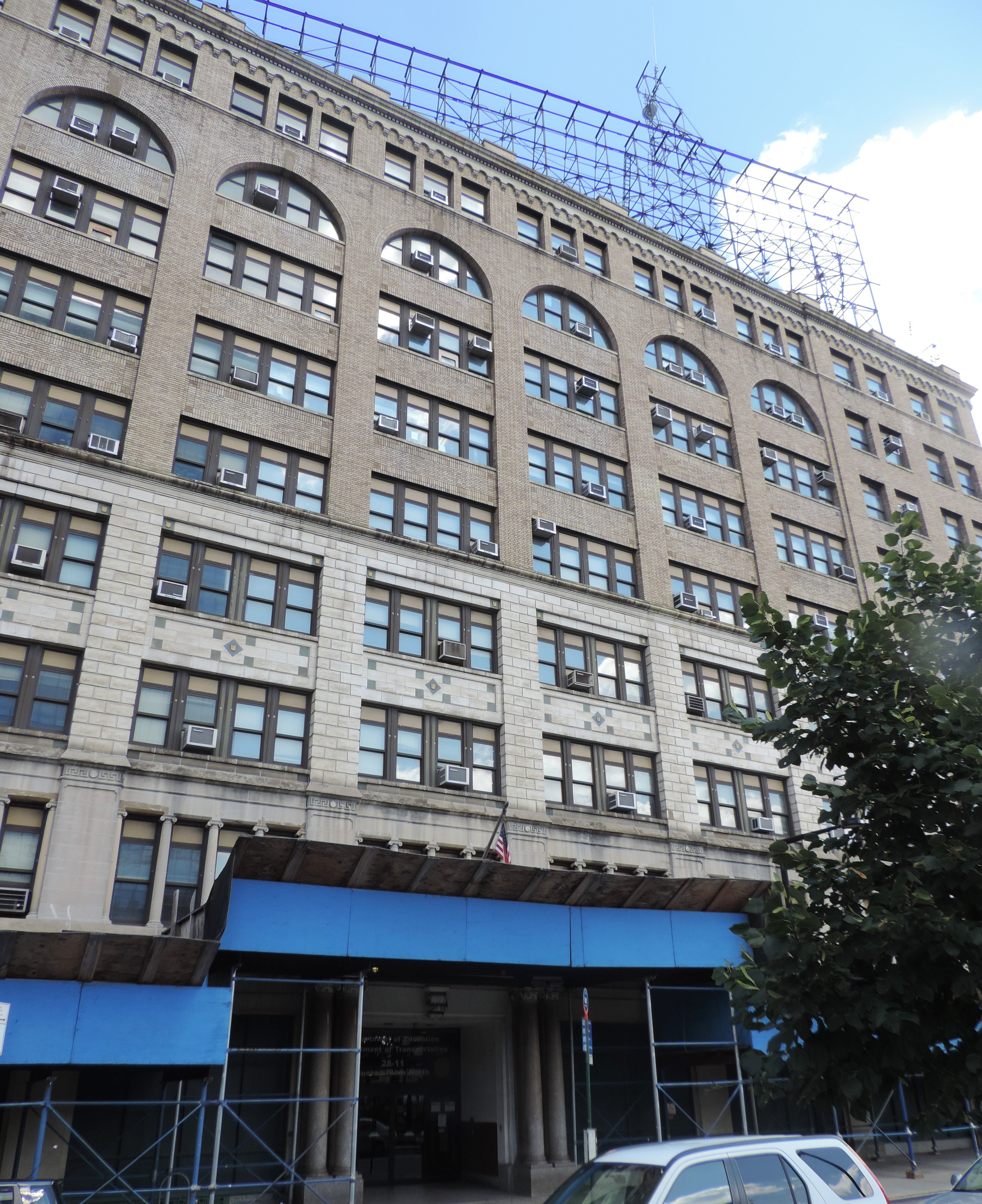
The New York City Department of Transportation (NYCDOT) is the agency of the government of New York City responsible for the management of much of New York City's transportation infrastructure. Mike Flynn is the Commissioner of the Department of Transportation, and was appointed by Mayor Zohran Mamdani on January 1, 2026. Former Commissioners have included Ydanis Rodriguez, Polly Trottenberg, Janette Sadik-Khan, and Iris Weinshall. The NYCDOT has a training center in eastern Queens.
Responsibilities
The Department of Transportation's responsibilities include day-to-day maintenance of the city's streets, highways, bridges, sidewalks, street signs, traffic signals, and street lights. DOT supervises street resurfacing, pothole repair, parking meter installation and maintenance, and municipal parking facility management. DOT also operates the Staten Island Ferry. DOT is the exclusive provider of day-to-day operations and maintenance on state-maintained roads and highways in city limits, while major repairs and capital improvements on state-owned roads are performed by the State DOT (NYSDOT). Both DOT and NYSDOT reserve the right to install signage, signals, and other roadway features on state highways, which then become maintained on a daily basis by DOT. DOT sets the speed limit on all roads and highways in the city, including those owned by NYSDOT.
DOT is also responsible for oversight of transportation-related issues, such as authorizing jitney van services and permits for street construction. DOT also advocates for transportation safety issues, including promotion of pedestrian and bicycle safety.
Its regulations are compiled in title 34 of the New York City Rules.
Traffic and street lights
The first traffic lights in New York City originated from traffic towers installed along Fifth Avenue in Manhattan in the 1910s. The first such towers were installed in 1920 and were replaced in 1929 by bronze traffic signals. , the DOT oversaw 12,460 intersections citywide with traffic lights. By 2017, the DOT controlled nearly 13,000 signalized intersections, almost all of which had pedestrian signals; of these, over half (7,507) had countdown timers for pedestrians. In addition, 635 signalized intersections under the DOT's control had exclusive pedestrian phases .
, the DOT maintained 548 accessible pedestrian signals for blind and visually impaired pedestrians. The first such signals were installed in 1957, but few accessible signals were added for the next half-century. the DOT plans to install these signals through 2031. All remaining intersections are planned to have accessible signals by 2036.
The DOT maintains 250,000 streetlamps . Most of them are LED lamps, installed between 2013 and 2018.
One of the larger groups of traffic restrictions implemented by the DOT is in Midtown Manhattan, where the DOT maintains a system of "thru streets" and split traffic-signal phases to prevent congestion on west–east streets.
Organization

- Commissioner of Transportation
- First Deputy Commissioner
- Sidewalk Inspection and Management
- Staten Island Ferry Service
- Bridges
- Transportation Planning & Management
- Roadway Repair and Maintenance
- Information Technology and Telecommunications
- Borough Commissioners
- Brooklyn Borough Commissioner
- Manhattan Borough Commissioner
- Bronx Borough Commissioner
- Queens Borough Commissioner
- Staten Island Borough Commissioner
- Policy
- External Affairs
- Finance, Contracting, and Program Management
- Human Resources and Facilities Management
- Legal
- First Deputy Commissioner
Management and budget
As of 2017, DOT had the budget and staff as follows:
| Division | Number of Employees | Budget (millions) |
|---|---|---|
| Executive | 598 | $116.8 |
| Highway Operations | 1492 | $277.8 |
| Transit Operations | 694 | $91.8 |
| Traffic Operations | 1418 | $353.3 |
| Bureau of Bridges | 858 | $106.3 |
| Total | 5060 | $943.3 |
Bridges
The DOT operates 794 roadway and pedestrian bridges throughout New York City, including 25 movable bridges. The agency's portfolio includes most of the East River and Harlem River bridges, as well as smaller bridges throughout the city. DOT operates two retractable bridges (the Borden Avenue and Carroll Street bridges). Other agencies that operate road bridges in New York include the MTA, the PANYNJ, and the NYSDOT.
East River bridges:
- Brooklyn Bridge
- Manhattan Bridge
- Williamsburg Bridge
- Queensboro Bridge
- Roosevelt Island Bridge
- Wards Island Bridge Harlem River bridges:
- Willis Avenue Bridge
- Third Avenue Bridge
- Madison Avenue Bridge
- 145th Street Bridge
- Macombs Dam Bridge
- Washington Bridge
- University Heights Bridge
- Broadway Bridge
References
References
- (December 2025). "Fiscal 2026-2029 November Plan".
- [[New York City Charter]] § 2901; "There shall be a department of transportation, the head of which shall be the commissioner of transportation."
- (January 1, 2026). "Mamdani Names Transportation Chief With Job of Making Buses Fast and Free".
- Gray, Christopher. (2014-05-16). "A History of New York Traffic Lights". The New York Times.
- Gray, Christopher. (1997-02-02). "Mystery of 104 Bronze Statues of Mercury". The New York Times.
- (January 1, 1980). "NYC DOT - Infrastructure - Traffic Signals". New York City Department of Transportation.
- Hu, Winnie. (November 24, 2017). "Giving Pedestrians a Head Start Crossing Streets". The New York Times.
- (October 2017). "Walk This Way Exclusive Pedestrian Signal Phase Treatments Study". New York City Department of Transportation.
- (December 2019). "Accessible Pedestrian Signals Program Status Report". New York City Department of Transportation.
- "NYC DOT - City Unveils State of the Art Pedestrian Signal for Visually Impaired Staten Islanders".
- Watkins, Ali. (December 27, 2021). "Why New York City May Soon Be More Walkable for Blind People". The New York Times.
- Rivoli, Dan. (December 29, 2021). "Judge to city: Install more crosswalk signals for visually impaired".
- Hernandez, Estefania. (March 18, 2022). "DOT plans to install 900 accessible pedestrian signals".
- Chung, Jen. (March 18, 2022). "DOT to install 500 accessible pedestrian signals at intersections next year".
- (January 1, 1980). "NYC DOT - Street Lights". New York City Department of Transportation.
- Pereira, Ivan. (September 26, 2017). "LED streetlight conversion in NYC more than 70%".
- Steinhauer, Jennifer. (October 1, 2002). "Turns From Midtown Streets Will Be Banned on Weekdays". The New York Times.
- [http://www.nyc.gov/html/omb/downloads/pdf/erc6-16.pdf FY 2017 City Budget], page 334E, New York City Office of Management and Budget
- (2011). "Annual Bridge and Tunnel Condition Report 2011". NYC DOT.
This article was imported from Wikipedia and is available under the Creative Commons Attribution-ShareAlike 4.0 License. Content has been adapted to SurfDoc format. Original contributors can be found on the article history page.
Ask Mako anything about New York City Department of Transportation — get instant answers, deeper analysis, and related topics.
Research with MakoFree with your Surf account
Create a free account to save articles, ask Mako questions, and organize your research.
Sign up freeThis content may have been generated or modified by AI. CloudSurf Software LLC is not responsible for the accuracy, completeness, or reliability of AI-generated content. Always verify important information from primary sources.
Report