From Surf Wiki (app.surf) — the open knowledge base
Net neutrality
Principle that Internet service providers should treat all data equally

Principle that Internet service providers should treat all data equally
- ]]
Net neutrality, sometimes referred to as network neutrality, is the principle that Internet service providers (ISPs) must treat all Internet communications equally, offering users and online content providers consistent transfer rates regardless of content, website, platform, application, type of equipment, source address, destination address, or method of communication (i.e., without price discrimination). Net neutrality was advocated for in the 1990s by the presidential administration of Bill Clinton in the United States. Clinton signed the Telecommunications Act of 1996, an amendment to the Communications Act of 1934. In 2025, an American court ruled that Internet companies should not be regulated like utilities, which weakened net neutrality regulation and put the decision in the hands of the United States Congress and state legislatures.
Supporters of net neutrality argue that it prevents ISPs from filtering Internet content without a court order, fosters freedom of speech and democratic participation, promotes competition and innovation, prevents dubious services, and maintains the end-to-end principle, and that users would be intolerant of slow-loading websites. Opponents argue that it reduces investment, deters competition, increases taxes, imposes unnecessary regulations, prevents the Internet from being accessible to lower-income individuals, and prevents Internet traffic from being allocated to the most needed users, that large ISPs already have a performance advantage over smaller providers, and that there is already significant competition among ISPs with few competitive issues.
Etymology
The term was coined by Columbia University media law professor Tim Wu in 2003 as an extension of the longstanding concept of a common carrier which was used to describe the role of telephone systems.
Regulatory considerations
Net neutrality regulations may be referred to as common carrier regulations. Net neutrality does not block all abilities that ISPs have to impact their customers' services. Opt-in and opt-out services exist on the end user side, and filtering can be done locally, as in the filtering of sensitive material for minors.
Research suggests that a combination of policy instruments can help realize the range of valued political and economic objectives central to the network neutrality debate. Combined with public opinion, this has led some governments to regulate broadband Internet services as a public utility, similar to the way electricity, gas, and the water supply are regulated, along with limiting providers and regulating the options those providers can offer.
Proponents of net neutrality, which include computer science experts, internet policy experts, and several non-profit organizations, and Internet content providers, assert that net neutrality helps to provide freedom of information exchange, promotes competition and innovation for Internet services, and upholds standardization of Internet data transmission which was essential for its growth.
Opponents of net neutrality, which include ISPs, computer hardware manufacturers, economists, technologists and telecommunications equipment manufacturers, argue that net neutrality requirements would reduce their incentive to build out the Internet and reduce competition in the marketplace, and may raise their operating costs, which they would have to pass along to their users.
Issues
Discrimination by protocol
Discrimination by protocol is the favoring or blocking of information based on aspects of the communications protocol that the computers are using. In the US, a complaint was filed with the Federal Communications Commission (FCC) against the cable provider Comcast alleging they had illegally inhibited users of its high-speed Internet service from using the popular file-sharing software BitTorrent. Comcast admitted no wrongdoing in its proposed settlement of up to per share in December 2009. However, a U.S. appeals court ruled in April 2010 that the FCC exceeded its authority when it sanctioned Comcast in 2008. However, the FCC spokeswoman Jen Howard responded, "The court in no way disagreed with the importance of preserving a free and open Internet, nor did it close the door to other methods for achieving this important end." Despite the ruling in favor of Comcast, a study by Measurement Lab in October 2011 verified that Comcast had virtually stopped its BitTorrent throttling practices.
Discrimination by Internet Protocol (IP) address
During the 1990s, creating a non-neutral Internet was technically infeasible. Originally developed to filter harmful malware, the Internet security company NetScreen Technologies released network firewalls in 2003 with so-called deep packet inspection capabilities. Deep packet inspection helped make real-time discrimination between different kinds of data possible, and is often used for Internet censorship.
One criticism regarding discrimination is that the system set up by ISPs for this purpose is capable of not only discriminating but also scrutinizing the full-packet content of communications. For instance, deep packet inspection technology installs intelligence within the lower layers of the network to discover and identify the source, type, and destination of packets, revealing information about packets traveling in the physical infrastructure so it can dictate the quality of transport such packets will receive. This is seen as an architecture of surveillance, one that can be shared with intelligence agencies, copyrighted content owners, and civil litigants, exposing the users' secrets in the process.
In a practice called zero-rating, companies will not invoice data use related to certain IP addresses, favoring the use of those services. Examples include Facebook Zero, Wikipedia Zero, and Google Free Zone. These zero-rating practices are especially common in the developing world. Aside from the zero-rating method, ISPs will also use certain strategies to reduce the costs of pricing plans such as the use of sponsored data. In a scenario where a sponsored data plan is used, a third party will step in and pay for all the content that it (or the carrier or consumer) does not want around. This is generally used as a way for ISPs to remove out-of-pocket costs from subscribers.
Sometimes ISPs will charge some companies, but not others, for the traffic they cause on the ISP's network. French telecom operator Orange, complaining that traffic from YouTube and other Google sites consist of roughly 50% of total traffic on the Orange network, made a deal with Google, in which they charge Google for the traffic incurred on the Orange network. Some also thought that Orange's rival ISP Free throttled YouTube traffic. However, an investigation done by the French telecommunications regulatory body revealed that the network was simply congested during peak hours.
Favoring private networks
Proponents of net neutrality argue that without new regulations, Internet service providers would be able to profit from and favor their own private networks and that ISPs would be able to pick and choose who they offer a greater bandwidth to. If one website or company is able to afford more, they will go with them. This especially stifles private up-and-coming businesses.
ISPs are able to encourage the use of specific services by using private networks to discriminate what data is counted against bandwidth caps. For example, Comcast struck a deal with Microsoft that allowed users to stream television through the Xfinity app on their Xbox 360s without it affecting their bandwidth limit. However, using other television streaming apps, such as Netflix, HBO Go, and Hulu, counted towards the limit. Comcast denied that this infringed on net neutrality principles since "it runs its Xfinity for Xbox service on its own, private Internet protocol network." In 2009, when AT&T was bundling iPhone 3G with its 3G network service, the company placed restrictions on which iPhone applications could run on its network.
According to net neutrality proponents, this capitalization on which content producers ISPs can favor would ultimately lead to fragmentation, where some ISPs would have certain content that is not necessarily present in the networks offered by other ISPs. The danger behind fragmentation, as viewed by proponents of net neutrality, is the concept that there could be multiple Internets, where some ISPs offer exclusive Internet applications or services or make it more difficult to gain access to Internet content that may be more easily viewable through other Internet service providers. An example of a fragmented service would be television, where some cable providers offer exclusive media from certain content providers.
However, in theory, allowing ISPs to favor certain content and private networks would overall improve Internet services since they would be able to recognize packets of information that are more time-sensitive and prioritize that over packets that are not as sensitive to latency. The issue, as explained by Robin S. Lee and Tim Wu, is that there are literally too many ISPs and Internet content providers around the world to reach an agreement on how to standardize that prioritization. A proposed solution would be to allow all online content to be accessed and transferred freely, while simultaneously offering a fast lane for a preferred service that does not discriminate on the content provider.
Peering discrimination
There is disagreement about whether peering is a net neutrality issue. In the first quarter of 2014, streaming website Netflix reached an arrangement with ISP Comcast to improve the quality of its service to Netflix clients with a peering agreement whereby Netflix delivered data directly to the Comcast network. This arrangement was made in response to increasingly slow connection speeds through Comcast over the course of 2013, where average speeds dropped by over 25% of their values a year before to an all-time low. After the deal was struck in January 2014, the Netflix speed index recorded a 66% increase. Netflix agreed to a similar deal with Verizon in 2014, after Verizon DSL customers' connection speed dropped to less than 1 Mbit/s early in the year. Netflix spoke out against this deal with a controversial statement delivered to all Verizon customers experiencing low connection speeds, using the Netflix client. This sparked an internal debate between the two companies that led to Verizon's obtaining a cease and desist order on 5 June 2014, that forced Netflix to stop displaying this message.
Favoring fast-loading websites
Pro-net neutrality arguments have also noted that regulations are necessary due to research showing low tolerance to slow-loading content providers. In a 2009 research study conducted by Forrester Research, online shoppers expected the web pages they visited to download content instantly. When a page fails to load at the expected speed, many of them simply abandon their visit. A study found that even a one-second delay could lead to "11% fewer page views, a 16% decrease in customer satisfaction, and 7% loss in conversions." This delay can cause a severe problem to small innovators who have created new technology. If a website is slow by default, the general public will lose interest and favor a website that runs faster. This helps large corporations maintain dominance because they have the means to fund faster Internet speeds. On the other hand, smaller competitors without the same financial means find it harder for them to succeed in the online world.
Legal aspects
Main article: Net neutrality law
Legal enforcement of net neutrality principles takes a variety of forms, from provisions that outlaw anti-competitive blocking and throttling of Internet services, all the way to legal enforcement that prevents companies from subsidizing Internet use on particular sites. Contrary to popular rhetoric and statements by various individuals involved in the ongoing academic debate, research suggests that a single policy instrument (such as a no-blocking policy or a quality of service tiering policy) cannot achieve the range of valued political and economic objectives central to the debate. As Bauer and Obar suggest, "safeguarding multiple goals requires a combination of instruments that will likely involve government and nongovernment measures. Furthermore, promoting [rights and] goals such as the freedom of speech, political participation, investment, and innovation calls for complementary policies."
By country
Main article: Net neutrality by country
Net neutrality is administered on a national or regional basis, though much of the world's focus has been on the conflict over net neutrality in the United States. Net neutrality in the US has been a topic since the early 1990s, as they were one of the world leaders in providing online services. However, they face the same problems as the rest of the world.
In 2019, the Save the Internet Act to "guarantee broadband internet users equal access to online content" was passed by the US House of Representatives but not by the US Senate. Finding an appropriate solution by creating more regulations for ISPs has been a major work in progress. Net neutrality rules were repealed in the US in 2017 during the first Trump administration and subsequent appeals upheld the repeal, until the FCC voted to reinstate them in 2024. On 2 January 2025, however, "a US appeals court...ruled the Federal Communications Commission did not have the legal authority to reinstate landmark net neutrality rules."
Governments of countries that comment on net neutrality usually support the concept.
United States
Main article: Net neutrality in the United States
Net neutrality in the United States has been a point of conflict between network users and service providers since the 1990s. Much of the conflict over net neutrality arises from how Internet services are classified by the FCC under the authority of the Communications Act of 1934. The FCC would have significant ability to regulate ISPs should Internet services be treated as a Title II "common carrier service". The ISPs would be mostly unrestricted by the FCC if Internet services fell under Title I "information services". In 2009, the United States Congress passed the American Recovery and Reinvestment Act, which granted a stimulus of $2.88 billion for extending broadband services into certain areas of the United States. It was intended to make the Internet more accessible for underserved areas, and aspects of net neutrality and open access were written into the grant. However, the bill never set any significant precedents for net neutrality or influenced future legislation relating to net neutrality.
Until 2017, the FCC had generally been favorable towards net neutrality, treating ISPs under Title II common carrier. With the onset of the Presidency of Donald Trump in 2017, and the appointment of Ajit Pai, an opponent of net neutrality, as chairman of the FCC, the FCC has reversed many previous net neutrality rulings and reclassified Internet services as Title I information services. The FCC's decisions have been a matter of several ongoing legal challenges by both states supporting net neutrality, and ISPs challenging it. The United States Congress has attempted but failed to pass legislation supporting net neutrality. In 2018, a bill cleared the U.S. Senate, with Republicans Lisa Murkowski, John Kennedy, and Susan Collins joining all 49 Democrats, but the House majority denied the bill a hearing. Individual states have been trying to pass legislation to make net neutrality a requirement within their state, overriding the FCC's decision. California has successfully passed its own net neutrality act, which the United States Department of Justice challenged. On 8 February 2021, the U.S. Justice Department withdrew its challenge to California's data protection law. Federal Communications Commission acting chairwoman Jessica Rosenworcel voiced support for an open Internet and restoring net neutrality. Vermont, Colorado, and Washington, among other states, have also enacted net neutrality.
On 19 October 2023, the FCC voted 3–2 to approve a Notice of Proposed Rulemaking (NPRM) that seeks comments on a plan to restore net neutrality rules and regulation of Internet service providers. On 25 April 2024, the FCC voted 3–2 to reinstate net neutrality in the United States by reclassifying the Internet under Title II. However, legal challenges immediately filed by ISPs resulted in an appeals court issuing an order that stays the net neutrality rules until the court makes a final ruling, while issuing the opinion that the ISPs will likely prevail over the FCC on the merits. On 2 January 2025, net neutrality rules, were in fact struck down by US Court of Appeals for the Sixth Circuit in MCP No. 185. According to the ruling, federal law shows that broadband must be classified as information services and not the more heavily regulated telecommunications service, the FCC said it was when it adopted the rules in April 2024 and the FCC lacked the authority to impose its rules on the broadband providers. According to Bloomberg News, the Sixth Circuit's ruling is "one of the highest-profile examples" so far of an appeals court exercising the expanded authority following Loper Bright Enters. v. Raimondo, which overturned a doctrine that had supported agency interpretations of ambiguous laws. The court also rejected a similar FCC classification for mobile broadband providers.
Canada
Net neutrality in Canada is a debated issue in that nation, but not to the degree of partisanship in other nations such as the United States in part because of its federal regulatory structure and pre-existing supportive laws that were enacted decades before the debate arose. In Canada, ISPs generally provide Internet service in a neutral manner. Some notable incidents otherwise have included Bell Canada's throttling of certain protocols and Telus's censorship of a specific website supporting striking union members. In the case with Bell Canada, the debate for net neutrality became a more popular topic when it was revealed that they were throttling traffic by limiting people's accessibility to view Canada's Next Great Prime Minister, which eventually led to the Canadian Association of Internet Providers (CAIP) demanding the Canadian Radio-Television and Telecommunications Commission (CRTC) to take action on preventing the throttling of third-party traffic. On 22 October 2009, the CRTC issued a ruling about Internet traffic management, which favored adopting guidelines that were suggested by interest groups such as OpenMedia.ca and the Open Internet Coalition. However, the guidelines set in place require citizens to file formal complaints proving that their Internet traffic is being throttled, and as a result, some ISPs still continue to throttle the Internet traffic of their users.
India
Main article: Net neutrality in India
In the year 2018, the Indian Government unanimously approved new regulations supporting net neutrality. The regulations are considered to be the "world's strongest" net neutrality rules, guaranteeing free and open Internet for nearly half a billion people, and are expected to help the culture of startups and innovation. The only exceptions to the rules are new and emerging services like autonomous driving and tele-medicine, which may require prioritized Internet lanes and faster than normal speeds.
China
Net neutrality in China is not enforced, and ISPs in China play important roles in regulating the content that is available domestically on the Internet. There are several ISPs filtering and blocking content at the national level, preventing domestic Internet users from accessing certain sites or services or foreign Internet users from gaining access to domestic web content. This filtering technology is referred to as the Great Firewall, or GFW.
In an article published by the Cambridge University Press, they observed the political environment with net neutrality in China. Chinese ISPs have become a way for the country to control and restrict information rather than providing neutral Internet content for those who use the Internet.
Philippines
Net neutrality in the Philippines is not enforced. Mobile Internet providers like Globe Telecom and Smart Communications commonly offer data package promos tied to specific applications, games or websites like Facebook, Instagram, and TikTok.
In the mid-2010s, Philippine telcos came under fire from the Department of Justice for throttling the bandwidth of subscribers of unlimited data plans if the subscribers exceeded arbitrary data caps imposed by the telcos under a supposed "fair use policy" on their "unlimited" plans. Certain adult sites like Pornhub, Redtube, and XTube have also been blocked by some Philippine ISPs at the request of the Philippine National Police to the National Telecommunications Commission, even without the necessary court orders required by the Supreme Court of the Philippines.
Support
Proponents of net neutrality regulations include consumer advocates, human rights organizations such as Article 19, online companies and some technology companies. Net neutrality tends to be supported by those on the political left, while opposed by those on the political right.
Many major Internet application companies are advocates of neutrality, such as eBay, Amazon, Netflix, Reddit, Microsoft, Twitter, Etsy, IAC Inc., Yahoo!, Vonage, and Cogent Communications. In September 2014, an online protest known as Internet Slowdown Day took place to advocate for the equal treatment of Internet traffic. Notable participants included Netflix and Reddit.
Consumer Reports, the Open Society Foundations along with several civil rights groups, such as the ACLU, the Electronic Frontier Foundation, Free Press, SaveTheInternet, and Fight for the Future support net neutrality.
Individuals who support net neutrality include World Wide Web inventor Tim Berners-Lee, Vinton Cerf, Lawrence Lessig, Robert W. McChesney, Steve Wozniak, Susan P. Crawford, Marvin Ammori, Ben Scott, David Reed, and former U.S. president Barack Obama. On 10 November 2014, Obama recommended that the FCC reclassify broadband Internet service as a telecommunications service to preserve net neutrality. On 31 January 2015, AP News reported that the FCC will present the notion of applying ("with some caveats") Title II (common carrier) of the Communications Act of 1934 and section 706 of the Telecommunications act of 1996 to the Internet in a vote expected on 26 February 2015.
Control of data
Supporters of net neutrality in the United States want to designate cable companies as common carriers, which would require them to allow ISPs free access to cable lines, the same model used for dial-up Internet. They want to ensure that cable companies cannot screen, interrupt or filter Internet content without a court order. Common carrier status would give the FCC the power to enforce net neutrality rules. SaveTheInternet.com accuses cable and telecommunications companies of wanting the role of gatekeepers, being able to control which websites load quickly, load slowly, or do not load at all. According to SaveTheInternet.com, these companies want to charge content providers who require guaranteed speedy data deliveryto create advantages for their own search engines, Internet phone services, and streaming video servicesand slowing access or blocking access to those of competitors. Vinton Cerf, a co-inventor of the Internet Protocol and current vice president of Google, argues that the Internet was designed without any authorities controlling access to new content or new services. He concludes that the principles responsible for making the Internet such a success would be fundamentally undermined were broadband carriers given the ability to affect what people see and do online. Cerf has also written about the importance of looking at problems like Net Neutrality through a combination of the Internet's layered system and the multistakeholder model that governs it. He shows how challenges can arise that can implicate Net Neutrality in certain infrastructure-based cases, such as when ISPs enter into exclusive arrangements with large building owners, leaving the residents unable to exercise any choice in broadband provider.
Digital rights and freedoms
Proponents of net neutrality argue that a neutral net will foster free speech and lead to further democratic participation on the Internet. Former Senator Al Franken from Minnesota fears that without new regulations, the major Internet Service Providers will use their position of power to stifle people's rights. He calls net neutrality the "First Amendment issue of our time." The past two decades has been an ongoing battle of ensuring that all people and websites have equal access to an unrestricted platform, regardless of their ability to pay, proponents of net neutrality wish to prevent the need to pay for speech and the further centralization of media power. Lawrence Lessig and Robert W. McChesney argue that net neutrality ensures that the Internet remains a free and open technology, fostering democratic communication. Lessig and McChesney go on to argue that the monopolization of the Internet would stifle the diversity of independent news sources and the generation of innovative and novel web content.
User intolerance for slow-loading sites
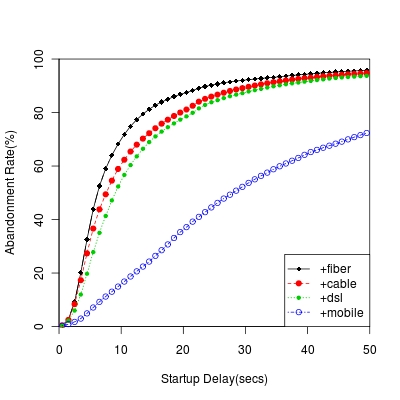
Competition and innovation
Net neutrality advocates argue that allowing cable companies the right to demand a toll to guarantee quality or premium delivery would create an exploitative business model based on the ISPs position as gatekeepers. Advocates warn that by charging websites for access, network owners may be able to block competitor Web sites and services, as well as refuse access to those unable to pay. According to Tim Wu, cable companies plan to reserve bandwidth for their own television services, and charge companies a toll for priority service. Proponents of net neutrality argue that allowing for preferential treatment of Internet traffic, or tiered service, would put newer online companies at a disadvantage and slow innovation in online services. Tim Wu argues that, without network neutrality, the Internet will undergo a transformation from a market ruled by innovation to one ruled by deal-making. SaveTheInternet.com argues that net neutrality puts everyone on equal terms, which helps drive innovation. They claim it is a preservation of the way the Internet has always operated, where the quality of websites and services determined whether they succeeded or failed, rather than deals with ISPs. Lawrence Lessig and Robert W. McChesney argue that eliminating net neutrality would lead to the Internet resembling the world of cable TV, so that access to and distribution of content would be managed by a handful of massive, near monopolistic companies, though there are multiple service providers in each region. These companies would then control what is seen as well as how much it costs to see it. Speedy and secure Internet use for such industries as healthcare, finance, retailing, and gambling could be subject to large fees charged by these companies. They further explain that a majority of the great innovators in the history of the Internet started with little capital in their garages, inspired by great ideas. This was possible because the protections of net neutrality ensured limited control by owners of the networks, maximal competition in this space, and permitted innovators from outside access to the network. Internet content was guaranteed a free and highly competitive space by the existence of net neutrality. For example, back in 2005, YouTube was a small startup company. Due to the absence of Internet fast lanes, YouTube had the ability to grow larger than Google Video. Tom Wheeler and Senators Ronald Lee Wyden (D-Ore.) and Al Franken (D-Minn.) said, "Internet service providers treated YouTube's videos the same as they did Google's, and Google couldn't pay the ISPs [Internet service providers] to gain an unfair advantage, like a fast lane into consumers' homes," they wrote. "Well, it turned out that people liked YouTube a lot more than Google Video, so YouTube thrived."
The lack of competition among internet providers has been cited as a major reason to support net neutrality. The loss of net neutrality in 2017 in the U.S. increased the calls for public broadband.
Preserving Internet standards
Net neutrality advocates have sponsored legislation claiming that authorizing incumbent network providers to override transport and application layer separation on the Internet would signal the decline of fundamental Internet standards and international consensus authority. Further, the legislation asserts that bit-shaping the transport of application data will undermine the transport layer's designed flexibility.
End-to-end principle
Some advocates say network neutrality is needed to maintain the end-to-end principle. According to Lawrence Lessig and Robert W. McChesney, all content must be treated the same and must move at the same speed for net neutrality to be true. They say that it is this simple but brilliant end-to-end aspect that has allowed the Internet to act as a powerful force for economic and social good. Under this principle, a neutral network is a dumb network, merely passing packets regardless of the applications they support. This point of view was expressed by David S. Isenberg in his paper, The Rise of the Stupid Network. He states that the vision of an intelligent network is being replaced by a new network philosophy and architecture in which the network is designed for always-on use, not intermittence and scarcity. Rather than intelligence being designed into the network itself, the intelligence would be pushed out to the end-user devices; and the network would be designed simply to deliver bits without fancy network routing or smart number translation. The data would be in control, telling the network where it should be sent. End-user devices would then be allowed to behave flexibly, as bits would essentially be free and there would be no assumption that the data is of a single data rate or data type.
Contrary to this idea, the research paper titled End-to-end arguments in system design by Saltzer, Reed, and Clark argues that network intelligence does not relieve end systems of the requirement to check inbound data for errors and to rate-limit the sender, nor for wholesale removal of intelligence from the network core.
Criticism
Opponents of net neutrality regulations include ISPs, broadband and telecommunications companies, computer hardware manufacturers, economists, and notable technologists.
Many of the major hardware and telecommunications companies specifically oppose the reclassification of broadband as a common carrier under Title II. Corporate opponents of this measure include Comcast, AT&T, Verizon, IBM, Intel, Cisco, Nokia, Qualcomm, Broadcom, Juniper, D-Link, Wintel, Alcatel-Lucent, Corning, Panasonic, Ericsson, Oracle, Akamai, and others. The US Telecom and Broadband Association, which represents a diverse array of small and large broadband providers, is also an opponent. A 2006 campaign against net neutrality was funded by AT&T and members included BellSouth, Alcatel, Cingular, and Citizens Against Government Waste.
Nobel Memorial Prize-winning economist Gary Becker's paper titled, "Net Neutrality and Consumer Welfare", published by the Journal of Competition Law & Economics, argues that claims by net neutrality proponents "do not provide a compelling rationale for regulation" because there is "significant and growing competition" among broadband access providers. Google chairman Eric Schmidt states that, while Google views that similar data types should not be discriminated against, it is okay to discriminate across different data types—a position that both Google and Verizon generally agree on, according to Schmidt. According to the Journal, when President Barack Obama announced his support for strong net neutrality rules late in 2014, Schmidt told a top White House official the president was making a mistake. Google once strongly advocated net-neutrality–like rules prior to 2010, but their support for the rules has since diminished; the company however still remains "committed" to net neutrality.
Individuals who opposed net neutrality rules include Bob Kahn, Marc Andreessen, Scott McNealy, Peter Thiel and Max Levchin, David Farber, David Clark, Louis Pouzin, MIT Media Lab co-founder Nicholas Negroponte, Rajeev Suri, Jeff Pulver, Mark Cuban, Robert Pepper and former FCC chairman Ajit Pai.
Nobel Prize laureate economists who opposed net neutrality rules include Princeton economist Angus Deaton, Chicago economist Richard Thaler, MIT economist Bengt Holmström, and the late Chicago economist Gary Becker. Others include MIT economists David Autor, Amy Finkelstein, and Richard Schmalensee; Stanford economists Raj Chetty, Darrell Duffie, Caroline Hoxby, and Kenneth Judd; Harvard economist Alberto Alesina; Berkeley economists Alan Auerbach and Emmanuel Saez; and Yale economists William Nordhaus, Joseph Altonji and Pinelopi Goldberg.
Some civil rights groups, such as the National Urban League, Jesse Jackson's Rainbow/PUSH, and League of United Latin American Citizens, also opposed Title II net neutrality regulations, citing concerns over stifling investment in underserved areas.
The Wikimedia Foundation, which runs Wikipedia, told The Washington Post in 2014 that it had a "complicated relationship" with net neutrality. The organization partnered with telecommunications companies to provide free access to Wikipedia for people in developing countries, under a program called Wikipedia Zero, without requiring mobile data to access information. The concept is known as zero rating. Said Wikimedia Foundation officer Gayle Karen Young, "Partnering with telecom companies in the near term, it blurs the net neutrality line in those areas. It fulfills our overall mission, though, which is providing free knowledge."
Farber has written and spoken strongly in favor of continued research and development on core Internet protocols. He joined academic colleagues Michael Katz, Christopher Yoo, and Gerald Faulhaber in an op-ed for The Washington Post critical of network neutrality, stating that while the Internet is in need of remodeling, congressional action aimed at protecting the best parts of the current Internet could interfere with efforts to build a replacement.
Reduction in investment
According to a letter to FCC commissioners and key congressional leaders sent by 60 major ISP technology suppliers including IBM, Intel, Qualcomm, and Cisco, Title II regulation of the Internet "means that instead of billions of broadband investment driving other sectors of the economy forward, any reduction in this spending will stifle growth across the entire economy. This is not idle speculation or fear mongering...Title II is going to lead to a slowdown, if not a hold, in broadband build out, because if you don't know that you can recover on your investment, you won't make it." According to the Wall Street Journal, in one of Google's few lobbying sessions with FCC officials, the company urged the agency to craft rules that encourage investment in broadband Internet networks—a position that mirrors the argument made by opponents of strong net neutrality rules, such as AT&T and Comcast. Opponents of net neutrality argue that prioritization of bandwidth is necessary for future innovation on the Internet. Telecommunications providers such as telephone and cable companies, and some technology companies that supply networking gear, argue telecom providers should have the ability to provide preferential treatment in the form of tiered services, for example by giving online companies willing to pay the ability to transfer their data packets faster than other Internet traffic. The added income from such services could be used to pay for the building of increased broadband access to more consumers.
Opponents say that net neutrality would make it more difficult for ISPs and other network operators to recoup their investments in broadband networks. John Thorne, senior vice president and deputy general counsel of Verizon, a broadband and telecommunications company, has argued that they will have no incentive to make large investments to develop advanced fibre-optic networks if they are prohibited from charging higher preferred access fees to companies that wish to take advantage of the expanded capabilities of such networks. Thorne and other ISPs have accused Google and Skype of freeloading or free riding for using a network of lines and cables the phone company spent billions of dollars to build. Marc Andreessen states that "a pure net neutrality view is difficult to sustain if you also want to have continued investment in broadband networks. If you're a large telco right now, you spend on the order of $20 billion a year on capex [capital expenditure]. You need to know how you're going to get a return on that investment. If you have these pure net neutrality rules where you can never charge a company like Netflix anything, you're not ever going to get a return on continued network investment – which means you'll stop investing in the network. And I would not want to be sitting here 10 or 20 years from now with the same broadband speeds we're getting today."
Proponents of net neutrality regulations say network operators have continued to under-invest in infrastructure. However, according to Copenhagen Economics, U.S. investment in telecom infrastructure is 50 percent higher than in the European Union. As a share of GDP, the United States' broadband investment rate per GDP trails only the UK and South Korea slightly, but exceeds Japan, Canada, Italy, Germany, and France sizably. On broadband speed, Akamai reported that the US trails only South Korea and Japan among its major trading partners, and trails only Japan in the G-7 in both average peak connection speed and percentage of the population connection at 10 Mbit/s or higher, but are substantially ahead of most of its other major trading partners.
The White House reported in June 2013 that U.S. connection speeds are "the fastest compared to other countries with either a similar population or land mass." Akamai's report on "The State of the Internet" in the 2nd quarter of 2014 says "a total of 39 states saw 4K readiness rate more than double over the past year." In other words, as ZDNet reports, those states saw a major increase in the availability of the 15 Mbit/s speed needed for 4K video. According to the Progressive Policy Institute and ITU data, the United States has the most affordable entry-level prices for fixed broadband in the OECD.
In Indonesia, there is a very high number of Internet connections that are subject to exclusive deals between the ISP and the building owner. Representatives of Google, Inc claim that changing this dynamic could unlock much more consumer choices and higher speeds. Former FCC Commissioner Ajit Pai and Federal Election Commission's Lee Goldman also wrote in a Politico piece in February 2015, "Compare Europe, which has long had utility-style regulations, with the United States, which has embraced a light-touch regulatory model. Broadband speeds in the United States, both wired and wireless, are significantly faster than those in Europe. Broadband investment in the United States is several multiples that of Europe. And broadband's reach is much wider in the United States, despite its much lower population density."
VOIP pioneer Jeff Pulver states that the uncertainty of the FCC imposing Title II, which experts said would create regulatory restrictions on using the Internet to transmit a voice call, was the "single greatest impediment to innovation" for a decade. According to Pulver, investors in the companies he helped found, like Vonage, held back investment because they feared the FCC could use Title II to prevent VOIP startups from bypassing telephone networks.
Significant and growing competition, investment
A 2010 paper on net neutrality by Nobel Prize economist Gary Becker and his colleagues stated that "there is significant and growing competition among broadband access providers and that few significant competitive problems have been observed to date, suggesting that there is no compelling competitive rationale for such regulation." Becker and fellow economists Dennis Carlton and Hal Sidler found that "Between mid-2002 and mid-2008, the number of high-speed broadband access lines in the United States grew from 16 million to nearly 133 million, and the number of residential broadband lines grew from 14 million to nearly 80 million. Internet traffic roughly tripled between 2007 and 2009. At the same time, prices for broadband Internet access services have fallen sharply." The PPI reports that the profit margins of U.S. broadband providers are generally one-sixth to one-eighth of companies that use broadband (such as Apple or Google), contradicting the idea of monopolistic price-gouging by providers.
When FCC chairman Tom Wheeler redefined broadband from 4 Mbit/s to 25 Mbit/s (3.125 MB/s) or greater in January 2015, FCC commissioners Ajit Pai and Mike O'Reilly believed the redefinition was to set up the agency's intent to settle the net neutrality fight with new regulations. The commissioners argued that the stricter speed guidelines painted the broadband industry as less competitive, justifying the FCC's moves with Title II net neutrality regulations.
A report by the Progressive Policy Institute in June 2014 argues that nearly every American can choose from at least 2–4 broadband Internet service providers, despite claims that there are only a "small number" of broadband providers. Citing research from the FCC, the institute wrote that 90 percent of American households have access to at least one wired and one wireless broadband provider at speeds of at least 4 Mbit/s (500 kbyte/s) downstream and 1 Mbit/s (125 kbyte/s) upstream and that nearly 88 percent of Americans can choose from at least two wired providers of broadband disregarding speed (typically choosing between a cable and telco offering). Further, three of the four national wireless companies report that they offer 4G LTE to 250–300 million Americans, with the fourth (T-Mobile) sitting at 209 million and counting. Similarly, the FCC reported in June 2008 that 99.8% of ZIP codes in the United States had two or more providers of high-speed Internet lines available, and 94.6% of ZIP codes had four or more providers, as reported by University of Chicago economists Gary Becker, Dennis Carlton, and Hal Sider in a 2010 paper.
Deterring competition
FCC commissioner Ajit Pai states that the FCC completely brushes away the concerns of smaller competitors who are going to be subject to various taxes, such as state property taxes and general receipts taxes. As a result, according to Pai, that does nothing to create more competition within the market. According to Pai, the FCC's ruling to impose Title II regulations is opposed by the country's smallest private competitors and many municipal broadband providers. In his dissent, Pai noted that 142 wireless ISPs (WISPs) said that FCC's new "regulatory intrusion into our businesses ... would likely force us to raise prices, delay deployment expansion, or both." He also noted that 24 of the country's smallest ISPs, each with fewer than 1,000 residential broadband customers, wrote to the FCC stating that Title II "will badly strain our limited resources" because they "have no in-house attorneys and no budget line items for outside counsel." Further, another 43 municipal broadband providers told the FCC that Title II "will trigger consequences beyond the Commission's control and risk serious harm to our ability to fund and deploy broadband without bringing any concrete benefit for consumers or edge providers that the market is not already proving today without the aid of any additional regulation."
According to a Wired magazine article by TechFreedom's Berin Szoka, Matthew Starr, and Jon Henke, local governments and public utilities impose the most significant barriers to entry for more cable broadband competition: "While popular arguments focus on supposed 'monopolists' such as big cable companies, it's government that's really to blame." The authors state that local governments and their public utilities charge ISPs far more than they actually cost and have the final say on whether an ISP can build a network. The public officials determine what requirements an ISP must meet to get approval for access to publicly owned rights of way (which lets them place their wires), thus reducing the number of potential competitors who can profitably deploy Internet services—such as AT&T's U-Verse, Google Fiber, and Verizon FiOS. Kickbacks may include municipal requirements for ISPs such as building out service where it is not demanded, donating equipment, and delivering free broadband to government buildings.
According to a research article from MIS Quarterly, the authors stated their findings subvert some of the expectations of how ISPs and CPs act regarding net neutrality laws. The paper shows that even if an ISP is under restrictions, it still has the opportunity and the incentive to act as a gatekeeper over CPs by enforcing priority delivery of content.
Counterweight to server-side non-neutrality
Those in favor of forms of non-neutral tiered Internet access argue that the Internet is already not a level playing field, and that large companies achieve a performance advantage over smaller competitors by providing more and better-quality servers and buying high-bandwidth services. Should scrapping of net neutrality regulations precipitate a price drop for lower levels of access, or access to only certain protocols, for instance, such would make Internet usage more adaptable to the needs of those individuals and corporations who specifically seek differentiated tiers of service. Network expert Richard Bennett has written, "A richly funded Web site, which delivers data faster than its competitors to the front porches of the Internet service providers, wants it delivered the rest of the way on an equal basis. This system, which Google calls broadband neutrality, actually preserves a more fundamental inequality."
Potentially increased taxes
FCC commissioner Ajit Pai, who opposed the 2015 Title II reclassification of ISPs, says that the ruling allows new fees and taxes on broadband by subjecting them to telephone-style taxes under the Universal Service Fund. Net neutrality proponent Free Press writes, "the average potential increase in taxes and fees per household would be far less" than the estimate given by net neutrality opponents, and that if there were to be additional taxes, the tax figure may be around US$4 billion. Under favorable circumstances, "the increase would be exactly zero." Meanwhile, the Progressive Policy Institute claims that Title II could trigger taxes and fees up to $11 billion a year. Financial website Nerd Wallet did their own assessment and settled on a possible US$6.25 billion tax impact, estimating that the average American household may see their tax bill increase US$67 annually.
FCC spokesperson Kim Hart said that the ruling "does not raise taxes or fees. Period."
Unnecessary regulations
According to PayPal founder and Facebook investor Peter Thiel in 2011, "Net neutrality has not been necessary to date. I don't see any reason why it's suddenly become important, when the Internet has functioned quite well for the past 15 years without it. ... Government attempts to regulate technology have been extraordinarily counterproductive in the past." Max Levchin, the other co-founder of PayPal, echoed similar statements, telling CNBC, "The Internet is not broken, and it got here without government regulation and probably in part because of lack of government regulation."
FCC commissioner Ajit Pai, who was one of the two commissioners who opposed the net neutrality proposal, criticized the FCC's ruling on Internet neutrality, stating that the perceived threats from ISPs to deceive consumers, degrade content, or disfavor the content that they dislike are non-existent: "The evidence of these continuing threats? There is none; it's all anecdote, hypothesis, and hysteria. A small ISP in North Carolina allegedly blocked VoIP calls a decade ago. Comcast capped BitTorrent traffic to ease upload congestion eight years ago. Apple introduced Facetime over Wi-Fi first, cellular networks later. "FCC chairman Pai wants to switch ISP rules from proactive restrictions to after-the-fact litigation, which means a lot more leeway for ISPs that don't particularly want to be treated as impartial utilities connecting people to the internet." (Atherton, 2017). Examples this picayune and stale aren't enough to tell a coherent story about net neutrality. The bogeyman never had it so easy." FCC Commissioner Mike O'Reilly, the other opposing commissioner, also claims that the ruling is a solution to a hypothetical problem, "Even after enduring three weeks of spin, it is hard for me to believe that the Commission is establishing an entire Title II/net neutrality regime to protect against hypothetical harms. There is not a shred of evidence that any aspect of this structure is necessary. The D.C. Circuit called the prior, scaled-down version a 'prophylactic' approach. I call it guilt by imagination." In a Chicago Tribune article, FCC commissioner Pai and Joshua Wright of the Federal Trade Commission argue that "the Internet isn't broken, and we don't need the president's plan to 'fix' it. Quite the opposite. The Internet is an unparalleled success story. It is a free, open and thriving platform."
Inability to make the Internet accessible to the poor
Opponents argue that net neutrality regulations prevent service providers from providing more affordable Internet access to those who can not afford it. A concept known as zero-rating, ISPs would be unable to provide Internet access for free or at a reduced cost to the poor under net neutrality rules. For example, low-income users who can not afford bandwidth-hogging Internet services such as video streams could be exempted from paying through subsidies or advertising. However, under the rules, ISPs would not be able to discriminate traffic, thus forcing low-income users to pay for high-bandwidth usage like other users.
The Wikimedia Foundation, which runs Wikipedia, created Wikipedia Zero to provide Wikipedia free-of-charge on mobile phones to low-income users, especially those in developing countries. However, the practice violates net neutrality rules as traffic would have to be treated equally regardless of the users' ability to pay. In 2014, Chile banned the practice of Internet service providers giving users free access to websites like Wikipedia and Facebook, saying the practice violates net neutrality rules. In 2016, India banned Free Basics application run by Internet.org, which provides users in less developed countries with free access to a variety of websites like Wikipedia, BBC, Dictionary.com, health sites, Facebook, ESPN, and weather reports—ruling that the initiative violated net neutrality.
Inability to allocate Internet traffic efficiently
Net neutrality rules would prevent the traffic from being allocated to the most needed users, according to David Farber. Because net neutrality regulations prevent a discrimination of traffic, networks would have to treat critical traffic equally with non-critical traffic. According to Farber, "When traffic surges beyond the ability of the network to carry it, something is going to be delayed. When choosing what gets delayed, allowing a network to favor traffic from, say, a patient's heart monitor over traffic delivering a music download makes sense. It also makes sense to allow network operators to restrict harmful traffic, such as viruses, worms, and spam."
References
References
- (December 14, 2017). "Pós-Pagos Unlimited". MEO.
- (October 27, 2015). "EU net neutrality laws fatally undermined by loopholes, critics say". [[The Guardian]].
- (8 March 2017). "Easley, R., Guo, H., Krämer, J. – From Net Neutrality to Data Neutrality, Information Systems Research 29(2):253–272".
- Gilroy, Angele A.. (11 March 2011). "Access to Broadband Networks: The Net Neutrality Debate". DIANE Publishing.
- (2019). "Net Neutrality". John Wiley & Sons.
- "Statement on Signing the Telecommunications Act of 1996 {{!}} The American Presidency Project".
- (28 August 2015). "Net Neutrality and the Rule of Law".
- (2 January 2025). "Court strikes down US net neutrality rules".
- Tim Wu. (2003). "Network Neutrality, Broadband Discrimination". Journal on Telecom and High Tech Law.
- (2013). "Net Neutrality: A Progress Report". Telecommunications Policy.
- Berners-Lee, Tim. (21 June 2006). "Net Neutrality: This is Serious".
- Staff. "A Guide to Net Neutrality for Google Users".
- Jensen, Cory. "Net Neutrality." ''American Governance'', edited by Stephen Schechter, et al., vol. 3, Macmillan Reference USA, 2016, p. 326. ''Gale Virtual Reference Library'', http://link.galegroup.com/apps/doc/CX3629100443/GVRL?u=mcc_pv&sid=GVRL&xid=4d1b573d. Accessed 16 June 2018.
- (21 December 2016). "The Effect of Regulation on Broadband Markets: Evaluating the Empirical Evidence in the FCC's 2015 "Open Internet" Order". Review of Industrial Organization.
- (20 March 2015). "Complying with COPPA: Frequently Asked Questions". Federal Trade Commission.
- (2014). "Reconciling political and economic goals in the net neutrality debate". Information Society.
- (27 February 2015). "F.C.C. Approves Net Neutrality Rules, Classifying Broadband Internet Service as a Utility". [[The New York Times]].
- Moulton, Cyrus. (2024-05-14). "What is net neutrality? And why it's vital to the future of the internet, Northeastern computer scientist explains".
- McCrary {{!}}, Jamie. (2018-02-13). "Net Neutrality Explained: A Conversation with Gwanhoo Lee".
- (2023-02-24). "Barbara van Schewick: Net neutrality and the future of the internet {{!}} Stanford University School of Engineering".
- "Net Neutrality: An Intellectual Freedom Issue {{!}} ALA".
- Wheeler, Tom. (April 9, 2024). "AI makes the fight for net neutrality even more important".
- "Net Neutrality".
- "What Is Net Neutrality?".
- (2017-07-12). "Net Neutrality Day of Action: Help preserve the open internet".
- Starzak, Alissa. (2017-07-09). "Participate in the Net Neutrality Day of Action". The Cloudflare Blog.
- Honan, Matthew. (12 February 2008). "Inside Net Neutrality: Is your ISP filtering content?". MacWorld.
- Wu, Tim. "Network Neutrality FAQ".
- Reed, Eric. "What Is Net Neutrality and Why Is it Important?".
- (18 March 2019). "Net neutrality is under threat (again). Here's why you should care".
- Wheeler, Tom. (15 September 2017). "What is the Open Internet Rule?".
- Ingram, Mathew. (23 March 2012). "Open vs. closed: What kind of internet do we want?".
- "About the Open Internet".
- admin. "Website Censorship in Thailand – 2008–2011 {{!}} 2Bangkok.com".
- (10 November 2016). "Russia".
- ""Race to the Bottom": Corporate Complicity in Chinese Internet Censorship: II. How Censorship Works in China: A Brief Overview".
- "국경없는 기자회 '북한 언론자유 세계 최악 수준'".
- Tåg, Joacim. (April 2008). "Open Versus Closed Platforms". Open Versus Closed Platforms.
- L.DE MUYTER, Y. DESMEDT, "Net Neutrality-from Catch-all to Catch-22" (2012) in A. STROWEL, Net Neutrality in Europe/ La neutralité de l'InternetInternet en Europe, Bruylant, Brussels, 2013, p.57
- Thierer, Adam. (2006) Are "Dumb Pipe" Mandates Smart Public Policy? Vertical Integration, Net Neutrality, and the Network Layers Model. In: Lenard T.M., May R.J. (eds) Net Neutrality or Net Neutering: Should Broadband Internet Services be Regulated. Springer, Boston, MA
- Saltzer, J. H., D. P. Reed, and D. D. Clark (1981) "End-to-End Arguments in System Design". In: Proceedings of the Second International Conference on Distributed Computing Systems. Paris, France. 8–10 April 1981. IEEE Computer Society, pp. 509–512.
- (25 April 2014). "Net Neutrality: A Guide to (and History of) a Contested Idea". [[The Atlantic]].
- [[:rfc:2475#section-2.3.3.3. IETF RFC 2475]] "An Architecture for Differentiated Services" section 2.3.3.3 – definition of "Shaper"
- tsbmail. "ITU-T I.371: Traffic control and congestion control in B-ISDN".
- Isenberg, David. (2 July 2007). "Research on Costs of Net Neutrality".
- Anderson, Nate. (25 July 2007). "Deep packet inspection meets 'Net neutrality, CALEA". Ars Technica.
- (4 December 2017). "After Net Neutrality, Device Neutrality".
- (25 January 2018). "Draft law laying down measures concerning the provision of Internet services for the protection of competition and freedom of access for users (under 'Contributions')".
- (20 July 2017). "Amended Enforcement Decree of the Telecommunications Business Act Now Effective".
- (16 February 2018). "Regulator slams devices as weak link for net neutrality".
- "L_2022265EN.01000101.xml".
- Hansell, Saul. (2 August 2008). "F.C.C. Vote Sets Precedent on Unfettered Web Usage". [[The New York Times]].
- "Deep_Packet_Inspection_The_End_of_the_Internet_As_We_Know_It". Center for Internet and Society.
- Duncan, Geoff. (23 December 2009). "Comcast to Pay $16 Million for Blocking P2P Applications". Digital Trends.
- Cheng, Jacqui. (22 December 2009). "Comcast settles P2P throttling class-action for $16 million". Condé Nast.
- Amy Schatz. (7 April 2010). "Court Backs Comcast Over FCC". [[The Wall Street Journal]].
- "Comcast No Longer Choking File Sharers' Connections, Study Says".
- "BitTorrent Throttling Internet Providers Exposed". TorrentFreak.
- (Mar 2009). "Deep Packet Inspection: The end of the Internet as we know it?".
- Paul Roberts, IDG News Service. (20 October 2003). "NetScreen announces deep inspection firewall". Network World.
- Lee, In. (2009). "Handbook of Research on Telecommunications Planning and Management for Business". Information Science Reference.
- (2012). "Law, Policy, and Technology: Cyberterrorism, Information Warfare, and Internet Immobilization: Cyberterrorism, Information Warfare, and Internet Immobilization". IGI Global.
- Ben Gilbert. (23 December 2013). "T-Mobile prepaid offering free data... but only to access Facebook".
- Hay Newman, Lily. (21 January 2014). "Net Neutrality Is Already in Trouble in the Developing World".
- (2017). "Grey nuances in the black and white debate over subsidized Internet access". Telecommunications Policy.
- Robertson, Adi. (19 January 2013). "French ISP Orange says it's making Google pay to send traffic over its network".
- (19 July 2013). "ARCEP closes the administrative inquiry involving several companies, including Free and Google, on the technical and financial terms governing IP traffic routing.".
- Mitchell, Dan. (May 2012). "Is Comcast violating net-neutrality rules?". [[Fortune (magazine).
- (2014). "The Economics of Net Neutrality". Economic and Political Weekly.
- (1 August 2009). "Subsidizing Creativity through Network Design: Zero-Pricing and Net Neutrality". Journal of Economic Perspectives.
- Joshua Brustein. (24 February 2014). "Netflix's Deal With Comcast Isn't About Net Neutrality—Except That It Is". [[Bloomberg News.
- Waniata, Ryan. (14 April 2014). "Comcast Jumps up in Netflix Speed Rankings after Payola-style Agreement". Digital Trends.
- Waniata, Ryan. (9 June 2014). "Netflix Calls Verizon out on the Big Red Screen [Update: Netflix Backs Off]". Digital Trends.
- Lohr, Steve. (29 February 2012). "Impatient Web Users Flee Slow-Loading Sites". [[The New York Times]].
- Dooley, Roger. "Don't Let a Slow Website Kill Your Bottom Line". [[Forbes]].
- Feld, Harold. (14 December 2017). "Net Neutrality".
- Leskin, P.. (27 November 2017). "Net Neutrality Timeline: 10 Events That Led to Dec. 14".
- The Editorial Board. (10 April 2015). "Editorial – Global Threats to Net Neutrality". [[The New York Times]].
- (2014). "Reconciling political and economic goals in the net neutrality debate". Information Policy.
- Kang, Cecilia. (10 April 2019). "Net Neutrality Vote Passes House, Fulfilling Promise by Democrats". [[The New York Times]].
- Shepardson, David. (27 October 2020). "U.S. FCC votes to maintain 2017 repeal of net neutrality rules". [[Reuters]].
- Kang, Cecilia. (25 April 2024). "F.C.C. Votes to Restore Net Neutrality Rules". [[The New York Times]].
- . (2 January 2025). ["Biden admin net neutrality rules blocked by appeals court"](https://nypost.com/2025/01/02/business/biden-admin-net-neutrality-rules-blocked-by-appeals-court/). *[[New York Post]]*.
- (1 April 2022). "A survey of Network Neutrality regulations worldwide". Computer Law & Security Review.
- Daniels, Lesley-Ann. (8 April 2016). "Tras el velo del antiterrorismo". Revista CIDOB d'Afers Internacionals.
- Shepardson, David. (10 May 2018). "U.S. 'net neutrality' rules will expire on June 11: FCC". [[Reuters]].
- (6 May 2018). "Senate votes to save net neutrality but hurdles remain". Wired.com.
- (30 September 2018). "Justice Department Sues to Stop California Net Neutrality Law". [[The New York Times]].
- Veigle, Anne. (8 February 2021). "Statement from the Federal Communication Commission".
- "Net neutrality responses by state".
- (19 October 2023). "FCC moves ahead with Title II net neutrality rules in 3-2 party-line vote". Ars Technica.
- Kang, Cecilia. (25 April 2024). "F.C.C. Votes to Restore Net Neutrality Rules". The New York Times.
- (25 April 2024). "Net neutrality is back as FCC votes to regulate internet providers". CNN.
- Brodkin, Jon. (2024-08-05). "Court blocks net neutrality, says ISPs are likely to win case against FCC".
- Bowman, Emma. (2025-01-03). "Net neutrality is struck, ending a long battle to regulate ISPs like public utilities". NPR.
- "In re MCP No. 185: FCC, No. 24-7000 (6th Cir. 2025)".
- Heisig, Eric. (January 2, 2025). "FCC's Net Neutrality Rules Struck Down by Sixth Circuit (3)". [[Bloomberg News]].
- (14 December 2017). "Why Canada's net neutrality fight hasn't been as fierce as the one in the U.S.". CBC.
- (24 July 2005). "Telus cuts subscriber access to pro-union website". CBC News.
- Anderson, Steve. (2014). "Dynamic Fair Dealing". University of Toronto Press.
- Iyengar, Rishi. (12 July 2018). "India now has the 'world's strongest' net neutrality rules".
- Doval, Pankaj. (12 July 2018). "Web stays equal for all as govt clears net neutrality". The Times of India.
- Hu, Henry L.. (2011). "The Political Economy of Governing ISPs in China: Perspectives of Net Neutrality and Vertical Integration". The China Quarterly.
- (September 2011). "The Political Economy of Governing ISPs in China". The China Quarterly.
- (5 September 2018). "Net Neutrality Badly Needed in the Philippines". [[Manila Bulletin]].
- "GoSURF".
- "Prepaid Promos".
- (12 December 2014). "Philippine gov't warns telcos of penalties for throttling 'unlimited' data users". [[Tech in Asia]].
- (1 February 2017). "Civil rights group: Blocking adult sites may have been illegal". [[The Philippine Star]].
- "Four tenors: Call for Internet Speech Rights". ARTICLE 19.
- Meza, Philip E.. (20 March 2007). "Coming Attractions?". Stanford University Press.
- Chen, Angela. (16 May 2018). "Here Are The Real Reasons Democrats & Republicans Just Can't Agree On Net Neutrality".
- (9 June 2006). "Defeat for net neutrality backers". [[BBC News]].
- (1 March 2006). "Open letter to the Committee on Energy and Commerce".
- Miller, Michael J.. (27 February 2015). "The FCC on Net Neutrality: Be Careful What You Wish For {{!}} PCMag.com".
- Plunkett, Jack W.. (2008). "Plunkett's Telecommunications Industry Almanac 2009". Plunkett Research.
- Cogent Communications, Inc. "Net Neutrality Policy Statement".
- Friedlander, Simone A.. (2016). "Net Neutrality and the FCC's 2015 Open Internet Order". Berkeley Technology Law Journal.
- (25 April 2024). "Consumer Reports applauds FCC vote to restore Net Neutrality rules".
- Lohninger, Thomas. (6 October 2016). "How We Kept the Internet Open in Europe".
- "Team Internet". [[Fight for the Future]].
- Döpfner, Mathias. (7 May 2017). "The inventor of the web Tim Berners-Lee on the future of the internet, 'fake news,' and why net neutrality is so important". [[Business Insider]].
- Cerf, Vinton. (7 February 2006). "The Testimony of Mr. Vinton Cerf, Vice President and Chief Internet Evangelist, Google".
- Cerf, Vinton. (July 2009). "The open internet: What it is, and why it matters". Telecommunications Journal of Australia.
- (9 August 2009). "Media Capitalism, the State and 21st Century Media Democracy Struggles – An interview with Robert McChesney".
- Dynamic Platform Standards Project. "Preserve the Internet Standards for Net Neutrality".
- Albanesius, Chloe. (22 September 2009). "Obama Supports Net Neutrality Plan".
- Broache, Anne. (29 October 2007). "Obama pledges Net neutrality laws if elected president".
- Wyatt, Edward. (10 November 2014). "Obama Asks F.C.C. to Adopt Tough Net Neutrality Rules". [[The New York Times]].
- NYT Editorial Board. (14 November 2014). "Why the F.C.C. Should Heed President Obama on Internet Regulation". [[The New York Times]].
- Sepulveda, Ambassador Daniel A.. (21 January 2015). "The World Is Watching Our Net Neutrality Debate, So Let's Get It Right". [[Wired (website).
- "Open Internet | Federal Communications Commission".
- Lohr, Steve. (2 February 2015). "In Net Neutrality Push, F.C.C. Is Expected to Propose Regulating Internet Service as a Utility". [[The New York Times]].
- Lohr, Steve. (2 February 2015). "F.C.C. Chief Wants to Override State Laws Curbing Community Net Services". [[The New York Times]].
- Flaherty, Anne. (31 January 2015). "Just whose Internet is it? New federal rules may answer that". [[AP News]].
- Fung, Brian. (2 January 2015). "Get ready: The FCC says it will vote on net neutrality in February". [[The Washington Post]].
- Staff. (2 January 2015). "FCC to vote next month on net neutrality rules". [[AP News]].
- Phillips, Peter. (2006). "Censored 2007". Seven Stories Press.
- Robertson, Adi. (14 January 2014). "Federal court strikes down FCC net neutrality rules".
- "Frequently Asked Questions". SaveTheInternet.com.
- Davidson, Alan. (8 November 2005). "Vint Cerf speaks out on net neutrality".
- (13 August 2013). "Internet Governance is our Shared Responsibility". I/S: A Journal of Law and Policy for the Information Society 10 ISJLP 1 (2014).
- (4 August 2015). "The Problem of Exclusive Arrangements in Multiple Dwelling Units: Unlocking Broadband Growth in Indonesia and the Global South". The 7th Indonesia International Conference on Innovation, Entrepreneurship, and Small Business (IICIES 2015).
- Hattem, Julian, ''[https://thehill.com/policy/technology/211607-franken-net-neutrality-is-first-amendment-issue-of-our-time/ Franken: Net neutrality is 'First Amendment issue of our time'] '', The Hill, Jul '14
- Nunziato DC. ''Virtual Freedom : Net Neutrality and Free Speech in the Internet Age''. Stanford, Calif: Stanford Law Books; 2009. {{EBSCOhost. 395792. Accessed 1 April 2019.
- "Video Stream Quality Impacts Viewer Behavior, by Krishnan and Sitaraman, ACM Internet Measurement Conference, Nov 2012".
- "NetFlix comments to FCC, page 17, Sept 16th 2014".
- "Vimeo Open Letter to FCC, page 11, July 15th 2014".
- (11 November 2012). "Patience is a Network Effect, by Nicholas Carr, Nov 2012".
- (10 January 2013). "NPR Morning Edition: In Video-Streaming Rat Race, Fast is Never Fast Enough, October 2012".
- "Boston Globe: Instant gratification is making us perpetually impatient, Feb 2013".
- "What Is Net Neutrality? 10 Aug 2010".
- [[Lawrence Lessig]] and [[Robert W. McChesney]]. (8 June 2006). "No Tolls on The Internet". Columns.
- Wu, Timothy. (1 May 2006). "Why You Should Care About Network Neutrality".
- Breland, Ali. (28 April 2017). "What killing net neutrality means for the internet". [[The Hill (newspaper).
- Jilani, Zaid. (15 December 2017). "Killing Net Neutrality Has Brought On a New Call for Public Broadband".
- Dynamic Platform Standards Project. "Internet Platform for Innovation Act".
- Isenberg, David. (1 August 1996). "The Rise of the Stupid Network".
- {{Cite Q. Q56503280
- [http://www.tiaonline.org/sites/default/files/pages/Internet_ecosystem_letter_FINAL_12.10.14.pdf "Letter expressing strong opposition to proposals to classify broadband as a 'Title II' service"] {{webarchive. link. (16 February 2015 , to U.S. congressional leaders and members of the FCC, from representatives of a wide range of technology companies, 10 December 2014.)
- Pai, Ajit. (26 February 2015). "Oral Dissenting Statement of Commissioner Ajit Pai, Re: Protecting and Promoting the Open Internet, GN Docket No. 14-28". fcc.gov.
- Hart, Jonathan D.. (2007). "Internet Law". BNA Books.
- (9 May 2017). "Oracle, Cisco break ranks, support repeal of net neutrality rules". San Francisco Chronicle.
- Roberts, Jasamyn. (21 November 2017). "US Telecom Net Neutrality Fact Sheet".
- www.ETtech.com. "Net Neutrality should not apply to content delivery networks: Akamai's McConnell – ETtech". The Economic Times.
- Jeffrey H. Birnbaum, "No Neutral Ground in This Internet Battle", ''The Washington Post'', 26 July 2006.
- "Hands Off the Internet, "Member Organizations,"".
- Anne Veigle, "Groups Spent $42 Million on Net Neutrality Ads, Study Finds", Communications Daily, 20 July 2006.
- link
- "Hands Off the Internet".
- (20 January 2011). "Back to the Future with Peter Thiel".
- (2010). "Net Neutrality and Consumer Welfare". Journal of Competition Law & Economics.
- (24 February 2015). "Jostling Begins as FCC's Net Neutrality Vote Nears".
- Pinsker, Joe. (20 December 2017). "Where Were Netflix and Google in the Net-Neutrality Fight?".
- "Vinton Cerf – A.M. Turing Award Winner".
- (9 January 2007). "An Evening with Robert Kahn". Computer History Museum.
- (23 May 2014). "Marc Andreessen on net neutrality".
- (2 May 2006). "McNealy Discusses".
- DiChristopher, Tom. (26 February 2015). "Father of net neutrality: Rules won't kill spending".
- Farber, David. (2 June 2006). "Common sense about network neutrality".
- Farber, Gerald Faulhaber and David. "Expert View: If the Internet is Working Well, Don't Add New Regulations".
- "David Clark talks with MIT News Office re Net Neutrality – MIT EECS".
- Lebrument, Chantal. (23 April 2014). "Network Neutrality and QoS".
- Nicholas Negroponte. (13 August 2014). "Nicholas Negroponte: Net Neutrality Doesn't Make Sense – Big Think".
- "Nokia knocks Net neutrality: Self-driving cars 'won't get the service you need'". CNET.
- "Internet Pioneers Decry Title II Rules".
- "Mark Cuban Vs. the World: The Full Code/Media Interview (Video)". Recode.
- Pepper, Robert. (14 March 2007). "Network Neutrality: Avoiding a Net Loss".
- "Net Neutrality II {{!}} IGM Forum".
- (1 September 2010). "Net Neutrality and Consumer Welfare".
- Holman W. Jenkins Jr.. (27 February 2015). "Holman Jenkins: The Net Neutrality Crack-Up – WSJ".
- Fung, Brian. (18 November 2014). "Jesse Jackson is lobbying the FCC against aggressive net neutrality rules".
- HughPickens.com. (9 December 2014). "Civil Rights Groups Divided On Net Neutrality".
- Fung, Brian. (25 November 2014). "Wikipedia's 'complicated' relationship with net neutrality". [[The Washington Post]].
- (19 February 2018). "Wikipedia ends zero-rated access for users in developing world".
- David Farber. (19 January 2007). "Hold Off On Net Neutrality". [[The Washington Post]].
- "Tech and Manufacturing Companies Warn Against Title II".
- (11 December 2014). "IBM, Intel, and Cisco come out against net neutrality".
- Mario Aguilar. (11 December 2014). "A Ton of Tech Companies Just Came Out Against Net Neutrality". Gawker Media.
- J. Gregory Sidak, What is the Network Neutrality Debate Really About?, 1 INT'L J. COMM. 377, 384 (2007).
- (December 2006). "FTC to Host Workshop on Broadband Connectivity Competition Policy". Federal trade Commission.
- Mohammed, Arshad. (February 2007). "Verizon Executive Calls for End to Google's 'Free Lunch'". [[The Washington Post]].
- Crowcroft, Jon. (2007). "Net Neutrality: The Technical Side of the Debate: A White Paper". University of Cambridge.
- (23 May 2014). "Marc Andreessen on net neutrality".
- (8 May 2014). "Net Neutrality, Monopoly, and the Death of the Democratic Internet".
- [http://www.progressivepolicy.org/wp-content/uploads/2014/06/2014.06-Ehrlich_The-State-US-Broadband_Is-it-competitive-are-we-falling-behind.pdf "The State of U.S. Broadband: Is it Competitive? Are We Falling Behind"] {{webarchive. link. (5 March 2015 , Everett Ehrlich, Progressive Policy Institute, June 2014.)
- [https://obamawhitehouse.archives.gov/sites/default/files/broadband_report_final.pdf "Four Years of Broadband Growth"] {{webarchive. link. (22 January 2017 , The White House Office of Science and Technology Policy and The National Economic Council, June 2013.)
- "Akamai shows global and US internet speeds increasing".
- [http://www.itu.int/en/ITU-D/Statistics/Documents/publications/mis2013/MIS2013_without_Annex_4.pdf "Measuring the Information Society"] {{webarchive. link. (30 April 2015 , International Telecommunication Union (ITU), 2013, {{ISBN). 978-92-61-14401-2.
- "Internet Freedom Works".
- Flows, Capital. "Title II And Utility-Style Regulation Is Not How We Should Protect Open Internet".
- "Sorry, your broadband Internet technically isn't broadband anymore". CBS Interactive.
- [https://www.cnbc.com/2015/02/27/why-fcc-ruling-will-hurt-us-consumers-fcc-commish.html "Why FCC ruling will hurt US consumers: FCC commish"], Fred Imbert, CNBC, 27 February 2015.
- (10 December 2015). "Summary of Commissioner Pai's Oral Dissent on Internet Regulation".
- (16 July 2013). "Don't Blame Big Cable. It's Local Governments That Choke Broadband Competition – WIRED".
- (2017). "Effects of Competition among Internet Service Providers and Content Providers on the Net Neutrality Debate". MIS Quarterly.
- "Former ITIF Staff".
- (9 July 2008). "Google's political Head-fake".
- Wood, Matt. (2 December 2014). "Claims That Real Net Neutrality Would Result in New Internet Tax Skew the Math and Confuse the Law". Free Press.
- "Effect of net neutrality rules on taxes is uncertain".
- [https://www.cnbc.com/2015/02/26/father-of-net-neutrality-rules-wont-kill-spending.html "Father of net neutrality: Rules won't kill spending"], Tom DiChristopher, CNBC, 26 February 2015.
- Chicago Tribune. (February 18, 2015). "The Internet isn't broken. Obama doesn't need to 'fix' it".
- "Digital Life: The Trump path to free internet for the poor".
- Fung, Brian. (25 November 2014). "Wikipedia's 'complicated' relationship with net neutrality".
- Mirani, Leo. (30 May 2014). "When net neutrality backfires: Chile just killed free access to Wikipedia and Facebook".
- (8 February 2016). "India Bans Facebook's Basics App to Support Net Neutrality".
- Wu, Tim. (2003). "Network Neutrality, Broadband Discrimination". Journal of Telecommunications and High Technology Law.
- Jon Peha. "The Benefits and Risks of Mandating Network Neutrality, and the Quest for a Balanced Policy".
- Goldman, David. (5 August 2010). "Why Google and Verizon's Net neutrality deal affects you". [[CNN]].
- "5 insights from Vint Cerf on bitcoin, net neutrality and more". [[The Washington Post]].
- "Nuts and Bolts: Network neutrality and edge caching".
- "Restoring Internet Freedom – DECLARATORY RULING, REPORT AND ORDER, AND ORDER".
- "What is traffic management and what is 'equal treatment'?".
- (2016). "Toward a Net Neutrality Debate that Conforms to the 2010s". IEEE Communications Magazine.
- (28 July 2017). "Content Delivery Networks Complicate Debate Over Net Neutrality".
- Koukoutsidis, Ioannis. (2015). "Public QoS and Net Neutrality Measurements: Current Status and Challenges Toward Exploitable Results". Journal of Information Policy.
- Sullivan, Mark. (14 August 2006). "Carriers Seek IP QOS Peers". Light Reading.
- Berners-Lee, Tim. (2 May 2006). "Neutrality of the Net".
- ''A bill to amend the Communications Act of 1934 to ensure net neutrality'', {{USBill. 110. S. 215
- Yoo, Christopher S.. (January 2017). "Wireless Network Neutrality: Technological Challenges and Policy Implications". Berkeley Technology Law Journal.
- "NCSU.edu".
- Choi, Jeon, Kim, Jay Pil, Doh-Shin, Byung. (August 2015). "Net, Neutrality, Business Models, and Internet Interconnection". American Economic Association.
- Lecher, Colin. (12 July 2017). "Here's how the internet's net neutrality day of action unfolded".
- Mozilla. (6 June 2017). "New Mozilla Poll: Americans from Both Political Parties Overwhelmingly Support Net Neutrality".
- Brodkin, Jon. (16 May 2017). "Flooded with thoughtful net neutrality comments, FCC highlights "mean tweets"".
- LastWeekTonight. (7 May 2017). "Net Neutrality II: Last Week Tonight with John Oliver (HBO)".
- Brodin, Jon. (5 September 2017). "FCC makes net neutrality complaints public, but too late to stop repeal".
- Fung, Brian. (16 May 2018). "Senate approves bipartisan resolution to restore FCC net neutrality rules". [[The Washington Post]].
- Coldewey, Devin. (10 May 2018). "Net neutrality will officially die on 11 June".
- Kharif, Olga. (4 September 2018). "YouTube, Netflix Videos Found to Be Slowed by Wireless Carriers". [[Bloomberg News.
- Greer, Evan. (6 March 2019). "Trump killed net neutrality. Congress is getting a chance to bring it back". [[NBC News]].
- (June 2017). "The Digital Divide and Other Economic Considerations for Network Neutrality". Review of Industrial Organization.
- "Bridging The Digital Divide For All Americans".
- Quaintance, Zack. (1 December 2017). "Preparing for the End of Net Neutrality, City Tech Leaders Warn of Widening Digital Divide".
- "Tell Congress to Restore Net Neutrality to Help Close the Rural Digital Divide".
- West, Darrell M. (February 2015). "Digital divide: Improving Internet access in the developing world through affordable services and diverse content".
This article was imported from Wikipedia and is available under the Creative Commons Attribution-ShareAlike 4.0 License. Content has been adapted to SurfDoc format. Original contributors can be found on the article history page.
Ask Mako anything about Net neutrality — get instant answers, deeper analysis, and related topics.
Research with MakoFree with your Surf account
Create a free account to save articles, ask Mako questions, and organize your research.
Sign up freeThis content may have been generated or modified by AI. CloudSurf Software LLC is not responsible for the accuracy, completeness, or reliability of AI-generated content. Always verify important information from primary sources.
Report