From Surf Wiki (app.surf) — the open knowledge base
Nephronophthisis

| Field | Value |
|---|---|
| name | Nephronophthisis |
| image | autorecessive.svg |
| caption | Nephronophthisis has an autosomal recessive pattern of inheritance. |
| symptoms | Polyuria |
| types | Infantile, Juvenile and Adult NPH |
| diagnosis | Renal ultrasound |
| treatment | Hypertension and anemia management |
Nephronophthisis is a genetic disorder of the kidneys which affects children. It is classified as a medullary cystic kidney disease. The disorder is inherited in an autosomal recessive fashion and, although rare, is the most common genetic cause of childhood kidney failure. It is a form of ciliopathy. Its incidence has been estimated to be 0.9 cases per million people in the United States, and 1 in 50,000 births in Canada.
Signs and symptoms
Infantile, juvenile, and adolescent forms of nephronophthisis have been identified. Although the range of characterizations is broad, people affected by nephronophthisis typically present with polyuria (production of a large volume of urine), polydipsia (excessive liquid intake), and after several months to years, end-stage kidney disease, a condition necessitating either dialysis or a kidney transplant in order to survive. Some individuals with nephronophthisis also have so-called "extra-renal symptoms" which can include tapetoretinal degeneration, liver problems, oculomotor apraxia, and cone-shaped epiphysis (Saldino-Mainzer syndrome).
Cause
Nephronophthisis is characterized by fibrosis and the formation of cysts at the cortico-medullary junction, it is an autosomal recessive disorder which eventually leads to terminal kidney failure.
Pathophysiology
Mechanism of nephronophthisis indicates that all proteins mutated in cystic kidney diseases express themselves in primary cilia. NPHP gene mutations cause defects in signaling resulting in flaws of planar cell polarity. The ciliary theory indicates that multiple organs are involved in NPHP (retinal degeneration, cerebellar hypoplasia, liver fibrosis, and intellectual disability).
Related rare genetic disorders
Nephronophthisis is a ciliopathy. Other known ciliopathies include primary ciliary dyskinesia, Bardet–Biedl syndrome, polycystic kidney and liver disease, Alström syndrome, Meckel–Gruber syndrome and some forms of retinal degeneration.
NPHP2 is an infantile type of nephronophthisis and sometimes associated with situs inversus this can be explained by its relation with inversin gene. NPHP1, NPHP3, NPHP4, NPHP5, and NPHP6 are sometimes seen with retinitis pigmentosa, this particular association has a name, Senior-Loken syndrome.
Diagnosis
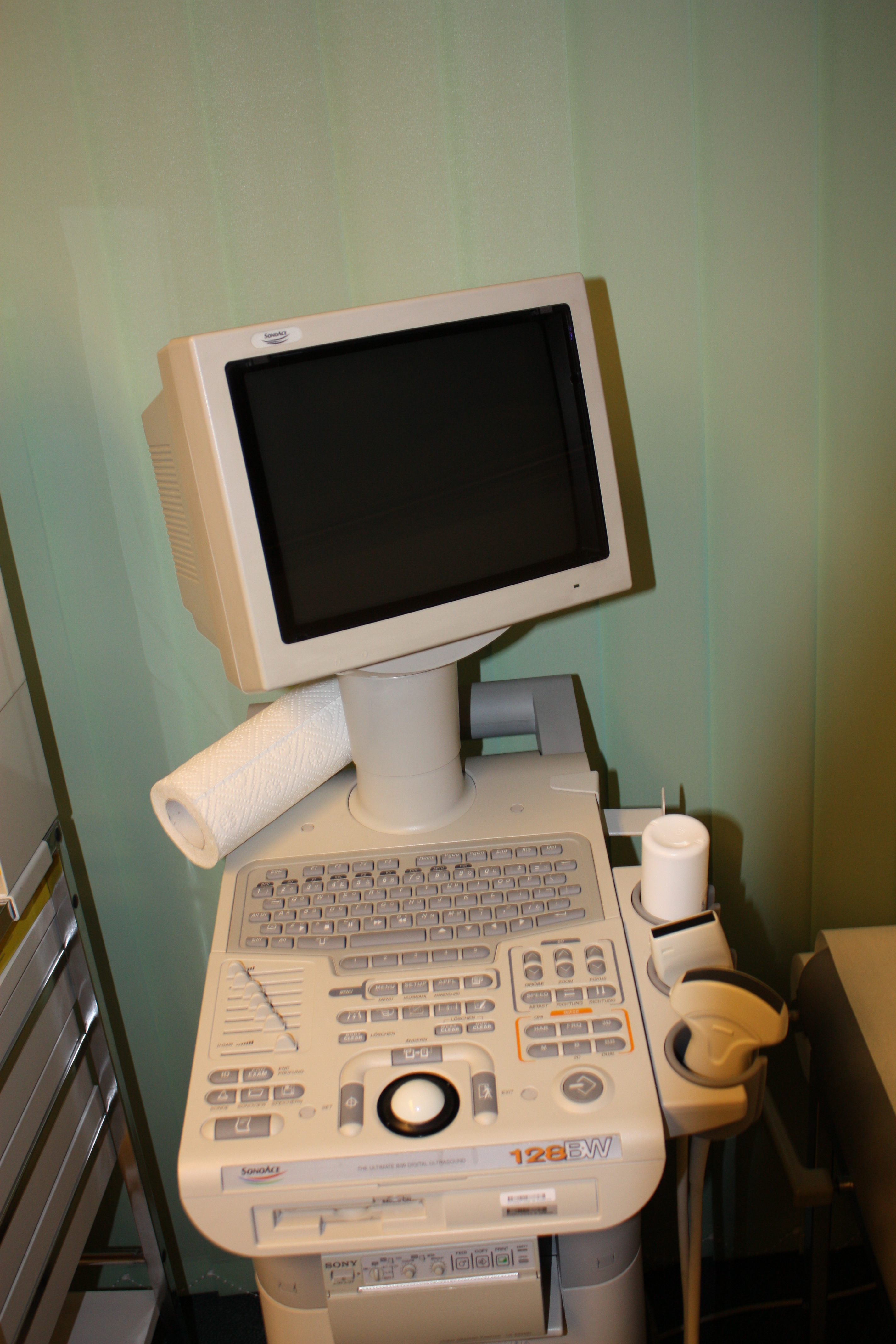
The diagnosis of nephronophthisis can be obtained via a kidney ultrasound, family history and clinical history of the affected individual according to Stockman, et al.
Types
- Infantile NPH
- Juvenile NPH
- Adult NPH
Management
The management of this condition can be done via-improvement of any electrolyte imbalance, as well as, high blood pressure and low red blood cell counts (anemia) treatment as the individual's condition warrants.
Epidemiology
Nephronophthisis occurs equally in both sexes and has an estimate 9 in about 8 million rate in individuals. Nephronophthisis is the leading monogenic cause of end-stage kidney disease in the first three decades of life.
References
References
- "Nephronophthisis".
- (2011). "Mechanisms of nephronophthisis and related ciliopathies". Nephron Exp. Nephrol..
- Avner, Ellis D.. (2009-08-20). "Pediatric Nephrology (Avner, Pediatric Nephrology)". Springer.
- Hildebrandt, Friedhelm. (2007). "Nephronophthisis-Associated Ciliopathies". Journal of the American Society of Nephrology.
- Kanwal, Kher. (2007). "Clinical Pediatric Nephrology, Second Edition". McGraw-Hill.
- {{EMedicine. article. 982359. Medullary Cystic Disease. clinical
- Salomon, Rémi. (2009). "Nephronophthisis". Pediatric Nephrology.
- Hildebrandt, Friedhelm. (2009). "Nephronophthisis: Disease Mechanisms of a Ciliopathy". Journal of the American Society of Nephrology.
- McCormack, Francis X.. (2010-03-10). "Molecular Basis of Pulmonary Disease: Insights from Rare Lung Disorders". Springer Science & Business Media.
- Badano, Jose L.. (2006). "The Ciliopathies: An Emerging Class of Human Genetic Disorders". Annual Review of Genomics and Human Genetics.
- Stokman, Marijn. (1 January 1993). "Nephronophthisis". University of Washington, Seattle.
- Hildebrandt, Friedhelm. (2009). "Genetic Diseases of the Kidney". Academic Press.
This article was imported from Wikipedia and is available under the Creative Commons Attribution-ShareAlike 4.0 License. Content has been adapted to SurfDoc format. Original contributors can be found on the article history page.
Ask Mako anything about Nephronophthisis — get instant answers, deeper analysis, and related topics.
Research with MakoFree with your Surf account
Create a free account to save articles, ask Mako questions, and organize your research.
Sign up freeThis content may have been generated or modified by AI. CloudSurf Software LLC is not responsible for the accuracy, completeness, or reliability of AI-generated content. Always verify important information from primary sources.
Report