From Surf Wiki (app.surf) — the open knowledge base
Neoxanthin
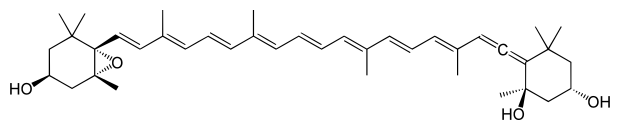
Neoxanthin is a carotenoid and xanthophyll. In plants, it is an intermediate in the biosynthesis of the plant hormone abscisic acid. It is often present in two forms: all-trans and 9-cis isomers. It is produced from violaxanthin, but a suspected neoxanthin synthase is still to be confirmed. Two different genes were confirmed to be implied in violaxanthin conversion to neoxanthin in Arabidopsis and tomato. It has a specific role in protection against photooxidative stress. It is a major xanthophyll found in green leafy vegetables such as spinach.
References
References
- (2000). "Identification of neoxanthin synthase as a carotenoid cyclase paralog". European Journal of Biochemistry.
- (2007). "The Arabidopsis ABA-deficient mutant aba4 demonstrates that the major route for stress-induced ABA accumulation is via neoxanthin isomers". Plant Journal.
- (2014). "The tomato mutation nxd1 reveals a gene necessary for neoxanthin biosynthesis and demonstrates that violaxanthin is a sufficient precursor for abscisic acid biosynthesis". Plant Journal.
- (2007). "The Arabidopsis aba4-1 mutant reveals a specific function for neoxanthin in protection against photooxidative stress". Plant Cell.
This article was imported from Wikipedia and is available under the Creative Commons Attribution-ShareAlike 4.0 License. Content has been adapted to SurfDoc format. Original contributors can be found on the article history page.
Ask Mako anything about Neoxanthin — get instant answers, deeper analysis, and related topics.
Research with MakoFree with your Surf account
Create a free account to save articles, ask Mako questions, and organize your research.
Sign up freeThis content may have been generated or modified by AI. CloudSurf Software LLC is not responsible for the accuracy, completeness, or reliability of AI-generated content. Always verify important information from primary sources.
Report