From Surf Wiki (app.surf) — the open knowledge base
Neoclassical architecture in Poland

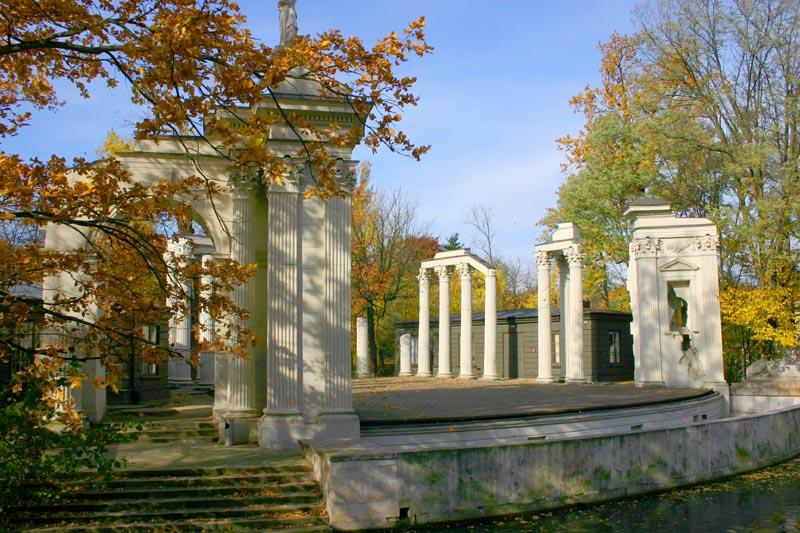
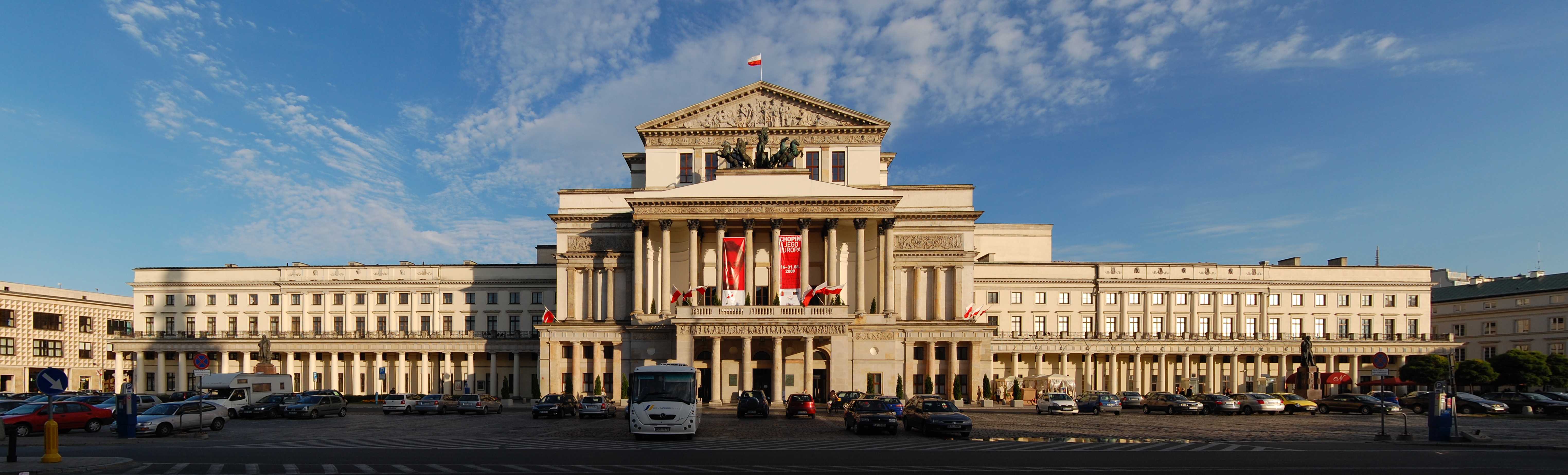
Neoclassical architecture in Poland was centered on Warsaw under the reign of Stanisław August Poniatowski, while the modern concept of a single capital city was to some extent inapplicable in the decentralized Polish–Lithuanian Commonwealth. Classicism came to Poland in the 18th century as the result of French infiltrations into the Polish milieu. The best-known architects and artists who worked in Poland were Dominik Merlini, Jan Chrystian Kamsetzer, Szymon Bogumił Zug, Stanisław Zawadzki, Efraim Szreger, Antonio Corazzi, Jakub Kubicki, Hilary Szpilowski, Christian Piotr Aigner, Wawrzyniec Gucewicz, Bonifacy Witkowski and Danish Bertel Thorvaldsen.
The first stage, called the Stanislavian style, followed by an almost complete inhibition and a period known as the Congress Kingdom classicism. The palladian patterns were independently interpreted by Szymon Bogumił Zug, who followed an influence of radical French classicism. A palladian by influence was also Piotr Aigner - architect of the façade of St. Anne's Church, Warsaw (1786–1788) and St. Alexander Church (1818–1826). Palladian ideas were implemented in a popular type of a palace with a pillared portico.
The most famous buildings of the Stanislavian period include the Royal Castle, Warsaw, rebuilt by Dominik Merlini and Jan Christian Kamsetzer, Palace on the Water, Królikarnia and the palace in Jabłonna. Kamsetzer erected the Amphitheatre in the Royal Baths Park and the Warsaw palaces of the Raczyńskis and Tyszkiewiczs as well as the palace in Iskierniki. Among the most notable works by Szymon Bogumił Zug is a palace in Natolin and Holy Trinity Church and gardens: Solec, Powązki, Mokotów and Arcadia near Nieborów.
From the period of the Congress Kingdom are Koniecpolski Palace and the St. Alexander's Church, Warsaw, the Temple of the Sibyl in Puławy, rebuilding the Łańcut Castle. The leading figure in the Congress Kingdom was Antonio Corrazzi. Corazzi created the complex of Bank Square in Warsaw, the Palace of the Ministry of Revenues and Treasury, the building of the Staszic Palace, Mostowski Palace and designed the Grand Theatre. Belvedere and Pawłowice were created by Jakub Kubicki, while Lubostroń Palace and Dobrzyca Palace by Stanisław Zawadzki. The notable town halls in Łowicz, Płock, Błonie, Konin and Aleksandrów Łódzki are dating back the first half of the nineteenth century.
Stanislavian classicism gallery
File:Poland Warsaw Łazienki Palace.jpg|Łazienki Palace in Warsaw, 1764–1795 File:Pulawy palac marynki.jpg|Marynka Palace in Puławy, 1790–1794 File:Warszawa-Królikarnia.jpg|Królikarnia Palace in Warsaw, 1782–1786 File:Lubostron Castle.jpg|Skórzewski Palace in Lubostroń, 1795–1800 File:Jabłonna Palace.png|Poniatowski Palace in Jabłonna, 1775–1779 File:Niezdow 01.jpg|Lubomirski Palace in Niezdów, 1776–1804 File:6 Warszawa Natolin 008.jpg|Potocki Palace in Natolin, 1780–1782 File:MZPP5.jpg|Gorzeński Palace in Dobrzyca, 1795–1799 File:Warszawa kościół św. Trójcy 2009.jpg|Holy Trinity Church, Warsaw, 1777–1782 File:Pulawy kosciol wniebowziecia nmp.jpg|Church of the Assumption of Mary in Puławy, 1801–1803 File:Sybilla's Temple Pulawy.JPG|Sybil Temple in Puławy, 1798–1801 File:Arkadia aqueduct01.jpg|The Aqueduct in Arkadia (Nieborów), 1784 File:Łazienki Wodozbiór okrąglak.jpg|Water Tower in the Royal Baths (Warsaw), 1777–1778 File:Panteon in Dobrzyca.jpg|Panteon in Dobrzyca, before 1806 File:6 Poznan 031.jpg|Działyński House in Poznań, 1773–1776 File:Pałac Zbaraskich, Kraków.JPG|Zbaraski House in Kraków, 1777–1783 File:Siedlce Ratusz 03.JPG|Town Hall in Siedlce, 1766–1769 File:Odwach Poznań.jpg|Guard Building in Poznań, 1783–1787
Congress Kingdom classicism gallery
File:Warszawa Pałac Prezydencki.jpg|Presidential Palace in Warsaw, 1818 File:Warszawa, ul. Nowy Świat 72-74 20170517 003.jpg|Staszic Palace in Warsaw, 1820–1823 File:Muranów Komenda 2009.jpg|Mostowski Palace in Warsaw, 1823–1824 File:Pulawy palac czartoryskich.jpg|Czartoryski Palace (Puławy), 1840–1843 File:Warszawa Teatr Wielki.jpg|Great Theatre, Warsaw, 1825–1833 File:VarsaviaMunicipio.jpg|Commission Palace in Warsaw, 1823–1825 File:2007-07-20 Pomnik Słowackiego, Plac Bankowy, Warszawa.jpg|Ministry of Treasury in Warsaw, 1825–1828 File:Gmach Giełdy i Banku Polskiego w Warszawie 2022.jpg|Bank Polski in Warsaw, 1825–1828 File:Ratusz w Łowiczu.JPG|Town hall in Łowicz, 1825–1828 File:Ratusz-plock.jpg|Town hall in Płock, 1816–1827 File:5 Lublin 59.jpg|Lublin New Town Hall, 1827–1828 File:2005-09 Łódź - pl. Wolności 1.jpg|City hall in Łódź, 1826–1827 File:St Alexander church in Warsaw.JPG|St. Alexander's Church, Warsaw, 1818–1825 File:3 Suwalki 01.jpg|St. Alexander's Church in Suwałki, 1820–1829 File:Brzóstków.JPG|St. John the Baptist's Church in Brzostków, 1839–1840 File:Cerkiew sw.Mikolaja.jpg|Orthodox Cathedral of St. Nicholas, Białystok, 1843–1846 File:Józef Poniatowski Monument in Warsaw.PNG|Józef Poniatowski Monument in Warsaw, 1826–1827 File:Copernicus by Thorwaldsen Warsaw 02.jpg|Nicolaus Copernicus Monument in Warsaw, 1828–1830 File:Natolin - pomnik-sarkofag Natalii Sanguszkowej.jpg|Sarcophagus of Natalia Sanguszkowa in Natolin Park and Palace, 1830 File:Warszawaqw7.jpg|Sybil Temple in the Saxon Garden (Warsaw), 1852–1854
References
References
- Michał Rożek, Doris Ronowicz. (1988). "Cracow: a treasury of Polish culture and art". Interpress Publishers.
- John Stanley. (March–June 2004). "Literary Activities and Attitudes in the Stanislavian Age in Poland (1764–1795): A Social System?". findarticles.com.
- Francis W. Carter. (1994). "Trade and urban development in Poland: an economic geography of Cracow, from its origins to 1795 – Volume 20 of Cambridge studies in historical geography". [[Cambridge University Press]].
- Marek Kwiatkowski. (1983). "Stanisław August, król-architekt (Stanislaus Augustus, the king-architect)". Zakład Narodowy im. Ossolińskich.
- Jon Stewart, Jon Bartley Stewart. (2003). "Kierkegaard and his contemporaries: the culture of golden age Denmark". Walter de Gruyter.
- Manfred Kridl. (1967). "A survey of Polish literature and culture". Columbia University Press.
- Wojciech Słowakiewicz. (2000). "Wielka encyklopedia polski". Fogra.
This article was imported from Wikipedia and is available under the Creative Commons Attribution-ShareAlike 4.0 License. Content has been adapted to SurfDoc format. Original contributors can be found on the article history page.
Ask Mako anything about Neoclassical architecture in Poland — get instant answers, deeper analysis, and related topics.
Research with MakoFree with your Surf account
Create a free account to save articles, ask Mako questions, and organize your research.
Sign up freeThis content may have been generated or modified by AI. CloudSurf Software LLC is not responsible for the accuracy, completeness, or reliability of AI-generated content. Always verify important information from primary sources.
Report