From Surf Wiki (app.surf) — the open knowledge base
Nebraska
U.S. state

U.S. state
| Field | Value |
|---|---|
| name | Nebraska |
| image_flag | Flag of Nebraska.svg |
| image_seal | Nebraska-StateSeal.svg |
| image_map | Nebraska in United States.svg |
| nickname | The Cornhusker State |
| Former | Nebraska Territory |
| motto | Equality before the law |
| anthem | "Beautiful Nebraska" |
| [[File:"Beautiful Nebraska" - Regional anthem of Nebraska.ogg | center]] |
| seat | Lincoln |
| OfficialLang | English |
| population_demonym | Nebraskan |
| LargestCity | Omaha |
| LargestCounty | Douglas |
| LargestMetro | Omaha–Council Bluffs |
| Governor | Jim Pillen (R) |
| Lieutenant Governor | Joe Kelly (R) |
| Legislature | Nebraska Legislature |
| Judiciary | Nebraska Supreme Court |
| Senators | Deb Fischer (R) |
| Pete Ricketts (R) | |
| Representative | 1: Mike Flood (R) |
| 2: Don Bacon (R) | |
| 3: Adrian Smith (R) | |
| postal_code | NE |
| TradAbbreviation | Neb., Nebr. |
| area_rank | 16th |
| area_total_sq_mi | 77,347 |
| area_total_km2 | 200,356 |
| area_land_sq_mi | 76,796 |
| area_land_km2 | 199,099 |
| area_water_sq_mi | 531 |
| area_water_km2 | 1,247 |
| area_water_percent | 0.7 |
| population_as_of | 2024 |
| population_rank | 37th |
| 2020Pop | 2,005,465 |
| population_density_rank | 43rd |
| 2000DensityUS | 24.94 |
| 2000Density | 9.62 |
| MedianHouseholdIncome | $ (2023) |
| IncomeRank | 27th |
| AdmittanceOrder | 37th |
| AdmittanceDate | March 1, 1867 |
| timezone1 | Central |
| utc_offset1 | −06:00 |
| timezone1_DST | CDT |
| utc_offset1_DST | −05:00 |
| timezone1_location | most of state |
| timezone2 | Mountain |
| utc_offset2 | −07:00 |
| timezone2_DST | MDT |
| utc_offset2_DST | −06:00 |
| timezone2_location | Panhandle |
| Latitude | 40° N to 43° N |
| Longitude | 95° 19′ W to 104° 03′ W |
| width_mi | 210 |
| width_km | 340 |
| length_mi | 430 |
| length_km | 690 |
| elevation_max_point | Panorama Point |
| elevation_max_ft | 5,424 |
| elevation_max_m | 1654 |
| elevation_ft | 2,600 |
| elevation_m | 790 |
| elevation_min_point | Missouri River at Kansas border |
| elevation_min_ft | 840 |
| elevation_min_m | 256 |
| iso_code | US-NE |
| website | https://nebraska.gov |
the U.S. state
Pete Ricketts (R) 2: Don Bacon (R) 3: Adrian Smith (R) Soft drink: Kool-aid
Nebraska ( ) is a triple-landlocked state in the Midwestern region of the United States. It borders South Dakota to the north; Iowa to the east and Missouri to the southeast, both across the Missouri River; Kansas to the south; Colorado to the southwest; and Wyoming to the west. Nebraska is the 16th-largest state by land area, with just over 77220 sqmi. With a population of over 2 million as of 2024, it is the 38th-most populous state and the eighth-least densely populated. Nebraska's capital is Lincoln, and its most populous city is Omaha, which is on the Missouri River. Nebraska was admitted into the United States in 1867, two years after the end of the American Civil War. The Nebraska Legislature is unlike any other American legislature in that it is unicameral, and its members are elected without any official reference to political party affiliation. Nebraska is one of only two states (Maine being the other) that divide electoral college votes by district, and is not winner-take-all.
Nebraska is composed of two major land regions: the Dissected Till Plains and the Great Plains. The Dissected Till Plains region consists of gently rolling hills and contains the state's largest cities, Omaha and Lincoln. The Great Plains region, occupying most of western Nebraska, is characterized by treeless prairie. Eastern Nebraska has a humid continental climate while western Nebraska is primarily semi-arid. The state has wide variations between winter and summer temperatures; the variations decrease in southern Nebraska. Violent thunderstorms and tornadoes occur primarily during spring and summer, and sometimes in autumn. The Chinook wind tends to warm the state significantly in the winter and early spring.
Indigenous peoples, including Omaha, Missouria, Ponca, Pawnee, Otoe, and various branches of the Lakota (Sioux) tribes, lived in the region for thousands of years before European discovery and exploration. The state is crossed by many historic trails, including that of the Lewis and Clark Expedition. The completion of the Transcontinental Railroad through Nebraska and passage of the Homestead Acts led to rapid growth in the population of American settlers in the 1870s and 1880s and the development of a large agriculture sector for which the state is known to this day.
Etymology
Nebraska's name is the result of anglicization of the archaic Otoe Ñí Brásge (contemporary Otoe: Ñíbrahge; pronounced ), or the Omaha Ní Btháska, (pronounced ), meaning "flat water", after the Platte River which flows through the state.
History
Main article: History of Nebraska

Early history
Indigenous peoples lived in the region of present-day Nebraska for thousands of years before European colonization. The historic tribes in the state included the Omaha, Missouria, Ponca, Pawnee, Otoe, and various branches of the Lakota (Sioux), some of which migrated from eastern areas into the region. When European exploration, trade, and settlement began, both Spain and France sought to control the region. In the 1690s, Spain established trade connections with the Apache, whose territory then included western Nebraska. By 1703, France had developed a regular trade with native peoples along the Missouri River in Nebraska, and by 1719 had signed treaties with several of these peoples. After war broke out between the two countries, Spain dispatched an armed expedition to Nebraska under Lieutenant General Pedro de Villasur in 1720. The party was attacked and destroyed near present-day Columbus by a large force of Pawnee and Otoe, both allied with the French. The massacre ended Spanish exploration of the area for the remainder of the 18th century.
In 1762, during the Seven Years' War, France ceded the Louisiana Territory to Spain. This left Britain and Spain competing for dominance along the Mississippi River; by 1773, the British were trading with the native peoples of Nebraska. Spain dispatched two trading expeditions up the Missouri River in 1794 and 1795; the second, under James Mackay, established the first European settlement in Nebraska near the mouth of the Platte River. Later that year, Mackay's party built a trading post, dubbed Fort Carlos IV (Fort Charles), near present-day Homer.
American settlement and statehood
In 1819, the United States established Fort Atkinson as the first U.S. Army post west of the Missouri River, just east of present-day Fort Calhoun. The army abandoned the fort in 1827 as migration moved further west. European-American settlement was scarce until 1848 and the California Gold Rush. On May 30, 1854, the U.S. Congress created the Kansas and Nebraska territories, divided by the Parallel 40° North, under the Kansas–Nebraska Act. The Nebraska Territory included parts of the current states of Colorado, North Dakota, South Dakota, Wyoming, and Montana. The territorial capital of Nebraska was Omaha.

Late 19th century
In the 1860s, after the U.S. government forced many of the American Indian tribes to cede their lands and settle on reservations, it opened large tracts of land to agricultural development by European immigrants and American settlers. Under the Homestead Act, thousands of settlers migrated into Nebraska to claim free land granted by the federal government. Because so few trees grew on the prairies, many of the first farming settlers built their homes of sod, as had Native Americans such as the Omaha. The first wave of settlement gave the territory a sufficient population to apply for statehood. Nebraska became the 37th state on March 1, 1867, and the capital was moved from Omaha to the center at Lancaster, later renamed Lincoln after the recently assassinated President of the United States, Abraham Lincoln. The battle of Massacre Canyon, on August 5, 1873, was the last major battle between the Pawnee and the Sioux.
During the 1870s to the 1880s, Nebraska experienced a large growth in population. Several factors contributed to attracting new residents. The first was that the vast prairie land was perfect for cattle grazing. This helped settlers to learn the unfamiliar geography of the area. The second factor was the invention of several farming technologies. New agricultural innovations such as barbed wire, windmills, and the steel plow, combined with fair weather, enabled settlers to transform Nebraska into prime farming land. By the 1880s, Nebraska's population had soared to more than 450,000 people. The Arbor Day holiday was founded in Nebraska City by territorial governor J. Sterling Morton. The National Arbor Day Foundation is still headquartered in Nebraska City, with some offices in Lincoln.
In the late 19th century, African Americans migrated from the South to Nebraska as part of the Great Migration. Eventually, they moved primarily to Omaha which offered working-class jobs in meat packing, the railroads and other industries. Omaha has a long history of civil rights activism. Blacks encountered discrimination from other Americans in Omaha and especially from recent European immigrants who were also competing for the same jobs as well.
20th century
In 1912, African Americans founded the Omaha chapter of the National Association for the Advancement of Colored People to work for improved conditions in the city and state. During the Omaha Race Riots in 1919, many white rioters protested throughout Omaha in response to an incident in which a black man was accused of sexually assaulting a white woman. The Great Depression also greatly affected the residents of Nebraska. From 1930 to 1936 the Dust Bowl, a period of dust storms caused by drought, destruction of topsoil by farming practices, and other factors affected Nebraska along with much of the Midwestern United States. In 1934, voters passed an initiative to make Nebraska's legislature a unicameral body, and the first unicameral session was held in 1937. Kay Orr was elected Nebraska's first female governor on November 4, 1986.
Geography

The state is bordered by South Dakota to the north; Iowa to the east and Missouri to the southeast, across the Missouri River; Kansas to the south; Colorado to the southwest; and Wyoming to the west. It is the only triply landlocked state in the United States. The state has 93 counties and is split between two time zones, with the majority of the state observing Central Time and the Panhandle and surrounding counties observing Mountain Time.
Three rivers cross the state from west to east:
- the Niobrara River flows through the northern part of the state, and
- the Platte River, formed by the confluence of the North Platte and the South Platte, runs through the state's central portion
- the Republican River runs across the southern part.
The first Constitution of Nebraska in 1866 described Nebraska's boundaries as follows:{{Blockquote
The description given for the northern border is no longer accurate, since the Keya Paha River and the Niobrara River no longer form the boundary of the state of Nebraska. Instead, Nebraska's northern border now extends east along the forty-third degree of north latitude until it meets the Missouri River directly.
Nebraska is composed of two major land regions, the Dissected Till Plains and the Great Plains. The easternmost portion of the state was scoured by Ice Age glaciers; the Dissected Till Plains were left after the glaciers retreated. The Dissected Till Plains is a region of gently rolling hills; Omaha and Lincoln are in this region. The Great Plains occupy most of western Nebraska, with the region consisting of several smaller, diverse land regions, including the Sandhills, the Pine Ridge, the Rainwater Basin, the High Plains and the Wildcat Hills. Panorama Point, at 5424 ft, is Nebraska's highest point; though despite its name and elevation, it is a relatively low rise near the Colorado and Wyoming borders. A former tourist slogan for the State of Nebraska was "Where the West Begins", but this has since been changed to "Honestly, it's not for everyone". Locations given for the beginning of the "West" in Nebraska include the Missouri River, the intersection of 13th and O Streets in Lincoln (where it is marked by a red brick star), the 100th meridian, and Chimney Rock.
Federal land management

Areas under the management of the National Park Service include:
- Agate Fossil Beds National Monument near Harrison
- California National Historic Trail
- Chimney Rock National Historic Site near Bayard
- Homestead National Monument of America in Beatrice
- Lewis and Clark National Historic Trail
- Missouri National Recreational River near Ponca
- Mormon Pioneer National Historic Trail
- Niobrara National Scenic River near Valentine
- Oregon National Historic Trail
- Pony Express National Historic Trail
- Scotts Bluff National Monument at Gering
Areas under the management of the National Forest Service include:
- Nebraska National Forest
- Oglala National Grassland
- Samuel R. McKelvie National Forest
Climate


Two major climatic zones are represented in Nebraska. The eastern two-thirds of the state has a humid continental climate (Köppen Dfa), although the southwest of this region may be classed as a humid subtropical climate (Cfa) using the −3 C near the Kansas state line, analogous to the predominantly humid subtropical climate of Kansas and Oklahoma. Western Nebraska, including The Panhandle and adjacent areas bordering Colorado have a semi-arid climate (Köppen BSk). The entire state experiences wide seasonal variations in both temperature and precipitation. Average temperatures are fairly uniform across Nebraska, with hot summers and generally cold winters. However, chinook winds from the Rocky Mountains provide a temporary moderating effect on temperatures in the state's western portion during the winter. Thus, average January maximum temperatures are highest at around 43 F in southwestern Dundy County, and lowest at about 30 F around South Sioux City in the northeast.
Average annual precipitation decreases east to west from about 31.5 in in the southeast corner of the state to about 13.8 in in the Panhandle. Humidity also decreases significantly from east to west. Snowfall across the state is fairly even, with most of Nebraska receiving between 25 and of snow each year. Nebraska's highest-recorded temperature was 118 F in Minden on July 24, 1936. The state's lowest-recorded temperature was -47 F in Camp Clarke on February 12, 1899.
Nebraska is located in Tornado Alley. Thunderstorms are common during both the spring and the summer. Violent thunderstorms and tornadoes happen primarily during those two seasons, although they also can occur occasionally during the autumn.
| Location | July (°F) | July (°C) | January (°F) | January (°C) |
|---|---|---|---|---|
| Omaha | 87/66 | 30/19 | 33/13 | 1/−10 |
| Lincoln | 89/66 | 31/19 | 35/14 | 2/−10 |
| Grand Island | 87/64 | 31/17 | 36/14 | 2/−10 |
| Kearney | 90/63 | 32/17 | 36/12 | 2/−11 |
| North Platte | 88/60 | 31/16 | 39/11 | 4/−11 |
| Papillion | 87/66 | 31/19 | 32/12 | 0/−11 |
Settlements

Eighty-nine percent of the cities in Nebraska have fewer than 3,000 people. Nebraska shares this characteristic with five other Midwestern states: Kansas, Oklahoma, North Dakota and South Dakota, and Iowa. Hundreds of towns have a population of fewer than 1,000. Regional population declines have forced many rural schools to consolidate.
Fifty-three of Nebraska's 93 counties reported declining populations between 1990 and 2000, ranging from a 0.06% loss (Frontier County) to a 17.04% loss (Hitchcock County).
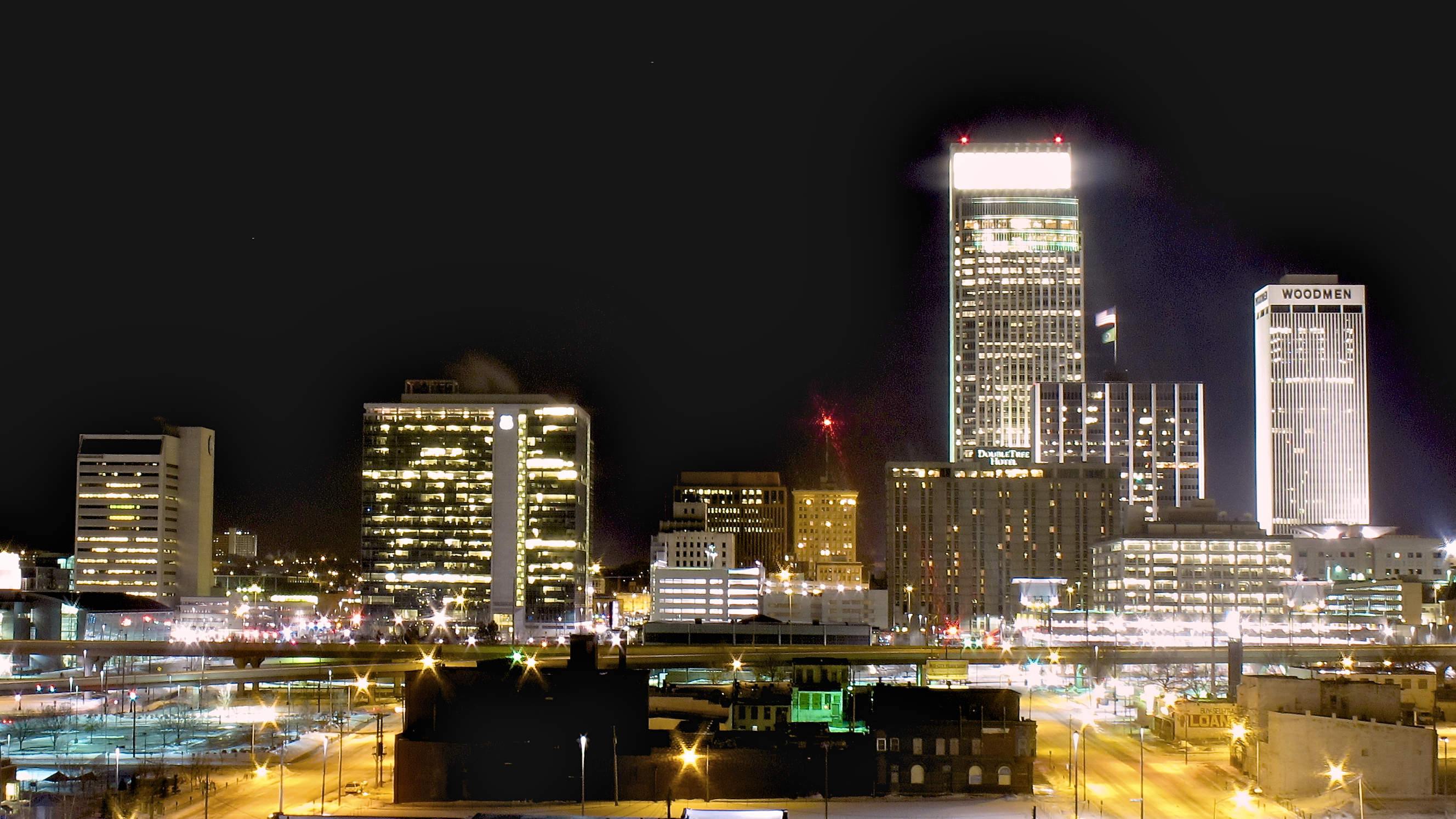
More urbanized areas of the state have experienced substantial growth. In 2000, the city of Omaha had a population of 390,007; in 2005, the city's estimated population was 414,521 (427,872 including the recently annexed city of Elkhorn), a 6.3% increase over five years. The 2010 census showed that Omaha has a population of 408,958. The city of Lincoln had a 2000 population of 225,581 and a 2010 population of 258,379, a 14.5% increase.
.jpg)
As of the 2010 census, there were 530 cities and villages in the state of Nebraska. There are five classifications of cities and villages in Nebraska, which are based upon population. All population figures are 2017 Census Bureau estimates unless flagged by a reference number.
Metropolitan Class City (400,000 or more)
- Omaha 466,893
Primary Class City (100,000–399,999)
- Lincoln 284,736
First Class City (5,000–99,999)
- Bellevue 53,424
- Grand Island 51,390
- Kearney 33,835
- Fremont 26,457
- Hastings 24,989
- Norfolk 24,434
- North Platte 23,888
- Columbus 23,128
- Papillion 19,539
- La Vista 17,116
- Scottsbluff 14,874
- South Sioux City 12,911
- Beatrice 12,295
- Lexington 10,024
- Gering 8,319
- Alliance 8,164
- Blair 8,091
- York 7,862
- McCook 7,540
- Ralston 7,333
- Nebraska City 7,313
- Seward 7,181
- Crete 7,160
- Sidney 6,620
- Plattsmouth 6,451
- Schuyler 6,212
- Chadron 5,648
- Wayne 5,439
- Holdrege 5,494
- Gretna 5,062
Second Class Cities (800–4,999) and Villages (100–799) make up the rest of the communities in Nebraska. There are 116 second-class cities and 382 villages in the state.
Metropolitan areas 2017 estimate data
- Omaha-Council Bluffs 763,326 (Nebraska portion); 933,316 (total for Nebraska and Iowa)
- Lincoln 331,519
- Sioux City, Iowa 26,836 (Nebraska portion); 168,618 (total for Nebraska, Iowa and South Dakota)
- Grand Island 85,045 Micropolitan areas 2012 estimate data
- Kearney 53,948
- Norfolk 48,286
- Scottsbluff 39,039
- North Platte 37,373
- Fremont 36,427
- Columbus 32,681
- Hastings 31,364
- Lexington 26,249
- Beatrice 21,806 Other areas
- Grand Island, Hastings and Kearney comprise the "Tri-Cities" area, with a combined population of 174,530.
- The northeast corner of Nebraska is part of the Siouxland region.
Demographics
Population
| align-fn = center

The 2020 United States census reported that the population of Nebraska was 1,961,504 on April 1, 2020, a 7.4% increase since the 2010 United States census. The center of population of Nebraska is in Polk County, in the city of Shelby.
According to HUD's 2022 Annual Homeless Assessment Report, there were an estimated 2,246 homeless people in Nebraska.
The table below shows the racial composition of Nebraska's population as of 2022.
| Race | Population (2022 est.) | Percentage |
|---|---|---|
| Total population | 1,967,923 | 100% |
| White | 1,543,454 | 78.4% |
| Black or African American | 92,208 | 4.7% |
| American Indian and Alaska Native | 19,656 | 1.0% |
| Asian | 49,557 | 2.5% |
| Native Hawaiian and Other Pacific Islander | 1,239 | 0.1% |
| Some other race | 87,534 | 4.4% |
| Two or more races | 174,275 | 8.9% |
| Racial composition | 1990 | 2000 | 2010 | url=https://www.census.gov/library/visualizations/interactive/racial-and-ethnic-diversity-in-the-united-states-2010-and-2020-census.html | title=Racial and Ethnic Diversity in the United States: 2010 Census and 2020 Census | date=August 12, 2021 | publisher=U.S. Census Bureau | access-date=August 12, 2021 | archive-date=August 29, 2021 | archive-url=https://web.archive.org/web/20210829185707/https://www.census.gov/library/visualizations/interactive/racial-and-ethnic-diversity-in-the-united-states-2010-and-2020-census.html | url-status=live}} |
|---|---|---|---|---|---|---|---|---|---|---|---|
| White | 93.8% | 89.6% | 86.1% | 78.4% | |||||||
| Black | 3.6% | 4.0% | 4.5% | 4.9% | |||||||
| Asian | 0.8% | 1.3% | 1.8% | 2.7% | |||||||
| Native | 0.8% | 0.9% | 1.0% | 1.2% | |||||||
| Native Hawaiian and | |||||||||||
| other Pacific Islander | – | 0.1% | 0.1% | 0.1% | |||||||
| Other race | 1.0% | 2.8% | 4.3% | 5.4% | |||||||
| Two or more races | – | 1.4% | 2.2% | 7.3% |
According to the 2016 American Community Survey, 10.2% of Nebraska's population were of Hispanic or Latino origin (of any race): Mexican (7.8%), Puerto Rican (0.2%), Cuban (0.2%), and other Hispanic or Latino origin (2.0%). The largest ancestry groups were: German (36.1%), Irish (13.1%), English (7.8%), Czech (4.7%), Swedish (4.3%), and Polish (3.5%).
Nebraska has the largest Czech American and non-Mormon Danish American population (as a percentage of the total population) in the nation. Nebraska is also home to the largest Polish American population in the Great Plains. German Americans are the largest ancestry group in most of the state, particularly in the eastern counties. Thurston County (made up entirely of the Omaha and Winnebago reservations) has an American Indian majority, and Butler County is one of only two counties in the nation with a Czech-American plurality.
In recent years, Nebraska has become home to many refugee communities. In 2016, it welcomed more refugees per capita than any other state. Nebraska, and in particular Lincoln, is the largest home of Yazidis refugees and Yazidi Americans in the United States.
Notably, Nebraska was the last of all 50 states to maintain a ban on the issuance of driver's licenses to adults who had entered the United States illegally as children (also known as Dreamers). The state legislature lifted the ban in December 2016.
Mexico, India, China, Guatemala, and El Salvador are top countries of origin for Nebraska's immigrants.
Birth data

Non-Hispanic White
Native American
As of 2011, 31.0% of Nebraska's population younger than ageone were minorities.
| Race | 2013 | 2014 | 2015 | 2016 | 2017 | 2018 | 2019 | 2020 | 2021 | 2022 | 2023 |
|---|---|---|---|---|---|---|---|---|---|---|---|
| White | 19,237 (73.7%) | 19,471 (72.6%) | 19,201 (72.0%) | 18,729 (70.4%) | 17,827 (69.0%) | 17,645 (69.2%) | 16,930 (68.4%) | 16,433 (67.7%) | 16,767 (68.1%) | 16,120 (66.2%) | 15,656 (64.9%) |
| Black | 1,979 (7.6%) | 2,015 (7.5%) | 2,009 (7.5%) | 1,685 (6.3%) | 1,688 (6.5%) | 1,739 (6.8%) | 1,654 (6.7%) | 1,631 (6.7%) | 1,533 (6.2%) | 1,597 (6.6%) | 1,506 (6.2%) |
| Asian | 854 (3.3%) | 1,048 (3.9%) | 987 (3.7%) | 894 (3.4%) | 861 (3.3%) | 925 (3.6%) | 857 (3.5%) | 870 (3.6%) | 861 (3.5%) | 816 (3.4%) | 823 (3.4%) |
| American Indian | 592 (2.3%) | 553 (2.1%) | 557 (2.1%) | 353 (1.3%) | 399 (1.5%) | 342 (1.3%) | 341 (1.4%) | 284 (1.2%) | 248 (1.0%) | 261 (1.1%) | 297 (1.2%) |
| Hispanic (any race) | 3,895 (14.9%) | 4,143 (15.6%) | 4,249 (15.9%) | 4,282 (16.1%) | 4,382 (17.0%) | 4,155 (16.3%) | 4,345 (17.6%) | 4,393 (18.1%) | 4,440 (18.0%) | 4,815 (19.8%) | 5,010 (20.8%) |
| Total | 26,095 (100%) | 26,794 (100%) | 26,679 (100%) | 26,589 (100%) | 25,821 (100%) | 25,488 (100%) | 24,755 (100%) | 24,291 (100%) | 24,609 (100%) | 24,345 (100%) | 24,111 (100%) |
Note: For 2013–2015, births in table don't add up, because Hispanics are counted both by their ethnicity and by their race, giving a higher overall number. Since 2016, data for births of White Hispanic origin are not collected, but included in one Hispanic group; persons of Hispanic origin may be of any race.
Religion
The largest single denominations by number of adherents in 2010 were the Roman Catholic Church (372,838), the Lutheran Church–Missouri Synod (112,585), the Evangelical Lutheran Church in America (110,110) and the United Methodist Church (109,283).
Taxation
Nebraska has a progressive income tax. The portion of income from $0 to $2,400 is taxed at 2.56%; from $2,400 to $17,500, at 3.57%; from $17,500 to $27,000, at 5.12%; and income over $27,000, at 6.84%. The standard deduction for a single taxpayer is $5,700; the personal exemption is $118.
Nebraska has a state sales and use tax of 5.5%. In addition to the state tax, some Nebraska cities assess a city sales and use tax, in 0.5% increments, up to a maximum of 1.5%. Dakota County levies an additional 0.5% county sales tax. Food and ingredients that are generally for home preparation and consumption are not taxable. All real property within the state of Nebraska is taxable unless specifically exempted by statute. Since 1992, only depreciable personal property is subject to tax and all other personal property is exempt from tax. Inheritance tax is collected at the county level. As of July 2025, the state's gasoline tax is 49.70 cents per gallon.
Economy

- Total employment (2016): 884,450
- Total employer establishments: 54,265
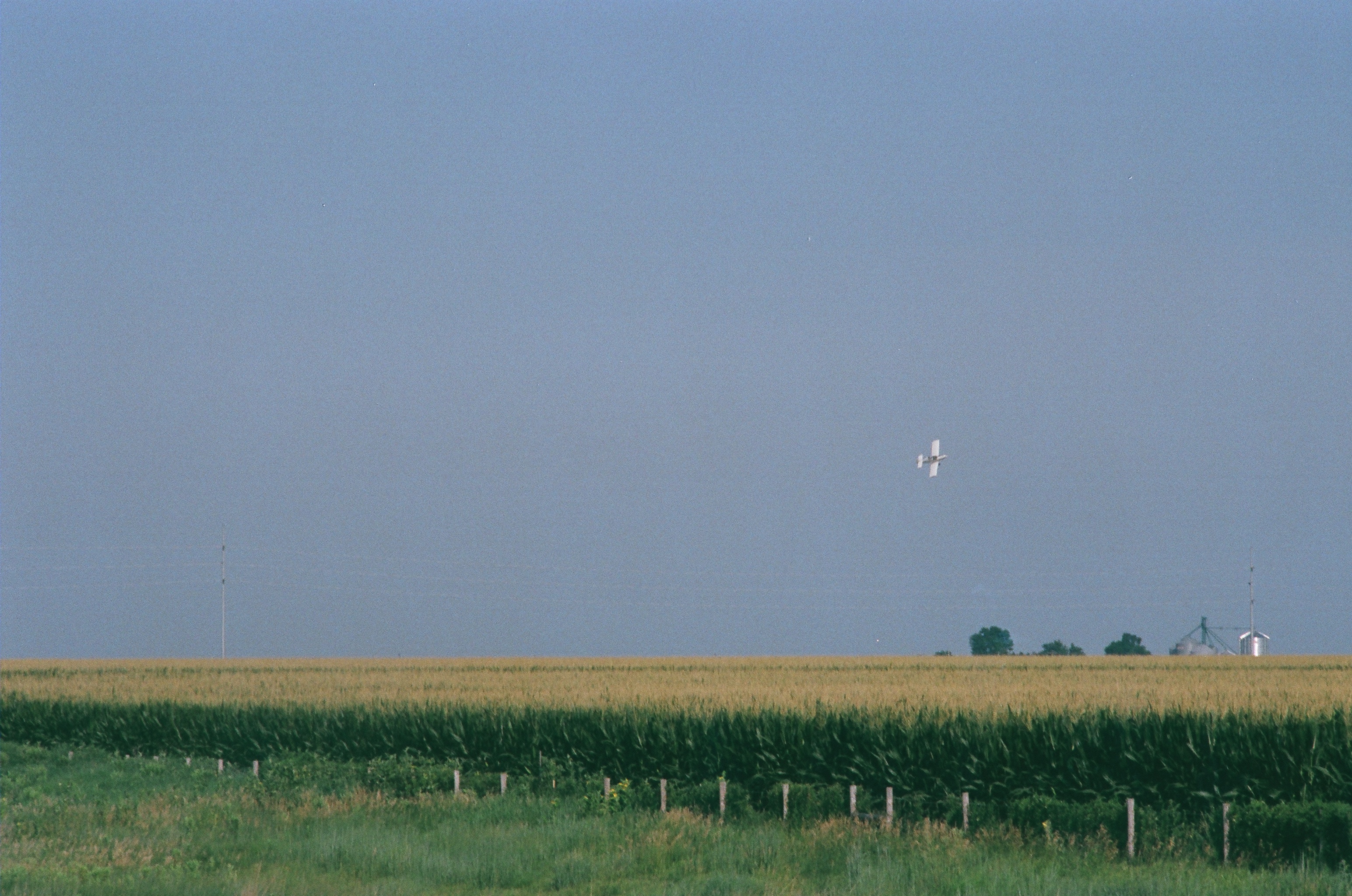
The Bureau of Economic Analysis estimates of Nebraska's gross state product in 2010 was $89.8 billion. Per capita personal income in 2004 was $31,339, 25th in the nation. Nebraska has a large agriculture sector, and is a major producer of beef, pork, wheat, corn (maize), soybeans, and sorghum. Other important economic sectors include freight transport (by rail and truck), manufacturing, telecommunications, information technology, and insurance.
In October 2021, Nebraska recorded an unemployment rate of 1.9%, the lowest ever recorded for any state. As of May 2025, the unemployment rate was 3%.
Industry
Kool-Aid was created in 1927 by Edwin Perkins in the city of Hastings, which celebrates the event the second weekend of every August with Kool-Aid Days, and Kool-Aid is the official soft drink of Nebraska. CliffsNotes were developed by Clifton Hillegass of Rising City. He adapted his pamphlets from the Canadian publications, Coles Notes.
Omaha is home to Berkshire Hathaway, whose chief executive officer (CEO), Warren Buffett, was ranked in March 2009 by Forbes magazine as the second-richest person in the world. The city is also home to Mutual of Omaha, West Corporation, Valmont Industries, Woodmen of the World, Kiewit Corporation, Union Pacific Railroad, and Gallup. Ameritas Life Insurance Corp., Nelnet, Sandhills Publishing Company, Duncan Aviation, and Hudl are based in Lincoln. The Buckle is based in Kearney. Sidney is the national headquarters for Cabela's, a specialty retailer of outdoor goods now owned by Bass Pro Shops. Grand Island is the headquarters of Hornady, a manufacturer of ammunition.
The world's largest train yard, Union Pacific's Bailey Yard, is in North Platte. The Vise-Grip was invented by William Petersen in 1924, and was manufactured in De Witt until the plant was closed and moved to China in late 2008.
Lincoln's Kawasaki Motors Manufacturing is the only Kawasaki plant in the world to produce the Jet Ski, all-terrain vehicle (ATV), and MULE product lines. The facility employs more than 1,200 people.
The Spade Ranch, in the Sandhills, is one of Nebraska's oldest and largest beef cattle operations.
Energy
Nebraska has been the nation's second-largest producer of ethanol biofuels. It has few fossil-fuel resources except for crude oil from the Niobrara Formation which underlays a portion of the state's western region. It hosts one uranium leach mining operation near its northwest border with Wyoming. It has an abundance of renewable generation resources, including untapped biomass generation potential from its productive agriculture industry. It has been a top-ten state for per-capita energy consumption due in large part to its energy-intensive agriculture, meat packing, and food processing industries.
Nebraska is the only state in the US where all electric utilities are publicly owned. Half of its electricity is generated from coal and the fastest-growing source in recent years has been wind. Nebraska has no renewable portfolio standard while supporting net metering.
Transportation
Railroads
The Union Pacific Railroad, headquartered in Omaha, was incorporated on July 1, 1862, in the wake of the Pacific Railway Act of 1862. Bailey Yard, in North Platte, is the largest railroad classification yard in the world. The route of the original transcontinental railroad runs through the state.
Other major railroads with operations in the state are Amtrak; BNSF Railway; Canadian National Railway; and Iowa Interstate Railroad.
Roads and highways



The U.S. Routes in Nebraska


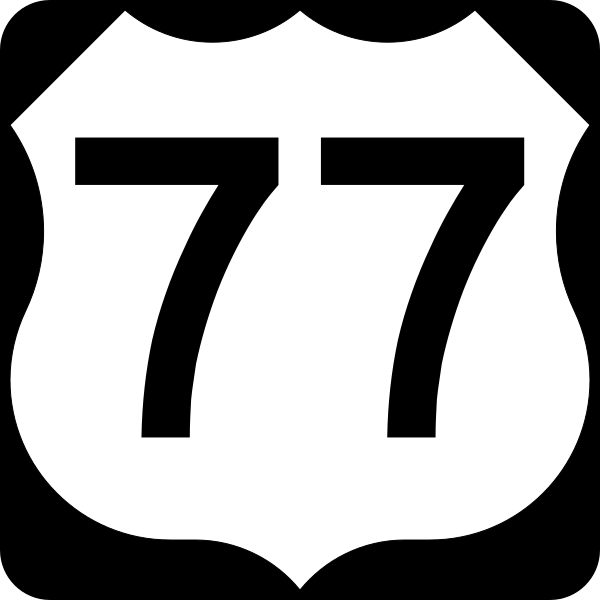

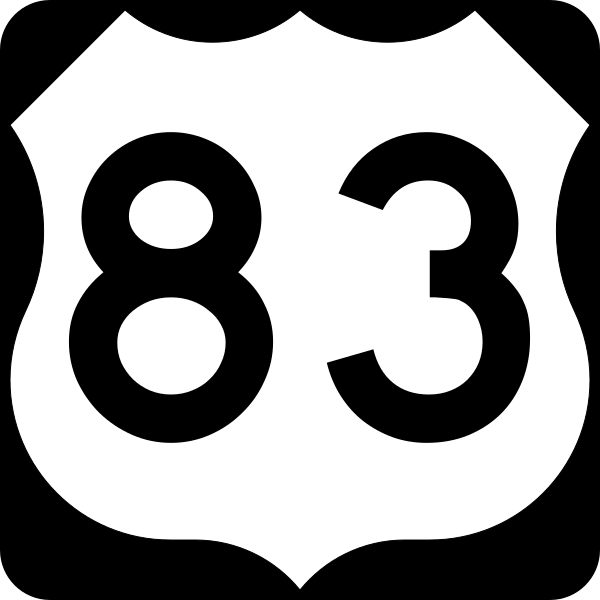
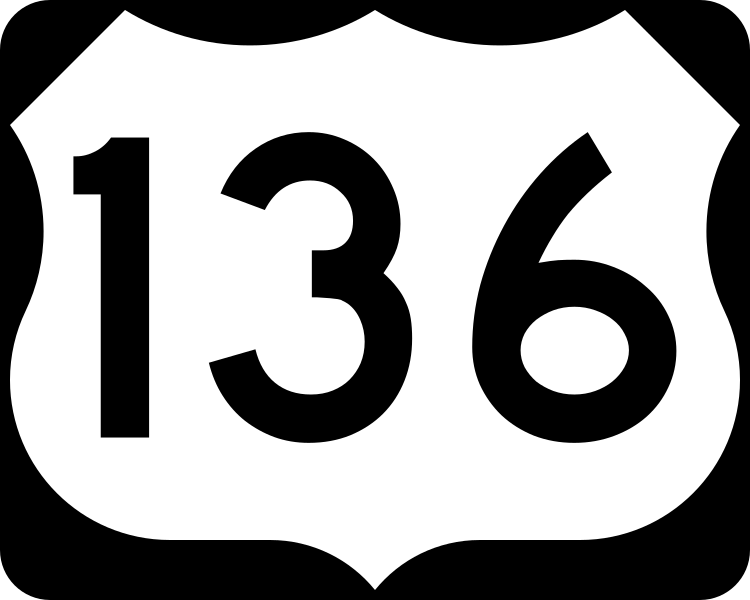

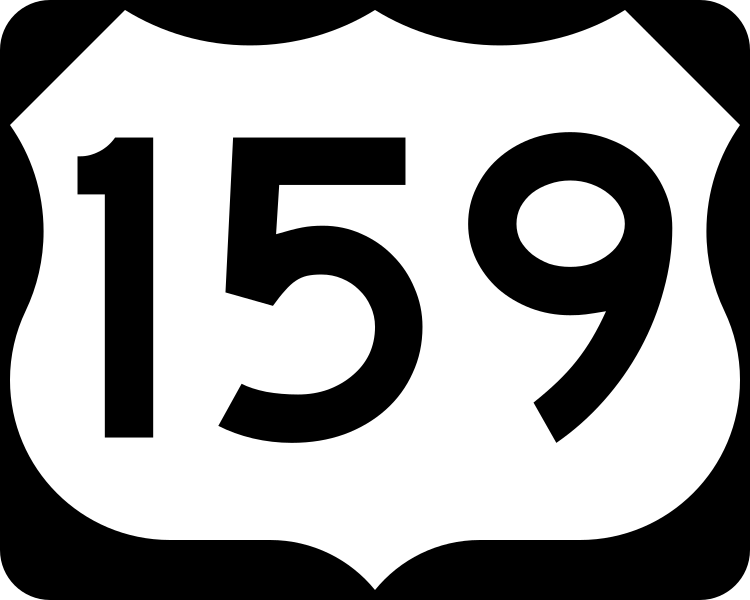

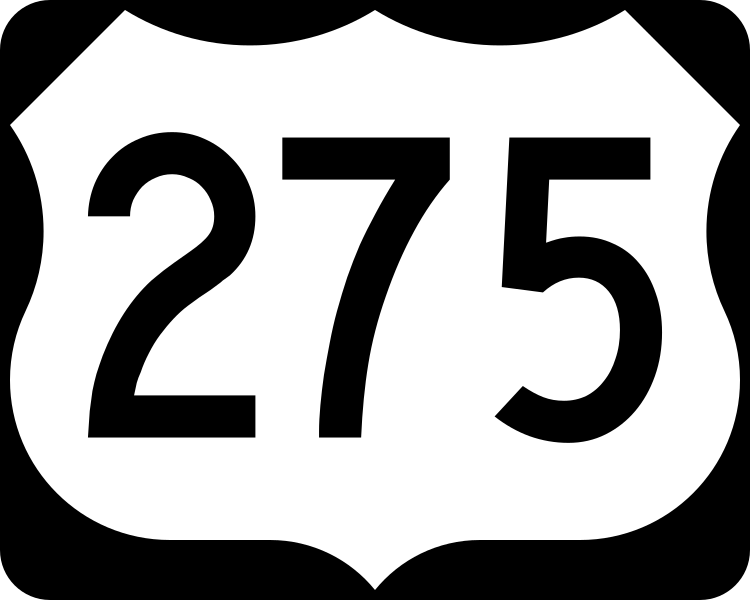
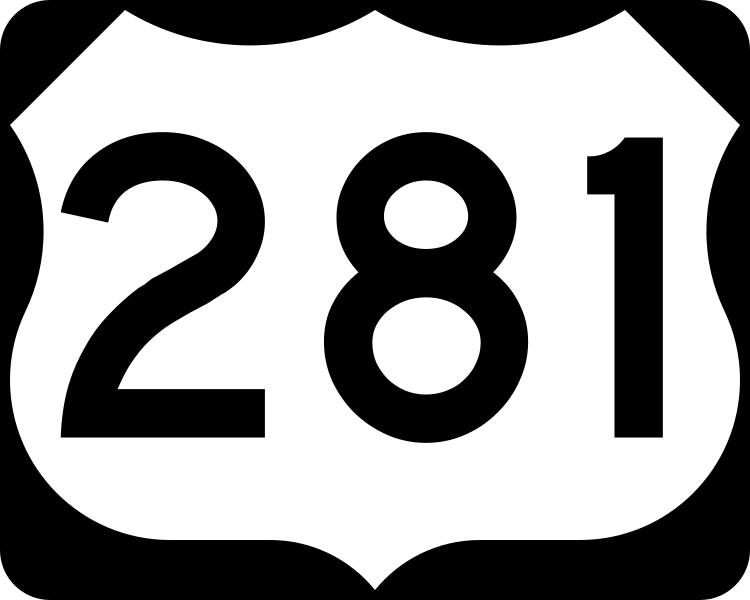
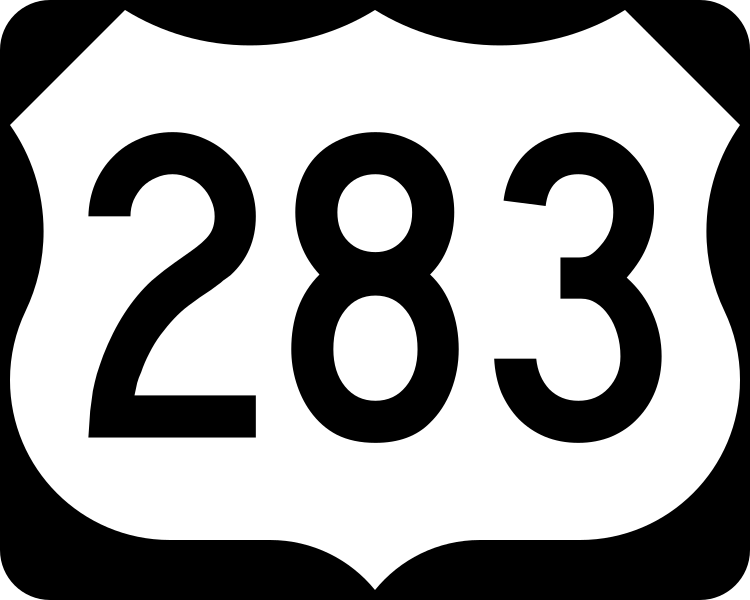
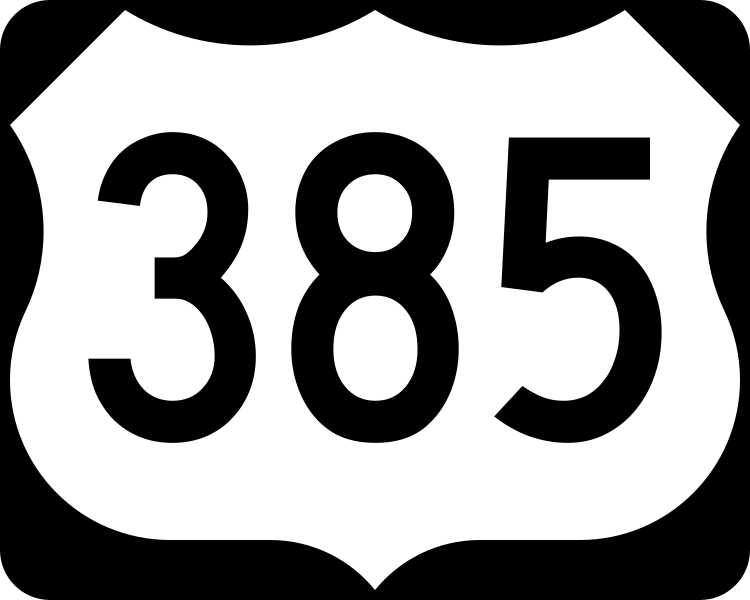
Public transit
- Lincoln StarTran
- Omaha Metro Transit
- Scottsbluff Tri-City Roadrunner
- Sioux City Transit
Intercity bus service
- Burlington Trailways
- Express Arrow
- Jefferson Lines
- Panhandle Trails
Law and government
Main article: Government of Nebraska

The Government of Nebraska operates under the framework of the Nebraska Constitution, adopted in 1875, and is divided into three branches: executive, legislative, and judicial.
Executive branch
The head of the executive branch is Governor Jim Pillen (Republican). The Governor of Nebraska is the head of government of the U.S. state of Nebraska as provided by the fourth article of the Constitution of Nebraska. Other elected officials in the executive branch are Lieutenant Governor Joe Kelly, Attorney General Mike Hilgers, Secretary of State Bob Evnen, State Treasurer John Murante, and State Auditor Mike Foley. All elected officials in the executive branch serve four-year terms.
Legislative branch
Nebraska is the only state in the United States with a 'single-house' unicameral legislature. Although this house is officially known simply as the "Legislature", and more commonly called the "Unicameral", its members call themselves "senators". Nebraska's Legislature is also the only state legislature in the United States that is officially nonpartisan. The senators are elected with no party affiliation next to their names on the ballot, and members of any party can be elected to the positions of speaker and committee chairs. The Nebraska Legislature can also override the governor's veto with a three-fifths majority, in contrast to the two-thirds majority required in some other states.
When Nebraska became a state in 1867, its legislature consisted of two houses: a House of Representatives and a Senate. For years, U.S. Senator George Norris (Senator 1913–1943) and other Nebraskans encouraged the idea of a unicameral legislature and demanded the issue be decided in a referendum. Norris argued: Unicameral supporters also argued that a bicameral legislature had a significant undemocratic feature in the committees that reconciled House and Senate legislation. Votes in these committees were secretive, and would sometimes add provisions to bills that neither house had approved. Nebraska's unicameral legislature today has rules that bills can contain only one subject, and must be given at least five days of consideration. In 1934, due in part to the budgetary pressure of the Great Depression, Nebraska citizens ran a state initiative to vote on a constitutional amendment creating a unicameral legislature, which was approved, which, in effect, abolished the House of Representatives (the lower house).
The Legislature meets in the third Nebraska State Capitol building, built between 1922 and 1932. It was designed by Bertram G. Goodhue. Built from Indiana limestone, the capitol's base is a cross within a square. A 400-foot (122 m) domed tower rises from this base. The Sower, a 19-foot (5.8 m) bronze statue representing agriculture, crowns the building.
Judicial branch
The judicial system in Nebraska is unified, with the Nebraska Supreme Court having administrative authority over all the courts within the state. Nebraska uses the Missouri Plan for the selection of judges at all levels, including county courts (as the lowest-level courts) and twelve district courts, which contain one or more counties. The Court of Appeals hears appeals from the district courts, juvenile courts, and workers' compensation courts.
Federal representation

Nebraska is represented in the U.S. Senate by Republican Deb Fischer, who was first elected in 2012. Nebraska's other Senate seat is currently held by Pete Ricketts, who took office on January 23, 2023.
Nebraska has three representative seats in the U.S. House of Representatives. Until the next election, Nebraska's representatives are Mike Flood (R) of the 1st district, Don Bacon (R) of the 2nd district, and Adrian Smith (R) of the 3rd district.
Nebraska is one of two states (Maine is the other) that allow for a split in the state's allocation of electoral votes in presidential elections. Under a 1991 law, two of Nebraska's five votes are awarded to the winner of the statewide popular vote, while the other three go to the highest vote-getter in each of the state's three congressional districts.
Politics
For most of its history, Nebraska has been a solidly Republican state. Republicans have carried the state in all but one presidential election since 1940: the 1964 landslide election of Lyndon B. Johnson. In the 2004 presidential election, George W. Bush won the state's five electoral votes by a margin of 33 percentage points (making Nebraska's the fourth-strongest Republican vote among states) with 65.9% of the overall vote; only Thurston County, which is majority-Native American, voted for his Democratic challenger John Kerry. In 2008, the state split its electoral votes for the first time: Republican John McCain won the popular vote in Nebraska as a whole and two of its three congressional districts; the second district, which includes the city of Omaha, went for Democrat Barack Obama. Since then, the state has split its electoral vote twice, with the second district going for the Democratic Party candidates Joe Biden in 2020 and Kamala Harris in 2024.
Despite the current Republican domination of Nebraska politics, the state has a long tradition of electing centrist members of both parties to state and federal office; examples include George W. Norris (who served a few years in the Senate as an independent), J. James Exon, Bob Kerrey, and Chuck Hagel. Voters have tilted to the right in recent years, a trend evidenced when Hagel retired from the Senate in 2008 and was succeeded by conservative Republican Mike Johanns to the U.S. Senate, as well as with the 2006 re-election of Ben Nelson, who was considered the most conservative Democrat in the Senate until his retirement in 2013. Johanns retired in 2015 and was succeeded by Ben Sasse, while Nelson retired in 2013 and was succeeded by Deb Fischer, both conservative Republicans.
Though its politics are generally conservative, the state also has a history of progressive reform. Nebraska was the first U.S. state to outlaw sexual assault within a marriage, in 1975. In 1980, it became the first U.S. state to divest from South Africa to protest the racist system of apartheid.
Former President Gerald Ford was born in Nebraska but moved away shortly after birth. Illinois native William Jennings Bryan represented Nebraska in Congress, served as U.S. Secretary of State under President Woodrow Wilson, and unsuccessfully ran for president three times. Former Vice President Dick Cheney was born in Lincoln but moved to Casper.
| Party registration as of September 1, 2025 | Party | Total voters | Percentage | Total | 1,257,860 | 100.00% |
|---|---|---|---|---|---|---|
| Republican | 622,822 | 49.51% | ||||
| Democratic | 329,686 | 26.21% | ||||
| Nonpartisan | 277,828 | 22.09% | ||||
| Libertarian | 17,697 | 1.41% | ||||
| Other/minor parties | 9,827 | 0.78% |
Education
Colleges and universities
University of Nebraska system
- University of Nebraska–Lincoln
- University of Nebraska at Kearney
- University of Nebraska at Omaha
- University of Nebraska Medical Center
- Nebraska College of Technical Agriculture Nebraska State College System
- Chadron State College
- Peru State College
- Wayne State College Community Colleges
- Central Community College
- Little Priest Tribal College
- Metropolitan Community College
- Mid-Plains Community College
- Nebraska Indian Community College
- Northeast Community College
- Southeast Community College
- Western Nebraska Community College Private colleges/universities
- Bellevue University
- Clarkson College
- College of Saint Mary
- Concordia University
- Creighton University
- Doane University
- Grace University
- Hastings College
- Midland University
- Nebraska Christian College
- Nebraska Methodist College
- Nebraska Wesleyan University
- Summit Christian College
- Union Adventist University
- York College
Culture
Arts
Museums Main article: List of museums in Nebraska
Performing arts
- Lied Center for Performing Arts, in Lincoln
- Orpheum Theatre, in Omaha
- Holland Performing Arts Center, in Omaha
- Omaha Community Playhouse, in Omaha
- Rose Blumkin Performing Arts Center, in Omaha
- Blue Barn Theatre, in Omaha
- Omaha Symphony
Sports
Main article: Sports in Nebraska

Professional sports
| Team | Home | First game | Sport | League |
|---|---|---|---|---|
| Omaha Supernovas | Omaha | January 24, 2024 | Volleyball | Pro Volleyball Federation |
| Union Omaha | Omaha | July 25, 2020 | Soccer | USL League One |
| Omaha Storm Chasers | Omaha | Baseball (minor league) (Triple-A) | International League | |
| Nebraska Stampede | Ralston | Football (women's) | Women's Football Alliance | |
| Lincoln Saltdogs | Lincoln | Baseball (independent) | American Association | |
| Omaha Beef | Omaha | Football (indoor) | Champions Indoor Football |
Junior-level sports
| Club | Sport | League | Founded |
|---|---|---|---|
| Lincoln Stars | Ice hockey | United States Hockey League | 1996 |
| Omaha Lancers | 1986 | ||
| Tri-City Storm | 2000 | ||
| No Coast Derby Girls | Roller derby | Women's Flat Track Derby Association | 2005 |
| Omaha Rollergirls | 2006 |
College sports
Main article: List of college athletic programs in Nebraska
Nebraska is currently home to seven member schools of the NCAA, eight of the NAIA, seven of the NJCAA, one of the NCCAA, and one independent school.
The College World Series has been held in Omaha since 1950. It was held at Rosenblatt Stadium from 1950 through 2010, and has been domiciled at Charles Schwab Field Omaha since 2011.
Notes
References
Bibliography
Surveys
- Andreas, Alfred T., History of the State of Nebraska (1882) (a highly detailed history)
- Archer, J. Clark, et al. *Atlas of Nebraska. * (U of Nebraska Press, 2017). Pp. xxii+ 214, color maps, illustrations, photographs, charts, graphs, bibliography. online review
- Creigh, Dorothy Weyers. Nebraska: A Bicentennial History (1977)
- Faulkner, Virginia, ed. Roundup: A Nebraska Reader (1957)
- Chokecherry Places, Essays from the High Plains, Merrill Gilfillan, Johnson Press, Boulder, Colorado, trade paperback, .
- Hickey, Donald R. Nebraska Moments: Glimpses of Nebraska's Past (1992).
- Miewald, Robert D., Nebraska Government & Politics (1984)
- Luebke Frederick C. Nebraska: An Illustrated History (1995)
- Naugle, Ronald C., John J. Montag, and James C. Olson. History of Nebraska (4th ed. U of Nebraska Press, 2015). 568 pp. online review
- Wishart, David J. ed. Encyclopedia of the Great Plains, University of Nebraska Press, 2004, . complete text online ; 900 pages of scholarly articles
- Nebraska: A Guide to the Cornhusker State, WPA Guide, 1939; scanned online edition
Scholarly special studies
- Barnhart, John D. "Rainfall and the Populist Party in Nebraska". American Political Science Review 19 (1925): 527–40. in JSTOR
- Beezley, William H. "Homesteading in Nebraska, 1862–1872", Nebraska History 53 (spring 1972): 59–75
- Bentley, Arthur F. "The Condition of the Western Farmer as Illustrated by the Economic History of a Nebraska Township". Johns Hopkins University Studies in Historical and Political Science 11 (1893): 285–370
- Cherny, Robert W. Populism, Progressivism, and the Transformation of Nebraska Politics, 1885–1915 (1981)
- Bogue Allen G. Money at Interest: The Farm Mortgage on the Middle Border (1955)
- Brunner, Edmund de S. Immigrant Farmers and Their Children (1929)
- Chudacoff, Howard P. Mobile Americans: Residential and Social Mobility in Omaha, 1880–1920 (1972)
- Chudacoff, Howard P. "A New Look at Ethnic Neighborhoods: Residential Dispersion and the Concept of Visibility in a Medium-sized City". Journal of American History 60 (1973): 76–93. about Omaha; in JSTOR
- Coletta, Paolo E. William Jennings Bryan. 3 vols. (1964–69)
- Dick, Everett. The Sod-House Frontier: 1854–1890 (1937)
- Farragher, John Mack. Women and Men on the Overland Trail (1979)
- Fuller, Wayne E. The Old Country School: The Story of Rural Education in the Midwest (1982)
- Grant, Michael Johnston. "Down and Out on the Family Farm" (2002)
- Harper, Ivy. Walzing Matilda: Life and Times of Nebraska Senator Robert Kerrey (1992)
- Holter, Don W. Flames on the Plains: A History of United Methodism in Nebraska (1983)
- Jeffrey, Julie Roy. Frontier Women: The Trans-Mississippi West, 1840–1880 (1979)
- Klein, Maury. Union Pacific: The Birth of a Railroad, 1862–1893 (1986)
- Larsen, Lawrence H. The Gate City: A History of Omaha (1982)
- Lowitt, Richard. George W. Norris 3 vols. (1971)
- Luebke, Frederick C. Immigrants and Politics: The Germans of Nebraska, 1880–1900 (1969)
- Luebke, Frederick C. "The German-American Alliance in Nebraska, 1910–1917". Nebraska History 49 (1969): 165–85
- Olson, James C. J. Sterling Morton (1942)
- Overton, Richard C. Burlington West: A Colonization History of the Burlington Railroad (1941)
- Parsons Stanley B. "Who Were the Nebraska Populists?" Nebraska History 44 (1963): 83–99
- Pierce, Neal. The Great Plains States (1973)
- Pederson, James F., and Kenneth D. Wald. Shall the People Rule? A History of the Democratic Party in Nebraska Politics (1972)
- Riley, Glenda. The Female Frontier. A Comparative View of Women on the Prairie and the Plains (1978)
- Wenger, Robert W. "The Anti-Saloon League in Nebraska Politics, 1898–1910". Nebraska History 52 (1971): 267–92
References
- link. (November 18, 2022 (1920))
- Porter, Rosalie Pedalino. (1996). "Forked Tongue: The Politics of Bilingual Education". Transaction Publishers.
- "Explore Census Data".
- "QuickFacts: Nebraska". United States Census Bureau.
- "Household Income in States and Metropolitan Areas: 2023".
- (2001). "Elevations and Distances in the United States". [[United States Geological Survey]].
- "Nebraska Legislature statute 90-107".
- "Nebraska Legislature statute 1-101".
- "Nebraska Legislature statute 90-112".
- "Nebraska Legislature statute 90-114".
- "Nebraska Legislature statute 90-117".
- "Nebraska Legislature statute 90-113".
- "Nebraska Legislature statute 90-109".
- "Nebraska Legislature statute 90-108".
- "Nebraska Legislature statute 90-110".
- "Nebraska Legislature statute 90-105".
- {{Cite Merriam-Webster. Nebraska
- (2019-09-19). "Distribution of Electoral Votes".
- Koontz, John. "Etymology".
- Hanson, James A. (1993). "Spain on the Plains". Nebraska History.
- [http://www.nebraskastudies.org/0300/frameset_reset.html?http://www.nebraskastudies.org/0300/stories/0301_0113.html "Villasur Sent to Nebraska".] {{Webarchive. link. (May 25, 2017 [http://www.nebraskastudies.org/ Nebraskastudies.org.] {{Webarchive). link. (August 19, 2001 Retrieved January 4, 2015.)
- {{usurped
- link. (October 2, 2018 [https://www.loc.gov/ Library of Congress.] {{Webarchive). link. (April 30, 2011 Retrieved January 4, 2015.)
- Wood, W. Raymond. {{usurped
- Interactive Media Group—Nebraska Educational Telecommunications. "1854 Kansas-Nebraska Act signed". Nebraskastudies.unl.edu.
- ''The Handybook for Genealogists: United States of America'', 10th ed. (Draper Utah: Everton Publishers, 2002).
- Omaha Media Group LLC-. "History of the Fort - History".
- Marsha Hoffman and Dwight A. Radford, "Nebraska", ''Redbook: American State, County, and Town Sources'', 3rd ed. (Provo: Ancestry, 2004), 408.
- ''The Nebraska Indian Wars Reader, 1865–1877'' By R. Eli Paul p. 88 Publisher: University of Nebraska Press (April 1, 1998) {{ISBN. 0-8032-8749-6
- "U.S. Senate: States in the Senate {{!}} Nebraska Timeline".
- ''Redbook''
- (May 2024). "Making Invisible Histories Visible / African American Migration to Omaha".
- (1914-07-28). "Timeline of 20th century Nebraska".
- Phillips, Taylor Kay. (2023). "A Guide to Midwestern Conversation". Clarkson Potter/Ten Speed.
- (February 2017). "The Nebraska Constitution, 1866–2016". Nebraska Legislature, Legislative Research Office.
- "'Honestly, it's not for everyone,' says Nebraska's self-deprecating new tourism campaign". [[The Washington Post]].
- (July 23, 2009). "Nebraska Climate Office {{pipe}} Applied Climate Science {{pipe}} SNR {{pipe}} UNL". Nebraskaclimateoffice.unl.edu.
- "Climate—Twin Cities Development Association, Inc.—Nebraska: Scottsbluff, Gering, TerryTown, Mitchell, Bayard". Tcdne.org.
- [http://www.hprcc.unl.edu/products/atlas.html] {{webarchive. link. (October 7, 2008)
- "Nebraska climate averages". Weatherbase.
- "City and Town Population Totals: 2010–2017".
- "Historical Population Change Data (1910–2020)". United States Census Bureau.
- "Population and Population Centers by State: 2000". United States Census Bureau.
- "2007-2022 PIT Counts by State".
- "The 2022 Annual Homelessness Assessment Report (AHAR) to Congress".
- "DP05: ACS Demographic and Housing Estimates". United States Census Bureau.
- "Historical Census Statistics on Population Totals By Race, 1790 to 1990, and By Hispanic Origin, 1970 to 1990, For The United States, Regions, Divisions, and States".
- (February 2018). "Population of Nebraska: Census 2010 and 2000 Interactive Map, Demographics, Statistics, Quick Facts".
- "2010 Census Data".
- (August 12, 2021). "Racial and Ethnic Diversity in the United States: 2010 Census and 2020 Census". [[U.S. Census Bureau]].
- "2016 American Community Survey—Demographic and Housing Estimates". United States Census Bureau.
- "2016 American Community Survey—Selected Social Characteristics". United States Census Bureau.
- (January 15, 2018). "Terrorized by ISIS, Yazidi refugees find welcoming community in Nebraska".
- (November 9, 2018). "Lincoln provides safe space for Yazidi refugee community".
- (September 8, 2015). "Yazidis Settle in Nebraska, but Roots Run Deep in Iraq".
- (August 5, 2019). "Editorial: Nebraska provides a welcoming new home for Yazidis fleeing Iraq".
- (December 6, 2016). "Last state to ban drivers licenses for Dreamers, Nebraska, passes bill to allow them".
- "Immigrants in Nebraska".
- "[http://www.cleveland.com/datacentral/index.ssf/2012/06/americas_under_age_1_populatio.html Americans under age{{spaces1 now mostly minorities, but not in Ohio: Statistical Snapshot] {{Webarchive. link. (July 14, 2016 ". ''[[The Plain Dealer]]''. June 3, 2012.)
- "Births: Final Data for 2013".
- "Births: Final Data for 2014".
- "Births: Final Data for 2015".
- "Data".
- "Births: Final Data for 2017".
- "Data".
- "Data".
- "Data".
- "Data".
- "Data".
- (May 11, 2015). "Religious Landscape Study".
- "PRRI – American Values Atlas".
- "The Association of Religion Data Archives {{pipe}} State Membership Report". www.thearda.com.
- (March 25, 2010). "State Individual Income Tax Rates, 2000–2010". The Tax Foundation.
- [http://www.revenue.ne.gov/question/slstax_faq.html#s02 "Frequently Asked Questions about Nebraska Sales and Use Tax".] {{Webarchive. link. (January 24, 2012 [http://www.revenue.ne.gov/index.html Nebraska Department of Revenue.] {{Webarchive). link. (January 25, 2012 Retrieved August 27, 2012.)
- "Sales and Use Tax FAQs".
- "U.S. Census Bureau QuickFacts: Iowa".
- "GDP by State". Greyhill Advisors.
- "Nebraska State Agriculture Overview—2006". [[United States Department of Agriculture]].
- (November 19, 2021). "Nebraska's 1.9% unemployment rate the lowest on record in US".
- staff, CNBC com. (2025-07-10). "15. Nebraska".
- "Kool-Aid Days".
- "It's National Kool-Aid Day!".
- (May 22, 1998). "Nebraska takes sweet turn, names Kool-Aid state drink".
- "History: Kool-Aid: Hastings Museum". [[Hastings Museum]].
- Jirovsky, Kristin. [http://journalstar.com/articles/2009/01/08/news/business/doc4966307080dcd635956810.txt "Owner of Nail Jack Tools wants to share former Vise-Grip plant"] {{Webarchive. link. (February 20, 2021 , ''Lincoln Journal-Star''. January 8, 2009.)
- "Nebraska Electricity Profile Analysis". U.S. EIA.
- Hanna, Thomas M.. (Jan 30, 2015). "Community-Owned Energy: How Nebraska Became the Only State to Bring Everyone Power From a Public Grid". Christine Hanna.
- [http://www.cprr.org/Museum/Pacific_Railroad_Acts.html "An Act to aid in the construction of a railroad and telegraph line from the Missouri river to the Pacific Ocean, and to secure to the government the use of the same for postal, military, and other purposes] {{Webarchive. link. (May 27, 2016 12 Stat. 489, July 1, 1862)
- (1865). "Profile Showing the Grades upon the Different Routes Surveyed for the Union Pacific Rail Road Between the Missouri River and the Valley of the Platte River".
- Leip, David. "Presidential General Election Results Comparison – Nebraska". US Election Atlas.
- [http://www.kancoll.org/books/andreas_ne/state/state-p6.html "Nebraska as a State".] {{Webarchive. link. (December 2, 2008 [http://www.kancoll.org/books/andreas_ne/hon_tabl.html ''Andreas's History of the State of Nebraska''.] {{Webarchive). link. (May 29, 2009 . Retrieved February 18, 2010.)
- "Governor of Nebraska".
- "State of Nebraska".
- "Lieutenant Governor of Nebraska".
- "Nebraska Attorney General".
- "Nebraska Secretary of State".
- "Nebraska State Treasurer".
- "Nebraska Auditor of Public Accounts".
- "Nebraska Legislature".
- "Nebraska Legislature - on Unicameralism".
- "Nebraska Legislature".
- "Nebraska Legislature".
- (30 June 2016). "Nebraska Supreme Court".
- (1 July 2016). "Nebraska Supreme Court".
- (30 June 2016). "Nebraska Supreme Court".
- (20 April 2017). "Nebraska Supreme Court".
- (30 June 2016). "Nebraska Supreme Court".
- (30 June 2016). "Nebraska Supreme Court".
- (30 June 2016). "Nebraska Supreme Court".
- "State of Nebraska".
- "United States Senator Deb Fischer".
- Hammel, Paul. (December 5, 2022). "Ben Sasse makes it official, will resign U.S. Senate seat Jan. 8".
- (June 28, 2022). "Mike Flood for U.S. Congress".
- "U.S. Representative Don Bacon".
- (3 December 2012). "U.S. Representative Adrian Smith".
- (July 1, 2009). "Spousal Rape Laws Continue to Evolve".
- Lansing, Paul. (1981). "The Divestment of United States Companies in South Africa and Apartheid". Nebraska Law Review.
- (March 1, 2023). "Registration Statistics".
This article was imported from Wikipedia and is available under the Creative Commons Attribution-ShareAlike 4.0 License. Content has been adapted to SurfDoc format. Original contributors can be found on the article history page.
Ask Mako anything about Nebraska — get instant answers, deeper analysis, and related topics.
Research with MakoFree with your Surf account
Create a free account to save articles, ask Mako questions, and organize your research.
Sign up freeThis content may have been generated or modified by AI. CloudSurf Software LLC is not responsible for the accuracy, completeness, or reliability of AI-generated content. Always verify important information from primary sources.
Report