From Surf Wiki (app.surf) — the open knowledge base
Naval Air Weapons Station China Lake
US Navy R&D installation in California
US Navy R&D installation in California
| Field | Value | |
|---|---|---|
| name | Naval Air Weapons Station China Lake | |
| native_name | Armitage Field | |
| partof | ||
| location | Ridgecrest, California | |
| nearest_town | ||
| country | United States | |
| image | File:US Navy 051215-N-9277A-003 An F-A-18F Super Hornet assigned to Air Test and Evaluation Squadron Nine (VX-9) returns to home at Naval Air Weapons Station (NAWS) China Lake.jpg | |
| caption | An F/A-18F Super Hornet assigned to VX-9 returns to its home at NAWS China Lake | |
| image2 | [[File:Naval Air Weapons Station China Lake logo.jpg | 175px]] |
| type | Naval Air Weapons Station | |
| coordinates | ||
| pushpin_map | USA#California | |
| pushpin_map_caption | Location in the United States | |
| pushpin_label | NAWS China Lake | |
| pushpin_label_position | top | |
| ownership | Department of Defense | |
| operator | US Navy | |
| controlledby | Navy Region Southwest | |
| open_to_public | ||
| site_other_label | ||
| site_other | ||
| site_area | 1.1 e6acre (including ranges) | |
| code | ||
| built | (civilian use) | |
| used | 1942 – present | |
| height | ||
| length | ||
| fate | ||
| condition | Operational | |
| events | 2019 Ridgecrest earthquakes | |
| current_commander | RDML Keith ‘Brownie’ Hash | |
| past_commanders | ||
| occupants | ||
| website | ||
| IATA | ||
| ICAO | KNID | |
| FAA | NID | |
| WMO | 746120 | |
| elevation | 696.1 m | |
| r1-number | 03/21 | |
| r1-length | 3048.3 m | |
| r1-surface | Concrete | |
| r2-number | 14/32 | |
| r2-length | 2747.1 m | |
| r2-surface | Asphalt | |
| r3-number | 08/26 | |
| r3-length | 2167.4 m | |
| r3-surface | Concrete | |
| h1-length | ||
| airfield_other_label | ||
| airfield_other | 1x VTOL pad | |
| footnotes | Source: Federal Aviation Administration |
| r1-number = 03/21 | r1-length = 3048.3 m | r1-surface = Concrete | r2-number = 14/32 | r2-length = 2747.1 m | r2-surface = Asphalt | r3-number = 08/26 | r3-length = 2167.4 m | r3-surface = Concrete | h1-number = | h1-length = | h1-surface =
Naval Air Weapons Station (NAWS) China Lake is a large military installation in California that supports the research, testing and evaluation programs of the United States Navy. It is part of Navy Region Southwest under Commander, Navy Installations Command, and was originally known as Naval Ordnance Test Station (NOTS).
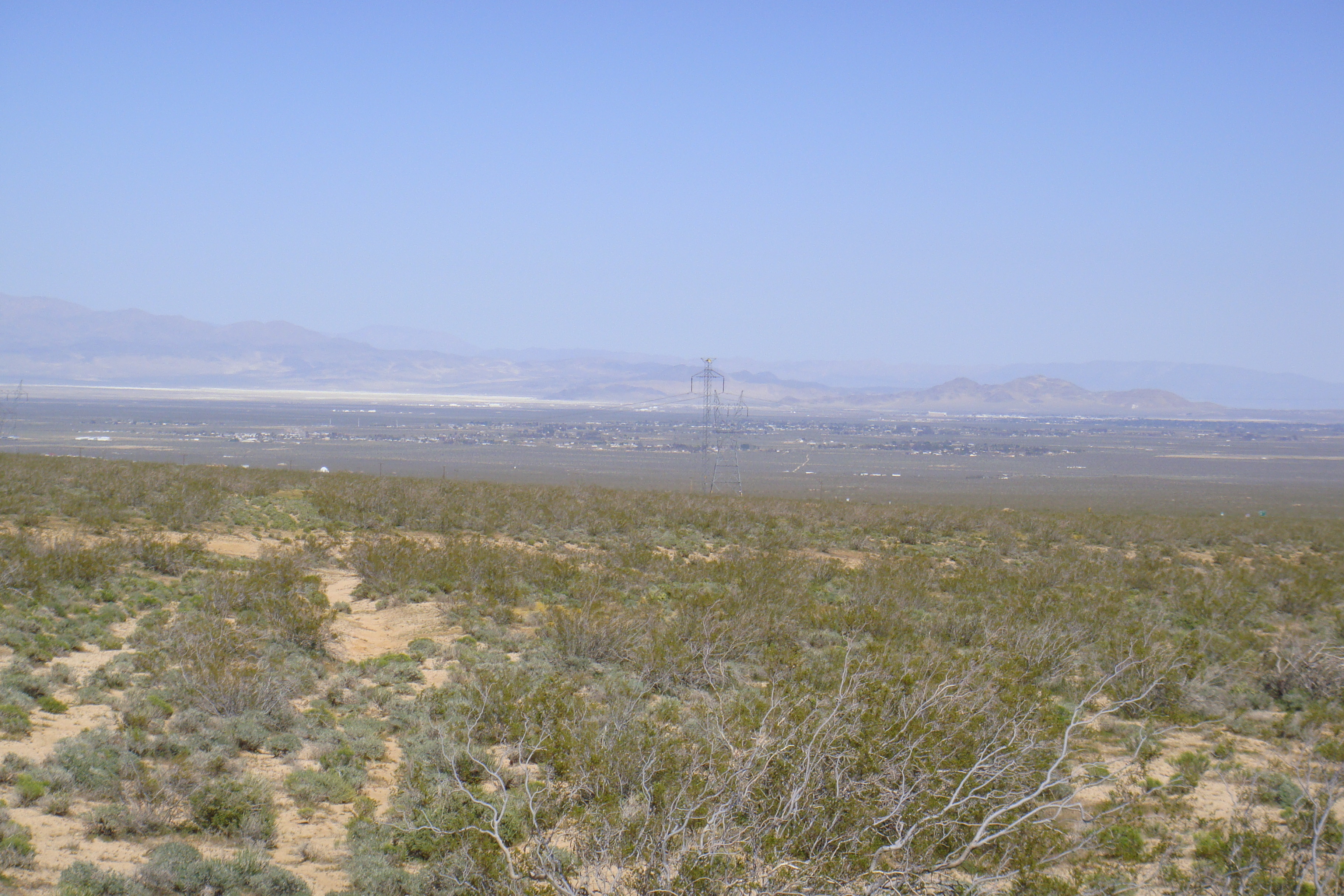
The installation is located in the Western Mojave Desert region of California, approximately 150 mi north of Los Angeles. Occupying land in three counties – Kern, San Bernardino, and Inyo – the installation's closest neighbors are the city of Ridgecrest and the communities of Inyokern, Trona, and Darwin.
China Lake is the United States Navy's largest single landholding, representing 85% of the Navy's land for weapons and armaments research, development, acquisition, testing, and evaluation (RDAT&E) use and 38% of the Navy's land holdings worldwide. In total, its two ranges and main site cover more than 1100000 acre, an area larger than the state of Rhode Island. As of 2010, at least 95% of that land is undeveloped. The roughly $3 billion infrastructure of the installation consists of 2,132 buildings and facilities, 329 mi of paved roads, and 1801 mi of unpaved roads.
The 19600 sqmi of restricted and controlled airspace at China Lake makes up 12% of California's total airspace. Jointly controlled by NAWS China Lake, Edwards Air Force Base and Fort Irwin, this airspace is known as the R-2508 Special Use Airspace Complex.
A 7.1 magnitude earthquake on July 5, 2019, whose epicenter was within the boundaries of NAWS China Lake, resulted in the facility being temporarily evaluated as "not mission capable" due to damage.
Geography
Location
The installation is located in the Western Mojave Desert region of California, approximately 150 mi north of Los Angeles. Occupying land in three counties – Kern, San Bernardino, and Inyo – the installation's closest neighbors are the city of Ridgecrest and the communities of Inyokern, Trona, and Darwin.
Armitage Field
All aircraft operations at NAWS China Lake are conducted at Armitage Field, which has three runways with more than 26000 ft of taxiway. More than 20,000 crewed and uncrewed military sorties are conducted out of Armitage by U.S. Armed Forces each year.
Foreign military personnel also use the airfield and range to conduct more than 1,000 test and evaluation operations each year.
Wildlife
The majority of the land at NAWS China Lake is undeveloped. It provides habitat for more than 340 species of wildlife, including feral horses, feral burros (donkeys), bighorn sheep and endangered animals, such as the desert tortoise, Mojave ground squirrel and Mojave tui chub. The Mojave tui chub was introduced to China Lake's Lark Seep in 1971. Lark Seep is fed by the water outflow from a wastewater treatment plant located at China Lake. The tui chub population has since grown and expanded to a population of around 6,000 in 2003. The desert on which the installation is built is home to 650 plant types.
Petroglyphs
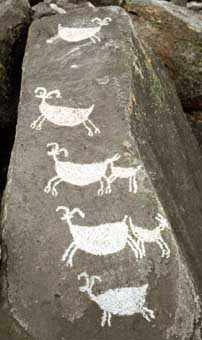
The area was once home to the Native American Coso People, whose presence is marked by thousands of archaeological sites; the Coso traded with other tribes as far away as San Luis Obispo County, California. This locale was also used by European miners and settlers whose cabins and mining structures are extant throughout the Station.
The Coso Range Canyons are home to the Coso Rock Art District, an area of some 99 sqmi which contains more than 50,000 documented petroglyphs, the highest concentration of rock art in the Northern Hemisphere.
The precise age of the petroglyphs is unknown. A broad range of dates can be inferred from archaeological sites in the area and some artifact forms depicted on the rocks. Archaeologists disagree on their age, but it is generally believed that most petroglyphs are between one and three thousand years old. Designs range from animals to abstract to anthropomorphic figures. Opinions vary widely on whether the petroglyphs were made for ceremonial purposes, whether they tell stories to pass along the mythology of their makers, or whether they are records of hunting hopes or successes, clan symbols, or maps.
Declared a National Historic Landmark in 1964, the rock art in Little Petroglyph Canyon provides insights into the cultural heritage and knowledge of the desert's past. Everything in the canyon area is protected, including the obsidian chips and any artifacts or tools, as well as the petroglyphs and native vegetation and wildlife.
Little Petroglyph Canyon contains 20,000 documented images. It is open to the public for tours.
Monorail
Remains of the Epsom Salts Monorail are signposted and visible within the site. The central rail, on which mining tractors pulled minerals from a mine to the nearest railway siding, was supported on wooden A-frames of a low trestle.
Coso Geothermal Field
The Coso Geothermal Field is within China Lake boundaries. The geothermal power plants located there began generating electricity in 1987 and were the Navy's first foray into producing clean power from the earth's thermal energy (heat). The plant's nameplate capacity is 270 megawatts, with a total annual electricity production from the field of 1,175 gigawatt-hours.
Tenant Squadrons
| Insignia | Squadron | Code | Callsign/Nickname | Assigned Aircraft | ||
|---|---|---|---|---|---|---|
| [[File:VX-9 Emblem.svg | frameless | 88x88px]] | Air Test and Evaluation Squadron 9 | VX-9 | Vampires | F/A-18E Super Hornet, F/A-18F Super Hornet, E/A-18G Growler, F-35C Lightning II |
| [[File:VX-31 Emblem.svg | frameless | 88x88px]] | Air Test and Evaluation Squadron 31 | VX-31 | Dust Devils | F/A-18C Hornet, F/A-18D Hornet, F/A-18E Super Hornet, F/A-18F Super Hornet, E/A-18G Growler, MH-60S Seahawk, |
Tenant commands
The 620 active duty military, 4,166 civilian employees and 1,734 contractors that make up China Lake's workforce are employed across multiple tenant commands, including:
- Naval Air Warfare Center Weapons Division
- Air Test and Evaluation Squadron 9 (VX-9)
- Air Test and Evaluation Squadron 31 (VX-31)
- Marine Aviation Detachment
- Explosive Ordnance Disposal Mobile Unit 3 Detachment
- Explosive Ordnance Disposal Testing and Evaluation Unit 1
- Naval Facilities Engineering Command Southwest Detachment
- Naval Construction Training Center Port Hueneme (Seabees)
History
China Lake is a dry lake. Its name comes from Chinese prospectors harvesting borax from the lake bed, approximately 1.5 mile south of Paxton Ranch. The operation was known locally as "The Little Chinese Borax Works".
Naval Ordnance Test Station (NOTS)
Amid World War II, adequate facilities were needed by the California Institute of Technology (Caltech) for test and evaluation of rockets. At the same time, the Navy needed a new proving ground for aviation ordnance. Caltech's Charles C. Lauritsen and then U.S. Navy Commander Sherman E. Burroughs worked together to find a site that would meet both their needs.
In the early 1930s, an emergency landing field had been built by the Works Progress Administration in the Mojave Desert near the small town of Inyokern, California. Opened in 1935, the field was acquired by the United States Army Air Forces (USAAF) in 1942. In November 1943, it was transferred to the Navy, which established China Lake as the Naval Ordnance Test Station (NOTS).
The NOTS mission was defined in a letter by the Secretary of the Navy as ".... a station having for its primary function the research, development, and testing of weapons, and having an additional function of furnishing primary training in the use of such weapons." Testing began within a month of the Station's formal establishment. The vast and sparsely populated desert, with near-perfect flying weather and practically unlimited visibility, proved an ideal location for test and evaluation activities and a complete research and development establishment.
During 1944, NOTS worked on the development and testing of the 3.5-inch, 5-inch, HVAR and 11.75-inch (Tiny Tim) rockets.
Manhattan Project funding was used to construct a new airfield at NOTS, with three runways, 10000 ft, 7700 ft and 9000 ft long, each 200 ft wide to accommodate the Boeing B-29 Superfortress bomber. Fuel storage was provided with a capacity of 200000 usgal of gasoline and 20000 usgal of oil. The airfield was opened on June 1, 1945, and named Armitage Field after Navy Lieutenant John Armitage, who was killed while testing a Tiny Tim rocket at NOTS in August 1944. Work done by Caltech at NOTS for the Manhattan Project - particularly the testing of bomb shapes dropped from B-29s - was included as part of codename Project Camel.
In 1950, NOTS scientists and engineers developed the air-intercept missile (AIM) 9 Sidewinder, which became the world's most used and most copied air-to-air missile. Other rockets and missiles developed or tested at China Lake include the Mighty Mouse, Zuni, Shrike, HARM, Joint Stand-Off Weapon (JSOW) and Joint Direct Attack Munition (JDAM).
The two Randsburg Wash Target Test Towers (Buildings 70021 and 70022) situated at are significant for their role in the naval testing of proximity or variable time (VT) fuzes, a vital element of the U.S. Navy's weapons program. The towers played a key role in the Cold War proximity fuze test program at the U.S. Navy's Randsburg Wash facility, a program that eventually led to the Navy adapting the use of these fuzes to guided missiles. The towers are important on a national level during the period of significance between 1952 and 1960; the years in which the most important achievements in the U.S. Navy's developments of the properties and attributes of proximity fuzes. The towers are also significant for their unique engineering achievement, as 360 foot-tall, pyramidal wood towers. Targets are suspended between the two towers.
In June 1963, President John F. Kennedy visited NAWS China Lake for an air show and to see the Michelson Lab.
Naval Weapons Center
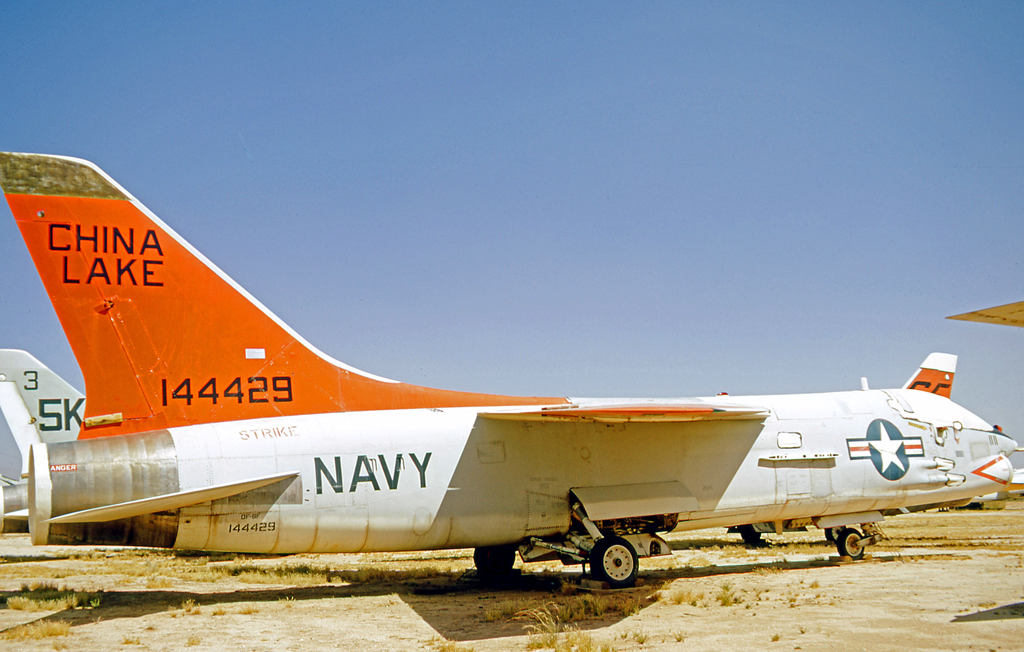
In July 1967, NOTS China Lake and the Naval Ordnance Laboratory in Corona, California, became the Naval Weapons Center. The Corona facilities were closed, and their functions transferred to the desert in 1971. In July 1979, the mission and functions of the National Parachute Test Range at Naval Air Facility El Centro were transferred to China Lake.
Naval Air Weapons Station
In January 1992, the Naval Weapons Center and the Pacific Missile Test Center Point Mugu were disestablished and joined with naval units at Kirtland AFB in Albuquerque and at the White Sands Missile Range at White Sands, NM as a single command - the Naval Air Warfare Center Weapons Division (NAWCWD) of the Naval Air Systems Command (NAVAIR). At the same time, the physical plant at China Lake was designated as a Naval Air Weapons Station and became the host of the NAVAIR Weapons Division, performing the base-keeping functions.
In 1982, the community area of China Lake, including most of the base housing, was annexed by the City of Ridgecrest. In 2013, Congress reserved China Lake's acreage for an additional 25 years for military use.
In 2014, U.S. Representative Kevin McCarthy of California introduced a bill to permanently designate Naval Air Weapons Station China Lake property for military use, arguing it would save taxpayer money and enhance the base's mission. The bill would add 25000 acre, including about 7500 acre that were part of a bombing range in San Bernardino County, as well as 19000 acre along the station's southwest boundary. The Bureau of Land Management said that DoD needs could change in future decades and that it is a popular recreation area with trail riding, campsites, and hunting, and an important wildlife corridor, especially for the threatened desert tortoise.
Between November 7 and 9, 2018, NAWS was used as the filming location for the fictional Mach 10-capable aircraft known as Darkstar featured in the opening scene of Paramount's Top Gun: Maverick, later released in 2022.
In July 2019, two large earthquakes struck Southern California; both had epicenters within the NAWS boundaries. The first, on July 4, a 6.4 magnitude quake, caused no injuries at NAWS, and the initial reports showed that all buildings were intact. The second, a 7.1 magnitude earthquake on July 5, resulted in the facility being evaluated as "not mission capable". The report shows that officials assessed all buildings, utilities, and facilities — 3,598 structures in all — for 13 days after the earthquakes and found damage totaled $5.2 billion. Replacing buildings alone would cost $2.2 billion, but officials also must replace or repair specialized equipment, furniture, machine tools, telecommunication assets and other facilities.
Weapons developed at China Lake

- AAM-N-5 Meteor
- AIM-9 Sidewinder
- AGM-45 Shrike
- AGM-62 Walleye
- BOAR (rocket)
- China Lake Grenade Launcher
- CL-20
- Gimlet (rocket)
- Holy Moses (rocket)
- Hopi (missile)
- LTV-N-4
- Ram (rocket)
- RUR-4 Weapon Alpha
- SLAM-ER
- Terasca
- Tiny Tim (rocket)
- Tomahawk (missile family)
Other notable projects
- Glowstick
- NOTS-EV-1 Pilot
References
References
- {{FAA-airport
- "Welcome to Naval Air Weapons Station China Lake". [[United States Navy]] [[Commander, Navy Installations Command]].
- [https://web.archive.org/web/20100920123255/http://cnic.navy.mil/cnrsw/ Commander, Navy Region Southwest]
- (September 27, 1955). "Record broken by land sled". Spokesman-Review.
- Salahieh, Nouran. (2019-07-06). "Naval Air Weapons Station China Lake in Ridgecrest Evacuated, Deemed Not 'Mission Capable' After Quake".
- (2003). "Currents". China Lake and the Tui Chub.
- [https://archive.today/20120722171124/http://www.cr.nps.gov/archeology/ROCKART/ NPS Archeology Program: Coso Rock Art] www.cr.nps.gov
- Shipstead, Maggie. (2015-10-29). "The Secret City".
- Monastero, Francis C.. (September–October 2002). "Model for Success: An Overview of Industry-Military Cooperation in the Development of Power Operations at the Coso Geothermal Field in Southern California".
- "Electricity Data Browser - List of plants for geothermal, California, all sectors, Coso".
- (2015). "Naval Air Weapons Station China Lake: Tenant Commands". United States Navy.
- Panlaqui, Carol. "What's in a Name?". [[Maturango Museum]].
- "Naval Air Weapons Station, China Lake". The California State Military Museum.
- (1978). "The Grand Experiment at Inyokern". U.S. Government Printing Office.
- "China lake Forecasters' Handbook – Section 1 Basic Description".
- "Naval Ordnance Test Station Inyokern, Randsburg Wash Facility Target Test Towers, Tower Road, China Lake, Kern County, CA".
- Freking. (April 29, 2014). "Obama administration opposes China Lake expansion". The Tribune.
- (2019-07-04). "Aftershocks following Southern California earthquake".
- Alejandra Reyes-Velarde. (August 14, 2019). "Earthquakes caused up to $5 billion in damage to China Lake naval base".
This article was imported from Wikipedia and is available under the Creative Commons Attribution-ShareAlike 4.0 License. Content has been adapted to SurfDoc format. Original contributors can be found on the article history page.
Ask Mako anything about Naval Air Weapons Station China Lake — get instant answers, deeper analysis, and related topics.
Research with MakoFree with your Surf account
Create a free account to save articles, ask Mako questions, and organize your research.
Sign up freeThis content may have been generated or modified by AI. CloudSurf Software LLC is not responsible for the accuracy, completeness, or reliability of AI-generated content. Always verify important information from primary sources.
Report