From Surf Wiki (app.surf) — the open knowledge base
Nationality
Legal status establishing the person as a subject of a sovereign state

Legal status establishing the person as a subject of a sovereign state
Nationality is the legal status of belonging to a particular nation, defined as a group of people organized in one country, under one legal jurisdiction, or as a group of people who are united on the basis of culture.
In international law, nationality is a legal identification establishing the person as a subject, a national, of a sovereign state. It affords the state jurisdiction over the person and affords the person the protection of the state against other states. The rights and duties of nationals vary from state to state, and are often complemented by citizenship law, in some contexts to the point where citizenship is synonymous with nationality. However, nationality differs technically and legally from citizenship, which is a different legal relationship between a person and a country. The noun "national" can include both citizens and non-citizens. The most common distinguishing feature of citizenship is that citizens have the right to participate in the political life of the state, such as by voting or standing for election. However, in most modern countries all nationals are citizens of the state, and full citizens are always nationals of the state.
In international law, a "stateless person" is someone who is "not considered as a national by any state under the operation of its law". To address this, Article 15 of the Universal Declaration of Human Rights states that "Everyone has the right to a nationality", and "No one shall be arbitrarily deprived of his nationality nor denied the right to change his nationality", even though, by international custom and conventions, it is the right of each state to determine who its nationals are. Such determinations are part of nationality law. In some cases, determinations of nationality are also governed by public international law—for example, by treaties on statelessness or the European Convention on Nationality. For when a person lacks nationality, globally only 23 countries have established dedicated statelessness determination procedures. Even where such procedures exist, they still have shortcomings in accessibility and functionality, preventing stateless people from accessing rights connected to being determined stateless.
The general process of acquiring nationality is called naturalization. Each state determines in its nationality law the conditions (statute) under which it will recognize persons as its nationals, and the conditions under which that status will be withdrawn. Some countries permit their nationals to have multiple nationalities, while others insist on exclusive allegiance.
Due to the etymology of nationality, in older texts or other languages the word "nationality", rather than "ethnicity", is often used to refer to an ethnic group (a group of people who share a common ethnic identity, language, culture, lineage, history, and so forth). Individuals may also be considered nationals of groups with autonomous status that have ceded some power to a larger sovereign state.
Nationality is also employed as a term for national identity, with some cases of identity politics and nationalism conflating the legal nationality as well as ethnicity with a national identity.
International law
Nationality is the status that allows a nation to grant rights to the subject and to impose obligations upon the subject.
In European law, nationality is the status or relationship that gives the nation the right to protect a person from other nations. A person's status as being the national of a country is used to resolve the conflict of laws.
Within the broad limits imposed by a few treaties and international law, states may freely define who are and are not their nationals. However, since the Nottebohm case, other states are only required to respect the claim(s) by a state to protect an alleged national if the nationality is based on a true social bond. In the case of dual nationality, the states may determine the most effective nationality for the person, to determine which state's laws are the most relevant. There are also limits on removing a person's status as a national. Article 15 of the Universal Declaration of Human Rights states that "Everyone has the right to a nationality," and "No one shall be arbitrarily deprived of his nationality nor denied the right to change his nationality."
Determining factors
A person can be recognized or granted nationality on a number of bases. Usually, nationality based on circumstances of birth is automatic, but an application may be required.
- Nationality by family (jus sanguinis). If one or both of a person's parents are citizens of a given state, then the person may have the right to be a citizen of that state as well. Formerly this might only have applied through the paternal line, but sex equality became common since the late twentieth century. Citizenship is granted based on ancestry or ethnicity and is related to the concept of a nation state common in Europe. Where jus sanguinis holds, a person born outside a country, one or both of whose parents are citizens of the country, is also a citizen. Some states (United Kingdom, Canada) limit the right to citizenship by descent to a certain number of generations born outside the state; others (Germany, Ireland, Switzerland) grant citizenship only if each new generation is registered with the relevant foreign mission within a specified deadline; while others (Italy, for example) have no limitation on the number of generations born abroad who can claim citizenship of their ancestors' country. This form of citizenship is common in civil law countries.
- Nationality by birth (jus soli). Some people are automatically nationals of the state in which they are born. This form of citizenship originated in England, where those who were born within the realm were subjects of the monarch (a concept pre-dating that of citizenship in England) and is common in common law countries. Most countries in the Americas grant unconditional jus soli citizenship, while it has been limited or abolished in almost all other countries.
- In many cases, both jus soli and jus sanguinis hold citizenship either by place or parentage (or both).
- Nationality by marriage (jus matrimonii). Many countries fast-track naturalization based on the marriage of a person to a citizen. Countries that are destinations for such immigration often have regulations to try to detect sham marriages, where a citizen marries a non-citizen typically for payment, without them having the intention of living together. Many countries (United Kingdom, Germany, United States, Canada) allow citizenship by marriage only if the foreign spouse is a permanent resident of the country in which citizenship is sought; others (Switzerland, Luxembourg) allow foreign spouses of expatriate citizens to obtain citizenship after a certain period of marriage, and sometimes also subject to language skills and proof of cultural integration (e.g. regular visits to the spouse's country of citizenship).
- Naturalization. States normally grant nationality to people who have entered the country legally and been granted a permit to stay, or been granted political asylum, and also lived there for a specified period. In some countries, naturalization is subject to conditions which may include passing a test demonstrating reasonable knowledge of the language or way of life of the host country, good conduct (no serious criminal record), and moral character (such as drunkenness, or gambling, or an understanding of the nature of drunkenness, or gambling) vowing allegiance to their new state or its ruler and renouncing their prior citizenship. Some states allow dual citizenship and do not require naturalized citizens to formally renounce any other citizenship.
- Nationality by investment or economic citizenship. Wealthy people invest money in property or businesses, buy government bonds or simply donate cash directly, in exchange for citizenship and a passport. Whilst legitimate and usually limited in quota, the schemes are controversial. Costs for citizenship by investment range from as little as $100,000 (£74,900) to as much as €2.5m (£2.19m)
Legal protections
The following instruments address the right to a nationality:
- Convention Relating to the Status of Refugees
- Protocol Relating to the Status of Refugees
- Convention Relating to the Status of Stateless Persons
- Convention on the Reduction of Statelessness
- European Convention on Nationality
- African Charter on the Rights and Welfare of the Child (art. 6)
- American Convention on Human Rights (art. 20)
- American Declaration of the Rights and Duties of Man (art. 19)
- Arab Charter on Human Rights (art. 24)
- Convention on the Elimination of All Forms of Discrimination Against Women (art. 9)
- International Convention on the Elimination of All Forms of Racial Discrimination (art. 5(d)(iii))
- Convention on the Rights of Persons with Disabilities (art. 18)
- Convention on the Rights of the Child (arts. 7 and 8)
- Council of Europe Convention on the Avoidance of Statelessness in Relation to State Succession
- International Covenant on Civil and Political Rights (art. 24(3))
- Protocol to the African Charter on Human and Peoples' Rights on the Rights of Women in Africa (Maputo Protocol) (art. 6(g) and (h))
- Universal Declaration of Human Rights (art. 15)
National law
Nationals normally have the right to enter or return to the country they belong to. Passports are issued to nationals of a state, rather than only to citizens, because a passport is a travel document used to enter the country. However, nationals may not have the right of abode (the right to live permanently) in the countries that granted them passports.
Nationality versus citizenship
Conceptually citizenship and nationality are different dimensions of state membership. Citizenship is focused on the internal political life of the state and nationality is the dimension of state membership in international law. Article 15 of the Universal Declaration of Human Rights states that everyone has the right to nationality. As such nationality in international law can be called and understood as citizenship, or more generally as subject or belonging to a sovereign state, and not as ethnicity. This notwithstanding, around 10 million people are stateless.
Today, the concept of full citizenship encompasses not only active political rights, but full civil rights and social rights.
Historically, the most significant difference between a national and a citizen is that the citizen has the right to vote for elected officials, and the right to be elected. This distinction between full citizenship and other, lesser relationships goes back to antiquity. Until the 19th and 20th centuries, it was typical for only a certain percentage of people who belonged to the state to be considered as full citizens. In the past, a number of people were excluded from citizenship on the basis of sex, socioeconomic class, ethnicity, religion, and other factors. However, they held a legal relationship with their government akin to the modern concept of nationality.
Nationality in context
United States nationality law defines some persons born in some of the US outlying possessions as US nationals but not citizens. British nationality law defines six classes of British national, among which "British citizen" is one class (having the right of abode in the United Kingdom, along with some "British subjects"). Similarly, in the Republic of China, commonly known as Taiwan, the status of national without household registration applies to people who have the Republic of China nationality, but do not have an automatic entitlement to enter or reside in the Taiwan Area, and do not qualify for civic rights and duties there. Under the nationality laws of Mexico, Colombia, and some other Latin American countries, nationals do not become citizens until they turn the age of majority.
List of nationalities which do not have full citizenship rights:
| Country | Form of nationality without full citizenship rights | Description |
|---|---|---|
| United Kingdom United Kingdom | All forms of British nationalities except British Citizen | Among the 6 forms of British nationality, only British Citizens have the automatic right of abode in the United Kingdom, Isle of Man and Channel Islands, all the others do not have an automatic right to enter and live in the UK at all. Although the status of a British Overseas Territories citizen (BOTC) is derived from a connection of an overseas territory, it does not guarantee belonger status in that territory (which confers citizenship rights) as it is defined by the law of the territory itself which may be different from the British nationality law. |
| Latvia Latvia | Non-citizens (Latvia) | This is the status conferred to people who were legal residents in Latvia upon restoring independence, but not eligible for Latvian citizenship—mainly ethnic Russians who migrated during the Soviet occupation period. |
| Estonia Estonia | Undefined citizenship | This is the term used to denote the legal residents in Estonia upon restoring independence who are not eligible for Estonian citizenship—mainly ethnic Russians who migrated during the Soviet occupation period. |
| Taiwan Taiwan (Republic of China) | National without household registration | Rights in Taiwan are granted by both having the nationality and a household registration there. Without a household registration a person does not have automatic right to enter or live in Taiwan. These are mainly overseas ethnic Chinese who have right to the Republic of China nationality under the nationality law. |
| China China | Chinese nationals migrated to either Hong Kong or Macau in a one-way permit but who have not yet taken up permanent residence | These people, although technically Chinese nationals, are unable to vote or apply for a passport anywhere because rights in mainland China are associated with household registration which is relinquished upon migration, but rights in the SARs (e.g. right to vote and right to hold a passport) are given to permanent residents which is only eligible after 7 years of continuous residence. (They are eligible for applying Hong Kong Document of Identity for Visa Purposes or Macao Special Administrative Region Travel Permit as travel documents.) |
| United States United States | US nationals who are not US citizens | These people, mainly American Samoan, have the right to enter, work, and live in the United States as permanent residents but do not have the same voting rights as citizens and are barred from holding certain public offices that are restricted to citizens only. |
| Uruguay Uruguay | "Non-national citizens" | Certain interpretation of the Constitution of Uruguay leads to the belief that the language of the Constitution divides citizens into "nationals" and "non-national citizens". |
Even if the nationality law classifies people with the same nationality on paper (de jure), the right conferred can be different according to the place of birth or residence, creating different de facto classes of nationality, sometimes with different passports as well. For example, although Chinese nationality law operates uniformly in China, including Hong Kong and Macau SARs, with all Chinese nationals classified the same under the nationality law, in reality local laws, in mainland and also in the SARs, govern the right of Chinese nationals in their respective territories which give vastly different rights, including different passports, to Chinese nationals according to their birthplace or residence place, effectively making a distinction between Chinese national of mainland China, Hong Kong or Macau, both domestically and internationally. The United Kingdom had a similar distinction as well before 1983, where all nationals with a connection to the UK or one of the colonies were classified as Citizens of the United Kingdom and Colonies, but their rights were different depending on the connection under different laws, which was formalised into different classes of nationalities under the British Nationality Act 1981.
Nationality versus ethnicity
Main article: Ethnic nationalism
Nationality is sometimes used simply as an alternative word for ethnicity or national origin, just as some people assume that citizenship and nationality are identical. In some countries, the cognate word for nationality in local language may be understood as a synonym of ethnicity or as an identifier of cultural and family-based self-determination, rather than on relations with a state or current government. For example, some Kurds say that they have Kurdish nationality, even though there is no Kurdish sovereign state at this time in history.

In the context of former Soviet Union and former Socialist Federal Republic of Yugoslavia, "nationality" is often used as translation of the Russian *nacional'nost' * and Serbo-Croatian narodnost, which were the terms used in those countries for ethnic groups and local affiliations within the member states of the federation. In the Soviet Union, more than 100 such groups were formally recognized. Membership in these groups was identified on Soviet internal passports, and recorded in censuses in both the USSR and Yugoslavia. In the early years of the Soviet Union's existence, ethnicity was usually determined by the person's native language, and sometimes through religion or cultural factors, such as clothing. Children born after the revolution were categorized according to their parents' recorded ethnicities. Many of these ethnic groups are still recognized by modern Russia and other countries.
Similarly, the term nationalities of China refers to ethnic and cultural groups in China. Spain is one nation, made up of nationalities, which are not politically recognized as nations (state), but can be considered smaller nations within the Spanish nation. Spanish law recognizes the autonomous communities of Andalusia, Aragon, Balearic Islands, Canary Islands, Catalonia, Valencia, Galicia and the Basque Country as "nationalities" (nacionalidades).
In 2013, the Supreme Court of Israel unanimously affirmed the position that "citizenship" (e.g. Israeli) is separate from le'om (; "nationality" or "ethnic affiliation"; e.g. Jewish, Arab, Druze, Circassian), and that the existence of a unique "Israeli" le'om has not been proven. Israel recognizes more than 130 le'umim in total.
The older ethnicity meaning of "nationality" is not defined by political borders or passport ownership and includes nations that lack an independent state (such as the Assyrians, Scots, Welsh, English, Andalusians, Basques, Catalans, Kurds, Punjabis, Kabyles, Baluchs, Pashtuns, Berbers, Bosniaks, Palestinians, Hmong, Inuit, Copts, Māori, Wakhis, Xhosas and Zulus, among others).
Nationality versus national identity
National identity is person's subjective sense of belonging to one state or to one nation. A person may be a national of a state, in the sense of being its citizen, without subjectively or emotionally feeling a part of that state, for example a migrant may identify with their ancestral and/or religious background rather than with the state of which they are citizens. Conversely, a person may feel that he belongs to one state without having any legal relationship to it. For example, children who were brought to the US illegally when quite young and grew up there while having little contact with their native country and their culture often have a national identity of feeling American, despite legally being nationals of a different country.
Dual nationality
Dual nationality is when a single person has a formal relationship with two separate, sovereign states. This might occur, for example, if a person's parents are nationals of separate countries, and the mother's country claims all offspring of the mother's as their own nationals, but the father's country claims all offspring of the father's.
Nationality, with its historical origins in allegiance to a sovereign monarch, was seen originally as a permanent, inherent, unchangeable condition, and later, when a change of allegiance was permitted, as a strictly exclusive relationship, so that becoming a national of one state required rejecting the previous state.
Dual nationality was considered a problem that caused a conflict between states and sometimes imposed mutually exclusive requirements on affected people, such as simultaneously serving in two countries' military forces. Through the middle of the 20th century, many international agreements were focused on reducing the possibility of dual nationality. Since then, many accords recognizing and regulating dual nationality have been formed.
Statelessness
Statelessness is the condition in which an individual has no formal or protective relationship with any state. There are various reasons why a person can become stateless. This might occur, for example, if a person's parents are nationals of separate countries, and the mother's country rejects all offspring of mothers married to foreign fathers, but the father's country rejects all offspring born to foreign mothers. People in this situation may not legally be the national of any state despite possession of an emotional national identity.
Another stateless situation arises when a person holds a travel document (passport) which recognizes the bearer as having the nationality of a "state" which is not internationally recognized, has no entry into the International Organization for Standardization's country list, is not a member of the United Nations, etc. In the current era, persons native to Taiwan who hold passports of Republic of China are one example.
Some countries (like Kuwait, the UAE, and Saudi Arabia) can also remove one's citizenship; the reasons for removal can be fraud and/or security issues. There are also people who are abandoned at birth and the parents' whereabouts are not known.
''De jure'' vs ''de facto'' statelessness
Nationality law defines nationality and statelessness. Nationality is awarded based on two well-known principles: jus sanguinis and jus soli. Jus sanguinis translated from Latin means "right of blood". According to this principle, nationality is awarded if the parent(s) of the person are nationals of that country. Jus soli is referred to as "birthright citizenship". It means, anyone born in the territory of the country is awarded nationality of that country.
Statelessness is defined thus in the 1954 Statelessness Convention: "For the purpose of this Convention, the term 'stateless person' means a person who is not considered as a national by any State under the operation of its law." A person can become stateless because of administrative reasons. For example, "A person may be at risk of statelessness if she is born in a State that applies jus sanguinis while her parents were born in a State that applies jus soli, leaving the person ineligible for citizenship in both States due to conflicting laws." Moreover, there are countries in which if a person does not reside for a specified period of time, they can automatically lose their nationality. To protect those individuals from being deemed "stateless", the 1961 Statelessness Convention places limitations on nationality laws.
Conferment of nationality
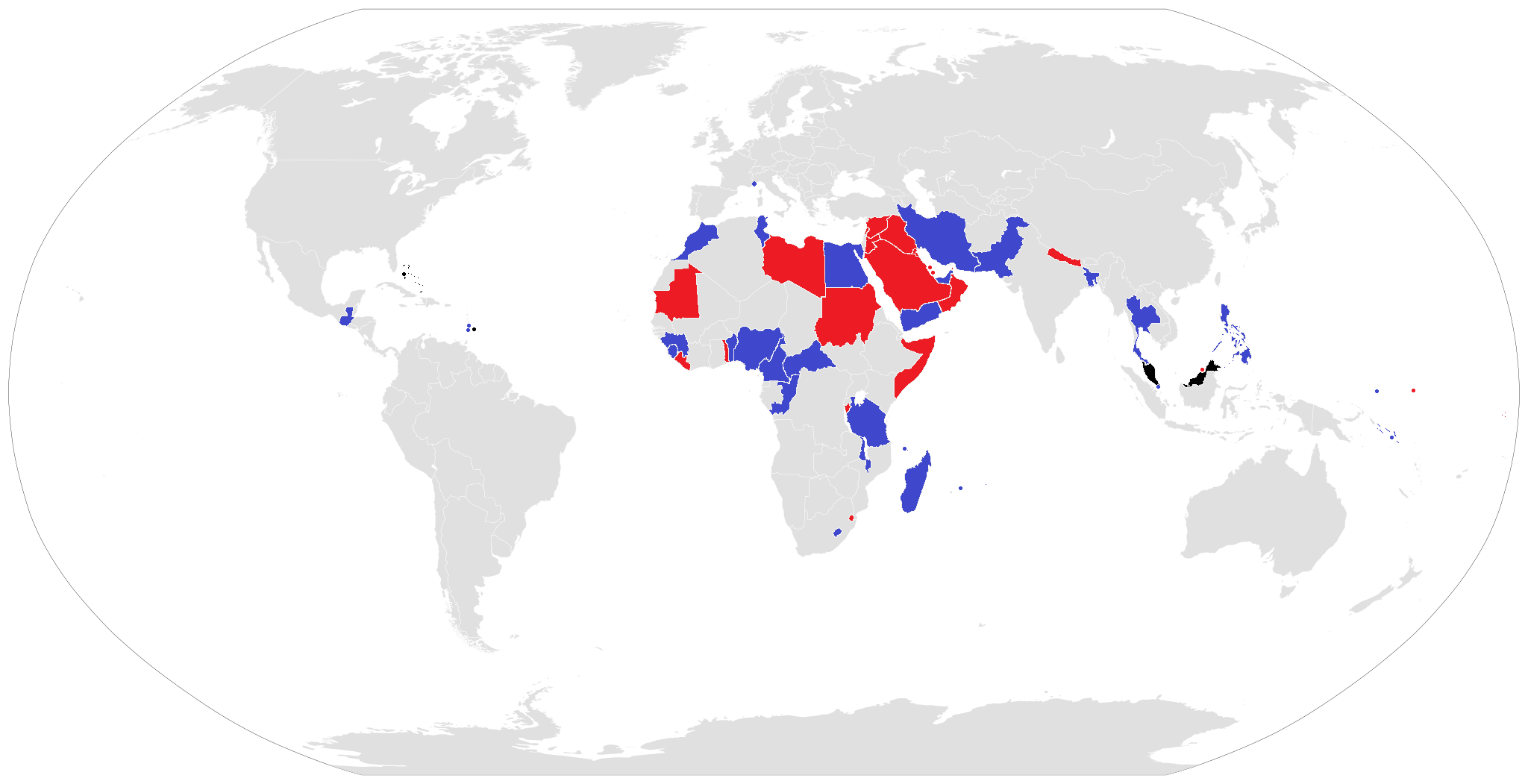
]] The following list includes states in which parents are able to confer nationality on their children or spouses.
Africa
| Country: | Unmarried fathers able to confer nationality on children | Mothers able to confer nationality on children | Women able to confer nationality on spouses |
|---|---|---|---|
| Benin Benin | |||
| Burundi Burundi | |||
| Cameroon Cameroon | |||
| Central African Republic Central African Republic | |||
| Comoros Comoros | |||
| Congo Congo | |||
| Egypt Egypt | |||
| Eswatini Eswatini | |||
| Guinea Guinea | |||
| Lesotho Lesotho | |||
| Liberia Liberia | |||
| Libya Libya | |||
| Madagascar Madagascar | |||
| Malawi Malawi | |||
| Mauritania Mauritania | |||
| Mauritius Mauritius | |||
| Morocco Morocco | |||
| Nigeria Nigeria | |||
| Sierra Leone Sierra Leone | |||
| Somalia Somalia | |||
| Sudan Sudan | |||
| Tanzania Tanzania | |||
| Togo Togo | |||
| Tunisia Tunisia |
America
| Nation: | Unmarried fathers able to confer nationality on children | Mothers able to confer nationality on children | Women able to confer nationality on spouses | |||||||||||
|---|---|---|---|---|---|---|---|---|---|---|---|---|---|---|
| Canada Canada | ||||||||||||||
| Mexico Mexico | last=Téllez Carvajal | first=Evelyn | date=December 2013 | title=The Political Rights of Mexican Migrants: Nationality and Citizenship in Mexico | journal=Mexican Law Review | language=en | volume=6 | issue=1 | pages=177–198 | doi=10.1016/S1870-0578(16)30023-3 | issn=1870-0578 | doi-access=free}} | ||
| United States United States |
| Country: | Unmarried fathers able to confer nationality on children | Mothers able to confer nationality on children | Women able to confer nationality on spouses |
|---|---|---|---|
| Bahamas Bahamas | |||
| Barbados Barbados | |||
| Saint Lucia Saint Lucia | |||
| Saint Vincent and the Grenadines Saint Vincent and the Grenadines |
| Country: | Unmarried fathers able to confer nationality on children | Mothers able to confer nationality on children | Women able to confer nationality on spouses |
|---|---|---|---|
| Belize Belize | |||
| Costa Rica Costa Rica | |||
| El Salvador El Salvador | |||
| Guatemala Guatemala | |||
| Honduras Honduras | |||
| Nicaragua Nicaragua | |||
| Panama Panama |
| Country: | Unmarried fathers able to confer nationality on children | Mothers able to confer nationality on children | Women able to confer nationality on spouses |
|---|---|---|---|
| Argentina Argentina | |||
| Bolivia Bolivia | |||
| Brazil Brazil | |||
| Chile Chile | |||
| Colombia Colombia | |||
| Ecuador Ecuador | |||
| Guyana Guyana | |||
| Paraguay Paraguay | |||
| Peru Peru | |||
| Suriname Suriname | |||
| Uruguay Uruguay | |||
| Venezuela Venezuela |
Asia
| Country: | Unmarried fathers able to confer nationality on children | Mothers able to confer nationality on children | Women able to confer nationality on spouses | |||
|---|---|---|---|---|---|---|
| Armenia Armenia | ||||||
| Bahrain Bahrain | ||||||
| Bangladesh Bangladesh | ||||||
| Brunei Brunei | ||||||
| India India | ||||||
| Iran Iran | ||||||
| Iraq Iraq | {{Refn | name=Iraq | group="note" | In Iraq, nationality law limits the ability of Iraqi | ||
| Jordan Jordan | ||||||
| Kuwait Kuwait | {{Refn | name=Kuwait | group="note" | In Kuwait, a person whose father is unknown or | ||
| Lebanon Lebanon | ||||||
| Malaysia Malaysia | ||||||
| Nepal Nepal | ||||||
| Oman Oman | ||||||
| Pakistan Pakistan | ||||||
| Philippines Philippines | ||||||
| Qatar Qatar | ||||||
| Russia Russia | ||||||
| Saudi Arabia Saudi Arabia | ||||||
| Singapore Singapore | ||||||
| Syria Syria | ||||||
| Thailand Thailand | ||||||
| United Arab Emirates United Arab Emirates | ||||||
| Yemen Yemen |
Europe
| Country: | Unmarried fathers able to confer nationality on children | Mothers able to confer nationality on children | Women able to confer nationality on spouses |
|---|---|---|---|
| Germany Germany | |||
| Monaco Monaco | |||
| Ukraine Ukraine |
Oceania
| Country: | Unmarried fathers able to confer nationality on children | Mothers able to confer nationality on children | Women able to confer nationality on spouses |
|---|---|---|---|
| Kiribati Kiribati | |||
| Nauru Nauru | |||
| Solomon Islands Solomon Islands |
Notes
References
References
- "Nationality Definition & Meaning {{!}} Britannica Dictionary".
- Publishers, HarperCollins. "The American Heritage Dictionary entry: nationality".
- "nationality".
- Boll, Alfred Michael. (2007). "Multiple Nationality And International Law". Martinus Nijhoff Publishers.
- link. (2016-06-24 . BRILL; 1979 [cited 19 August 2012]. {{ISBN). 9789028603295. p. 29–61.
- (2005). "Nationality and Statelessness: A Handbook for Parliamentarians". [[UNHCR]] and [[Inter-Parliamentary Union.
- Refugees, United Nations High Commissioner for. "Refworld | The 1954 Convention relating to the Status of Stateless Persons: Implementation within the European Union Member States and Recommendations for Harmonisation".
- [http://eudo-citizenship.eu/InternationalDB/docs/Convention%20on%20certain%20questions%20relating%20to%20the%20conflict%20of%20nationality%20laws%20FULL%20TEXT.pdf Convention on Certain Questions Relating to the Conflict of Nationality Laws] {{webarchive. link. (2014-12-26 . The Hague, 12 April 1930. Full text. Article 1, "It is for each State to determine under its own law who are its nationals...".)
- (2011). "A New International Law of Citizenship". American Journal of International Law.
- (2020-09-30). "Statelessness determination in Europe and beyond: Trends and good practices".
- (2009). "Principles of European Constitutional Law.". Hart Pub..
- [http://www.chanrobles.com/article4.htm Article IV of the Philippine Constitution].
- "8 U.S. Code Part I - Nationality at Birth and Collective Naturalization".
- "Federal Act on Swiss Citizenship (art 7.1)".
- . (12 January 2023). ["CITTADINANZA ITALIANA: COME SI OTTIENE?"](https://www.cittadinanzattiva.it/approfondimenti/giustizia/11085-cittadinanza-italiana-come-si-ottiene.html). *Cittadinanzattiva APS*.
- "Bishops act to tackle sham marriages".
- (2 June 2018). "Citizenship for sale: how tycoons can go shopping for a new passport".
- Refugees, United Nations High Commissioner for. "The 1951 Refugee Convention".
- Refugees, United Nations High Commissioner for. "Convention and Protocol Relating to the Status of Refugees".
- Refugees, United Nations High Commissioner for. "Convention Relating to the Status of Stateless Persons".
- Refugees, United Nations High Commissioner for. "Convention on the Reduction of Statelessness".
- "Full list".
- African Charter on The Rights and Welfare of the Child, 1990 https://www.un.org/en/africa/osaa/pdf/au/afr_charter_rights_welfare_child_africa_1990.pdf {{Webarchive. link. (2021-04-05)
- OAS. (2009-08-01). "OAS - Organization of American States: Democracy for peace, security, and development".
- OAS. (2009-08-01). "OAS - Organization of American States: Democracy for peace, security, and development".
- Refugees, United Nations High Commissioner for. "Refworld {{!}} Arab Charter on Human Rights".
- "OHCHR | Convention on the Elimination of All Forms of Discrimination against Women".
- "OHCHR | International Convention on the Elimination of All Forms of Racial Discrimination".
- "Archived copy".
- "OHCHR | Convention on the Rights of the Child".
- "OHCHR | International Covenant on Civil and Political Rights".
- "Archived copy".
- Nations, United. "Universal Declaration of Human Rights".
- Sassen, Saskia. (2002). "Handbook of Citizenship Studies". SAGE Publications.
- (15 November 2012). "CITIZENSHIP & NATIONALITY".
- {{cite BAILII. (2001)
- Oommen, T. K.. (1997). "Citizenship, nationality, and ethnicity: reconciling competing identities". Polity Press.
- Slezkine, Yuri (Summer 1994) "The USSR as a Communal Apartment, or How a Socialist State Promoted Ethnic Particularism" ''Slavic Review'' Vol. 53, No. 2, pp. 414-452
- Cook, Jonathan. "Court nixes push for 'Israeli nationality'".
- (September 2014). "Is "Israeli" a Nationality?".
- "Ornan v. Ministry of the Interior (CA 8573/08)".
- [http://www.boe.es/boe/dias/2007/03/20/pdfs/A11871-11909.pdf ''Boletín Oficial del Estado'' of Spain, n. 68 of 2007/03/20, p. 11872.] {{Webarchive. link. (2011-06-09 Statute of Autonomy of Andalusia. Article 1: «Andalusia, as a historical nationality and in the exercise of the right of self-government recognized by the Constitution, is constituted in the Autonomous Community within the framework of the unity of the Spanish nation and in accordance with article 2 of the Constitution.»)
- link. (2016-06-10 ''. SAGEs; 2003-01-29. {{ISBN). 9780761968580. p. 278–279.
- US District Court, Washington, D.C.. "Roger C. S. Lin et al. v. USA".
- International Civil Aviation Organization (ICAO). "ISO 3166-1 alpha-3 codes".
- Taylor, Adam. (17 May 2016). "The controversial plan to give Kuwait's stateless people citizenship of a tiny, poor African island". Washington Post.
- Abrahamian, Atossa Araxia. (November 11, 2015). "The bizarre scheme to transform a remote island into the new Dubai | Atossa Araxia Abrahamian". The Guardian.
- "Statelessness".
- Refugees, United Nations High Commissioner for. "UN Conventions on Statelessness".
- (2012-11-15). "Citizenship & Nationality".
- Refugees, United Nations High Commissioner for. "Convention Relating to the Status of Stateless Persons".
- "Gender-Discriminatory Nationality Laws". Equal Nationality Rights.
- (8 March 2017). "Background Note on Gender Equality, Nationality Laws and Statelessness".
- (5 August 2014). "Citizenship".
- ''Citizenship Act'', R.S.C., 1985, c. C-29, ¶¶3(1)(b), (g)–(h), §5.1.
- ''Immigration & Refugee Protection Act'', S.C. 2001, c. 27, sub§12(1); ''Immigration & Refugee Protection Regulations'', SOR/2002‑227, pt. 7, div. 1–2.
- Téllez Carvajal, Evelyn. (December 2013). "The Political Rights of Mexican Migrants: Nationality and Citizenship in Mexico". Mexican Law Review.
- United States Code, Title 8 (Aliens and Nationality), Chapter 12 (Immigration and Nationality), Part I (Nationality at Birth and Collective Naturalization), §1401 (Nationals and Citizens of United States at Birth)
- "How To Become A Citizen Of Belize".
- "Costa Rica Citizenship / Naturalization".
- "The Legal Atlas for Street Children".
- "Constitución Politica De La Republica De Honduras De 1982".
- "Armenian citizenship by marriage".
- "Section 5 (1) (c) of the Citizenship Act, 1955 if the spouse has resided in India for a continuous period of Seven Years".
- (14 May 2019). "Iran: Parliament OKs Nationality Law Reform". Human Rights Watch.
- (2 October 2019). "Victory for Iran's Women as Breakthrough Citizenship Law Is Passed".
- (2 October 2019). "Iran women married to foreigners can pass citizenship to children".
- (22 February 2018). "How to get Russian citizenship by marriage".
- (28 May 2019). "'This will change our lives': Emirati mothers rejoice as children granted citizenship".
- "Becoming a German citizen by birth".
- "Federal Ministry of the Interior and Community".
- immigrationukraine. "Ukrainian citizenship by marriage – Ukrainian immigration bureau".
This article was imported from Wikipedia and is available under the Creative Commons Attribution-ShareAlike 4.0 License. Content has been adapted to SurfDoc format. Original contributors can be found on the article history page.
Ask Mako anything about Nationality — get instant answers, deeper analysis, and related topics.
Research with MakoFree with your Surf account
Create a free account to save articles, ask Mako questions, and organize your research.
Sign up freeThis content may have been generated or modified by AI. CloudSurf Software LLC is not responsible for the accuracy, completeness, or reliability of AI-generated content. Always verify important information from primary sources.
Report