From Surf Wiki (app.surf) — the open knowledge base
National Trust for Scotland
Conservation charity that protects and promotes Scotland's natural and cultural heritage
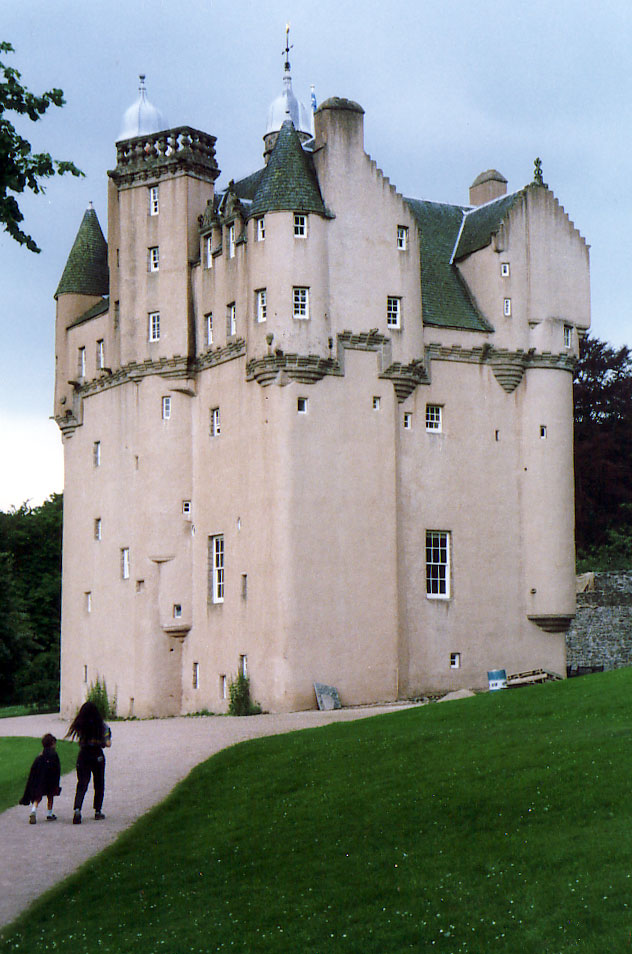
Conservation charity that protects and promotes Scotland's natural and cultural heritage
| Field | Value |
|---|---|
| name | National Trust for Scotland |
| image | National Trust for Scotland logo.svg |
| formation | |
| status | Trust |
| headquarters | Edinburgh |
| location | Scotland |
| leader_title | Key people |
| leader_name | |
| staff | |
| membership | 326,000 |
| website |
The National Trust for Scotland () is a Scottish conservation organisation. It is the largest membership organisation in Scotland and describes itself as "the charity that cares for, shares and speaks up for Scotland's magnificent heritage".
The trust owns and manages around 130 properties and 76,000 ha of land, including castles, ancient small dwellings, historic sites, gardens, coastline, mountains and countryside. It is similar in function to the National Trust, which covers England, Wales, and Northern Ireland, and to other national trusts worldwide.
History
The trust was established in 1931 as the "National Trust for Scotland for Places of Historic Interest or Natural Beauty", following discussions held in the smoking room of Pollok House. The Trust was incorporated on 1 May 1931, with John Stewart-Murray, 8th Duke of Atholl being elected as its first president, Sir Iain Colqhoun serving as the first chairman. Sir John Stirling Maxwell, owner of Pollok House, was appointed as a vice-president, and provided the trust with its first property, Crookston Castle. Another early acquisition was Glen Coe, which was purchased with assistance from the Scottish Mountaineering Club in 1935.
| use_new_UK-LEG = | UK-LEG_title = Following the passage of the National Trust for Scotland Order Confirmation Act 1935 (26 Geo. 5 & 1 Edw. 8. c. ii), the trust gained the power to declare its properties "inalienable", meaning that they are effectively held in perpetuity, and can only be removed from the trust with parliamentary permission.
When the trust took on the management of mountain estates there was controversy concerning issues such as the siting of visitor centres, which some considered inappropriate for land of "wild" character. The trust has since removed some intrusive facilities, with the original Glen Coe Visitor Centre being removed in 2002; a new centre was built lower down the glen. Similarly the visitor centre at Ben Lawers was removed in 2012.
In August 2010, a report called Fit For Purpose by George Reid, commissioned by the Trust, cited shortcomings that were corrected through organizational restructuring largely completed by the end of its 2011/12 Fiscal Year. The stabilisation of the Trust's finances allowed it to make its first acquisition in seven years when it bought the Alloa Tower in Clackmannanshire in 2015.
Historians working for the NTS have estimated that at least 36 of the 139 historic properties owned by the Trust have links to the Atlantic slave trade. Many former of owners of NTS properties either directly or indirectly benefited from the ownership or exploitation of enslaved people, or received compensation payments from the Slave Compensation Act 1837.
Organisation
The trust is a registered charity under Scottish law. it employed 1,144 people in total (taking account of seasonal employees), up from 760 in 2022. This equated to 617 people on a full-time equivalent basis, up from 469 in 2022. The trust's patron is King Charles III; the president is Jackie Bird; the CEO is Philip Long; and the chair is Dame Sue Bruce.
Funding
For the year ending 28 February 2022, the trust's total income was £49.3 million, up from £44.3 million in 2020–21. The largest sources of income were membership subscriptions (£14.7 million), commercial activities (£9.0 million), investment income (£5.3 million), and property income (£5.3 million). In the same year the trust's total expenditure was £51.9 million, up from £44.1 million in 2020–21. The trust therefore recorded an operating deficit of £2.7 million, however this was less bad than anticipated and largely attributed to the aftermath of the COVID-19 pandemic. A three-year business recovery plan was put in place to restore financial sustainability and ensure the trust was able to undertake repairs and maintenance delayed by the pandemic, and to continue to invest in conservation and visitor engagement activities at its properties.
For the year ended 29 February 2024, the trust's total income was £69.5 million; in the same year the trust's total expenditure was £75.9 million. The trust therefore recorded an annual operating deficit of £6.4 million, however this loss was offset with investment growth of £7.9 million during the year, meaning the trust recorded a small increase in overall balance carried forward to the following year.
Membership
Annual membership of the trust allows free entry to properties and "Discovery Tickets" are available for shorter term visitors. Membership also provides free entry to National Trust properties in England and Wales and Northern Ireland, and many other national trusts worldwide; members of these organisations enjoy a reciprocal right of free entry to NTS properties.
For the maintenance of its nature properties, the trust depends on the contributions of volunteers, with local circles of conservation volunteers working on projects during weekends. The charity also formerly organised working holidays called "Thistle Camps" on various properties, with activities undertaken including footpath maintenance and woodland work such as rhododendron control. However as of 2025 Thistle Camps are currently not on offer, with the programme having original been suspended in 2020 due to the COVID-19 pandemic.
Properties
Main article: List of National Trust for Scotland properties
Historic houses
The trust owns 27 historic houses, ranging from large houses such as Culzean Castle and the House of Dun to humbler dwellings such as the Tenement House and Moirlanich Longhouse.
Gardens
The trust is Scotland's largest garden owner with just under 70 gardens that cover 238 ha and contain 13,500 varieties of plant.
Coastline and countryside
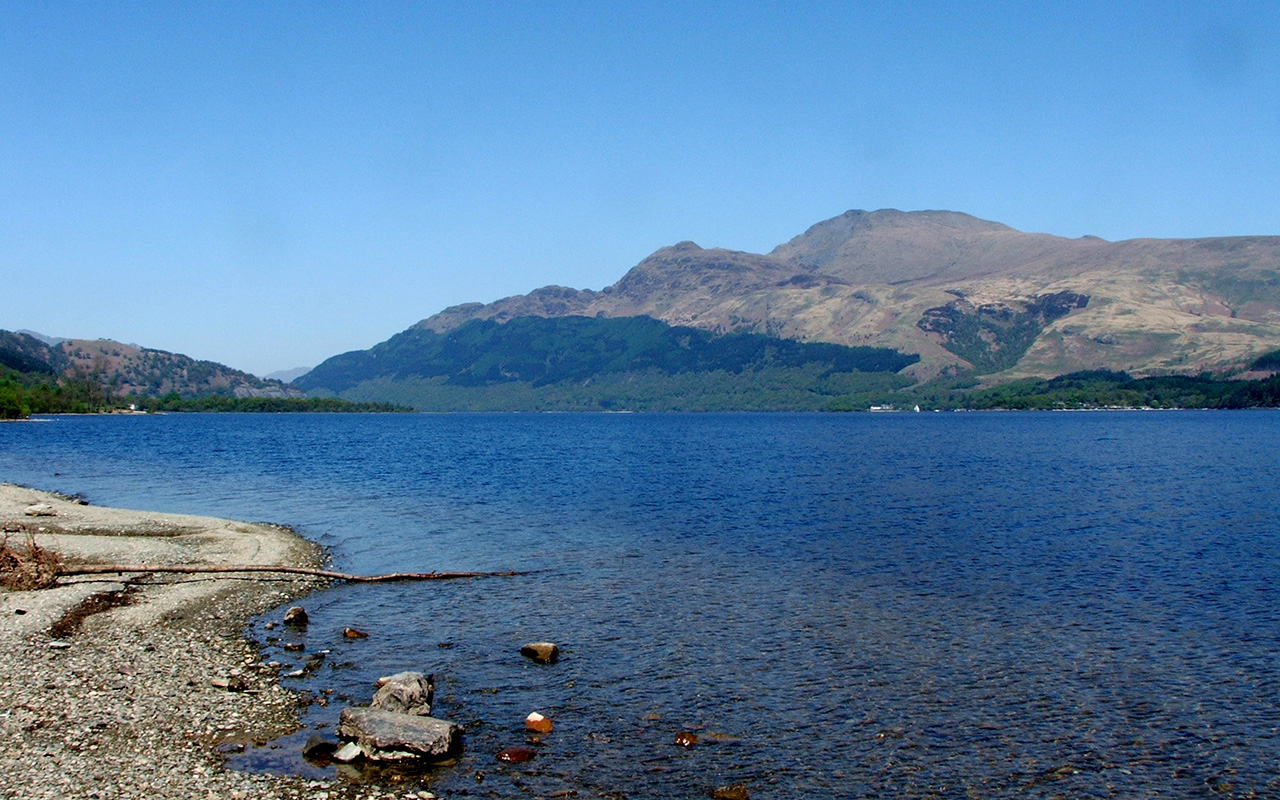
The trust is the third largest land manager in Scotland, owning 76000 ha of Scottish countryside including 46 Munros, eight national nature reserves, more than 400 islands and islets, and significant stretches of coastline. Trust countryside properties include Glen Coe, Torridon and Mar Lodge Estate.
The trust's management of its coastal and countryside sites is guided by its Wild Land Policy which aims to preserve the land in its undeveloped state and provide access and enjoyment to the public. Trust sites are home to a diverse variety of native wildlife. The Trust estimate that almost 25% of Scotland's seabirds nest on its island and coastal sites, equivalent to 8% of seabirds in Europe. The Trust's countryside properties are home to native mammal species including red deer, pine marten, wildcat and red squirrel.
Since 1957, the trust have owned and managed the archipelago of St Kilda, Scotland's first World Heritage Site and the only World Heritage Site in the UK to be listed for both its natural and cultural significance. St Kilda and the surrounding sea stacks are home to over one million seabirds as well as three species unique to the islands; the Soay sheep; St Kilda field mouse and St Kilda wren.
Paintings and sculpture collection
Across its properties the trust is responsible for the conservation and display of hundreds of thousands of objects from paintings to furniture and domestic tools. The primary aim of the trust's curatorship is to present collections and works of art in the historic settings for which they were commissioned or acquired.
Most visited sites
During the 2023-2024 financial year the trust received in 4.5 million visitors in total, including an estimated 1.8 million visitors recorded at free-to-enter countryside properties: the trust considers this figure to be below the actual number due to practical challenges of recording open access across a large countryside estate.
| # | Property | Location | Visitors |
|---|---|---|---|
| 1 | Glenfinnan Monument | Highland | 546,377 |
| 2 | Gladstone's Land | Edinburgh | 380,402 |
| 3 | Culloden | Highland | 374,443 |
| 4 | The Hermitage | Perth and Kinross | 359,937 |
| 5 | Glen Coe | Highland | 359,653 |
| 6 | Newhailes | East Lothian | 304,111 |
| 7 | Culzean Castle and Country Park | South Ayrshire | 247,602 |
| 8 | Crathes Castle and Gardens | Aberdeenshire | 201,997 |
| 9 | Robert Burns Birthplace Museum | South Ayrshire | 198,115 |
| 10 | Killiecrankie | Perth and Kinross | 184,459 |
Gallery
Crookston Castle.jpg|Crookston Castle in Glasgow was the first property acquired by the Trust. Ridges_of_Gearr_Aenoch_and_Aonach_Dubh,_Glencoe.jpg|Glen Coe, the Trust's first major land acquisition BurnsCottage.jpg|Robert Burns Birthplace Museum, the Trust's most popular visitor site Culzean_Castle_house_and_gardens_01.JPG|Culzean Castle in South Ayrshire is one of the Trust's most iconic sites.
References
Citations
Bibliography
- Bremner, Douglas. For the Benefit of the Nation. McGraw-Hill Contemporary. 2001.
- Greenoak, Francesca. The Gardens of the National Trust for Scotland. Aurum Press Ltd. 2005.
References
- (26 September 2022). "Our new President: Jackie Bird". National Trust for Scotland.
- "New Chair confirmed for the National Trust for Scotland". National Trust for Scotland.
- "What we do". National Trust for Scotland.
- "Explore the world". National Trust for Scotland.
- Hurd, Robert (1938), ''Scotland Under Trust'', Adam & Charles Black, London
- "Pollok House".
- "Our History". National Trust for Scotland.
- (1976). "The National Trust for Scotland Guide". Jonathan Cape.
- "Glen Coe Visitor Centre". Undiscovered Scotland.
- (6 August 2012). "Mountain goes back to nature as 'hideous' visitor centre torn down". The Scotsman.
- "A future for our past". National Trust for Scotland.
- Severin Carrell. (9 August 2010). "Scotland National Trust properties up for sale after review prompts reforms". The Guardian.
- Mark Smith. (25 April 2015). "What next for the National Trust for Scotland". The Scottish Herald.
- Carrell, Severin. (7 January 2021). "Slave trade links of Scotland's Glenfinnan memorial revealed".
- {{Scottish charity. SC007410
- "Trustees' Annual Report and Financial Statements For the Year ended 28 February 2022". National Trust for Scotland.
- "Trustees' Annual Report and Financial Statements for the year ended 29 February 2024". National Trust for Scotland.
- Riches, Ian. "Reaching Out – engaging with our audiences over the years". National Trust for Scotland.
- "Volunteer FAQs".
- "Volunteer Work Crew Blog". Friends of Crarae.
- Greenoak, Francesca. (1 June 2005). "The Gardens of the National Trust for Scotland". Aurum Press Ltd.
- (June 2012). "National Trust for Scotland: About". The National Trust for Scotland.
- "National Trust for Scotland: Mountains". The National Trust for Scotland.
- "National Trust for Scotland: Wild Land". The National Trust for Scotland.
- National Trust for Scotland. (2019-07-20). "Key wildlife".
- UNESCO World Heritage Centre. "St Kilda".
- "Collections and Conservation". The National Trust for Scotland.
- "Association of Leading Visitor Attractions: Latest Visitor Figures". Association of Leading Visitor Attractions.
This article was imported from Wikipedia and is available under the Creative Commons Attribution-ShareAlike 4.0 License. Content has been adapted to SurfDoc format. Original contributors can be found on the article history page.
Ask Mako anything about National Trust for Scotland — get instant answers, deeper analysis, and related topics.
Research with MakoFree with your Surf account
Create a free account to save articles, ask Mako questions, and organize your research.
Sign up freeThis content may have been generated or modified by AI. CloudSurf Software LLC is not responsible for the accuracy, completeness, or reliability of AI-generated content. Always verify important information from primary sources.
Report