From Surf Wiki (app.surf) — the open knowledge base
National Museum of Western Art
Art museum in Tokyo, Japan

Art museum in Tokyo, Japan
| Field | Value | |
|---|---|---|
| image | [[File:Nmwa logo.svg | 260px]] |
| caption | Logo, designed by Shin Matsunaga, and National Museum of Western Art, designed by Le Corbusier | |
| official_name | Musée National des Beaux-Arts de l’Occident | |
| location | 7-7 Ueno Imperial Grant Park, Taitō, Tokyo, Japan | |
| part_of | The Architectural Work of Le Corbusier, an Outstanding Contribution to the Modern Movement | |
| criteria | (i), (ii), (vi) | |
| ID | 1321rev-016 | |
| year | 2016 | |
| area | 0.93 ha | |
| buffer_zone | 116.17 ha | |
| website | ||
| mapframe | yes | |
| mapframe-zoom | 14 | |
| mapframe-marker | museum | |
| mapframe-wikidata | yes |
----[[File:National museum of western art05s3200.jpg|240px]] | mapframe-zoom = 14 | mapframe-marker = museum | mapframe-wikidata = yes The National Museum of Western Art is the premier public art gallery in Japan specializing in art from the Western tradition. The museum is in the Ueno Park in Taitō, central Tokyo. It received 1,162,345 visitors in 2016.
History
The NMWA was established on June 10, 1959. The museum developed around the core art collection of Kōjirō Matsukata (1865–1950), whose thinking is mirrored in the museum he anticipated.
Matsukata's acquisition strategies were designed to create the nucleus of what he hoped would become an evolving national museum specializing in Western art.
The museum exhibits works from the Renaissance to the early 20th century, many having been acquired since the museum's opening. The museum's purpose is to provide the public with opportunities to appreciate Western art.
Since its opening, the museum, as Japan's only national institution devoted to Western art, has been involved in exhibitions, art work and document acquisition, research, restoration and conservation, education and the publication of materials related to Western art.
Exhibitions
The museum is involved in the development and organization of a special exhibition every year. These exhibitions feature works on loan from private collections and museums both in and out of Japan. In 1963, NMWA created a splash on the international art scene by bringing together 450 works by Marc Chagall. The exhibition brought together Chagall's work from 15 countries, including 8 paintings lent from the Soviet Union; and it was believed to be the most comprehensive show mounted during the artist's lifetime.
In January 2019, it was announced that the National Gallery, London will loan over 60 paintings for a two-venue tour of the National Museum of Western Art, Tokyo and the National Museum of Art, Osaka in 2020, the year of the Tokyo Olympics. Included within the loaned collection will be Vincent van Gogh's Sunflowers, which will travel to Japan for the first time.
Collections
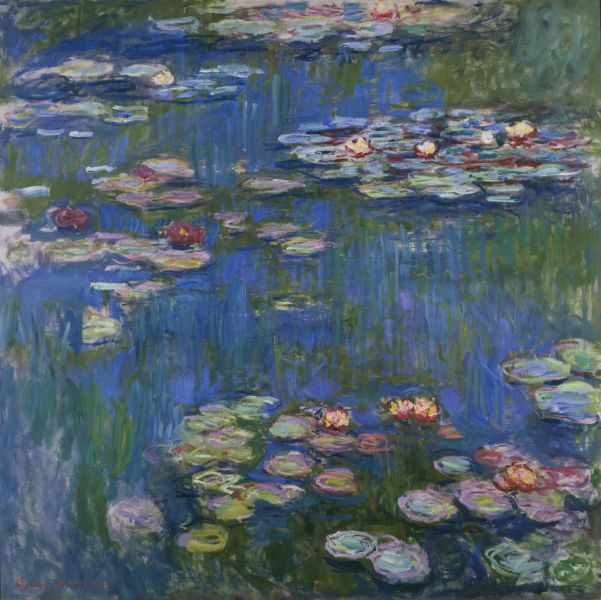
NMWA has purchased art work every year since its establishment in its efforts to build and develop its permanent collection. The museum houses about 4,500 works, including examples of painting and sculpture from the 14th through the beginning of the 20th century. The museum's holdings have expanded in the decades since the museum was first opened to the public:
Paintings; 18th century and earlier
The Main Building displays pre-18th-century paintings, including those by Veronese, Rubens, Brueghel, and Fragonard. Many of these paintings are religious paintings featuring imagery from Christianity.
Paintings: 19th-20th century
The New Wing displays 19th- to early 20th-century French paintings, including works by Delacroix, Courbet, Manet, Renoir, Monet, Van Gogh, Gauguin, and Moreau. The galleries also feature works by the next generation of artists, such as Marquet, Picasso, Soutin, Ernst, Miró, Dubuffet and Pollock.
Drawings
The NMWA drawing collection centers on works by such 18th- to 19th-century French artists as Boucher, Fragonard, Delacroix, Moreau, Rodin, and Cézanne.
Prints
The prints collection features works by Dürer, Holbein, Rembrandt, Callot, Piranesi, Goya, and Klinger, ranging from the 15th century through the early 20th century.
Union catalog
The "Union Catalog of the Collections of the National Art Museums, Japan" is a consolidated catalog of material held by the four Japanese national art museums:
- The National Museum of Modern Art, Kyoto (MOMAK).
- The National Museum of Modern Art, Tokyo (MOMAT)
- The National Museum of Art, Osaka (NMAO)
- The National Museum of Western Art (NMWA)
The online version of this union catalog is currently under construction, with only selected works available at this time.
Le Corbusier's building

The Main Building was designed by the Swiss-French architect Charles-Édouard Jeanneret (1887–1965), who is more popularly known as Le Corbusier. It is the only representative example of his work in the Far East; and the New York Times review of its opening suggested that the building itself presented an "artistic significance and beauty" which rivaled the paintings inside. The multi-story, reinforced concrete building was completed in March 1959 as a symbol of the resumption of diplomatic ties between Japan and France after World War II.
Commission
The museum was built to house the collection of works gathered by the industrialist Kōjirō Matsukata between 1920 and 1923. His collection remained in England and France until after World War II, when the Japanese Government asked France for its return to Japan. After France stipulated that a French architect should design the museum that would house the collection, the works were returned to Japan. Le Corbusier was selected for this task.
Le Corbusier designed a masterplan to include the area surrounding the museum. The design itself evolved into a building far exceeding the original brief and the library, a small lecture hall and a room for distinguished guests had to be removed. Nonetheless, the removed elements were retained on the plans to provide guidance for future extension.
Le Corbusier asked that his three Japanese apprentices: Kunio Maekawa, Junzo Sakakura and Takamasa Yoshizaka be responsible for developing the detailed drawings and supervising the construction.
Building
The museum is square in plan, with the main body of the galleries raised on piloti to first floor level. The layout is influenced by Le Corbusier's Sanskar Kendra museum in Ahmedabad which was being designed at the same time.
Entrance for visitors is at ground floor level via the 19th Century Hall. This double height space is lit from above with a north glazed pyramidal skylight intersected with reinforced concrete beams and a column. On the opposite side of the hall from the entrance, the ascent to the paintings gallery is via a promenade ramp, which affords better views of Rodin's sculptures. The paintings gallery wraps around 19th Century Hall, the ceiling is initially low but is raised to two storeys around the perimeter to display the paintings. There are also balconies at this level that push back into the 19th Century Hall to re-orient the visitor. Le Corbusier designed the paintings gallery to be lit by natural daylight via four lighting troughs, but these are no longer used, and the galleries are now artificially lit.
Externally, the building is clad in prefabricated concrete panels which sit on U-shaped frames supported by the inner wall. The building generally is constructed of reinforced concrete and the columns have a smooth concrete finish.
After more than two years of construction, the building opened on 10 June 1959.
Modulor
In every element of the building, Le Corbusier's Modulor has been applied:
"The modular, which Le Corbusier developed after many years of research, is like a musical scale which gives order to the infinitude of possible musical pitches. Based on the size and proportions of the human body, it is a means of fitting architecture to the human spirit, of ordering the infinitude of possible proportions in such a way as to make them conform to the human shape. In the new Museum of Western Art, the modulor system has been observed in everything from the structural members to the architectural details and furnishings."
- Tadayoshi, Fujiki, August 1959 "The Modular in the National Museum of Western Art" Japan Architect, p. 48
Additions
The museum has been expanded and modified over the years. Sakakura Associates designed a lecture hall and office building in 1964 and a ticket office in 1984. Whilst Maekawa Associates added a new annex in 1979 and in 1998 in conjunction with the Ministry of Construction, Yokoyama Engineering and Shimizu Construction installed earthquake resistant foundations to the museum.
Recognition
In 1998, the importance of the structure was underscored when it was included in the former Ministry of Construction's survey—as one of the hundred selected public buildings (the Kokyo Kenchiku 100 Sen) which are outstanding and "well established in the local community."
In 2005 the museum was recognised by Docomomo International as one of Japan's top one hundred modernist buildings.
World Heritage Site
In 2007, the building was registered by Japan on a provisional UNESCO list for World Heritage cultural site candidates as an Important Cultural Property, at the request of the French government.
In July 2016 UNESCO listed 17 works by Le Corbusier as World Heritage Sites, including the 1959 National Museum of Western Art building.
Access
- [[File:Shinkansen-E.svg|17px|■]] Ueno Station (with JR East and Tokyo Metro)
- Uguisudani Station (with JR East)
- Keisei Ueno Station (with Keisei Electric Railway)
Collection gallery - paintings
|File:Eugène Boudin - Beach of Trouville - Google Art Project.jpg|Eugène Boudin |File:Cezanne Towards the Exit of Jas de Bouffan.jpg|Paul Cézanne |File:Gustave Courbet - Sleeping Nude - Google Art Project.jpg|Gustave Courbet |File:Füssli Theodore Meets in the Wood the Spectre of His Ancestor Guido Cavalcanti.jpg|Henry Fuseli |File:Gauguin Women Bathing.jpg|Paul Gauguin |File:Claude Lorrain Landscape With Dancing Satyrs and Nymphs.jpg|Claude Lorrain |File:Manet Boy in Flowers Jacques Hoschede.jpg|Édouard Manet |File:Camille Pissarro - La Route au bord du chemin de fer effet de neige - 1873 small size.jpg|Camille Pissarro |File:Renoir Reclining Woman Bather.jpg|Pierre-Auguste Renoir |File:Paul Signac - The Port of Saint-Tropez - Google Art Project.jpg|Paul Signac |File:Alfred Sisley Landscape at Louveciennes.jpg|Alfred Sisley |File:Teniers Younger The Temptation of St Anthony.jpg|David Teniers the Younger |File:Giovanni Battista Tiepolo - The Apotheosis of Admiral Vettor Pisani - Google Art Project.jpg|Giovanni Battista Tiepolo |File:Vincent van Gogh Roses.jpg|Vincent van Gogh |File:Jacob van Ruisdael - Landscape with Dune and Small Waterfall - Google Art Project.jpg|Jacob Isaakszoon van Ruisdael |File:Jacob Jordaens - The Flight of Lot and His Family from Sodom (after Rubens) - Google Art Project.jpg|Jacob Jordaens |File:Veronese The Mystic of St Catherine.jpg|Paolo Veronese |File:Albert Gleizes, 1912, Le Dépiquage des Moissons, Harvest Threshing, oil on canvas, 269 x 353 cm, National Museum of Western Art, Tokyo, Japan.jpg|Albert Gleizes
|File:Corot Reminiscence of the Beach of Naples.jpg|Jean-Baptiste-Camille Corot |File:Lucas Cranach d.Ä. - Christus am Ölberg (Tokyo).jpg|Lucas Cranach the Elder |File:Philippe de Champaigne - Mary Magdalene - Google Art Project.jpg|Philippe de Champaigne |File:Chavannes Poor Fisherman.jpg|Pierre Puvis de Chavannes |File:Ribera Philosopher Crates.jpg|Jusepe de Ribera |File:Eugene Delacroix Christ Carried Down to the Tomb.jpg|Eugène Delacroix |File:Carlo Dolci Mater dolorosa.jpg|Carlo Dolci |File:Gerard Dou Still Life with a Boy Blowing Soap-bubbles.jpg|Gerard Dou |File:El Greco Christ on the Cross.jpg|El Greco |File:Fantin Latour Still Life with a Carafe Flowers an Fruit.jpg|Henri Fantin-Latour |File:Guercino David with the Head of Goliath.jpg|Guercino |File:Millet, Jean-François II - Le Printemps (Daphnis et Chloé) - .jpg|Jean-François Millet |File:Moreau Pieta.jpg|Gustave Moreau |File:Bartolomé Esteban Murillo - St. Justa and St. Rufina - Google Art Project.jpg|Bartolomé Esteban Murillo |File:Rossetti The Loving Cup.jpg|Dante Gabriel Rossetti |File:Rubens Abundance.jpg|Peter Paul Rubens |File:Tintoretto Portrait of a Young Man as David.jpg|Tintoretto |File:Anthony van Dyck - Diego Felipe de Guzmán, Marquis of Leganés - Google Art Project.jpg|Anthony van Dyck |File:Vasari The Garden of Gethsemane.jpg|Giorgio Vasari
References and sources
References
Sources
- Watanabe, Hiroshi. (2001). The Architecture of Tokyo: An Architectural History. Tokyo: Edition Axel Menges.
- Bijutskan, Kokuritsu Seiyo. (1978). Masterpieces of the National Museum of Western Art, Tokyo. Tokyo: National Museum of Western Art.
- Sakakura Junzo, August 1959, "On the Opening of the National Museum of Western Art", Japan Architect
References
- (April 2017). "Visitor Figures 2016". [[The Art Newspaper]] Review.
- "NMWA collection".
- [http://www.nmwa.go.jp/en/about/index.html NMWA outline]
- Chapin, Emerson. [https://select.nytimes.com/gst/abstract.html?res=FB0D1EF739581A7B93C6AB1782D85F478685F9&scp=4&sq=matsukata+kojiro&st=p "Japan Assembling a Large Chagall Show; 450 Works From 15 Nations to Be Lent For Tokyo Display; Value of Exhibition Estimated at Nearly $14 Million Planned for 7 Years Designed by Le Corbusler,"] ''New York Times.'' September 24, 1963.
- (9 January 2019). "National Gallery in London to send Van Gogh's Sunflowers to Japan".
- (10 January 2019). "National Gallery makes its biggest loan of art to Japan".
- [http://www.nmwa.go.jp/en/collection/group1.html NMWA 14th-16th centuries]
- [http://www.nmwa.go.jp/en/collection/group2.html NMWA 17th century]
- [http://www.nmwa.go.jp/en/collection/group3.html NMWA 18th century]
- [http://www.nmwa.go.jp/en/collection/group4.html NMWA pre-WWII artists]
- [http://www.nmwa.go.jp/en/collection/group5.html NMWA post-WWII artists]
- [http://www.nmwa.go.jp/en/education/prints-drawings.html NMWA prints study]
- [http://search.artmuseums.go.jp/search_e/ IAI-National Museums of Art union catalog]
- [http://www.momak.go.jp/English/searchCollection.html MOMAK union catalog]
- Watanabe, Hiroshi. (2001). [https://books.google.com/books?id=zkkjpWYS8icC&dq=Matsukata+Kojiro&pg=PA124 ''The Architecture of Tokyo: An Architectural History,'' pp. 123]-124.
- Falk, Ray. [https://www.nytimes.com/1959/06/21/archives/french-art-in-tokyo.html?sq=matsukata+kojiro&scp=1&st=p "French Art in Tokyo,"] ''New York Times.'' June 21, 1959.
- [http://www.nmwa.go.jp/en/about/building.html NMWA building]
- Reynolds, (2001), p177
- Sakakura, (1959), p36
- Reynolds, (2001), p178
- Sakakura, (1959), p44
- "Discover Architecture Map", ''The National Museum of Western Art''
- Reynolds, (2001), p179
- Spring 2005, "Do_co,mo.mo Japan: the 100 selection", ''The Japan Architect'', No57
- [https://www.bbc.com/news/world-europe-36820119 BBC.com: "Le Corbusier works named as UN world heritage sites"], posted 17 July 2016. accessed 17 July 2016.
This article was imported from Wikipedia and is available under the Creative Commons Attribution-ShareAlike 4.0 License. Content has been adapted to SurfDoc format. Original contributors can be found on the article history page.
Ask Mako anything about National Museum of Western Art — get instant answers, deeper analysis, and related topics.
Research with MakoFree with your Surf account
Create a free account to save articles, ask Mako questions, and organize your research.
Sign up freeThis content may have been generated or modified by AI. CloudSurf Software LLC is not responsible for the accuracy, completeness, or reliability of AI-generated content. Always verify important information from primary sources.
Report