From Surf Wiki (app.surf) — the open knowledge base
National Mosque of Malaysia
Mosque in Kuala Lumpur, Malaysia

Mosque in Kuala Lumpur, Malaysia
| Field | Value |
|---|---|
| name | National Mosque of Malaysia |
| native_name | Masjid Negara Malaysia |
| native_name_lang | ms |
| image | Masjid Negara Malaysia 20250822.jpg |
| caption | National Mosque of Malaysia in August 2025 |
| coordinates | |
| religious_affiliation | Islam |
| location | Jalan Perdana (formerly Jalan Venning), Kuala Lumpur, Malaysia |
| festival | |
| organisational_status | |
| heritage_designation | 2007 |
| architect | Baharuddin Abu Kassim (Lead) |
| Ikmal Hisham Albakri | |
| Howard Ashley | |
| funded_by | |
| general_contractor | Messrs Lim Chong Sharikat Pembinaan Berhad |
| groundbreaking | 27 February 1963 |
| year_completed | 27 August 1965 |
| construction_cost | RM10,000,000 |
| date_demolished | |
| capacity | 15,000 |
| minaret_height | 73 m |
| elevation_m | |
| website |
Ikmal Hisham Albakri Howard Ashley
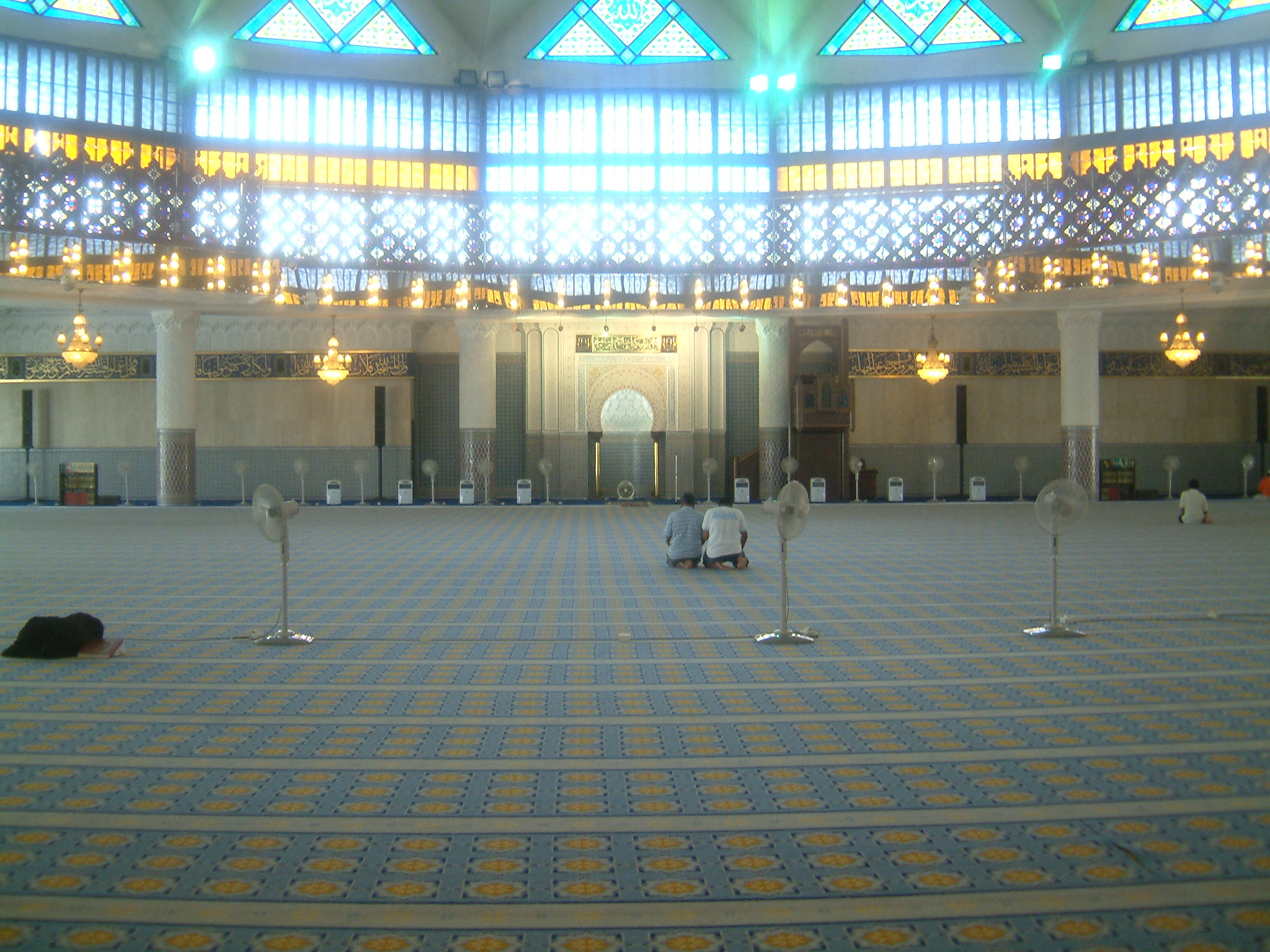
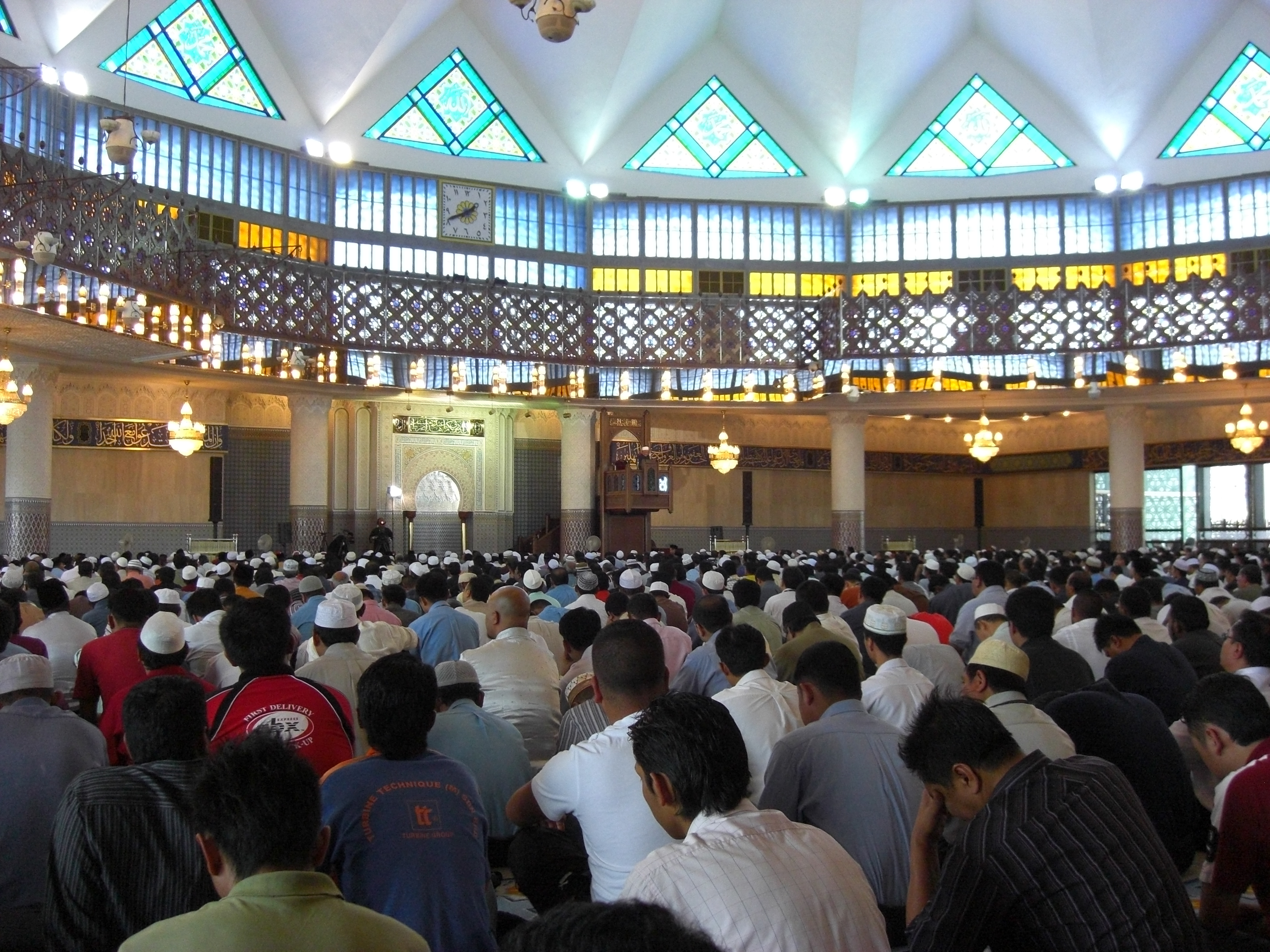

The National Mosque of Malaysia (; Jawi: ) is a mosque in Kuala Lumpur, Malaysia. It has a capacity for 15,000 people and is situated among 13 acres of gardens. Its key features are a 73 m minaret and a 16-pointed star concrete main roof. The umbrella, synonymous with the tropics, is featured conspicuously – the main roof is reminiscent of an open umbrella, the minaret's cap a folded one. The folded plates of the concrete main roof are a creative solution to achieving the larger spans required in the main gathering hall. Reflecting pools and fountains are spread throughout the compound. Completed in 1965, the mosque is a bold and modern approach in reinforced concrete, symbolic of the aspirations of a then newly independent nation.
History
Malaya gained its independence from the British government on 31 August 1957. Major development programs in areas of economy, social, and architecture were actively implemented in line with the new government. The programs were also implemented to portray new progressive culture and achieved democracy. Therefore, on 30 July 1957, in a meeting of the Federal Executive Council, an idea to build a national mosque as a symbol of the country's independence was mooted. In another meeting on 5 March 1958 of Chief Ministers of the eleven states in the Federation of Malaya, a proposal was made to name the mosque as Masjid Tunku Abdul Rahman Putra Al-Haj, in recognition of Prime Minister Tunku Abdul Rahman's efforts in guiding the country to gaining independence. However, Tunku refused this honour; on the contrary, he named it Masjid Negara in thanksgiving for the country's peaceful independence without bloodshed.
The mosque was built on the former site of two government quarters, the Railway Services Commission building, a Masonic lodge, the NAAFI Galloway Club and the Venning Road Brethren Gospel Hall, which were acquired by the government in 1961. The church was offered land on Jalan Imbi as a replacement and is now known as Jalan Imbi Chapel. The original structure of the mosque was designed by a three-person team from the Public Works Department lead by Baharuddin Abu Kassim, along with Ikmal Hisham Albakri and Howard Ashley. The engineer in charge of the construction of the mosque, which commenced in 1963, was Antony Morris.
The first foundation stone of the mosque was laid on 27 February 1963. Two years later on 27 August 1965, the mosque was declared open by the third Yang di-Pertuan Agong, the late Tuanku Syed Putra of Perlis. The construction of the mosque cost RM10 million.
The mosque underwent major renovations in 1987, and the once-pink concrete roof is now clad in green and blue tiles. Today, Masjid Negara continues to stand sleek and stylish against the Kuala Lumpur skyline. An underground passage leads to the National Mosque located near the Kuala Lumpur railway station, along Jalan Sultan Hishamuddin. Its unique modern design embodies a contemporary expression of traditional Islamic art calligraphy and ornamentation. Near the mosque is the Makam Pahlawan (Heroes' Mausoleum), a burial ground of several Malaysian Muslim leaders. Makam Pahlawan is a 7-pointed star concrete roofed structure.
The mosque was the largest in Malaysia until the completion in 1988 of the Sultan Salahuddin Abdul Aziz Mosque in Shah Alam.
On 6 July 2007, the mosque together with the mausoleum were declared as a heritage site under the National Heritage Act 2005, which were later gazetted as such in 2009 and later elevated to the status of "national heritage" in November 2012. On 27 August 2015, Masjid Negara celebrated its Golden Jubilee (50th anniversary).
Imams of the National Mosque
- Ghazali Abdullah (1965)
- Mohs Salleh Hassan Farid
- Sheikh Abdul Mohsein bin Salleh (1974–1975)
- Ahmad Shahir bin Daud (1975–1980)
- Abu Hassan bin Din Al-Hafiz (1981–1983)
- Ahmad Shahir bin Daud (1984–1992)
- Arifin Harun (1992–1993)
- Taib Azamudden bin Md. Taib (1993–1999)
- A. Jalil bin Sindring @ Prangerang (1999–September 2001)
- Wan Halim bin Wan Harun (2001–2004)
- Kamaruddin bin Zakaria (2005–2006)
- Tan Sri Dato' Sri Haji Ismail bin Haji Muhammad (February 2007–2019)
- Haji Ehsan bin Mohd Hosni (February 2020–present)
Transportation
The mosque is within walking distance of the Kuala Lumpur railway station, which is served by KTM ETS and two KTM Komuter lines, namely the Batu Caves-Pulau Sebang line and the Tanjung Malim-Port Klang line. The Kuala Lumpur station is also linked to the Pasar Seni station, which is served by the LRT Kelana Jaya and MRT Kajang lines.
The free Go KL City Bus (Red Line) has a stop at Masjid Negara.
References
References
- Mahadi, Samad. (27 August 1965). "The Largest Mosque in S-E Asia: 8-year dream materialises". The Straits Times.
- (4 March 1961). "Buildings to go for mosque". The Straits Times.
- (27 September 2013). "Named after church leader". The Star (Malaysia).
- (28 February 1963). "King lays foundation of $10 mil. national mosque". The Straits Times.
- Jawatankuasa Kechil Penerangan dan Achara. (1965). "Masjid Negara". Jabatan Penarangan Malaysia.
- Mahadi, Samad. (28 August 1965). "A symbol of tolerance". The Straits Times.
- Ahmad, A Ghafar. (2018). "Conservation of the Flat Roofs at the National Mosque, Kuala Lumpur, Malaysia". ACCU Nara International Correspondent - The Twenty-first Regular Report.
- TourMalaysia.com, [https://archive.today/20130204143846/http://www.tourmalaysia.com/2010/02/07/kl-heritage-trail-masjid-negara-national-mosque/ KL Heritage Trail: Masjid Negara−National Mosque], archived 4 February 2013, accessed 7 February 2024
- (6 July 2007). "Warisan Kebangsaan 2007".
- (12 November 2012). "National Heritage (Declaration of National Heritage) (Heritage Site) (No. 2) Order 2012 [P.U. (A) 370/2012]". Attorney General's Chambers.
- Hasliza Hassan. (27 August 2015). "50 tahun terus istiqamah perkasa dakwah". [[Berita Harian]].
- "GoKL Brochure Map".
This article was imported from Wikipedia and is available under the Creative Commons Attribution-ShareAlike 4.0 License. Content has been adapted to SurfDoc format. Original contributors can be found on the article history page.
Ask Mako anything about National Mosque of Malaysia — get instant answers, deeper analysis, and related topics.
Research with MakoFree with your Surf account
Create a free account to save articles, ask Mako questions, and organize your research.
Sign up freeThis content may have been generated or modified by AI. CloudSurf Software LLC is not responsible for the accuracy, completeness, or reliability of AI-generated content. Always verify important information from primary sources.
Report