From Surf Wiki (app.surf) — the open knowledge base
Natchez, Mississippi
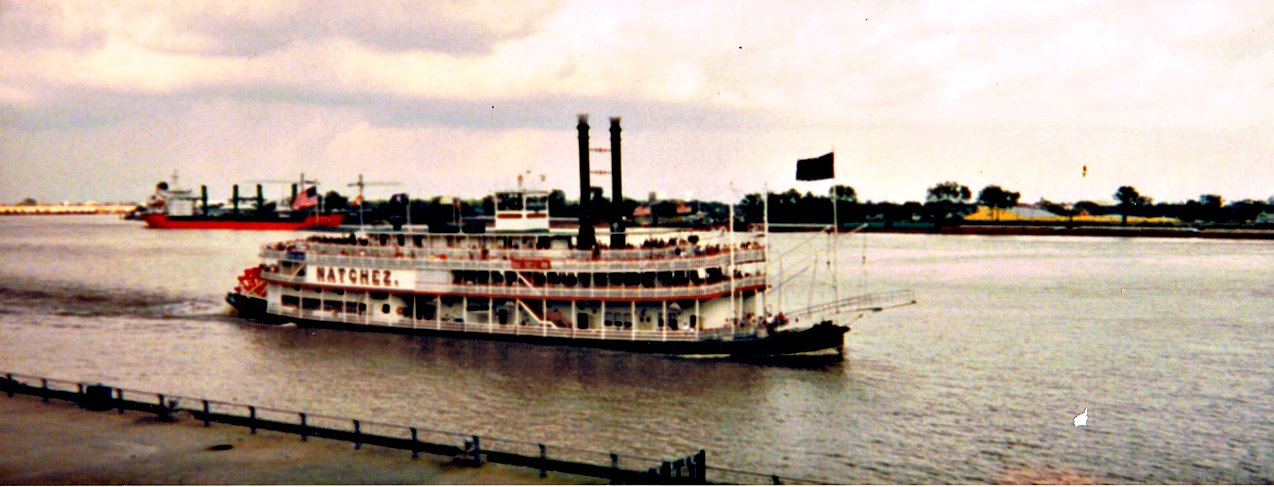
| Field | Value | |||
|---|---|---|---|---|
| official_name | Natchez, Mississippi | |||
| settlement_type | City | |||
| nicknames | The Bluff City, The Trace City, The River City, Antebellum Capital of the World, Historic Natchez on the Mississippi | |||
| motto | "On the Mighty Mississippi" | |||
| image_skyline | Eola view, U.S. Courthouse, Natchez, Mississippi LCCN2010719141.tif | |||
| imagesize | 250px | |||
| image_caption | Pearl Street, Natchez | |||
| image_flag | [[File:Flag of Natchez, Mississippi.png | 120px | border | One of the two official flags used by Natchez, this flag is used to represent the city. Source = https://www.crwflags.com/fotw/flags/us-msntz.html]] |
| [[File:Seal Flag of Natchez, Mississippi.png | 120px | border | One of the two official flags used by Natchez, this flag is used to represent the city seal. Source = https://www.natchezdemocrat.com/2020/07/29/natchez-adopts-city-seal-unity-flag-as-a-second-flag/]] | |
| image_seal | Seal of Natchez, Mississippi.png | |||
| image_map | Adams_County_Mississippi_Incorporated_and_Unincorporated_areas_Natchez_Highlighted.svg | |||
| mapsize | 250px | |||
| map_caption | Location of Natchez in Adams County | |||
| subdivision_type | Country | |||
| subdivision_name | ||||
| subdivision_type1 | State | |||
| subdivision_name1 | Mississippi | |||
| subdivision_type2 | County | |||
| subdivision_name2 | Adams | |||
| leader_title | Mayor | |||
| leader_name | Dan M. Gibson (D) | |||
| established_title | Founded | |||
| established_date | 1716 as Fort Rosalie, renamed Fort Panmure in 1763 | |||
| Louisiana (New France) | ||||
| established_title1 | Established | |||
| established_date1 | as the capital of the Natchez District | |||
| Spanish West Florida | ||||
| established_title2 | Incorporated | |||
| established_date2 | ||||
| unit_pref | Imperial | |||
| area_footnotes | ||||
| area_total_km2 | 42.49 | |||
| area_land_km2 | 40.96 | |||
| area_water_km2 | 1.53 | |||
| area_total_sq_mi | 16.41 | |||
| area_land_sq_mi | 15.81 | |||
| area_water_sq_mi | 0.59 | |||
| population_as_of | 2020 | |||
| population_est | 13812 | |||
| pop_est_as_of | 2022 | |||
| pop_est_footnotes | ||||
| population_footnotes | ||||
| population_total | 14520 | |||
| population_urban | 25902 | |||
| population_metro | 53611 (US: 200th) | |||
| population_density_km2 | 354.48 | |||
| population_density_sq_mi | 918.12 | |||
| timezone | Central (CST) | |||
| utc_offset | -6 | |||
| timezone_DST | CDT | |||
| utc_offset_DST | -5 | |||
| elevation_m | 66 | |||
| elevation_ft | 217 | |||
| coordinates | ||||
| postal_code_type | ZIP codes | |||
| postal_code | 39120-39122 | |||
| area_code | 601 & 769 | |||
| blank_name | FIPS code | |||
| blank_info | 28-50440 | |||
| blank1_name | GNIS feature ID | |||
| blank1_info | 0691586 | |||
| website |
Louisiana (New France) Spanish West Florida
Natchez ( ) is the only city in and the county seat of Adams County, Mississippi, United States. The population was 14,520 at the 2020 census. Located on the Mississippi River across from Vidalia, Louisiana, Natchez was a prominent city in the antebellum years, a center of cotton planters and Mississippi River trade.
Natchez is approximately 90 mi southwest of the capital of Jackson and 85 mi north of Baton Rouge, Louisiana, located on the lower Mississippi River. Natchez is the 28th-largest city in the state. The city was named for the Natchez people, who with their ancestors, inhabited much of the area from the 8th century AD through the French colonial period.
History
Main article: History of Natchez, Mississippi
Established by French colonists in 1716, Natchez is one of the oldest and most important European settlements in the lower Mississippi River Valley. After the French lost the French and Indian War (Seven Years' War), they ceded Natchez and near territory to Great Britain in the Treaty of Paris of 1763. (It later traded other territory east of the Mississippi River with Great Britain, which expanded what it called West Florida). The British Crown bestowed land grants in this territory to officers who had served with distinction in the war. These officers came mostly from the colonies of New York, New Jersey, and Pennsylvania. They established plantations and brought their upper-class style of living to the area.
Beginning 1779, the area was under Spanish colonial rule. After defeat in the American Revolutionary War, Great Britain ceded the territory to the United States under the terms of the Treaty of Paris (1783). Spain was not a party to the treaty, and it was their forces who had taken Natchez from British troops. Although Spain had been allied with the American colonists, they were more interested in advancing their power at the expense of Britain. Once the war was over, they were not inclined to give up that which they had acquired by force.
In 1797 Major Andrew Ellicott of the United States marched to the highest ridge in the young town of Natchez, set up camp, and raised the first American Flag claiming Natchez and all former Spanish lands east of the Mississippi above the 31st parallel for the United States.
After the United States acquired this area from the Spanish, the city served as the capital of the Mississippi Territory and then of the state of Mississippi. It predates Jackson by more than a century; the latter replaced Natchez as the capital in 1822, as it was more centrally located in the developing state. The strategic location of Natchez, on a bluff overlooking the Mississippi River, ensured that it would be a pivotal center of trade, commerce, and the interchange of ethnic Native American, European, and African cultures in the region; it held this position for two centuries after its founding.
In U.S. history, Natchez is recognized particularly for its role in the development of the Old Southwest during the first half of the 19th century. It was the southern terminus of the historic Natchez Trace, with the northern terminus being Nashville, Tennessee. After unloading their cargoes in Natchez or New Orleans, many pilots and crew of flatboats and keelboats traveled by the Trace overland to their homes in the Ohio River Valley. (Given the strong current of the Mississippi River, it was not until steam-powered vessels were developed in the 1820s that travel northward on the river could be accomplished by large boats.) The Natchez Trace also played an important role during the War of 1812. Today the modern Natchez Trace Parkway, which commemorates this route, still has its southern terminus in Natchez.
In the decades preceding the Civil War, Natchez was by far the most prevalent slave trading city in Mississippi, and second in the United States only to New Orleans. The leading markets were located at the Forks of the Road, at the intersection of Liberty Road and Washington Road (now D'Evereux Drive and St. Catherine Street). In 1833, the most active slavers in the United States, John Armfield and Isaac Franklin began a program of arbitraging low slave prices in the Middle Atlantic area by sending thousands of slaves to Deep South markets in Natchez and New Orleans. Their company, Franklin and Armfield sent an annual caravan of slaves, called a coffle, from Virginia to the Forks of the Road in Natchez, as well as sending others by ship through New Orleans. Unlike other slave sellers of the day, Franklin and Armfield sold slaves individually, with the buyers allowed to survey the people much like items in a modern retail store.
In 1840, the city was struck by a devastating tornado that killed 317 people and injured 109. It ranks today as the second-deadliest tornado in U.S. history, although the death toll may be higher due to slave deaths not traditionally being counted in the South at that time.
In the middle of the nineteenth century, the city attracted wealthy Southern planters as residents, who built mansions to fit their ambitions. Their plantations were vast tracts of land in the surrounding lowlands along the river fronts of Mississippi and Louisiana, where they grew large commodity crops of cotton and sugarcane using slave labor. Natchez became the principal port from which these crops were exported, both upriver to Northern cities and downriver to New Orleans, where much of the cargo was exported to Europe. Many of the mansions built by planters before 1860 survive and form a major part of the city's architecture and identity. Agriculture remained the primary economic base for the region until well into the twentieth century.
During the American Civil War Natchez was surrendered by Confederate forces without a fight in September 1862. Following the Union victory at the Battle of Vicksburg in July 1863, many refugees, including former slaves, freed by the Emancipation Proclamation, began moving into Natchez and the surrounding countryside. The Union Army officers claimed to be short on resources and unable to provide for the refugees. The Army planned to address the situation with a mixture of paid labor for freed slaves on government leased plantations, the enlistment of able-bodied males who were willing to fight in the Union Army and the establishment of refugee camps where former slaves could be provided with education. However, as the war continued, the plan was never effectively implemented and the leased plantations were crowded, poorly managed and frequently raided by Confederate troops who controlled the surrounding territory. Hundreds of people living in Natchez, including many former slaves and refugees, died of hunger, disease, overwork or were killed in the fighting during this period. In order to manage the tens of thousands of freed Black slaves, the Union Army created a refugee camp in Natchez in a natural pit known as the Devil's Punchbowl, where thousands died of starvation, smallpox, and other diseases.
After the American Civil War, the city's economy rapidly revived, mostly due to Natchez having been spared the destruction visited upon many other parts of the South. From 1870 to 1871, Robert H. Wood served as Mayor of Natchez; he was the one of only five African Americans to serve as mayor during the Reconstruction-era, and he was one of the first black mayors in the entire country. Natchez was also home to politicians Hiram Rhodes Revels and John R. Lynch, both African Americans.
The municipality regulated transportation and commerce with Vidalia, Louisiana by setting tariffs on goods and fares on the ferry even giving a monthly rate for school children.
The vitality of the city and region was captured most significantly in the 80 years or so following the war by the photographers Henry C. Norman and his son Earl. The output of the Norman Studio between roughly 1870 and 1950 documents this period in Natchez's development vividly; the photographs are now preserved as the Thomas and Joan Gandy Collection in special collections of the library of Louisiana State University in Baton Rouge.
During the twentieth century, the city's economy experienced a downturn, first due to the replacement of steamboat traffic on the Mississippi River by railroads in the early 1900s, some of which bypassed the river cities and drew away their commerce. Later in the 20th century, many local industries closed in a restructuring that sharply reduced the number of jobs in the area. Despite its status as a popular destination for heritage tourism because of well-preserved antebellum architecture, Natchez has had a general decline in population since 1960. It remains the principal city of the Natchez micropolitan area.
Geography
According to the United States Census Bureau, the city has a total area of 13.9 sqmi, of which 13.2 sqmi are land and 0.6 sqmi (4.62%) is water. The physical characteristic that controls the land use within the municipality are the natural drains which the locals call 'bayous' and their network of deep ravines across the landscape. The elevation of the Mississippi River at Natchez is approximately 46 feet and the river gauge reference point for Natchez being 17.28 feet.Mississippi River map. (2025). Lists of John website Retrieved 28 May 2025. The Natchez bluffs are composed of strata that might indicate a later geological event that cut a trench into the bluffs depositing a soil variation.
Climate
Natchez has a humid subtropical climate (Cfa) under the Köppen climate classification system.
| Jan record high F = 83 | Feb record high F = 86 | Mar record high F = 92 | Apr record high F = 92 | May record high F = 99 | Jun record high F = 103 | Jul record high F = 105 | Aug record high F = 105 | Sep record high F = 105 | Oct record high F = 98 | Nov record high F = 89 | Dec record high F = 89 | year record high F = 105
|Jan avg record high F = 75.1 |Feb avg record high F = 78.4 |Mar avg record high F = 82.2 |Apr avg record high F = 85.9 |May avg record high F = 89.8 |Jun avg record high F = 93.0 |Jul avg record high F = 95.7 |Aug avg record high F = 96.1 |Sep avg record high F = 93.4 |Oct avg record high F = 88.7 |Nov avg record high F = 81.7 |Dec avg record high F = 77.3 |year avg record high F = 96.8
|Jan avg record low F = 20.3 |Feb avg record low F = 24.4 |Mar avg record low F = 28.6 |Apr avg record low F = 36.6 |May avg record low F = 47.0 |Jun avg record low F = 59.5 |Jul avg record low F = 65.3 |Aug avg record low F = 63.9 |Sep avg record low F = 51.5 |Oct avg record low F = 36.8 |Nov avg record low F = 27.5 |Dec avg record low F = 23.4 |year avg record low F = 18.5
| Jan record low F = 4 | Feb record low F = 4 | Mar record low F = 18 | Apr record low F = 28 | May record low F = 30 | Jun record low F = 49 | Jul record low F = 55 | Aug record low F = 50 | Sep record low F = 40 | Oct record low F = 27 | Nov record low F = 18 | Dec record low F = 5 | year record low F = 4 | access-date = June 9, 2021 | archive-date = May 30, 2021 | archive-url = https://web.archive.org/web/20210530182437/https://w2.weather.gov/climate/xmacis.php?wfo=jan | url-status = dead | access-date = June 9, 2021}}
Demographics
|align-fn=center 2020 Census
2020 census
As of the census of 2020, there were 14,520 people, 6,028 households, and 3,149 families residing in the city.
Race and ethnicity
| Race | Num. | Perc. |
|---|---|---|
| Black or African American | 8,729 | 60.12% |
| White | 5,156 | 35.51% |
| Native American | 16 | 0.11% |
| Asian | 73 | 0.5% |
| Pacific Islander | 2 | 0.01% |
| Other/Mixed | 343 | 2.36% |
| Hispanic or Latino | 201 | 1.38% |
2000 census
As of the census of 2000, there were 18,464 people, 7,591 households, and 4,858 families residing in the city. The population density was 1,398.3 PD/sqmi. There were 8,479 housing units at an average density of 642.1 /sqmi.
In 2000, the racial and ethnic makeup of the city was 54.49% African American, 44.18% White, 0.38% Asian, 0.11% Native American, 0.02% Pacific Islander, 0.18% from other races, and 0.63% from two or more races. 0.70% of the population were Hispanic or Latino of any race. Since then, with the publication of the 2020 census, its racial and ethnic makeup was 60.12% African American, 35.51% non-Hispanic white, 0.11% Native American, 0.5% Asian, 0.01% Pacific Islander, 2.36% other or mixed, and 1.38% Hispanic or Latino of any race.
Economy
Adams County Correctional Center, a private prison operated by the Corrections Corporation of America on behalf of the Federal Bureau of Prisons, is in an unincorporated area in Adams County, near Natchez.
Education
Natchez is home to Alcorn State University's Natchez Campus, which offers the School of Nursing, the School of Business, and graduate business programs. The School of Business offers Master of Business Administration (MBA) degree and other business classes from its Natchez campus. The MBA program attracts students from a wide range of academic disciplines and preparation from the Southwest Mississippi area and beyond offering concentrations in general business, gaming management and hospitality management. Both schools in the Natchez campus provide skills which has enabled community students to have an important impact on the economic opportunities of people in Southwest Mississippi.
Copiah-Lincoln Community College also operates a campus in Natchez. Adams County is in the district of Copiah–Lincoln Community College and has been since 1971.
The city of Natchez and Adams County are in the boundary of one public school system, the Natchez-Adams School District. The district comprises ten schools. They are Susie B. West, Morgantown, Gilmer McLaurin, Joseph F. Frazier, Robert Lewis Magnet School, Natchez Freshman Academy, Natchez Early College@Co-Lin, Central Alternative School, Natchez High School, and Fallin Career and Technology Center.
In Natchez, there are a number of private and parochial schools. Adams County Christian SchoolAdams County Christian School (ACCS) is also a PK-12 school in the city. Adams County Christian School was founded as a segregation academy and is a member of the Mississippi Association of Independent Schools (MAIS). Cathedral School is also a PK-12 school in the city. It is affiliated with the Roman Catholic St. Mary Basilica. Holy Family Catholic School, founded in 1890, is a PK-3 school affiliated with Holy Family Catholic Church.
Media
Newspaper
- The Natchez Democrat
Radio
Television
Natchez is amid the Alexandria, Louisiana and Jackson, Mississippi television markets.
Transportation
Highways
U.S. 61 runs north–south, parallel to the Mississippi River, linking Natchez with Port Gibson, Woodville, Mississippi and Baton Rouge, Louisiana.
U.S. 84 runs east–west and bridges the Mississippi, connecting it with Vidalia, Louisiana and Brookhaven, Mississippi.
U.S. 425 runs north from Natchez after crossing the Mississippi, connecting Ferriday with Clayton, at which point U.S. 65 follows the west bank of the Mississippi, connecting to Waterproof north to St. Joseph, Newellton, and Tallulah, Louisiana.
U.S. 98 runs east from Natchez towards Bude and McComb, Mississippi.
Mississippi 555 runs north from the center of Natchez to where it joins Mississippi Highway 554.
Mississippi 554 runs from the north side of the city to where it joins Highway 61, northeast of town.
Rail
Natchez is served by the Natchez Railway, which interchanges with Canadian National.
Air
Natchez is served by the Natchez-Adams County Airport, a general aviation facility. The nearest airports with commercial service are Baton Rouge Metropolitan Airport, 85 mi to the south via US 61 and Alexandria International Airport, 82 mi to the west via US 84 to LA-28W.
Notable people
- Robert H. Adams, former United States senator from Mississippi
- William Wirt Adams, Confederate States Army officer, grew up in Natchez
- Philip Alston, prominent plantation owner and early American outlaw
- Glen Ballard, five-time Grammy Award-winning songwriter/producer
- Pierre A. Barker, former Mayor of Buffalo, New York
- Campbell Brown, Emmy Award-winning journalist, political anchor for CNN; grew up in Natchez and attended both Trinity Episcopal and Cathedral High School
- John J. Chanche, first Roman Catholic bishop of Natchez, buried on the grounds of St. Mary Basilica, Natchez
- George Henry Clinton, member of both houses of the Louisiana State Legislature in the first quarter of the 20th century, born in Natchez in the late 1860s
- Charles C. Cordill, Louisiana state senator from Concordia and Tensas parishes, interred at Natchez City Cemetery
- Charles G. Dahlgren, Confederate brigadier general during American Civil War
- Olu Dara, musician and father of rapper Nas
- Varina Howell Davis, first lady of the Confederate States of America; born, reared, and married in Natchez
- Bob Dearing, longtime member of the Mississippi State Senate
- Ellen Douglas, novelist, author of Black Cloud, White Cloud and Apostles of Light, nominated for the National Book Award
- A. W. Dumas (1876–1945), physician
- Stephen Duncan (1787–1867), planter and banker
- Robert C. Farrell (born 1936), journalist and member of the Los Angeles City Council, 1974–1991
- Je'Kel Foster, basketball player
- Jimmie Giles, NFL Tight End & four-time Pro Bowl selection in the 1980s while with the Tampa Bay Buccaneers
- Mickey Gilley, country music singer, born in Natchez
- Hugh Green, All-American defensive end at the University of Pittsburgh, two-time Pro Bowler, Heisman runner-up
- Elizabeth Taylor Greenfield, noted black concert singer and Mississippi Musicians Hall of Fame inductee, was born in Natchez in 1824.
- Cedric Griffin, Minnesota Vikings cornerback born in Natchez but raised in San Antonio, Texas
- Bishop Gunn, rock and roll band whose members were born in Natchez and hold 'The Bishop Gunn Crawfish Boil' in the city every May
- Malcolm Harvey, former sheriff of Stone Mountain, Georgia and murderer, was born in Natchez
- Margaret Kempe Howell, mother of Varina Davis and mother-in-law of Jefferson Davis, lived in Natchez
- Abijah Hunt, merchant during the Territorial Period who owned a chain of stores and public cotton gins along the Natchez Trace
- Von Hutchins, former NFL football player for the Indianapolis Colts 2004–2005 Houston Texans 2006-2007Atlanta Falcons 2008
- Greg Iles, raised in Natchez and a best-selling author of many novels set in the city
- Wharlest Jackson, Sr. (1929–1967), civil rights activist
- Rosa Vertner Jeffrey (1828–1894), poet and novelist
- William Johnson, "The Barber of Natchez", freed slave and prominent businessman
- Harriet B. Kells, educator, activist, suffragist, feminist, editor; born in Natchez
- Nook Logan, former Major League Baseball player for the Washington Nationals
- John R. Lynch, the first African-American Speaker of the House in Mississippi and one of the earliest African-American members of Congress
- Samuel Abraham Marx, architect, was born in Natchez
- George Mathews, former governor of Georgia, lived in Natchez in the late 1790s.
- Carrie Winder McGavock, Confederate cemetery caretaker
- Lynda Lee Mead, Miss Mississippi in 1959 and Miss America in 1960; a Natchez city street, Lynda Lee Drive, is named in her honor
- Marion Montgomery, jazz singer born in Natchez
- Anne Moody, civil rights activist and author of Coming of Age in Mississippi, attended Natchez Junior College
- Elizabeth Dunbar Murray (1877–1966), author, director, impersonator; conducted the Murray School of Expression
- Alexander O'Neal, R&B singer
- John Anthony Quitman, Mexican War hero, plantation owner, governor of Mississippi, owner of Monmouth Plantation
- Clyde V. Ratcliff, member of the Louisiana State Senate from 1944 to 1948, lived in Natchez
- Rico Richardson, NFL player
- Stevan Ridley, NFL running back for the New England Patriots
- Pierre Adolphe Rost, a member of the Mississippi State Senate and commissioner to Europe for the Confederate States, immigrated to Natchez from France
- Billy Shaw, Pro Football Hall of Fame member, born in Natchez
- Chris Shivers, two-time PBR world champion bull rider, born in Natchez
- Carter Smith, film director and fashion photographer
- Abdul Rahman Ibrahima Sori, African nobleman sold into slavery and sent to work a plantation in Natchez, Mississippi for thirty-eight years before being freed at the request of Abd al-Rahman, the Sultan of Morocco
- Hound Dog Taylor, blues singer and slide guitar player
- Fred Toliver, former pitcher for the Philadelphia Phillies and the Minnesota Twins
- Don José Vidal, Spanish governor of the Natchez District, buried in the Natchez City Cemetery
- Joanna Fox Waddill, Civil War nurse known as the "Florence Nightingale of the Confederacy"
- Samuel Washington Weis (1870–1956), painter
- Marie Selika Williams, first black artist to perform at the White House
- Richard Wright, novelist, author of Black Boy and Native Son, born on Rucker plantation in Roxie, twenty-two miles east of Natchez; lived in Natchez as a child
- Robert H. Wood (1844–?), politician, first African American mayor in the United States, former mayor of Natchez
In popular culture
Various movies have been shot here, including The Autobiography of Miss Jane Pittman (1974), Crossroads (1986), Raintree County (1957), Horse Soldiers (1959), Rascals and Robbers: The Secret Adventures of Tom Sawyer and Huckleberry Finn (1981), The Ladykillers (2004),* Get On Up* (2014) and Ma (film) (2019).
In the opening narration of The Apartment (1960), C.C. Baxter mentions the company he works for "has 31,259 employees, which is more than the entire population of Natchez, Mississippi."
Ta-Nehisi Coates' 2019 novel, The Water Dancer, alludes constantly to the threat, in antebellum Virginia, represented to slaves by the possibility of being sold "down Natchez way," that is, into harshest slavery.
Historic sites
[[Post-classical history|Post-classical]] through Early modern periods
- Anna site
- Grand Village of the Natchez
Antebellum period
- Commercial Bank and Banker's House
- First Presbyterian Church of Natchez
- Great Natchez Tornado
- Natchez Museum of African American History and Culture
- Natchez National Cemetery
- Natchez On-Top-of-the-Hill Historic District
- Selma Plantation
- St. Mary Basilica, Natchez
- United States Courthouse (Natchez, Mississippi)
Pre-Civil War homes
- Airlie (Natchez)
- Arlington (Natchez, Mississippi)
- Auburn (Natchez, Mississippi)
- Brandon Hall (Washington, Mississippi)
- The Briars (Natchez, Mississippi)
- The Burn (Natchez, Mississippi)
- Concord (Natchez, Mississippi)
- Cottage Gardens
- D'Evereux
- Dunleith
- Elgin (Natchez, Mississippi)
- The Elms (Natchez, Mississippi)
- Elms Court
- Glenfield Plantation
- Gloucester (Natchez, Mississippi)
- Hawthorne Place
- Homewood Plantation (Natchez, Mississippi)
- Lansdowne (Natchez, Mississippi)
- Linden (Natchez, Mississippi)
- Longwood (Natchez, Mississippi)
- Magnolia Hill (Natchez, Mississippi)
- Melrose (Natchez, Mississippi)
- Monmouth (Natchez, Mississippi)
- Montaigne (Natchez, Mississippi)
- Ravenna (Natchez, Mississippi)
- Richmond (Natchez, Mississippi)
- Routhland
Town houses
- Choctaw
- Green Leaves
- House on Ellicott's Hill
- King's Tavern
- The Presbyterian Manse
- Magnolia Hall (Natchez, Mississippi)
- Rosalie Mansion
- Smith-Bontura-Evans House
- Stanton Hall
- William Johnson House (Natchez, Mississippi)
- Winchester House (Natchez, Mississippi)
Footnotes
References
- (2020-07-25). "Ex-GOP governor hopeful becomes Democratic mayor of Natchez".
- "2020 U.S. Gazetteer Files". United States Census Bureau.
- "Explore Census Data". [[United States Census Bureau]].
- (February 27, 2020). "Celebrating Black History: Forks of Road tells story of second largest slave market in the South". Natchez Democrat.
- (February 2003). "The Forks of the Road Slave Market at Natchez".
- Ronald L. F Davis. (1999). "The Black experience in Natchez, 1720–1880: A special history study, Natchez National Historical Park, Mississippi". Eastern National.
- (December 11, 1865). "The Devil's Punchbowl (Mississippi), a story".
- (June 2, 2021). "Devil's Punch Bowl in Natchez: Confederate Disaster and Propaganda Campaign".
- Bernardo, Joseph. (December 30, 2008). "Robert Wood (1844-?)".
- Davis, Jack E.. (October 1, 2004). "Race Against Time: Culture and Separation in Natchez Since 1930". LSU Press.
- Brunker, Mike. (August 16, 2004). "Race, politics and the evolving South".
- City of Natchez. G.B. Sheilds. (1905). Code of ordinances of the city of Natchez with contracts, franchises, etc. Natchez, Mississippi: Natchez Printing and Stationery Company. p. 246. [[iarchive:codeofordinances00natc. The Internet Archive website]]. Retrieved 6 May 2025.
- “THE NATCHEZ PLAN: A LONG-RANGE PROGRAM FOR IMPROVING A MISSISSIPPI CITY.” ''Landscape Architecture'', vol. 42, no. 3, 1952, p. 102. [http://www.jstor.org/stable/44658621 JSTOR website] Retrieved 4 May 2025.
- Impact Newsletter. Mississippi Levee Board. (2022). "Back in time: River gauges" Spring 2022. v. 20. no. 1. [https://www.msleveeboard.com/images/newsletters/IMPACT_newsletter_WINTER_2022_MM_proof_7.pdf Mississippi Levee Board website] Retrieved 28 May 2025.
- State of Mississippi. State Geological Commission. William N. Logan. (1908) "The Clays of Mississippi." Mississippi State Geological Survey. Bulletin No. 4. Part 2. "Brick clays and clay industry in Southern Mississippi." pp. 22–24. [https://www.mdeq.ms.gov/wp-content/uploads/2017/06/Bulletin-4.pdf Mississippi Department of Environmental Quality website]. Retrieved 28 May 2025.
- (November 24, 2023). "City and Town Population Totals: 2020-2022". United States Census Bureau.
- United States Census Bureau. "Census of Population and Housing".
- "Explore Census Data".
- "U.S. Census website". [[United States Census Bureau]].
- "Censtats".
- "[http://www.cca.com/facilities/adams-county-correctional-center Adams County Correctional Center] {{Webarchive. link. (August 1, 2016." [[Corrections Corporation of America]]. Retrieved on June 28, 2016. "20 Hobo Fork Road, Natchez, MS 39120")
- "Alcorn State University – School of Business".
- "Home – Alcorn State University".
- "Campuses & Maps". [[Copiah-Lincoln Community College]].
- "History". [[Copiah–Lincoln Community College]].
- "2020 CENSUS – SCHOOL DISTRICT REFERENCE MAP: Adams County, MS". [[U.S. Census Bureau]].
- (November 1, 2019). "Nominees Share History of Slavery, Plantations, Seg Academies in Natchez Senate Race".
- (1963). "Who Was Who in America, Historical Volume, 1607–1896". Marquis Who's Who.
- "James Matthew Reonas, Once Proud Princes: Planters and plantation Culture in Louisiana's Northeast Delta, From the First World War Through the Great Depression". Baton Rouge: Louisiana State University Ph.D. dissertation, December 2006, pp. 263–264.
- "113. Charles C. Cordill". homepages.rootsweb.ancestry.com.
- [http://www.lib.utexas.edu/taro/utcah/01243/cah-01243.html A Guide to the Abijah Hunt Papers, 1800–1821, 1880] {{Webarchive. link. (March 4, 2016, The University of Texas at Austin: [[Briscoe Center for American History]])
- (March 16, 2016). "The Barber of Natchez – Natchez National Historical Park (U.S. National Park Service)".
- (1969). "George Mathews, Frontier Patriot". The Virginia Magazine of History and Biography.
- Maude K. Barton. (March 14, 1915). "Historic Cemeteries of Natchez". Natchez Democrat.
- Barth, Jack (1991). ''Roadside Hollywood: The Movie Lover's State-By-State Guide to Film Locations, Celebrity Hangouts, Celluloid Tourist Attractions, and More''. Contemporary Books. Page 170. {{ISBN. 9780809243266
- "Behind the Scenes – Rascals and Robbers – the Secret Adventures of Tom Sawyer and Huck Finn".
- (September 4, 2003). "Filming for 'The Ladykillers' includes outside scenes on Natchez streets".
- Shelton, Lindsey. (November 16, 2013). "'Get On Up' filming turns back clock on Natchez streets". The Natchez Democrat.
This article was imported from Wikipedia and is available under the Creative Commons Attribution-ShareAlike 4.0 License. Content has been adapted to SurfDoc format. Original contributors can be found on the article history page.
Ask Mako anything about Natchez, Mississippi — get instant answers, deeper analysis, and related topics.
Research with MakoFree with your Surf account
Create a free account to save articles, ask Mako questions, and organize your research.
Sign up freeThis content may have been generated or modified by AI. CloudSurf Software LLC is not responsible for the accuracy, completeness, or reliability of AI-generated content. Always verify important information from primary sources.
Report