From Surf Wiki (app.surf) — the open knowledge base
Nashville Vols
Former Minor League Baseball team in Nashville, Tennessee

Former Minor League Baseball team in Nashville, Tennessee
| Field | Value | |
|---|---|---|
| name | Nashville Vols | |
| firstseason | 1901 | |
| lastseason | 1963 | |
| allyears | –, | |
| city | Nashville, Tennessee | |
| logo | NashvilleVolsLogo.PNG | |
| uniformlogo | Nashville Vols cap logo (1963).png | |
| class level | {{plainlist | |
| league | {{plainlist | |
| majorleague | {{plainlist | |
| dixienum | 4 | |
| dixiechamps | ||
| leaguenum | 9 | |
| leaguechamps | ||
| pennum | 8 | |
| pennants | ||
| firsthalfnum | 2 | |
| firsthalfchamps | ||
| secondhalfnum | 1 | |
| secondhalfchamps | 1944 | |
| nickname | {{plainlist | |
| ballpark | Sulphur Dell (1901–1961, 1963) |
- Double-A (1946–1961, 1963)
- Class A1 (1936–1945)
- Class A (1902–1935)
- Class B (1901)}}
- South Atlantic League (1963)
- Southern Association (1901–1961)}}
- Los Angeles Angels (1963)
- Minnesota Twins (1961)
- Cincinnati Reds (1955–1960)
- New York Giants (1952–1954)
- Chicago Cubs (1943–1951)
- Brooklyn Dodgers (1938–1940)
- Cincinnati Reds (1936–1937)
- New York Giants (1934–1935)}}
- Nashville Volunteers (1908–1961, 1963)
- Nashville Baseball Club (1901–1907)}} The Nashville Vols were a Minor League Baseball team that played in Nashville, Tennessee, from 1901 to 1963. Known as the Nashville Baseball Club during their first seven seasons, they became the Nashville Volunteers (regularly shortened to Vols) in 1908 in reference to Tennessee's nickname, "The Volunteer State" (a name now mostly associated with the University of Tennessee). The Vols played their home games at Athletic Park, which had been home to the city's professional baseball teams since 1885 and was renamed Sulphur Dell in 1908.
The Nashville club was formed as a charter member of the Southern Association in 1901 and remained in the league until it disbanded after the 1961 season. The circuit operated at several classifications: Class B (1901), Class A (1902–1935), Class A1 (1936–1945), and Double-A (1946–1961). Over 61 seasons in the Southern Association, the Vols won eight league pennants, nine playoff championships, and four Dixie Series titles. The team sat out the 1962 season, primarily due to the league's collapse, but returned for a final campaign in the Double-A South Atlantic League in 1963 before ceasing operations altogether.
During 35 seasons, Nashville was not affiliated with any Major League Baseball team. Across 27 seasons, they served as a farm club for six major league franchises: the New York Giants (1934–1935, 1952–1954), Cincinnati Reds (1936–1937, 1955–1960), Brooklyn Dodgers (1938–1940), Chicago Cubs (1943–1951), Minnesota Twins (1961), and Los Angeles Angels (1963). A total of 28 managers led the club and its more than 1,200 players. Over 62 seasons, the Vols played 9,015 regular-season games and compiled a win–loss record of 4,569–4,446 (.507). They qualified for postseason playoffs on 16 occasions in which they had a record of 108–74–1 (.593). Combining all 9,198 regular-season and postseason games, Nashville's all-time record was 4,677–4,520–1 (.509).
History
Prior professional baseball in Nashville
Nashville has been home to Minor League Baseball teams since the late 19th century. The city's professional baseball history dates back to 1884 with the formation of the Nashville Americans, who were charter members of the original Southern League from 1885 to 1886 and played their home games at Sulphur Spring Park, later renamed Athletic Park and Sulphur Dell. The ballpark was located just north of the Tennessee State Capitol in downtown Nashville on the block bounded by modern-day Junior Gilliam Way, Fourth Avenue North, Harrison Street, and Fifth Avenue North. It was the home of Nashville's minor league teams through 1963. In 1887, Nashville's Southern League team was called the Nashville Blues. The Nashville Tigers competed in the same league from 1893 to 1894.
Early days (1901–1907)
Following a three-year absence from professional baseball, the sport returned to Nashville in 1901. A franchise was granted to Nashville's representative, Newt Fisher, who would be the team's first manager. played their home games at Athletic Park, which also gained its Sulphur Dell moniker in 1908.
The team began the regular-season on May 2, 1901, in Chattanooga, Tennessee, at Stanton Field with a 15–14 win over the Chattanooga Lookouts in 10 innings. In the bottom of the tenth with the score tied, 14–14, Nashville's Doc Wiseman drew a walk, stole second base, and came home to score the winning run on Andy O'Connell's hit to right field. With over 2,000 spectators in attendance, Nashville lost their inaugural home game versus Chattanooga, 9–7, in 10 innings. They recorded their first home victory the next day, defeating Chattanooga, 4–0, behind the pitching of War Sanders, who allowed only three hits in the complete game shutout. At the conclusion of the season, Nashville stood in first place with the Little Rock Travelers a close second. Following a dispute between the two teams in which each claimed to be the rightful pennant winners, the league's board of directors awarded the first Southern Association pennant to Nashville with a win–loss record of 78–45, one game ahead of Little Rock.
In 1902, the Southern Association was elevated to Class A status. The game was called due to rain in the fifth inning with Nashville leading, 8–0. Fisher led the 1902 team to win a second pennant with an 80–40 season, placing six games ahead of the second-place New Orleans Pelicans. From 1903 to 1907, the Nashvilles had losing seasons in all but the 1904 campaign. During this stretch, they posted their all-time lowest winning percentage in 1906, when they went 45–92 (.328).
Becoming the Volunteers (1908)
In 1908, Nashville American sportswriter Grantland Rice held a contest to name the team. The public was invited to mail-in votes for one of three monikers: the "Limerocks" (from the abundance of limestone in and around Nashville), the "Rocks" (a shorter version of "Limerocks" and a reference to Nashville being called "The Rock City"), and the "Volunteers" (from the state's nickname, "The Volunteer State"). The winner and new official team name was Volunteers, though this was and is often shortened to Vols.

Nashville's John Duggan tossed the team's second no-hitter on September 10, 1908, in a 1–0 home win over Little Rock. The Vols, under manager Bill Bernhard, entered the final day of the season with the pennant on the line. The championship was to be decided by the last game of the season between Nashville and New Orleans at Sulphur Dell. Both teams had 56 losses, but the Pelicans were in first-place with 76 wins to the Vols' second-place 74. Some 12,000 spectators witnessed Vols pitcher Carl Sitton hurl a three-hit, 1–0 shutout, giving Nashville their third Southern Association pennant with a 75–56 record. Their lone run came in the seventh inning when Doc Wiseman drove in Ed Hurlburt from third base with a sharply-hit bouncer over the second baseman. One account recalls, "By one run, by one point, Nashville has won the Southern League pennant, nosing New Orleans out literally by an eyelash. Saturday's game, which was the deciding one, between Nashville and New Orleans was the greatest exhibition of the national game ever seen in the South and the finish in the league race probably sets a record in baseball history."
1909–1933
On August 31, 1909, Vols pitcher Charlie Case threw a 1–0 no-hitter on the road against New Orleans at Pelican Park. The team finished the season in second place, five-and-a-half games behind the pennant-winning Atlanta Crackers. From 1910 through 1915, Nashville finished no higher than fourth and had winning records only in 1911 and 1914.
.jpg)
Tom Rogers pitched a perfect game against Chattanooga on July 11, 1916, at Sulphur Dell. He retired all 27 batters in the 2–0 victory—the first perfect game in the Southern Association and the only perfect game in the Volunteers' history. Nashville closed out the 1910s by placing fifth at 77–73 in 1917 and incurring losing records in the next two campaigns.
On July 25, 1920, Zeke Lohman tossed a 6–0 no-hit game against Atlanta in the second game of a seven-inning doubleheader in Nashville. The Vols posted an even number of winning and losing seasons in the 1920s. and in 1929, when they wound up in second place at 90–63, three games behind the Birmingham Barons. Conversely, Nashville finished seventh at 62–90 in 1921, forty-one-and-a-half games behind the Memphis Chickasaws, and seventh in 1922 at 59–96, forty games behind the Mobile Bears. In 1928, the Southern Association tried out a split-season schedule wherein the winners from each half qualified for postseason championship playoffs, but Nashville did not win either half.
Nashville started the 1930s with three losing seasons in a row. The home team lost to the Mobile Marines, 8–1. The 1933 Volunteers turned in their first winning record in four seasons.
New York Giants (1934–1935)
The Vols became the Class A affiliate of the National League's New York Giants in 1934. Chuck Dressen managed the team to win the first-half of the season with a 46–26 mark, six games ahead of New Orleans. After being hired to lead the Cincinnati Reds in late July, he was replaced by Vols outfielder Lance Richbourg. Following the conclusion of the regular-season, they met New Orleans, winners of the second-half, in a best-of-five-games series to determine the Southern Association champion but were defeated by New Orleans, 3–2.
The circuit abandoned the split-season format in 1935 and instead adopted the Shaughnessy playoff system in which the top four teams at the end of the season participated in a tournament to determine a champion. The 1935 Vols began the season with Frank Brazill at the helm, but he was dismissed in early June and replaced by Johnny Butler. The team qualified for the playoffs with an 82–69 record, placing fourth, but they were eliminated in the first round by Atlanta, 3–0–1. Perceiving the affiliation with New York to benefit the Giants more than the Volunteers, Nashville discontinued its working agreement after the season.
Cincinnati Reds (1936–1937)
Nashville entered into a new affiliation with the National League's Cincinnati Reds in 1936, enticed by their larger roster of younger players who could help the Vols. After losing the first game of the first round, Nashville won two-in-a-row to take control of the series, but two consecutive losses to Birmingham resulted in a 3–2 elimination. The 1937 team finished fifth, missing the playoffs. The affiliation with Cincinnati came to an end after these two seasons.
Brooklyn Dodgers (1938–1940)
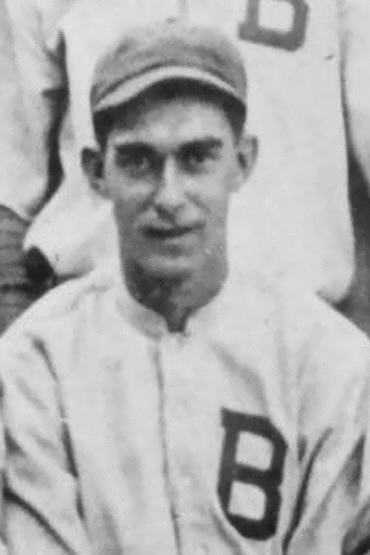
Nashville became the Class A1 affiliate of the National League's Brooklyn Dodgers in 1938. This was the beginning of most successful stretch, in terms of winning percentage and championships, in team history. They beat New Orleans, 3–2, in the playoffs' opening semifinal series to advance. In the championship round, now a best-of-seven series, they lost to Atlanta, 4–1.
Larry Gilbert became Nashville's manager in 1939. The Vols swept the Memphis Chicks, 3–0, in the opening round, and they then bested Atlanta, 4–3, to win their first playoff championship. This was the first of six consecutive playoff titles for the Volunteers. Since 1920, the champions of the Southern Association had been meeting the champions of the Texas League in the Dixie Series, a best-of-seven series to crown a champion of the Southland. Up three games to two, the Vols lost two-in-a-row versus the Texas League champion Fort Worth Cats to lose the series, 4–3.
The 1940 Volunteers set a franchise record with their 101–47 (.682) season under Gilbert. In possession of first place since Opening Day, they won their fifth Southern Association pennant by nine-and-a-half games over Atlanta. After blanking Chattanooga, 3–0, in the semifinals, they won a second playoff title over Atlanta, 4–2. Nashville then won their first Dixie Series title versus the Houston Buffaloes, 4–1. The Vols led the loop in batting average (.311), hits (1,662), doubles (344), home runs (89), runs (961), double plays (208), and fielding percentage (.970). Nashville's Arnie Moser paced the league with 216 hits, John Mihalic drew a league-best 127 walks, and Gus Dugas tied for the lead with 22 home runs. was selected for the Southern Association Most Valuable Player (MVP) Award. In a 2001 ranking, the 1940 Vols were evaluated as the 47th greatest minor league team of all time.
Unaffiliated (1941–1942)
The Volunteers operated without a major league working agreement in 1941. With Larry Gilbert remaining as manager, In the playoffs, they defeated New Orleans, 3–1, before capturing their third Southern Association championship over Atlanta, 4–3. In the deciding game, the Vols trailed 2–0 before tieing the contest in the ninth inning, and George Jeffcoat scored the winning run in the tenth.
The 1942 campaign, in which the Vols were also unaffiliated, was equally successful as the previous season. Gilbert's team posted an 85–66 record, placing four-and-a-half games behind Little Rock. After downing Birmingham, 3–1, in the semifinals, they won a fourth championship by sweeping Little Rock, 4–0. Against the Texas League's Shreveport Sports, Nashville won a third consecutive Dixie Series title, 4–2.
Chicago Cubs (1943–1951)
In 1943, the Volunteers became the Class A1 affiliate of the National League's Chicago Cubs. Still under Larry Gilbert, the Vols won the first-half of the season with a 49–26 record, nine-and-a-half games ahead of Little Rock, and later clinched their sixth regular-season pennant with a league-best 83–55 record, four games in front of New Orleans. In an abbreviated postseason, the Vols won their fifth consecutive Southern Association playoff title over second-half winners New Orleans, 4–1. There would be no Dixie Series appearance since the series was suspended due to World War II. Outfielder Ed Sauer, the league leader in batting average (.368), doubles (51), runs (113), and stolen bases (30), was chosen for the MVP Award.
The 1944 Vols posted an overall record of 79–61, placing third, but won the second-half title in the process, going 47–25, one game ahead of Atlanta. They won their sixth consecutive playoff championship by defeating first-half pennant winners Memphis, 4–3, after coming back from a 3–1 series deficit. The Dixie Series was still on wartime hiatus.
For the first time since 1937, Nashville failed to qualify for the postseason from 1945 to 1946, having finished with losing records well behind the leaders. In 1946, the Southern Association was reclassified as a Double-A circuit. Having returned to a four-team postseason format, the Vols won their semifinal bout with New Orleans, 4–1, but were defeated for the league championship by Mobile, 4–2.
In 1948, Nashville won a seventh regular-season pennant by three games over Memphis at 95–58. They reached the championship round via a semifinal win over Mobile, 4–3, but, for a second-straight season, lost in the finals, this time to Birmingham, 4–2. Vols outfielder Chuck Workman, who paced the league in home runs (52) and RBI (182), won the MVP Award. After 10 seasons as manager, Larry Gilbert retired from his post following the season but remained with the team in the role of general manager. Gilbert had led the Vols for 1,471 games over 10 seasons, making him the longest-tenured manager in team history. He also sits atop the all-time wins list for Vols skippers with 821 wins.
Rollie Hemsley, Gilbert's successor, Nashville advanced past New Orleans, 4–2, in the semifinals and then won their seventh playoff championship versus Mobile, 4–2. They capped off the season with a 4–3 Dixie Series victory over the Texas League's Tulsa Oilers. Catcher Carl Sawatski, who led the circuit with 45 home runs and 153 RBI, won league MVP honors.
The 1950 Vols, under manager Don Osborn placed third at 86–64, five-and-a-half back from Atlanta. They won the semifinals versus Birmingham, 4–1, and then beat Atlanta, 4–1, to win an eighth playoff title. They lost the Dixie Series to the San Antonio Missions, 4–3. Pitcher Bob Schultz, with a league-best 25 wins and 5 shutouts and a second-best 202 strikeouts, won the loop's MVP Award. On July 21, 1951, Umberto Flammini tossed a 2–0 no-hit game against Atlanta on the road at Ponce de Leon Park. The 1951 team narrowly missed the playoffs with a fifth-place finish. A shortage of available players prompted Nashville to discontinue their working agreement with the Chicago Cubs after the 1951 season.
New York Giants (1952–1954)

The Vols returned to the New York Giants organization as their Double-A affiliate in 1952. the 1953 club, led by Hugh Poland, After defeating Atlanta, 4–2, in the semifinals, they won what would be Nashville's ninth and final Southern Association championship over Birmingham, 4–1. In their last of seven Dixie Series appearances, they lost to the Dallas Eagles, 4–2. Twenty-three game winner Jack Harshman was the league's MVP.
Despite the 1954 team ending the season 30 games out of first-place behind Atlanta, outfielder Bob Lennon led the league in several areas, including batting average (.345), hits (210), runs (139), home runs (64), and RBI (161), and was chosen as the Southern Association MVP. With the New York Giants unable to supply Nashville with quality players and the Vols losing some US$40,000 to $50,000 per season amid dwindling attendance, they severed ties with the Giants after the 1954 campaign.
Cincinnati Reds (1955–1960)
Nashville repartnered with the Cincinnati Reds, who were known as the Cincinnati Redlegs at the time, in 1955. while the 1956 team placed a more distant seventh at 75–79, five-and-a-half back.
In 1957, the Vols posted a third-place 83–69 record, coming in three games behind first-place Atlanta. Though Nashville won the semifinals against Memphis, 4–2, they were swept in the championship round by Atlanta, 4–0, in what was to be their final postseason appearance. Outfielder Stan Palys, who paced the league with a .359 batting average and 116 runs along with a second-best 112 RBI and 93 walks, was selected for the Southern Association MVP Award. The 1958 Vols finished two games shy of a winning record and one-and-a-half games behind the playoff qualifiers in fifth place at 76–78. Pitcher Jim O'Toole won the Rookie of the Year Award with a league-high 20 wins, 189 strikeouts, and a 2.44 earned run average.

Since 1955, the team had been operated by owner T. L. Murray. He had been losing money each year, including a loss of $50,000 in 1958, as attendance dwindled. Having reached a point where he could no longer afford to run the Volunteers, Murray offered to sell the team, Sulphur Dell, and the real estate it occupied for $200,000 to a local citizens group, which would operate the club beginning in 1959. The additional $50,000 would be used for operating expenses.
In 1959, the loop switched back to a split-season schedule. The Vols narrowly missed the first-half pennant by a half game behind Birmingham at 41–24. They placed further back in the second-half and missed the playoffs while posting an overall third-place record of 84–64. Though the circuit returned to a four-team playoff in 1960, Nashville came in sixth at 71–82, twelve games behind the qualifiers.
Cincinnati ended its affiliation with Nashville after the 1960 season because the Southern Association prohibited the use of black players. The league was the only professional circuit that had not integrated, and it had a few member clubs that operated in cities with segregation laws that banned black players or mixed-race athletic competitions.
Minnesota Twins (1961)
Having a difficult time obtaining a new major league affiliate, the Vols' board of directors considered operating the club without an affiliate, leasing Sulphur Dell to another party at which to base a team, sitting out the 1961 season, or surrendering the franchise to the league and selling the ballpark. They continued to seek a major league working agreement and found one with the American League's Minnesota Twins. The partnership came about through the help of Southern Association president Hal Totten, Chattanooga president Joe Engel, and Birmingham general manager Eddie Glennon, who convinced Twins president Calvin Griffith and farm director Sherry Robertson to affiliate with Nashville. The season finale was a 10-inning 4–2 loss to Little Rock at Sulphur Dell on September 4. Minnesota ended its partial working agreement with Nashville after the season.
Hiatus (1962)
Knowing the Vols were unlikely to gain another major league affiliate otherwise, The Southern Association eventually followed suit. Nashville then gained a working agreement with the American League's Detroit Tigers. The league planned to operate as a reduced six-team circuit in 1962 following the subtraction of the Atlanta, Birmingham, Mobile, and Shreveport franchises and the addition of teams in Columbus, Georgia, and Evansville, Indiana. However, the inability of the Columbus and Macon teams to secure major league affiliations resulted in the Southern Association disbanding after 61 seasons.
Nashville and Chattanooga were invited to join the Class A South Atlantic League (often referred to as the Sally League) if they could get major league affiliations. When the Philadelphia Phillies refused to partner with Chattanooga in the loop, minor league president George Trautman ceased his efforts to locate an affiliate for Nashville. Instead, Sulphur Dell played host to Negro league, collegiate, and amateur baseball games, as well as other events such as concerts, rodeos, professional wrestling, and revivals.
In August 1962, Nashville's board of directors voted to proceed with a plan presented by South Atlantic League president Sam Smith that would see Nashville join the league in 1963. The committee agreed that a major league affiliation and league membership must be obtained by January 1, 1963, or they would sell Sulphur Dell.
Los Angeles Angels (1963)
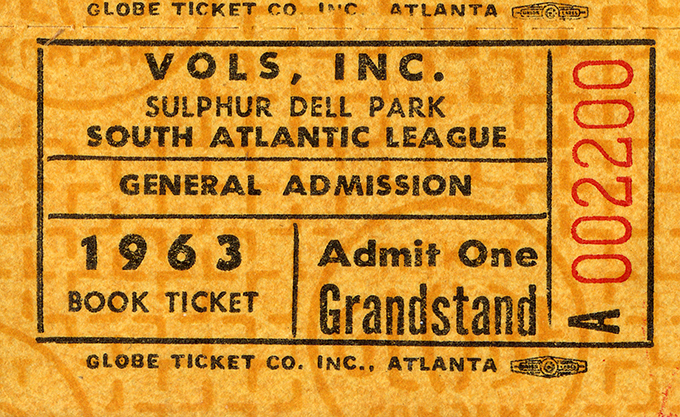
Nashville's Vols played their final season in 1963 as the Double-A affiliate of the American League's Los Angeles Angels in the South Atlantic League. They began competition in the circuit on April 19 with an 8–4 victory over the Knoxville Smokies on the road at Smithson Stadium in Knoxville, Tennessee. The Sulphur Dell home opener on April 22 saw the Macon Peaches down the Vols, 15–4, with 8,348 spectators in attendance. Their first home victory came on April 25 with a 12–4 win against the Charlotte Hornets. On July 17, Edward Kikla pitched an 8–0 no-hitter in the first game of a seven-inning doubleheader against the Augusta Yankees on the road at Jennings Stadium. The Volunteers closed out the season on September 8 with a pair of victories by winning both games of a double bill over the Lynchburg White Sox, 6–3 and 2–1, at Sulphur Dell. Nashville placed last out of eight teams at 53–86, twenty-seven-and-a-half games out of first and did not with either half of the Sally League's split-season.
Poor attendance and financial problems, including no cash assets and a nearly $22,000 debt incurred over the season, resulted in the team's board of directors voting unanimously to surrender the franchise to the league on September 16.
After the Vols
Amateur baseball teams took the field at Sulphur Dell in 1964. Sulphur Dell was demolished on April 16, 1969, after being purchased by an investor with the intent of building an 18-story shopping center. The plan fell apart, and the property was subdivided into 22 parcels and put up for auction in 1971. Meeting with little success, the land was sold to a group of investors in 1972, who gradually filled in the property with dirt and rock but had no plans to develop. Much of the area was bought by the State of Tennessee and used as parking lots for state employees.

Music City was without a professional baseball team for 14 years until 1978 when Vanderbilt University baseball coach Larry Schmittou led a group of local investors to found the Nashville Sounds, an expansion franchise of the Double-A Southern League, which was a reorganized version of the South Atlantic League. The Sounds played at Herschel Greer Stadium, named for first Vols, Inc., president Hershel Lynn Greer, for 37 seasons until moving into the new First Horizon Park, which was built on the Sulphur Dell site, in 2015. The ballpark's design incorporates elements relating to Sulphur Dell. Light stanchions on the grandstand and outfield concourse resemble Sulphur Dell's lights. The back of the batter's eye has a tin sign marking the former location of Sulphur Dell's marquee declaring, "Site of Sulphur Dell, Baseball's Most Historic Park, 1870–1963". Displays about Sulphur Dell and the Vols are located throughout the park.
Season-by-season records
Main article: List of Nashville Vols seasons
Over 9,015 regular-season games in their 62-year history, the Vols compiled a win–loss record of 4,569–4,446 (.507). They qualified for postseason playoffs on 16 occasions and had a postseason record of 108–74–1 (.593). Nashville won eight Southern Association (SA) pennants, nine SA playoff championships, and four Dixie Series titles. Combining all 9,198 regular-season and postseason games, the Vols had an all-time record of 4,677–4,520–1 (.509). The team's best season record occurred in 1940 when they finished 101–47 (.682). Their lowest season record was 45–92 (.328) in 1906. Of the six major league affiliations in Nashville's history, the team experienced its best record from 1938 to 1940 as a Brooklyn Dodgers affiliate. They had a composite season record of 270–181 (.599) and reached the postseason in all three years, winning one pennant, two playoff championships, and one Dixie Series. Including a postseason mark of 25–16 (.610), their overall record was 295–197 (.600). Conversely, the team's lowest record was as a Los Angeles Angels affiliate in 1963. The Vols incurred a 53–86 (.381) record and did not reach the postseason in their lone year with the Angles and their final year of competition.
| Season | League | Regular-season | Postseason | MLB affiliate | Ref. | Record | Win % | Finish | GB | Record | Win % | Result | 1940 | 1902 | 1901 | 1949 | 1948 | 1916 | 1943 | 1909 | 1929 | 1908 |
|---|---|---|---|---|---|---|---|---|---|---|---|---|---|---|---|---|---|---|---|---|---|---|
| SA | 101–47 | .682 | 1st | 11–3 | .786 | Won SA pennant | ||||||||||||||||
| Won semifinals vs. Chattanooga Lookouts, 3–0 | ||||||||||||||||||||||
| Won SA championship vs. Atlanta Crackers, 4–2 | ||||||||||||||||||||||
| Won Dixie Series vs. Houston Buffaloes, 4–1 | Brooklyn Dodgers | |||||||||||||||||||||
| SA | 80–40 | .667 | 1st | Won SA pennant | Unaffiliated | |||||||||||||||||
| SA | 78–45 | .634 | 1st | Won SA pennant | Unaffiliated | |||||||||||||||||
| SA | 95–57 | .625 | 1st | 12–7 | .632 | Won SA pennant | ||||||||||||||||
| Won semifinals vs. New Orleans Pelicans, 4–2 | ||||||||||||||||||||||
| Won SA championship vs. Mobile Bears, 4–2 | ||||||||||||||||||||||
| Won Dixie Series vs. Tulsa Oilers, 4–3 | Chicago Cubs | |||||||||||||||||||||
| SA | 95–58 | .621 | 1st | 6–7 | .462 | Won SA pennant | ||||||||||||||||
| Won semifinals vs. Mobile Bears, 4–3 | ||||||||||||||||||||||
| Lost SA championship vs. Birmingham Barons, 4–2 | Chicago Cubs | |||||||||||||||||||||
| SA | 84–54 | .609 | 1st | Won SA pennant | Unaffiliated | |||||||||||||||||
| SA | 83–55 | .601 | 1st | 4–1 | .800 | SA pennant]]* | ||||||||||||||||
| *Won SA championship vs. New Orleans Pelicans, 4–1'' | Chicago Cubs | |||||||||||||||||||||
| SA | 82–55 | .599 | Unaffiliated | |||||||||||||||||||
| SA | 90–63 | .588 | Unaffiliated | |||||||||||||||||||
| SA | 75–56 | .573 | 1st | Won SA pennant | Unaffiliated |
Ballpark
Main article: Sulphur Dell
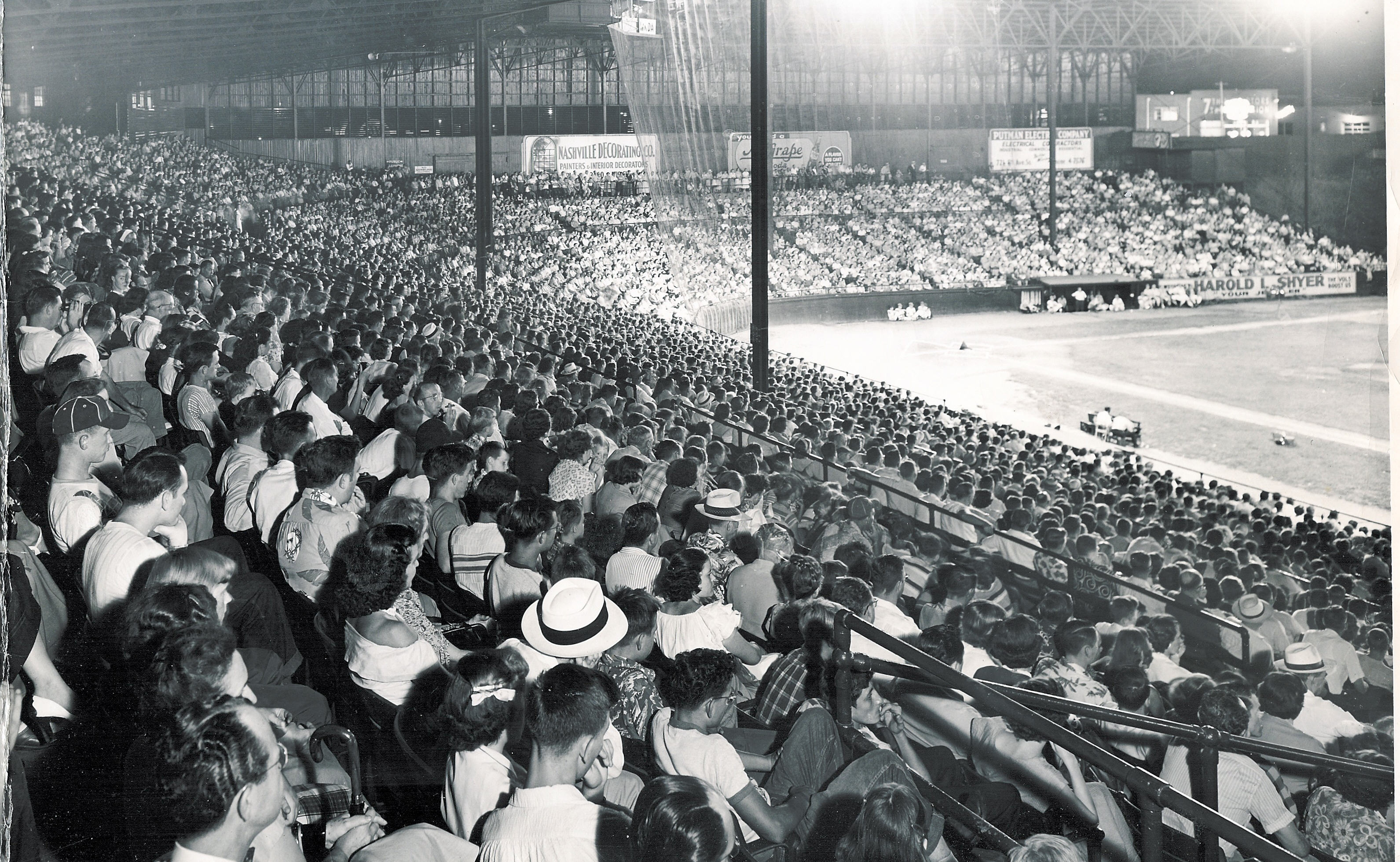
The Vols played their home games at Nashville's Athletic Park, Prior to the Nashville Baseball Club's inaugural 1901 season, the grandstand was remodeled to include 1,000 seats on cushioned benches plus bleachers on both ends with room for an additional 1,200 spectators, which brought the total seating capacity to 2,200 people. and the old right field bleachers were torn out and a new grandstand erected in their place in 1921.
Home plate was originally situated in the northeast corner of the plot, facing southwest. Consequently, batters, first baseman, and right fielders would often have to compete with the afternoon sunlight shining in their eyes. After the 1926 season, the entire ballpark was demolished and rebuilt as a concrete-and-steel structure with home plate on the west side, facing northeast. The top of the right field terrace was 22+1/2 ft above the infield. Right fielders were often called "mountain goats" for the way they had to go up and down the hills in right-center and right. They usually played on the 10 ft "shelf" one-third of the way up the incline. Occasionally, the shelf was used for overflow seating, cutting the already-short right field distance to 235 ft. The seating capacity of the reconfigured stadium was 7,500.
After the Vols' disbanded following the 1963 season, Sulphur Dell saw use as an amateur baseball park, speedway, the city's tow-in lot, and an automobile company's storage lot until being demolished on April 16, 1969. the home stadium of the Nashville Sounds minor league baseball team, which moved into the facility in 2015.
Players
After 62 seasons, over 1,200 players had competed in at least one game for the Vols. From these, Nashville Banner sportswriters Fred Russell and George K. Leonard created two rosters of the all-time greatest players, covering the periods of 1901 to 1919 and 1920 to 1963.
| Position | Player | First baseman | Second baseman | Shortstop | Third baseman | Outfielder | Outfielder | Outfielder | Catcher | Catcher | Pitcher | Pitcher | Pitcher | Pitcher | Pitcher | Pitcher |
|---|
| Position | Fred Russell | George K. Leonard | Player | Player | First baseman | Second baseman | Shortstop | Third baseman | Outfielder | Outfielder | Catcher | Catcher | Right-handed pitcher | Right-handed pitcher | Right-handed pitcher | Right-handed pitcher | Left-handed pitcher | Left-handed pitcher | Left-handed pitcher | Manager |
|---|
Achievements

Awards
Main article: List of Nashville Vols awards, All-Stars, and league leaders
Eight Vols were selected for the Southern Association Most Valuable Player Award, more than any other team in the league, in recognition for their performance with Nashville. These players were Greek George (1940), Ed Sauer (1943), Chuck Workman (1948), Carl Sawatski (1949), Bob Schultz (1950), Jack Harshman (1953), Bob Lennon (1954), and Stan Palys (1957). One player won the league's Rookie of the Year Award: Jim O'Toole (1958).
Hall of Famers
Two former Vols have been elected to the National Baseball Hall of Fame. Outfielder Kiki Cuyler, who was selected by the Veterans Committee in 1968, played for the Vols in 1923 before being purchased by the Pittsburgh Pirates near the season's end. In 149 games, Cuyler led the team with a .340 batting average, 195 hits, 39 doubles, and 17 triples. Pitcher Waite Hoyt, selected by the Veterans Committee in 1969, was on loan to Nashville from the New York Giants in 1918 when he was recalled to the majors mid-season. In 20 games, he had accumulated a win–loss record of 5–10 with 51 strikeouts.
Managers
Over the course of 62 seasons, the Nashville Vols were led by 28 managers. Playing in an era when it was common to have player-managers, 19 men served as managers concurrent with their on-field playing. The team's eight regular-season pennants, nine playoff championships, and four Dixie Series titles were won behind seven different managers. Newt Fisher (1901 and 1902), Bill Bernhard (1908), Roy Ellam (1916), and Larry Gilbert (1940, 1943, 1948, and 1949) managed the Vols to win the Southern Association pennant. Gilbert (1939, 1940, 1941, 1942, 1943, and 1944), Rollie Hemsley (1949), Don Osborn (1950), and Hugh Poland (1953) led the team to win Southern Association playoff championships. Gilbert (1940, 1941, and 1942) and Hemsley (1949) managed Nashville to win the Dixie Series, a best-of-seven playoff series against the champions of the Texas League.
| Manager | Season(s) | Regular-season | Postseason | Composite | Ref(s). | G | W | L | Win % | Apps. | W | L | Win % | G | W | L | Win % | ||
|---|---|---|---|---|---|---|---|---|---|---|---|---|---|---|---|---|---|---|---|
| 1939–1948 | 1,481 | 821 | 660 | .554 | 8 | 63 | 33 | .656 | 1,577 | 884 | 693 | .561 | |||||||
| 1923–1928 | 863 | 443 | 420 | .513 | — | — | — | — | 863 | 443 | 420 | .513 | |||||||
| 1911–1915 | 710 | 350 | 360 | .493 | — | — | — | — | 710 | 350 | 360 | .493 | |||||||
| 1916–1920 | 650 | 311 | 339 | .478 | — | — | — | — | 650 | 311 | 339 | .478 | |||||||
| 1901–1905 | 574 | 313 | 261 | .545 | — | — | — | — | 574 | 313 | 261 | .545 | |||||||
| 1932–1934, | |||||||||||||||||||
| 1938 | 471 | 261 | 210 | .554 | 1 | 4 | 6 | .400 | 481 | 265 | 216 | .551 | |||||||
| 1952–1954 | 460 | 222 | 238 | .483 | 1 | 10 | 7 | .588 | 477 | 232 | 245 | .486 | |||||||
| 1957–1959 | 454 | 243 | 211 | .535 | 1 | 4 | 6 | .400 | 464 | 247 | 217 | .532 | |||||||
| 1908–1910 | 408 | 221 | 187 | .542 | — | — | — | — | 408 | 221 | 187 | .542 | |||||||
| 1934, 1935, | |||||||||||||||||||
| 1936–1937 | 359 | 193 | 166 | .538 | 2 | 4 | 6 | .400 | 369 | 197 | 172 | .534 | O'Neal | 1994 | p=306–308}} |
References
;Specific
;General
References
- "Nashville, Tennessee Encyclopedia". Sports Reference.
- Traughber, Bill. (April 25, 2011). "Looking Back: The 1885 Nashville Americans". Minor League Baseball.
- Williams, F. M.. (January 27, 1962). "City Loses Baseball for 1962". The Nashville Tennessean.
- Traughber, Bill. (August 26, 2013). "Looking Back: Sulphur Dell Demolished in 1969". Minor League Baseball.
- Traughber, Bill. (April 26, 2010). "Looking Back: The 1887 Nashville Blues". Minor League Baseball.
- (December 19, 1897). "Southern Boys in Base Ball". The Nashville American.
- (December 16, 1900). "Base Ball, Southern League". The Nashville American.
- (February 29, 1908). "'Volunteers' is the New Name for Nashville's Baseball Club". The Nashville American.
- (February 13, 1901). "Rehabilitating Athletic Park". The Nashville American.
- (May 4, 1908). "Volunteers Will Meet the Barons". The Nashville American.
- (May 3, 1901). "Battles on Diamond". The Nashville American.
- (May 6, 1901). "League Ball this Afternoon". The Nashville American.
- (May 7, 1901). "Hard Luck Loses Game". The Nashville American.
- (May 8, 1901). "Nashville Again Takes the Lead". The Nashville American.
- (September 26, 1901). "Pennant Will Fly Over Athletic Park". The Nashville Banner.
- (1911). "The Book of Baseball: The National Game from the Earliest Days to the Present Season". P.F. Collier.
- "1901 Southern League Standings". Stats Crew.
- (July 10, 1902). "Rain Could Not Save Shreveport". The Nashville American.
- (September 22, 1902). "Southern League Pennant". The Nashville Banner.
- (2022). "2022 Nashville Sounds Media Guide".
- "1902 Southern League Standings". Stats Crew.
- "Nashville Vols Franchise History (1901–1963)". Stats Crew.
- (February 18, 1908). "It's Up to the Bugs". The Nashville American.
- Tamburin, Adam. (April 4, 2014). "Nashville Ballpark Build Unearths Ancient Finds". The Nashville American.
- (June 24, 1875). "Base Ball". Republican Banner.
- (September 11, 1908). "No Hit Game for J. Duggan". The Nashville Banner.
- (September 19, 1908). "Today's Game Will Decide Pennant". Republican Banner.
- (September 20, 1908). "Nashville Wins League Pennant in Fierce Fight". Republican Banner.
- "1908 Southern League Standings". Stats Crew.
- Simpson, John A.. (2007). "The Greatest Game Ever Played in Dixie". McFarland & Company.
- Love, Hamilton. (October 10, 1908). "South Sayings". Sporting Life.
- (September 1, 1909). "No-Hit No-Run Game Pitched". The Nashville American.
- "1909 Southern League Standings". Stats Crew.
- (July 12, 1916). "Perfect Game by Tom Rogers". The Nashville Banner.
- "1916 Southern League Standings". Stats Crew.
- "1917 Southern League Standings". Stats Crew.
- "1929 Southern Association Standings". Stats Crew.
- "1921 Southern Association Standings". Stats Crew.
- "1922 Southern Association Standings". Stats Crew.
- "1928 Southern Association Standings". Stats Crew.
- (July 7, 1894). "Was No End of Fun". The Daily American.
- "San Francisco Giants Minor League Affiliates". Sports Reference.
- Russell, Freddie. (July 3, 1934). "Lookouts, Pebs Only One Given No Flag Chance". The Nashville Banner.
- Horn, Blinkey. (July 29, 1934). "For Second Time Terry Takes a 400 Hitter from Vols". The Nashville Tennessean.
- "1934 Southern Association Standings". Stats Crew.
- Russell, Freddie. (September 25, 1934). "Just a Hairline Separated Vols From 1934 Flag". The Nashville Banner.
- "1935 Southern Association Standings". Stats Crew.
- Russell, Freddie. (June 6, 1935). "Former Dodger Arrives Friday to Take Charge". The Nashville Banner.
- (September 23, 1935). "Crackers to Battle Pels for Southern Loop Flag". The Knoxville Journal.
- Horn, Blinkey. (November 24, 1935). "Reds, Who Will Help Vols, Already Have Promised Two Players". The Nashville Tennessean.
- "1936 Southern Association Standings". Stats Crew.
- (September 21, 1936). "Barons Win Place in Southern Race". Kingsport Times.
- "1937 Southern Association Standings". Stats Crew.
- "Cincinnati Reds Minor League Affiliates". Sports Reference.
- "Los Angeles Dodgers Minor League Affiliates". Sports Reference.
- Johnson, Raymond. (September 20, 1938). "Victory Gains Right to Meet Crax in Finals". The Nashville Tennessean.
- (September 27, 1938). "Crackers Down Vols, Enter Dixie Series". The Jackson Sun.
- Rule, Bob. (September 15, 1939). "Jeffcoat, Smoll Hurl Dell Opener". The Nashville Banner.
- Russell, Fred. (September 23, 1939). "Sam Nahem No. 1 Hero of Playoff". The Nashville Banner.
- Johnson, Raymond. (October 4, 1939). "One Man's Opinion". The Nashville Tennessean.
- Johnson, Raymond. (October 4, 1939). "Texans Blank Nashville 6-0 to Win Series". The Nashville Tennessean.
- (2001). "47. 1940 Nashville Vols". Minor League Baseball.
- (September 9, 1940). "'Nooga-Vols, Crax-Chix in Playoff". The Jackson Sun.
- Johnson, Raymond. (September 14, 1939). "Win 16th in Row; Boken, Hockett Four in Second". The Nashville Tennessean.
- Russell, Fred. (September 24, 1940). "Adams Opposes Nahem in Dixie Series Opener". The Nashville Banner.
- Johnson, Raymond. (October 1, 1940). "Vols Win Dixie Series, Defeat Houston 5 to 3". The Nashville Tennessean.
- (November 19, 1940). "Official Southern League Figures Reveal New Records Set by 1940 Vols". The Nashville Banner.
- "Charles George Minor Leagues Statistics". Sports Reference.
- "Timeline". Southern Association Baseball.
- Russell, Fred. (August 13, 1940). "League's Most Valuable". The Nashville Banner.
- Johnson, Raymond. (February 20, 1941). "One Man's Opinion". The Nashville Tennessean.
- "1941 Southern Association". Sports Reference.
- (September 12, 1941). "Standing of the Clubs". Chattanooga Daily Times.
- Johnson, Raymond. (September 20, 1941). "Vols' Late Rallies Top Crax, 3-2; Get Third Shot at Dixie Title". The Nashville Tennessean.
- Johnson, Raymond. (September 26, 1941). "Vols Beat Dallas to Sweep Series". The Nashville Tennessean.
- "1942 Southern Association". Sports Reference.
- "1942 Southern Association Standings". Stats Crew.
- (September 14, 1942). "Vols Subdue Barons and Enter Finals". Johnson City Press.
- (September 24, 1942). "Vols Open Dixie Series on Home Lot on Friday". The Jackson Sun.
- (October 5, 1942). "Nashville Takes Dixie Championship, 4 to 2". Johnson City Press.
- "Chicago Cubs Minor League Affiliates". Sports Reference.
- (July 5, 1943). "Southern Association". The Nashville Banner.
- (September 8, 1943). "Vols and Pelicans Open Series Today". The Knoxville Journal.
- "1943 Southern Association Standings". Stats Crew.
- O'Donnell, Red. (September 14, 1943). "Gardner Paints 7-Hit Masterpiece in Box". The Nashville Tennessean.
- Russell, Fred. (August 24, 1943). "Sideline Sidelights". The Nashville Banner.
- "1944 Southern Association Standings". Stats Crew.
- (September 11, 1944). "Southern League". The Nashville Banner.
- Johnson, Raymond. (September 11, 1944). "Greek's Homer in 9th Ices 9-5 Flag Clincher as 12,000 Cheer". The Nashville Tennessean.
- (September 21, 1944). "Nashville is Dixie Champ". The Bristol News Bulletin.
- (September 15, 1947). "Club Standings". Chattanooga Daily Times.
- (September 23, 1947). "Baseball Standings". The Leaf-Chronicle.
- Russell, Fred. (September 13, 1948). "Pennant Winners to Face Mobile; Need Two 'Tricks' for Grand Slam". The Nashville Banner.
- "1948 Southern Association Standings". Stats Crew.
- (September 22, 1948). "Southern Association". The Leaf-Chronicle.
- (September 30, 1948). "Southern Association". The Leaf-Chronicle.
- "1948 Southern Association Batting Leaders". Sports Reference.
- (January 19, 1949). "Most Valuable to Workman". The Nashville Tennessean.
- Johnson, Raymond. (September 9, 1948). "One Man's Opinion". The Nashville Tennessean.
- "1949 Southern Association Standings". Stats Crew.
- (September 20, 1949). "Minor Loop Scores". The Knoxville News-Sentinel.
- (September 27, 1949). "Southern Playoff". The Nashville Tennessean.
- Melvin, Russ. (October 8, 1949). "Vols Dixie Titlists; Win 5-4 in Tenth". The Nashville Tennessean.
- "1949 Southern Association Batting Leaders". Sports Reference.
- (February 19, 1950). "Southern League Picks Sawatski Most Valuable". The Commercial Appeal.
- "1950 Southern Association Standings". Stats Crew.
- (September 19, 1950). "Ace Pitchers to Work in Southern Playoff". The Jackson Sun.
- (September 25, 1950). "Vols Defeat Crackers in Southern Playoff; Gain Dixie Series". The Jackson Sun.
- (October 6, 1950). "Baseball Results". The Knoxville News-Sentinel.
- "1950 Southern Association Pitching Leaders". Sports Reference.
- (November 23, 1950). "Schultz Voted Southern's Most Valuable for 1950". The Nashville Tennessean.
- (July 22, 1951). "Flammini Foils Crax with No-Hitter". The Nashville Tennessean.
- "1951 Southern Association Standings". Stats Crew.
- Leonard, George K.. (September 19, 1951). "Cub Hook-Up Is Over; Gilbert May Work With Giants in 1952". The Nashville Banner.
- "1952 Southern Association Standings". Stats Crew.
- (September 15, 1953). "Vols in Playoff Finals vs Birmingham Barons". The Jackson Sun.
- (September 22, 1953). "How They Stand". The Jackson Sun.
- (October 1, 1953). "Dallas Rally Defeats Nashville to Become Dixie Series Champs". The Jackson Sun.
- (January 12, 1954). "Harshman Voted SA's Most Valuable Player". The Nashville Tennessean.
- "1954 Southern Association Standings". Stats Crew.
- "1954 Southern Association Batting Leaders". Sports Reference.
- Leonard, George K.. (January 11, 1955). "No Surprise, This: Lennon Is Elected Most Valuable". The Nashville Banner.
- Leonard, George K.. (September 22, 1954). "Vols Sever Giant Tieup". The Nashville Banner.
- Johnson, Raymond. (September 26, 1954). "Nashvols, in Surprise Move, to Work With Cincinnati". The Nashville Tennessean.
- "1955 Southern Association Standings". Stats Crew.
- "1956 Southern Association Standings". Stats Crew.
- "1957 Southern Association Standings". Stats Crew.
- (September 17, 1957). "Nashville Rubs Out Memphis". The Jackson Sun.
- (September 24, 1957). "Southern Association Playoffs". The Jackson Sun.
- "1957 Southern Association Batting Leaders". Sports Reference.
- Williams, F. M.. (January 23, 1958). "Stan Palys Selected Most Valuable in SL". The Nashville Tennessean.
- "1958 Southern Association Standings". Stats Crew.
- Williams, F. M.. (November 13, 1958). "Nashville Reaps Jim O'Toole's Harvest". The Nashville Tennessean.
- "1958 Southern Association Pitching Leaders". Sports Reference.
- (October 22, 1958). "Thursday Fateful Day for Baseball Here". The Nashville Tennessean.
- (November 1, 1958). "Vol Owner Transfer Hinges on Stock Sale". The Nashville Tennessean.
- (November 7, 1958). "Greer to Head Vol Operation". The Nashville Tennessean.
- (January 25, 1959). "Vols to Pick Board, Fix Set of By-Laws". The Nashville Tennessean.
- Williams, F. M.. (January 27, 1959). "Vols Periled by Title Threat". The Nashville Tennessean.
- (July 11, 1959). "Southern Association". The Nashville Banner.
- (September 8, 1959). "Southern Association". The Nashville Banner.
- "1959 Southern Association Standings". Stats Crew.
- "1960 Southern Association Standings". Stats Crew.
- Williams, F. M.. (August 30, 1960). "Vols Searching for Majors' Help After Reds End Work Agreement". The Nashville Tennessean.
- Williams, F. M.. (January 6, 1961). "Directors Vote to Stay Action on Vols". The Nashville Tennessean.
- Williams, F. M.. (January 24, 1961). "Twins Tieup Rescues Nashvols". The Nashville Tennessean.
- "1961 Southern Association Standings". Stats Crew.
- Williams, F. M.. (September 5, 1961). "Grace's Clutch Single Beats Vols 4-2 in 10". The Nashville Tennessean.
- Leonard, George. (September 29, 1961). "Vols to Go Triple A? 'Unlikely,' Says GM". The Nashville Banner.
- Leonard, George. (September 6, 1961). "Realignment, Future Policy Call for Early SA Meeting". The Nashville Banner.
- (October 19, 1961). "Southern League Okays Negro Players for 1962". The Nashville Banner.
- (December 17, 1961). "Tigers, Vols Draw Pact". The Nashville Tennessean.
- (January 3, 1962). "Southern Seeks Two More Ties at Columbus Confab". The Nashville Banner.
- Leonard, George. (January 25, 1962). "Vols Need 'Santa Claus' Now to Survive". The Nashville Banner.
- Leonard, George. (February 28, 1962). "Vols Forced to Release Joyner, Christian—No Sale". The Nashville Banner.
- (May 27, 1962). "Dee Clark Coming To Dell". The Nashville Tennessean.
- (May 21, 1962). "Benefit Rodeo Slated For Memorial Hospital". The Nashville Banner.
- (June 3, 1962). "Big Mat Card in Dell June 19". The Nashville Tennessean.
- (May 18, 1962). "City-Wide Healing Revival". The Nashville Banner.
- Williams, F. M.. (August 25, 1962). "Vols Ready to 'Play Ball' if Details Set by Jan. 1". The Nashville Tennessean.
- Williams, F. M.. (December 12, 1962). "Vols Officially Hire Ed Doherty, Accept Agreement with Angels". The Nashville Tennessean.
- Williams, F. M.. (April 20, 1963). "Vol Bats Choke Smokies, 8-4". The Nashville Tennessean.
- Williams, F. M.. (April 23, 1963). "Macon Pounds Vols 15 to 4". The Nashville Tennessean.
- Williams, F. M.. (April 26, 1963). "Waite Powers Vols 12-4". The Nashville Tennessean.
- (July 18, 1963). "Vols' Kikla No-Hits Augusta". The Nashville Tennessean.
- Williams, F. M.. (September 9, 1963). "Vols Bow Out with 2 Wins". The Nashville Tennessean.
- "1963 South Atlantic League Standings". Stats Crew.
- Williams, F. M.. (September 17, 1963). "Vols Owe $22,000, Surrender Franchise". The Nashville Tennessean.
- Williams, F. M.. (April 16, 1969). "Long Journey Ends with One Last Ball". The Nashville Tennessean.
- Williams, F. M.. (April 17, 1969). "Sad Day at the Dell, as 35 Say Farewell". The Nashville Tennessean.
- Cason, Albert. (September 9, 1971). "22 Sulphur Dell Lots Up for Sale Today". The Nashville Tennessean.
- Walker, Irene. (January 12, 1975). "Dell Dump Still Giving Trouble". The Tennessean.
- Zepp, George. (October 30, 2002). "Sulphur Dell was a Big Nashville Hit". The Tennessean.
- (2001). "69. 1980 Nashville Sounds".
- "Southern League History". Minor League Baseball.
- Ammenheuser, David. "Coming Home to Sulphur Dell".
- Reichard, Kevin. (April 20, 2015). "First Tennessee Park / Nashville Sounds". August Publications.
- (April 5, 2023). "Explore Nashville's First Horizon Park".
- "Nashville Vols Franchise History (1901–1963)". Stats Crew.
- Traughber, Bill. (June 25, 2012). "Looking Back: Nashville's Sulphur Springs Ballpark". Minor League Baseball.
- Johnson, Raymond E.. (March 24, 1921). "Vandy and Vols Will Try to Play Today". The Nashville Tennessean.
- Horn, Blinkey. (November 24, 1926). "Erection of New Concrete Stands in Sulphur Dell Begins Immediately". The Nashville Tennessean.
- Lowry, Phillip. (2005). "Green Cathedrals". Walker & Company.
- (January 27, 2014). "Mayor, Nashville Sounds Celebrate Groundbreaking for New Ballpark". Metropolitan Government of Nashville and Davidson County, Tennessee.
- (January 23, 1958). "Palys Eighth Vol to Get Southern's MVP Accolade". The Nashville Banner.
- "Kiki Cuyler Stats, Height, Weight, Position, Rookie Status & More". Sports Reference.
- (September 22, 1923). "Giants Increase Lead by Beating Pirates Twice". The Nashville Tennessean.
- "1923 Nashville Volunteers Statistics". Sports Reference.
- "Waite Hoyt Stats, Height, Weight, Position, Rookie Status & More". Sports Reference.
- (June 30, 1918). "Hoyt off for New York". The Nashville Banner.
- "1918 Nashville Volunteers Statistics". Sports Reference.
- Gonzalez, Alden. (November 10, 2011). "Will There Ever Be Another Player-Manager?". Major League Baseball.
- "Larry Gilbert Minor League Baseball Coaching Records". Stats Crew.
- "Jimmy Hamilton Minor League Baseball Coaching Records". Stats Crew.
- (June 28, 1928). "Southern League Clubs Facing New Start—Barons Dominated Play in First Half of Battle". The Nashville Banner.
- (June 28, 1928). "Southern League". The Nashville Tennessean.
- "William Schwartz Minor League Baseball Coaching Records". Stats Crew.
- "Roy Ellam Minor League Baseball Coaching Records". Stats Crew.
- "Ike Fisher Minor League Baseball Coaching Records". Stats Crew.
- (July 17, 1905). "Standing of the Clubs". The Nashville Tennessean.
- Russell, Freddie. (July 7, 1932). "Charlie Dressen New Vol Boss". The Nashville Banner.
- Russell, Freddie. (July 28, 1934). "Lance Richbourg Named Manager of Nashville Club". The Nashville Banner.
- "1932 Nashville Vols Statistics". Stats Crew.
- "Chuck Dressen Minor League Baseball Coaching Records". Stats Crew.
- (July 5, 1934). "Southern Association". The Nashville Banner.
- "Hugh Poland Minor League Baseball Coaching Records". Stats Crew.
- "Dick Sisler Minor League Baseball Coaching Records". Stats Crew.
- "Bill Bernhard Minor League Baseball Coaching Records". Stats Crew.
- "Lance Richbourg Minor League Baseball Statistics". Stats Crew.
- Russell, Freddie. (June 7, 1935). "Nashville Mound Staff in Crippled Shape for Game". The Nashville Banner.
This article was imported from Wikipedia and is available under the Creative Commons Attribution-ShareAlike 4.0 License. Content has been adapted to SurfDoc format. Original contributors can be found on the article history page.
Ask Mako anything about Nashville Vols — get instant answers, deeper analysis, and related topics.
Research with MakoFree with your Surf account
Create a free account to save articles, ask Mako questions, and organize your research.
Sign up freeThis content may have been generated or modified by AI. CloudSurf Software LLC is not responsible for the accuracy, completeness, or reliability of AI-generated content. Always verify important information from primary sources.
Report