From Surf Wiki (app.surf) — the open knowledge base
Nardaran Fortress
| Field | Value |
|---|---|
| name | Nardaran Fortress |
| image | Nrdaran qalası, 1301-ci il.jpg |
| caption | Nardaran Fortress |
| location | Nardaran, Baku, Azerbaijan |
| coordinates | |
| completion_date | 1301 |
| architect | Mahmud ibn Sa'd |
Nardaran Fortress () is a historical and architectural monument located in the Nardaran settlement of the Sabunçu district in Baku. The fortress has been registered as a monument of global significance by the Ministry of Culture and Tourism of the Republic of Azerbaijan. In 2001, the Nardaran Fortress, along with other Caspian defense structures, was included in UNESCO's Tentative List.
The Nardaran Fortress consists of fortress walls enclosing a square-shaped courtyard and a cylindrical tower located at the center of the courtyard. Local stone was used in the construction of the fortress.
History
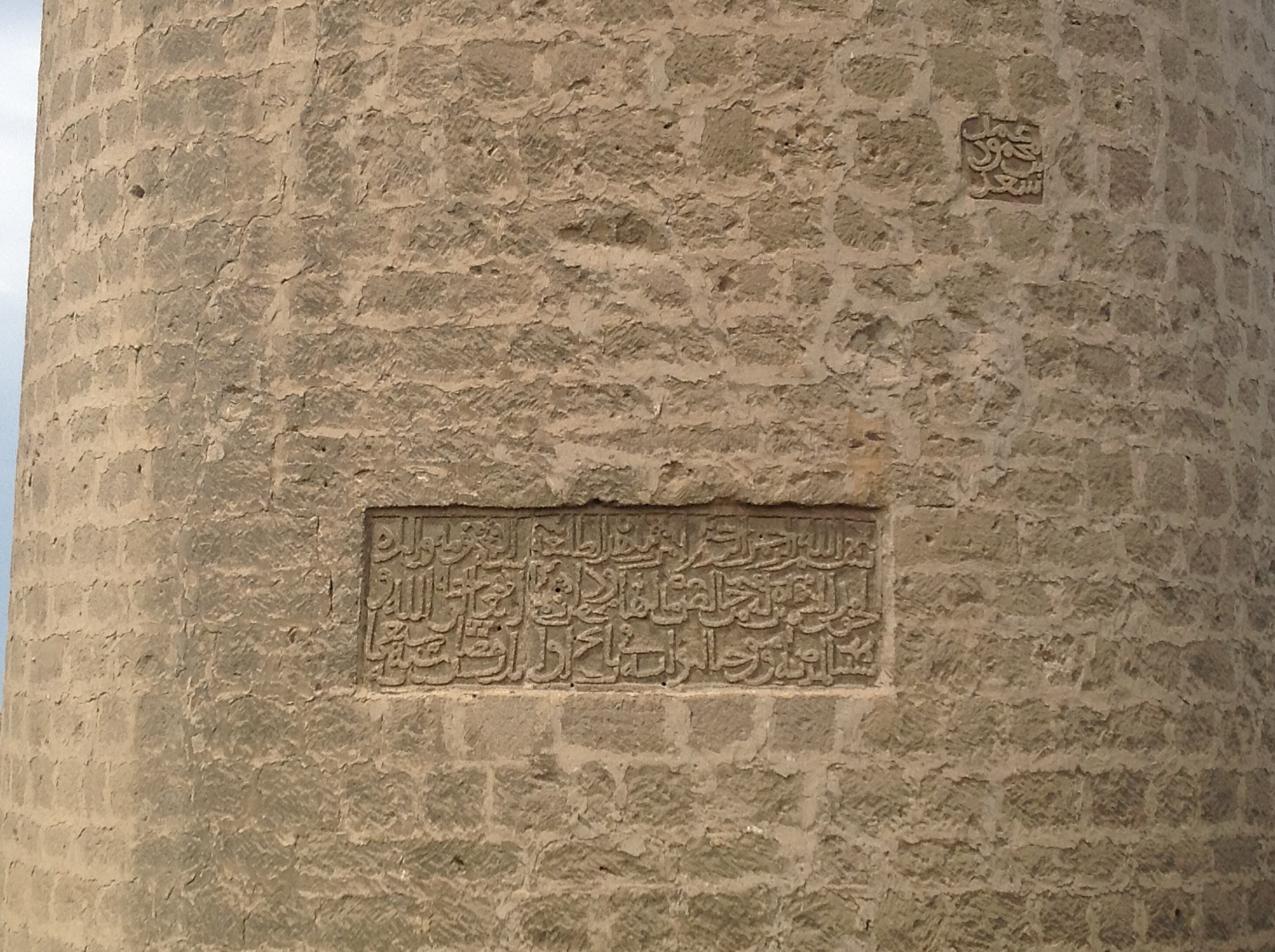
Two inscriptions on the facade of the fortress tower indicate that the structure was built in the Hijri year 700 (1301 AD) by architect Mahmud ibn Sad (or Mahmud ibn Said ) .
The larger inscription, located at the height of the second tier above the entrance to the tower, states:
The smaller inscription, located slightly above the first one and on the eastern side, states: "The work of Mahmud, son of Sa'd."
This architect also designed and constructed the Bibi-Heybat Mosque in Baku Bay and the Molla Ahmad Mosque in Icherisheher, built in 1300, which also bears the architect's name on its inscription.
All three monuments testify to the architect's extraordinary talent, his deep knowledge of the characteristics of fortress constructions, and his artistic imagination.
Architectural features
The Nardaran Fortress consists of fortress walls enclosing a square-shaped courtyard and a cylindrical tower situated at the center of the courtyard. The walls surrounding the courtyard are 6 meters high and are reinforced by bastioned towers on all four sides. The central tower in the courtyard has a height of 12.5 meters. Local stone was used in the construction of the fortress.
The cylindrical shape, division into three tiers topped with stone domes, the second tier's elevated entrance, and other features make the central tower of the Nardaran Fortress similar to the central tower of the Round Mardakan Fortress. Despite these similarities, the donjon of the Nardaran Fortress also has distinctive characteristics: for example, unlike other Absheron fortresses, the walls of the Nardaran donjon do not incline inward as they rise but maintain their straight form. Additionally, unlike the corbels of the Round Mardakan Fortress donjon, the donjon of the Nardaran Fortress is built from plain hewn stones without decorative elements.
References
Literature
References
- (2 August 2001). "Dünya əhəmiyyətli daşınmaz tarix və mədəniyyət abidələrinin siyahısı". Azərbaycan Respublikası Mədəniyyət Nazirliyi.
- "The Caspian Shore Defensive Constructions". unesco.org.
This article was imported from Wikipedia and is available under the Creative Commons Attribution-ShareAlike 4.0 License. Content has been adapted to SurfDoc format. Original contributors can be found on the article history page.
Ask Mako anything about Nardaran Fortress — get instant answers, deeper analysis, and related topics.
Research with MakoFree with your Surf account
Create a free account to save articles, ask Mako questions, and organize your research.
Sign up freeThis content may have been generated or modified by AI. CloudSurf Software LLC is not responsible for the accuracy, completeness, or reliability of AI-generated content. Always verify important information from primary sources.
Report