From Surf Wiki (app.surf) — the open knowledge base
Napkin ring
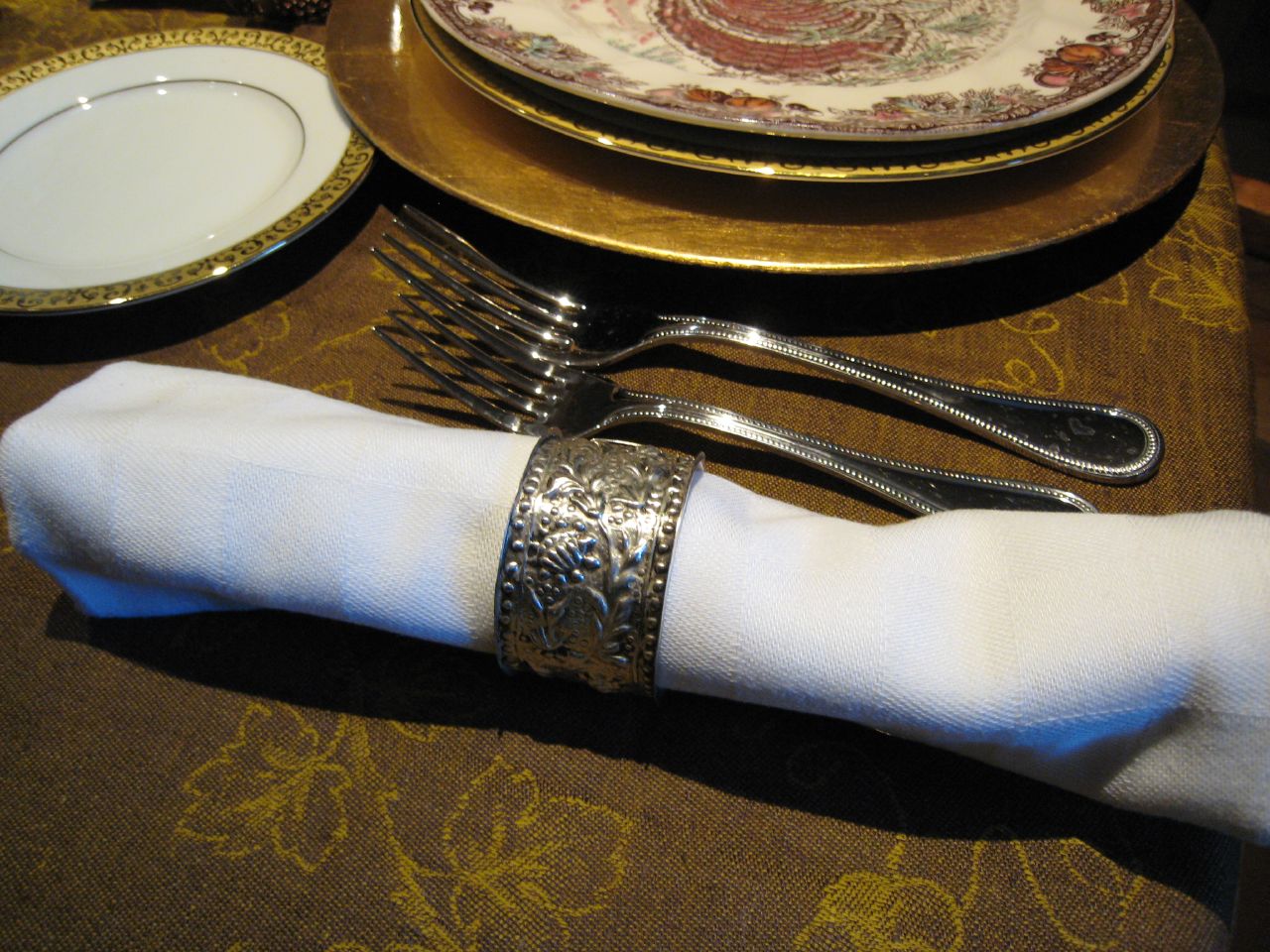
the household item
The napkin ring, occasionally called a Christening bangle, was originally used to identify the napkins of a household between weekly wash days. The figural napkin ring is an American specialty in which the simple napkin ring is part of a small figure or sculpture that may take any shape and show any motif. Napkin rings appear as single items with the name or initials of the owner, notably given as christening presents, or pairs often given as gifts at weddings and silver weddings. In the English speaking countries, numbered sets of 4, 6, 8, 10 or 12 napkin rings are found. Napkin rings are an invention of the European bourgeoisie, first appearing in France about 1800 and soon spreading to all countries in the western world. Most 19th century napkin rings were made of silver or silver plate, but others were made in bone, wood, pearl embroidery, porcelain, glass, and other materials. In the 20th century, bakelite and other new materials were used.
References
- Silver, September–October 1980: Ole Lachmann, European Silver Napkin Rings
- Ole Lachmann: "Napkin Rings – 150 years of silver design"
- Victor Schnadig: American Victorian Figural Napkin Rings
This article was imported from Wikipedia and is available under the Creative Commons Attribution-ShareAlike 4.0 License. Content has been adapted to SurfDoc format. Original contributors can be found on the article history page.
Ask Mako anything about Napkin ring — get instant answers, deeper analysis, and related topics.
Research with MakoFree with your Surf account
Create a free account to save articles, ask Mako questions, and organize your research.
Sign up freeThis content may have been generated or modified by AI. CloudSurf Software LLC is not responsible for the accuracy, completeness, or reliability of AI-generated content. Always verify important information from primary sources.
Report