From Surf Wiki (app.surf) — the open knowledge base
Nagasaki
Core city in Kyushu, Japan

Core city in Kyushu, Japan
| Field | Value | |
|---|---|---|
| <!-- See Template:Infobox settlement for additional fields and descriptions --> | name | Nagasaki |
| native_name | 長崎市 | |
| official_name | Nagasaki City | |
| settlement_type | Prefecture capital and core city | |
| image_skyline | {{multiple image | |
| total_width | 280 | |
| border | infobox | |
| perrow | 1/2/2/2/1/1 | |
| image1 | Nagasaki City View from Glover Garden, Nagasaki 2014.jpg | |
| caption1 | Nagasaki City View from Glover Garden | |
| image2 | Fountain at Nagasaki Peace Park.jpg | |
| caption2 | Nagasaki Peace Park | |
| image3 | Megane Bridge 2021.jpg | |
| caption3 | Megane Bridge | |
| image4 | Glover House in evening light.jpg | |
| caption4 | Glover Garden | |
| image5 | Oura Cathedral 20180623.jpg | |
| caption5 | Oura Church | |
| image6 | Okeyamachi, Nagasaki, Nagasaki Prefecture 850-0027, Japan - panoramio (1).jpg | |
| caption6 | Nagasaki Lantern Festival | |
| image7 | Urakami Catholic Church 2017.jpg | |
| caption7 | Urakami Cathedral | |
| image8 | Hashima, Nagasaki, Japan, 20240814 1424 3412.jpg | |
| caption8 | Hashima Island (Gunkan Island) | |
| image_flag | Flag of Nagasaki, Nagasaki.svg | |
| image_seal | Nagasaki Nagasaki chapter.svg | |
| nicknames | ||
| City of Peace | ||
| Naples of the Orient | ||
| image_map1 | Nagasaki in Nagasaki Prefecture Ja.svg | |
| map_caption1 | Map of Nagasaki Prefecture with Nagasaki highlighted in dark pink | |
| pushpin_map | #Kyushu#Japan#Asia#Earth | |
| pushpin_map_caption | ||
| coordinates | ||
| subdivision_type | Country | |
| subdivision_name | ||
| subdivision_type1 | Region | |
| subdivision_name1 | Kyushu | |
| subdivision_type2 | Prefecture | |
| subdivision_name2 | Nagasaki Prefecture | |
| <!-- established ---------------> | established_title | Harbor opened for foreign trade |
| established_date | 1571 | |
| established_title1 | Became treaty port | |
| established_date1 | 1859 | |
| established_title2 | Incorporated as a city | |
| established_date2 | April 1, 1889 | |
| leader_title | Mayor | |
| leader_name | Shirō Suzuki (indp.) | |
| area_magnitude | ||
| area_total_km2 | 405.86 | |
| area_land_km2 | 240.71 | |
| area_water_km2 | 165.15 | |
| population_total | 392,281 | |
| population_as_of | February 1, 2024 | |
| population_density_km2 | auto | |
| timezone1 | Japan Standard Time | |
| utc_offset1 | +9 | |
| <!-- postal codes, area code ---> | blank_name_sec1 | City Symbols |
| blank1_name_sec1 | – Tree | |
| blank1_info_sec1 | Chinese tallow tree | |
| blank2_name_sec1 | – Flower | |
| blank2_info_sec1 | Hydrangea | |
| blank_name_sec2 | Phone number | |
| blank_info_sec2 | 095-825-5151 | |
| blank1_name_sec2 | Address | |
| blank1_info_sec2 | 2–22 Sakura-machi, Nagasaki-shi, Nagasaki-ken | |
| 850-8685 | ||
| <!-- website, footnotes --------> | website |
the city in Japan
City of Peace Naples of the Orient 850-8685 Nagasaki, officially {{nihongo|Nagasaki City|長崎市|Nagasaki-shi|
Founded by the Portuguese, the port of Nagasaki became the sole port used for trade with the Portuguese and Dutch during the 16th through 19th centuries. The Hidden Christian Sites in the Nagasaki Region have been recognized and included in the UNESCO World Heritage Sites list. Part of Nagasaki was home to a major Imperial Japanese Navy base during the First Sino-Japanese War and Russo-Japanese War. Near the end of World War II, the American atomic bombings of Hiroshima and Nagasaki made Nagasaki the second city in the world to experience a nuclear attack. The city was later rebuilt.
, Nagasaki has an estimated population of 392,281, and a population density of 966 people per km2. The total area is 405.86 km2.
History
Nagasaki as a Jesuit port of call
Main article: Ecclesiastical Nagasaki, Dejima
The first recorded contact between Portuguese explorers and Japan occurred in 1543, when a Portuguese ship, possibly a Chinese junk carrying Portuguese sailors, was blown off course and landed on Tanegashima, an island south of Kyūshū. This event marked the beginning of direct contact between Japan and Europe.
Two Portuguese traders, António Mota and Francisco Zeimoto, were among the crew members. They introduced the Japanese to firearms, specifically the Portuguese matchlock guns known as harquebuses. The local lord, Tanegashima Tokitaka, purchased two of these firearms and had local blacksmiths replicate them, leading to the development of the Tanegashima matchlock in Japan.
Fernão Mendes Pinto, a Portuguese adventurer and writer, claimed in his memoirs, Peregrinação, that he was part of the first landing party in 1543. However, his account is considered unreliable, and historians generally agree that he was not among the first Europeans to reach Japan.
The introduction of firearms had a significant impact on Japanese warfare, contributing to the unification of Japan during the Sengoku period. The Portuguese also introduced other goods and ideas, including Christianity, which further influenced Japanese society.
Today, the arrival of the Portuguese in 1543 is commemorated in Tanegashima with the annual Teppō Matsuri (Firearm Festival), celebrating the island's historical connection to the introduction of firearms in Japan.
Soon after, Portuguese ships started sailing to Japan as regular trade freighters, thus increasing the contact and trade relations between Japan and the rest of the world, and particularly with mainland China, with whom Japan had previously severed its commercial and political ties, mainly due to a number of incidents involving wokou piracy in the South China Sea, with the Portuguese now serving as intermediaries between the two East Asian neighbors.
Despite the mutual advantages derived from these trading contacts, which would soon be acknowledged by all parties involved, the lack of a proper seaport in Kyūshū for the purpose of harboring foreign ships posed a major problem for both merchants and the Kyushu daimyōs (feudal lords) who expected to collect great advantages from the trade with the Portuguese.
In the meantime, Spanish Jesuit missionary St. Francis Xavier arrived in Kagoshima, South Kyūshū, in 1549. After a somewhat fruitful two-year sojourn in Japan, he left for China in 1552 but died soon afterwards. His followers who remained behind converted a number of daimyōs. The most notable among them was Ōmura Sumitada. In 1569, Ōmura granted a permit for the establishment of a port with the purpose of harboring Portuguese ships in Nagasaki, which was set up in 1571, under the supervision of the Jesuit missionary Gaspar Vilela and Portuguese Captain-Major Tristão Vaz de Veiga, with Ōmura's personal assistance.
The little harbor village quickly grew into a diverse port city, and Portuguese products imported through Nagasaki (such as tobacco, bread, textiles and a Portuguese sponge-cake called castellas) were assimilated into popular Japanese culture. Tempura derived from a popular Portuguese recipe originally known as peixinhos da horta, and takes its name from the Portuguese word, 'tempero,' seasoning, and refers to the tempora quadragesima, forty days of Lent during which eating meat was forbidden, another example of the enduring effects of this cultural exchange. The Portuguese also brought with them many goods from other Asian countries, such as China. The value of Portuguese exports from Nagasaki during the 16th century were estimated to ascend to over 1,000,000 cruzados, reaching as many as 3,000,000 in 1637.
Due to the instability during the Sengoku period, Sumitada and Jesuit leader Alessandro Valignano conceived a plan to pass administrative control over to the Society of Jesus rather than see the Catholic city taken over by a non-Catholic daimyō. Thus, for a brief period after 1580, the city of Nagasaki was a Jesuit colony, under their administrative and military control. It became a refuge for Christians escaping maltreatment in other regions of Japan. In 1587, however, Toyotomi Hideyoshi's campaign to unify the country arrived in Kyūshū. Concerned with the large Christian influence in Kyūshū, Hideyoshi ordered the expulsion of all missionaries, and placed the city under his direct control. However, the expulsion order went largely unenforced, and the fact remained that most of Nagasaki's population remained openly practicing Catholic.
In 1596, the Spanish ship San Felipe was wrecked off the coast of Shikoku, and Hideyoshi learned from its pilot that the Spanish Franciscans were the vanguard of an Iberian invasion of Japan. In response, Hideyoshi ordered the crucifixions of twenty-six Catholics in Nagasaki on February 5 of the next year (i.e. the "Twenty-six Martyrs of Japan"). Portuguese traders were not ostracized, however, and so the city continued to thrive.
In 1602, Augustinian missionaries also arrived in Japan, and when Tokugawa Ieyasu took power in 1603, Catholicism was still tolerated. Many Catholic daimyōs had been critical allies at the Battle of Sekigahara, and the Tokugawa position was not strong enough to move against them. Once Osaka Castle had been taken and Toyotomi Hideyoshi's offspring killed, though, the Tokugawa dominance was assured. In addition, the Dutch and English presence allowed trade without religious strings attached. Thus, in 1614, Catholicism was officially banned and all missionaries ordered to leave. Most Catholic daimyo apostatized, and forced their subjects to do so, although a few would not renounce the religion and left the country for Macau, Luzon and Japantowns in Southeast Asia. A brutal campaign of persecution followed, with thousands of converts across Kyūshū and other parts of Japan killed, tortured, or forced to renounce their religion. Many Japanese and foreign Christians were executed by public crucifixion and burning at the stake in Nagasaki. They became known as the Martyrs of Japan and were later venerated by several Popes.
Catholicism's last gasp as an open religion and the last major military action in Japan until the Meiji Restoration was the Shimabara Rebellion of 1637. While there is no evidence that Europeans directly incited the rebellion, Shimabara Domain had been a Christian han for several decades, and the rebels adopted many Portuguese motifs and Christian icons. Consequently, in Tokugawa society the word "Shimabara" solidified the connection between Christianity and disloyalty. The Shimabara Rebellion also convinced many policy-makers that foreign influences were more trouble than they were worth, leading to the national isolation policy. The Portuguese were expelled from the archipelago altogether. They had previously been living on a specially constructed artificial island in Nagasaki harbour that served as a trading post, called Dejima. The Dutch were then moved from their base at Hirado onto the artificial island. | File:Macau Trade Routes.png|Portuguese (green) and Spanish (yellow) trade routes to Macao and Nagasaki | File:Nanban-Screens-by-Kano-Naizen-c1600.png|Nanban trade by Kanō Naizen, . The screen shows Portuguese merchants docking in Japan. | File:Tojin-yashiki.jpg|The Chinese traders at Nagasaki were confined to a walled compound (Tōjin yashiki),
Seclusion era
The Great Fire of Nagasaki destroyed much of the city in 1663, including the Mazu shrine at the Kofuku Temple patronized by the Chinese sailors and merchants visiting the port.
In 1720, the ban on Dutch books was lifted, causing hundreds of scholars to flood into Nagasaki to study European science and art. Consequently, Nagasaki became a major center of what was called rangaku, or "Dutch learning". During the Edo period, the Tokugawa shogunate governed the city, appointing a hatamoto, the Nagasaki bugyō, as its chief administrator. During this period, Nagasaki was designated a "shogunal city". The number of such cities rose from three to eleven under the Tokugawa administration.
Consensus among historians was once that Nagasaki was Japan's only window on the world during its time as a closed country in the Tokugawa era. However, nowadays, it is generally accepted that this was not the case, since Japan interacted and traded with the Ryūkyū Kingdom, Korea and Russia through Satsuma, Tsushima and Matsumae respectively. Nevertheless, Nagasaki was depicted in contemporary art and literature as a cosmopolitan port brimming with exotic curiosities from the Western world.
In 1808, during the Napoleonic Wars, the Royal Navy frigate HMS Phaeton entered Nagasaki Harbor in search of Dutch trading ships. The local magistrate was unable to resist the crew’s demand for food, fuel, and water, later committing seppuku as a result. Laws were passed in the wake of this incident strengthening coastal defenses, threatening death to intruding foreigners, and prompting the training of English and Russian translators.
The Tōjinyashiki (唐人屋敷) or Chinese Factory in Nagasaki was also an important conduit for Chinese goods and information for the Japanese market. Various Chinese merchants and artists sailed between the Chinese mainland and Nagasaki. Some actually combined the roles of merchant and artist such as 18th century Yi Hai. It is believed that as much as one-third of the population of Nagasaki at this time may have been Chinese. The Chinese traders at Nagasaki were confined to a walled compound (Tōjin yashiki) which was located in the same vicinity as Dejima island, and the activities of the Chinese, though less strictly controlled than the Dutch, were closely monitored by the Nagasaki bugyō.
Meiji Japan
With the Meiji Restoration, Japan opened its doors once again to foreign trade and diplomatic relations. Nagasaki became a treaty port in 1859 and modernization began in earnest in 1868. Nagasaki was officially proclaimed a city on April 1, 1889. With Christianity legalized and the Kakure Kirishitan coming out of hiding, Nagasaki regained its earlier role as a center for Roman Catholicism in Japan.
During the Meiji period, Nagasaki became a center of heavy industry. Its main industry was ship-building, with the dockyards under control of Mitsubishi Heavy Industries becoming one of the prime contractors for the Imperial Japanese Navy, and with Nagasaki harbor used as an anchorage under the control of nearby Sasebo Naval District. During World War II, at the time of the nuclear attack, Nagasaki was an important industrial city, containing both plants of the Mitsubishi Steel and Arms Works, the Akunoura Engine Works, Mitsubishi Arms Plant, Mitsubishi Electric Shipyards, Mitsubishi Steel and Arms Works, Mitsubishi-Urakami Ordnance Works, several other small factories, and most of the ports storage and trans-shipment facilities, which employed about 90% of the city's labor force, and accounted for 90% of the city's industry. These connections with the Japanese war effort made Nagasaki a major target for strategic bombing by the Allies during the war. | File:Nagasaki illustration2.jpeg|Plan of Nagasaki, Hizen province, 1778 | File:View of Dejima in Nagasaki Bay Folding Screen by Kawahara Keiga c1836.jpg|View of Dejima in Nagasaki Bay by Kawahara Keigo c. 1836 | File:View of Nagasaki Bay by Antoon Bauduin c1865.png|View of Nagasaki Bay, c. 1865 | File:UCHIDA_KUICHI_Nagasaki.png|View of Nagasaki in 1870s
Atomic bombing of Nagasaki during World War II
Main article: Atomic bombings of Hiroshima and Nagasaki#Nagasaki
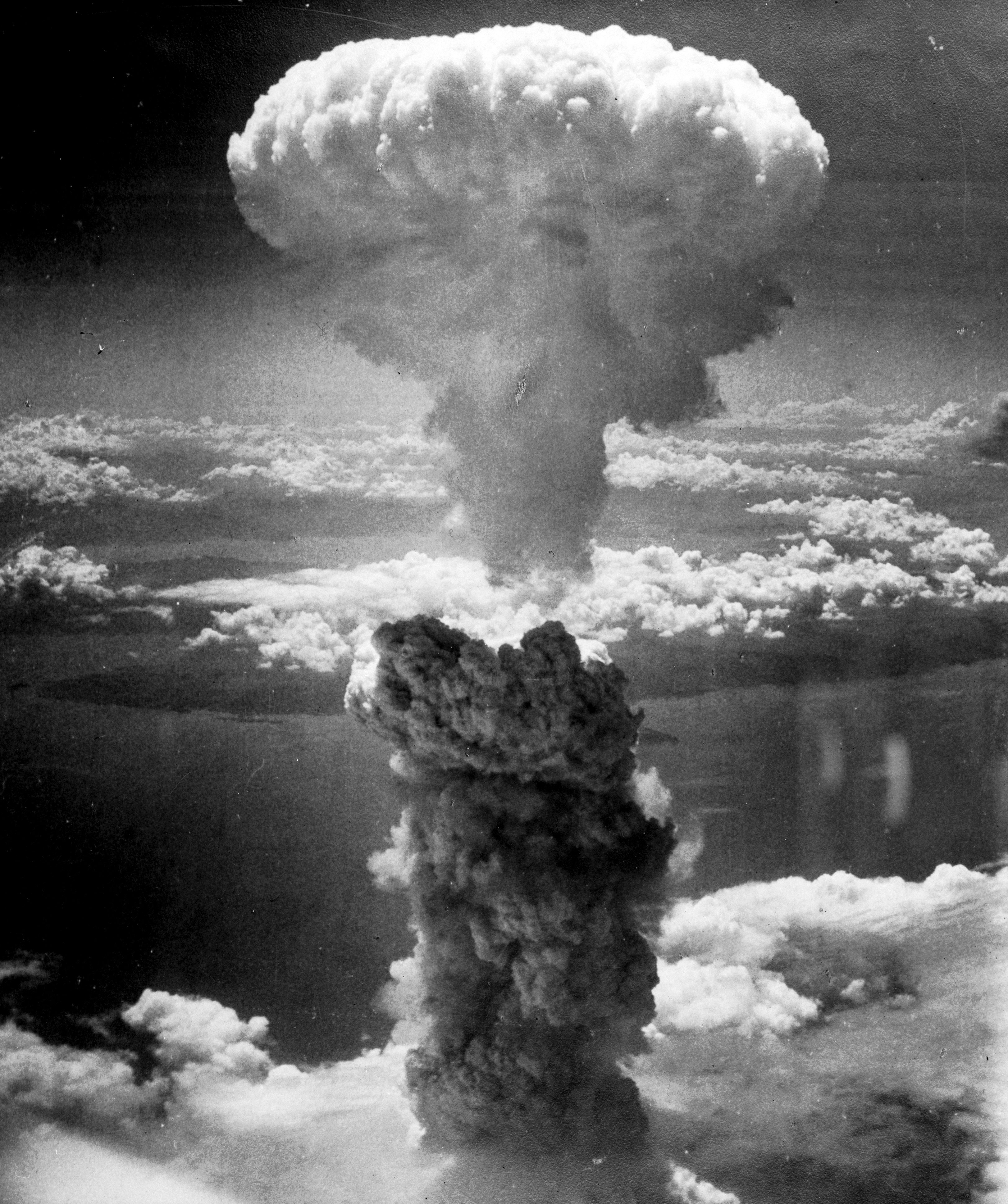

In the 12 months prior to the nuclear attack, Nagasaki had experienced five small-scale air attacks by an aggregate of 136 U.S. planes which dropped a total of 270 tons of high explosives, 53 tons of incendiaries, and 20 tons of fragmentation bombs. Of these, a raid of August 1, 1945, was the most effective, with a few of the bombs hitting the shipyards and dock areas in the southwest portion of the city, several hitting the Mitsubishi Steel and Arms Works, and six bombs landing at the Nagasaki Medical School and Hospital, with three direct hits on buildings there. While the damage from these few bombs was relatively small, it created considerable concern in Nagasaki and a number of people, principally school children, were evacuated to rural areas for safety, consequently reducing the population in the city at the time of the atomic attack.
On the day of the nuclear strike (August 9, 1945) the population in Nagasaki was estimated to be 263,000, which consisted of 240,000 Japanese residents, 10,000 Korean residents, 2,500 conscripted Korean workers, 9,000 Japanese soldiers, 600 conscripted Chinese workers, and 400 Allied POWs. That day, the Boeing B-29 Superfortress Bockscar, commanded by Major Charles Sweeney, departed from Tinian's North Field just before dawn, this time carrying a plutonium bomb, code named "Fat Man". The primary target for the bomb was Kokura, with the secondary target being Nagasaki, if the primary target was too cloudy to make a visual sighting. When the plane reached Kokura at 9:44 a.m. (10:44 am. Tinian Time), the city was obscured by clouds and smoke, as the nearby city of Yahata had been firebombed on the previous day – the steel plant in Yahata had also instructed their workforce to intentionally set fire to containers of coal tar, to produce target-obscuring black smoke. Unable to make a bombing attack 'on visual' because of the clouds and smoke, and with limited fuel, the plane left the city at 10:30 a.m. for the secondary target. After 20 minutes, the plane arrived at 10:50 a.m. over Nagasaki, but the city was also concealed by clouds. Desperately short of fuel and after making a couple of bombing runs without obtaining any visual target, the crew was forced to use radar to drop the bomb. At the last minute, the opening of the clouds allowed them to make visual contact with a racetrack in Nagasaki, and they dropped the bomb on the city's Urakami Valley, midway between the Mitsubishi Steel and Arms Works in the south, and the Mitsubishi-Urakami Ordnance Works in the north. The bomb exploded 47 seconds after its release, at 11:02 a.m. at an approximate altitude of 1,800 feet.
Less than a second after the detonation, the north of the city was destroyed and more than 10% of the city's population were killed. Among the 35,000 deaths were 150 Japanese soldiers, 6,200 out of the 7,500 employees of the Mitsubishi Munitions plant, and 24,000 others (including 2,000 Koreans). The industrial damage in Nagasaki was high, leaving 6880% of the non-dock industrial production destroyed. It was the second and, to date, the last use of a nuclear weapon in combat, and also the second detonation of a plutonium bomb. The first combat use of a nuclear weapon was the "Little Boy" bomb, which was dropped on the Japanese city of Hiroshima on August 6, 1945. The first plutonium bomb was tested in central New Mexico, United States, on July 16, 1945. The Fat Man bomb was more powerful than the one dropped over Hiroshima, but because of Nagasaki's more uneven terrain, there was less damage.
Contemporary era
The city was rebuilt after the war, albeit dramatically changed. The pace of reconstruction was slow. The first simple emergency dwellings were not provided until 1946. The focus of redevelopment was the replacement of war industries with foreign trade, shipbuilding and fishing. This was formally declared when the Nagasaki International Culture City Reconstruction Law was passed in May 1949. New temples were built, as well as new churches, owing to an increase in the presence of Christianity. Some of the rubble was left as a memorial, such as a one-legged torii at Sannō Shrine and an arch near ground zero. New structures were also raised as memorials, such as the Atomic Bomb Museum. Nagasaki remains primarily a port city, supporting a rich shipbuilding industry.
On January 4, 2005, the towns of Iōjima, Kōyagi, Nomozaki, Sanwa, Sotome and Takashima (all from Nishisonogi District) were officially merged into Nagasaki along with the town of Kinkai the following year. | File:ModernDayNagasaki.jpg|Modern Nagasaki, Oura Cathedral on a slope, 2005 | File:Nagasaki_City_view_from_Hamahira01s3.jpg|Night view of Nagasaki seen from Mount Konpira, 2012 | File:Nagasaki City View from Glover Garden, Nagasaki 2014.jpg|View of Nagasaki seen from Glover Garden, 2014
Geography
Nagasaki and Nishisonogi Peninsulas are located within the city limits. The city is surrounded by the cities of Isahaya and Saikai, and the towns of Togitsu and Nagayo in Nishisonogi District.
Nagasaki lies at the head of a long bay that forms the best natural harbor on the island of Kyūshū. The main commercial and residential area of the city lies on a small plain near the end of the bay. Two rivers divided by a mountain spur form the two main valleys in which the city lies. The heavily built-up area of the city is confined by the terrain to less than 4 sqmi.
Climate
Nagasaki has the typical humid subtropical climate of Kyūshū and Honshū, characterized by mild winters and long, hot, and humid summers. Apart from Kanazawa and Shizuoka, it is the wettest sizeable city in Japan. In the summer, the combination of persistent heat and high humidity results in unpleasant conditions, with wet-bulb temperatures sometimes reaching 26 C. In the winter, however, Nagasaki is drier and sunnier than Gotō to the west, and temperatures are slightly milder than further inland in Kyūshū. Since records began in 1878, the wettest month has been July 1982, with 1178 mm including 555 mm in a single day, whilst the driest month has been September 1967, with 1.8 mm. Precipitation occurs year-round, though winter is the driest season; rainfall peaks sharply in June and July. August is the warmest month of the year. On January 24, 2016, a snowfall of 17 cm was recorded.
|Jan record high C = 21.3 |Feb record high C = 22.6 |Mar record high C = 24.4 |Apr record high C = 29.0 |May record high C = 31.4 |Jun record high C = 36.4 |Jul record high C = 37.7 |Aug record high C = 37.7 |Sep record high C = 36.7 |Oct record high C = 33.7 |Nov record high C = 27.4 |Dec record high C = 23.8 |Jan record low C = -5.6 |Feb record low C = -4.8 |Mar record low C = -3.6 |Apr record low C = 0.2 |May record low C = 5.3 |Jun record low C = 8.9 |Jul record low C = 15.0 |Aug record low C = 16.4 |Sep record low C = 11.1 |Oct record low C = 4.9 |Nov record low C = -0.2 |Dec record low C = -3.9 | script-title = ja:気象庁 / 平年値(年・月ごとの値) | access-date = May 19, 2021 | archive-date = May 21, 2021 | archive-url = https://web.archive.org/web/20210521160814/https://www.data.jma.go.jp/obd/stats/etrn/index.php?prec_no=84&block_no=47817&year=&month=&day=&view= | url-status = live
Education
Universities
- Kwassui Women's University
- Nagasaki Institute of Applied Science
- Nagasaki Junshin Catholic University
- Nagasaki University
- Nagasaki University of Foreign Studies
- Nagasaki Wesleyan University
Junior colleges
- Nagasaki Junior College
- Nagasaki Junshin Junior College
- Nagasaki Gyokusei Junior College, formerly Tamaki Women's Junior College (closed 2012)
- Nagasaki Women's Junior College
Economy
- Machinery and heavy industry
- Mitsubishi
- Shipbuilding
Transportation

On August 9, 1945, the population was estimated to be 263,000. As of March 1, 2017, the city had a population of 505,723 and a population density of 1,000 people per km2.
Sports
Nagasaki is represented in the J.League of football with its local club, V-Varen Nagasaki.
Main sites


- Basilica of the Twenty-Six Holy Martyrs of Japan
- Confucius Shrine, Nagasaki
- Dejima Museum of History
- Former residence of Shuhan Takashima
- Former site of Latin Seminario
- Former site of the British Consulate in Nagasaki
- Former site of Hong Kong and Shanghai Banking Corporation Nagasaki Branch
- Glover Garden
- Former Glover Residence
- Former Alt Residence
- Former Ringer Residence
- Former Walker Residence
- Fukusai-ji
- Gunkanjima
- Higashi-Yamate Juniban Mansion
- Kazagashira Park
- Kofukuji
- Megane Bridge
- Mount Inasa
- Nagasaki Atomic Bomb Museum (located next to the Peace Park)
- Nagasaki Museum of History and Culture
- Nagasaki National Peace Memorial Hall for the Atomic Bomb Victims
- Nagasaki Peace Park
- Atomic Bomb Hypocenter (located near the Peace Park)
- Nagasaki Peace Pagoda
- Nagasaki Penguin Aquarium
- Nagasaki Chinatown
- Nagasaki Science Museum
- Nagasaki Subtropical Botanical Garden
- Nyoko-do Hermitage
- Oranda-zaka
- Sannō Shrine – One-legged stone torii, sometimes called an arch or gateway.
- Sakamoto International Cemetery
- Shōfuku-ji
- Siebold Memorial Museum
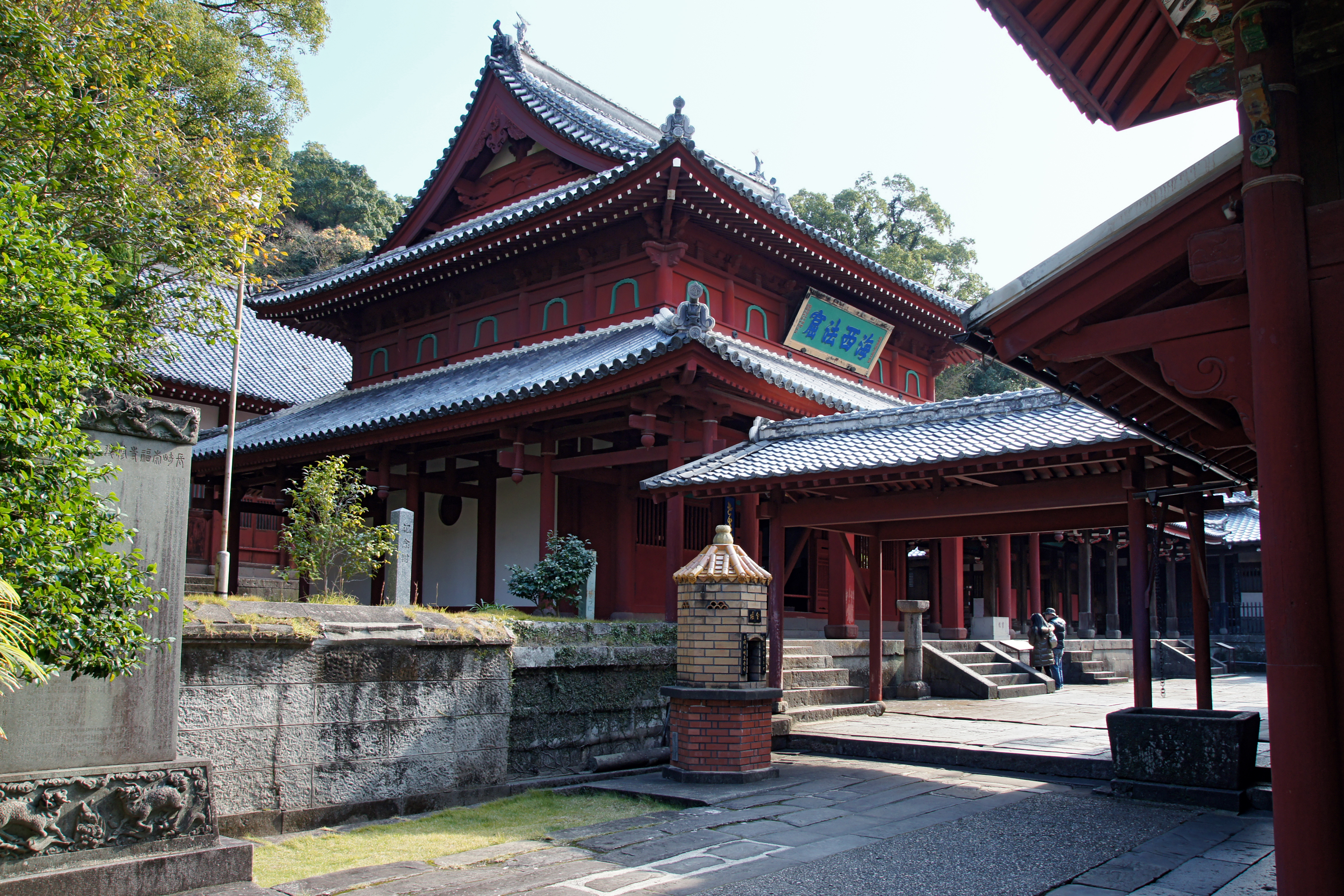
- Sōfuku-ji – Daiyūhōden and Daiippomon are national treasures of Japan.
- Suwa Shrine
- Syusaku Endo Literature Museum
- Tateyama Park
- Twenty-Six Martyrs Museum and Monument
- Nagasaki Prefectural Art Museum
- Urakami Cathedral
- Miyo-Ken, a temple where the white snake is worshipped
Cityscape
Events
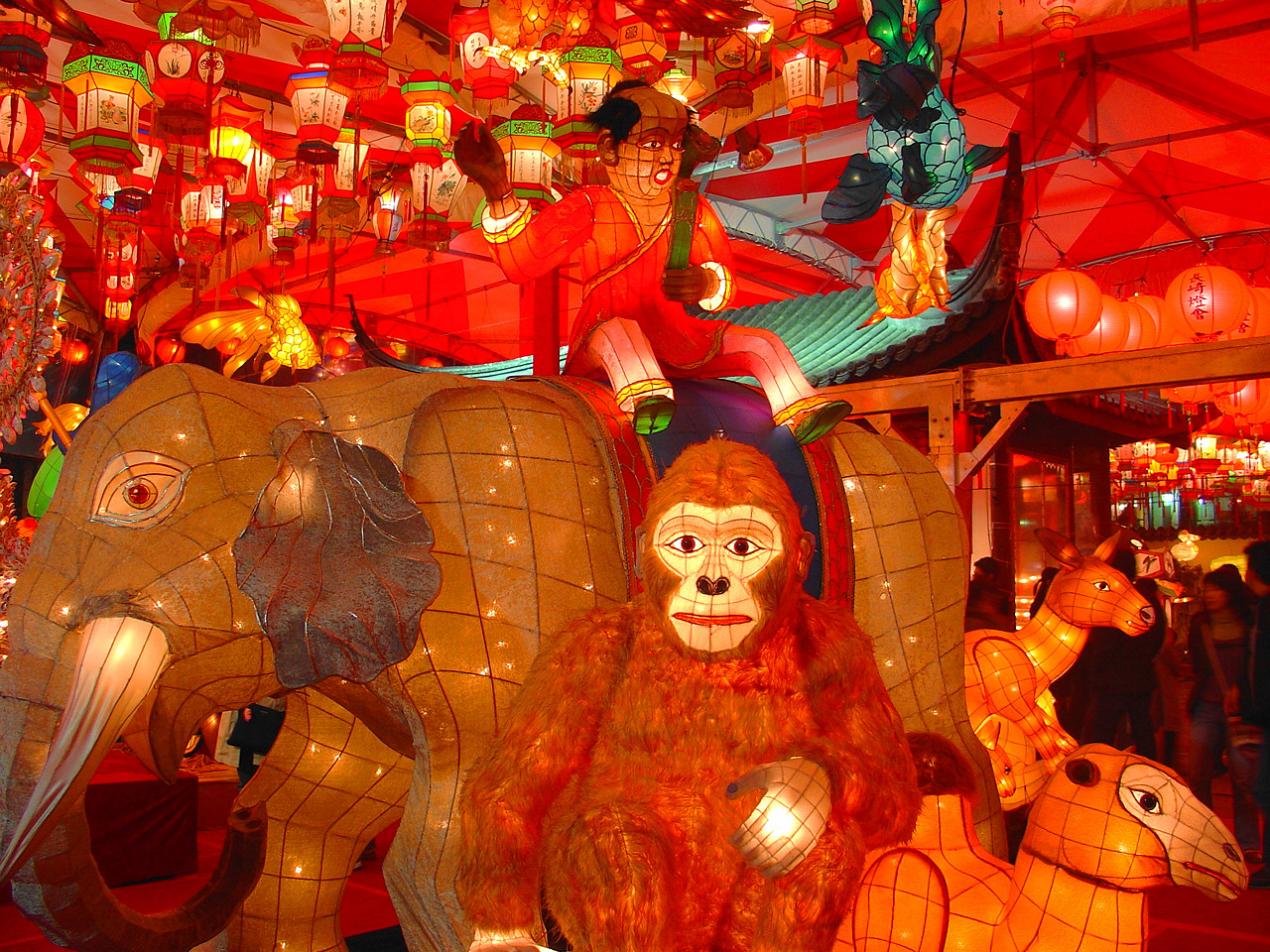
The Nagasaki Lantern Festival is celebrated annually over the first 15 days of Chinese New Year and is the largest of its kind in all of Japan. Kunchi, the most famous festival in Nagasaki, is held from October 7–9.
The Prince Takamatsu Cup Nishinippon Round-Kyūshū Ekiden, the world's longest relay race, begins in Nagasaki each November.
Cuisine

- Tempura
- Castella
- Champon
- Sara udon
- Mogi Biwa
- Chinese confections
- Urakami Soboro
- Shippoku Cuisine
- Toruko rice (Turkish rice)
- Karasumi
- Nagasaki Kakuni
Notable people
- Masaharu Fukuyama
- Mr. Gannosuke
- Kazuo Ishiguro
- Noboru Kaneko
- Mitsurou Kubo
- Ariana Miyamoto
- Neru Nagahama
- Takashi Nagai
- Saint Marina of Omura
- Atsushi Onita
- Kaori Sakagami
- Ryōko Tateishi
- Tsutomu Yamaguchi
- Maya Yoshida
Sister cities
The city of Nagasaki maintains sister cities or friendship relations with other cities worldwide.
- Japan Hiroshima, Japan
- United States St. Louis, United States (1972)
- United States Saint Paul, United States (1955)
- Bulgaria Dupnitsa, Bulgaria
- Brazil Santos, Brazil (1972)
- China Fuzhou, China, (1980)
- The Netherlands Middelburg, Netherlands (1978)
- Portugal Porto, Portugal (1978)
- France Vaux-sur-Aure, France (2005)
References
Bibliography
References
- (June 1, 2020). "今月のうごき(推計人口など最新の主要統計)". Nagasaki city office.
- NHK Publishing. (24 May 2016)
- (2025-04-27). "Nagasaki {{!}} Japan, History, Bombing, Map, & Facts {{!}} Britannica".
- Pacheco, Diego. (1970). "The Founding of the Port of Nagasaki and its Cession to the Society of Jesus". Monumenta Nipponica.
- "Dejima History".
- Tinka, Delakorda Kawashima. (January 2021). "The Authenticity of the Hidden Christians' Villages in Nagasaki: Issues in Evaluation of Cultural Landscapes". Sustainability.
- (2024). "Tangible and Intangible Heritage in the Age of Globalisation".
- Sekine, Ichiro. (2003-11-01). "The researches at Nagasaki University on atomic bomb survivors". International Congress Series.
- "Atomic Bombing Of Hiroshima and Nagasaki".
- Hakim, Joy. (January 5, 1995). "A History of US: Book 9: War, Peace, and All that Jazz". [[Oxford University Press]].
- (January 1, 2020). "令和2年全国都道府県市区町村別面積調 - 長崎県". Geospatial Information Authority of Japan.
- "Europeans Begin Trade with Japan {{!}} EBSCO Research Starters".
- Low, Spencer. (2023-01-29). "Japan & Portugal: 480 years of friendship".
- Yamafune, Kotaro. (2012). "Portuguese Ships on Japanese Namban Screens". Academia Materials Science.
- Diego Pacheco. "Xavier and Tanegashima." ''Monumenta Nipponica'', Vol. 29, No. 4 (Winter, 1974), pp. 477–480
- Boxer, ''The Christian Century in Japan 1549–1650'', p. 100–101
- "Arrival of a Portuguese ship".
- link. (April 14, 2023 '' p. 169.)
- Diego Paccheco, Monumenta Nipponica, 1970
- so says the Jesuit account
- "MARTYRS OF JAPAN († 1597-1637) (poz. 10)".
- "Martyrs List". Twenty-Six Martyrs Museum.
- "Martyrs of Japan (1603–39)".
- "Official site". Thomeizan Kofukuji.
- [[Louis Cullen. link. (April 6, 2023)
- Cambridge Encyclopedia of Japan, [[Richard Bowring]] and Haruko Laurie
- Screech, Timon. ''The Western Scientific Gaze and Popular Imagery in Later Edo Japan: The Lens Within the Heart''. Cambridge: Cambridge University Press, 1996. p15.
- (2011). "Xavier's Legacies: Catholicism in Modern Japanese Culture". UBC Press.
- "Chapter II The Effects of the Atomic Bombings". United States Strategic Bombing Survey.
- (December 1, 2000). "How Effective is Strategic Bombing?: Lessons Learned From World War II to Kosovo (World of War)". NYU Press.
- "Avalon Project – The Atomic Bombings of Hiroshima and Nagasaki".
- Bradley, F.J.. (1999). "No Strategic Targets Left". Turner Publishing Company.
- "Nagasaki atomic bombing, 1945".
- "Steel mill worker reveals blocking view of U.S. aircraft on day of Nagasaki atomic bombing". Mainichi Weekly.
- Bruce Cameron Reed. (October 16, 2013). "The History and Science of the Manhattan Project". [[Springer Nature]].
- "BBC - WW2 People's War – Timeline".
- Robert Hull. (October 11, 2011). "Welcome To Planet Earth – 2050 – Population Zero". [[AuthorHouse]].
- (May 1, 1984). "Nuke-Rebuke: Writers & Artists Against Nuclear Energy & Weapons (The Contemporary anthology series)". The Spirit That Moves Us Press.
- {{harvnb. Groves. 1962
- {{harvnb. Hoddeson. Henriksen. Meade. Westfall. 1993
- "AtomicBombMuseum.org – After the Bomb".
- "Nagasaki History Facts and Timeline".
- (January 25, 2016). "あすにかけ全国的に厳しい冷え込み続く".
- link. Nagasaki-gaigo.ac.jp
- link. .city.nagasaki.nagasaki.jp
- link. Nmhc.jp
- link. .city.nagasaki.nagasaki.jp
- (March 31, 2005). "The Encircled Serpent: A Study of Serpent Symbolism in All Countries and Ages – M. Oldfield Howey – Google Books". Kessinger.
- link. Nagasaki City
- "Nagasaki Lantern Festival". Japan Travel.
- "Nagasaki Lantern Festival". Nagasaki Prefecture Tourism Association.
- Hesselink, Reinier H.. (2004). "The Two Faces of Nagasaki: The World of the Suwa Festival Screen". Monumenta Nipponica.
- "Sister Cities of Nagasaki City". Nagasaki City Hall International Affairs Section.
- "International Relations of the City of Porto". Municipal Directorate of the Presidency Services International Relations Office.
This article was imported from Wikipedia and is available under the Creative Commons Attribution-ShareAlike 4.0 License. Content has been adapted to SurfDoc format. Original contributors can be found on the article history page.
Ask Mako anything about Nagasaki — get instant answers, deeper analysis, and related topics.
Research with MakoFree with your Surf account
Create a free account to save articles, ask Mako questions, and organize your research.
Sign up freeThis content may have been generated or modified by AI. CloudSurf Software LLC is not responsible for the accuracy, completeness, or reliability of AI-generated content. Always verify important information from primary sources.
Report