From Surf Wiki (app.surf) — the open knowledge base
N-of-1 trial
Single patient clinical trial
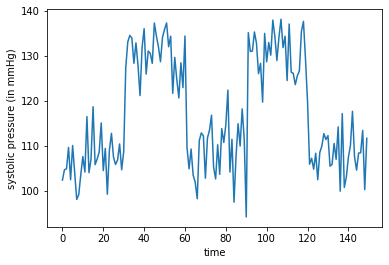
Single patient clinical trial
An N-of-1 (N=1) trial is a multiple crossover clinical trial, conducted in a single patient. A trial in which random allocation is used to determine the order in which an experimental and a control intervention are given to a single patient is an N-of-1 randomized controlled trial. Some N-of-1 trials involve randomized assignment and blinding, but the order of experimental and control interventions can also be fixed by the researcher.
This type of study has enabled practitioners to achieve experimental progress without the work of designing a group comparison study. This design, especially if including blinding and wash-out periods, can be effective in confirming causality. N-of-1 trials, if used in clinical practice to inform therapeutic decisions concerned with the patient participating in the trial, can be a source of evidence about individual treatment responses, fulfilling the promise of personalized medicine.
Design
The N-of-1 trials can be designed in many ways. For example, Single-Patient Open Trials (SPOTs) are located somewhere in between the formal (explanatory) N-of-1 trials and the trial and error approach used in clinical practice and are characterized by at least one crossover period with washout in between. One of the most common procedures is the ABA withdrawal experimental design, where the patient problem is measured before a treatment is introduced (baseline) and then measured again during the treatment and finally when the treatment has terminated. If the problem vanished during the treatment it can be established that the treatment was effective. But the N=1 study can also be executed in an AB quasi experimental way; such type-2 N-of-1 studies can be effective for testing treatments for severe, rare diseases when the expected effect of the intervention exceeds the effect size of confounders. Another variation is non-concurrent experimental design where different points in time are compared with one another. The standard approach to therapy choice, the trial and error method, may also be included in the N-of-1 design. This experimental design also has a problem with causality, whereby statistical significance under a frequentist paradigm may be un-interpretable but other methods, such as clinical significance or Bayesian methods should be considered.
Many consider this framework to be a proof of concept or hypothesis generating process to inform subsequent, larger clinical trials.
List of variation in N-of-1 trial
| Design | Causality | Use |
|---|---|---|
| A-B | Quasi experiment | Often the only possible method |
| A-A1-A | Experiment | Placebo design where A is no drug and A1 is a placebo |
| A-B-A | Experiment | Withdrawal design where effects of B phase can be established |
| A-B-A-B | Experiment | Withdrawal design where effects of B phase can be established |
| A-B-A-B-A-B | Experiment | Withdrawal design where effects of B phase can be established |
| A-B1-B2-B3-Bn-A | Experiment | Establishing the effect of different versions of B phase |
Quasi experiment means that causality cannot be definitively demonstrated. Experiment means that it can be demonstrated.
Examples
An N-of-1 trial is usually used to assess individual responses to treatments targeting chronic diseases. This design can be successfully implemented to determine optimal treatments for patients with diseases as diverse as osteoarthritis, chronic neuropathic pain and attention deficit hyperactivity disorder.
N-of-1 designs can also be observational and describe natural intra-individual changes in health-related behaviours or symptoms longitudinally. N-of-1 observational designs require complex statistical analysis of N-of-1 data however, a simple 10-step procedure is available. There has also been work to adapt causal inference counterfactual methods for using N-of-1 observational studies to design subsequent N-of-1 trials.
While N-of-1 trials are increasing, results of a recent systematic review found that statistical analyses in these studies would improve with more methodological and statistical rigor across all periods of the studies.
The Quantified Self
With the cultural phenomenon of the quantified self a proliferation of personal experiments akin to N=1 is occurring, along with some detailed reports about them. This trend has been sparked in part by the growing ease of collecting data and analysing it, and also motivated by the ability of individuals to report such data easily.
A famous proponent and active experimenter was Seth Roberts, who reported on his self-experimental findings on his blog, and later published The Shangri-La Diet based on his conclusions from these self-experiments.
Global networks
The International Collaborative Network for N-of-1 Trials and Single-Case Designs (ICN) is a global network for clinicians, researchers and consumers who have an interest in these methods. There are over 400 members of the ICN who are based in over 30 countries across the globe. The ICN was established in 2017 and is co-chaired by Jane Nikles and Suzanne McDonald.
References
References
- "Introduction to N-of-1 Trials: Indications and Barriers (Chapter 1) {{!}} Effective Health Care (EHC) Program".
- (August 2016). "N-of-1 trials are a tapestry of heterogeneity". Journal of Clinical Epidemiology.
- (2023-12-14). "Averaged versus individualized: pragmatic N-of-1 design as a method to investigate individual treatment response". European Journal for Philosophy of Science.
- Nikles, J., & Mitchell, G.. (2015). "The Essential Guide to N-of-1 Trials in Health".
- (2015). "Single Patient Open Trials (SPOTs)". Springer Netherlands.
- (August 2022). "A Useful and Sustainable Role for N-of-1 Trials in the Healthcare Ecosystem". Clinical Pharmacology & Therapeutics.
- Kravitz, R. L., Duan, N., Vohra, S., Li, J.. (2014). "Introduction to N-of-1 trials: indications and barriers. Design and implementation of N-of-1 trials: A user's guide". AHRQ Publication No. 13(14)-EHC122-EF.
- (March 2019). "Finding Benefit in n-of-1 Trials". JAMA Internal Medicine.
- (2013-08-01). "Single-patient (n-of-1) trials: a pragmatic clinical decision methodology for patient-centered comparative effectiveness research". Journal of Clinical Epidemiology.
- (September 2010). "Using N-of-1 trials to improve patient management and save costs". Journal of General Internal Medicine.
- (1 January 2020). "Analysing N-of-1 observational data in health psychology and behavioural medicine: a 10-step SPSS tutorial for beginners". Health Psychology and Behavioral Medicine.
- (February 2018). "Causal Analysis of Self-tracked Time Series Data Using a Counterfactual Framework for N-of-1 Trials". Methods of Information in Medicine.
- (November 2025). "Model-Twin Randomization (MoTR) for Estimating the Recurring Individual Treatment Effect". Statistics in Medicine.
- (August 2018). "N-of-1 Randomized Intervention Trials in Health Psychology: A Systematic Review and Methodology Critique". Annals of Behavioral Medicine.
- (June 2013). "The Quantified Self: Fundamental Disruption in Big Data Science and Biological Discovery". Big Data.
- "International Collaborative Network for N-of-1 Trials and Single-Case Designs".
This article was imported from Wikipedia and is available under the Creative Commons Attribution-ShareAlike 4.0 License. Content has been adapted to SurfDoc format. Original contributors can be found on the article history page.
Ask Mako anything about N-of-1 trial — get instant answers, deeper analysis, and related topics.
Research with MakoFree with your Surf account
Create a free account to save articles, ask Mako questions, and organize your research.
Sign up freeThis content may have been generated or modified by AI. CloudSurf Software LLC is not responsible for the accuracy, completeness, or reliability of AI-generated content. Always verify important information from primary sources.
Report