From Surf Wiki (app.surf) — the open knowledge base
Muthuswami Dikshitar
Composer of Carnatic Music (1776 – 1835)
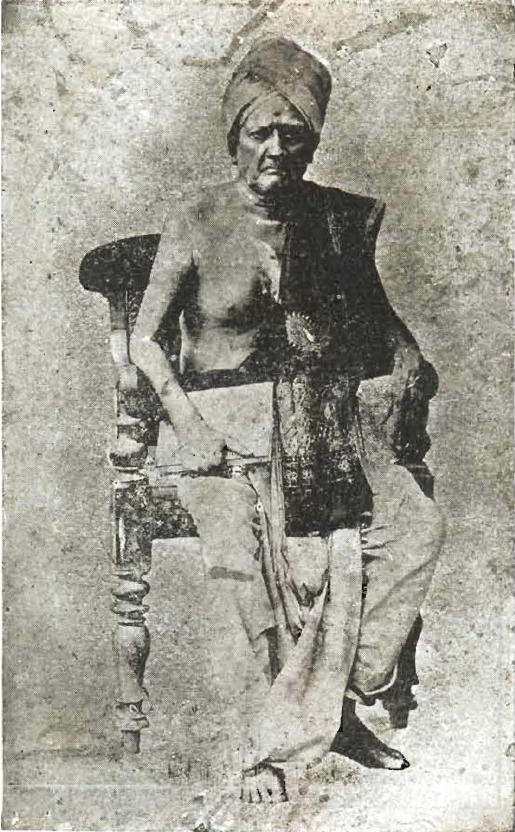
Composer of Carnatic Music (1776 – 1835)
| Field | Value |
|---|---|
| name | Muthuswami Dikshitar (Mudduswamy Dikshitar) |
| image | Muthuswami Dikshitar 1976 stamp of India.jpg |
| other_names | Guruguha |
| birth_date | |
| birth_place | Thiruvarur, near Thanjavur, Tamil Nadu |
| death_date | |
| death_place | Ettayapuram, India |
| father | Ramaswami Dikshitar |
| occupation | Carnatic music composer, Vainika |
Muthuswami Dikshitar (, 24 March 1776 – 21 October 1835), mononymously known as Dikshitar, was a South Indian poet, singer, veena player, and prolific composer of Indian classical music. He was the youngest member of the Trinity of Carnatic music, alongside Tyagaraja and Shyama Sastri. Dikshitar was born on 24 March 1776 in Thiruvarur near Thanjavur, in Tamil Nadu. His family traditionally traced its lineage to Virinchipuram in the northern part of the state.
Dikshitar is credited with around 500 compositions, renowned for their elaborate, poetic descriptions of Hindu deities, and detailed architectural depictions of temples. His music is notable for capturing the essence of ragas in the vainika (veena) style, which highlights the use of gamakas. His works are usually composed in a slower tempo (chowka kala), often incorporating using middle tempo stanzas (madhyama kala sahitya). Dikshitar used the signature name Guruguha (as a mudra) in all his compositions. They continue to be widely performed in Carnatic music concerts.
The musical trinity consists of Dikshitar, Tyagaraja (1767–1847), and Syama Sastri (1762–1827). Unlike the predominantly Telugu compositions of Tyagaraja and Syama Sastri, Dikshitar's works are mostly in Sanskrit. He also composed a few kritis in Manipravalam, a literary style combining Sanskrit and Tamil.
There are two schools of thought regarding the pronunciation of his name. It is generally pronounced Muthuswami Dikshitar. Muthu means "pearl" in Tamil, cognate to Mutya in Sanskrit. It may also be linked to Selvamuthukumaraswamy, a deity of the Vaideeswaran temple in Mayiladuthurai. However, T. K. Govinda Rao explains in Compositions of Muthuswami Dikshitar that "Muddayya" is an epithet of Kumaraswami or Guha. In the 1904 Telugu publication of Sangita Sampradaya Pradarshini, Sri Subbarama Dikshitar refers to him as Muthuswami. In his composition Bhajare re Chitha in raga Kalyani, the mudra appears as "Guruguha Roopa Muddu Kumara Jananeem".
Early life
Muthuswami Dikshitar was born in an Auttara Vadama Tamil Brahmin family on 24 March 1776, in Tiruvarur near Thanjavur, in what is now the state of Tamil Nadu in India. As the eldest son in his family, he received instruction from his father, Ramaswami Dikshitar, in several subjects, including the Vedas, poetry, music, and astronomy. Muthuswami had two brothers, Chinnaswami () and Balaswami (), and a sister, . Muthuswami's father, Ramaswami Dikshitar, born circa 1735, from an Auttara Vadama family in Virinchipuram, had relocated south due to the politically turbulent environment surrounding Kanchipuram and Virinchipuram at the time. Ramaswamy Dikshitar trained in the veena under Venkata Vaidyanatha Dikshitar, of the lineage of Govinda Dikshitar and Venkatamakhin, an influence discernible in Muthuswami's works, which follow the Venkatamakhin raga system.
Muthuswami moved to the town of Manali, near Madras (now Chennai) at the behest of Venkatakrishna Mudaliar, a local zamindar. The Dikshitar brothers accompanied the zamindar to Fort St. George, where they were introduced to Western orchestral music and the violin. An ascetic named Chidambaranatha Yogi then took Muthuswami under his wing, and they went to the city of Benares (now Varanasi in Uttar Pradesh). There he was instructed in music, esoterics, philosophy, and yoga. He was also exposed to Hindustani classical music, particularly the Dhrupad style, which some scholars believe influenced his later compositions.
Career
According to hagiographical tradition, Murugan, the deity of the temple at Tiruttani, is said to have placed a piece of sugar candy in Dikshitar's mouth and commanded him to sing. This marked the beginning of his music career and also led him to adopt the mudra, "Guruguha," one of the many names of Murugan. His first composition was "**" in the raga Maya Malavagaula and Adi tala.
The song addressed the Lord (and/or the guru) in the first declension (Vibhakthi) in Sanskrit. Dikshitar later composed Kritis in all eight declensions on the Lord. These are with epithets glorifying Muruga in the ascetic form and have few references to the deity in the saguna form, as at Thiruthani.
He then went on a pilgrimage visiting and composing at the temples at Kanchi, Tiruvannamalai, Chidambaram, Tirupathi and Kalahasthi, Srirangam, before returning to Tiruvarur.
Muthuswami Dikshitar attained proficiency in the veena, and the influence of veena playing is evident in his compositions, particularly the gamakas. In his Kriti Balagopala, he introduces himself as a **, "a player of the veena". He experimented with the violin, and among his disciples, Vadivelu of the Thanjavur Quartet, and his brother Balaswami Dikshitar pioneered the use of violin in Carnatic music, now an integral part of most Carnatic ensembles.
On his return to Tiruvarur, he composed on every deity in the Tiruvarur temple complex, including Tyagaraja (an amsham of Lord Shiva), the presiding deity, Nilotpalambal, his consort, and the Goddess Kamalambal, an independent deity of high tantric significance in the same temple complex. This is when he composed the famous Kamalamba Navavarna Kritis, filled with exemplary sahityas on the deities of the Sri Chakra, which proved to be the showcase of his compositions. These navavarnams were in all eight declensions of the Sanskrit language and are sung as a highlight of Guruguha Jayanti, celebrated every year. He continued to display his prowess by composing the Navagraha Kritis in praise of the nine planets. The sahitya of the songs reflect a profound knowledge of the Mantra and Jyotisha sastras. The Nilotpalamba Kritis is another classic set of compositions which revived dying ragas like Narayanagaula, Purvagaula, and Chayagaula.
Death and legacy
Muthuswami Dikshitar died on 21 October 1835 at Ettayapuram. He had no children. A samadhi was erected at Ettayapuram in his memory, which attracts musicians and admirers of his art.
Muthuswami Dikshitar's brothers Chinnaswami (1778–) and Balaswami Dikshitar (1786–1858) were also noted musicians. Chinnaswami composed some Kritis while Balaswami adapted and pioneered the use of the Western violin in Carnatic music. The two of them were primarily vocalists and performed together as a duo singing Muthuswami's compositions. Balaswami's grandson was the composer and scholar, Subbarama Dikshitar (1839–1906). In his Sangeeta Sampradaya Pradarshini (), Subbarama records 229 of Muthuswami Dikshitar's Kritis.
Dikshitar's disciples included several artists who carried forward his tradition. They included the Tanjore quartet brothers, Ponnayya Pillai, Vadivelu, Chinnayya and Sivanandam, the mridangam player Tambiyappa, the veena player Venkatarama Ayyar of Avudayarkoil, Tiruvarur Kamalam, Vallalarkoil Ammani, Kornad Ramaswamy, Tirukkadeyur Bharati, Thevvoor Subrahmania Ayyar, and the son of Shyama Shastri, Subbaraya Shastri.
Dikshitar is considered one of the Trinity of Carnatic music alongside his two contemporaries from Tiruvarur, Tyagaraja and Shyama Shastri. The Carnatic musician M Balamuralikrishna had composed a song in his honour in the Raga Sucharitra, 'Cintayāmi Satatam Śrī Mudduswāmi Dīkṣitam'. Koteeswara Iyer has composed a song in his honour in the Raga Devamanohari, 'Sāmi Dīkṣita'.
Compositions
Main article: List of compositions by Muthuswami Dikshitar}}{{Copy edit section
Dikshitar's compositions are noted for their scholarly depth and use of complex rhythmic patterns. He incorporated philosophical concepts into his music and often employed a dignified, structured style, in contrast to the more spontaneous approach of Tyagaraja. Works such as the Abhayāmbā Vibhakti-kṛtis demonstrate a careful integration of spiritual themes with musical techniques. Dikshitar experimented with ragas and talas, including the Raga-malika format, and his compositions reflect attention to thematic appropriateness and musical structure. While his works exhibit technical complexity, they tend to be more concise than the extended compositions of his father, Ramaswamy Dikshitar.
Muthuswami Dikshitar is credited with composing roughly 450 to 500 works, many of which remain part of the active Carnatic concert repertoire. Most of these compositions are in Sanskrit and follow the Krithi format, in which poetry is set to music.
Throughout his early life, Dikshitar traveled extensively to numerous sacred temples across India, composing Krithis in honor of the deities enshrined at these sites. Many of his works praise the presiding deities of well-known temples and incorporate detailed references to the specific characteristics and traditions of each sthalam.
Dikshitar composed extensively throughout his time in Kanchipuram, a city traditionally described as containing more than 108 temples, representing both Shaivite and Vaishnavite traditions. He is said to have worked under the guidance of the saint Brahma Upanishad. His compositions encompass a uniquely wide range of deities, broader than that addressed by most composers in the Carnatic tradition. They are noted for their depth, melodic sophistication, and structural precision. His interpretations of several ragas are regarded as authoritative references for their melodic form. While the lyrics are primarily devotional, addressed to specific temple deities, they also integrate concepts from Advaita Vedanta, blending devotional expression with non-dualistic philosophical ideas.
Technical contributions
Dikshitar composed Krithis in all 72 Melakartha ragas, under his unique Asampurna Mela scheme, thereby preserving and showcasing several rare and nearly forgotten ragas. He is also credited with pioneering the Samashti Charanam format—compositions that include only one stanza after the Pallavi, unlike the conventional two.
Dikshitar was a master of Tala and is the only recorded composer to have Krithis in all seven basic Talas of the Carnatic scheme. His compositions are known for proficient rhyming and intricate use of Sanskrit grammar, including the use of all eight grammatical declensions.
Grouped compositions and notable works
Muthuswami Dikshitar composed many Kritis in groups. Vatapi Ganapatim is regarded as his best-known work.[[File:Shri Nilotpala Nayike, rendered on the Veena by L Ramakishnan.ogg|thumb|Shri Nilotpala Nayike, in the raga Reethigowlai. A composition by Muthuswamy Dikshitar. The rendition was part of the Smt Kalpakam Swaminathan memorial concert at Naada Inbam, Chennai.]]
Muthuswami Dikshitar composed one song (Shri Kantimatim Shankara Yuvatim Shri Guruguhajananim Vandeham. Samashti Charanam Hrîmkâra Bîjâkâra vadanâm Hiranya manimaya Shôbhâ Sadanâm) on the Nellaiappar Temple for goddess Kanthimathi Amman. This song is set in a rare raga. He is also said to have composed a Rama Ashtapathi along with Upanishad Brahmendral at Kanchipuram, which has been lost.
Influence of Western music
At a young age, Dikshitar was exposed to the music of Western bands at Fort St. George. Later, Dikshitar composed some forty songs to several (mostly western folk) tunes loosely adapted to ragas such as Shankarabharanam. This corpus is now known as nottusvara sahitya (etym. nottusvara = "notes" swara). The influence of Celtic and Baroque styles in these compositions is evident (e.g., Sakthi Sahitha Ganapatim, to the tune of voulez-vous dancer, Varashiva Balam). A common misconception is that these compositions were commissioned by CP Brown, the Collector of Cuddappah. However, this is improbable, as historical records indicate that Dikshitar had left Madras by the year 1799, while Brown did not arrive in Madras until by August 3, 1817, where he studied at the Fort St. George College, and was being taught of Marathi and Telugu. He would then pass his Telugu Proficiency and Civil Service Tests by June 1820. In a quote from his English translation of the Telugu Reader, about his own writing initiations into Telugu studies "This Brahmin (Velagapudi Kodandarama Panthulu) taught me the Telugu alphabet when I entered the Madras College".
Notes
References
Sources
References
- (1997). "Compositions of Mudduswamy Dikshitar". Ganamandir Publication.
- "Thiruvaiyaru Thyagaraja Aradhana".
- "Muttuswami Dikshitar and the British Raj". [[The Hindu]].
- V, Sriram. (2020-12-26). "Knowing the real Dikshitar". The Hindu.
- "Carnatic Songs - bhajarE rE ciththa cittha chittha".
- (2017-11-24). "Muthuswami Deekshitar Day at Ganabharathi on Nov. 25".
- "Sri Muthuswami Dikshitar: composer per excellence".
- (1 December 2007). "Songs, moving and intellectual". [[The Hindu]].
- (2013-03-14). "A peek at Dikshitar's philosophy". The Hindu.
- "Sangita Sampradaya Pradarsini (PDF)".
- Ragde, Lakshman. "Carnatic Songs - cintayAmi satatam".
- Srinivasan, Barathi. (14 June 2016). "Decoding Dikshitar".
- NARAYANASWAMI, P. P.. "kSEtra k.rtis of muttusvAmi dIkSitar, part 3".
- www.wisdomlib.org. (2022-03-17). "Muthuswami Dikshitar".
- Gopal, Madan. (1990). "India through the ages". Publication Division, Ministry of Information and Broadcasting, Government of India.
- "4carnaticmusic - Music of Dikshitar-(Shodhganga)".
- "Shodasha Ganapathi kritis of Muthuswamy Dikshitar".
- www.wisdomlib.org. (2022-03-17). "Musical Compositions of Muthuswami Dikshitar on Planets".
- [http://www.thehindu.com/todays-paper/tp-features/tp-fridayreview/rare-kriti-on-a-famous-temple/article6725927.ece Rare kriti on a famous temple – Tirunelveli]. The Hindu (26 December 2014). Retrieved on 2018-12-13.
- sramadoss. (2019-04-21). "Upanishad Brahmendra Mutt-Kancheepuram".
- Vijayasri. "NOTTU SWARAS by MUTHUSWAMY DIKSHITAR".
- Durga, S.A.K.. "Homage to the Great Composer – SRI MUTHUSWAMI DIKSHITAR". Chennai Online.
- Raghavan's monograph published by the NCPA.
- Brown Team, CP. (1 February 2023). "About CP Brown (English)".
This article was imported from Wikipedia and is available under the Creative Commons Attribution-ShareAlike 4.0 License. Content has been adapted to SurfDoc format. Original contributors can be found on the article history page.
Ask Mako anything about Muthuswami Dikshitar — get instant answers, deeper analysis, and related topics.
Research with MakoFree with your Surf account
Create a free account to save articles, ask Mako questions, and organize your research.
Sign up freeThis content may have been generated or modified by AI. CloudSurf Software LLC is not responsible for the accuracy, completeness, or reliability of AI-generated content. Always verify important information from primary sources.
Report