From Surf Wiki (app.surf) — the open knowledge base
Museum ship
Ship preserved and converted into a museum open to the public

Ship preserved and converted into a museum open to the public
A museum ship, also called a memorial ship, is a ship that has been preserved and converted into a museum open to the public for educational or memorial purposes. Some are also used for training and recruitment purposes, mostly for the small number of museum ships that are still operational and thus capable of regular movement.
Several hundred museum ships are kept around the world, with around 175 of them organised in the Historic Naval Ships Association though many are not naval museum ships, from general merchant ships to tugs and lightships. Many, if not most, museum ships are also associated with a maritime museum.
Significance
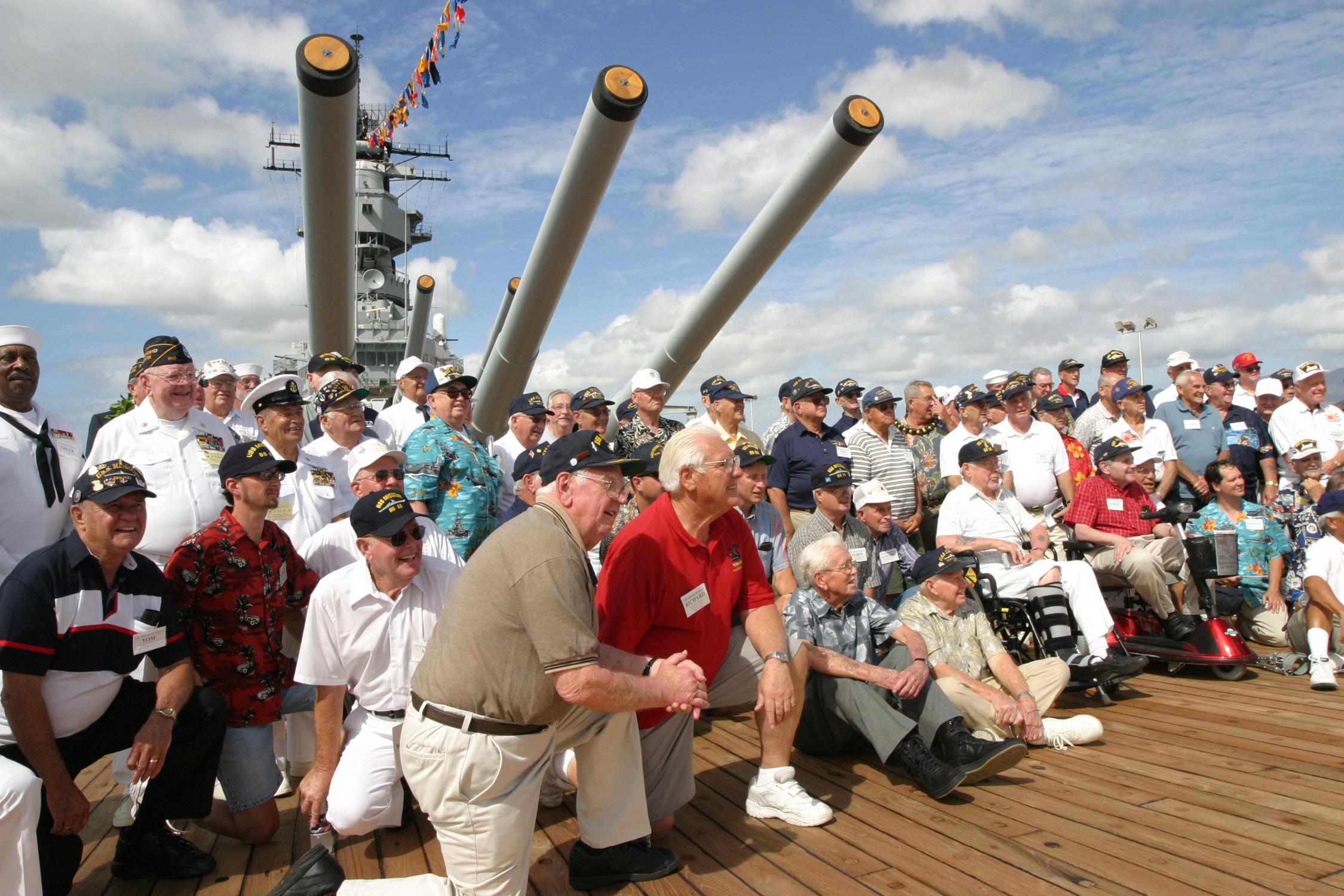
Relatively few ships are preserved beyond their useful life, due to the high cost of maintaining them against the ravages of the elements. Most are broken up and sold for scrap, while a relative handful are sunk as naval target practice, scuttled to create artificial reefs, and so on. Some survive because of historical significance, but more often due to luck and circumstance. Since an old ship tied up at dockside, without attention, still decays and eventually sinks, the practice of recent years has been to form some sort of preservation society, solicit donations from governments or private individuals, organize volunteer labor from the enthusiasts, and open the restored ship to visitors, usually for a fee.
When the USN turns over one of their ships to a museum, a contract must be signed, stating that the Navy bears no responsibility for the costs of restoration, preservation and maintenance. Also, major pieces of equipment such as engines and generators must be permanently disabled. If the ship requires services such as electricity and water, they must come through shore connections.
The restoration and maintenance of museum ships presents problems for historians who are asked for advice, and the results periodically generate some controversy. For instance, the rigging of sailing ships has almost never survived, and so the rigging plan must be reconstructed from various sources. Studying the ships also allows historians to analyze how life on and operation of the ships took place. Numerous scientific papers have been written on ship restoration and maintenance, and international conferences are held discussing the latest developments. Some years ago, the Barcelona Charter was signed by a variety of international owner organizations of traditional vessels, and provides certain accepted minimum criteria for the restoration and operation of traditional watercraft still in operation.
Another consideration is the distinction between a "real" museum ship, and a ship replica. As repairs accumulate over time, less and less of the ship is of the original materials, and the lack of old parts (or even "appropriate" work tools) may lead to the use of modern "short-cuts" (such as welding a metal plate instead of riveting it, as would be the case during the ships' historical period). Visitors without historical background are also often unable to distinguish between a historical museum ship and a (more-or-less historically relevant) ship replica, which may serve solely as a tourist attraction.
Museum usage

Typically the visitor enters via gangplank, wanders around on the deck, then goes below, usually using the original stairways, giving a sense of how the crew got around. The interior features restored but inactivated equipment, enhanced with mementos including old photographs, explanatory displays, pages from the ship's logs, menus, and the like. Some add recorded sound effects, audio tours or video displays to enhance the experience.
In some cases, the ships radio room has been brought back into use, with volunteers operating amateur radio equipment. Often, the callsign assigned is a variation on the original identification of the ship. For example, the submarine , which had the callsign NBQV, is now on the air as NB9QV. The World War II submarine , berthed at the San Francisco Maritime National Historical Park, had the active service callsign NJVT and is now on the air as NJ6VT. In other cases, such as , a distinctive call (in this case KH6BB) is used. This radio work not only helps restore part of the vessel, but also provides worldwide publicity for the museum ship.
A number of the larger museum ships have begun to offer hosting for weddings, meetings, other events, and sleepovers, and on a few ships still seaworthy, cruises. In the United States, this includes s annual "turnaround", when the old ship is towed out into the harbor and brought back in facing the other way, so as to weather evenly. A place on the deck is by invitation or lottery only, and highly prized.
Many consider the tourism appeal of an interesting old vessel on the city waterfront strong enough that any port city should showcase one or more museum ships. This may even include building a replica ship at great expense.
Gallery
File:HMSVictoryPortsmouthEngland (version 2).jpg|: the only surviving ship of the line, preserved in Portsmouth. File:Fregatten Jylland total.jpg|Jylland: the only survivng wooden screw frigate, preserved in Ebeltoft. File:Averof Today2.jpg|: the only survivng armored cruiser, preserved in Athens. File:USS Salem (CA-139) museum ship - Quincy, Massachusetts - USA - 30 March 2012.jpg|: the only survivng heavy cruiser, preserved in Quincy, MA. File:MIKASA02.jpg|: the only surviving pre-dreadnought battleship, preserved in Yokosuka. File:USS Texas01a.jpg|: the only surviving dreadnought battleship, to be preserved in Galveston, TX. File:Blyskawica l d.jpg|The Polish destroyer : the oldest preserved destroyer in the world, preserved as a museum ship in Gdynia. File:U995 2004 1.jpg|: World War II German submarine, preserved in Laboe. File:USS Yorktown (CVS-10) panorama 2012.jpg|: the first aircraft carrier converted into a museum, preserved in Charleston, SC. File:Constellation bow.JPG|: sloop-of-war, the last sail-only warship designed and built by the United States Navy, preserved as a museum ship in Baltimore. File:USS Olympia (6219191508).jpg|: one of two surviving protected cruisers, preserved in Philadelphia. File:HMS_Warrior_-Portsmouth_April_2009(3421286551).jpg|: the world's first iron-hulled warship, preserved in Portsmouth. File:1914 British Light Cruiser ‘HMS Caroline’ – Belfast (45830550741).jpg|HMS Caroline: WW1 light cruiser, preserved in Belfast. File:HMS Belfast with rainbow.jpg|: WW2 light cruiser, preserved in London. File:Huascar1.jpg|: one of the earliest ironclad warships to be preserved afloat, anchored in Talcahuano. File:Royal Yacht Britannia.JPG|: former royal yacht of the British monarchy, now preserved in Edinburgh. File:USS SARSFIELD Dec2016.jpg|: served in the Republic of China Navy as ROCS Te Yang (DDG-925), now preserved in Anping. File:Northeast View of the Cutty Sark in Greenwich.jpg|Cutty Sark: 1869 clipper preserved at Greenwich, London. File:SSMeteor-whaleback-050507-02.jpg|SS Meteor: the only surviving whaleback freighter, on display at Superior, WI. File:NS_Savannah_exterior_MD2.jpg|NS Savannah: the world's first nuclear-powered merchant ship, on display in Baltimore. File:Hikawa-maruYokohama.jpg|Hikawa Maru: Japanese ocean liner preserved at Yokohama. File:Brunel's SS Great Britain - geograph.org.uk - 2473459.jpg|Brunel's 1843 steamship , preserved at Bristol. File:USS Pueblo (4634638484).jpg|USS Pueblo: captured by North Korea in 1968, preserved as a museum ship in Pyongyang. File:Platypus submarine display unveiling, Middlemarch, NZ (10 Dec 2023).jpg|1873 submarine Platypus on display in Middlemarch, New Zealand. File:J37 574 ARA Presidente Sarmiento.jpg|ARA Presidente Sarmiento: considered to be the last intact cruising training ship from the 1890s, moored at Puerto Madero in Buenos Aires.
References
References
- [http://www.hnsa.org/activities.htm Activities of the Historic Naval Ships Association] {{webarchive. link. (2007-08-08 (the international [[Historic Naval Ships Association]] website. Accessed 2008-06-06.))
- [http://www.hnsa.org/intro.htm About The Historic Naval Ships Association] {{webarchive. link. (2008-05-14 (the international [[Historic Naval Ships Association]] website. Accessed 2008-06-06.))
- [https://www.navsea.navy.mil/Home/Team-Ships/NAVSEA-21/Inactive-Ships/Ship-Donation/ Surface Ships from Cradle to Grave]
- [http://www.dsm.de/Pubs/22_04.htm ''Museum ships built in 1999: Remarks on the reconstruction of historical inland and sea-going vessels'' (abstract)] {{webarchive. link. (2003-11-11 - Ingo Heidbrink, Ingo; Deutsches Schiffahrtsarchiv (DSA) 22, 1999, Page 43–58)
- [http://www.maritime.org/conf-sched.htm Conference Proceedings] {{Webarchive. link. (2007-07-02 (from the 'Third International Conference on the Technical Aspects of the Preservation of Historic Vessels' (1997) webpage on the [[San Francisco Maritime Park Association]] website))
- ''The "Barcelona Charter", European Charter for the Conservation and Restoration of Traditional Ships in Operation'' - Ingo Heidbrink (editor), Bremen (Hauschildt Verlag, 2003
- ''[http://www.maritime.org/conf/conf-kearon.htm Conserving Unique and Historic Ships]'' - Kearon, John; Head of Shipkeeping, Industrial and Land Transport Conservation, [[Merseyside Maritime Museum]], paper from the Third International Conference on the Technical Aspects of the Preservation of Historic Vessels (1997) webpage on the [[San Francisco Maritime Park Association]] website
- "The Museum Resource".
- [http://www.eb-5investors.com/POHF%20Summary.htm A Proposal to Recreate the Royal Yacht Ha'Aheo o Hawai'i (Pride of Hawaii)] ([[International Historic Watercraft Society]], via a website of the [[United States Citizenship and Immigration Services. USCIS]] Regional Center Immigrant Investor Program. Accessed 2008-03-26.)
This article was imported from Wikipedia and is available under the Creative Commons Attribution-ShareAlike 4.0 License. Content has been adapted to SurfDoc format. Original contributors can be found on the article history page.
Ask Mako anything about Museum ship — get instant answers, deeper analysis, and related topics.
Research with MakoFree with your Surf account
Create a free account to save articles, ask Mako questions, and organize your research.
Sign up freeThis content may have been generated or modified by AI. CloudSurf Software LLC is not responsible for the accuracy, completeness, or reliability of AI-generated content. Always verify important information from primary sources.
Report