From Surf Wiki (app.surf) — the open knowledge base
Murder of John Lennon
1980 murder in New York City, US
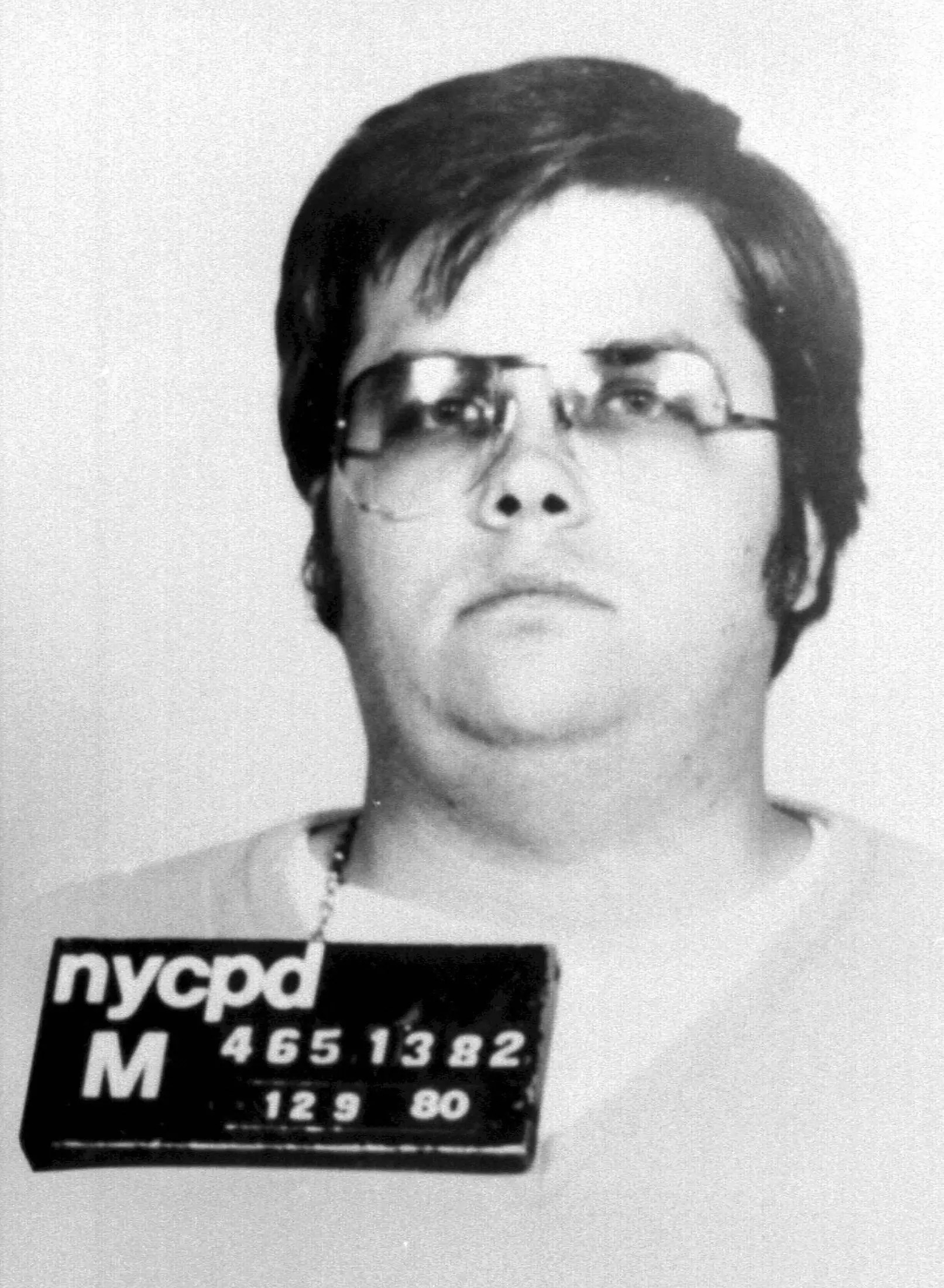
1980 murder in New York City, US
| Field | Value |
|---|---|
| title | Murder of John Lennon |
| image | Police artist image of murder of John Lennon.jpg |
| caption | A police artist's sketch of the shooting |
| location | The Dakota, New York City, U.S. |
| coordinates | |
| target | John Lennon |
| type | Murder by shooting, assassination |
| date | |
| time | p.m. |
| timezone | UTC−05:00 |
| perp | Mark David Chapman |
| fatalities | John Lennon |
| weapon | Charter Arms Undercover .38 Special revolver |
| motive | Personal resentment against Lennon and a desire to emulate Holden Caulfield |
On the night of 8 December 1980, English musician John Lennon, formerly of the Beatles, was shot and fatally wounded in the archway of The Dakota, his residence in Manhattan, New York City. The shooter, Mark David Chapman, an American and alleged Beatles fan who was envious and enraged by Lennon's lifestyle, was inspired by the fictional character Holden Caulfield from J. D. Salinger's novel The Catcher in the Rye, a "phony-killer" who loathes hypocrisy.
Chapman planned the murder over several months. Earlier in the day, he had met Lennon, who signed his copy of the album Double Fantasy as Lennon and his wife, Yoko Ono, were leaving for a recording session at the Record Plant. Later that night when the couple returned home, Chapman, still waiting at the building's entrance, fired five hollow-point bullets from a .38 Special revolver, four of which hit Lennon in the back. Lennon was rushed to Roosevelt Hospital in a police car, where he was pronounced dead on arrival at 11:15 p.m. Chapman remained at the scene of the shooting reading The Catcher in the Rye until he was arrested by police.
The murder triggered a global outpouring of grief, with crowds gathering at Roosevelt Hospital and outside the Dakota, and tributes held worldwide. The day after the murder, Lennon was cremated at Ferncliff Cemetery in Hartsdale, New York. In lieu of a funeral, Ono requested 10 minutes of silence around the world on 14 December. Chapman pleaded guilty to murdering Lennon and was given a sentence of 20 years to life imprisonment; he has been denied parole multiple times after becoming eligible in 2000.
Background
Mark David Chapman
Main article: Mark David Chapman
Mark David Chapman, a 25-year-old former security guard from Honolulu, Hawaii, with no prior criminal convictions, was a fan of the Beatles. J. D. Salinger's novel The Catcher in the Rye (1951) had taken on great personal significance for Chapman, to the extent that he wished to model his life after the novel's protagonist, Holden Caulfield. One of the novel's main themes is Caulfield's rage against adult hypocrisy and "phonies". Chapman said that he had been enraged by Lennon's infamous, much-publicized remark in 1966 that the Beatles were "more popular than Jesus", and by the lyrics of Lennon's songs "God" (in which Lennon states that he does not believe in the Beatles, God, or Jesus) and "Imagine", where Lennon states "imagine no possessions", despite having a lavish lifestyle (as depicted in Anthony Fawcett's 1976 book John Lennon: One Day at a Time). Chapman concluded that the latter made Lennon a "phony".
On 27 October 1980, Chapman purchased a five-shot revolver, manufactured by Charter Arms and chambered in .38 Special, in Honolulu. and checked into the Upper West Side YMCA for a night before moving to a Sheraton hotel in Midtown Manhattan.
8 December 1980
Chapman waited for Lennon outside the Dakota in the early morning and spent most of the day near the entrance to the building, talking to fans and the doorman. That morning, Chapman was distracted and missed seeing Lennon step out of a taxi and enter the Dakota. Later in the morning, Chapman met Lennon's family nanny, Helen Seaman, who was returning from a walk with Lennon's five-year-old son, Sean. Chapman reached in front of the housekeeper to shake Sean's hand and said that he was a beautiful boy, quoting Lennon's song "Beautiful Boy (Darling Boy)".

Portrait photographer Annie Leibovitz arrived at Lennon's apartment for a photo shoot intended for Rolling Stone magazine. Leibovitz assured Lennon and Ono that a photograph of the two of them naked together would make the front cover of the magazine. She captured several images of Lennon by himself, with one set to be on the cover. Although Ono was initially reluctant to pose nude, Lennon insisted that both he and his wife be on the cover, and after taking the pictures, Leibovitz left their apartment at 3:30 p.m. At around 5:00 p.m., Lennon and Ono, delayed by a late limousine shared with the RKO Radio crew, left their apartment to mix the song "Walking on Thin Ice", an Ono song featuring Lennon on lead guitar, at the Record Plant.
As they left the building, Lennon and Ono were approached by Chapman, who asked for Lennon's autograph on a copy of his recently released album, Double Fantasy (1980). Lennon liked to give autographs or pictures, especially to those who had been waiting for long periods of time to meet him. Paul Goresh, an amateur photographer and Lennon fan, took a photo of Lennon signing Chapman's album.
Shooting
The Lennons returned to the Dakota around 10:50 p.m. They passed Chapman and walked toward the archway entrance of the building. As Ono walked by, Chapman nodded at her. As Lennon walked by, he glanced briefly at Chapman, appearing to recognize him from earlier that day.
_entrance_by_David_Shankbone.jpg)
Based on statements made that night by New York City Police Department (NYPD) Chief of Detectives James Sullivan, numerous reports at the time stated that Chapman called out "Mr. Lennon" and dropped into a combat stance before firing. Later court hearings and witness interviews did not include either of these details. Chapman said that he does not remember calling out to Lennon before he fired, and that Lennon did not turn around. He claimed to have taken a combat stance in a 1992 interview with Barbara Walters.

One bullet missed Lennon and struck a window of the Dakota. According to the autopsy, two bullets entered the left side of Lennon's back, with one exiting through his chest and lung and the other lodging in his neck, and two more bullets hit his left shoulder. Lennon, bleeding profusely from his external wounds and from his mouth, staggered up five steps to the lobby, crying, "I'm shot! I'm shot!" He then fell to the floor, scattering the cassettes he had been carrying.
José Sanjenís Perdomo, the doorman, shook the revolver out of Chapman's hand and kicked it across the pavement. Concierge worker Jay Hastings first started to make a tourniquet, but upon ripping open Lennon's blood-stained shirt and realizing the severity of his injuries, he covered Lennon's chest with his uniform jacket, removed his blood-covered glasses, and summoned the police. Perdomo shouted at Chapman, "Do you know what you just did?", to which Chapman calmly replied, "I just shot John Lennon."
Officers Steven Spiro and Peter Cullen were the first policemen to arrive at the scene; they were at 72nd Street and Broadway when they heard a report of shots fired at the Dakota. The officers arrived about two minutes after the shooting and found Chapman standing very calmly on 72nd Street reading a paperback copy of The Catcher in the Rye. They immediately put Chapman in handcuffs and placed him in the back seat of their squad car. Chapman made no attempt to flee or resist arrest. Cullen said of Chapman: "He apologized to us for ruining our night. I turned around and said to him, 'You've got to be fucking kidding me. You're worried about our night? Do you know what you just did to your life?' We read him his rights more than once."
Officers Herb Frauenberger and Tony Palma were the second team to arrive on the scene. They found Lennon lying face down on the floor of the lobby, blood pouring from his mouth and his clothing already soaked with it, with Hastings attending to him. Officers James Moran and Bill Gamble soon arrived as well. Frauenberger put Lennon in Moran and Gamble's car, concluding his condition was too serious to wait for an ambulance to arrive. Moran and Gamble then drove Lennon to Roosevelt Hospital on West 59th Street, followed by Frauenberger and Palma, who drove Ono to that location. According to Gamble, in the car, Moran asked, "Are you John Lennon?" or, "Do you know who you are?" Lennon nodded, but could only manage to make a moaning and gurgling sound when he tried to speak, and lost consciousness shortly thereafter.
Resuscitation attempt and death
A few minutes before 11:00 p.m., Moran arrived at Roosevelt Hospital with Lennon in his squad car. Moran carried Lennon on his back and placed him onto a gurney, demanding a doctor for a multiple gunshot wound victim. When Lennon was brought in, he was not breathing and had no pulse. Three doctors, a nurse, and two or three other medical attendants worked on Lennon for 10 to 20 minutes in an attempt to resuscitate him. As a last resort, the doctors cut open his chest and attempted a resuscitative thoracotomy to restore circulation, but they quickly discovered that the damage to the blood vessels above and around Lennon's heart from the bullet wounds was too great.
Three of the four bullets that struck Lennon's back passed completely through his body and out of his chest, while the fourth lodged itself in his aorta beside his heart. One of the exiting bullets from Lennon's chest hit and became lodged in his upper left arm. Several of the wounds could have been fatal by themselves because each bullet had ruptured vital arteries around the heart. Lennon was shot four times at close range with hollow-point bullets and his affected organs—particularly his left lung and major blood vessels above his heart—were virtually destroyed upon impact.
Reports regarding who operated on and attempted to resuscitate Lennon have been inconsistent. Stephan Lynn, the head of the Emergency Department at Roosevelt Hospital, is usually credited with performing Lennon's surgery. In 2005, Lynn said that he massaged Lennon's heart and attempted to resuscitate him for 20 minutes, that two other doctors were present, and that the three of them declared Lennon's death. Richard Marks, an emergency room surgeon at Roosevelt Hospital, stated in 1990 that he operated on Lennon, administered a "massive" blood transfusion, and provided heart massage to no avail. "When I realized he wasn't going to make it," said Marks, "I just sewed him back up. I felt helpless." David Halleran, who had been a third-year general surgery resident at Roosevelt Hospital, disputed the accounts of both Marks and Lynn. In 2015, Halleran stated that the two doctors "didn't do anything", and that he did not initially realize the identity of the victim. He added that Lynn only came to assist him when he heard that the victim was Lennon.
According to his death certificate, Lennon was pronounced dead on arrival at 11:15 p.m., but the time of 11:07 p.m. has also been reported. Witnesses noted that the Beatles song "All My Loving" came over the hospital's sound system at the moment Lennon was pronounced dead. Lennon's body was then taken to the city morgue at 520 First Avenue for an autopsy. The cause of death was reported on his death certificate as "hypovolemic shock, caused by the loss of more than 80% of blood volume due to multiple through-and-through gunshot wounds to the left shoulder and left chest resulting in damage to the left lung, the left subclavian artery, and both the aorta and aortic arch". According to the report, even with prompt medical treatment, no person could have lived for more than a few minutes with many bullet wounds affecting all of the major arteries and veins around the heart.
Media announcement
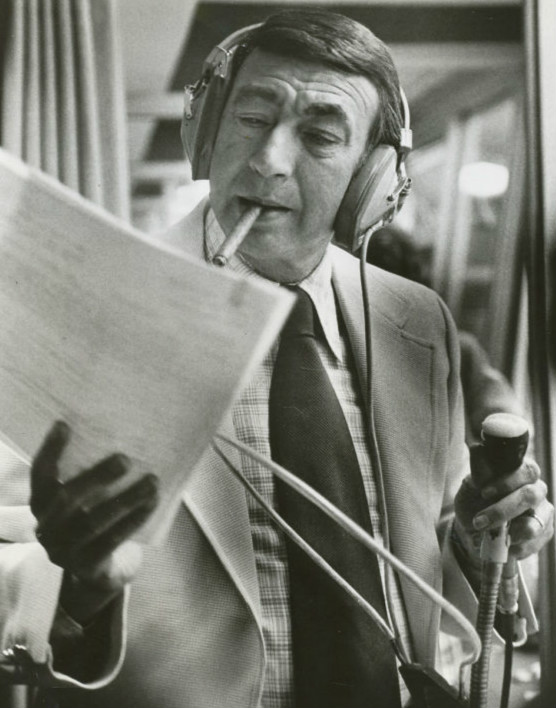
Ono asked Roosevelt Hospital not to report to the media that her husband was dead until she had informed their five-year-old son Sean, who was still at home at the Dakota. Ono said that he was probably watching television and that she did not want him to learn of his father's death from a TV announcement. However, news producer Alan J. Weiss of WABC-TV happened to be waiting for treatment in the emergency room after being injured in a motorcycle crash earlier in the evening. Police officers wheeled Lennon into the same room as Weiss and mentioned what happened. Weiss called his station and relayed the information.
Meanwhile, word reached Roone Arledge, who at the time was the president of both ABC News and ABC Sports as well as executive producer for Monday Night Football, which on this night featured a matchup between the New England Patriots and the Miami Dolphins. Arledge relayed the news to Frank Gifford and Howard Cosell, who had interviewed Lennon during a Monday Night Football broadcast in 1974, suggesting that they issue the report of the murder to the audience watching at home. Arledge asked Cosell to be the one to deliver the reported, but he did not want to initially; Gifford convinced Cosell otherwise, saying, "You've got to. If you know it, we've got to do it. Don't hang on it. It's a tragic moment, and this is going to shake up the whole world."
The news was broken as follows:
Gifford: Third down, four. [Chuck] Foreman ... it'll be fourth down. [Matt] Cavanaugh will let it run down for one final attempt; he'll let the seconds tick off to give Miami no opportunity whatsoever. (Whistle blows.) Timeout is called; three seconds remaining; John Smith is on the line. And I don't care what's on the line, Howard, you have got to say what we know in the booth.
Cosell: Yes, we have to say it. Remember, this is just a football game, no matter who wins or loses. An unspeakable tragedy confirmed to us by ABC News in New York City: John Lennon, outside of his apartment building on the West Side of New York City – the most famous, perhaps, of all of the Beatles – shot twice in the back, rushed to Roosevelt Hospital, dead on arrival. Hard to go back to the game after that newsflash, which, in duty-bound, we have to take. Frank?
Gifford: (after a pause) Indeed, it is.}}
The first official confirmation of Lennon's death apparently came from Steve North, the news director for Long Island radio station WLIR, according to North and disc jockey Bob Waugh. North was doing a special comment on the recent murder of gun control advocate Michael J. Halberstam, when an intern ran in with the news about Lennon. North then read the AP wire bulletin and spoke several times with a police contact, who was finally able to confirm Lennon had died. Waugh has since released an aircheck from that night.
New York rock station WNEW immediately suspended all programming and opened its lines to calls from listeners. Stations throughout the country switched to special programming devoted to Lennon or Beatles music.
Reactions
Lennon's associates
Lynn claimed that Yoko Ono responded to the news of her husband's death with extreme distress, banging her head against the hospital floor. His account is disputed by two nurses present at the scene. Ono herself refuted Lynn's version of events in a 2015 interview, stating that her priority was to remain calm and take care of her son, Sean. She was led away from the hospital by a policeman and Geffen Records president David Geffen. The following day, Ono issued a statement: "There is no funeral for John. Later in the week we will set the time for a silent vigil to pray for his soul. We invite you to participate from wherever you are at the time.... John loved and prayed for the human race. Please pray the same for him. Love. Yoko and Sean."
George Harrison issued a prepared statement for the press: "After all we went through together, I had and still have great love and respect for him. I am shocked and stunned. To rob a life is the ultimate robbery in life. The perpetual encroachment on other people's space is taken to the limit with the use of a gun. It is an outrage that people can take other people's lives when they obviously haven't got their own lives in order."
Paul McCartney addressed reporters outside his Sussex home that morning and said, "I can't take it at the moment. John was a great man who'll be remembered for his unique contributions to art, music and peace. He is going to be missed by the whole world." Later that day, McCartney was leaving an Oxford Street recording studio when reporters asked him for his reaction; he concluded his response with, "Drag, isn't it? Okay, cheers, bye-bye". His apparently casual response was widely condemned. McCartney later clarified that he had intended no disrespect and simply was unable to articulate his shock and sadness. Reflecting on the day two years later, McCartney said the following: "How did I feel? I can't remember. I can't express it. I can't believe it. It was crazy. It was anger. It was fear. It was madness. It was the world coming to an end. And it was, 'Will it happen to me next?' I just felt everything. I still can't put into words. Shocking. And I ended up saying, 'It's a drag,' and that doesn't really sum it up."
Ringo Starr, who was in the Bahamas at the time, received a phone call from his stepchildren informing him about the murder. He flew to New York to console Ono and Sean.
In a 1995 interview with New Musical Express magazine, Rolling Stones guitarist Keith Richards claimed that he was just a few miles south of the Dakota (on Fifth Avenue) when he found out about Lennon's murder, whereupon Richards obtained a firearm of his own and searched the streets for the alleged killer.
Public response
John]] or [Assassination of Robert F. Kennedy
Robert Kennedy]], or a spiritual leader, like [[Assassination of Martin Luther King Jr.
Per Ono's wishes, on 14 December, millions of people around the world paused for 10 minutes of silence to remember Lennon, including 30,000 people gathered in Lennon's birthplace of [Liverpool and over 225,000 people at the Naumburg Bandshell in Central Park, near the scene of the shooting. During this period, all radio stations in New York City ceased broadcasting.
At least three Beatles fans committed suicide after the murder, prompting Ono to publicly ask mourners not to give in to despair. On 18 January 1981, a full-page open letter from Ono appeared in The New York Times and The Washington Post. Titled "In Gratitude", it thanked the millions of people who mourned Lennon's loss and expressed a desire to commemorate his life and support her and Sean.
Double Fantasy, initially released to mixed reviews and modest sales, became a worldwide commercial success after the murder and won the Grammy Award for Album of the Year at the 24th Annual Grammy Awards.
Aftermath
The day after the murder, Lennon's remains were cremated at Ferncliff Cemetery in Hartsdale, New York, and his ashes were scattered in Central Park, in sight of the Dakota. Chapman was taken to the NYPD's 20th Precinct on West 82nd Street, where he was questioned for eight hours before being brought to New York County Criminal Court on Centre Street in Lower Manhattan. A judge remanded Chapman to Bellevue Hospital for psychiatric evaluation.
Chapman was charged with second-degree murder of Lennon, as premeditation in New York State was not sufficient to warrant charge of first-degree murder. Despite advice by his lawyers to plead insanity, Chapman pleaded guilty to the murder, saying that his plea was the will of God. As of September 2025, Chapman has been denied parole 14 times and remains incarcerated at Green Haven Correctional Facility.
Ono released a solo album, Season of Glass, in 1981. The cover of the album is a photograph of the blood-splattered glasses than Lennon was wearing when he was shot. That same year, Ono also released the song "Walking on Thin Ice", which she and Lennon had mixed at the Record Plant on the day of before the killing, as a single.
Three months after Lennon's murder, John Hinckley Jr. attempted to assassinate Ronald Reagan. Police later found a copy of The Catcher in the Rye among Hinckley's possessions, as well as a cassette tape in which Hinckley expressed sadness over Lennon's death and said he wished to make "some kind of statement" after it.
In June 2016, Dakota concierge Jay Hastings sold the shirt he was wearing when he tried to aid Lennon at an auction for $42,500.
Memorials and tributes
Photography

Leibovitz's photo of a naked Lennon embracing his wife, taken on the day of the murder, was the cover of the 22 January 1981 issue of Rolling Stone, most of which was dedicated to articles, letters, and photographs commemorating Lennon's life and death. In 2005, the American Society of Magazine Editors ranked it as the top magazine cover of the last forty years.
Events
.jpg)
- Every 8 December, a remembrance ceremony is held in front of the Capitol Records building on Vine Street in Hollywood, California. People also light candles in front of Lennon's Hollywood Walk of Fame star, outside the Capitol Building.
- On 28–30 September 2007, Durness held the John Lennon Northern Lights Festival, which was attended by Lennon's half-sister, Julia Baird, who read from his writings and her own books; and Stanley Parkes, Lennon's Scottish cousin.
- Ono places a lit candle in the window of Lennon's room in the Dakota every year on 8 December, while fans gather at the nearby Strawberry Fields memorial in Central Park for an all-day vigil, with musicians playing Lennon's songs while the crowd sings along.
- Every year from 9 October, Lennon's birthday, until 8 December, the date Lennon was shot, the Imagine Peace Tower in Iceland is lit.
- On 24 March 2018, Paul McCartney participated in the March for Our Lives, a protest against gun violence, because of Lennon's killing.
Music
- Bob Dylan wrote and recorded the song "Roll On John" on his 2012 album Tempest, which explicitly refers to the assassination ("They shot him in the back and down he went").
- David Bowie, who befriended Lennon while Lennon co-wrote and performed on Bowie's US #1 hit "Fame" in 1975, performed a tribute to Lennon in the final show of his Serious Moonlight Tour at the Hong Kong Coliseum, on 8 December 1983—the third anniversary of Lennon's death. Bowie said he last saw Lennon in Hong Kong, and performed Lennon's song "Imagine".
- George Harrison released a tribute song entitled "All Those Years Ago" in the spring of 1981, with Ringo Starr and Paul McCartney being credited as additional musicians. The following year in the spring of 1982, McCartney released a song entitled "Here Today" in honor of Lennon.
- Roxy Music recorded a cover version of Lennon's 1971 song "Jealous Guy" as a tribute single released in February 1981. The song reached No. 1 in the UK singles charts for two weeks.
- Elton John, who recorded the US number-one hit "Whatever Gets You thru the Night" with Lennon, teamed up with his lyricist Bernie Taupin for the tribute "Empty Garden (Hey Hey Johnny)". It appeared on his album Jump Up! (1982), and peaked at No. 13 on the US Singles Chart that year. When he performed the song at a sold-out concert in Madison Square Garden in August 1982, he was joined on stage by Ono and Sean.
- Paul Simon's homage to Lennon, "The Late Great Johnny Ace", initially sings of the rhythm and blues singer Johnny Ace, who is said to have shot himself in 1954, then goes on to refer to John Lennon, as well as President John F. Kennedy, who was assassinated in 1963, the year "Beatlemania" started. The song also appears on Simon's Hearts and Bones (1983) album.
- Queen performed "Imagine" the night after Lennon's death at Wembley Arena in London.
- Freddie Mercury wrote "Life Is Real (Song for Lennon)" as a tribute to John Lennon. The song appeared on the Queen album Hot Space (1982).
- The Bellamy Brothers mentioned Lennon's death in their 1985 single "Old Hippie".
- The Cranberries' 1996 album To the Faithful Departed includes a song about the murder, "I Just Shot John Lennon".
- XTC performed "Rain" and "Towers of London" in Liverpool the night after Lennon's death.
- The Chameleons’ 1983 album Script of the Bridge features a song about the murder, “Here Today”, written from the perspective of Lennon.
- Måneskin's 2023 album Rush! features an Italian language song about an obsessed fan stalking a celebrity titled after Mark Chapman.
- The Cleaners from Venus' 1984 song "Johnny the Moondog is dead" is a tribute to Lennon.
Physical memorials

- In 1985, New York City dedicated an area of Central Park where Lennon had frequently walked, directly across from the Dakota, as Strawberry Fields. In a symbolic show of unity, countries from around the world donated trees, and the city of Naples, Italy, donated the Imagine mosaic centerpiece.
- On 9 October 2007, Ono dedicated in memory of Lennon a memorial called the Imagine Peace Tower, on the island of Viðey, off the coast of Reykjavík, Iceland. Every year, between 9 October and 8 December, the memorial projects a vertical beam of light into the sky.
- In 2009, the New York City annex of the Rock and Roll Hall of Fame hosted a special John Lennon exhibit that included many mementos and personal effects from Lennon's life, as well as the clothes he was wearing when he was murdered, still in the brown paper bag from Roosevelt Hospital.
- In 2018, Ono created an artwork in John Lennon's memory, titled "Sky", for MTA Arts & Design. The artwork was installed during the renovation of the 72nd Street station on the New York City Subway (served by the ), outside the Dakota.
Operas
- Former president of Croatia Ivo Josipović composed an opera called Lennon about the murder of John Lennon. In the opera, Lennon has a series of flashbacks during the murder, in which he remembers the most important moments and people in his life.
Depiction in films
- The Killing of John Lennon (2006), focuses on Chapman's life up to the murder.
- Chapter 27 (2007), based on Jack Jones's book Let Me Take You Down, attempts a nonjudgmental portrayal of Chapman.
- The Lennon Report (2016) focuses on attempts by doctors and nurses to save Lennon's life.
Conspiracy theories
The Central Intelligence Agency (CIA) and Federal Bureau of Investigation (FBI) spied on Lennon due to his left-wing activism and the actions of Chapman during the murder or subsequent legal proceedings have led to conspiracy theories postulating CIA involvement:
- Fenton Bresler, a barrister and journalist, raised the idea of CIA involvement in the murder in his 1990 book Who Killed John Lennon? Bresler alleges that Chapman may have been brainwashed by the CIA as an assassin, such as in The Manchurian Candidate.
- Liverpool playwright Ian Carroll staged a drama, One Bad Thing, conveying the theory Chapman was manipulated by a rogue wing of the CIA "who wanted Lennon off the scene".
- Salvador Astrucia argued that forensic evidence proves Chapman did not commit the murder in his 2004 book Rethinking John Lennon's Assassination: The FBI's War on Rock Stars.
- The 2010 documentary The Day John Lennon Died suggests that Jose Perdomo, the doorman at the Dakota, was a Cuban exile with links to the CIA and the Bay of Pigs invasion.
References
Works cited
- (Also published as The Murder of John Lennon, Mandarin Publishing, .)
References
- Gaines, James R.. (9 March 1987). "Mark Chapman Part III: the Killer Takes His Fall".
- link. (27 September 2007 Lynne H. Schultz, 2001. Retrieved 26 December 2006.)
- Rothman, Lily. (8 December 2015). "How the World Reacted to John Lennon's Death 35 Years Ago".
- (2 November 2012). "John Lennon's Killer Denied Parole". [[ABC News (United States).
- THILL, SCOTT. (8 August 2010). "Geek The Beatles: John Lennon's Assassination Simulations".
- Jones, Jack. (November 1992). "Let Me Take You Down: Inside the Mind of Mark David Chapman, the Man Who Killed John Lennon". [[Villard (imprint).
- Herszenhorn, David M.. (15 October 2000). "Word for Word/Mark David Chapman; Vanity and a Small Voice Made Him Do It". [[The New York Times]].
- Hamill, Pete. (18 March 2008). "The Death and Life of John Lennon". [[New York (magazine).
- (30 September 2000). "Larry King Weekend: A Look Back at Mark David Chapman in His Own Words.". [[CNN]].
- Badman, Keith. (2001). "The Beatles After the Breakup 1970–2000: A Day-by-Day Diary". [[Omnibus Press]].
- (16 November 2009). "Final portrait of John and Yoko appears on the cover of "Rolling Stone"". [[History (American TV network).
- (14 July 2017). "50th Anniversary Flashback: Inside John Lennon's Long History With Rolling Stone".
- Smith, Harry. (8 December 2005). "John Lennon Remembered". [[CBS News]].
- (26 May 2008). "The Last Days of Dead Celebrities". [[ABC News (United States).
- (1980). "1980 Year in Review: Death of John Lennon". [[United Press International]].
- Daly, Rhian. (21 November 2020). "The album John Lennon signed for Mark Chapman is set to be auctioned". [[NME]].
- Cocks, Jay. (22 December 1980). "The Last Day In The Life: John Lennon is shot to death at 40, and a bright dream fades.".
- Attrino, Anthony G.. (7 December 2015). "N.J. man who took last photo of John Lennon recalls tragedy". [[NJ.com]].
- (16 January 2018). "Paul Goresh, who got only picture of John Lennon with his killer hours before the Beatle was shot, has died". [[New York Daily News]].
- Kelly, Ray. (29 January 2019). "John Lennon's killer says he didn't want former Beatle to suffer, but used hollow-point bullets to make sure he died". [[Advance Publications]].
- Montgomery. (10 December 1980). "Police Trace Tangled Path Leading to Lennon's Slaying at the Dakota". The New York Times.
- (21 August 2008). "I don't recall saying, 'Mr. Lennon'". [[The Daily Telegraph]].
- (12 December 1980}}{{Dead link). "Transcript of 2008 parole hearing in which Chapman denies calling out 'Mr. Lennon'".
- Lovett, Kenneth. (19 April 2008). "Mark David Chapman tells his version of John Lennon slay". [[New York Daily News]].
- Walters, Barbara. (4 December 1992). "Interview with Mark David Chapman". [[20/20 (U.S. TV program).
- Thiel, Stacia. (2 December 2005). "Revolver". [[New York (magazine).
- (8 December 2015). "On the 35th anniversary of John Lennon's death, a look inside the mind of his killer". [[WTIC-TV]].
- (10 December 1980). "'I Just Shot John Lennon', He Said Coolly". [[The Washington Post]].
- Montgomery, Paul L.. (9 February 1981). "Lennon Murder Suspect Preparing Insanity Defense". [[The New York Times]].
- Breslin, Jimmy. (9 December 1980). "The day John Lennon died: Jimmy Breslin writes iconic tale of NYPD cops who drove the dying Beatles star to the hospital". [[New York Daily News]].
- Nash, Jackie. (16 June 2020). "John Lennon's Death: A Timeline of Events".
- Edwards, David. (3 December 2005). "Lennon's Last Day". [[Daily Mirror]].
- Breslin, Jimmy. (5 September 2015). "Best of Breslin: 'Are You John Lennon?'". [[The Daily Beast]].
- O'Donovan. (7 December 2010). "The Day John Lennon Died, ITV1, review". The Daily Telegraph.
- Kilgannon, Corey. (8 December 2005). "Recalling the Night He Held Lennon's Still Heart". [[The New York Times]].
- Sheff, Vicki. (10 December 1990). "The Day the Music Died". [[People (magazine).
- Herbert, Geoff. (9 November 2015). "Syracuse doctor: I treated John Lennon night he was shot, others stole credit". [[The Post-Standard]].
- (8 December 2011). "Syracuse Doctor Remembers Trying to Save John Lennon's Life". [[WSTM-TV]].
- (22 June 2004). "John Lennon Death Certificate".
- "John Lennon".
- Sullivan, Eve. (26 October 2014). "The man who broke the news of John Lennon's death". [[The News-Times]].
- (20 May 2014). "John Lennon on Monday Night Football in 1974 [11-20-95]".
- Werner, Barry. (8 December 2020). "Listen: 40 years ago, a stunned Howard Cosell told the nation John Lennon had been assassinated". [[USA Today]].
- Ausiello, Jeff. (5 December 2010). "Ex-Pats kicker forever linked to Lennon". [[ESPN]].
- (8 December 2020). "Forty years ago, 'Monday Night Football' broke the news of John Lennon's murder". [[Newsday]].
- (4 February 2008). "John Lennon Announced dead by Howard Cosell 1980".
- Monkovic, Toni. (6 December 2010). "Behind Cosell's Announcement of Lennon's Death". [[The New York Times]].
- link. (4 June 2023 . ''Daily Beast'', 8 December 2020.)
- link. (4 June 2023 . YouTube clip found 4 June 2023.)
- Hauser, Jeff. (12 August 2020). "'Imagine': The world mourned the death of John Lennon 40 years ago today". [[WBT (AM)]].
- Kilgannon, Corey. (2005-12-08). "Recalling the Night He Held Lennon's Still Heart". The New York Times.
- Marinucci, Steve. (7 October 2016). "Filmmakers say 'The Lennon Report' Will Set Record Straight on ex-Beatle's Death".
- (8 November 2015). "The untold John Lennon story". [[Fox News]].
- (8 December 2005). "Lennon's Death". [[CBS News]].
- Thomson, Graeme. (2016). "George Harrison: Behind the Locked Door". Overlook Omnibus.
- Badman, p. 275
- (18 August 2011). "Paul McCartney explains "Drag" comment about Lennon's Death".
- "Paul McCartney Interview: Music Express, April/May 1982 - Beatles Interviews Database".
- (4 November 2019). "Ringo Starr Remembers His Reaction to John Lennon's Death". Society Of Rock.
- (8 July 1995). "RSTONES' GUITARIST SAYS HE WENT GUNNING FOR KILLER".
- Haberman, Clyde. (15 December 1980). "Silent Tribute to Lennon's Memory Is Observed Throughout the World; Largest Group in Central Park Silent Tribute to Lennon's Memory Throughout the World A Sea of 'V's' Few Medical Emergencies". [[The New York Times]].
- Lopez, Oscar. (8 December 2013). "Best John Lennon Quotes: 10 Phrases To Honor The Genius Beatle On The 33rd Anniversary Of His Death". [[Latin Times]].
- (25 November 1990). "10 years after death, Lennon legend still lives". [[Lawrence Journal-World]].
- "Suicides push Lennon's wife to caution his fans." ''The Bulletin'' (Bend, Deschuets County, Oregon), 12 December 1980.
- "Yoko Phones Daily News, begs fans: Stop the Suicides." ''New York Daily News'', 12 December 1980.
- Ono, Yoko. (18 January 1981). "In Gratitude". [[The Washington Post]].
- (23 November 2020). "JOHN LENNON". [[Grammy Awards]].
- Rouner, Jef. (7 June 2012). "10 Things That Have Happened To Rock Stars' Ashes". [[Houston Press]].
- Kaplan, Michael. (8 December 2020). "Mark David Chapman and the assassination of John Lennon". [[New York Post]].
- Unger, Craig. (6 July 1981}}
{{cite magazine). "Divine Justice". [[New York (magazine). - Shipp, E. R.. (25 August 1981). "Chapman Given 20 Years in Lennon's Slaying". [[The New York Times]].
- (March 15, 2024). "Parole Board Interview Calendar".
- Lion, Ed. (7 June 1981). "Yoko Ono releases first album since Lennon's death". [[United Press International]].
- Taylor, Stuart Jr.. (6 May 1982). "Hinckley Jury Told of Notes and Letters by Defendant". [[The New York Times]].
- (15 May 1981). "Tape by Hinckley is Said to Reveal Obsession With Slaying of Lennon". [[The New York Times]].
- Gardener, Jade R.. (28 June 2016). "Shirt stained with John Lennon's blood from the day of his murder and other items sell for $42,500 at auction". [[New York Daily News]].
- Schuster, Dana. (6 October 2018). "How four iconic magazine covers were born". [[New York Post]].
- (17 October 2005). "Lennon Leads List of Top Magazine Covers". [[Today (American TV program).
- LEWIS, RANDY. (7 December 2015). "John Lennon memorial in Hollywood to have 'Stop Gun Violence' theme". [[Los Angeles Times]].
- "John Lennon Northern Lights Festival in Durness". [[Scotland]].
- Ross, John. (19 May 2007). "Village strikes a chord with Lennon festival". [[The Scotsman]].
- Rose, Derek. (9 December 2005). "LENNON FANS REMEMBER". [[Sun-Sentinel]].
- Suddath, Claire. (2010-12-10). "The Death of John Lennon: Why the Fans Keep Returning".
- "Imagine Peace Tower". [[Imagine Peace Tower]].
- Horton, Alex. (24 March 2018). "Why Paul McCartney marched: 'One of my best friends was killed in gun violence'". [[The Washington Post]].
- "Roll on John: The Official Bob Dylan Site". [[Bob Dylan]].
- (1985). "David Bowie: The Starzone Interviews". [[Omnibus Press]].
- CRUMLISH, CALLUM. (10 March 2021). "George Harrison's 'sadness' on John Lennon tribute song with Paul and Ringo". [[Daily Express]].
- Rice, Jo. (1982). "The Guinness Book of 500 Number One Hits". Guinness Superlatives Ltd.
- "UK top 40 database".
- (23 September 2020). "Elton John to remember his friend John Lennon for the BBC, shares backstory of newly released B-side". [[KRWM]].
- "John Lennon".
- DEMAIN, BILL. (26 April 2013). ""The Late Great Johnny Ace"". [[Mental Floss]].
- "Queen - imagine ( Live In 1980 ) - (Video)".
- Blake, Mark. (22 March 2011). "Is This the Real Life?: The Untold Story of Queen". [[Hachette Books]].
- "Life is Real (Song for Lennon) by Queen".
- Wright, Minnie. (22 April 2020). "Freddie Mercury: What Queen star said about John Lennon – cryptic lyric on death revealed?". [[Daily Express]].
- (16 December 2007). "Andy and Dave discuss 'Towers of London'".
- "Strawberry Fields". [[Central Park]].
- Pilkington, Ed. (12 May 2009). "John Lennon exhibit opens in New York". [[The Guardian]].
- (11 May 2009). ""John Lennon: The New York City Years" Comes to the Rock and Roll Hall of Fame Annex".
- Martinez, Jose. (8 October 2018). "The New 72nd Street Subway Station Features Art Designed by Yoko Ono". [[NY1]].
- "Opera Lennon Ive Josipovića izravno na Trećem".
- Holden, Stephen. (2 January 2008). "John Lennon's Death Revisited Through the Words of His Killer". [[The New York Times]].
- Seitz, Matt Zoller. (28 March 2008). "Tracking an Assassin". [[The New York Times]].
- "'The Lennon Report' captures the aftermath of ex-Beatle's shooting". [[Los Angeles Times]].
- Wiener, Jon. (27 September 2006). "CIA-FBI Cooperation: The Case of John Lennon". [[HuffPost]].
- Goulding, Joan. (23 June 1984). "Documents show CIA and FBI spied on Lennon". [[United Press International]].
- (18 December 2003). "Fenton Bresler". [[The Guardian]].
- Austin, Jon. (24 May 2017). "John Lennon 'was murdered by CIA-trained killer to stop ex-Beatle radicalising youth'". [[Daily Express]].
- Jones, Catherine. (5 August 2013). "Lennon lives on in new play". [[Liverpool Echo]].
- Astrucia, Salvador. (2004). "Rethinking John Lennon's Assassination - the FBI's War on Rock Stars". Ravening Wolf Publishing Company.
- Thorpe, Vanessa. (5 December 2010). "John Lennon: the last day in the life". [[The Guardian]].
- Sheridan, Peter. (6 December 2010). "John Lennon's last moments". [[Daily Express]].

This article was imported from Wikipedia and is available under the Creative Commons Attribution-ShareAlike 4.0 License. Content has been adapted to SurfDoc format. Original contributors can be found on the article history page.
Ask Mako anything about Murder of John Lennon — get instant answers, deeper analysis, and related topics.
Research with MakoFree with your Surf account
Create a free account to save articles, ask Mako questions, and organize your research.
Sign up freeThis content may have been generated or modified by AI. CloudSurf Software LLC is not responsible for the accuracy, completeness, or reliability of AI-generated content. Always verify important information from primary sources.
Report