From Surf Wiki (app.surf) — the open knowledge base
Municipalities of Mexico
Second-level administrative divisions of Mexico
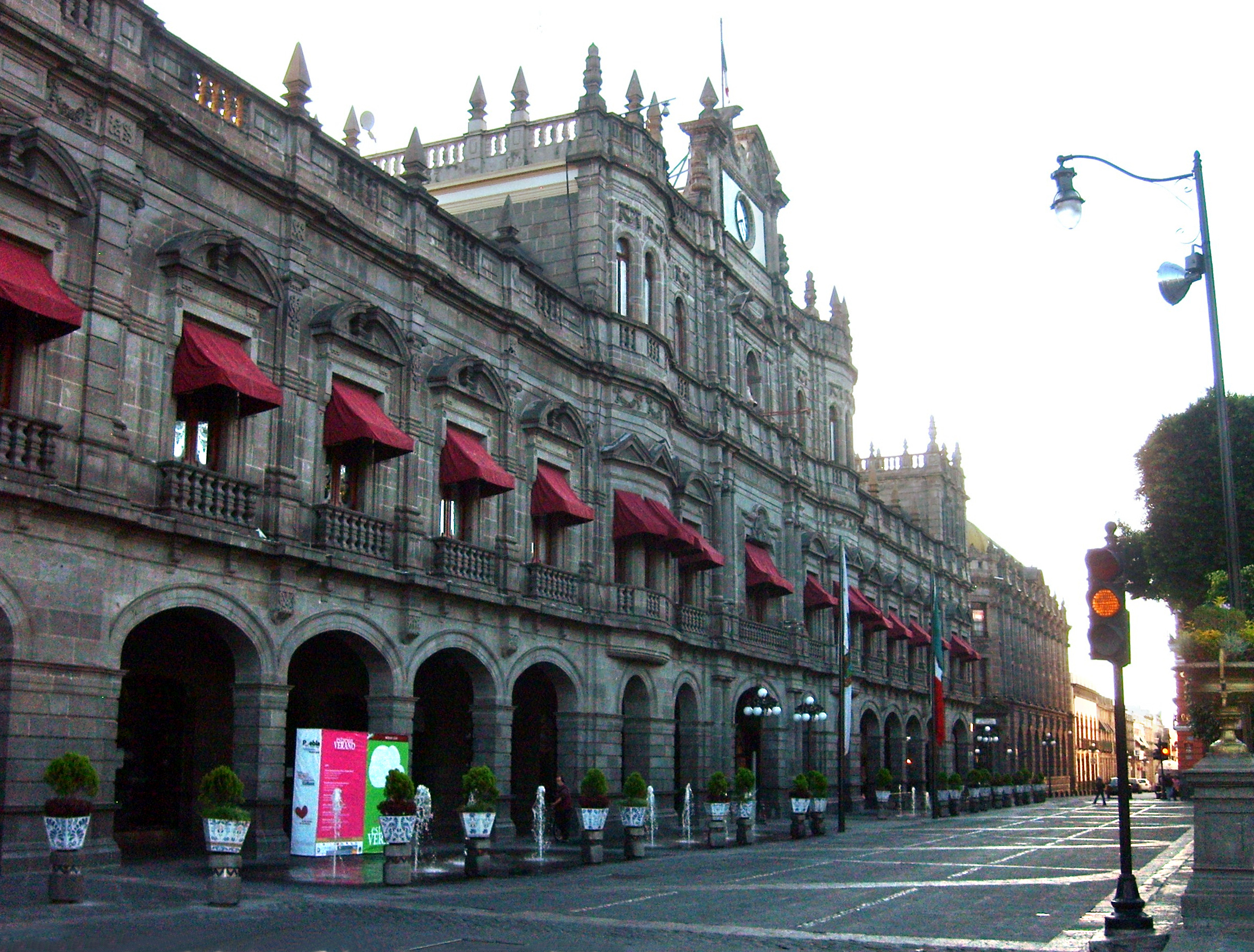
Second-level administrative divisions of Mexico
| Field | Value |
|---|---|
| name | Municipality |
| Municipio (Spanish) | |
| map | File:Municipalities of México (black borders).svg |
| caption | Municipalities of Mexico as of January 2020 |
| category | Municipio / Municipality |
| territory | |
| upper_unit | Mexican states |
| current_number | 2,462 |
| number_date | December 2024 |
| population_range | Smallest: |
| 81 (Santa Magdalena Jicotlán, Oax.) | |
| Largest: | |
| 1,922,523 (Tijuana, B.C.) | |
| area_range | Smallest: |
| 2.2 km2 (Natividad, Oax.) | |
| Largest: | |
| 32953.3 km2 (Mulegé, B.C.S.) | |
| government | Municipal council (Ayuntamiento) |
| subdivision | Localities |
Municipio (Spanish) 81 (Santa Magdalena Jicotlán, Oax.) Largest: 1,922,523 (Tijuana, B.C.) 2.2 km2 (Natividad, Oax.) Largest: 32953.3 km2 (Mulegé, B.C.S.) Municipalities () are the administrative divisions under the states of Mexico according to the constitution. Municipalities are considered as the second-level administrative divisions by the federal government. However, some state regulations have designed intrastate regions to administer their own municipalities. Municipalities are further divided into localities in the structural hierarchy of administrative divisions of Mexico. As of December 2024, there are 2,462 municipalities in Mexico.
In Mexico, municipalities should not be confused with cities (). Cities are locality-level divisions that are administered by the municipality, although some larger cities are consolidated with its own municipality and form a single level of governance. In addition, the 16 boroughs of Mexico City are considered municipality equivalent, this makes the total number of municipality-level divisions to be 2,478.
The internal political organization and their responsibilities are outlined in the 115th article of the 1917 Constitution and detailed in the constitutions of the states to which they belong. Municipalities are distinct from cities, a form of Mexican locality, and are divided into colonias (neighborhoods); some municipalities can be as large as full states, while cities can be measured in basic geostatistical areas or city blocks.
Structure
All Mexican states are divided into municipalities. Each municipality is autonomous; citizens elect a municipal president () who heads a municipal council (), responsible for providing all the public services for their constituents. This concept, which originated after the Mexican Revolution, is known as a municipio libre (free municipality).
The municipal president is elected by first-past-the-post voting system for a three-year term and cannot be reelected for the next immediate term. The municipal council consists of a cabildo (chairman) with a síndico and several regidores (trustees).
If the municipality covers a large area and contains more than one city or town (collectively called localidades), one city or town is selected as a cabecera municipal (head city, seat of the municipal government) while the rest elect representatives to a presidencia auxiliar or junta auxiliar (auxiliary presidency or council). In that sense, a municipality in Mexico is roughly equivalent to the counties of the United States, whereas the auxiliary presidency is equivalent to a township. Nonetheless, auxiliary presidencies are not considered a third-level administrative division since they depend fiscally on the municipalities in which they are located.
North-western and south-eastern states are divided into small numbers of large municipalities (e.g. Baja California is divided into only seven municipalities), and therefore they cover large areas incorporating several separated cities or towns that do not necessarily conform to one single conurbation. Central and southern states, on the other hand, are divided into many small municipalities (e.g. Oaxaca is divided into 570 municipalities), and therefore large urban areas usually extend over several municipalities which form one single conurbation. Although an urban area might cover an entire municipality, auxiliary councils might still be used for administrative purposes.
Municipalities are responsible for public services (such as water and sewerage), street lighting, public safety, traffic, supervision of slaughterhouses and the cleaning and maintenance of public parks, gardens and cemeteries. They may also assist the state and federal governments in education, emergency fire and medical services, environmental protection and maintenance of monuments and historical landmarks. Since 1983, they can collect property taxes and user fees, although more funds are obtained from the state and federal governments than from their own collection efforts.
Some municipalities in Mexico are subdivided into internal, third-level administrative organizations. All municipalities of Baja California are subdivided into boroughs, or delegaciones. Mexicali municipality, for example, is divided into 14 boroughs besides the City of Mexicali, which comprises the municipal seat and three additional metropolitan boroughs. Querétaro municipality is subdivided into seven boroughs. Nonetheless, the heads of government of the boroughs are not elected by the residents but rather appointed by the municipal president.
Mexico City is a special case in that it is not organized into municipalities. As a result of the Political Reforms enacted in 2016, it is no longer designated as a Federal District and became a city, a member entity of the Mexican federation, seat of the Powers of the Union and the capital of Mexico. Mexico City is divided in 16 boroughs, officially called demarcaciones territoriales, substituting the old delegaciones. The boroughs are considered as third-level territorial divisions for statistical data collection and cross-country comparisons.
Statistics
According to Mexico's National Institute of Statistics and Geography, there are in total 2,462 municipalities under the 31 states of Mexico as of December 2024. Consider also the 16 boroughs of Mexico City, the total number of municipality-level divisions to be 2,478.
| Code | State | Municipalities | Main |
|---|---|---|---|
| Aguascalientes | 11 | Municipalities of Aguascalientes | |
| Baja California | 7 | Municipalities of Baja California | |
| Baja California Sur | 5 | Municipalities of Baja California Sur | |
| Campeche | 13 | Municipalities of Campeche | |
| Coahuila | 38 | Municipalities of Coahuila | |
| Colima | 10 | Municipalities of Colima | |
| Chiapas | 124 | Municipalities of Chiapas | |
| Chihuahua | 67 | Municipalities of Chihuahua | |
| Durango | 39 | Municipalities of Durango | |
| Guanajuato | 46 | Municipalities of Guanajuato | |
| Guerrero | 85 | Municipalities of Guerrero | |
| Hidalgo | 84 | Municipalities of Hidalgo | |
| Jalisco | 125 | Municipalities of Jalisco | |
| México (state) | 125 | Municipalities of the State of Mexico | |
| Michoacán | 113 | Municipalities of Michoacán | |
| Morelos | 36 | Municipalities of Morelos | |
| Nayarit | 20 | Municipalities of Nayarit | |
| Nuevo León | 51 | Municipalities of Nuevo León | |
| Oaxaca | 570 | Municipalities of Oaxaca | |
| Puebla | 217 | Municipalities of Puebla | |
| Querétaro | 18 | Municipalities of Querétaro | |
| Quintana Roo | 11 | Municipalities of Quintana Roo | |
| San Luis Potosí | 59 | Municipalities of San Luis Potosí | |
| Sinaloa | 20 | Municipalities of Sinaloa | |
| Sonora | 72 | Municipalities of Sonora | |
| Tabasco | 17 | Municipalities of Tabasco | |
| Tamaulipas | 43 | Municipalities of Tamaulipas | |
| Tlaxcala | 60 | Municipalities of Tlaxcala | |
| Veracruz | 212 | Municipalities of Veracruz | |
| Yucatán | 106 | Municipalities of Yucatán | |
| Zacatecas | 58 | Municipalities of Zacatecas |
History

Since the Conquest and colonization of Mexico, the municipality became the basic entity of the administrative organization of New Spain and the Spanish Empire. The first city council in Mexico was established by Hernán Cortés in 1519 in Veracruz; it was also the first in the American mainland. Settlements located in strategic locations received the status of ciudad (the highest status within the Empire, superior to that of villas and pueblos) and were entitled to form an ayuntamiento or municipality. During the first decades, the local authorities had full powers on the public and economic administration of each municipality, but successive reforms diminished their attributions.
After Independence, the 1824 Constitution did not specify any regulation for the municipalities, whose structure and responsibilities were to be outlined in the constitution of each state of the federation. As such, every state set its own requirements for a settlement to become a municipality (usually based on population).
The Constitution of 1917 abolished the jefatura política ("political authority"), the intermediate administrative authority between the states and converted all existing municipalities into municipios libres ("free municipalities"), that is, gave them full autonomy to manage local affairs, while at the same time restricting the scope of their competencies. However, in 1983 the 115th article was modified to expand the municipalities' authority to raise revenue (through property taxes and other local services) and to formulate budgets.
Since the 2015 Intercensal Survey, the following municipalities have been created by the state governments.
- January 6, 2016: Puerto Morelos in Quintana Roo
- September 6, 2017: Capitán Luis Ángel Vidal and Rincón Chamula San Pedro in Chiapas.
- July 15, 2018: Honduras de la Sierra in Chiapas.
- January 1, 2019: Coatetelco, Hueyapan, and Xoxocotla in Morelos.
- February 27, 2020: San Quintín in Baja California.
- January 1, 2021: Seybaplaya and Dzitbalché in Campeche.
- March 5, 2021: Eldorado and Juan José Ríos in Sinaloa.
- August 31, 2021: Las Vigas, Ñuu Savi, San Nicolás, and Santa Cruz del Rincón in Guerrero.
- January 1, 2022: San Felipe in Baja California.
- July 22, 2024: Villa de Pozos in San Luis Potosí.
Ranking of municipalities
By population
Main article: List of municipalities in Mexico by population
Data from the 2020 Mexican National Census.

| Ranking | Municipality | State | Population |
|---|---|---|---|
| 1 | Mexico City | Mexico City | 9,209,944 |
| 2 | Tijuana | Baja California | 1,922,523 |
| 3 | León | Guanajuato | 1,721,215 |
| 4 | Puebla | Puebla | 1,692,181 |
| 5 | Ecatepec | Mexico | 1,645,352 |
| 6 | Juárez | Chihuahua | 1,512,450 |
| 7 | Zapopan | Jalisco | 1,476,491 |
| 8 | Guadalajara | Jalisco | 1,385,629 |
| 9 | Monterrey | Nuevo León | 1,142,994 |
| 10 | Nezahualcóyotl | Mexico | 1,077,208 |
| 2,450 | San Mateo Tlapiltepec | Oaxaca | 229 |
| 2,451 | Santiago Nejapilla | Oaxaca | 174 |
| 2,452 | Santiago Tepetlapa | Oaxaca | 130 |
| 2,453 | Santo Domingo Tlatayapam | Oaxaca | 113 |
| 2,454 | Santa Magdalena Jicotlán | Oaxaca | 81 |
By area
Data from the 2020 Mexican National Census.

| Ranking | Municipality | State | Land Area | km2 | sq mi |
|---|---|---|---|---|---|
| 1 | Mulegé | Baja California Sur | 32953.3 km2 | ||
| 2 | San Quintín | Baja California | 32009.9 km2 | ||
| 3 | Ocampo | Coahuila | 26024.4 km2 | ||
| 4 | Ensenada | Baja California | 19526.8 km2 | ||
| 5 | Comondú | Baja California Sur | 18318.6 km2 | ||
| 6 | Ahumada | Chihuahua | 16910.0 km2 | ||
| 7 | Hermosillo | Sonora | 15724.3 km2 | ||
| 8 | La Paz | Baja California Sur | 15413.7 km2 | ||
| 9 | Mexicali | Baja California | 14528.3 km2 | ||
| 10 | Calakmul | Campeche | 13987.5 km2 | ||
| 2,450 | Ánimas Trujano | Oaxaca | 3.0 km2 | ||
| 2,451 | San Pedro Cajonos | Oaxaca | 2.8 km2 | ||
| 2,452 | Santa Inés Yatzeche | Oaxaca | 2.4 km2 | ||
| 2,453 | Santa Cruz Amilpas | Oaxaca | 2.3 km2 | ||
| 2,454 | Natividad | Oaxaca | 2.2 km2 |
By location
- Northernmost: Mexicali, Baja California ()
- Southernmost: Suchiate, Chiapas ()
- Westernmost: Ensenada, Baja California ()
- Easternmost: Isla Mujeres, Quintana Roo ()
- Geographical center: Villa de Cos, Zacatecas ()
- Highest: Tlachichuca, Puebla and Calcahualco, Veracruz (5,636 m, Citlaltépetl volcano).
- Lowest: Mexicali, Baja California (-12 m, Laguna Salada).
References
See http://en.wikipedia.org/wiki/Wikipedia:Footnotes for a discussion of different citation methods and how to generate footnotes using the and tags
References
- https://www.infobae.com/mexico/2024/03/27/estos-son-los-municipios-de-mas-reciente-creacion-en-mexico-se-encuentran-en-guerrero/
- (1917). "Constitución Política de los Estados Unidos Mexicanos".
- "Territorial Statutes of Mexicali Municipality's Interior Boroughs". Gobierno de Mexical.
- "Boroughs of Querétaro". Gobierno de Querétaro.
- "Constitution of Mexico City". Gobierno de la Ciudad de México.
- [https://www.inegi.org.mx/app/ageeml/ Catálogo Único de Claves de Áreas Geoestadísticas Estatales, Municipales y Localidades]
- Sanchez Diez, Jaime R. (18 October 2000). "Estudio sobre reestructuración portuaria - Impacto Social Sinopsis Histurica del Puerto de Veracruz". Puerto de Veracruz Organización Internacional.
- "El municipio en España y Nueva España".
- [http://hdr.undp.org/docs/reports/national/MEX_Mexico/Mexico_2004_sp.pdf Inform sobre Desarrollo Humano México 2004] {{webarchive. link. (2007-01-26 p. 50)
- Norma Anaya. (November 5, 2015). "Puerto Morelos nuevo municipio de Quintana Roo". El Financiero.
- (September 6, 2017). "Constitución Política del Estado Libre y Soberano de Chiapas".
- (November 9, 2017). "Habrá a partir de 2019 4 municipios indígenas en Morelos". Diario de Morelos.
- "Decreto de Creación municipio San Quintín".
- (26 April 2019). "Decreto Número 45". Periódico Oficial del Estado de Campeche, Segunda Sección.
- "Censo de Población y Vivienda 2020 - SCITEL". INEGI.
- ,
This article was imported from Wikipedia and is available under the Creative Commons Attribution-ShareAlike 4.0 License. Content has been adapted to SurfDoc format. Original contributors can be found on the article history page.
Ask Mako anything about Municipalities of Mexico — get instant answers, deeper analysis, and related topics.
Research with MakoFree with your Surf account
Create a free account to save articles, ask Mako questions, and organize your research.
Sign up freeThis content may have been generated or modified by AI. CloudSurf Software LLC is not responsible for the accuracy, completeness, or reliability of AI-generated content. Always verify important information from primary sources.
Report