From Surf Wiki (app.surf) — the open knowledge base
Multicellular organism
Organism that consists of more than one cell
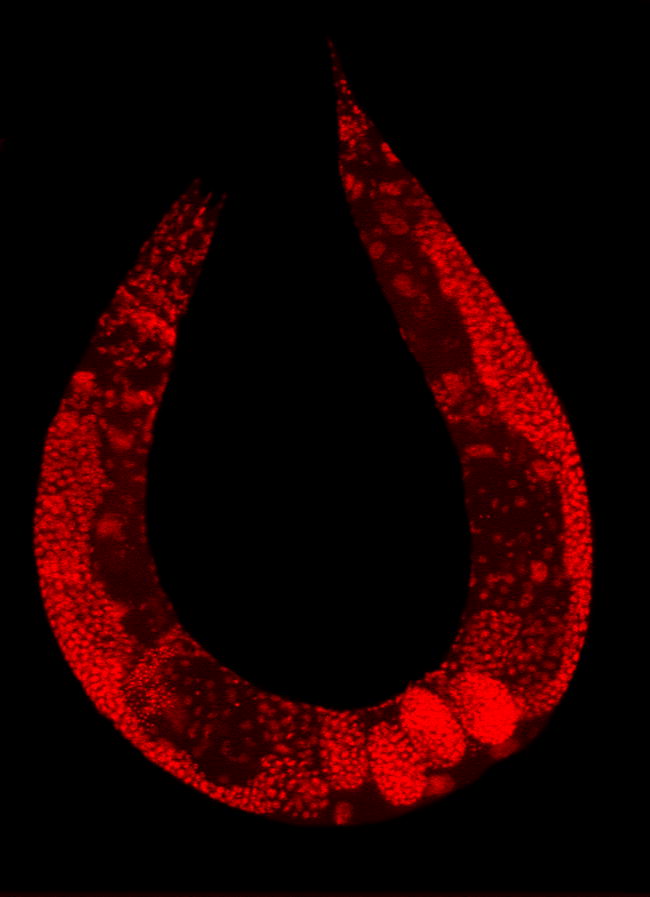
Organism that consists of more than one cell
A multicellular organism is an organism that consists of more than one cell, and more than one cell type, unlike unicellular organisms.{{cite book
Multicellular organisms arise in various ways, for example by cell division or by aggregation of many single cells. Colonial organisms are the result of many identical individuals joining together to form a colony. However, it can often be hard to separate colonial protists from true multicellular organisms, because the two concepts are not distinct; colonial protists have been dubbed "pluricellular" rather than "multicellular".{{cite book
Evolutionary history
Occurrence
Multicellularity has evolved independently at least 25 times in eukaryotes, and also in some prokaryotes, like cyanobacteria, myxobacteria, actinomycetes, Magnetoglobus multicellularis or Methanosarcina. However, complex multicellular organisms evolved only in six eukaryotic groups: animals, symbiomycotan fungi, brown algae, red algae, green algae, and land plants. It evolved repeatedly for Chloroplastida (green algae and land plants), once for animals, once for brown algae, three times in the fungi (chytrids, ascomycetes, and basidiomycetes) and perhaps several times for slime molds and red algae. To reproduce, true multicellular organisms must solve the problem of regenerating a whole organism from germ cells (i.e., sperm and egg cells), an issue that is studied in evolutionary developmental biology. Animals have evolved a considerable diversity of cell types in a multicellular body (100–150 different cell types), compared with 10–20 in plants and fungi.
The first evidence of multicellular organization, which is when unicellular organisms coordinate behaviors and may be an evolutionary precursor to true multicellularity, is from cyanobacteria-like organisms that lived 3.0–3.5 billion years ago. Decimeter-scale multicellular fossils have been found as early as 1.56 Bya.
Loss of multicellularity
Loss of multicellularity occurred in some groups. Fungi are predominantly multicellular, though early diverging lineages are largely unicellular (e.g., Microsporidia) and there have been numerous reversions to unicellularity across fungi (e.g., Saccharomycotina, Cryptococcus, and other yeasts). It may also have occurred in some red algae (e.g., Porphyridium), but they may be primitively unicellular. Loss of multicellularity is also considered probable in some green algae (e.g., Chlorella vulgaris and some Ulvophyceae). In other groups, generally parasites, a reduction of multicellularity occurred, in the number or types of cells (e.g., the myxozoans, multicellular organisms, earlier thought to be unicellular, are probably extremely reduced cnidarians).
Cancer
Multicellular organisms, especially long-living animals, face the challenge of cancer, which occurs when cells fail to regulate their growth within the normal program of development. Changes in tissue morphology can be observed during this process. Many genes responsible for the establishment of multicellularity that originated around the appearance of metazoans are deregulated in cancer cells, including genes that control cell differentiation, adhesion and cell-to-cell communication. There is a discussion about the possibility of existence of cancer in other multicellular organisms or even in protozoa. For example, plant galls have been characterized as tumors, but some authors argue that plants do not develop cancer.
Separation of somatic and germ cells
In some multicellular groups, which are called Weismannists, a separation between a sterile somatic cell line and a germ cell line evolved. However, Weismannist development is relatively rare (e.g., vertebrates, arthropods, Volvox), as a great part of species have the capacity for somatic embryogenesis (e.g., land plants, most algae, many invertebrates).
Origin hypotheses
One hypothesis for the origin of multicellularity is that a group of function-specific cells aggregated into a slug-like mass called a grex, which moved as a multicellular unit. This is essentially what slime molds do. Another hypothesis is that a primitive cell underwent nucleus division, thereby becoming a coenocyte. A membrane would then form around each nucleus (and the cellular space and organelles occupied in the space), thereby resulting in a group of connected cells in one organism (this mechanism is observable in Drosophila). A third hypothesis is that as a unicellular organism divided, the daughter cells failed to separate, resulting in a conglomeration of identical cells in one organism, which could later develop specialized tissues. This is what plant and animal embryos do as well as colonial choanoflagellates.
Because the first multicellular organisms were simple, soft organisms lacking bone, shell, or other hard body parts, they are not well preserved in the fossil record. One exception may be the demosponge, which may have left a chemical signature in ancient rocks. The earliest fossils of multicellular organisms include the contested Grypania spiralis and the fossils of the black shales of the Palaeoproterozoic Francevillian Group Fossil B Formation in Gabon (Gabonionta). | author-link = Abderrazak El Albani A, Bengtson S, Canfield DE, Bekker A, Macchiarelli R, Mazurier A, Hammarlund EU, Boulvais P, Dupuy JJ, Fontaine C, Fürsich FT, Gauthier-Lafaye F, Janvier P, Javaux E, Ossa FO, Pierson-Wickmann AC, Riboulleau A, Sardini P, Vachard D, Whitehouse M, Meunier A.
|display-authors=etal| bibcode = 2010Natur.466..100A
Until recently, phylogenetic reconstruction has been through anatomical (particularly embryological) similarities. This is inexact, as living multicellular organisms such as animals and plants are more than 500 million years removed from their single-cell ancestors. Such a passage of time allows both divergent and convergent evolution time to mimic similarities and accumulate differences between groups of modern and extinct ancestral species. Modern phylogenetics uses sophisticated techniques such as alloenzymes, satellite DNA and other molecular markers to describe traits that are shared between distantly related lineages.
The evolution of multicellularity could have occurred in several different ways, some of which are described below:
The symbiotic theory
This theory suggests that the first multicellular organisms occurred from symbiosis (cooperation) of different species of single-cell organisms, each with different roles. Over time these organisms would become so dependent on each other that they would not be able to survive independently, eventually leading to the incorporation of their genomes into one multicellular organism. Each respective organism would become a separate lineage of differentiated cells within the newly created species.
This kind of severely co-dependent symbiosis can be seen frequently, such as in the relationship between clown fish and Riterri sea anemones. In these cases, it is extremely doubtful whether either species would survive very long if the other became extinct. However, the problem with this theory is that it is still not known how each organism's DNA could be incorporated into one single genome to constitute them as a single species. Although such symbiosis is theorized to have occurred (e.g., mitochondria and chloroplasts in animal and plant cells—endosymbiosis), it has happened only extremely rarely and, even then, the genomes of the endosymbionts have retained an element of distinction, separately replicating their DNA during mitosis of the host species. For instance, the two or three symbiotic organisms forming the composite lichen, although dependent on each other for survival, have to separately reproduce and then re-form to create one individual organism once more.
The cellularization (syncytial) theory
This theory states that a single unicellular organism, with multiple nuclei, could have developed internal membrane partitions around each of its nuclei.
The colonial theory
The colonial theory of Haeckel, 1874, proposes that the symbiosis of many organisms of the same species (unlike the symbiotic theory, which suggests the symbiosis of different species) led to a multicellular organism. At least some – it is presumed land-evolved – multicellularity occurs by cells separating and then rejoining (e.g., cellular slime molds) whereas for the majority of multicellular types (those that evolved within aquatic environments), multicellularity occurs as a consequence of cells failing to separate following division.{{Cite journal | doi-access = free

The advantage of the Colonial Theory hypothesis is that it has been seen to occur independently in 16 different protoctistan phyla. For instance, during food shortages the amoeba Dictyostelium groups together in a colony that moves as one to a new location. Some of these amoeba then slightly differentiate from each other. Other examples of colonial organisation in protista are Volvocaceae, such as Eudorina and Volvox, the latter of which consists of up to 500–50,000 cells (depending on the species), only a fraction of which reproduce. For example, in one species 25–35 cells reproduce, 8 asexually and around 15–25 sexually. However, it can often be hard to separate colonial protists from true multicellular organisms, as the two concepts are not distinct; colonial protists have been dubbed "pluricellular" rather than "multicellular".
The synzoospore theory
Some authors suggest that the origin of multicellularity, at least in Metazoa, occurred due to a transition from temporal to spatial cell differentiation, rather than through a gradual evolution of cell differentiation, as affirmed in Haeckel's gastraea theory.
GK-PID
About 800 million years ago, a minor genetic change in a single molecule called guanylate kinase protein-interaction domain (GK-PID) may have allowed organisms to go from a single cell organism to one of many cells.
The role of viruses
Genes borrowed from viruses and mobile genetic elements (MGEs) have recently been identified as playing a crucial role in the differentiation of multicellular tissues and organs and even in sexual reproduction, in the fusion of egg cells and sperm. Such fused cells are also involved in metazoan membranes such as those that prevent chemicals from crossing the placenta and the brain body separation. Two viral components have been identified. The first is syncytin, which came from a virus. The second identified in 2002 is called EFF-1, which helps form the skin of Caenorhabditis elegans, part of a whole family of FF proteins. Felix Rey, of the Pasteur Institute in Paris, has constructed the 3D structure of the EFF-1 protein and shown it does the work of linking one cell to another, in viral infections. The fact that all known cell fusion molecules are viral in origin suggests that they have been vitally important to the inter-cellular communication systems that enabled multicellularity. Without the ability of cellular fusion, colonies could have formed, but anything even as complex as a sponge would not have been possible.
Oxygen availability hypothesis
This theory suggests that the oxygen available in the atmosphere of early Earth could have been the limiting factor for the emergence of multicellular life. This hypothesis is based on the correlation between the emergence of multicellular life and the increase of oxygen levels during this time. This would have taken place after the Great Oxidation Event but before the most recent rise in oxygen. Mills concludes that the amount of oxygen present during the Ediacaran is not necessary for complex life and therefore is unlikely to have been the driving factor for the origin of multicellularity.
Snowball Earth hypothesis
A snowball Earth event is a geological event where the entire surface of the Earth is covered in snow and ice. Snowball events are thought to have happened several times throughout the Earth's history, and during the Cryogenian, two snowball events happened in quick succession – the Sturtian and Marinoan glaciations.
These glaciations could have been the catalyst for the evolution of complex multicellular life. The time between the Sturtian and Marinoan glaciations may have allowed for planktonic algae to dominate the seas, making way for rapid diversification of biota for both plant and animal lineages. Complex life quickly emerged and diversified in what is known as the Cambrian explosion shortly after the Marinoan.
Xiao et al. suggest that between the period of time known as the "Boring Billion" and the snowball Earth, simple life could have had time to innovate and evolve, which could later lead to the evolution of multicellularity.
Predation hypothesis
The predation hypothesis suggests that to avoid being eaten by predators, simple single-celled organisms evolved multicellularity to make it harder to be consumed as prey. Herron et al. performed laboratory evolution experiments on the single-celled green alga, Chlamydomonas reinhardtii, using paramecium as a predator. They found that in the presence of this predator, C. reinhardtii does indeed evolve simple multicellular features.
Experimental evolution
It is impossible to know what happened when single cells evolved into multicellular organisms hundreds of millions of years ago. However, we can identify mutations that can turn single-celled organisms into multicellular ones. This would demonstrate the possibility of such an event. Unicellular species can relatively easily acquire mutations that make them attach to each other—the first step towards multicellularity. Multiple normally unicellular species have been evolved to exhibit such early steps:
- Yeast are long known to exhibit flocculation. One of the first yeast genes found to cause this phenotype is FLO1. A more strikingly clumped phenotype is called "snowflake", caused by the loss of a single transcription factor Ace2. "Snowflake" yeast grow into multicellular clusters that sediment quickly; they were identified by directed evolution. More recently (2024), snowflake yeast were subject to over 3,000 generations of further directed evolution, forming macroscopic assemblies on the scale of millimeters. Changes in multiple genes were identified. In addition, the authors reported that only anaerobic cultures of snowflake yeast evolved this trait, while the aerobic ones did not.
- A range of green algae species have been experimentally evolved to form larger clumps. When Chlorella vulgaris is grown with a predator Ochromonas vallescia, it starts forming small colonies, which are harder to ingest due to the larger size. The same is true for Chlamydomonas reinhardtii under predation by Brachionus calyciflorus and Paramecium tetraurelia.
C. reinhartii normally starts as a motile single-celled propagule; this single cell asexually reproduces by undergoing 2–5 rounds of mitosis as a small clump of non-motile cells, then all cells become single-celled propagules and the clump dissolves. With a few generations under Paramecium predation, the "clump" becomes a persistent structure: only some cells become propagules. Some populations go further and evolved multi-celled propagules: instead of peeling off single cells from the clump, the clump now reproduces by peeling off smaller clumps.
Advantages
Multicellularity allows an organism to exceed the size limits normally imposed by diffusion: single cells with increased size have a decreased surface-to-volume ratio and have difficulty absorbing sufficient nutrients and transporting them throughout the cell. Multicellular organisms thus have the competitive advantages of an increase in size without its limitations. They can have longer lifespans as they can continue living when individual cells die. Multicellularity also permits increasing complexity by allowing differentiation of cell types within one organism.
Whether all of these can be seen as advantages however is debatable: The vast majority of living organisms are single celled, and even in terms of biomass, single celled organisms are far more successful than animals, although not plants. Rather than seeing traits such as longer lifespans and greater size as an advantage, many biologists see these only as examples of diversity, with associated tradeoffs.
Gene expression changes in the transition from uni- to multicellularity
During the evolutionary transition from unicellular organisms to multicellular organisms, the expression of genes associated with reproduction and survival likely changed. In the unicellular state, genes associated with reproduction and survival are expressed in a way that enhances the fitness of individual cells, but after the transition to multicellularity, the pattern of expression of these genes must have substantially changed so that individual cells become more specialized in their function relative to reproduction and survival. As the multicellular organism emerged, gene expression patterns became compartmentalized between cells that specialized in reproduction (germline cells) and those that specialized in survival (somatic cells). As the transition progressed, cells that specialized tended to lose their own individuality and would no longer be able to both survive and reproduce outside the context of the group.
References
References
- (2017). "Life at the Edge of Sight: A Photographic Exploration of the Microbial World". Harvard University Press.
- (April 2015). "On the evolution of bacterial multicellularity". Current Opinion in Microbiology.
- Miller, S.M.. (2010). "Volvox, Chlamydomonas, and the evolution of multicellularity". Nature Education.
- (October 2005). "The New Higher Level Classification of Eukaryotes with Emphasis on the Taxonomy of Protists". J. Eukaryot. Microbiol..
- (2007). "The evolution of multicellularity: A minor major transition?". [[Annu Rev Ecol Evol Syst]].
- (2013). "Multicellularity arose several times in the evolution of eukaryotes". BioEssays.
- (2011). "Evolution and diversity of plant cell walls: From algae to flowering plants". Annual Review of Plant Biology.
- Niklas, K.J.. (2014). "The evolutionary-developmental origins of multicellularity". American Journal of Botany.
- Bonner, John Tyler. (1998). "The origins of multicellularity". [[Integrative Biology]].
- (2009). "Kingdoms and Domains: An illustrated guide to the phyla of life on Earth". Academic Press / Elsevier.
- (2016). "Decimetre-scale multicellular eukaryotes from the 1.56-billion-year-old Gaoyuzhuang Formation in North China". Nat Commun.
- Seravin, L.N.. (2001). "The principle of counter-directional morphological evolution and its significance for constructing the megasystem of protists and other eukaryotes". Protistology.
- {{harvnb. Parfrey. Lahr. 2013
- (2003). "Phylogeny of Opisthokonta and the evolution of multicellularity and complexity in Fungi and Metazoa". International Journal of Astrobiology.
- (2010). "Red algae in the genomic age". Springer.
- (2010). "Evolution and Cytological Diversification of the Green Seaweeds (Ulvophyceae)". Mol. Biol. Evol..
- Richter, Daniel Joseph. (2013). "The gene content of diverse choanoflagellates illuminates animal origins". University of California, Berkeley.
- "Myxozoa".
- (2010). "Phylostratigraphic tracking of cancer genes suggests a link to the emergence of multicellularity in metazoa". BMC Biology.
- (2022). "Origin and evolution of animal multicellularity in the light of phylogenomics and cancer genetics". Medical Oncology.
- {{harvnb. Richter. 2013
- (1991). "When plant teratomas turn into cancers in the absence of pathogens". Physiologia Plantarum.
- Lauckner, G. (1980). Diseases of protozoa. In: ''Diseases of Marine Animals''. Kinne, O. (ed.). [https://www.int-res.com/archive/doma_books/DOMA_Vol_I_(general_aspects,_protozoa_to%20gastropoda).pdf Vol. 1, p. 84], John Wiley & Sons, Chichester, UK.
- (1958). "Plant tumors: Introduction". Proceedings of the National Academy of Sciences of the United States of America.
- (1996). "Cell cycle. Why don't plants get cancer?". Nature.
- Ridley M (2004) Evolution, 3rd edition. Blackwell Publishing, p. 295–297.
- (26 October 2010). "Multicellular development in a choanoflagellate". Current Biology.
- Carroll, Sean B.. (December 14, 2010). "In a Single-Cell Predator, Clues to the Animal Kingdom's Birth". The New York Times.
- A H Knoll, 2003. ''Life on a Young Planet''. Princeton University Press. {{ISBN. 0-691-00978-3 (hardcover), {{ISBN. 0-691-12029-3 (paperback). An excellent book on the early history of life, very accessible to the non-specialist; includes extensive discussions of early signatures, fossilization, and organization of life.
- (2014). "Cell differentiation and germ–soma separation in Ediacaran animal embryo-like fossils". Nature.
- Margulis, Lynn. (1998). "Symbiotic Planet: A New Look at Evolution". [[Basic Books]].
- AlgaeBase. [http://www.algaebase.org/search/genus/detail/?genus_id=43497 Volvox Linnaeus, 1758: 820.]
- (2009). "The origin of Metazoa: A transition from temporal to spatial cell differentiation". BioEssays.
- (9 November 2015). "Early metazoan life: divergence, environment and ecology". [[Phil. Trans. R. Soc. B]].
- Zimmer, Carl. (7 January 2016). "Genetic Flip Helped Organisms Go From One Cell to Many". [[New York Times]].
- Letzter, Rafi. (2018-02-02). "An Ancient Virus May Be Responsible for Human Consciousness".
- Koonin, E.V.. (2016). "Viruses and mobile elements as drivers of evolutionary transitions". Philosophical Transactions of the Royal Society of London. Series B, Biological Sciences.
- (2000). "Syncytin is a captive retroviral envelope protein involved in human placental morphogenesis". Nature.
- (March 2002). "The Type I Membrane Protein EFF-1 Is Essential for Developmental Cell Fusion". Developmental Cell.
- (2014). "Structural Basis of Eukaryotic Cell-Cell Fusion". Cell.
- Slezak, Michael (2016), "No Viruses? No skin or bones either" (New Scientist, No. 2958, 1 March 2014) p.16
- Nursall, J.R.. (April 1959). "Oxygen as a Prerequisite to the Origin of the Metazoa". Nature.
- (2014-02-18). "Oxygen requirements of the earliest animals". Proceedings of the National Academy of Sciences.
- (August 2017). "The rise of algae in Cryogenian oceans and the emergence of animals". Nature.
- (2018-09-28). "After the boring billion and before the freezing millions: Evolutionary patterns and innovations in the Tonian Period". Emerging Topics in Life Sciences.
- (2019-02-20). "De novo origins of multicellularity in response to predation". Scientific Reports.
- (2008-11-14). "FLO1 is a variable green beard gene that drives biofilm-like cooperation in budding yeast". Cell.
- (2013). "Genome duplication and mutations in ''ACE2'' cause multicellular, fast-sedimenting phenotypes in evolved ''Saccharomyces cerevisiae''". Proceedings of the National Academy of Sciences.
- (2023-05-25). "De novo evolution of macroscopic multicellularity". Nature.
- (April 2023). "The Genetics of Fitness Reorganization during the Transition to Multicellularity: The Volvocine regA-like Family as a Model". Genes (Basel).
This article was imported from Wikipedia and is available under the Creative Commons Attribution-ShareAlike 4.0 License. Content has been adapted to SurfDoc format. Original contributors can be found on the article history page.
Ask Mako anything about Multicellular organism — get instant answers, deeper analysis, and related topics.
Research with MakoFree with your Surf account
Create a free account to save articles, ask Mako questions, and organize your research.
Sign up freeThis content may have been generated or modified by AI. CloudSurf Software LLC is not responsible for the accuracy, completeness, or reliability of AI-generated content. Always verify important information from primary sources.
Report