From Surf Wiki (app.surf) — the open knowledge base
MultiAir
Automobile variable valve timing technology
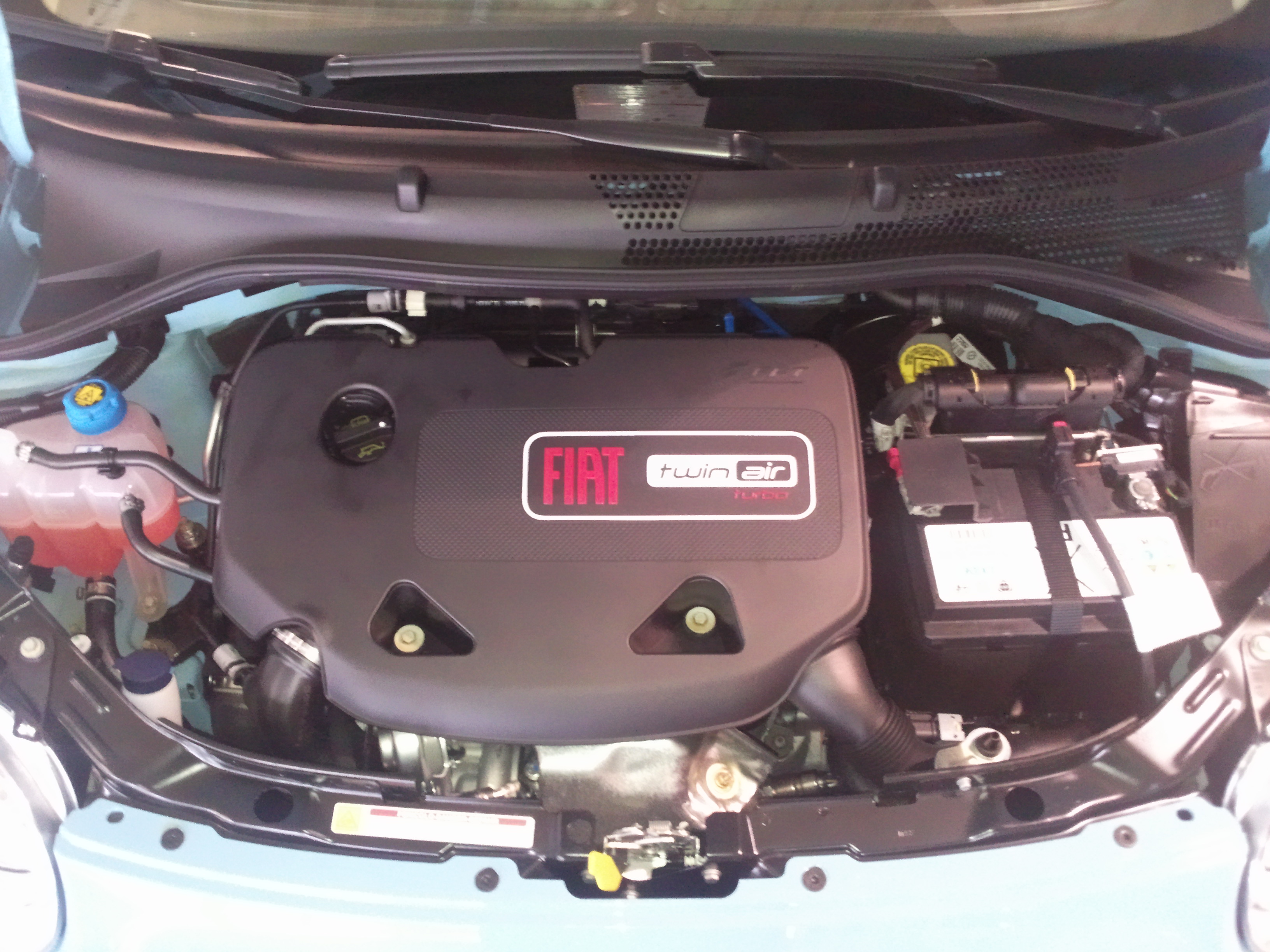
Automobile variable valve timing technology
MultiAir or Multiair is a hydraulically actuated variable valve timing (VVT) and variable valve lift (VVL) engine technology enabling "cylinder by cylinder, stroke by stroke" control of intake air directly via a gasoline engine's inlet valves. Developed by Fiat Powertrain Technologies, the technology addresses a primary engine inefficiency: pumping losses caused by restricting intake passage by the throttle plate that regulates air feeding the cylinders.{{cite web
Fiat S.p.A., now known as Stellantis, launched MultiAir in 2009, employing a proprietary electro-hydraulic system to precisely control air intake without a throttle valve to increase engine power and torque, reduce fuel consumption, reduce emissions, and improve engine operation, offering "a more controllable flow of air during the combustion cycle in comparison with mechanical VVT systems."{{cite web
MultiAir was licensed to the Schaeffler Group in 2011, which also markets the system as Uniair. Schaeffler began supplying Uniair systems in 2017 to Jaguar Land Rover, branded as Ingenium technology.
Compatible with both naturally aspirated and forced-induction engines, MultiAir technology was patented by Fiat in 2002 and was launched at the 2009 Geneva Motor Show in the Alfa Romeo MiTo. 1.4 L MultiAir engines for global markets are manufactured in Termoli, Italy at the Fiat Powertrain Technologies factory and the FCA's Dundee Engine Plant (formerly of Global Engine Alliance's GEMA manufacturing branch), with critical systems manufactured and assembled by Schaeffler Group.{{cite web | access-date = May 30, 2016 | archive-url = https://web.archive.org/web/20160806050130/http://wardsauto.com/news-analysis/schaeffler-expects-other-takers-multiair-technology | archive-date = August 6, 2016 | url-status = dead
In 2010, the 1.4 L MultiAir engine won the International Engine of the Year as well as Popular Science's Best of What's New.{{cite web | access-date = May 31, 2016 | archive-url = https://web.archive.org/web/20160303010027/http://www.allpar.com/news/2010/11/fiats-multiair-engine-wins-popular-science-award-6549 | archive-date = March 3, 2016 | url-status = dead
Both FIRE and SGE units are equipped with MultiAir and use indirect fuel injection.
The GME (Hurricane) and GSE (FireFly) MultiAir II engines, which use direct fuel injection, were first made available in 2016.
Technology
"The MultiAir system is elegantly simple. An electrohydraulic actuator, a high-response, electronically activated solenoid—controls the pressure applied to hydraulic fluid (engine oil drawn from the sump) that fills a thin passageway that connects the intake valves and the camshaft. The solenoid valve regulates the amount of oil pumped by the cam action to either the valve or a bypass reservoir.
When pressurized, the hydraulic line behaves like a solid body and transmits the lift schedule imparted by the intake cam directly to the intake valve. When the solenoid is disengaged, a spring takes over valve actuation duties.
This electrohydraulic link allows independent operation of the two components, which enables near real-time control over the valve lift profiles, said Bernard. Whereas a closed solenoid normally transmits the pressure generated by the camshaft’s intake profile to the valve, an open solenoid breaks the hydraulic link between cam and valve, decoupling their operations."{{cite web
*** Society of Automotive Engineering, 2010*** For variable valve lift, competing technologies (e.g., Honda's VTEC and BMW's Valvetronic) use electromechanical concepts, achieving valve lift variation via dedicated mechanisms; it can also be combined with camshaft phasers to allow control of both valve lift and phase. In contrast, MultiAir uses managed hydraulic fluid to provide variable valve control.
Control of a MultiAir engine's intake valves works via a valve tappet (cam follower), moved by a mechanical intake cam, which is connected to the intake valve through a hydraulic chamber, controlled by a normally open on/off solenoid valve. The system allows optimum timing of intake valve operation.
MultiAir technology can increase power (up to 10%) and torque (up to 15%), as well as reduce consumption levels (up to 10%) and emissions of CO2 (up to 10%), particulates (up to 40%) and NOx (up to 60%) when compared to a traditional petrol engine. The system also provides smoother cold weather operation, greater torque delivery, and no engine shake at shut-off.
Development
Research on critical related technologies started in the 1980s when engine electronic control reached market maturity. MultiAir was developed over ten years at Fiat's Centro Ricerche Fiat (CRF) in Orbassano outside Turin, after a five-year delay during Fiat's 2000-2005 partnership with General Motors. The vice president of Fiat Powertrain Research & Development, Rinaldo Rinolfi, led the team who developed the technology at a cost of over $100 million.
Other systems
More advanced, fully camless valvetrain systems are under development but are not yet production-ready. The Valvetronic system used by BMW allows the valve timing and lift to be varied, but not the cam profile. The ability to vary the latter is characteristic of camless and the MultiAir systems.
Applications
- Fiat FIRE engine
- Fiat SGE (TwinAir) engine
- Fiat GSE (FireFly) engine
- Fiat GME (Hurricane) engine
- Chrysler Tigershark engine
References
References
- "Best new engine 2010". "International Engine of the Year".
- springerprofessional.de: [https://www.springerprofessional.de/en/drivetrain/companies---institutions/uniair-valve-control-for-ingenium-petrol-engine/12263614 Drivetrain. UniAir Valve Control for Ingenium Petrol Engine. springerprofessional.de], accessdate: 27. January 2018
- "「MultiAir」 is launched on the Alfa Romeo MiTo". alfaromeopress.com.
- "Fiat's 1.4-liter turbocharged Multiair powerplant wins "Best New Engine of 2010" award". green.autoblog.com.
- "Fiat 875cc TwinAir". ukipme.com.
- "The Fiat Multiair Technology: how it works". fiatgroupautomobilespress.com.
- "Multiair". fiatgroup.com.
- WebCite query result: [https://web.archive.org/web/20160710131103/http://www.examiner.com/article/fiat-s-engine-innovation WebCite query result], accessdate: 16. June 2016
- The Boston Globe: [http://archive.boston.com/business/articles/2009/06/25/fiat_hopes_tech_will_make_chrysler_deal_work/ Fiat hopes tech will make Chrysler deal work - The Boston Globe], accessdate: 16. June 2016
- "Fiat retrofits Chrysler engine, shelves dinosaurs to save gas". pittsburghlive.com.
- "Valeo has customers for seamless engine with "smart valve actuation"". autobloggreen.com.
This article was imported from Wikipedia and is available under the Creative Commons Attribution-ShareAlike 4.0 License. Content has been adapted to SurfDoc format. Original contributors can be found on the article history page.
Ask Mako anything about MultiAir — get instant answers, deeper analysis, and related topics.
Research with MakoFree with your Surf account
Create a free account to save articles, ask Mako questions, and organize your research.
Sign up freeThis content may have been generated or modified by AI. CloudSurf Software LLC is not responsible for the accuracy, completeness, or reliability of AI-generated content. Always verify important information from primary sources.
Report