From Surf Wiki (app.surf) — the open knowledge base
Morris R. Jeppson
United States Army Air Forces officer

United States Army Air Forces officer
| Field | Value | ||
|---|---|---|---|
| name | 2LT Morris R. Jeppson | ||
| birth_date | |||
| death_date | |||
| birth_place | Logan, Utah, U.S. | ||
| death_place | Las Vegas, Nevada, U.S. | ||
| image | Morris Jeppson.jpg | ||
| image_size | 250 | ||
| allegiance | United States | ||
| branch | [[File:US Army Air Corps Hap Arnold Wings.svg | 25px]] United States Army Air Forces | |
| serviceyears | 1942–1946 | ||
| rank | [[File:US ARMY 2LT.gif | 8px]] Second Lieutenant | |
| battles | World War II | ||
| awards | [[File:Silver Star Medal ribbon.svg | border | 23px]] Silver Star |
| [[File:Air Medal ribbon.svg | border | 23px]] Air Medal |
Morris Richard Jeppson (June 23, 1922 – March 30, 2010) was a Second Lieutenant in the United States Army Air Forces during World War II. He served as assistant weaponeer on the Enola Gay, which dropped the first atomic bomb on the city of Hiroshima, Japan on August 6, 1945.
Early life
Jeppson was born in Logan, Utah, and studied physics at the University of Nevada, Reno. After enlisting in the United States Army Air Corps in 1942 at the age of 19 and basic training in Florida, he received electrical engineering training at Yale University, Harvard University and MIT. He then worked on bomb firing mechanisms with Los Alamos scientists at Wendover Air Force Base, Utah.
The Hiroshima mission
Second Lieutenant Jeppson, along with then Captain William "Deak" Parsons of the U.S. Navy were responsible for arming the atomic bomb "Little Boy" on the Boeing B-29 Superfortress bomber during the flight from Tinian to Japan. The bomb was protected from premature in-flight detonation by inserting three safety plugs into the electrical connection from its internal battery to the firing mechanism. This was designed to prevent a firing voltage from reaching the mechanism. Each plug was approximately 3 in in length, with a green cap for the safety plug and a red cap for the arming plug. Jeppson's role was to climb into the bomb bay and remove the three green safety plugs from the bomb and to replace them with the three red plugs just before the aircraft climbed to high altitude close the target area. With the actions of switching these plugs, Jeppson became the last person to handle the “Little Boy” bomb. He clarified this in the BBC documentary Hiroshima.
Later life and career
In September 1945, Jeppson was awarded the Silver Star in recognition of his service to his country. During the 1950s he worked as a scientist at Lawrence Livermore National Laboratory in California developing hydrogen thermonuclear weapons. Later in his career, he helped develop several key technological breakthroughs including microwave technology as well as stabilizers used on helicopters. After retiring from his work as a physicist, Jeppson lived in Las Vegas with his second wife Mollie.
For many years, Jeppson refused to speak publicly about the Hiroshima mission for fear of reprisal against himself and his family. Starting in 1985, he became more willing to speak about it. On the 40th anniversary of the dropping of the bomb, Jeppson granted an interview and recounted his part in the mission.
In June 2002, a controversy over the sale of a set of safety plugs Jeppson had kept since the mission occurred. After the mission Jeppson had kept one of each in his possession. The plugs were offered for sale in an auction, however the U.S. government tried to halt the sale, claiming they were classified secret material. U.S. District Court Judge Susan Illston rejected the claim by the government clearing the way for the sale. The plugs were eventually sold to retired physicist Clay Perkins for $167,000.
A reunion for the 60th anniversary in 2005 which was supposed to take place on the island of Guam had been in the planning stages, but never materialized. Time Magazine published an in-depth issue commemorating the 60th anniversary of the dropping of the bombs on Japan. Jeppson and other crew members gave accounts of their experiences. Jeppson also gave an account of his role in the mission in the BBC drama documentary Hiroshima in 2005 and his removal of the safety plugs was portrayed by an actor.
Death
Jeppson died on March 30, 2010, in Las Vegas. He is survived by his wife, brother, three children, five grandchildren and three great grandchildren. With Jeppson's death, Theodore Van Kirk became the last surviving Enola Gay crew member (Van Kirk died on July 28, 2014).
Military decorations
His decorations include:
| American Campaign Medal | Asiatic-Pacific Campaign Medal |
|---|---|
| with two bronze campaign stars | World War II Victory Medal |
Silver Star citation
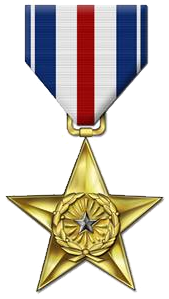
:Jeppson, Morris R. :Second Lieutenant, U.S Army Air Forces :393d Bombardment Squadron, 509th Composite Group, 20th Air Force :Date of Action: August 6, 1945 :Headquarters, 20th Air Force, General Orders No. 69 (September 22, 1945) :Citation:
References
References
- http://www.hofferthistoryclass.com/Mr._Hofferts_Class_Website/Morris_Jeppson.html{{dead link. (November 2017)
- [[Hiroshima: BBC History of World War II]], [[BBC]] Television/Tokyo Broadcasting Inc/Discovery Channel 2005
- [http://news.bbc.co.uk/2/hi/americas/2046382.stm Hiroshima bomb parts cleared for sale], June 15, 2002
- "Morris Jeppson". Military Times Hall of Valor.
This article was imported from Wikipedia and is available under the Creative Commons Attribution-ShareAlike 4.0 License. Content has been adapted to SurfDoc format. Original contributors can be found on the article history page.
Ask Mako anything about Morris R. Jeppson — get instant answers, deeper analysis, and related topics.
Research with MakoFree with your Surf account
Create a free account to save articles, ask Mako questions, and organize your research.
Sign up freeThis content may have been generated or modified by AI. CloudSurf Software LLC is not responsible for the accuracy, completeness, or reliability of AI-generated content. Always verify important information from primary sources.
Report