From Surf Wiki (app.surf) — the open knowledge base
Mood swing
Extreme or rapid change in mood
Extreme or rapid change in mood
A mood swing is an extreme or sudden change of mood. Such changes can play a positive or a disruptive part in promoting problem solving and in producing flexible forward planning. When mood swings are severe, they may be categorized as part of a mental illness, such as bipolar disorder, where erratic and disruptive mood swings are a defining feature.
To determine mental health problems, people usually use charting with papers, interviews, or smartphone to track their mood/affect/emotion. Furthermore, mood swings do not just fluctuate between mania and depression, but in some conditions, involve anxiety.
Terminology
Definitions of the terms mood swings, mood instability, affective lability, or emotional lability are commonly similar, which describe fluctuating or oscillating of mood and emotions. But each has unique characteristics that are used to describe specific phenomena or patterns of oscillation. Different from emotions or affect, mood is associated with emotional responses without knowing the reason (being unaware).
The dynamics of mood, mood patterns for long times are commonly erratic, labile or instable, also known as euthymic. Although the term of mood swing is unspecific, it may be used to describe a pattern where mood goes down from positive to negative valency immediately (without delay in baseline) at specific periods. And also generally have aperiodic patterns. This is because mood dynamics are influenced by various factors which can magnify or lessen fluctuations, such as when expectations become reality or not. Other terms for describing patterns are episodic, periodic, cyclothymia, rapid cycling, mixed states, short episodes, soft spectrum, diurnal variation, etc., although the definition of each term may be unclear.
Overview
Speed and extent
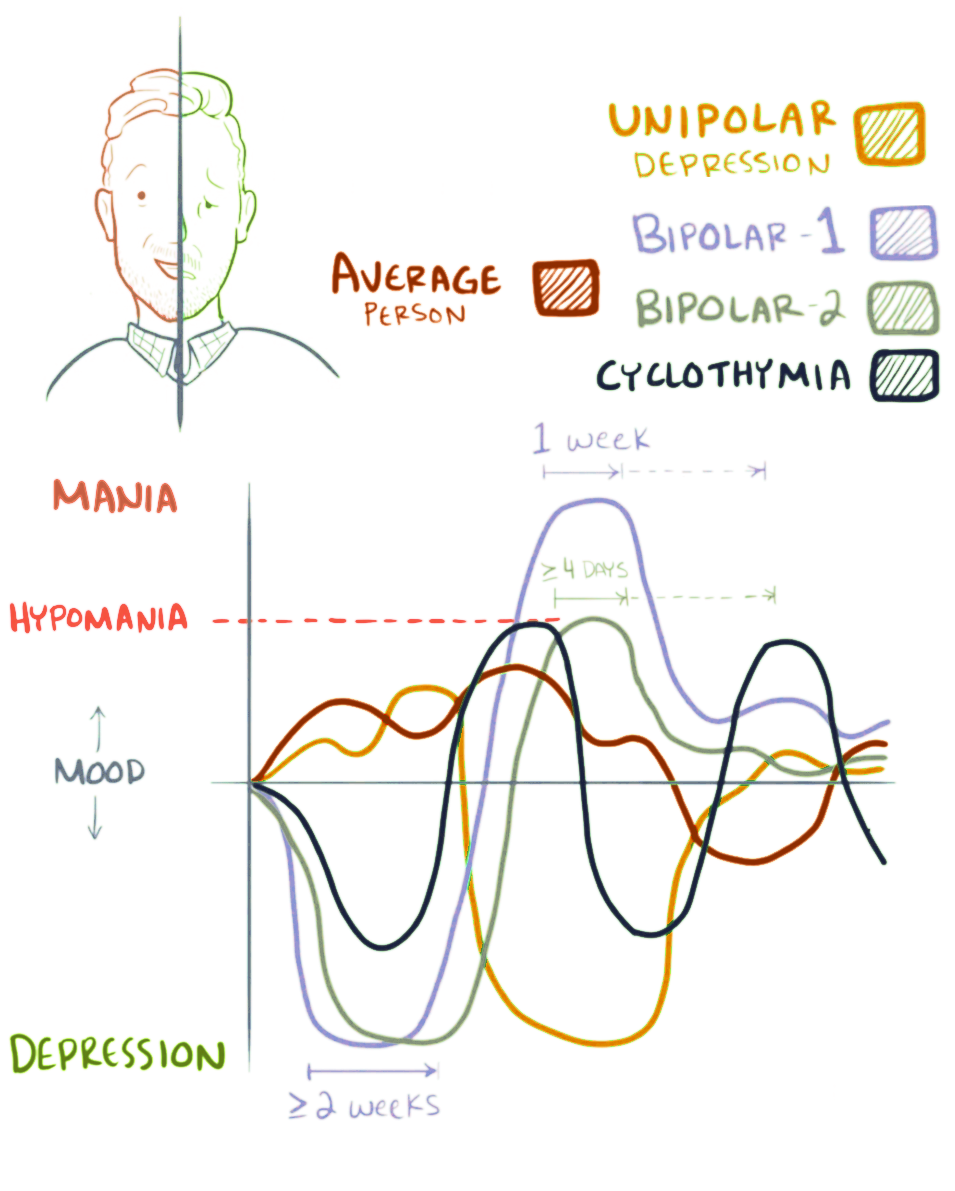
Mood swings can happen any time at any place, varying from the microscopic to the wild oscillations of bipolar disorder, so that a continuum can be traced from normal struggles around self-esteem, through cyclothymia, up to a depressive disease. However, most people's mood swings remain in the mild to moderate range of emotional ups and downs. The duration of bipolar mood swings also varies. They may last a few hours – ultrarapid – or extend over days – ultradian: clinicians maintain that only when four continuous days of hypomania, or seven days of mania, occur, is a diagnosis of bipolar disorder justified. In such cases, mood swings can extend over several days, even weeks; these episodes may consist of rapid alternation between feelings of depression and euphoria.
Characteristics
.jpg)
- Changing mood up and down without knowing the reason or external stimuli, in various degrees, duration and frequent, from high mood (happy, elevated, irritated) to low mood (sad, depressed).
- Sometimes it's mixed, a combination between manic and depression symptoms or similar with bittersweet experiences that last for a day.
- Mood swings in normal people appear like "climate changing" at mild to moderate degree. Thus, unless it happens at a moderate degree or more, some people need more high emotional intelligence to recognize their mood change.
- Mood swings in mental illness simply can be described by generalized complexity based on mood dynamics (patterns that characterize the oscillation) like intensity (mild, moderate, severe), duration (days, weeks, years), average mood and other features, such as:
- Mood swings in cyclothymia: Mood swings occur episodically and aperiodic within 2 years or more at a moderate degree and frequently. Characterized by coexisting with anxiety, persistence, rapid shift, intense, impulsive, heightened by sensitivity and reactivity to external stimuli.
- Mood swings in bipolar II: Episodic, hypomanic (severe degree) episodes occur continuously for 4 days, depression episodes for weeks, and sometimes erratic episodes at moderate degree in between episodes.
- Mood swings in bipolar I: Episodic, manic episodes (severe degree) occur continuously for 7 days, depressive episodes for weeks, and sometimes erratic episodes at moderate degree in between episodes. Alterations in bipolar I and II can be rapid cyclic, which means changes of mood happen 4 times or more within a year. Symptoms of manic and hypomanic episodes are similar between bipolar I and bipolar II, just different in degree of intensity.
- Mood swings in Premenstrual symptoms (PMS): Episodically at mild to severe degree in the menses period, occur gradually or rapidly, start 7 days before and decrease at the onset of menses. Characterized by angry outbursts, depression, anxiety, confusion, irritability or social withdrawal.
- Mood swings in borderline personality disorder (BPD): Mood changes erratically with episodic mood swings. Mood swings fluctuate in rapid shifts for hours or days, not persistent, sensitive and heightened negative mood (e.g. irritability) by external stimuli. Mood appears in the form of high intensity of irritability, anxiety, and moderate degree depression (characterized by hostility, anger towards self, loneliness, isolation, related with relationships, emptiness or boredom).
- Mood swings in attention deficit hyperactivity disorder (ADHD) : Mood changes erratically and mood swings occur episodically, sometimes several times a day in rapid shifts. Characterized by a mild to moderate degree of irritability, related to the environment, impulsiveness (impatience to get rewards). In adult ADHD, high mood appears as excitement and low mood appears as boredom.
- Mood swings in schizophrenia: Although schizophrenia has flat emotions, a study in 2021 based on ALS-SF measures, Margrethe Collier et al., found that the score pattern of schizophrenia is similar to bipolar I. The alteration being related to delusions or hallucinations, mood changes that occur internally may be difficult to express externally (blunt affect), and heightened by external stimuli.
- Mood swings in major depressive disorder (MDD): Various mood patterns, and mood changes erratically. Mood swings occur episodically and fluctuate in moderate high mood and severe low mood. Characterized by having high negative affect (bad mood) most of the time, particularly in melancholic subtype. And also positive diurnal variation mood (bad mood in the morning, good mood in the evening), sensitivity to negative stimulation and mixed symptoms in some people, etc.
- Mood swings in post-traumatic stress disorder (PTSD): Mood changes erratically with episodic mood swings rising in the period of recovery process. Characterized by temporary fluctuations in negative affect (anxiety, irritability, shame, guilt) and self-esteem, reactive to environmental reminders, difficulty to control emotions, hyperarousal symptoms, etc.
Causes
There can be many different causes for mood swings. Some mood swings can be classified as normal/healthy reactions, such as grief processing, adverse effects of substances/drugs, or a result of sleep deprivation. Mood swings can also be a sign of psychiatric illnesses in the absence of external triggers or stressors.
Changes in a person's energy level, sleep patterns, self-esteem, sexual function, concentration, drug or alcohol use can be signs of an oncoming mood disorder.
Other major causes of mood swings (besides bipolar disorder and major depression) include diseases/disorders which interfere with nervous system function. Attention deficit hyperactivity disorder (ADHD), epilepsy, and autism spectrum are three such examples.
The hyperactivity sometimes accompanied by inattentiveness, impulsiveness, and forgetfulness are cardinal symptoms associated with ADHD. As a result, ADHD is known to bring about usually short-lived (though sometimes dramatic) mood swings. The communication difficulties associated with autism, and the associated changes in neurochemistry, are also known to cause autistic fits (autistic mood swings). The seizures associated with epilepsy involve changes in the brain's electrical firing, and thus may also bring about striking and dramatic mood swings. If the mood swing is not associated with a mood disorder, treatments are harder to assign. Most commonly, however, mood swings are the result of dealing with stressful and/or unexpected situations in daily life.
Degenerative diseases of the human central nervous system such as Parkinson's disease, Alzheimer's disease, multiple sclerosis, and Huntington's disease may also produce mood swings. Celiac disease can also affect the nervous system and mood swings can appear.
Not eating on time can contribute, or eating too much sugar, can cause fluctuations in blood sugar, which can cause mood swings.
Brain chemistry
If a person has an abnormal level of one or several of certain neurotransmitters (NTs) in their brain, it may result in having mood swings or a mood disorder. Serotonin is one such neurotransmitter that is involved with sleep, moods, and emotional states. A slight imbalance of this NT could result in depression. Norepinephrine is a neurotransmitter that is involved with learning, memory, and physical arousal. Like serotonin, an imbalance of norepinephrine may also result in depression.
List of conditions known to cause mood swings
- Bipolar disorder or cyclothymia: Bipolar disorder is a mood disorder with characteristics of mood swings from hypomania or mania to depression. While cyclothymia is a lower degree of bipolar disorder. In 2022, ENIGMA Bipolar Disorder Working Group found that people with bipolar disorder have smaller subcortical volumes, lower cortical thickness and altered white matter integrity, which one of the functions is for emotion processing.
- Anabolic steroid abuse: Anabolic steroids are synthetic derivatives of testosterone. Used for treatment of male hypogonadism or delayed puberty, stimulating muscle growth, as well as treating impotence, and AIDS. Studies found that overusing anabolic-androgenic steroids can cause mood swings, impulsive, and aggressive behavior. This behavior is associated with decreased emotion regulation systems such as the frontal cortex, temporal, parietal, and occipital. Studies also found that using anabolic-androgenic steroids can cause neuronal changes and death in the hypothalamic-pituitary-gonadal axis, thus symptoms of sleep and mood disorder occur.
- Attention deficit hyperactivity disorder (ADHD): ADHD is known as a disorder with difficulty keeping control of attention, hyperactivity, frequently changing focus and losing interest and also hyperfocus when doing something interesting or pleasurable tasks. Mood dysregulation may be caused by distraction when absorbed in pleasurable tasks. Another contribution to mood swings is lower brain activity in the prefrontal cortex (PFC), orbitofrontal cortex (OFC), increased size of the hippocampus and decreasing size of the amygdala in some people. Abnormalities in these parts of the brain can cause disturbance in attention, motivation, mood, and behavioral inhibition.
- Autism or other pervasive developmental disorder: Autism is a neurological and development disorder with symptoms such as lack of social skills, restricted repetitive behaviors, hyper- or hyporeactivity to sensory input, etc. Abnormal sensory processing is one of the reasons for mood swings in autism. Studies in 2015 found that in autism, the brain becomes overactivated in limbic areas, primary sensory cortices, and orbitofrontal cortex (OFC), which functions for emotional and sensory processing. Studies found too, that the brain in autism has decreased connectivity between the amygdala and ventrolateral prefrontal cortex, increased amygdala reactivity, and reduced prefrontal response which contribute to emotion dysregulation.
- Borderline personality disorder: It has been theorized that borderline personality disorder comes from lack of ability to endure, learn and overcome negative events. People with BPD commonly have difficulty in relationships, which is associated with a tendency to anger-outbursts, judgment or expecting how others behave. Emotion dysregulation may be as a result of lack of interpersonal skills such as knowledge about emotions and how to control them, especially with intense emotions. Mostly, people with BPD use maladaptive emotion regulations like self-criticism, thought suppression, avoidance, and alcohol, which may trigger more mood disruption.
- Dementia, including Alzheimer's disease, Parkinson's disease and Huntington's disease: Dementia is known as a decreasing brain function disease that affects older people. In Alzheimer's disease, mood dysregulation can be caused by decreasing function of emotional regulation, salience, cholinergic, GABAergic, and dopaminergic function. Parkinson's disease can generate mood swings and mood dysregulation such as depression, low self worth, shame and worry about the future caused by cognitive and physical problems. And in Huntington's disease, common mood swings occur as a result of psychosocial, cognitive deficits, neuropsychiatric and biological factors.
- Dopamine dysregulation syndrome: Dopamine dysregulation syndrome is an effect of abusing Parkinson's disease drugs to decrease motor and non-motor syndromes, which result in mania, violent behavior, and depression when withdrawal. Mood dysregulation from dopamine dysregulation syndrome occurs as a result of changes in the neurotransmitter systems such as disturbance in the dopaminergic reward system.
- Epilepsy: Epilepsy is an abnormal brain activity disease marked with seizures. Seizures occur because hypersynchronous and hyperexcitability of neurons, in other words, too much neural activity and excitability at the same time. Mood swings commonly appear before, during, after a seizure and during treatment. Studies found that seizures contribute to decreased function of emotions and mood processing as a consequence of abnormal neurogenesis and damaged neuron connections in the hippocampus and amygdala. Experiencing a seizure can cause mood swings caused by depression, anxiety, or worry about life being threatened. Another source of mood change comes from anticonvulsant drugs for epilepsy, like phenobarbital for increasing brain inhibitors or antiglutamatergic for decreasing brain activity which generates depression, cognitive dysfunction, sedation or mood lability.
- Hypothyroidism or hyperthyroidism: Hypo- and hyperthyroidism is an endocrine disease caused by low or excessive production of thyroid hormone. Abnormal thyroid hormone can affect mood, although the correlation between thyroid hormone and mood disorder is still not known.
- Intermittent explosive disorder: Intermittent explosive disorder is frequent rage that occurs spontaneous, uncontrolled, unproportioned and not persistent. This short duration of alternate mood occurs in the form of aggression verbally or physically towards people or property, sometimes followed by regret, shame and guilt after an act which might generate depression symptoms. Impulsive behavior in IED can be associated with hyperactivity in brain regions for regulating and emotional expression, such as the amygdala, insula, and orbitofrontal area.
- Menopause: Menopause in women commonly happens at age 52. One factor that causes mood disturbance is fluctuation of milieu hormones including sex steroids, growth hormones, stress hormones, etc.
- Major depression: Major depression is a disorder with symptoms such as feelings of sadness, loss of interest, emptiness and, for some people, mixed with irritability, mental overactivity, and behavioral overactivity. Development of irritability or anger may result from personality traits like narcissistic or coping strategies to avoid looking sad, worthless, or frustrated.
- Obsessive Compulsive Disorder: Obsessive compulsive disorder is marked with obsessions and compulsions about something that causes life distress and dysfunction. Alteration of mood and feeling discomfort such as shame, guilt or anxiety may occur caused by intrusive thoughts, fear, urge, and fantasy.
- Pathological demand avoidance
- Post traumatic stress disorder: Post-traumatic stress disorder is a disorder which is associated with frequently being disturbed by flashback memories and being haunted by feelings of fear and horror in the past. This contributes to the alteration of mood that occurs after a traumatic event happens, such as depression, outbursts of anger, self-destructive behaviors, and feelings of shame.
- Pregnancy: Women commonly experience mood swings during the pregnancy and the postpartum period. Hormone changes, stress and worry may be the reasons for changes of mood.
- Premenstrual syndrome: Women experience premenstrual syndrome like physical pains, mood swings, irritability or depression in a few days until 2 weeks of their period with different intensity. Furthermore, 4% to 14% of women experience severe PMS or premenstrual dysphoric disorder (PMDD), which can decrease life quality. Despite the reason mood dysregulation in PMS is still unclear, Studies found that mood dysregulation is related with drop in progesterone concentrations, disruption of serotonergic transmission, GABAergic, stress, body-mass index, and traumatic events.
- Schizoaffective disorder: Mood swings in schizoaffective disorder are caused by mixed symptoms between schizophrenia and mood disorder.
- Schizophrenia: Schizophrenia is a disorder with symptoms of delusions, hallucinations, mood dysregulation, etc. Mood changes may be generated from hallucinations and delusions which cause anger, paranoia, and shame.
- Seasonal affective disorder: Seasonal affective disorder is depression which occurs during some seasons (commonly in winter), then manic or hypomanic episodes in the other season and that happens every year. These fluctuating moods appear in the form of anger attacks with depression and occur from season to season, also known as seasonal mood swings.
- XXYY syndrome: XXYY syndrome is a rare type of sex chromosome aneuploidies (SCAs). XXYY syndrome contributes to abnormal neurodevelopment and psychiatric diseases which can cause mood disorders.
Treatment
It's part of human nature's mood going up and down caused by various factors. Individual strength, coping skill or adaptation ability, social support or another recovery model might determine whether mood swings will create disruption in life or not.
Cognitive behavioral therapy recommends using emotional dampeners to break the self-reinforcing tendencies of either manic or depressive mood swings. Exercise, treats, seeking out small (and easily attainable) triumphs, and using vicarious distractions like reading or watching TV, are among the techniques found to be regularly used by people in breaking depressive swings. Learning to bring oneself down from grandiose states of mind, or up from exaggerated shame states, is part of taking a proactive approach to managing one's own moods and varying sense of self-esteem.
Behavioral activation is a component of CBT that can break the cycle (depression leads to inactivity, inactivity leads to depression). This may rely on individual strengths to "cold start" the reward system.
Dialectical behavior therapy (DBT): Another manifestation of mood swing is irritability, which can lead to elation, anger or aggression. DBT has a lot of coping skills that can be used for emotion dysregulation, such as mindfulness with the "wise mind" or emotion regulation with opposite action.
Emotion regulation therapy (ERT) has a package of mindful emotion regulation skills (e.g., attention regulation skills, metacognitive regulation skills, etc.) that can be handy to have when mood swings happen.
Interpersonal and social rhythm therapy can be used to regulate life rhythm when mood swings happen frequently and disrupt the rhythm of life. Episodes of mood disorder often liberate people from daily routines by making a mess of sleep schedules, social interaction, or work and causing irregular circadian rhythms.
Acceptance and commitment therapy (ACT) has a function to increase psychological flexibility by learning to assess present experience or be mindful, accept everything internally or externally, commit action to move toward personal recovery, etc.
References
References
- Peter Salovey et al, ''Emotional Intelligence'' (2004) p. 1974
- (19 April 2013). "BBC Science – When does your mental health become a problem?". BBC Science.
- (2016-01-15). "Electronic self-monitoring of mood using IT platforms in adult patients with bipolar disorder: A systematic review of the validity and evidence". BMC Psychiatry.
- (2008). "Affective instability: Measuring a core feature of borderline personality disorder with ecological momentary assessment.". Journal of Abnormal Psychology.
- (1989). "The affective lability scales: Development, reliability, and validity". Journal of Clinical Psychology.
- (2018). "Assessment of Affect Lability: Psychometric Properties of the ALS-18". Frontiers in Psychology.
- (1975). "Affect, mood, emotion, and feeling: semantic considerations". American Journal of Psychiatry.
- (2015). "Mood instability: significance, definition and measurement". The British Journal of Psychiatry: The Journal of Mental Science.
- (2009). "The conceptualization of terms: 'Mood' and 'affect' in academic trainees of mental health". Indian Journal of Psychiatry.
- "APA Dictionary of Psychology".
- (2020). "Emotional Lability". Springer International Publishing.
- Kahmann, Daan (2022) [https://fse.studenttheses.ub.rug.nl/28443/1/Thesis_DaanKahmann_s3986314.pdf Emotion dynamics in Tibetan monks and healthy Westerners]. Bachelor's Thesis, Artificial Intelligence.university of groningen."Emotions can be very turbulent and are constantly changing."
- Klinkman, Michael S.. (2007). "A whole new world: complexity theory and mood variability in mental disorders". Primary Care Companion to the Journal of Clinical Psychiatry.
- (2015-11-27). "The Concept of Euthymia". Psychotherapy and Psychosomatics.
- "APA Dictionary of Psychology".
- (2007). "Dynamic patterns in mood among newly diagnosed patients with major depressive episode or panic disorder and normal controls". Primary Care Companion to the Journal of Clinical Psychiatry.
- (1991). "Mood variability: a study of four groups". American Journal of Psychiatry.
- (2023-04-01). "Origins and consequences of mood flexibility: a computational perspective". Neuroscience & Biobehavioral Reviews.
- (2016-01-01). "Mood as Representation of Momentum". Trends in Cognitive Sciences.
- (2002). "The soft bipolar spectrum redefined: focus on the cyclothymic, anxious-sensitive, impulse-dyscontrol, and binge-eating connection in bipolar II and related conditions". The Psychiatric Clinics of North America.
- (2004-03-01). "Mood swings in patients with anxiety disorders compared with normal controls". Journal of Affective Disorders.
- Sigmund Freud, ''Civilization, Society and Religion'' (PFL 12) p. 164
- Otto Fenichel, ''The Psychoanalytic Theory of Neurosis'' (1946) p. 406
- Daniel Goleman. (1995). "Emotional Intelligence: Why it Can Matter More Than IQ". Bloomsbury Publishing PLC.
- S, Nassir Ghaemi, ''Mood Disorder'' (2007) p. 243-4
- Hockenbury, Don and Sandra. (2011). "Discovering Psychology Fifth Edition". Worth Publishers.
- {{Citation. Lischetzke. Tanja. (2014). Springer Netherlands
- CAMH Bipolar Clinic Staff(2013)."[https://www.camh.ca/-/media/files/guides-and-publications/bipolar-guide-en.pdf Bipolar disorder:an information guide]".camph:Centre for Addiction and Mental Health.www.camh.ca."Everyone has ups and downs in mood. Feeling happy, sad and angry is normal...Their moods may have nothing to do with things going on in their lives."
- (2021-03-29). "Not Only Mania or Depression: Mixed States/Mixed Features in Paediatric Bipolar Disorders". Brain Sciences.
- (2020). "The pursuit of euthymia". World Psychiatry.
- (2001). "Can people feel happy and sad at the same time?". Journal of Personality and Social Psychology.
- (2021). "Meaningful endings and mixed emotions: The double-edged sword of reminiscence on good times". Emotion.
- (1980). "Mood variability and the psychosocial adjustment of adolescents". Journal of Youth and Adolescence.
- Okoronkwo, Valentine. (2022-11-29). "39 Best Emotional Intelligence Statistics To Know In 2022".
- Wilhelm, Peter & Schoebi, Dominik. (2007). [https://www.researchgate.net/profile/Dominik-Schoebi/publication/225274249_Assessing_Mood_in_Daily_Life_Structural_Validity_Sensitivity_to_Change_and_Reliability_of_a_Short-Scale_to_Measure_Three_Basic_Dimensions_of_Mood/links/559695e108ae793d137c5236/Assessing-Mood-in-Daily-Life-Structural-Validity-Sensitivity-to-Change-and-Reliability-of-a-Short-Scale-to-Measure-Three-Basic-Dimensions-of-Mood.pdf Assessing Mood in Daily Life Structural Validity, Sensitivity to Change, and Reliability of a Short-Scale to Measure Three Basic Dimensions of Mood.] [https://www.researchgate.net/journal/European-Journal-of-Psychological-Assessment-2151-2426?_tp=eyJjb250ZXh0Ijp7ImZpcnN0UGFnZSI6InB1YmxpY2F0aW9uIiwicGFnZSI6InB1YmxpY2F0aW9uIn19 European Journal of Psychological Assessment]. 23. 258-. [http://dx.doi.org/10.1027/1015-5759.23.4.258 10.1027/1015-5759.23.4.258]."Moods can be consciously experienced as soon as they gain the focus of our attention, and are then characterized by the predominance of certain subjective feelings."
- (2020). "Psychiatric Illnesses as Disorders of Network Dynamics". Biological Psychiatry: Cognitive Neuroscience and Neuroimaging.
- van Genugten, Claire. (2022). [https://www.researchgate.net/publication/365853916_Measurement_innovation_studies_on_smartphone-based_ecological_momentary_assessment_in_depression Measurement innovation: studies on smartphone-based ecological momentary assessment in depression]. VU Research Portal.ISBN 978-94-93270-96-1."Mood dynamics are the patterns that characterize fluctuations in a person's mood [64]. Mood dynamics are often operationalized by a combination of "mood variability" and "emotional inertia" [65,66].
- (2022-03-17). "A Data-Driven Clustering Method for Discovering Profiles in the Dynamics of Major Depressive Disorder Using a Smartphone-Based Ecological Momentary Assessment of Mood". Frontiers in Psychiatry.
- Miklowitz, D. J., Gitlin, M. J. (2015). Clinician's Guide to Bipolar Disorder. Amerika Serikat: Guilford Publications."''The mood swings of individuals with cyclothymia occur most of the time (in the DSM-5 definition, no more than 2 consecutive months have been symptom-free within a 2-year period) and never exhibit the number of symptoms or the length of ..."''
- Rhoads, J. (2021). Clinical Consult to Psychiatric Mental Health Management for Nurse Practitioners. Amerika Serikat: Springer Publishing Company."''Mood changes in cyclothymic disorder can be abrupt and unpredictable, of short duration, and with infrequent euthymic episodes."''
- (2017). "Diagnosis and Treatment of Cyclothymia: The "Primacy" of Temperament". Current Neuropharmacology.
- (2016-01-26). "Applications of time-series analysis to mood fluctuations in bipolar disorder to promote treatment innovation: a case series". Translational Psychiatry.
- (2017). "Depression and Mania in Bipolar Disorder". Current Neuropharmacology.
- (1995). "Evidence of chaotic mood variation in bipolar disorder". Archives of General Psychiatry.
- Last, C. G. (2009). When Someone You Love Is Bipolar: Help and Support for You and Your Partner. Ukraina: Guilford Publications."''Research indicates that bipolar II depressions persist for longer periods of time than bipolar I depressions, nearly twice as long (1 year versus 6 months)."''
- (2013). "Recovery from multiple episodes of bipolar I depression". The Journal of Clinical Psychiatry.
- Fink, C., Kraynak, J. (2011). Bipolar Disorder For Dummies. Amerika Serikat: Wiley."''Rapid cycling isn't a separate type of bipolar disorder, but your doctor may use the label to describe a particular subtype of Bipolar I or II. To qualify as a rapid-cycling sufferer, you must experience the following: You must ..."''
- Clinical Handbook for the Management of Mood Disorders. (2013). Amerika Serikat: Cambridge University Press.''"While both mania and hypomania are phenomenologically similar in that they occur as discrete episodes ... "''
- admin. "PMS".
- (2011). "Mood Instability in Women With Premenstrual Syndrome". Journal of Obstetrics and Gynaecology Canada.
- (2021-05-28). "Premenstrual syndrome, a common but underrated entity: review of the clinical literature". Journal of the Turkish German Gynecological Association.
- Southward, Matt & Semcho, Stephen & Stumpp, Nicole & MacLean, Destiney & Sauer, Shannon. (2020). [https://www.researchgate.net/publication/346316997_A_Day_in_the_Life_of_Borderline_Personality_Disorder_A_Preliminary_Analysis_of_Within-Day_Emotion_Generation_and_Regulation A Day in the Life of Borderline Personality Disorder: A Preliminary Analysis of Within-Day Emotion Generation and Regulation]. Journal of Psychopathology and Behavioral Assessment. 42. 702-713. [https://link.springer.com/article/10.1007/s10862-020-09836-1 10.1007/s10862-020-09836-1]."[https://www.researchgate.net/figure/Emotional-Intensity-Within-and-Across-Days-for-Each-Participant_fig1_346316997 Graph]"
- (2013). "Components of emotion dysregulation in borderline personality disorder: a review". Current Psychiatry Reports.
- Paris, Joel. (2005-06-07). "Borderline personality disorder". CMAJ: Canadian Medical Association Journal.
- (2021). "Don't Make Me Angry: Frustration-Induced Anger and Its Link to Aggression in Women With Borderline Personality Disorder". Frontiers in Psychiatry.
- Reich Brad. (2012).[https://www.borderlinepersonalitydisorder.org/wp-content/uploads/2012/07/AffectiveInstabilityNEABPD12-30-12.pdf Affective Instability in Borderline Personality Disorder].McLean Hospital."Graph"
- (2002). "Characterizing Affective Instability in Borderline Personality Disorder". American Journal of Psychiatry.
- (2013-10-29). "Depression and borderline personality disorder". Medical Journal of Australia.
- (2015-04-01). "Quality and severity of depression in borderline personality disorder: A systematic review and meta-analysis". Clinical Psychology Review.
- FW, Reimherr & Marchant, Barrie & Olsen, John & C, Halls & Kondo, Douglas & ED, Lyon & Robison, Reid. (2010). [http://repository.cshl.edu/26296/1/Lyon%20GJ%20Journal%20of%20ADHD%202010.pdf Emotional dysregulation as a core feature of adult ADHD: Its relationship with clinical variables and treatment response in two methylphenidate trials]. Journal of ADHD and Related Disorders. 1. 53-64. "[https://www.researchgate.net/figure/EMA-ratings-of-irritability-EMA-ecological-momentary-assessment-ADHD-EDr_fig1_224911003 Graph]"
- (2013-05-01). "Emotional lability, comorbidity and impairment in adults with attention-deficit hyperactivity disorder". Journal of Affective Disorders.
- (2010). "A pilot study of ecological momentary assessment of emotion dysregulation in children". Journal of ADHD & Related Disorder.
- (2006). "Behavioral models of impulsivity in relation to ADHD: translation between clinical and preclinical studies". Clinical Psychology Review.
- Ciompi, Luc. (2015). "The key role of emotions in the schizophrenia puzzle". Schizophrenia Bulletin.
- (2021). "Characterization of affective lability across subgroups of psychosis spectrum disorders". International Journal of Bipolar Disorders.
- (2011). "Affective dysregulation and reality distortion: a 10-year prospective study of their association and clinical relevance". Schizophrenia Bulletin.
- (2015). "Instruments measuring blunted affect in schizophrenia: a systematic review". PLOS ONE.
- (2009). "Life events and high-trait reactivity together predict psychotic symptom increases in schizophrenia". Schizophrenia Bulletin.
- (2012). "The everyday emotional experience of adults with major depressive disorder: Examining emotional instability, inertia, and reactivity". Journal of Abnormal Psychology.
- (2017). "Moods in Clinical Depression Are More Unstable than Severe Normal Sadness". Frontiers in Psychiatry.
- (2022-04-04). "Emotional blunting in patients with depression. Part I: clinical characteristics". Annals of General Psychiatry.
- (2019-09-30). "Emotion Dynamics Concurrently and Prospectively Predict Mood Psychopathology". Journal of Affective Disorders.
- Murray, Greg. (2007-09-01). "Diurnal mood variation in depression: A signal of disturbed circadian function?". Journal of Affective Disorders.
- (1994-09-01). "Anhedonia and blunted affect in major depressive disorder". Comprehensive Psychiatry.
- (2015-05-01). "Depressive mixed states: A reappraisal of Koukopoulos׳criteria". Journal of Affective Disorders.
- (2007). "The effects of childhood trauma on daily mood lability and comorbid psychopathology in bulimia nervosa". Journal of Traumatic Stress.
- (2013). "The Role of Emotion in PTSD: Two Preliminary Studies". Behavioural and Cognitive Psychotherapy.
- (2020). "The short-term dynamics of posttraumatic stress disorder symptoms during the acute posttrauma period". Depression and Anxiety.
- Shalev, Arieh Y.. (2009). "Posttraumatic stress disorder and stress-related disorders". The Psychiatric Clinics of North America.
- (2008-12-04). "Posttraumatic Stress Symptoms and Emotion Experience in Women: Emotion Occurrence, Intensity, and Variability in the Natural Environment". Journal of Psychological Trauma.
- (2007-10-04). "Response Variation following Trauma: A Translational Neuroscience Approach to Understanding PTSD". Neuron.
- (2018). "Emotional lability and affective synchrony in posttraumatic stress disorder pathology". Journal of Anxiety Disorders.
- [http://www.webmd.com/bipolar-disorder/guide/mood-swings "Bipolar Mood Swings, Stabilizers, Triggers, and Mania."] ''WebMD''. WebMD, 3 May 0000. Web. 29 February 2012.
- "epilepsymatters.com – Home of the Canadian Epilepsy Alliance". Epilepsymatters.com.
- "Autism spectrum disorder". Nlm.nih.gov.
- "Chat for Adults with HFA and Aspergers: Mood Swings in Adults on the Autism Spectrum". Adultaspergerschat.com.
- Donna Williams. "Donna Williams: Autism, Puberty and Possibility of Seizures". Donnawilliams.net.
- Stern RA. (1996). "Assessment of Mood States in Neurodegenerative Disease: Methodological Issues and Diagnostic Recommendations". Seminars in Clinical Neuropsychiatry.
- Angela Haupt. "Food and Mood: 6 Ways Your Diet Affects How You Feel".
- (26 November 2013). "Can food affect your mood? – CNN.com". CNN.
- "''Neurobiology of Mood Disorders.''". Turner-white.com.
- [http://www.integrativepsychiatry.net/neurotransmitter.html] {{webarchive. link. (4 August 2012)
- (December 2019). "Peripheral blood metabolome predicts mood change-related activity in mouse model of bipolar disorder". Molecular Brain.
- (2009). "Early Mood Swings as Symptoms of the Bipolar Prodrome: Preliminary Results of a Retrospective Analysis". Psychopathology.
- {{cite encyclopedia. (2023). Elsevier
- (2022). "What we learn about bipolar disorder from large-scale neuroimaging: Findings and future directions from the ENIGMA Bipolar Disorder Working Group". Human Brain Mapping.
- (2023). "StatPearls". StatPearls Publishing.
- {{cite encyclopedia. (2003). Elsevier
- Su, Tung-Ping. (1993-06-02). "Neuropsychiatric Effects of Anabolic Steroids in Male Normal Volunteers". JAMA: The Journal of the American Medical Association.
- (1988). "Low Dose Testosterone Treatment of Delayed Growth". Pediatric Research.
- (2000-03-01). "Anabolic steroids". Best Practice & Research Clinical Endocrinology & Metabolism.
- (2001-03-01). "The use of anabolic agents in HIV disease". International Journal of STD & AIDS.
- (2015). "Anabolic-androgenic steroid use and psychopathology in athletes. A systematic review". Current Neuropharmacology.
- (2019). "Structural brain characteristics of anabolic-androgenic steroid dependence in men". Addiction.
- (2020). "NEUROLOGICAL CONSEQUENCES OF ABUSIVE USE OF ANABOLIC-ANDROGENIC STEROIDS". Brazilian Journal of Surgery and Clinical Research.
- (2023-01-10). "ADHD in the DSM-5-TR: What has changed and what has not". Frontiers in Psychiatry.
- (2021-02-01). "Hyperfocus: the forgotten frontier of attention". Psychological Research.
- (2022-08-12). "Can ADHD Cause Mood Swings?".
- (2019-07-03). "Do Neuropsychological Deficits Predict Anger Dysregulation in Adults with ADHD?". International Journal of Forensic Mental Health.
- Arnsten, Amy F.T.. (2009). "ADHD and the Prefrontal Cortex". The Journal of Pediatrics.
- (2002-12-20). "Orbitofrontal cortex dysfunction in attention-deficit hyperactivity disorder revealed by reversal and extinction tasks". NeuroReport.
- (2008). "Hippocampus and amygdala morphology in adults with attention-deficit hyperactivity disorder". Journal of Psychiatry & Neuroscience.
- Arnsten, Amy P.T.. (May 1, 2009). "The Emerging Neurobiology of Attention Deficit Hyperactivity Disorder: The Key Role of the Prefrontal Association Cortex". Journal of Pediatrics.
- (2020). "Autism spectrum disorder: definition, epidemiology, causes, and clinical evaluation". Translational Pediatrics.
- (2022). "In Our Own Words: The Complex Sensory Experiences of Autistic Adults". Journal of Autism and Developmental Disorders.
- (2015). "Neurobiology of Sensory Overresponsivity in Youth With Autism Spectrum Disorders". JAMA Psychiatry.
- (2019). "Reduced Amygdala–Prefrontal Functional Connectivity in Children With Autism Spectrum Disorder and Co-occurring Disruptive Behavior". Biological Psychiatry: Cognitive Neuroscience and Neuroimaging.
- (2017). "What we have changed our minds about: Part 1. Borderline personality disorder as a limitation of resilience". Borderline Personality Disorder and Emotion Dysregulation.
- (2022-10-25). "Borderline Personality Disorder". StatPearls Publishing.
- (2019). "Too Much Too Soon?: Borderline Personality Disorder Symptoms and Romantic Relationships in Adolescent Girls". Journal of Abnormal Child Psychology.
- (2013-11-06). "Social Judgement in Borderline Personality Disorder". PLOS ONE.
- (2018). "Self and informant report across the borderline personality disorder spectrum". Personality Disorders.
- (2013). "Components of emotion dysregulation in borderline personality disorder: a review". Current Psychiatry Reports.
- (2021-03-17). "Emotion regulation, mindfulness, and self-compassion among patients with borderline personality disorder, compared to healthy control subjects". PLOS ONE.
- (2017). "Emotional Processes in Borderline Personality Disorder: An Update for Clinical Practice". Journal of Psychotherapy Integration.
- (2021). "Attachment style, thought suppression, self-compassion and depression: Testing a serial mediation model". PLOS ONE.
- (2017). "Neuropsychiatric signs and symptoms of Alzheimer's disease: New treatment paradigms". Alzheimer's & Dementia: Translational Research & Clinical Interventions.
- Sjödahl Hammarlund C, Westergren A, Åström I, Edberg AK, Hagell P. (2018). "The Impact of Living with Parkinson's Disease: Balancing within a Web of Needs and Demands". Parkinsons Dis.
- Jauhar Sameer, Ritchie Stuart. (2010). "Psychiatric and behavioural manifestations of Huntington's disease". Advances in Psychiatric Treatment.
- (2020-08-01). "Dopamine and reward hypersensitivity in Parkinson's disease with impulse control disorder". Brain.
- (2011). "Dopamine dysregulation syndrome and deep brain stimulation of the subthalamic nucleus in Parkinson's disease". Neurology Research International.
- (2022-04-02). "Epilepsy".
- Heilman, Kenneth M.. (2021). "Disorders of Emotion in Neurologic Disease". Elsevier.
- Salpekar, Jay. (2016). "Mood Disorders in Epilepsy". FOCUS.
- (2011-12-14). "The Link between Thyroid Function and Depression". Journal of Thyroid Research.
- (2021). "Thyroid Function and Mood Disorders: A Mendelian Randomization Study". Thyroid.
- Coccaro, Emil F.. (2018). "DSM-5 intermittent explosive disorder: Relationship with Disruptive Mood Dysregulation Disorder". Comprehensive Psychiatry.
- (2020-06-23). "Intermittent explosive disorder subtypes in the general population: association with comorbidity, impairment and suicidality". Epidemiology and Psychiatric Sciences.
- (October 2008). "Relation of Guilt, Shame, Behavioral and Characterological Self-Blame to Depressive Symptoms in Adolescents Over Time". Journal of Social and Clinical Psychology.
- (2020-05-20). "Gray Matter Deficits and Dysfunction in the Insula Among Individuals With Intermittent Explosive Disorder". Frontiers in Psychiatry.
- Sengupta, A.. (January 2003). "The emergence of the menopause in India". Climacteric.
- (2006-04-01). "Associations of Hormones and Menopausal Status With Depressed Mood in Women With No History of Depression". Archives of General Psychiatry.
- Hankinson SE, Tworoger SS. (2011). "Assessment of the hormonal milieu". IARC Sci Publ.
- (2019-10-01). "Cognition, Mood and Sleep in Menopausal Transition: The Role of Menopause Hormone Therapy". Medicina (Kaunas, Lithuania).
- (2021-02-13). "Major Depressive Disorder: Advances in Neuroscience Research and Translational Applications". Neuroscience Bulletin.
- Benazzi, Franco. (2006-06-30). "Various forms of depression". Dialogues in Clinical Neuroscience.
- Busch, Fredric N.. (July 2009). "Anger and depression". Advances in Psychiatric Treatment.
- Soomro, G. Mustafa. (2012-01-18). "Obsessive compulsive disorder". BMJ Clinical Evidence.
- (2018). "Suicidality in People With Obsessive-Compulsive Symptoms or Personality Traits". Frontiers in Psychiatry.
- Mason, Katherine A.. (2022). "Blenders, Hammers, and Knives: Postpartum Intrusive Thoughts and Unthinkable Motherhood". Anthropology and Humanism.
- (2023). "Posttraumatic Stress Disorder". StatPearls Publishing.
- van der Kolk, B.. (2000). "Posttraumatic stress disorder and the nature of trauma". Dialogues in Clinical Neuroscience.
- (2000). "An Update on Mood and Anxiety Disorders During Pregnancy and the Postpartum Period". Primary Care Companion to the Journal of Clinical Psychiatry.
- Theisler, Charles. (2022). "Adjuvant Medical Care". CRC Press.
- (2015-08-25). "Premenstrual syndrome". BMJ Clinical Evidence.
- (2008-04-05). "Premenstrual syndrome". Lancet.
- (2012). "The Relationship between Severity of Premenstrual Syndrome and Psychiatric Symptoms". Iranian Journal of Psychiatry.
- (2023). "Schizoaffective Disorder". StatPearls Publishing.
- (2014). "Schizophrenia: overview and treatment options". P & T: A Peer-Reviewed Journal for Formulary Management.
- (2016-07-15). "Depression and Schizophrenia: Cause, Consequence or Trans-diagnostic Issue?". Schizophrenia Bulletin.
- (2021-09-01). "Anger Experience and Anger Expression Through Drawing in Schizophrenia: An fNIRS Study". Frontiers in Psychology.
- (2015-07-23). "Aggression and Impulsivity in Schizophrenia". Psychiatric Times.
- (2016). "Paranoid individuals with schizophrenia show greater social cognitive bias and worse social functioning than non-paranoid individuals with schizophrenia". Schizophrenia Research: Cognition.
- (2017-01-19). "The role of shame in people with a diagnosis of schizophrenia". British Journal of Clinical Psychology.
- Foster, P. M. (2017). The Real Guide to Teenage Depression: Handling Teen Depression A book about what matters most for teen boys and teen girls. Amerika Serikat: PatriceMFoster.com.''"Seasonal depression, or seasonal affective disorder, is a type of depression that affects a person every year around the same time. It is almost always observed during the winter months, particularly in places where it gets dark and ..."''
- (2005-07-08). "Anger attacks in seasonal affective disorder". The International Journal of Neuropsychopharmacology.
- Basco, M. R. (2015). The Bipolar Workbook: Tools for Controlling Your Mood Swings. Amerika Serikat: Guilford Publications."''Seasonal Mood Swings Sometimes mood swings occur at predictable times. Common examples are depressions that occur during the winter months and manias that occur in the spring. In this case the shifting seasons can serve as triggers for ..."''
- (2023-01-11). "Case report: Bipolar disorder in 48,XXYY syndrome". Frontiers in Psychiatry.
- (2008-06-15). "A new look at XXYY syndrome: medical and psychological features". American Journal of Medical Genetics. Part A.
- (2023). "Mood Disorder". StatPearls Publishing.
- (2006). "Greater strengths of character and recovery from illness". The Journal of Positive Psychology.
- Crowe, Marie. (2017). "Recovery and mood disorders". Journal of Psychiatric and Mental Health Nursing.
- (2023-02-27). "Self-Compassion Mediates the Impact of Family Support on Clinical and Personal Recovery Among People with Mental Illness". Mindfulness.
- (2023-06-16). "Exploring Personal Recovery in Schizophrenia: The Role of Mentalization". Journal of Clinical Medicine.
- (2021-06-18). "A qualitative study exploring personal recovery meaning and the potential influence of clinical recovery status on this meaning 20 years after a first episode psychosis". Social Psychiatry and Psychiatric Epidemiology.
- (1999). "Overcoming Depression". Basic Books.
- Goleman, pp. 73-4
- Terence Real. (1997). "I Don't Want to Talk About It". Newleaf.
- (2009). "The "inactivity trap"". General Hospital Psychiatry.
- (2010). "Behavioral activation interventions for well-being: A meta-analysis". The Journal of Positive Psychology.
- (2016). "The Status of Irritability in Psychiatry: A Conceptual and Quantitative Review". Journal of the American Academy of Child and Adolescent Psychiatry.
- (2017). "Combining emotion regulation and mindfulness skills for preventing depression relapse: a randomized-controlled study". Borderline Personality Disorder and Emotion Dysregulation.
- (2014). "Dialectical behavior therapy for the treatment of anger and aggressive behavior: A review". Aggression and Violent Behavior.
- (2023-02-05). "A systematic review on the effectiveness of dialectical behavior therapy for improving mood symptoms in bipolar disorders". International Journal of Bipolar Disorders.
- (2020). "Emotion Regulation Therapy and Its Potential Role in the Treatment of Chronic Stress-Related Pathology Across Disorders". Chronic Stress (Thousand Oaks, Calif.).
- (2000-09-15). "Interpersonal and social rhythm therapy: managing the chaos of bipolar disorder". Biological Psychiatry.
- (2012). "Life events and social rhythms in bipolar spectrum disorders: an examination of social rhythm sensitivity". Journal of Affective Disorders.
- (2011). "Social rhythms and vulnerability to bipolar disorder". Journal of Affective Disorders.
- (2021). "Maintaining Daily Routines to Stabilize Mood: Theory, Data, and Potential Intervention for Circadian Consequences of COVID-19". Canadian Journal of Psychiatry. Revue Canadienne de Psychiatrie.
- (2020). "Acceptance and Commitment Therapy (ACT) to reduce depression: A systematic review and meta-analysis". Journal of Affective Disorders.
This article was imported from Wikipedia and is available under the Creative Commons Attribution-ShareAlike 4.0 License. Content has been adapted to SurfDoc format. Original contributors can be found on the article history page.
Ask Mako anything about Mood swing — get instant answers, deeper analysis, and related topics.
Research with MakoFree with your Surf account
Create a free account to save articles, ask Mako questions, and organize your research.
Sign up freeThis content may have been generated or modified by AI. CloudSurf Software LLC is not responsible for the accuracy, completeness, or reliability of AI-generated content. Always verify important information from primary sources.
Report