From Surf Wiki (app.surf) — the open knowledge base
Miri
City in Sarawak, Malaysia

City in Sarawak, Malaysia
| Field | Value |
|---|---|
| name | Miri |
| settlement_type | City and district capital |
| official_name | City of Miri |
| ms | |
| image_skyline | {{multiple image |
| border | infobox |
| total_width | 300 |
| image_style | border:1; |
| perrow | 1/2/2 |
| image1 | Miri City lookout from Canada Hill.jpg |
| image2 | Miri City Council 3.jpg |
| image3 | World War 2 Memorial Park, Miri, Sarawak, Malaysia.jpg |
| image4 | Seahorse Lighthouse, Miri.jpg |
| image5 | Petroleum Museum Miri, Sarawak, Malaysia (2).jpg |
| image_caption | From top, left to right: |
| Miri City lookout from Canada Hill, the old Miri City Council Complex, Miri World War 2 Memorial Park, the Iconic Seahorse Lighthouse, and Miri Petroleum Museum. | |
| image_seal | Seal of Miri.svg |
| image_map | |
| map_caption | Location of Miri in Sarawak |
| pushpin_map | Malaysia Sarawak#Malaysia municipalities#Asia#Earth |
| pushpin_mapsize | 275px |
| pushpin_map_caption | Miri in Sarawak |
| coordinates | |
| nicknames | "Resort City" (Bandaraya Peranginan), "Oil Town" (Bandar Minyak) |
| motto | Maju Bersama Masyarakat () |
| subdivision_type | Country |
| subdivision_name | Malaysia |
| subdivision_type1 | State |
| subdivision_name1 | Sarawak |
| subdivision_type2 | Division |
| subdivision_name2 | Miri |
| subdivision_type3 | District |
| subdivision_name3 | Miri |
| established_title | Founded by Royal Dutch Shell |
| established_date | 10 August 1910 |
| established_title1 | Granted municipality status |
| established_date1 | 6 November 1981 |
| established_title2 | Granted city status |
| established_date2 | 20 May 2005 |
| government_type | City council |
| governing_body | Miri City Council |
| government_footnotes | |
| leader_title | Mayor |
| leader_name | Adam Yii Siew Sang |
| total_type | Miri City |
| area_footnotes | |
| area_total_km2 | 997.43 |
| elevation_footnotes | |
| elevation_m | 8 |
| elevation_min_m | 0 |
| population_footnotes | |
| population_total | 248877 |
| population_as_of | (as per administrative district; 2022) |
| population_density_sq_mi | |
| population_blank1_title | Demonym |
| population_blank1 | Mirian |
| timezone1 | MST |
| utc_offset1 | +08:00 |
| timezone1_DST | Not observed |
| utc_offset1_DST | +08:00 |
| postal_code_type | Postal code |
| postal_code | 98xxx |
| blank_name | Area code(s) |
| blank_info | +6085 (landline only) |
| blank1_name | Vehicle registration |
| blank1_info | QM and QM****A (etc..) (for all vehicles except taxis) |
| HQ (for taxis only) | |
| website |
ms Miri City lookout from Canada Hill, the old Miri City Council Complex, Miri World War 2 Memorial Park, the Iconic Seahorse Lighthouse, and Miri Petroleum Museum. HQ (for taxis only)
Miri () is a coastal city in north-eastern Sarawak, Malaysia, located near the border of Brunei, on the island of Borneo. The city covers an area of 997.43 km2, and 329 km southwest of Kota Kinabalu. Miri is the second largest city in Sarawak, with a population of 356,900 as of 2020. The city is also the capital of Miri District, Miri Division.
Before Miri was founded, Marudi was the administrative centre of the northern region of Sarawak. Miri was founded in 1910 when the first oil well was drilled by Royal Dutch Shell. The discovery of an oil field in Miri has led to rapid development of Miri town. Miri became the administrative centre of the northern region of Sarawak by 1929. During World War II, the Miri oil fields were destroyed by the Brooke government to sabotage Japanese operations in Southeast Asia but to no avail; Miri town was the first landing point of Japanese troops in Borneo. The subsequent Japanese occupation led Miri to become a target of Allied air raids which caused the destruction of oil refinery facilities in Miri. The petroleum industry continued to be a major player in the city's economy after the war. Oil exploration has moved offshore since the 1950s, but subsequently new inland oil fields were found in 1989 and 2011. In 1974, the formation of Malaysian oil and gas company Petronas led to co-operation between Petronas and Shell on oil exploration in the Miri region. In 2005, Miri became the 10th city in Malaysia to be granted official city status, the first non-state-capital city to be bestowed such status. To commemorate the occasion, the Miri City Fan was created. The 26 acre urban civic park includes a promenade, parkland, Amphitheatre, musical fountain, library and cultural centre. The Miri City Fan was masterplanned by Teo A. Khing Design Consultants (TAK).
Miri is the main tourist gateway to the world-famous UNESCO World Heritage Site, Gunung Mulu National Park; Loagan Bunut National Park; Lambir Hills National Park; and Niah National Park and Miri-Sibuti Coral Reef National Park. The Gunung Mulu National Park with its Sarawak Chamber, which is the largest known cave chamber in the world by area, remains one of the favourite ecotourism destinations in Miri. Miri is also the birthplace of the Malaysian petroleum industry. Other major industries in the city include timber, oil palm and tourism.
Etymology
Miri town is named after a minority ethnic group called "Jati Miriek" or simply "Mirek", or "Miriek". This ethnic group are the earliest settlers in the region of Miri Division.
Prehistory
Main article: Prehistoric Malaysia
The first foragers visited the West Mouth of Niah Cavelocated 110 km southwest of Miri city50,000 years ago when Borneo was connected to the mainland of Southeast Asia. The landscape of Niah Cave was drier and more open than it is now. Prehistoric Niah Cave was surrounded by a mosaic of closed forests with bush, parkland, swamps, and rivers. The foragers were able to survive in the rainforests through hunting, fishing, mollusc collection, and plant gathering. The earliest evidence of human population in the area dates back to 40,000 BC in Niah Cave at Paleolithic period. This is evidenced by the discovery of a Homo sapiens skull nicknamed "Deep Skull" in a deep trench uncovered by Tom Harrisson in 1958, which is the oldest modern human skull in Southeast Asia. The skull probably belongs to a 16- to 17-year-old adolescent girl. as well as with the Mesolithic and Neolithic burial sites inside the Niah Caves.
History
Brooke administration
.JPG)
.jpg)
Charles Brooke succeeded James Brooke as the new Rajah of Sarawak in 1868. By 1883, Sultan of Brunei (Sultan Abdul Momin) ceded the Baram region (including Miri) to Charles Brooke. The fourth division of Sarawak was immediately created with the installation of Claude Champion de Crespigny as the first Resident of the Division. It was a small settlement surrounded by mangrove and Nipah palm jungles consisted of 20 scattered houses, a few wooden shops operated by Chinese traders and a lone Arab trader. A fort was built in Claudetown (present day Marudi, 43 km to the east of Miri) in 1883. Claudetown became the administrative centre of the division. Mr Claude's administration was helped by two junior officers, 30 rangers, and a few native police. Charles Hose succeeded Mr de Crespigny as the new Resident in 1891 and the fort in Marudi was renamed as "Fort Hose". To restore peace among various ethnic tribes fighting in the Baram region, Charles Hose decided to organise a peace conference at his fort in April 1899. This peace conference also led to the birth of first Baram Regatta, a long boat race competition among the natives which continued to be held until today.
The local population in Miri has indeed started to extract oil from hand-dug wells for centuries. Song Huiyao Jigao, a documentation of the Song dynasty of China, mentions the imports of Borneo camphor and petroleum in the 11th century. In 1882, Mr de Crespigny reported to the Brooke government on 18 hand-dug oil wells in the Miri area. He also recommended that area near Miri River should be thoroughly explored. However, his recommendations were ignored. But when Charles Hose took over the Resident office in 1891, he was interested in Mr de Crespigny's idea and began to collaborate with him. Mr de Crespigny began to map oil seeps around the Miri area, however a consultant geologist from England discouraged the oil exploration in Miri due to poor logistical conditions. After his retirement from administrative positions in Sarawak, Charles Hose went back to England. He later went to London to discuss the idea of oil exploration in Miri with the Anglo-Saxon Petroleum Company (later became a part of Royal Dutch Shell Company in 1907). Benjamin, a branch manager from the petroleum company, was interested in this idea. Finally in 1909, Rajah Charles Brooke came to London to sign the first Sarawak Oil Mining Lease. Royal Dutch Shell dispatched a senior geologist named Josef Theodor Erb together with Charles Hose back to Miri. Erb started to map Miri oil fields from August 1909 to July 1910. He also identified a location known as "Miri Hill" (now known as "Canada Hill", 150 m above sea level) is suitable to act as an anticline for oil drilling.
.JPG)
Finally, on 10 August 1910, the first oil drilling operation was started. A 30 m rig (nicknamed the "Grand Old Lady") made up of wooden derricks and cable tool drilling was used in the operation by Royal Dutch Shell. On 22 December 1910, oil was struck after 130 m of drilling at the well. Royal Dutch Shell also founded a subsidiary company named Sarawak Oil Field Ltd, which now operated as Sarawak Shell Berhad. Since then, another 624 land wells have been drilled around Miri until 1972 which are collectively known as the "Miri field". The Miri field is the only onshore field in Sarawak, because oil production has shifted offshore since the late 1950s. The first oil well on Canada Hill (Miri Well No. 1) produced a total of 0.65 e6oilbbl for the next 60 years until its closure on 31 October 1972. The first oil refinery and submarine pipeline was built in Miri in 1914. The oil refinery has since been relocated to Lutong, 11 km to the north of Miri, in 1916.
Resident Office moved from Marudi to Miri in 1912. Miri grew as fast as the rate of oil production by the Shell company. In 1920, roads were built in Miri. Bicycles and motorcycles were also bought into the town. Miri became the administrative centre of the entire Baram region in 1929.
Japanese occupation
Main article: Japanese occupation of British Borneo


.JPG)
The Brooke government had been actively lobbying for the British government to accept Sarawak as one of its protectorates in an event of a war. By 1888, the British finally agreed to grant the protection to Sarawak. The British dispatched several troops to Sarawak to strengthen its defences in the 1930s. By 1938, under the leadership of Rajah Charles Vyner Brooke, airstrips were constructed in Miri, Kuching, Oya, and Mukah in preparation for an imminent war. However, by 1941, British Royal Navy and Royal Air Force had withdrawn from Sarawak and returned to Singapore. Therefore, the British government advocated a "scorched earth policy" for the Brooke government in the event of a Japanese attack. A Denial Scheme was formulated to destroy oil installations in Miri and Lutong. This was because the coastline measuring 30 mi from Lutong to Miri was impossible to defend from Japanese landings due to shortage of manpower. By May 1941, 1 Infantry Company from 2/15 Punjab Regiment, 6-inch Hong Kong-Singapore Royal Artillery Battery, and 1 Platoon of Royal Engineers were stationed at Miri to oversee the destruction of the Miri oil fields. In August 1941, an operation was carried out to reduce Miri oil output by 70%.
Soon after the news of Japanese attack on Pearl Harbor, Japanese planes were seen making reconnaissance flights over Miri. Another flying boat X-33 also damaged a Japanese transport ship.
During the occupation, Miri and Lutong became a periodic subject of Allied air raids and bombings. Food, clothes, and medicine were scarce. Workers of the Japanese oil supply service were used to reconstruct and maintain Lutong Bridge and Lutong airstrip from Allied bombing damage.
Recent developments

Petronas, a Malaysian national oil and gas company, was formed in 1974. As a result, a concession system was changed into production sharing contract system (PSC) between Shell and Petronas. All the foreign oil companies including Shell required to obtain licences from Petronas. The first two PSCs were signed on 30 November 1976. Foreign oil companies are required to keep not more than 41% of the oil produced until their original costs are recovered. After a return of their investments, the oil companies will keep 30% of the revenue after all operating costs and oil royalties are deducted. Petronas also formed a company named Petronas Carigali Sdn Bhd which was directly involved in the exploration, development, and production of oil and gas in the country. Petronas also initiated the Baram Delta Gas Gathering (Bardegg) project which involves the collection and compression of gas from five fields, namely Betty, Bekor, Baram, Baronia, and West Lutong, located 10 to offshore from Miri. This is to ensure the minimisation of gas loss during oil production. Petronas and Shell are also involved in educational outreach activities such as awarding scholarships to deserving students. Both companies are also involved in Malaysian first rig-to-reef project, in an effort to preserve bio-marine life in the sea offshore Miri. In this project, an abandoned offshore platform was made to become part of the Siwa reef.
Miri Municipal Council has adopted the seahorse as the town's official symbol. It was proposed by the former Sarawak chief minister Abdul Taib Mahmud and introduced as part of the "I love Miri campaign" in 1994. The seahorse is chosen because of its distinctive figure with gentle and graceful motion. These characteristics describe multiple ethnic and cultural identities of Miri which live in peace and harmony with good values of life. It also denotes the location of Miri town near to the sea and coral reefs and the city status as a resort paradise.
Miri was elevated to city status on 20 May 2005 and became Malaysia's tenth city. Miri is also the first town in Malaysia which is not a state capital to be granted city status. Miri City Day is celebrated each year on 20 May since it was declared by the past Chief Minister, Abdul Taib Mahmud. A time capsule containing news article of the day and a souvenir book was buried at Petroleum Science Museum at Canada Hill, Miri. The time capsule will be opened 100 years later on 20 May 2105. An effort has also been made to develop Miri as liveable resort city.
Governance

Miri City currently elects one member of parliament from the Miri parliamentary seat (P.219) into the Parliament of Malaysia. The city also elects 3 state assemblymen into the Sarawak State Legislative Assembly, namely Piasau, Pujut, and Senadin.
Local authority and city definition
Miri was formerly administered by the Miri Municipal Council for 24 years. It was upgraded to Miri City Council (MCC) on 20 May 2005, with Adam Yii Siew Sang as its current mayor, with a total population of 290,274 and total area of 4,707 km2. Miri Resident Office and Miri District Office are located at Kingsway Road, Miri City.
Geography

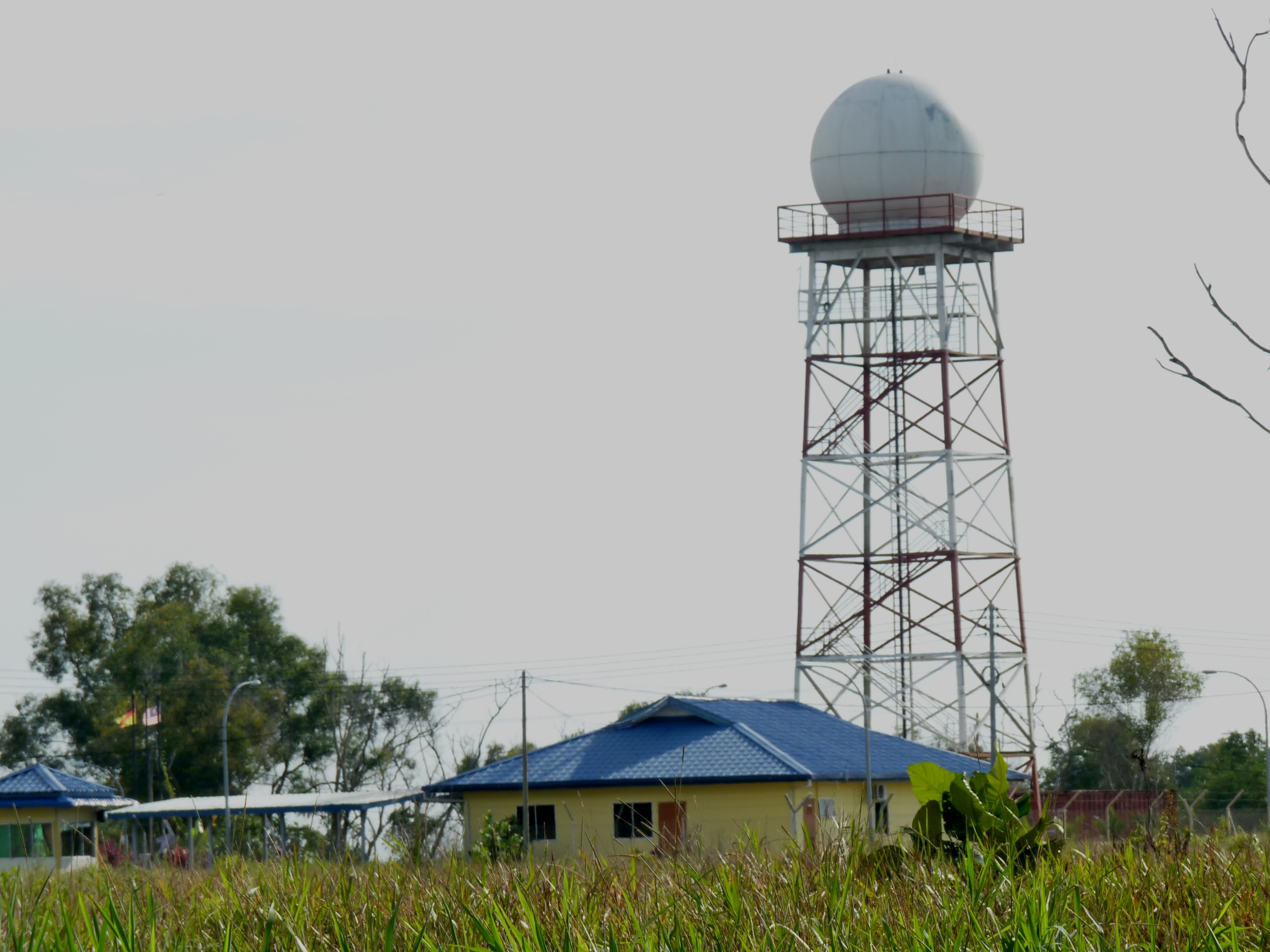
Miri is situated on the alluvial plain of the Miri River on the western shore of northern Sarawak on the island of Borneo. Because of the prevailing southerly off-shore current, beach drift has built up the Peninsula Road as a barrier beach between the Miri River and the shore causing a "Yazoo effect" where the river runs parallel to the coast before breaking through into the South China Sea. The city is predominately located on the inland (east) side of the Miri River with only a few scattered residential neighbourhoods, a Golf Club and a small airstrip on the Peninsula Road.
Climate
Miri has a tropical rainforest climate. There are two monsoon seasons: the southwest monsoon, which is the dry season from April to September, and the northeast monsoon, which is the wet season from October to March. The annual rainfall is around 250 to. The air temperature is between 23 °C to 32 °C the whole year round. But on rare occasions, the temperature can go down to 16 °C to 18 °C especially in the months of November, December and January. The lowest temperature ever recorded was in December 2010 when the mercury dropped down to 11 °C.
Demography
File:San Ching Temple.jpg|San Ching Tian Temple File:Masjid Nur Hijrah - panoramio.jpg|Nur Hijrah Mosque
People from Miri are called "Mirians".
The growth of Miri population is shown below:
| 1940 | 11,000 | 1960 | 24,049 | 1970 | 34,613 | 1980 |52,125 | 1991 | 102,878 | 2000 | 167,535 | 2010 | 234,541 | 2020 | 248,877
Ethnicity
| Total | |||||||||
|---|---|---|---|---|---|---|---|---|---|
| Population | Malay | Iban | Bidayuh | Melanau | Other | ||||
| Bumiputera | Chinese | Indian | Other | ||||||
| Non-Bumiputera | Non-Citizen | ||||||||
| 356,900 (as per Administrative District year 2020) | 52,954 | 85,026 | 3,727 | 9,012 | 31,704 | 77,869 | 1,186 | 1,609 | 27,187 |
According to the 2010 Malaysian census, Miri City has a total population of 234,541. Indigenous people form the largest ethnic group in the city (61.3%, 143,736) which consists of Iban (61,273), Malay (46,723), other indigenous tribes (24,119), Melanau (8,313), and Bidayuh (3,308). This is followed by Chinese (32.1%, 75,329), non-Malaysians (5.7%, 13,362), Indians (0.5%, 1134), and Others (0.4%, 980). The ethnic Malay population here consists mainly of Bruneian, Jati Miriek (early indigenous native inhabitants) and Kedayan peoples. including Orang Ulu tribal groups native to the area such as Berawan, Kiput, Lun Bawang, Kayan, Bakong, Kenyah and Kelabit people. Chinese in Miri mainly consist of the Fuzhounese majority with significant populations of Hakka and Cantonese including a small number of Teochews and Hainanese. A majority of non-Malaysians in Miri are Bajau people from the working at Baram Delta as fishermen. There are also illegal Suluk and Bajau people entering Miri using Pulau Tikus (near Baram Delta) as a transit point.
Languages
There is great diversity in terms of languages spoken in Miri, as it is a location where there are migrants from all over Sarawak, some West Malaysians, several foreigners, and several Eurasians. Among the main languages spoken here are Malay: which includes both the local variety of Malay, Sarawakian Malay or Bahasa Sarawak, and Standard Malay; Malaysian Mandarin, and Iban. The pronunciation and accent of spoken Malay differs depending on each individual's native language, background and history. English is generally well spoken by the older generation, many of whom received primary and secondary education in the 1960s, which then, was in English: a token of British colonialism; or who have worked in oil & gas related companies that operate in English, where they picked up English, Malay and Iban to varying levels of mastery. This is not the case for many younger Mirians, who generally were and are being educated in either Malay or Mandarin; most are capable of speaking basic English with grammar that is heavily influenced by either Malay or Mandarin. This, is because the English language was reduced to a mere standalone subject after the 1980s. There is currently a minuscule minority of Miri-born Millennials and Generation Z members that speaks English as its first language, with varying levels of proficiency. The indigenous races speak their various languages as well, all of them Austronesian. These include languages such as Berawan, Lakiput (often called Kiput), Bruneian/Kedayan, Miriek, Iban, Bidayuh, Kayan, Kenyah, Lun Bawang and Kelabit. Meanwhile, the Chinese Malaysians speak Malaysian Mandarin, Hakka, Cantonese, Teochew, Hainanese, Hokkien and Foochow, in addition to possibly Henghua, a minority Chinese language in Malaysia. However, many Millennials and Generation Z members in Miri tend to use the lingua francas Malay and Malaysian Mandarin rather than their indigenous languages (such as Kayan and Kelabit) and Chinese dialects (Hokkien and Foochow); with the exception of Iban, which is widely used here; although certain efforts have been made in the past to promote the usage of indigenous languages among the younger generation.
Religion
Religions in Miri include Christianity, Islam, Buddhism, Taoism, Hinduism, Sikhism and Baháʼí Faith. Among the Christian churches, there are the Borneo Evangelical Church, Anglicanism, Methodism, Roman Catholics. Respective religious groups are free to hold processions in Miri city. Among notable religious places in Miri are: Tua Pek Kong Temple, St Joseph Cathedral (Roman Catholic), Hwai En Methodist Church, St Columba church (Anglican), Al-Taqwa Mosque, Al-Jamek Mosque, Sikh Temple, and Kamini Durga Eswari Amman Temple (Hinduism). Sarawak is predominantly Christian, in contrast with most of the Indonesian archipelago This is also owing to the 2 previous Christian Revivals: the Bario Revival and the Ba' Kelalan Revival that occurred between the 1960s and 1990s.
Economy

There are a few industrial areas in Miri, some examples include Kuala Baram Industrial Estate (Mixed, Light, and Medium Industries), Piasau Industrial Estate (Mixed Light Industries), Senadin Industrial Area, Eastwood Industrial Estate and Bekenu Light Industrial Area (food processing).
Miri mainly relies on its oil and gas industry, which contributes significantly to the Gross Domestic Product (GDP) of Sarawak. Sarawak Shell Berhad (upstream business) and Petronas Carigali Sdn Bhd have their offices based in Miri. Other multinational oil and gas companies also set up their offices here, including Nippon Oil, Schlumberger, Baker Hughes, Halliburton, Technip, Ranhill WorleyParsons, and Petra Resources Sdn Bhd. In 1989, Asam Paya Oilfield was discovered in Sarawak inland areas. In 2010, Petronas discovered two oil fields offshore between Bintulu and Miri. In 2011, new underground reserves of oil and gas deposits were discovered by Nippon Oil in an inland region near Miri, Sarawak.
In the 1970 to 1980s, timber exporting industry became one of the major income generators for Miri. Multinational conglomerates based in Miri such as Shin Yang and Samling had their early beginnings in timber industry. Besides, shipbuilding companies such as Sealink Shipyard, Shin Yang Shipping & Shipyard, Berjaya Dockyard, and Sarawak Slipways have their major shipyards set up in Miri - Kuala Baram industrial area along the Baram river.
First large-scale oil palm plantation in Sarawak began in 1968, in which the newly formed Sarawak Oil Palm Berhad (SOPB) planted a total of 5,000 ha oil palm plantations near Miri by employing Indonesian workers at these plantations. Since the 1980s, SOPB has a total of 30,000 ha of oil palm in Miri and Bintulu Divisions, generating a total revenue of RM 85 million in 2005. SOPB is now majority-owned by Shin Yang Group and Sarawak Land Custody and Development Authority (LCDA) with its headquarters in Miri. By 2014, oil palm plantations between Miri-Bintulu zone constituted 60% of total oil palm estates in Sarawak.

Miri Port Authority (MPA) was established on 1 February 1981 and commenced operation on 1 March 1983. It is located near the mouth of Baram River. The port is able to take in ships measuring up to 1,500 GT (Gross Tonnage), with general cargo area of 50,895 m2 and total developed area of 34 ha It is mainly used in handling petroleum, timber products, coal, and building materials. A total of 23.94 million metric tonnes of goods was handled by MPA from 2011 to 2013, which earned a total revenue of RM 48.58 million in port dues.
Miri is a shopping destination for visitors coming from the neighbouring country of Brunei because of a discrepancy in currency exchange rate (100 Brunei dollar to around 350 Malaysian ringgit), cheaper items, and a variety of resorts in Miri for recreational activities. Bintang Plaza and Boulevard Shopping Mall are the two major shopping destinations for Brunei people. As of 2014, Miri visitor movement along Kuala Baram-Kuala Belait checkpoint (Sungai Tujoh, along the Sarawak-Brunei border) reached a total of 2.9 million people in one year. Miri is also an eco-tourism gateway to four national parks and a marine national park. Miri is also a destination for Bruneians to go clubbing on occasion.
The education sector is another income generator for Miri. Curtin University, Malaysia brought in RM 480 million foreign exchange annually from 3,000 foreign students studying at the university.
Transportation
Road
All the roads in Miri are maintained by Miri City Council (MCC). Miri is accessible by road from Bandar Seri Begawan (Brunei) through the Sungai Tujoh checkpoint which is located 35 km north of Miri. Miri is connected to all major cities and towns in Sarawak including Kota Kinabalu in Sabah through the Pan Borneo Highway. Miri is also connected to Bintulu town through a coastal road and Marudi through a 42 km road.
Buses and taxis
Miri city has 2 bus stations, namely the local (located at Melayu Road next to Tamu Muhibbah and Wisma Pelita Tunku) and long-distance bus stations (located at Pujut Corner). Buses to Lambir Hills National Park, rest of division within Sarawak and Pontianak, Indonesia depart from the long-distance bus station. Local taxi services are also provided in the city with the main taxi stand at China Road in the city centre. Taxis here do not use meters. There is no direct bus to Miri Airport, most people will prefer to use car or taxi because of short distance between airport and city.
Air

Miri Airport (IATA: MYY, ICAO: WBGR) is an important gateway to the northern region of Sarawak. It is located 11 km south of Miri city. It serves as a hub for domestic, international, and rural air services. Miri Airport is the tenth busiest airport in Malaysia and second busiest in Sarawak. It provided services to 2.2 million passengers in 2013. The airport has only one direct international flight to Singapore. It also receives flights from domestic destinations such as Kuala Lumpur, Johor Bahru, Kota Kinabalu, Labuan, Kuching and other major towns in Sarawak. Miri Airport also caters flights to the Sarawak interior such as Bario, Ba'kelalan, Marudi, Lawas, Limbang, and Mukah through MASwings using DHC-6 Twin Otter aircraft.
Water
Kuala Baram Express Boat Jetty is located 45 minutes away from Miri city centre. It was last operated in the year 2014 and was closed due to the presence of a better air and road connectivity to the interior especially Marudi Town and all other major towns in Baram.
Other utilities
Courts of law and legal enforcement
The current court complex is located at Merdu Road, Miri. It contains the High Court, Sessions Court, and the Magistrate Court. Miri city also has Syariah Subordinate Court which is located at Wisma Pelita Tunku, Miri with area of jurisdiction of Miri District and Marudi District. There is one district police headquarters at Pujut Road, Miri. Miri central police station is located at Raja Road while other police stations are located at Bakam Road, Miri Airport, Kampung Tulang Road, Bekenu, and Niah. There is also a central prison in Miri.
Healthcare
The current Miri Hospital started its operation on 6 May 1995, located 2.5 km away from Miri city centre and with an area of 87.11 hectares. The hospital has 339 beds, and it provides tertiary specialist services such as surgery, ophthalmology, obstetrics and gynaecology (ONG), nephrology and radiology. It is also the main referral hospital in the northern region of Sarawak, and construction is currently ongoing to add an additional 328 beds in a new block There are currently 3 government polyclinics in Miri city namely Klinik Kesihatan Jalan Merbau, Klinik Kesihatan Tudan, and the new Klinik Kesihatan Bandaraya Miri. Miri has 4 private hospitals currently, with the newest private medical centres including Borneo Medical Centre Miri and KPJ Miri Specialist Hospital. Miri City Medical Centre is a private hospital that started its operation in 2002 and has 30 beds. It is located at Hokkien Road, Miri. Columbia Asia Medical Centre was formerly known as Selesa Medical Centre. It was acquired in 1998, located 4 km downtown Miri. It serves the communities from Miri, Limbang, Marudi, and Brunei. Shell employees make up the largest customer base for this private hospital.
Education
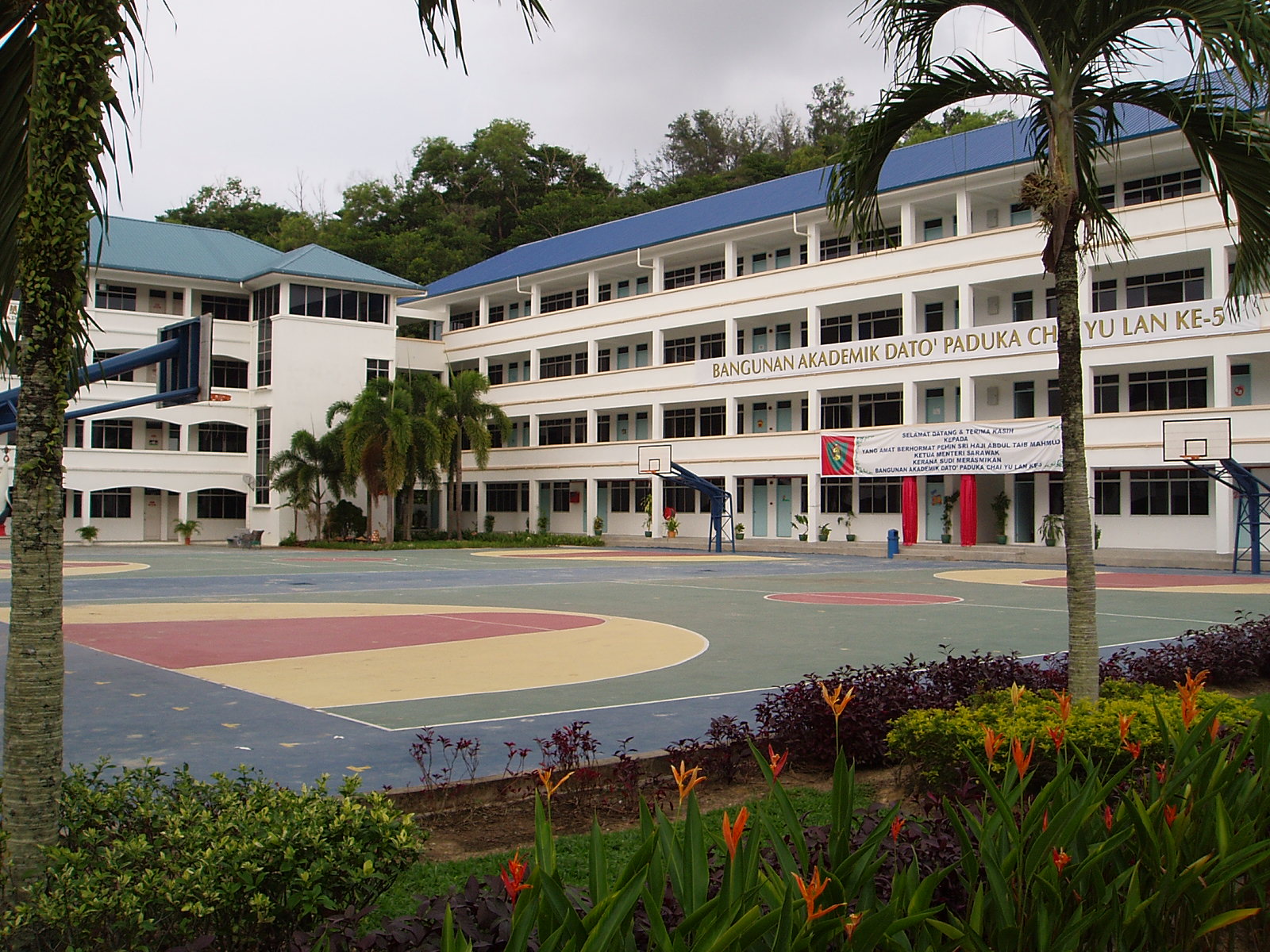
All the primary and secondary schools in Miri (under National Education System) are managed by the Miri District Education Office located at Kipas Road, Miri. Among the Chinese primary schools are SJK (C) Chung Hua Miri, SJK (C) Chung Hua Pujut, and SJK (C) Chung Hua Lutong. SK Agama Miri is an Islamic primary school. There are several national primary schools such as: SK Anchi, SK Senadin, and SK St Columba, along with several other national secondary schools in Miri namely SMK Agama Miri, SMK St. Columba, SM Sains Miri, Kolej Tun Dato Tuanku Haji Bujang, SMK St.Joseph, SMK Lutong, SMK Pujut, SMK Lopeng Tengah, SMJK Chung Hua Miri and Sekolah Menengah Teknik Miri. Miri has 2 out of 14 Chinese independent schools in Sarawak. These are Pei Min Middle School (培民中学) and Riam Road Middle School (廉律中学). Tenby International School is the first international school in Miri. In 2019, Tenby International School Miri was renamed Knewton Global Schools under new ownership. Other private schools in Miri such as Sekolah Rendah Sri Mawar and Sekolah Rendah Sri Mulia are providers of primary education.
Curtin University, Malaysia is the first foreign university to establish its campus in Sarawak since 1999. It offers business, accounting, and engineering courses. Institut Pendidikan Guru Malaysia Kampus Miri Sarawak (Teachers Training Institute Malaysia Miri) offers training for teachers placements in primary and secondary schools. I-Systems College offers a nursing programme. Fajar International College (FIC) offers a Diploma in Occupational Safety & Health (DIPOSH), accounting, and business studies courses. IBS College was established in 1998, currently offering finance, business, accounting, and security courses. Maxcel Institute of Management offers Diploma programme for Hotel and Tourism Management.
Cahaya Education and Training Academy (Ceta) offers training courses on oil and gas industries. Institut Latihan Perindustrian Miri (Miri Industry Training Institute) was formed in 2004, currently offering courses such as electrician, product design, and telecommunication. RIAM Institute of Technology Sarawak (RIAMTEC) was established in 1996, offering technical training in the fields of agriculture and mechanics. Institut Kemahiran Belia Negara (National Youth skills Institute) and Pusat Pembangunan Kemahiran Sarawak (Sarawak Skills Development Centre) also offer technical training for students. Kolej Komuniti Miri (Miri Community College) offers short module courses upon request from the public. Open University Malaysia (OUM) also operates a learning centre in Miri.
Libraries
Miri City Council Library was established in 1958. Currently, it has branches in Piasau, Lutong, and Taman Tunku. Pustaka Miri is a regional library established by the state-run Sarawak State Library. It is located at Miri City Fan.
Culture and leisure
Attractions and recreational spots
Cultural
Miri May Fest has been held in Miri since 1989. It is a month-long celebration of entertainment programmes, trade fairs, cultural, arts, sports, and social activities organised by various governmental agencies. Miri City Day will also be held during the Miri May Fest. Gong Xi Fa Cai Bazaar is held annually a few weeks before the Chinese New Year eve. There will be stalls opening daily selling food and drinks, clothes, decorative items, potted plants, paintings, and handicrafts. Various entertainment programmes such as lion and dragon dances will be held every evening. Miri International Dance for Humanity is held annually since 2004 by Miri Chapter of Malaysian Red Crescent Society to promote racial and cultural harmony. This event will showcase up to 40 to 50 multicultural dance troupes which attract an audience of around 3,500. No dancing competition will be held during this event. Donation cards will be distributed to raise funds for the Red Crescent Society. 916 Malaysia Day Countdown cum Street Party has been held annually since 2010. It consists of a variety of outdoor sports events, street parties, and entertainment programmes which runs beyond midnight to commemorate the formation of Malaysia on 16 September 1963. Miri International Deep Sea Fishing Tournament is held annually at Luconia Shoals at South China Sea. Participants will depart from the Marina Bay, Miri and head up to the ocean for 3 days. The participant who catches the biggest fish in that category wins. Miri city Christmas Parade is held annually since 2007. Churches in Miri would start the parade at Miri City Fan and cover the main streets in the city centre.
Historical

In 2005, a petroleum museum was opened in Miri to preserve the city's roots as an oil and gas city. The museum is at the site of "Grand Old Lady", the first oil well in Malaysia which was opened in 1910. Visitors are able to interact with advanced devices displayed in the museum. Niah Archeology Museum is located near the archaeological site of Niah cave. It exhibits the prehistorical artefacts found in the area. Baram Regional Museum was opened in 1997, housed inside Fort Hose at Marudi. The fort was burnt down in 1994, but it was rebuilt later according to its original design and was converted into a museum. It displays historical and cultural artefacts belonging to various ethnic groups living in the area. The Miri Tua Pek Kong Temple was built in 1913 to give thanks to a monk who was believed to chase away evil spirits. The evil spirits were believed to have caused an unknown epidemic in Miri. It is the only building which survives World War II.
Leisure and conservation areas

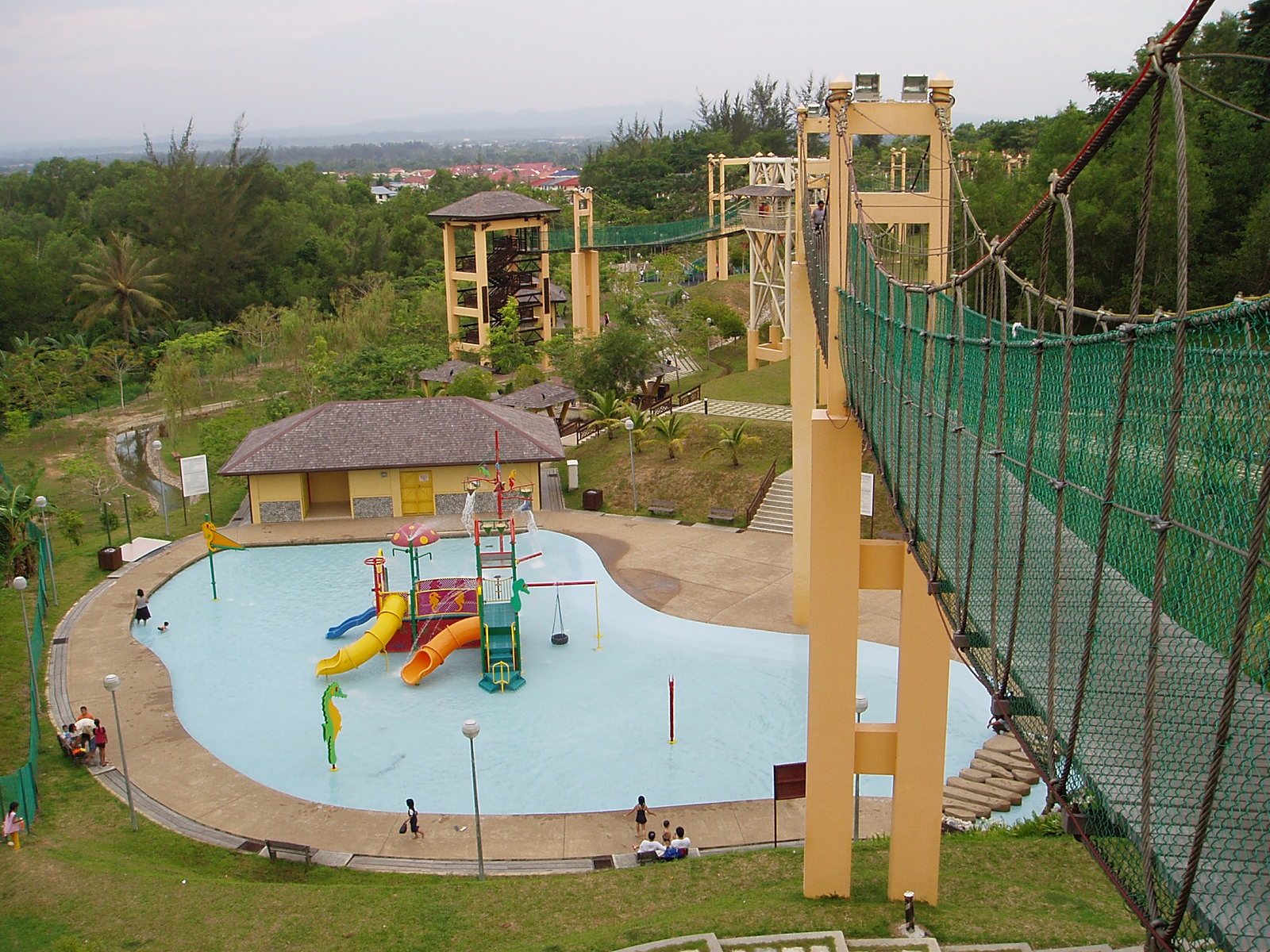
Miri is surrounded by five national parks, namely: Gunung Mulu National Park, which is a renowned UNESCO World Heritage Site; Niah National Park; Lambir Hills National Park; Loagan Bunut National Park, and Miri-Sibuti Coral Reef National Park. Tanjung Lobang Beach is the oldest recreational park in Miri. There are two wooden piers extending out into the ocean which offer a view of the coastline and the seahorse lighthouse at Marina Bay. Miri Marriott Hotel is located at Tanjung Lobang Beach. Marina Bay also has berthing facilities for yachts. Hawaii Beach is located 15 minutes away from Miri city. Picnic and barbecue facilities are provided here. Lutong Beach is suitable for paragliding and paramotor sports. Luak Esplanade Beach is located 11 km south of the city. It is a common spot for barbecues and picnics. Further down to the south of Luak Esplanade Beach is Bungai Beach, which is located at Bekenu, about 1 hour drive from Miri city. Since 2015, the "Blue Tears" phenomenon caused by Dinoflagellate bioluminescence can be seen at Miri beaches particularly at Tusan beach, which is a half-an-hour drive from the Miri city.
Miri Bulatan Park was opened to the public in 1993. It has a man-made lake, a jogging track, and a traffic garden. Traffic games will held every year at Miri Bulatan Park. Taman Awam Miri (Miri Public Park) is located 3 km away from Miri city centre. It has a children's playground, botanical garden, and a jogging trail. Miri City Fan is an urban park complex that has a variety of theme gardens, botanical garden, a swimming pool, a library, and an amphitheatre where concerts are frequently held. Taman Bunga (Flower Garden) is located at Asrama Road. Every plant here has a label which list the name and characteristics of the plant.
Other attractions
Miri Crocodile Farm Wildlife Mini Zoo is located near the Baram Delta. It houses 1,000 estuarine crocodiles including Malayan gharial crocodiles. Man-made sanctuary pools are also constructed for the crocodiles. Other animals can also be found here such as cassowary, sun bears, python, monkeys and porcupines. Visitors are allowed to feed the animals with bananas available from the canteen.
Shopping
Main article: List of shopping malls in Malaysia
Miri has always been a shopping haven for nearby Bruneians, thanks to the favourable currency exchange rates. There are plenty of shopping malls in Miri and the popular ones include Bintang Megamall, Boulevard Shopping Complex, The Imperial Mall, E-Mart, Miri Plaza (Servay Hypermarket), MYY Mall, Permy Mall, Soon Hup Shopping Complex, Wisma Pelita Tunku, and Permaisuri Imperial City Mall.
Saberkas Weekend Market is located at Sarbekas Commercial Centre. It opens in late evening every Friday, Saturday and Sunday. There are over 170 stalls in the market which sell vegetables, fruits, sea products, drinks, satay, grilled fish, BBQ chicken wings and other products such as local handicrafts, clothes as well as used magazines at reasonable prices. Miri Handicraft Centre is located at Brooke Road, Miri. It features handicrafts and souvenirs of Sarawak such as colourful bags, beadwork, woodcarvings, and textiles made by local indigenous groups, Chinese, and Malay artisans.
Music
There are three music festivals in Miri, namely Borneo Jazz Festival, Asia Music Festival (AMF) and Miri Country Music Fest (MCMF). Borneo Jazz Festival was started in 2006. It is a 2-night festival of 4 performances in each night by local and international jazz musicians at Parkcity Everly hotel, Miri. Asia Music Festival is also a 2-day event featuring artists and musicians from Asian countries such as India, Taiwan, Philippines, and Indonesia. It was first held in 2013 at Eastwood Valley Golf and Country Club, about 5 km from the city centre. It attracts about 4,000 music lovers attending the event. Miri Country Music Fest (MCMF) is a one-day event introduced in 2014, held at Parkcity Everly Hotel, Miri. Among the activities that can be found here are music and dance workshop, and night concert featuring country music bands from all over the world. Stalls selling food items, games, and souvenir items are also available.
Local radio stations
Several local radio stations have their office in the city, this include Hitz FM Sarawak (105.8), Era FM Sarawak (101.3), MY FM Sarawak (103.2) and Cats FM (93.3).
Cuisine

Miri Central Market (also known as Miri Open Air Market) is located at the Miri Old Town centre. It offers a wide choices of local food whose recipes which have been passed on for generations. Local delicacies such as Miri Curry Rice, chicken porridge, and Char kway teow can be found here. Exotic dishes of pig's stomach cooked with pineapple and pig's blood with chives can also be found at the central market. There are also a variety of restaurants in Miri that offer seafood, Western food, Chinese, Japanese, and Muslim food. Authentic cuisine from Kelabit Highlands especially from Bario can also be found here.
Notable people
- Paul Phua, businessman, bookmaker, and poker player.
- Zee Avi, international singer and ukulele player.
- Shaun Maloney, Scottish football Manager.
- Abdul Taib Mahmud, fourth chief minister of Sarawak.
- Joseph Kalang Tie, Sarawak FA football player.
- George Chan Hong Nam, Sarawak's former deputy chief minister.
- Wee Han Wen, first chairman of the Miri City Council.
- Watson Nyambek, ex-national sprinter.
- Lukanisman Awang Sauni, politician.
- Raymond Jalong, famous porn actor and starred in a local 2018 Sarawakian Movie, Main Keloh.
Sister cities
Miri currently has two sister cities:
- PRC Guangning County, People's Republic of China
- ROC Hualien County, Republic of China
References
References
- "Official Website of Miri City Council - Mayor message". Miri City Council.
- (4 September 2014). "Miri Council ... in Brief".
- "Miri, Malaysia Weather History and Climate Data". World Climate.
- "Malaysia Elevation Map (Elevation of Miri)". Flood Map : Water Level Elevation Map.
- "Population Distribution by Local Authority Areas and Mukims, 2010 (page 1)". Department of Statistics, Malaysia.
- "Miri, Sarawak to Kuching, Sarawak".
- "Miri, Sarawak to Kota Kinabalu, Sabah".
- (2014). "Sarawak Visitors' Guide 2014 - Miri". Sarawak Tourism Board.
- (6 June 2015). "Miri City Fan".
- "- Laman Web Rasmi Pejabat Pentadbiran Bahagian Miri".
- "News - Official Website of Miri City Council".
- "TAK making waves in Middle East".
- "Diving in Miri-Sibuti Coral Reefs National Park". Sarawak Tourism Board.
- (21 June 2010). "Miri Nature Society: Coral reefs in Miri under threat". The Borneo Post.
- (17 October 2014). "Jatti Meirek want candidate from their community". The Borneo Post.
- Sather, Clifford. (September 1979). "Recent studies of Orang Miri". Borneo Research Bulletin.
- (2014). "Engage! Public Intellectuals Transforming Society". Sunta Press Co Ltd.
- "Niah National Park - Early Human settlements". Sarawak Forestry.
- (7 November 2003). "Niah Cave, Sarawak, Borneo". [[Current World Archaeology]] Issue 2.
- "History of the Great Cave of Niah". [[Australian Broadcasting Corporation]].
- "Niah Cave". Smithsonian National Museum of Natural History.
- (1978). "Early Paleolithic in South and East Asia". Walter de Gruyter.
- "Niah Cave (Borneo, Malaysia) - Anatomically modern humans in Borneo".
- (16 September 2011). "Chronology of Sarawak throughout the Brooke Era to Malaysia Day". The Borneo Post.
- "Laman Web Rasmi Pejabat Residen dan Daerah di Miri - Sejarah Miri (Official Website of Miri Resident and District Office - History of Miri)". Miri Resident and District Office.
- (March 2011). "Historical Highlight: Miri Field Seeps Helped, But Success Was a Higher Calling". [[American Association of Petroleum Geologists]] (AAPG).
- (2010). "Miri - People - Progress - Prosperity". Miri Resident Office.
- (28 May 2012). "Road upgrade will reduce Miri—Marudi travelling time". The Borneo Post.
- (1912). "The pagan tribes of Borneo; a description of their physical, moral and intellectual condition, with some discussion of their ethnic relations, vol.2". Macmillan and Co. Ltd.
- (2011). "Baram Regatta A Testament Of Racial Harmony". Bernama.
- (2010). "History of oil: Sarawak - Miri 1910". GEO ExPro Magazine Vol 7, No 2.
- (20 May 2005). "Miri – from where it all began". The Star (Malaysia).
- "A Little Excitement". Miri Resort City.
- "History of Miri". Curtin Sarawak Malaysia.
- "Labuan War Cemetery". [[Commonwealth War Graves Commission]].
- L, Klemen. (1999–2000). "The Invasion of British Borneo in 1942". Forgotten Campaign: The Dutch East Indies Campaign 1941-1942.
- Visser, Jan. (1999–2000). "Who sank IJN destroyer Shinonome, December 1941?". Forgotten Campaign: The Dutch East Indies Campaign 1941-1942.
- (13 January 2006). "Decline and War".
- (18 April 1981). "Where it all started - The site: Miri in Sarawak". New Sunday Times.
- (3 July 2014). "Shell, Petronas expand Baram Delta terms to include gas rights". The Star (Malaysia).
- (10 May 2014). "Sarawak Government Collaborates With Shell And Petronas To Conserve Environmental Biodiversity". Malaysian Shell Berhad.
- "Miri Macot—Sea Horse". Tan Chin Kian.
- (2010). "Borneo Talk Highlight - Miri ecotourism". Bumi Serasi.
- (20 May 2005). "Revelry as Miri turns city". The Star (Malaysia).
- (19 May 2014). "Miri to replace Kuching as Sarawak capital?". New Straits Times.
- (19 May 2013). "14,000 walk to celebrate Miri City Day". The Borneo Post.
- (29 March 2015). "Some of the outstanding achievements of the leadership of Pehin Sri Abdul Taib". New Sarawak Tribune.
- (24 July 2014). "Miri aims to be 'the most liveable resort city'". The Borneo Post.
- (6 March 2015). "Miri should have another parliamentary seat". The Borneo Post.
- (4 September 2014). "Background".
- "Portai Rasmi Pentadbiran Bahagian Miri (Official Portal of Miri administrative Division)". Miri Resident Office.
- "Total population by ethnic group, sub-district, and state, Malaysia, 2010 (Table 28.1, page 376)". Statistics Department, Malaysia.
- "Malaysia - Basic population characteristics by administrative districts". Statistics Department, Malaysia.
- "Hubungi Kami (Contact Us)". Miri Resident Office.
- West, Terry R.. (2010). "Geology Applied to Engineering". Waveland Press.
- Google Earth at {{coord. 4. 25. 47. N. 114. 01. 16. E expand out.
- "December Climate History for Miri | Local | Malaysia". Myweather2.com.
- (9 October 2014). "Mirian to represent Sarawak at public speaking contest". The Borneo Post.
- (December 2011). "Population Distribution by Local Authority Areas and Mukims, 2010". Statistics Department, Malaysia.
- (18 January 2013). "Curtin Sarawak - All about Miri".
- (28 August 2012). "Our people - Chinese". Sarawak Tourism Board.
- (17 March 2015). "Stay away, foreign fishermen told". The Star (Malaysia).
- (15 July 2013). "Foreigners using bombs to fish in Miri, claim locals". The Borneo Post.
- (25 March 2015). "Pulau Tikus may be transit point for illegal immigrants". The Borneo Post.
- "Information from the visitors' Guide to Miri".
- (18 November 2010). "Foochow gathering a shot in the arm for Miri". The Borneo Post.
- (30 November 2009). "Social Computing: Concepts, Methodologies, Tools, and Applications: Concepts, Methodologies, Tools, and Applications". Idea Group Inc.
- (1 March 2014). "Nanta: Iban a language for learning". The Borneo Post.
- (17 September 2011). "Miri Hindus to celebrate Navarathri with prayers". The Borneo Post.
- "Sikh Temple". Sarawak Tourism Board.
- "Sarawak Worship Places - Miri".
- "LDS Growth Case Studies". International Resources for Latter Day Saints.
- (7 December 2014). "Sea of Mirians in annual Christmas Parade of 15 churches". The Borneo Post.
- (15 January 2014). "Sarawak unique for religious unity — Abg Jo". The Borneo Post.
- "Taoism in Sarawak".
- (1 November 2013). "Miri Catholic diocese gets new bishop in 47-year-old". The Star (Malaysia).
- "The Consecration of St. Columba's Church Miri". The Diocese of Kuching.
- "Miri Visitors' Guide".
- (22 October 2012). "Society launches logo and website". The Borneo Post.
- (15 May 2010). "Penduduk Menurut Wilayah dan Agama yang Dianut". [[Statistics Indonesia.
- Bulan, Solomon and Bulan-Dorai, L (2014), The Bario Revival, HomeMatters Network
- Lees, Shirley (1979), Drunk Before Dawn, OMF International
- "Industrial Estate by Division". Official website of the Sarawak Government.
- (20 August 2013). "2nd Borneo International Oil & Gas Expo in Miri".
- "Offices and Installations". Shell Malaysia.
- "Petronas Carigali Sdn Bhd". Yellow Pages Malaysia.
- "Contact Us". JX Nippon Oil and Gas Exploration.
- "Schlumberger WTA (M) Sdn Bhd". Yellow Pages Malaysia.
- (21 November 2008). "Baker Hughes (M) Sdn Bhd - Baker Atlas".
- (15 September 2008). "Halliburton Energy Services (M) Sdn. Bhd.".
- (3 September 2014). "TechNip South East Asia". Technip.
- (2 November 2009). "Ranhill Worleyparsons Sdn Bhd (Pujut )". MiriBiz.
- "Petra Energy - Contact Us - Regional Offices and Service Facilities". Petra Energy.
- (22 April 2013). "Rich deposits of crude oil and gas discovered in Sarawak's inland areas". The Star (Malaysia).
- "The Oil Town".
- "Introduction to Miri".
- (27 March 2010). "Sarawak shakers". The Star (Malaysia).
- "Company Profiles". Forests Monitor.
- "About Us - The Sealink Group". The Sealink Group.
- "SHIN YANG Shipping Corporation Berhad - About US". SHIN YANG Shipping Corporation Berhad.
- "Berjaya Dockyard Sdn Bhd - About Us". Berjaya Dockyard Sdn Bhd.
- "Sarawak Slipways Sdn Bhd - Company Profile". Sarawak Slipways Sdn Bhd.
- (19 October 2007). "Reinventing Dualism: Policy Narratives and Modes of Oil Palm Expansion in Sarawak". Australian National University - Crawford School of Public Policy.
- "Sarawak Oil Palms Berhad - Contact Us". Sarawak Oil Palms Berhad.
- (20 May 2014). "Miri's property outlook remains buoyant". The Borneo Post.
- "About MPA". Miri Port Authority.
- "Facilities". Miri Port Authority.
- (17 June 2014). "Form uniform mechanism to verify cargo amount — AG". The Borneo Post.
- (6 April 2019). "'It's dangerous to go out now': young, gay and scared in Brunei — AG". The Guardian.
- (14 January 2010). "Miri remains as top draw for Bruneians". The Star (Malaysia).
- (19 March 2012). "Miri still a shopping paradise for Bruneians". The Borneo Post.
- (16 February 2014). "Visitor movement between Brunei, Sarawak to cross over three million mark". The Star (Malaysia).
- (5 March 2012). "Ting identifies key contributing factors to Miri's boom". The Borneo Post.
- (3 February 2014). "Massive congestion at Sarawak-Brunei checkpoints spoils festive mood". The Star (Malaysia).
- (4 September 2012). "Pan Borneo Highway, coastal road to be upgraded in stages". The Borneo Post.
- (24 May 2013). "Abolish toll at Asean Bridge, gazette Piasau Camp as Hornbill Park, Ling urges". The Borneo Post.
- "Sarawak Bus Travelling ...An Exciting Travelling Alternative to Get Around Sarawak, East Malaysia.".
- (19 February 2014). "Work to upgrade Miri Airport to commence this year, says Lee". The Borneo Post.
- (23 April 2014). "Miri Airport needs an upgrade – Jofri Jaraiee". The Malaysian Insider.
- "List of Court addresses - High Court Sarawak (Kuching, Bintulu, Miri & Sibu)". CLJ Legal Network Sdn Bhd.
- (12 May 2012). "Chung elevated to High Court judge". The Borneo Post.
- "Structure of The Court (STRUCTURE OF THE HIGH COURT IN SABAH & SARAWAK)". The High Court in Sabah and Sarawak.
- "Direktori Mahkamah Syariah Sarawak (Sarawak Syariah Courts Directory)". Department of Syariah Judiciary Malaysia.
- "Direktori PDRM Sarawak - Sibu [Sarawak Royal Malaysian Police (RMP) Directory - Sibu]". Royal Malaysian Police.
- (11 January 2015). "Miri Central Prison donates clothes for victims of disasters". The Borneo Post.
- "Latar Belakang Hospital Miri (Miri Hospital Background)". Miri Hospital.
- "pembinaan-bangunan-tambahan-hospital-miri".
- (October 2009). "Pattern of skin diseases among patients attending a tertiary care teaching hospital in Kerala". Indian Journal of Dermatology, Venereology and Leprology.
- "Hospital Miri - Obstetrics & Gynaecology Department". Miri General Hospital.
- (1 August 2012). "Miri polyclinic upgrading its facilities, assures doctor in-charge". The Borneo Post.
- (10 November 2011). "Facilities in Tudan Polyclinic not up to standard". The Borneo Post.
- "About Miri City Medical Centre". Miri City Medical Centre.
- (16 January 2013). "Columbia Asia Hospital Miri – Private Hospital and Medical Facilities in Miri, Sarawak, Malaysia".
- "Pejabat Pendidikan Daerah Miri (Miri District Education Office)". Sarawak Education Department.
- (20 November 2012). "SJKC Chung Hua Miri retains good record in UPSR result". The Borneo Post.
- (11 May 2014). "Tales of tourism from Chinese writing skill camp for primary school". The Borneo Post.
- (24 April 2014). "Three cluster schools shine". The Borneo Post.
- (11 March 2015). "Four classes at SK Anchi without power". The Borneo Post.
- (28 September 2013). "SK Senadin on right track — Gramong'". The Borneo Post.
- (30 November 2013). "SK St Columba best first aider". The Borneo Post.
- (19 April 2015). "World Scout Environment event attracts 244 students". The Borneo Post.
- "砂拉越华文独中通讯录 (Communication directory of Sarawak Chinese independent schools)".
- (11 March 2015). "Global Recognition for Tenby Miri". The Star (Malaysia).
- "Curtin Sarawak". Curtin University.
- (18 January 2013). "Undergraduate Degree Studies". Curtin University Sarawak.
- "Institut Pendidikan Guru (Teachers' Training Institute)".
- (30 October 2011). "I-Systems College students praised". The Borneo Post.
- (13 April 2011). "Fajar International College offers quality and affordable education". The Borneo Post.
- (30 January 2014). "IBS College to introduce new courses; next intake April 28". The Borneo Post.
- "Maxcel Institute of Management".
- (5 September 2012). "Ceta welcomes SPM school leavers to sign up for drafting courses". The Borneo Post.
- "Institute Latihan Perindustrian Miri - Introduction". Institute Latihan Perindustrian Miri.
- "RIAM Institute of Technology Sarawak".
- "Institut Kemahiran Belia Negara (IKBN), Miri, Sarawak". Naim Holdings Berhad.
- "Pusat Pembangunan Kemahiran Sarawak (Sarawak Skills Development Centre)". Sarawak Skills Development Centre.
- (26 October 2010). "Kolej Komuniti Miri offers short module courses". The Borneo Post.
- "OUM Sarawak".
- "Introduction to Miri City Council Public Library".
- "Introduction to Pustaka Miri".
- "Miri May Fest 2014".
- "Miri City MayFest Events Calendar for the Year 2012".
- (11 March 2014). "MCC invites participants for Miri May Fest 2014". The Borneo Post.
- (19 January 2014). "Annual Gong Xi Fa Cai Bazaar lends Oriental touch to Miri". The Borneo Post.
- (8 January 2012). "Gong Xi Fa Cai Bazaar with 260 stalls comes alive". The Borneo Post.
- (24 April 2014). "11th International Dance for Humanity committee visits Lai". The Borneo Post.
- "MRCS International Dance For Humanity". Malaysiaan Red Crescent Society.
- (1 May 2013). "Support MRC's International Dance for Humanity". The Borneo Post.
- "916 Malaysia Day Countdown cum Street Party".
- "Miri Anglers Club". Miri Anglers Club.
- (23 February 2015). "Miri Deep Sea fishing contest wants 'early birds' for logistics". The Borneo Post.
- "Miri City Christmas Parade". Sarawak Tourism Board.
- (7 December 2014). "Sea of Mirians in annual Christmas Parade of 15 churches". The Borneo Post.
- "Petroleum Museum Miri".
- "The Grand Old Lady on Canadian Hill". Tawau.
- "Petroleum Museum". Official Website of Sarawak Museum Department.
- "Niah Archeology Museum". Sarawak Tourism Board.
- "Baram Regional Museum". Official Website of Sarawak Museum Department.
- "Tua Pek Kong Temple".
- "Brighton Beach / Tanjung Lobang". Sarawak Tourism Board.
- "Miri Marina". Pantai Bayau Indah Sdn Bhd.
- "Hawaii Beach". Sarawak Tourism Board.
- (3 June 2014). "Taiwanese paramotor pilots rave about Lutong beach, Miri as a top venue". The Borneo Post.
- "Miri Luak Esplanade".
- "Luak Bay Esplanade". Sarawak Tourism Board.
- "Bungai Beach". Sarawak Tourism Board.
- (21 September 2015). "Tusan Beach a stunning open secret in Miri". The Borneo Post.
- (22 November 2016). "Blue Tears & Bioluminescence phenomenon back again in Miri!". The Borneo Post.
- (30 April 2014). "Residents bemoan sorry state of Bulatan Park". The Borneo Post.
- "Taman Awam Miri (Miri Public Park)". Sarawak Tourism Board.
- "Miri City Fan". Sarawak Tourism Board.
- "Miri City Fan".
- "Around and About Miri".
- "Taman Bunga (Flower Garden)".
- "The Crocodile Farm". Miri Crocodile Farm.
- "Miri Crocodile Farm cum Mini Zoo". Sarawak Tourism Board.
- "Bintang Megamall". Bintang Megamall.
- "Boulevard Shopping Complex". Boulevard Shopping Complex.
- "Inside Imperial Mall".
- "Welcome to Emart Supermarket". Emart Supermarket.
- "Miri Plaza, Miri, Sarawak, Malaysia".
- "Inside MYY Mall".
- "Permy Mall". Naim Holdings Berhad.
- "Inside Soon Hup Tower".
- "Wisma Pelita Tunku".
- (14 January 2014). "Permaisuri Imperial City Mall set for soft opening this Friday". The Borneo Post.
- "Sarbekas Weekend Market".
- "Saberkas Weekend Market". Lonely Planet.
- "Handicraft Heritage Centre".
- "Miri Handicraft Centre". Sarawak Tourism Board.
- "Miri Handicraft Centre". Lonely Planet.
- "Borneo Jazz Festival". Malaysian Tourism Promotion Board.
- "Borneo Jazz Festival 2015". Sarawak Tourism Board.
- "Borneo Jazz Programme 2015". Sarawak Tourism Board.
- "About Asia Music Festival". Asia Music Festival.
- (17 September 2014). "Asia Music Festival 2014 to attract more than 4,000 music lovers". Malaysia Travel News.
- "Miri Country Music Festival 2016". Sarawak Tourism Board.
- (29 January 2015). "Miri Country Music Fest on Feb 7". The Borneo Post.
- "Eating Out". Curtin University Sarawak.
- "Miri Central Market". Lonely Planet.
- "Miri Curry Rice".
- "Great Kolo Mee - Review of Central Market". tripadvisor.
- (11 March 2012). "Char Kueh Tiaw at Open Air Market Miri".
- (18 May 2014). "Miri boasts exotic native cuisine". The Borneo Post.
- "Where to Eat in Miri?".
- (26 September 2010). "Best of Bario in Miri city". The Star (Malaysia).
- "Paul Phua's profile on The Hendon Mob".
- "The Book of Zee Avi".
- (21 October 2014). "Maloney: I play for Scotland but Malaysia will always be a special part of me".
- 978-981-4311-58-8. Google Book Search. Retrieved 23 June 2014.
- (22 September 2012). "Joseph Kalang Tie returns to Sarawak". The Borneo Post.
- (5 June 2013). "By George! It's a tough battle". The Star (Malaysia).
- (9 December 2012). "Von Jolly Riding High". The Borneo Post.
- (2 December 2012). "肇庆市广宁县与马来西亚美里市缔结友好城市 (Guangning County of Zhaoqing city built a sister-city relationship with Malaysian city of Miri)". 广东省归国华侨联合会 (Guangdong province Returned Overseas Chinese Association).
- (23 July 2015). "Hualien county and City of Miri, Malaysia becoming sisters cities". Hualien County Government.
- (23 June 2015). "花蓮縣與馬來西亞砂拉越州美里市締結友好城市 (Hualien County built a sister city relationship with Malaysian city of Miri, Sarawak)". 指傳媒 (Fingermedia).
- (26 June 2004). "Sarawak's Industrial City - Bintulu". CH Williams Talhar Yong & Yeo Sdn. Bhd.
- "Miri Healthy City".
- (26 January 2005). "Sibu, the centre of the Rajang basin". CH Williams Talhar Yong & Yeo Sdn. Bhd.
- (5 May 2010). "Tua Pek Kong always remembered and revered by Miri folk". The Star (Malaysia).
This article was imported from Wikipedia and is available under the Creative Commons Attribution-ShareAlike 4.0 License. Content has been adapted to SurfDoc format. Original contributors can be found on the article history page.
Ask Mako anything about Miri — get instant answers, deeper analysis, and related topics.
Research with MakoFree with your Surf account
Create a free account to save articles, ask Mako questions, and organize your research.
Sign up freeThis content may have been generated or modified by AI. CloudSurf Software LLC is not responsible for the accuracy, completeness, or reliability of AI-generated content. Always verify important information from primary sources.
Report