From Surf Wiki (app.surf) — the open knowledge base
Mir Yeshiva (Jerusalem)
.jpg)
| Field | Value |
|---|---|
| name | Mir Yeshiva |
| native_name | |
| image | Yeshivatmir2.JPG |
| caption | Mir Yeshiva in Jerusalem in September 2012 |
| mapframe-zoom | 14 |
| town | Beit Yisrael, Jerusalem |
| religion | Orthodox |
| established | 1944 |
| founder | Eliezer Yehuda Finkel (Reb Leizer Yudel) |
| dean | Eliezer Yehuda Finkel |
| enrollment | 9,600 |
the post-war Yeshivas Mir in Jerusalem
| mapframe-zoom = 14 The Mir Yeshiva (, Yeshivat Mir), known also as The Mir, is an Orthodox Jewish yeshiva in Beit Yisrael, Jerusalem. With over 9,000 single and married students, it is the largest yeshiva in the world. Most students are from Israel and the United States, with many from other parts of the world such as Belgium, France, the United Kingdom, Mexico, Switzerland, Argentina, Australia, Russia, Canada and Panama.
History
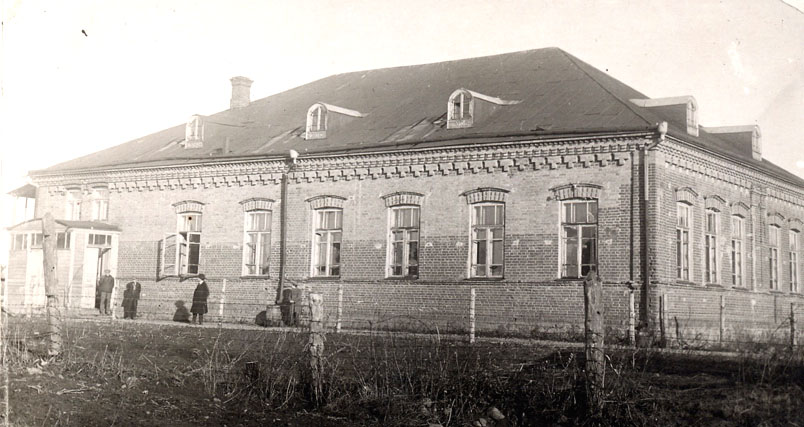
The yeshiva was founded in the small town of Mir (now in Belarus) in 1814, 1815 or 1817 by Rabbi Shmuel Tiktinsky. After his death, his oldest son, Rabbi Avraham Tiktinsky, was appointed Rosh Yeshiva. After a number of years, Avraham died and his younger brother, Rabbi Chaim Leib Tiktinsky, succeeded him. Rabbi Chaim Leib would remain as Rosh Yeshiva for many decades. He was succeeded by his son, Rabbi Avrohom Tiktinsky, who brought Rabbi Eliyahu Boruch Kamai into the yeshiva. In 1903, Rabbi Kamai's daughter married Rabbi Eliezer Yehuda Finkel, son of Rabbi Nosson Tzvi Finkel of Slabodka, who in time became the Rosh Yeshiva of the Mir. The yeshiva remained in that location until 1914.
With the outbreak of World War I, the yeshiva moved to Poltava (now in Ukraine). In 1921, the yeshiva moved back to its original facilities in Mir, where it remained until, Nazi Germany and the Soviet Union invaded Poland in 1939.
Although many of the foreign-born students left when the Soviet army invaded from the east, the yeshiva continued to operate—albeit on a reduced scale—until the approaching German armies caused the leaders of the yeshiva to move the entire community to Keidan, Lithuania. The yeshiva moved en masse on October 15 to Vilna in order to get out from under Russian rule and into then-free Lithuania. Russia had announced that it was returning Vilna to Lithuania. Until that was completed, they could go to Vilna by crossing a border.
Establishment in Jerusalem
Main article: Aliyah Bet, Fifth Aliyah, History of the Jews and Judaism in the Land of Israel#Ottoman rule (1517–1917)

Around this time, Rabbi Eliezer Yehuda Finkel traveled to Mandatory Palestine to obtain visas for his students and re-establish the Mir Yeshiva in Eretz Yisrael, but these plans were interrupted by the outbreak of World War II in Europe. In 1944, Rabbi Finkel opened a branch of the yeshiva in Jerusalem with ten students, among them Rabbi Yudel Shapiro (later Rosh Kollel Chazon Ish), Rabbi Chaim Brim (later Rosh Yeshiva of Rizhn-Boyan), and Rabbi Chaim Greineman.
During World War II, as the Wehrmacht continued to push to the Eastern Front, the yeshiva students fled to Japanese-controlled Shanghai under the Wang Jingwei regime, where they remained until the end of the war. The story of the escape to the Far East of Mir Yeshiva along with thousands of other Jewish refugees from Nazi-occupied Europe, thanks largely to visas issued by the Dutch consul, Jan Zwartendijk, and the Japanese consul-general to Lithuania, Chiune Sugihara, has been the subject of several books and movies, including the PBS documentary film Conspiracy of Kindness. After the war, most of the Jewish refugees from the Shanghai Ghetto left for Mandatory Palestine and the United States. Among them were survivors from the Mir Yeshiva, many of whom rejoined the yeshiva in Jerusalem. Rabbi Finkel's son, Rabbi Chaim Zev Finkel (commonly called Chazap), served as mashgiach.
When Rabbi Eliezer Yehuda Finkel died on July 19, 1965, his son, Rabbi Beinish Finkel and his brother-in-law, Rabbi Chaim Leib Shmuelevitz became joint Mirrer Rosh Yeshivas. Reb Chaim was considered the main Rosh Yeshiva and when he died, his son-in-law, Rabbi Nachum Partzovitz, replaced him. Rabbi Beinish Finkel became Rosh Yeshiva after Reb Nachum died. With Rabbi Beinish Finkel's death in 1990, the reins were taken over by Rabbi Beinish Finkel's sons-in-law, with the Rosh Yeshiva, Rabbi Nosson Tzvi Finkel, at the helm. After Nosson Tzvi Finkel's death on November 8, 2011, his eldest son, Rabbi Eliezer Yehuda Finkel, was named as his successor.
Chaburas
Under Rabbi Nosson Tzvi Finkel, the yeshiva's enrollment grew into the thousands. The large enrollment was divided into chaburas, or learning groups. Each chabura consists of the same type of student – e.g. American, European, Israeli, Hasidic, and non-Hasidic. These chaburas sit in designated areas in the Mir's various study halls (the three biggest being Merkazi, Beis Yeshaya, Beis Shalom), as well as in the same area in the dining room. Each chabura is subdivided by shiur (class), with each maggid shiur (lecturer) teaching a group of students. The largest shiur in the yeshiva (which is also the biggest in the yeshiva world) is that of Rabbi Asher Arieli, who gives shiurim in Yiddish to over 1000 students.
Mir Brachfeld
Main article: Mir Brachfeld
The yeshiva has a branch in Modi'in Illit primarily for Israelis, which also includes a kollel. Mir Brachfeld was headed by Rabbi Aryeh Finkel (grandson of Rabbi Eliezer Yehuda Finkel and son of Rabbi Chaim Zev Finkel) until his passing on Aug. 9, 2016. His oldest son, Rabbi Binyomin Finkel, took over as Rosh Yeshiva.
Leadership
- Eliezer Yehuda Finkel, Rosh Yeshiva, since 2011
- Yitzchok Ezrachi, Rosh Yeshiva
Past leadership
- Rabbi Eliezer Yehuda Finkel, Rosh Yeshiva, 1917-1965;
- Rabbi Chaim Leib Shmuelevitz, Rosh Yeshiva, 1941-1979
- Rabbi Nochum Partzovitz, Rosh Yeshiva, 1979-1986
- Rabbi Binyomin Beinush Finkel, Rosh Yeshiva, 1979 - 1990
- Rabbi Nosson Tzvi Finkel
- Rabbi Refoel Shmuelevitz Rosh Yeshiva, 1990-2016
Notable alumni
- Moses Michael Levi Barrow (born Jamal Michael Barrow; 1978), better known by his stage name Shyne, Belizean rapper and politician
- Rabbi Yitzchak Berkovits, Rosh Kollel, Linus HaTzedek: Center for Jewish Values
- Rabbi Azriel Brown, Rosh Yeshiva, Yeshiva Gedola of Carteret
- Rabbi Yaakov Mayer, Rosh Yeshiva, Yeshiva Gedola of Carteret
- Ari Goldwag, singer-songwriter
- Rabbi Aryeh Kaplan, philosopher, author, and translator
- Zvi Kogan (1996-2024), Israeli-Moldovan rabbi killed in the United Arab Emirates
- Shulem Lemmer (born 1990), singer
- Baruch Levine, singer-songwriter
- David Lichtenstein, real estate investor
- Yisroel Mantel, American rabbi
- Shlomo Yehuda Rechnitz, philanthropist
- Rabbi Jacob J. Schacter, rabbi and historian
- Natan Slifkin, Rabbi and Zoologist
References
Bibliography
- Toldot Yeshivat Mir, Zinowitz, M., Tel Aviv, 1981.
References
- Beyda, Rabbi Yehuda. (2012). "Rav Nosson Tzvi Finkel z.s.l.". Community Magazine.
- (8 November 2011). "Jerusalem – Torah Chigri Sak! Hagaon Harav Nosson Tzvi Finkel, Zt"l". [[Vos Iz Neias?]].
- Krausz, Yossi. "Our Boys in Israel". ''[[Ami (magazine). Ami]]'', October 23, 2013, pp. 44-53.
- Ettinger, Yair. (9 November 2011). "Some 100,000 attend funeral of Rabbi Nosson Tzvi Finkel". [[Haaretz]].
- [https://www.hebrewbooks.org/pdfpager.aspx?req=43310&pgnum=8 חוברת של קרן התורה, וינה, תרפ"ה, עמ' 6]
- [https://www.hebrewbooks.org/pdfpager.aspx?req=29155&st=&pgnum=6 משה יהודה ליב גאלדבערג, תולדות הגאון ר' חיים יהודה ליב ז"ל, ווארשא, תרס"ב, עמ' 7.] Rabbi Goldberg was a grandson of Mir's 2nd rosh yeshiva, R. Avraham Tiktinsky and a great-grandson of the yeshiva founder, R. Shmuel Tiktinsky.
- [https://www.hebrewbooks.org/pdfpager.aspx?req=2923&st=&pgnum=95 ר' יוסף ד. עפשטיין, "ישיבת מיר" בתוך ר' ד"ר שמואל ק. מירסקי (עורך), מוסדות תורה באירופה בבנינם ובחורבנם, ניו יורק, תשט"ז, עמ' 87]
- [https://archive.org/stream/nybc313894#page/n53/mode/1up ר' משה צינוביץ, "לתולדות ישיבת מיר" בתוך נ. בלומנטל (עורך), ספר מיר, ירושלים, תשכ"ג, עמ' 99]
- [https://www.otzar.org/wotzar/Book.aspx?143137&&page=13 ר' משה צינוביץ, תולדות ישיבת מיר, תל אביב, תשמ"א, עמ' 1]
- [https://winners-master.s3.eu-central-1.amazonaws.com/Sale_097/546.jpg Receipt from the yeshiva dated 1931 that lists the year established as 1817] {{Webarchive. link. (2017-04-04 (also see a full discussion re: the year founded at [http://forum.otzar.org/viewtopic.php?t=14718 פורום אוצר החכמה: בקשת עזרה: שנת ייסוד ישיבת מיר]))
- [http://www.eilatgordinlevitan.com/kovno/kovno_pages/kovno_stories_shmulevitz.html Rabbi Chaim Leib Shmulevitz: by Eliahu Meir Klugman]
- [https://www.pbs.org/wgbh/sugihara/ Sugihara: Conspiracy of Kindness]
- Rossoff, Dovid (1998). Where Heaven Touches Earth: Jewish life in Jerusalem from medieval times to the present. Feldheim Publishers. p. 597. ISBN 0-87306-879-3.
- Ben Gedalyahu, Tzvi. (8 November 2011). "Mir Yeshiva Rabbi Finkel Passes Away". [[Arutz Sheva]].
- (2020-09-16). "Beyond Space and Time".

This article was imported from Wikipedia and is available under the Creative Commons Attribution-ShareAlike 4.0 License. Content has been adapted to SurfDoc format. Original contributors can be found on the article history page.
Ask Mako anything about Mir Yeshiva (Jerusalem) — get instant answers, deeper analysis, and related topics.
Research with MakoFree with your Surf account
Create a free account to save articles, ask Mako questions, and organize your research.
Sign up freeThis content may have been generated or modified by AI. CloudSurf Software LLC is not responsible for the accuracy, completeness, or reliability of AI-generated content. Always verify important information from primary sources.
Report