From Surf Wiki (app.surf) — the open knowledge base
Minuet cat
Breed of cat
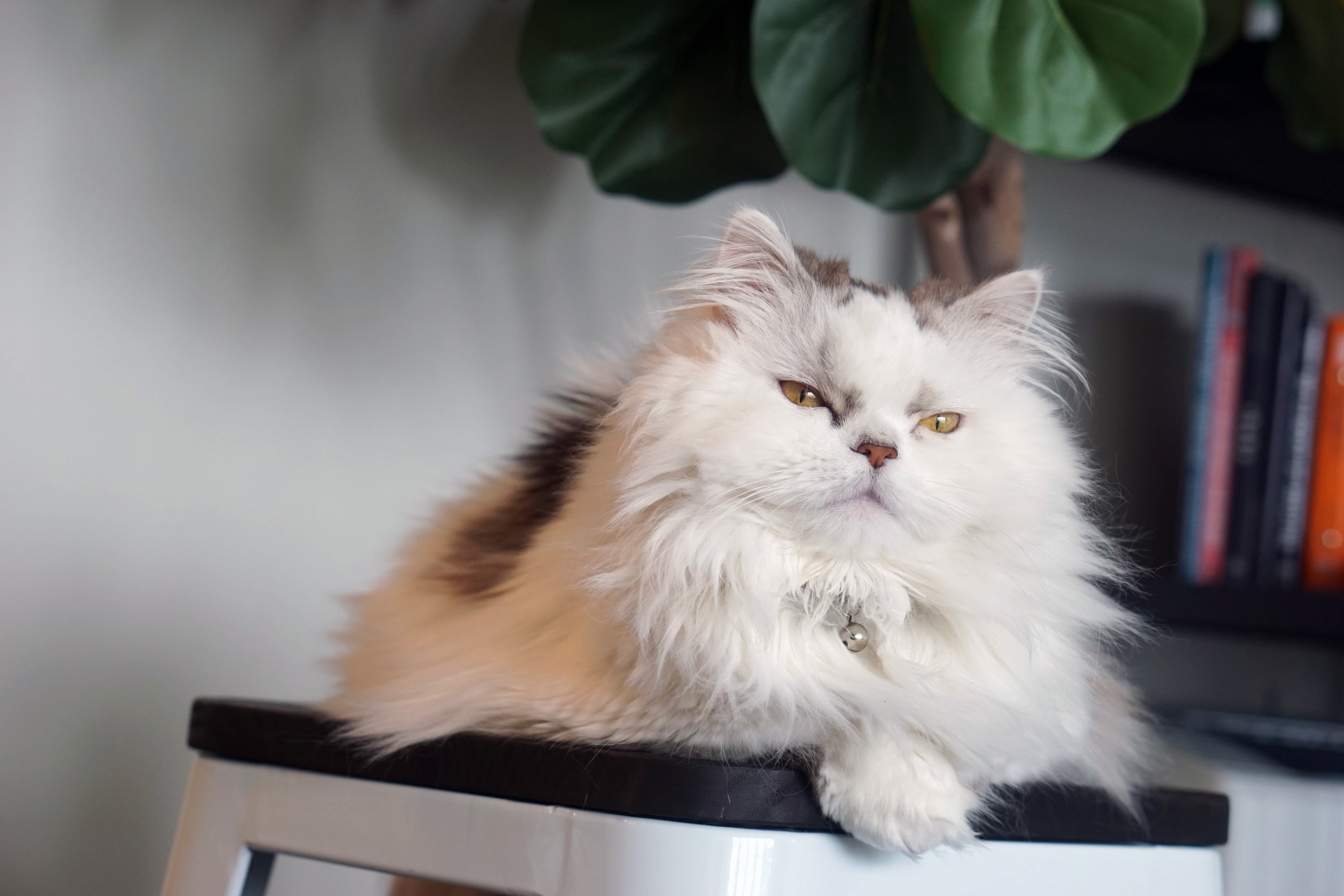
Breed of cat
| Field | Value |
|---|---|
| name | Minuet |
| altname | Napoleon |
| image | White Gray Minuet Cat.png |
| imagecaption | Example of a long-haired Minuet cat |
| country | United States |
| ticastd | https://www.tica.org/phocadownload/mnt.pdf |
| note | Not recognized by other registries than TICA |
| stock | Munchkin, Persian (sometimes Himalayan, Exotic Shorthair) |
The Minuet (also known as the Napoleon) is a hybrid mix of Persian and Munchkin cat breeds. Categorized by The International Cat Association (TICA) as a domestic hybrid, "developed from a deliberate cross between two existing domestic breeds, incorporating characteristics of both parental breeds into the new mix." The Minuet cat is characterized by its short legs, as a result of the dwarfism-mutation derived from the Munchkin breed.
According to TICA's official standards, these breeds represent the only permissible outcrosses one may use to create the Minuet. This includes the combinations Minuet × Minuet, Minuet × Munchkin, and Minuet × one of the Persian-type breeds (including Persians, Himalayans and Exotic Shorthairs). Minuets come in both long-haired and short-haired varieties.
History
Origin
In 1996 Joe Smith started breeding Persians with Munchkins. Joe had previously bred Basset Hounds, a breed with osteochondrodysplasia; similarly Munchkin cats have achondroplasia. He wished to create a breed that would appeal to people irrespective of the size of the limbs (the gene responsible for the shortened limbs is autosomal dominant and lethal in utero when the gene is homozygous: therefore not all Munchkins will be born with the smaller stature). The name Napoleon was chosen due to the belief of Napoleon Bonaparte being short.
Breed recognition
In 2001, the breed was added to the experimental breeds category of TICA. By 2002, it had achieved registration-only status; by 2011, the breed had achieved preliminary status, and was being shown in TICA cat shows by 2012. In January 2015, TICA's board of directors voted to change the name of the breed to Minuet. The breed was promoted to full TICA championship eligibility in 2016. The breed is recognized under the original Napoleon name by the Rare and Exotic Feline Registry.
Welfare concerns
Apart from TICA, the other major cat registries do not allow the registry of the Minuet breed, nor recognise it, due to concerns about the animal's welfare. Among others, the breed is not recognised by:
- Cat Fanciers' Association
- Fédération Internationale Féline
- Governing Council of the Cat Fancy
- World Cat Federation
The Governing Council of the Cat Fancy (GCCF) and Fédération Internationale Féline (FIFe) both disallow any Munchkin and Munchkin-derived breed from being registered due to the health concerns arising from the dwarfism of the breed.
Breeding bans
Breeding the Minuet is prohibited by law in Victoria which outlaws the breeding of animals with hereditary aplasia or hypoplasia of long bones. The Australian Capital Territory forbids the breeding of 'malformed animals' which includes the Munchkin.
Appearance
The Minuet has the stubbed legs of the Munchkin and the shortened face of the Persian. The body is semi-cobby with shortened height due to the legs. The tail is not short in comparison to the length of the cat's body. The ears are rounded and wide apart. Eyes are large and round. The Minuet may come in any coat colour.
Health
Due to inheriting both the dwarfism of the Munchkin and the shortened face of the Persian the Minuet is susceptible to multiple health issues relating to both conditions.
The condition causing the shortened legs and enlarged head is known as achondrodysplasia and with common symptoms including thick-looking joints, undersized jaw, curved spine, and a bow-legged or knock knee posture. Lordosis and pectus excavatum have higher incidence in breeds with achondrodysplasia. The shortened limbs give the breed a heightened risk of osteoarthritis.
The shortened face inherited from the Persian is known as brachycephaly. The anatomical deformities caused by brachycephaly may lead to dyspnoea. Epiphora may occur due to malformation of the nasolacrimal ducts which causes staining and secondary dermatitis. Their shallow eye socket may lead to exophthalmos and feline corneal sequestra. Their malformed jaw can cause difficulty with mastication; the result is a build up of food which leads to accelerated plaque formation and periodontal disease. Brachycephaly may also lead to dystocia with higher rates of still births in brachycephalic cats than cats with mesocephaly. Another condition which occurs due to the anatomical abnormalities is brachycephalic airway obstruction syndrome which can cause stridor, sleep apnoea, and even death.
Notes
References
References
- (January 23–25, 2015). "2015 Winter Board Meeting". [[The International Cat Association]].
- (March 2, 2020). "Napoleon". Rare and Exotic Feline Registry.
- (January 1, 2013). "Registration Rules & Related Standing Rules". [[The International Cat Association]].
- (May 1, 2016). "Minuet Breed Groups (MNT/MNL)". [[The International Cat Association]].
- (January 2007). "Histopathologic study of long-bone growth plates confirms the basset hound as an osteochondrodysplastic breed". Canadian Journal of Veterinary Research.
- "Munchkin Limb Deformity".
- "Gene Anomalies".
- "Minuet". [[The International Cat Association]].
- "Minuet Breed". [[The International Cat Association]].
- "Breeds". [[Cat Fanciers' Association]].
- (2023). "Breed standards". [[Fédération Internationale Féline]].
- "Cat breeds". [[Governing Council of the Cat Fancy]].
- "Recognized and admitted breeds in the WCF". [[World Cat Federation]].
- The Governing Council of the Cat Fancy, [http://www.gccfcats.org/health.html The GCCF says Health Comes First] {{Webarchive. link. (May 4, 2015)
- [https://web.archive.org/web/20071226123710/http://www.fifeweb.org/wp/lib/lib_rls_breg_2007_03.html Breeding and Registration Rules]: 2.7.3 Genetic Diseases. Fédération Internationale Feline
- (July 6, 2020). "Code of Practice for the Breeding of Animals with Heritable Defects that Cause Disease". Department of Jobs, Precincts and Regions; Agriculture Victoria.
- Australian Capital Territory, [https://web.archive.org/web/20070927222247/http://www.tams.act.gov.au/_data/assets/pdf_file/0005/12983/Welfare_of_Cats-_Code_of_Practice.pdf Code of Practice for the Welfare of Cats in the ACT]
- "Minuet Standard".
- "Napoleon".
- (March 6, 2019). "Feline Dwarfism".
- (2009). "Feline Orthopedic Surgery and Musculoskeletal Disease". Saunders Ltd..
- (1995). "Textbook of Veterinary Internal Medicine". Saunders.
- (2003). "Morphometric Investigations of Breed-Specific Features in Feline Skulls and Considerations on their Functional Implications". Anatomia, Histologia, Embryologia.
- (November 1, 2009). "Brachycephalic Feline Noses: CT and Anatomical Study of the Relationship between Head Conformation and the Nasolacrimal Drainage System". Journal of Feline Medicine and Surgery.
- (June 16, 2004). "Feline corneal sequestra: a review of 64 cases (80 eyes) from 1993 to 2000". Wiley.
- (2009). "Brachycephalia - a Bastardisation of what Makes Cats Special". Journal of Feline Medicine and Surgery.
- (1995). "Feline dystocia: prevalence, and association with cranial conformation and breed". Vet Rec.
- (November 2, 2023). "Brachycephalic Obstructive Airway Syndrome in Dogs and Cats".
This article was imported from Wikipedia and is available under the Creative Commons Attribution-ShareAlike 4.0 License. Content has been adapted to SurfDoc format. Original contributors can be found on the article history page.
Ask Mako anything about Minuet cat — get instant answers, deeper analysis, and related topics.
Research with MakoFree with your Surf account
Create a free account to save articles, ask Mako questions, and organize your research.
Sign up freeThis content may have been generated or modified by AI. CloudSurf Software LLC is not responsible for the accuracy, completeness, or reliability of AI-generated content. Always verify important information from primary sources.
Report