From Surf Wiki (app.surf) — the open knowledge base
Minnesota Drive Expressway
Highway in Alaska
Highway in Alaska
| Field | Value |
|---|---|
| state | AK |
| name | Minnesota Drive Expressway |
| alternate_name | Spenard Thruway |
| map | |
| map_custom | yes |
| map_notes | Minnesota Drive Expressway highlighted in red |
| maint | Alaska DOT&PF and MATD |
| length_mi | 7.560 |
| length_ref | |
| established | |
| direction_a | South |
| terminus_a | Old Seward Highway in Anchorage |
| direction_b | North |
| terminus_b | West 15th Avenue in Anchorage |
| borough | Anchorage |
The Minnesota Drive Expressway is a 7.560 mi south–north expressway located in the city of Anchorage, Alaska, United States. The expressway includes a small portion of O'Malley Road, which is also built to expressway standards. The highway travels from the southern region of Anchorage northward to North Star neighborhood area, and bisects the community of Spenard. The first section of the highway was constructed around 1950, and the entire highway was upgraded to expressway standards by the year of 1985. The entire length of the expressway is listed on the National Highway System.
Route description
The route begins where O'Malley Road intersects the Old Seward Highway. At this point, the route is heading directly west, even though the expressway is south–north. O'Malley Road is, at this point, a four-lane, paved, asphalt road. That intersection is the last at-grade intersection on O'Malley Road. From there, the expressway continues on for about 0.7 mi, passing under a set of railroad tracks, before reaching its first exit, for C Street. The highway passes over C Street and continues past a few small properties before curling north and becoming renamed Minnesota Drive. Almost immediately after the turn is the exit for 100th Avenue. The highway passes over 100th Avenue, and continues past a large neighborhood. The expressway continues, reaching an incomplete interchange with Dimond Boulevard, where the expressway's frontage roads terminate. The highway continues past several large neighborhoods, with an exit for the neighborhoods on the western side of the highway. The roadway continues northward, interchanging with Raspberry Road and passing over a small hiking trail.
The expressway passes a large industrial area before interchanging with International Airport Road, which provides access to Ted Stevens Anchorage International Airport. The highway passes over a railroad track, continues past a large industrial area and a large neighborhood, before reaching an at-grade intersection with Tudor Road, which marks the end of the main controlled-access section of the expressway. The roadway intersects several small roads, and passes numerous small businesses, before intersecting with Spenard Road. The highway continues past several more businesses, intersecting several small roads, including Benson Boulevard and Northern Lights Boulevard, before being upgraded to freeway standards. The expressway passes two small lakes, with a southbound exit for Hillcrest Drive, which provides access to West Anchorage High School. The highway continues northward, merging with Spenard Road and passing a small neighborhood, before intersecting 15th Avenue, where the expressway terminates. The road continues northward as I Street (northbound) and L Street (southbound).
Traffic
Traffic on the Minnesota Drive Expressway is very high, with a yearly average of approximately 260,000. while the lowest count is where O'Malley Road becomes Minnesota Drive, with a daily average of 22,209.
History
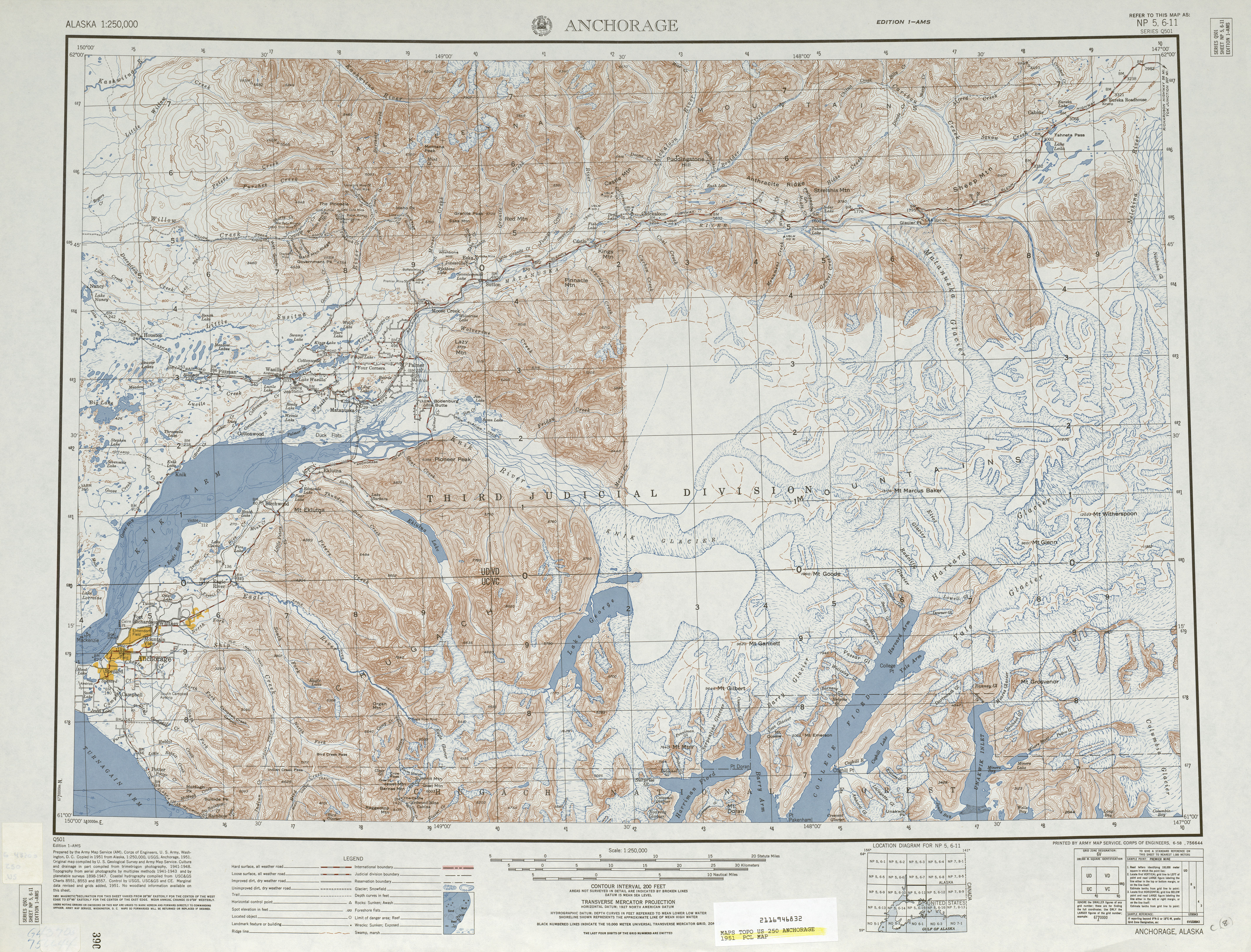
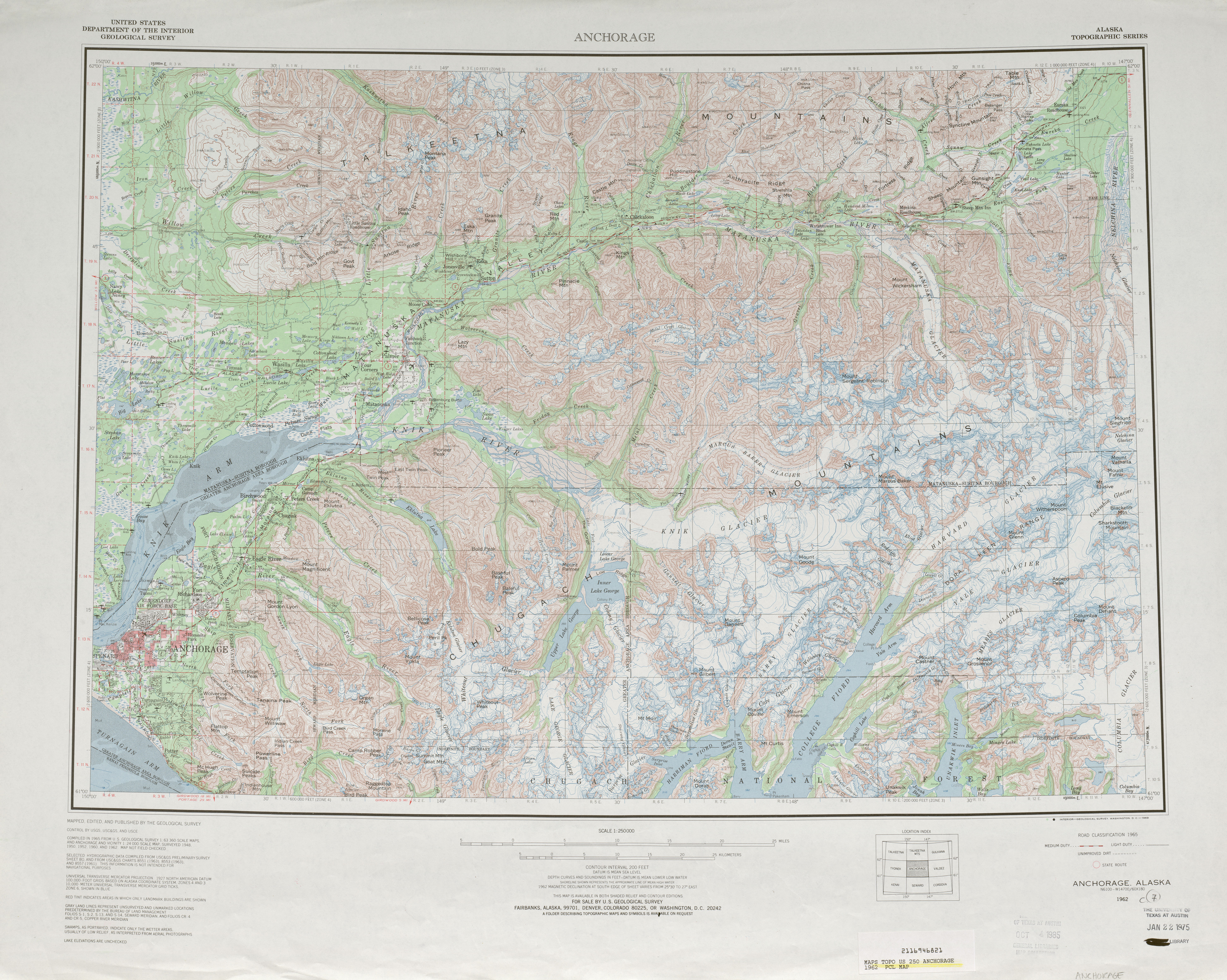
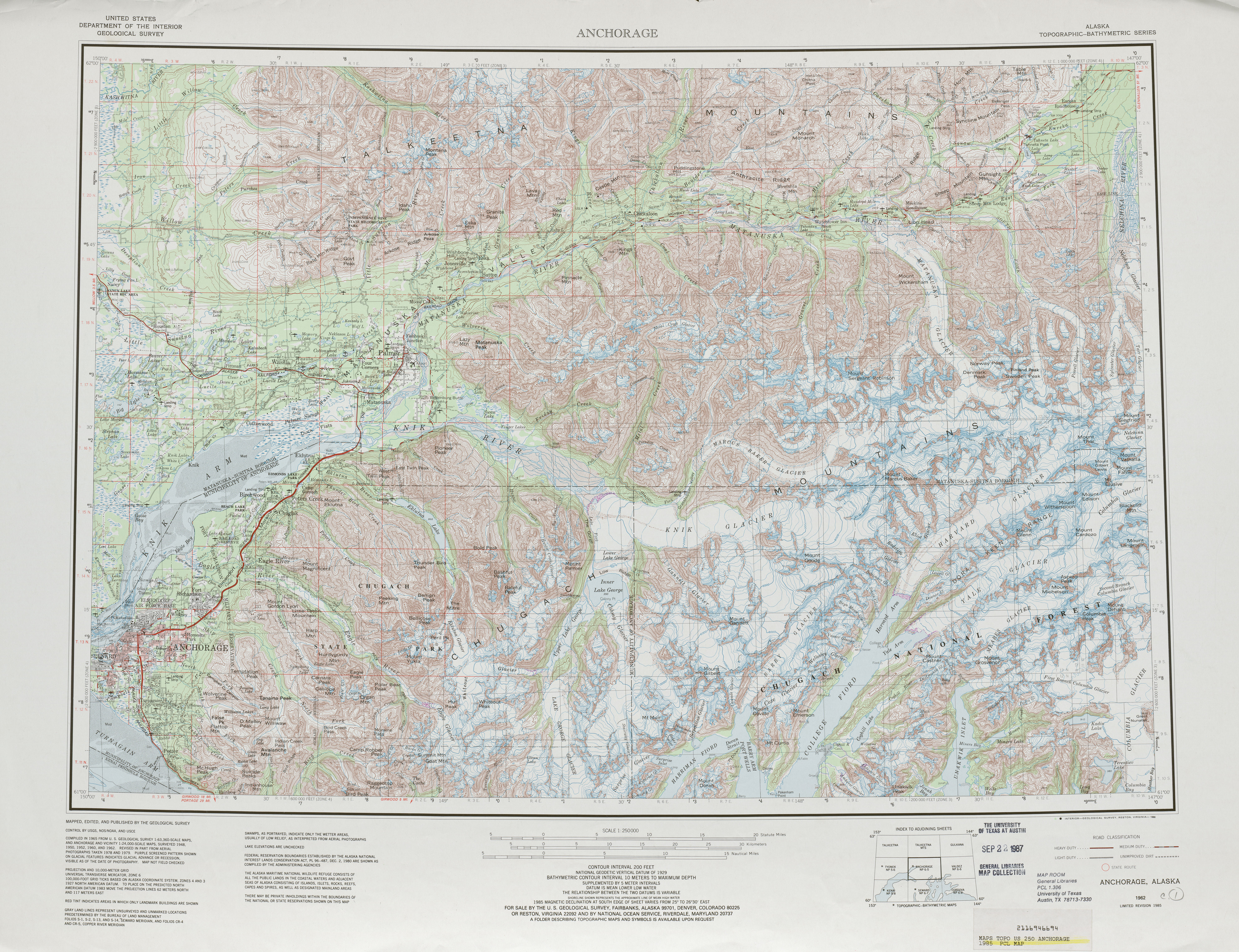
The Minnesota Drive Expressway was first created circa 1950, when the Spenard Road was built in the location of the current highway. By 1962, a highway existed from the northern terminus southward to Dimond Boulevard. By 1983, most portions of the highway had been created, and by 1985, the highway had been fully completed. The entire length of the highway was upgraded to expressway standards between 1989 and 2008.
In 2012 the highway was designated the Walter J. Hickel Expressway in honor of the former governor.
On November 30, 2018, a ramp connecting Minnesota Drive to area streets collapsed, as well as the surrounding hillside, during a magnitude 7.0 earthquake that struck the area. A driver in an SUV who was on the section of destroyed highway was stranded, but uninjured.
Major junctions
The entire route is in the Municipality of Anchorage.
References
References
- "Map of Alaska". [[United States Department of the Interior]].
- (March 2005). "National Highway System: Anchorage AK". [[Federal Highway Administration]].
- Wit, Jennifer W.. (2010). "Annual Traffic Volume Report". [[Alaska Department of Transportation & Public Facilities]].
- "Alaska Activity Map". Alaska Activity Guide.
- "Anchorage Map". Frommer's.
- "Anchorage Traffic Map". [[Alaska Department of Transportation and Public Facilities]].
- "History of Spenard". Spenard Chamber of Commerce.
- "Map of Alaska". [[United States Department of the Interior]].
- "Design & Construction Standards—Highway Safety Improvement Program (HSIP)—Central Region Projects & Status—Anchorage Area". [[Alaska Department of Transportation & Public Facilities]].
- "Map of Alaska". [[United States Department of the Interior]].
- Bridges Department. "2009 Bridge Inventory". [[Alaska Department of Transportation & Public Facilities]].
- (November 30, 2018). "'Major' damage to Anchorage area after severe 7.0-magnitude earthquake in Alaska". [[Washington Post]].

This article was imported from Wikipedia and is available under the Creative Commons Attribution-ShareAlike 4.0 License. Content has been adapted to SurfDoc format. Original contributors can be found on the article history page.
Ask Mako anything about Minnesota Drive Expressway — get instant answers, deeper analysis, and related topics.
Research with MakoFree with your Surf account
Create a free account to save articles, ask Mako questions, and organize your research.
Sign up freeThis content may have been generated or modified by AI. CloudSurf Software LLC is not responsible for the accuracy, completeness, or reliability of AI-generated content. Always verify important information from primary sources.
Report