From Surf Wiki (app.surf) — the open knowledge base
Ministry of Finance (Japan)
Government ministry of Japan

Government ministry of Japan
| Field | Value |
|---|---|
| agency_name | Ministry of Finance |
| nativename | 財務省 |
| nativename_r | Zaimushō |
| picture | File:Ministry of Finance Building (Japan).jpg |
| picture_caption | Ministry of Finance building in Kasumigaseki |
| formed | |
| preceding1 | Ministry of Finance (until 2001) |
| jurisdiction | Government of Japan |
| headquarters | 3-1-1 Kasumigaseki, Chiyoda-ku, Tokyo, Japan 〒100-8940 |
| minister1_name | Satsuki Katayama, Minister |
| minister2_name | Shinichi Nakatani, State Minister |
| minister3_name | Shōji Maitachi, State Minister |
| child1_agency | National Tax Agency |
| website |
The Ministry of Finance is one of the cabinet-level ministries of the Japanese government. The ministry was named the Ōkura-shō until 2001. The Ministry is headed by the Minister of Finance, who is a member of the Cabinet and is typically chosen from members of the Diet by the Prime Minister.
The ministry's history dates back to the 6th century in ancient Japan. After the Meiji Restoration, the Ministry of Finance was established. The ministry's power over banking supervision was split to the newly established Financial Services Agency in 1990s.
Overview
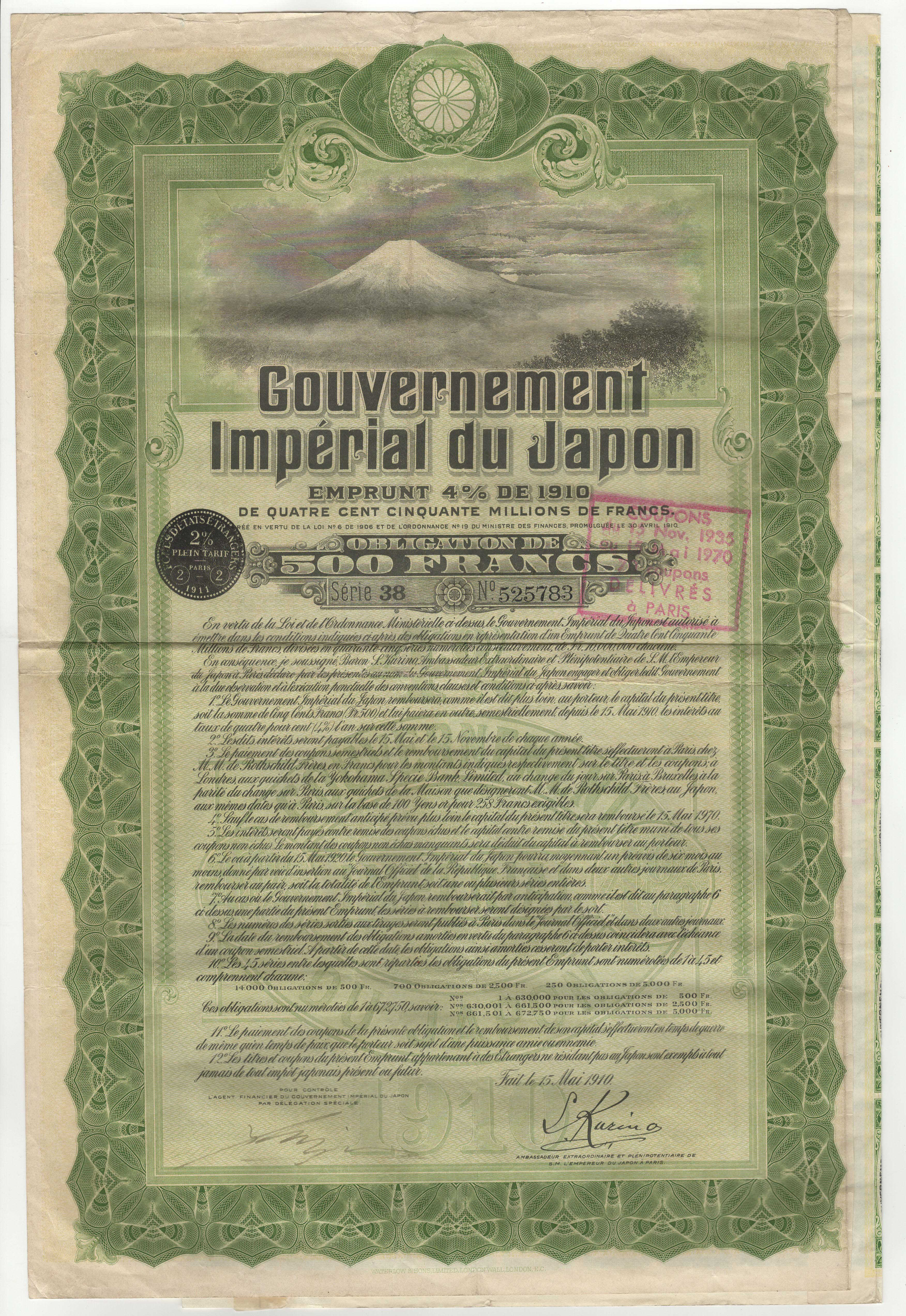
The Ministry originated in the 6th century, when the Ōkura was established as a state treasury in ancient Japan. When a modern system of government was introduced after the Meiji Restoration, the Ministry of Finance was established as a government body in charge of public finance and monetary affairs. It is said that new ministry employees are subtly reminded that the Ōkura-shō predates by some 1269 years when the new Constitution was imposed on the nation by the U.S. occupation forces in 1947.
The Ministry has long been regarded as the most powerful ministry in the Japanese government. After various financial scandals revealed in the 1990s, however, the Ministry lost its power over banking supervision to a newly established Financial Services Agency. It also lost most of its control over monetary policy to the Bank of Japan when the Diet passed a new Bank of Japan Law in 1998. In addition, it lost its ancient Japanese name when it was renamed the Zaimu-shō in January 2001, although its English name remained the same.
In financial markets, the Ministry is famous for its active foreign exchange policy. Its top civil servant on the international side, Vice Minister of Finance for International Affairs, is often quoted in the financial press. Former Vice Minister Eisuke Sakakibara was known as "Mr Yen", whereas his successors Haruhiko Kuroda and Zenbei Mizoguchi were often referred to as "Mr. Asian Currency" and "Mr. Dollar", respectively.
The ministry has been criticized for attempting to stop major media networks from broadcasting negative informations against the ministry, mainly by hounding newspapers and others until a mistake is found in the declaration of incomes, whether it is a minor one or not. Among the newspapers and other media networks affected by this action are Chunichi Shimbun, Sankei Shimbun, Kyodo News, and more. Following the 2024 Japanese general election, criticisms against the ministry skyrocketed, mainly due to the ministry hesitating to pass a proposal by the Democratic Party For the People to reduce the income taxes. The ministry was compared to the Aum Shinrikyo on the internet, with the ministry nicknamed "Zaimu Shinrikyō"(ザイム真理教) on social media platforms. Several protests calling for the dissolution of the ministry in front of the ministry were held from February 21, 2025. The protests, initially at the size of around a thousand spread across cities, with organizers holding protests in regional cities such as Fukuoka and Takamatsu. The lack of initial media attention towards this protest compared to others was criticized on the internet. The protests themselves received mixed reactions, with Hiroyuki Nishimura describing the protests as "a waste of time, money, and power", criticizing the protests' lack of force to cause any changes. Nishimura cited French protests in the interview, referring to how buildings were torched during protests. Shigeru Ishiba denied the accusation that the ministry held too much power over both deciding budgets and taxes, referring to how countries such as United States had similar systems. People who attend these demonstrations tend to be supporters of the Reiwa Shinsengumi and Sanseito, as well as those steeped in conspiracy theories.
Organizational structure

The Ministry is organized in six bureaus that provide the overall functions of the ministry:
- Minister's Secretariat
- Budget Bureau
- Tax Bureau
- Customs and Tariff Bureau
- Financial Bureau
- International Bureau
Independent Administrative Institutions
Six Independent Administrative Institutions are under the Ministry's control:
- Japan Mint
- National Printing Bureau
- National Research Institute of Brewing
- Nippon Automated Cargo Clearance System
- Commemorative Organization for the Japan World Exposition '70
- Japan Housing Finance Agency
Incidents
- In 1998, four officials at the ministry were arrested and 112 disciplined for accepting bribes in the form of visits to a no-pan shabu-shabu restaurant in Shinjuku.
- In March 2018 Toshio Akagi, an employee of the ministry's Kinki Local Finance Bureau, committed suicide after being forced to tamper with documents related to the sale of government owned land to school operator Moritomo Gakuen, a transaction defended by the ministry despite the resulting scandal. His wife began collecting signatures online for a petition to investigate the truth about Akagi's suicide. , she had gathered around 290,000 signatures.
- On May 20, 2022, the deputy vice minister for policy planning and coordination in the Ministry of Finance was arrested for beating and kicking a fellow passenger on a train in Tokyo.
- In 2023, , the deputy minister of the ministry was found to be a tax delinquent, and was later also found to be frequently overspeeding on roads. Although Kanda at first announced that he was not quitting, he later resigned from the position on November 13 before he was forced out of the position.
References
References
- "Kasumigaseki Today: Ministry of Finance".
- [http://findarticles.com/p/articles/mi_m2242/is_n1591_v273/ai_21089101 Lamont-Brown, Raymond. "The Ministry: The Inside Story of Japan's Ministry of Finance – a book review"], ''Contemporary Review''. August 1998.
- Machidori, S. (2023). Political Reform Reconsidered: The Trajectory of a Transformed Japanese State. Singapore: Springer Nature Singapore.
- 日本放送協会. (2024-07-17). "円安 市場介入を指揮 “令和のミスター円”神田財務官に問う {{!}} NHK {{!}} ビジネス特集".
- "税務調査にささやかれる“黒いウワサ”…メディアが「財務省の批判」を徹底的に避けるワケとは?【森永卓郎の見解】(THE GOLD ONLINE(ゴールドオンライン))".
- 諒, 西山. (2024-11-23). "財務省への批判がXで急増、リプライは衆院選後15倍以上に 殺到の批判コメントを可視化".
- "財務省解体デモ|テレ東BIZ".
- 産経新聞. (2025-02-24). "財務省の何が間違っているか 増税には熱心だが歳出削減にはさほど… 政策シンクタンク代表・原英史".
- "実施日程一覧 {{!}} 財務省解体デモ 時刻日程 「時刻日程.japan」".
- "「報じないから代わりに僕が」 財務省解体デモ、人気YouTuberにも波及(J-CASTニュース)".
- (2025-02-24). "財務省の前で消費税廃止や“解体”求めるデモ 「YouTube見て来た」参加者も 国民・榛葉幹事長「国民の悲鳴だね」|FNNプライムオンライン".
- (2025-02-24). "ひろゆき氏 連日行われている財務省解体デモを疑問視「効果のないデモは力とお金と時間の無駄」".
- "【速報】石破首相“財務省解体デモ”に「怒りは等閑視すべきではない」 専横は否定「理解得るべくさらなる努力を」(FNNプライムオンライン(フジテレビ系))".
- 実話BUNKAオンライン. (2025-02-28). "「財務省解体デモ」の危うさ:ロマン優光連載330".
- "Functions".
- https://japantoday.com/category/features/kuchikomi/entertainment-at-lurid-shabu-shabu-establishment-got-bankers-bureaucrats-in-hot-water
- (2021-10-07). "Bureaucrat's widow asks PM to look into Moritomo Gakuen scandal that led to her husband's suicide".
- McNeill, David. "An ultranationalist school, a suicide and a wife on a quest for the truth". The Irish Times.
- https://www.nnn.co.jp/dainichi/news/200402/20200402022.html {{Dead link. (February 2022)
- (2020-04-16). "森友・文書改ざん 再調査求める署名30万人突破へ 電通過労自殺の遺族も賛同".
- (20 May 2022). "Senior Japan ministry official arrested for alleged assault on train".
- (2023-11-13). "神田憲次財務副大臣が辞任、税金滞納で事実上の更迭か…改造内閣発足後の政務三役辞任は3人目".
- (2023-11-13). "“税金滞納”神田副大臣が辞任 元秘書明かす「お金に対して、時間に対して、すべてルーズなので」 政務三役の辞任は3人目 {{!}} TBS NEWS DIG (1ページ)".
This article was imported from Wikipedia and is available under the Creative Commons Attribution-ShareAlike 4.0 License. Content has been adapted to SurfDoc format. Original contributors can be found on the article history page.
Ask Mako anything about Ministry of Finance (Japan) — get instant answers, deeper analysis, and related topics.
Research with MakoFree with your Surf account
Create a free account to save articles, ask Mako questions, and organize your research.
Sign up freeThis content may have been generated or modified by AI. CloudSurf Software LLC is not responsible for the accuracy, completeness, or reliability of AI-generated content. Always verify important information from primary sources.
Report