From Surf Wiki (app.surf) — the open knowledge base
Military beret
Berets as part of a military uniform

Berets as part of a military uniform
Troops began wearing berets as a part of the headgear of military uniforms in some European countries during the 19th century; since the mid-20th century, they have become a component of the uniforms of many armed forces throughout the world. Military berets are usually pushed to the right to free the shoulder that bears the rifle on most soldiers, but the armies of some countries, mostly within Europe, South America, and Asia, have influenced the push to the left (i.e. "French pull").
In many countries, berets have become associated with elite units, who often wear berets in specific colours. For instance, the maroon beret is mostly traditional headgear for airborne forces around the world, with a few exceptions—for example, the Russian Airborne Troops, who wear a sky-blue beret, and the Portuguese Paratroopers who wear a green beret.
History
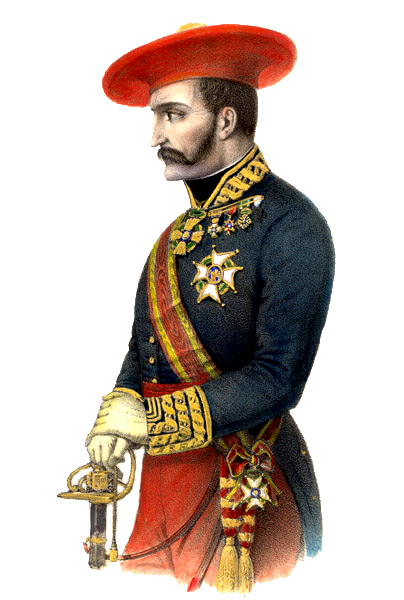
The use of beret-like headgear as a civilian headdress dates back hundreds of years, an early example being the Scottish Blue Bonnet, which became a de facto symbol of Scottish Jacobite forces in the 16th and 17th centuries. Berets themselves were first used as a military headdress in the 1830s during the First Carlist War in Spain, where they were said to have been imported from the South of France by Liberal forces, but were made famous by the opposing General Tomás de Zumalacárregui, who sported a white or red beret with a long tassel, which came to be an emblem of the Carlist cause.

The French Chasseurs alpins, created in the early 1880s, were the first regular unit to wear the military beret as a standard headgear. These mountain troops were issued with a uniform which included several features which were innovative for the time, notably the large and floppy blue beret which they still retain. This was so unfamiliar a fashion outside France that it had to be described in the Encyclopædia Britannica of 1911 as "a soft cap or tam o'shanter".
Berets have features that make them attractive to the military; they are cheap, easy to make in large numbers, can be manufactured in a wide range of colors encouraging esprit de corps, can be rolled up and stuffed into a pocket or beneath the shirt epaulette without damage, and can be worn with headphones.
The beret was found particularly practical as a uniform for armored vehicle crews; the British Royal Tank Regiment adopted a black beret which would not show oil stains and was officially approved in 1924. German Panzertruppen also adopted a black beret or Schutzmütze in 1934, which included a rubber skull cap as head protection inside.
The wearing of berets of distinctive colors by elite special forces originated with the British Parachute Regiment, whose maroon beret was officially approved in July 1942, followed by the Commando Forces whose green beret was approved in October of that year. The United States Army Special Forces adopted a darker green beret in 1955, although it was not officially approved until 1961.
By country
A
Afghanistan
.jpg)
Most berets were used by senior enlisted personnel and officers.
| Colour | Wearer | |
|---|---|---|
Algeria
Light green berets are used by para-commando units.
Angola
In the Angola Armed Forces, the following berets are in use:
| Colour | Wearer | |
|---|---|---|
Argentina
Berets are worn by some units in the Argentine Armed Forces, with distinctive colors for some units or functions. The beret colours are as follows:
| Colour | Wearer | |
|---|---|---|
| Colour | Wearer | |
|---|---|---|
| Colour | Wearer | |
|---|---|---|
Armenia
![]]The Armed Forces continue to wear Soviet-style (pieced fabric) berets, which are draped to the right in most circumstances. When appearing in public on parade, the berets are draped to the left side so that the insignia shows to observing dignitaries and the public.](https://upload.wikimedia.org/wikipedia/commons/b/bc/Armenian_Special_Forces.jpg)
- Light blue – Airborne forces, peacekeeping forces
- Black – Police troops
- Wine red – Special police troops
- Bright green – Border guards
Australia
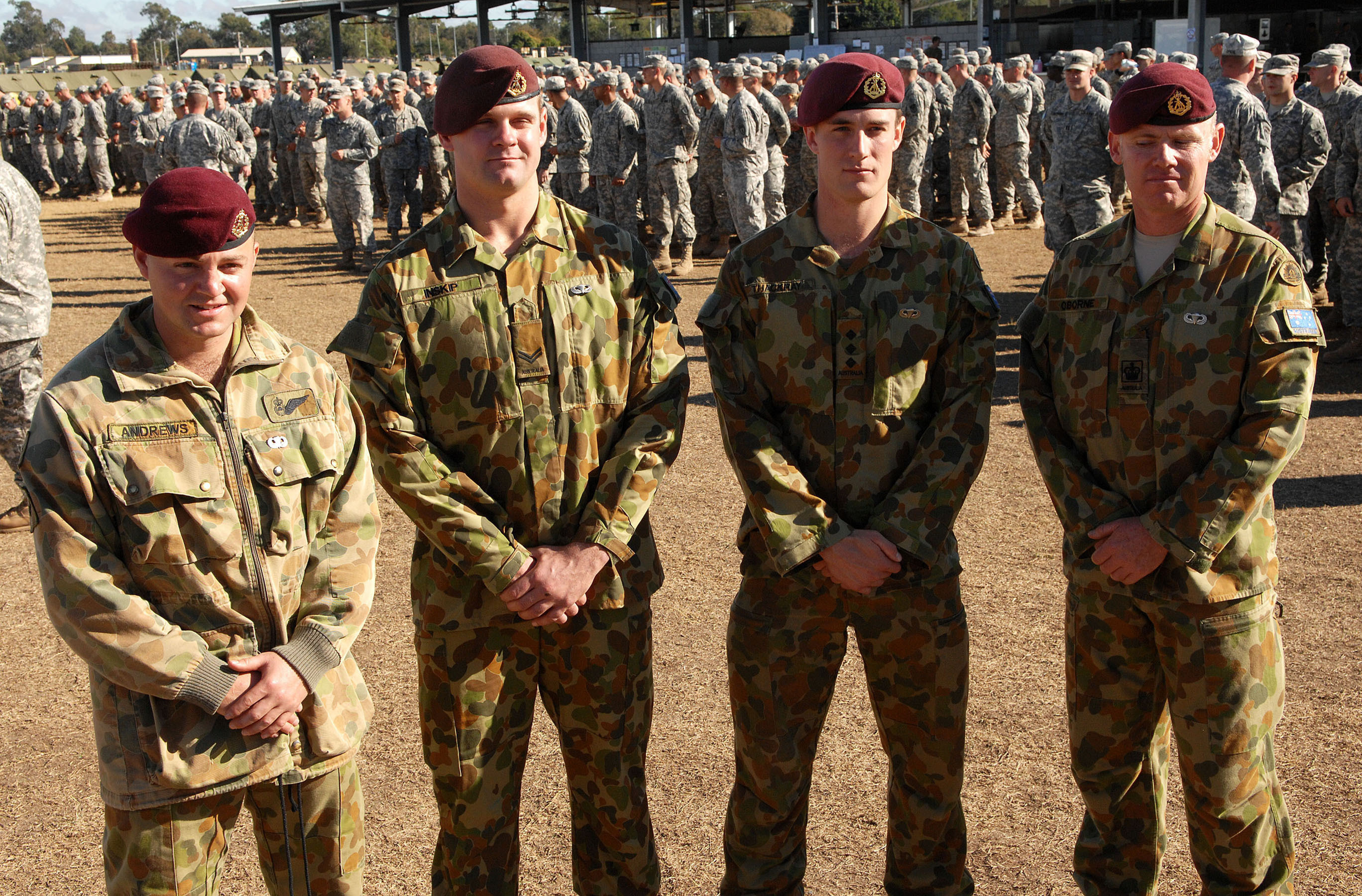
In all service branches, the beret is "bashed" to the right and a badge or insignia is worn above the left eye. In the army, all units can wear them with certain units wearing unique ones. In the navy, the beret is an optional item and in the air force, it is only worn by certain units.
| Colour | Wearer | |
|---|---|---|
| Colour | Wearer | |
|---|---|---|
| Colour | Wearer | |
|---|---|---|
Austria

The Austrian coat of arms is worn on the left side of the beret (officers in gold, NCOs in silver, enlisted personnel as well as conscripts in dark grey). An exception are members of the special forces (): after successfully completing the Basic Special Forces Course (Jagdkommandogrundkurs), they wear the Special Forces Badge (Jagdkommandoabzeichen) instead of the coat of arms on their berets.
| Colour | Wearer | |
|---|---|---|
Azerbaijan
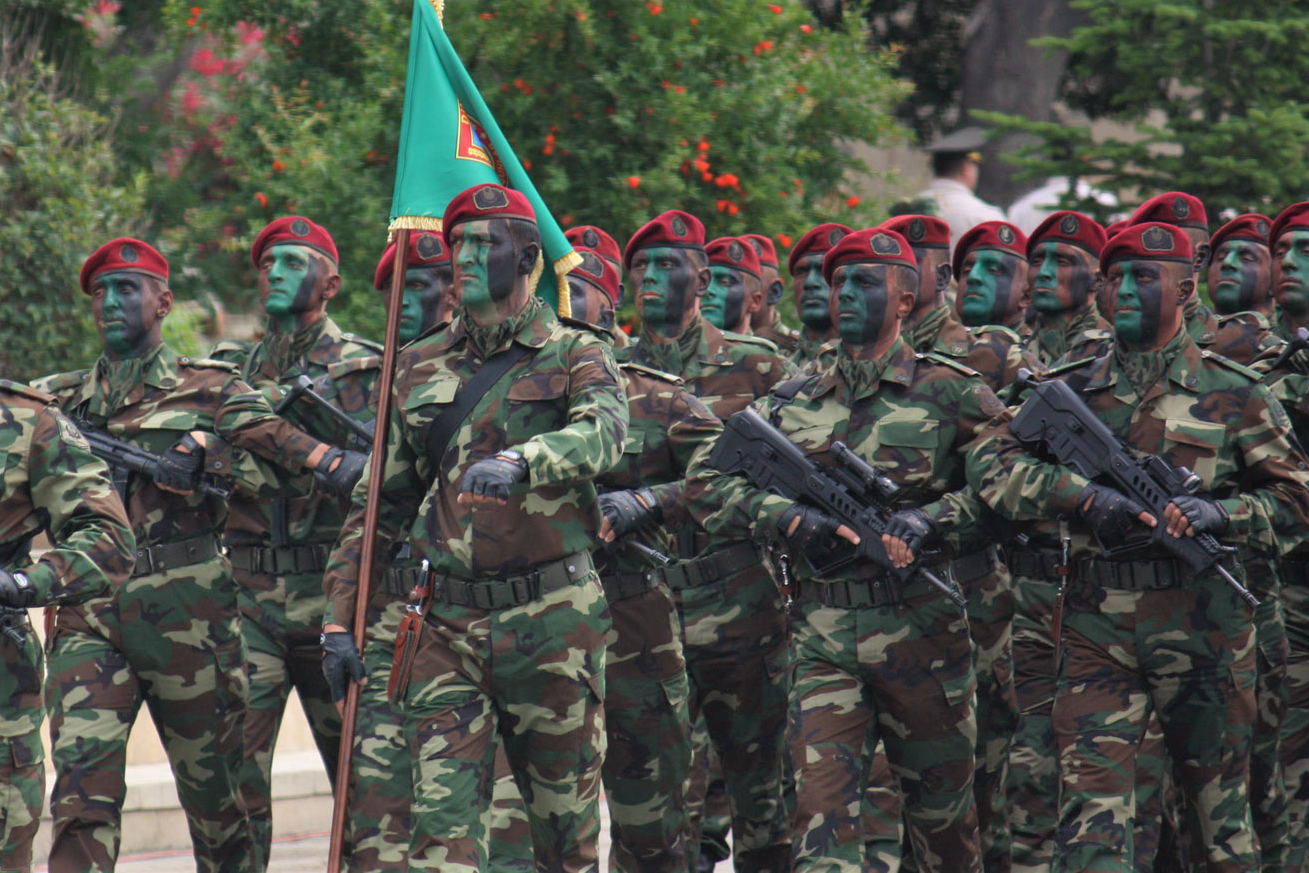
| Colour | Wearer | |
|---|---|---|
B
Bahrain
- Black – Royal Bahraini Army and Royal Bahraini Naval Force
- Blue – Royal Bahraini Air Force
- Red – Military Police
- Tan – Special Forces
- Green – Royal Guard
- Olive green – National Guard
- Maroon – Public Security Forces
- Dark blue – Coast Guard
- Dark green – Harasat
Bangladesh
.jpg)
| Colour | Wearer | |
|---|---|---|
| N\A |
Belgium

Initially, the only unit of the Belgian military to wear berets were the from the 1930s. Since World War II they have been adopted by all units. Berets vary in colour according to the regiment, and carry a badge (sometimes on a coloured shield-shaped patch) which is of gilt for officers, silver for non-commissioned officers and bronze for other ranks. Members of cavalry units all wear silver-coloured badges.
| Colour | scope=col | Wearer | |
|---|---|---|---|
Benin
| Colour | Wearer | |
|---|---|---|
Bolivia
Berets in Bolivian Army:
- Black – Paratroopers
- Maroon – Armoured Corps
- Green – Special Operations Forces, Commandos
- Camouflage – Special Forces "Bolivian Condors"
- Tan – Mountain Infantry (Satinadores de Montaña)
- Blue – Engineer units Berets in Bolivian Air Force:
- Royal blue – Air Force Infantry personnel
Brazil
.jpg)
| Colour | Wearer | |
|---|---|---|
| [[File:Camo EB.jpg | 50px]] | |
Bulgaria
Berets have been worn by Bulgarian military personnel since 1991. Berets vary in colour according to the military branch, and carry a crest pin (sometimes on a coloured background patch) resembling the unit's insignia.
- Red – Bulgarian Land Forces and the counter-terrorism police detachment SOBT
- Light blue – Bulgarian Air Force and the 68th Special Forces Brigade
- Black – Bulgarian Navy SOF and the Gendarmerie
- Green – Military police
C
Cambodia

- Dark red – 911 Special Forces Regiment
- Royal purple – Military Police
Cameroon
- Bataillon des Troupes Aéroportées (Airborne Battalion) – Dark red/maroon
- Bataillon Spécial Amphibie (Special Amphibious Battalion) – Dark green
- Bataillon d'Intervention Rapide (Rapid Intervention Battalion) – Light green
- Fusiliers de l'Air (Air Force Infantry) – Royal blue
- Fusiliers Marins (Marine Infantry) – Black
- Garde Presidentielle (Presidential Guard) – Royal purple
- All others army units – Navy blue
- Gendarmerie (Military Police) – Red
Canada
Main article: Uniforms of the Canadian Armed Forces#Berets

The colour of the beret is determined by the wearer's environment, branch, or mission. The beret colours listed below are the current standard:
| Colour | Wearer | |
|---|---|---|
Chile

Berets in Chilean Army:
- Black – Lautaro Special Operations Brigade (Commandos, Paratroopers and Special Combatants)
- Maroon – Armoured Cavalry
- Green – Mountain troops
- Olive green – Aviation Brigade
Berets in Chilean Navy:
- Black – Combat Divers, combat crews and Maritime Boarding and Police operatives
- Green – Marine special forces
Berets in Chilean Air Force:
- Dark blue – Parachuting demonstration group Boinas Azules and Ground troops
- Black – Special forces
China
Since May 5, 2000, the People's Liberation Army has adopted woolen berets for all its personnel, along with the traditional peaked caps. Type 99 beret
- Olive green – Ground Forces and Strategic Forces
- Dark blue – Navy
- Black – Marine corps
- Blue-grey – Air Force (including Airborne troops) Berets were not officially adopted by the CAPF, but some of the forces issued their own types NOT OFFICIAL:
- Red – CAPF Provincial Women Special Police Corps
- Dark blue – Public Security Police SWAT
During the 80s, camo berets were issued to some of the recon forces of PLA. It has no badge on it.
Type 07 uniform is being issued to both PLA and CAPF on August 1, 2007. Colours of 07 berets are changed to the same colours with the service uniform. And several changes in designs were made from type 99 beret. The berets were not being issued until summer of 2009 to most of the troops.
Other than colours of the berets, the most significant difference between type 99 and type 07 is the type 99 beret badge is cloth, while type 07 is plastic.
Colombia

Berets are worn by all personnel of the National Army of Colombia (Ejército), certain members of the Navy (Armada) and National Police (Policía Nacional), with distinctive colors for some units or functions. The beret colors are:
| Colour | Wearer in Army | Wearer in Navy | Wearer in Police | |||
|---|---|---|---|---|---|---|
Croatia
In the Croatian Army berets are used in special forces and guard brigades, as well as in cadet battalion.
During Croatian War of Independence, Croatian Army consisted of seven professional brigades—guard brigades, each having its beret colour. During the army reforms number of guard brigades was cut to two, but the battalions kept the names and insignia (colour of beret also) of ex brigades.
Joint staff:
- Green with golden cap badge – Joint staff
- Red – Presidential guard on their battledress uniforms
- Green (badge on the right) – Special Operations Battalion
- Black – Military Police
Guard brigades:
- Armored Mechanized Guard Brigade
- Black – 1st Mechanized Battalion "Sokolovi"
- Brown – 2nd Mechanized Battalion "Pume"
- Black – Tank Battalion "Kune"
- Motorized Guard Brigade
- Black – 1st Mechanized Battalion "Tigrovi"
- Green – 2nd Mechanized Battalion "Gromovi"
- Black – 1st Motorized Battalion "Vukovi"
- Red – 2nd Motorized Battalion "Pauci"
Black beret is also used in Cadet battalion. Also dark blue beret is used in Croatian Navy.
Cuba
In the Cuban Revolutionary Armed Forces, the following berets are in use:
| Colour | Wearer | |
|---|---|---|
Czech Republic


The Armed Forces of the Czech Republic use berets for both battledress and display uniform. The colour of the beret signifies the branch of the armed forces. The beret displays the Czech Army badge (silver for NCOs and enlisted, gold for officers, gold with linden branchlets for generals) and the rank of the individual.
The history of the military berets in the Czech military dates back at least to the World War I, when the Czechoslovak legionaires in France wore the standard field blue military berets as part of their uniforms. After the war and foundation of the First Czechoslovak Republic, the whole uniform continued to be used for ceremonial purposes by the Prague Castle guard. During the World War Two, the Czechoslovak soldiers serving in the 1st Czechoslovak Independent Armoured Brigade wore the standard British combat uniforms, including the black beret for armoured corps, with Czechoslovak insignia.
After the war, in 1948, the newly established Czechoslovak Airborne forces adopted the maroon beret, inspired by those worn by the British Paras. After a brief discontinuation by the Communist leadership on ideological basis it was re-established in 1960s and continues to be used until this day. After the Velvet revolution berets were selected as the new standard head cover for the newly democratic Armed Forces, with several colour variants to distinguish the type of Forces or Corps being developed.
In 2023 the Czech Armed Forces updated the colours of their berets, completely discontinuing the orange beret for the Rescue and Civil defence forces (disbanded) and adopting two new colours: blue for the Prague Castle Guard and khaki for the Ground forces (including the 4th Rapid reaction brigade, formerly wearing the maroon berets), both replacing the previous and broadly unpopular light green beret.
| Colour | Wearer | |
|---|---|---|
D
Denmark
The Royal Danish Army first introduced the black berets for its armour personnel in 1958. In 1968 it was extended to the whole army, Homeguard and parts of the Navy and Airforce, replacing the standard issue Side cap.
| Colour | Wearer | Disbanded Colors | ||
|---|---|---|---|---|
| Black | All Army combat units and artillery: JDR, GHR, LG, SLFR and DAR (2014–) | |||
| Green | All Army non-combat units: Engineers, Logistics, Intelligence, | |||
| Army Home Guard | ||||
| Blue | Signal troops (2019–) | |||
| Maroon | Jægerkorpset, SOKOM | |||
| Red | Military Police (all Branches) | |||
| Light blue | Royal Danish Air Force, | |||
| Air Force Home Guard | ||||
| Dark blue | Royal Danish Navy, | |||
| Naval Home Guard | ||||
| UN blue | Personnel serving with the United Nations on international peacekeeping missions | |||
| Dark brown | (1951–1989) | |||
| "Signal blue" | Signal troops (2014–2019) | |||
| Light blue (or "mouse grey") | Army Air Service (1992–2004) |
Dominican Republic
The Armed Forces of the Dominican Republic general issue beret is dark blue with this being standard across all services, however some units use different colours. Paratroopers wear maroon, green is worn by commandos, black by armoured corps.
| Colour | Wearer | ||
|---|---|---|---|
| Dark blue | General issued beret for all services. | ||
| Maroon (Amaranto) | Worn by paratroopers. | ||
| Green | Worn by commandos. | ||
| Black | Worn by armoured corps. | ||
| Tan | Worn by mountain infantry. | ||
| Blue | Worn by engineer units and army aviation personnel. | ||
| Camouflage | Worn by some commando/special forces units. |
E
Ecuador
.jpg)
Berets are worn by all personnel of the Ecuadorian Army (Ejército) and certain members of the Navy (Armada) and Air Force (Fuerza Aérea), with distinctive colours for some units or functions. The beret colours are:
| Colour | Wearer | |
|---|---|---|
Egypt
- Maroon – Paratroopers
- Forest green – Armour
- Dark blue – Infantry
- Dark blue with red band – Presidential Guard
- Black – Artillery
- Red – Military Police
- Green – Engineers
Eritrea
All personnel of the EDF or Eritrean Defense Forces wear Berets.
- Red – Air Force Units
- Green – Army Units
- Blue – Naval Units
- Purple – Border Guard
Estonia
All Estonian military personnel wore berets after the country's independence was reinstated in 1991. Although the practice of wearing berets was suspended, they were brought back in 2013.
- Green – Ground forces
- Black – Armoured corps, naval units
- Slate – Air force
- Red – Military police
- White – Military bands (when not in parade dress uniform)
F
Finland

The Finnish Defence Force uses berets with cap badges for the Army, Navy and the Air Force. The berets are worn in "clean" garrison duties such as roll calls and with the walking-out uniform, but not with the battle dress. Until the mid-1990s, the beret was reserved for troops with special status, such as the armoured troops, coastal jägers and the airborne jägers, but is nowadays used by all units. In winter, berets are replaced by winter headgear.
Berets are also used by the Finnish Border Guard, which is a military organization under the aegis of the Ministry of Interior during peacetime.
| Colour | Wearer | |
|---|---|---|
France

.JPG)
The military beret originated in the French Army, in the form of the wide and floppy headdress worn by the Chasseurs Alpins (mountain light infantry) from their foundation in the early 1880s. The practical uses of the beret were soon recognised and the Marine Infantry forming part of the Expeditionary Force sent in China in 1900 used berets as headwear A tight-fitting version was subsequently adopted by French armoured troops towards the end of World War I. Between the wars, special fortress units raised to garrison the Maginot Line wore khaki berets as did the 13th Demi-Brigade of Foreign Legion when it was created in 1940. The Vichy Milice of the War period wore a blue beret.
The beret in blue, red or green was a distinction respectively of the Metropolitan, Colonial and Legion paratrooper units during the Indochina and Algerian wars. In 1962 the beret in either light khaki or the colours specified above became the standard French Army headdress for ordinary use.
With the exception of the Commandos Marine and the Fusiliers Marins, whose berets are worn pulled to the right, all other French military berets (army, air force and Gendarmerie) are pulled to the left with the badge worn over the right eye or temple. Also the military forces of the countries that have historical, colonial, or cooperative ties with France such as Algeria, Burkina Faso, Cameroon, Central African Republic, Chad, Congo, Côte d'Ivoire, Gabon, Lebanon, Mali, Mauritania, Morocco, Niger, Sénégal, Togo, Tunisia or have been trained by the French military wear their beret pulled left.
Gendarmerie personnel serving with the European Gendarmerie Force (EUROGENDFOR) an EU crisis response and intervention force wear the standard EUROGENDFOR royal blue beret and badge when so assigned.
| Colour | Wearer | |
|---|---|---|
G
Gabon
Berets in Gabonese Army:
- Dark red/rouge – Paratroopers
- Light grey – Armoured troops
- Green – Republican Guard
- Green – Commandos Marine
- Dark red – Army Medical Corps
- Dark blue – Other Army units
Germany
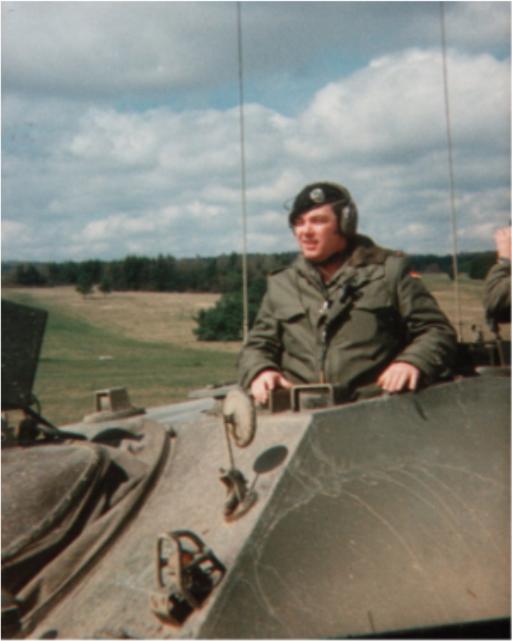
The German Heer uses berets with different badges for every branch of service. The Luftwaffe and the Marine issue dark blue berets only to their ground or land combat units (called Luftwaffensicherungstruppe and Marineschutzkräfte) respectively. Berets are usually worn at special ceremonies and roll calls, although units with a special esprit de corps, especially armoured and mechanized infantry (Panzergrenadiere) battalions, wear their berets all the time. German berets are always pulled to the right, with the badge visible over the left temple.
| Colour | Wearer | |
|---|---|---|
Military bands wear the beret colour of their respective division (e.g. black in the 1st Panzer Division).
Ghana
The beret colours worn by the Ghana Army are as follows:
- Black – Armoured Corps, Artillery Corps
- Dark green – Airborne Force (ABF)
- Red – Military Police
- Midnight blue – All other Arms and Corps
- Tan – Special Forces
Greece
The beret colours worn by the Hellenic Army are as follows:

- Light blue – Presidential Guard
- Black – Armoured Corps
- Green – Special Forces (including Commandos, Marines and Parachute despatchers/riggers)
- Dark red/maroon – Army Aviation
- Bright red/scarlet — Airmobile troops (71st Airmobile Brigade "Pontus" and 5th Airmobile Brigade "5th Cretan Division")
- Dark blue – All other Arms and Corps when in 8a, 8b and 8c Service Dress When in camouflage fatigues, the camouflaged cap is worn instead of the dark blue beret.
Guatemala

- Black – Parachute Brigade (Brigada Paracaidista)
- Maroon – Kaibiles (Special Forces)
H
Hungary
History: the first beret-type cap (khaki colour, with black ribbon and "eagle" badge) was issued for Air Force enlisted personnel in 1930, but berets became popular in the 1970s, when reconnaissance troops (paratroopers) were issued with rifle green (or grass green) berets. Previously maroon beret was also experimented and even reversible (green to camo) "multi-purpose" berets were produced, but the standardization started on the 1975 military parade. In 1982 military secondary school students were issued with green berets too, while in 1987 River Force troopers received dark blue beret. After the collapse of the communism the beret as "mark of the elite trooper" received more and more popularity among soldiers. Light green (with border guard's badge) berets were issued for Border Guard reaction forces between 1990 and 2007. The berets of Hungarian forces were made first in "eastern-european style" (like worn by most Warsaw Pact armies), sewn together from 4 pieces. After 1993 "western style" one-piece berets were adopted.
Berets currently in Hungarian military:
- Black (with tank troops' badge) – Armoured Units
- Black (with – battalion number – numbered oak leaf badge) – Territorial Voluntary Reserve Forces
- Black (with anchor badge) – River Forces
- Scarlet red (with MP badge) – Military Police
- Scarlet red (with artillery or AA badge) – Artillery, Anti-Aircraft Artillery
- Rifle green (with paratroops badge) – Paratroopers, Long-range recons, Field recons
- Rifle green (with engineer's badge) – Engineers
- Rifle green (with infantry badge) – Infantry (only in foreign missions)
- Dark brown (with infantry badge) – Guard Battalion Special Team (only in the 2000s, discontinued)
- Tan (with special operation's badge) – 2nd "Vitéz Bertalan Árpád" Special Operations Brigade
- Maroon (carmine red) (with LC badge) – Logistic Corps (issued in 2020)
Except these, mission-type berets were/are used in international peacekeeping missions (UN blue, EBECS yellow, MFO brick red etc.) worn. Beside the official versions different unofficial beret types, colours and badges are worn, for example Dark Blue berets by Signal Corps cadets etc.
I
Iceland
Icelandic armed services commonly use berets.
| Colour | Wearer | |
|---|---|---|
India
_(cropped).jpg)
The beret is the standard headgear for the Various forces of Indian Armed Forces. Berets are worn by officers and Other ranks, apart from Sikhs, who wear turbans. The beret colours worn by the Indian Army are as follows:
- Light green (shades vary considerably) – Infantry regiments and Directorate of Military Intelligence (India)
- Rifle green – Rifle Regiments, some Light Infantry regiments (including the Mechanised Infantry Regiment), Assam Rifles, Commando Battalion for Resolute Action, and National Cadet Corps (India)
- Maroon – The Parachute Regiment, Para (Special Forces), Special Frontier Force, Garud Commando Force, MARCOS, Special Group
- Black – Indian Army Armoured Corps, Border Security Force, National Security Guards, Indian Navy, Military Nursing Service and Indian Coast Guard
- Bluish grey – Army Aviation Corps, Cadets of Training Academies of Army and Indian Air Force NC(e)
- Scarlet – Corps of Military Police (India)
- Navy blue – Regiment of Artillery, Indian Army Corps of Engineers, Indian Army Corps of Signals, Corps of Army Air Defence (India), All Service arms of Indian Army, Defence Security Corps, Indo-Tibetan Border Police, Central Industrial Security Force, Central Reserve Police Force, Sashastra Seema Bal and Railway Protection Force
- Sand – Border Road Organisation
- Dark blue – National Disaster Response Force
- Dark Green - All General Officers
- Light blue – All personnel serving with the United Nations forces irrespective of unit, arm or service
Indonesia

The beret is the standard headgear of armed forces and police personnel in Indonesia. It is also worn by paramilitary and other uniformed services in the country such as the Fire Brigade, Search and Rescue, Scouts, civil militias (such as Banser) and civil paramilitary organizations. In the Military Services (Army, Navy and Air Force), the berets are dragged to the right (the insignia are worn on the left side), while in the Indonesian National Police force and Military Police Corps, the berets are dragged to the left (the insignia are worn on the right side). Both having its own meaning, dragged to the right meaning "ready for combat and defense" and dragged to the left meaning "ready for law enforcement and order". Military and Police services according to their beret colours which represent different units within the force are as shown below:
- Indonesian Army (TNI AD)
- Green – Army HQ, Territorial Army, regular Infantry, and Army staff
- Red – Army Special Forces Command ("Kopassus"), including Para-Commandos
- Dark Green – Raider Infantry air-mobile units, Mechanized Infantry
- Green – Strategic Reserve Command Corps ("Kostrad") which itself includes infantry brigades, Airborne/Para brigades, reconnaissance platoons, cavalry and artillery battalions.
- Black – Cavalry and Armored Cavalry (tank) Corps
- Brown – Field Artillery Corps and Air Defense Artillery Corps
- Green – Corps of Engineers (previously steel grey)
- Red maroon – Army Aviation Corps (previously maroon/brick red later switched to green for 11 years and switched back to red maroon)
- Green – Signal Corps (previously khaki)
- Green – Logistics and Transportation Corps (previously dark blue)
- [[File:US Navy 070420-N-4965F-005 Sailors assigned to Indonesian naval training ship KRI Dewaruci stand by to handle mooring lines while pierside Naval Station Pearl Harbor.jpg|thumb|Sailors of the Indonesian naval training ship [[KRI Dewaruci|KRI Dewaruci]] at the [[Naval Station Pearl Harbor]]]] Indonesian Navy (TNI AL)
- Navy blue – Standard berets for the Navy, worn by all personnel such as Naval seamen and naval sailors in duty of ships' company, or on the Naval bases.
- Black – Submarine forces
- Dark Blue – Naval Aviation, Underwater Rescue Service, Naval Hydro-Oceanography Center
- Reddish purple (magenta) – Marine Corps and Joint naval special forces (Jala Mengkara Detachment)
- Maroon – Frogman Command
- [[File:Paskhas commandoes.png|thumb|[[Kopasgat]] commandos in formation wearing their distinctive orange beret]] Indonesian Air Force (TNI AU)
- Dark blue – Standard berets for the Air Force, with Air Force insignia worn by Airmen and Air Force staff
- Orange – Air Force Infantry Quick Reaction Forces Command (Kopasgat)
- Inter-services
- Black – All personnel in Armed Forces/TNI HQ
- Light blue (beret dragged to the left) – Military Police personnel from all branches (Army, Navy, Air Force)
- Light blue – All personnel attached in United Nations' Peace Keeping Force (Garuda Contingent), and the Presidential Security Force (Paspampres)
- Red – Special Operations Command
- Dark brown – Cadets and midshipmen of the Indonesian Military, Naval, and Air Force Academies
- Light brown – Armed Forces Reserve Component (since 2022)

- Indonesian National Police (paramilitary, not part of the armed forces / TNI), all Police berets are dragged to the left unless noted
- Dark blue – Mobile Brigade Corps (Brimob)
- Dark brown – Patrol Units (Sabhara), Canine Units, Music, Security Services
- Ultramarine – Water and Aerial Units
- Light blue – Internal Affairs and Provost, U.N. Police with U.N. beret which dragged to the right
- Maroon – Cadets of the Indonesian Police Academy
- Non-military
- Dark brown – Scouts
- Light brown – Ministry of Defence employees and Armed Forces Civil Servants (PNS), beret dragged to the left
- Purple – College Students Regiment
Iran
.jpg)
| Colour | Wearer | |
|---|---|---|
Iraq

The beret color system used for the different branches of the Iraqi military and security forces changed after the fall of Saddam Hussein. Beret colors currently (and formerly) worn by Iraqi forces are as follows:
- Maroon – Army (formerly Special Republican Guards, Paratroops and/or Special Forces)
- Khaki (olive green) – No longer used (formerly Logistics and Transport personnel)
- Green – Special Forces (formerly Commandos and Thunder Paratroops)
- Bright red – Military Police
- Black – Police (formerly Republican Guards and regular Army)
- Blue – Air Force
- Dark Blue – Iraqi Navy
- Blue-Grey – No longer worn (formerly Iraqi Air Force)
Ireland

.jpg)
All Army personnel wear a common capbadge, a sunburst insignia with the letters "FF" inscribed above the left eye of the beret. The Irish Defence Forces cap badge for Officers in the Army has a more subdued appearance. Air Corps and Naval Service personnel wear their own cap badge on berets.
The beret colours worn by the Irish Defence Forces are as follows:
| Colour | Wearer | |
|---|---|---|
The Cavalry Corps of the Irish Army do not wear berets; instead, they wear a Glengarry hat with black ribbons.
The beret colours worn by the Reserve Defence Forces are as follows:
| Colour | Wearer | |
|---|---|---|
Israel
Main article: Israel Defense Forces insignia

Israeli Defense Forces soldiers wear berets only on formal occasions, such as ceremonies and roll calls, and in disciplinary situations such as courts martial and imprisonments. While they are not attending formal occasions, they must place the beret beneath the left epaulette. The Border Police, which are a unit of the civil police rather than the military IDF, wear their berets at most times. The beret colors are as follows:
| Colour | Wearer | |
|---|---|---|
| [[File:Camouflage.svg | 30px]] | |
| [[File:IsraelCombat Intelligence CorpsBeretCamouflageColors.png | 30px]] | |
Italy
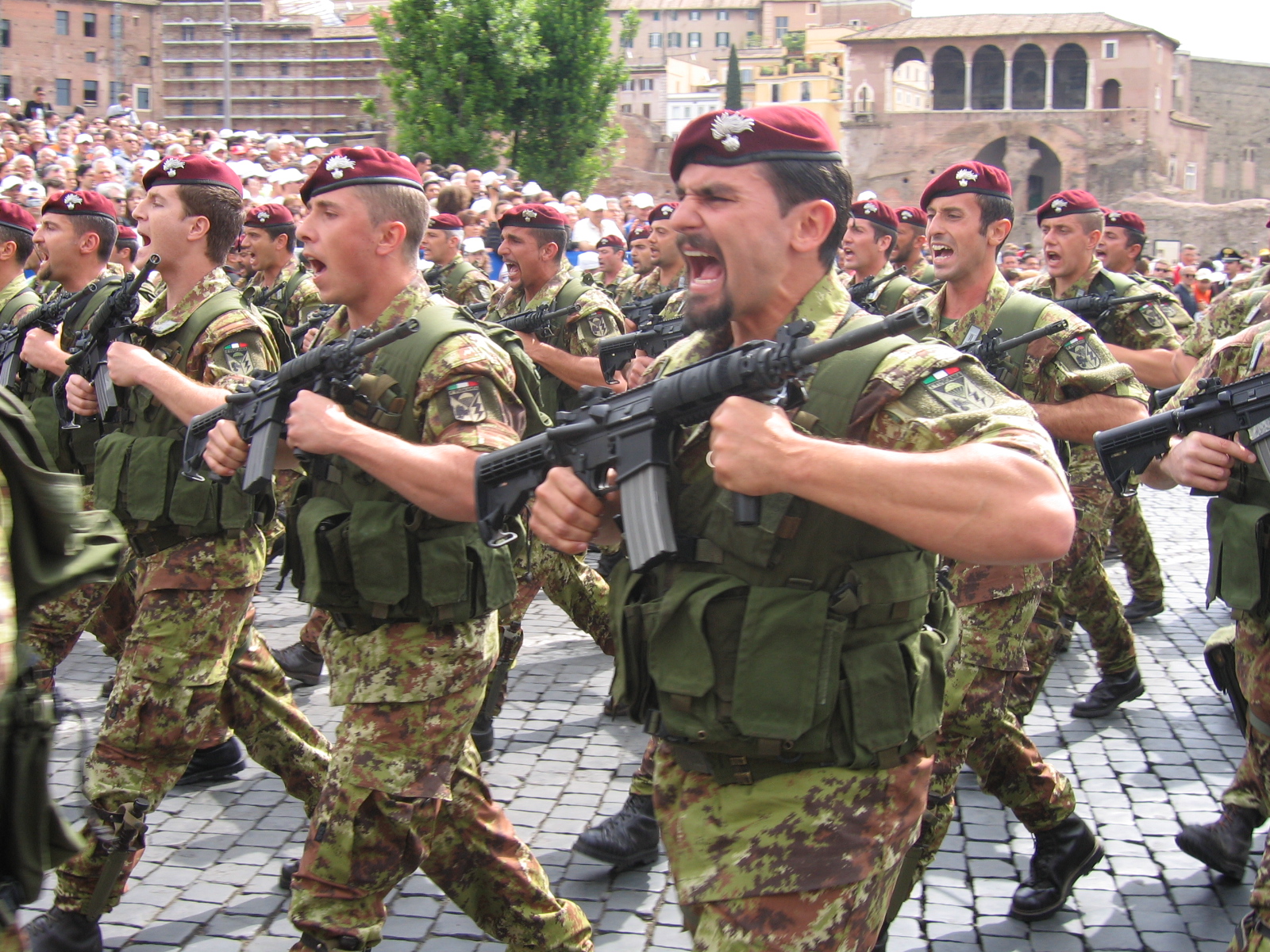

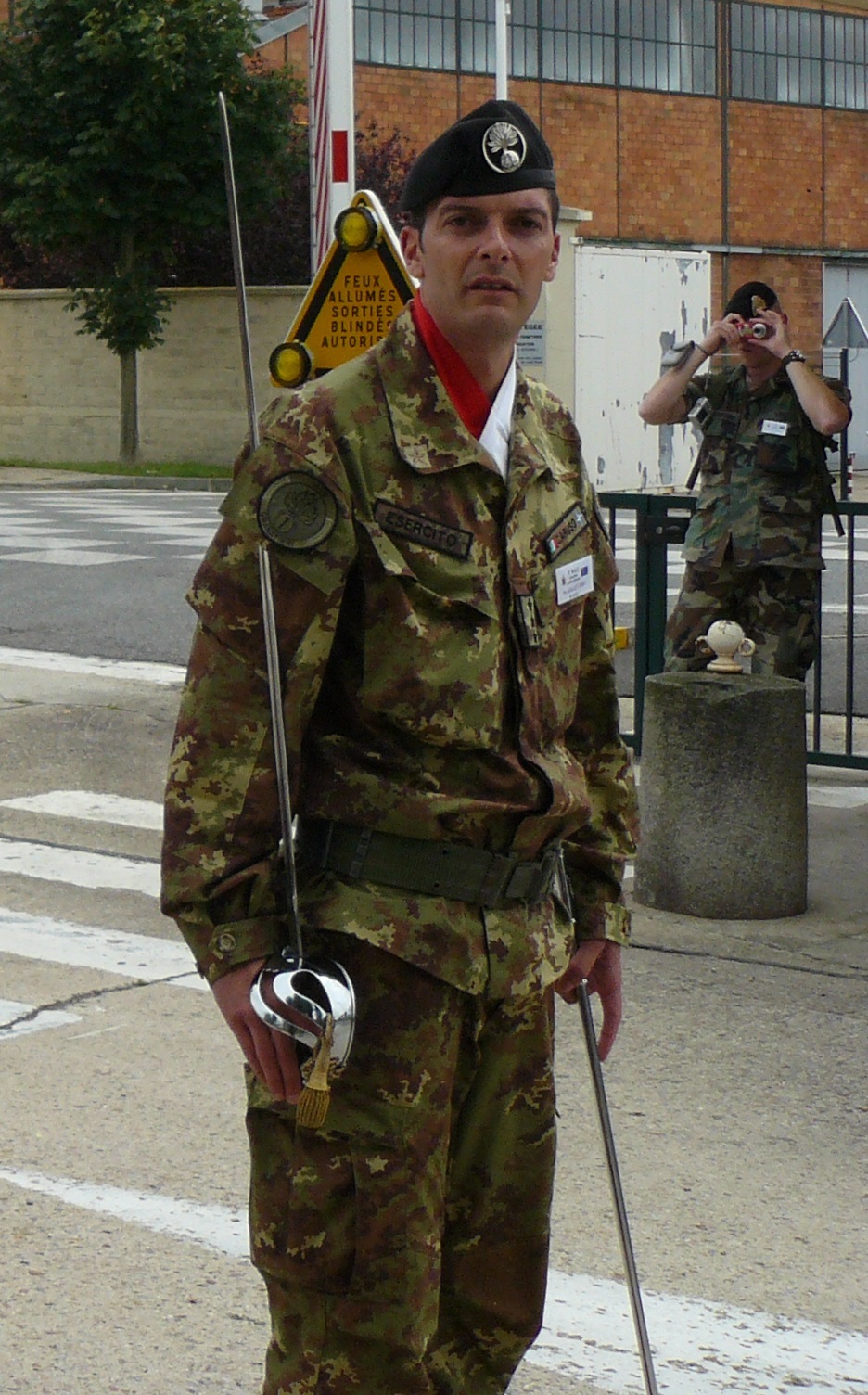
Italian Army personnel used to wear a garrison cap alongside the combination cap, until the early 1970s when the garrison cap was replaced by the beret. Only the Alpini never wore berets, wearing the characteristic Cappello Alpino. Until the early 1980s the general Army colour for the beret was drab khaki, the black being reserved to armoured units. The colours presently used by the Italian Army are as follows:
- Maroon – Paratroopers, Folgore Airborne Brigade
- Light blue – Army Aviation, 66th Airmobile Infantry Regiment
- Black – All other Army units (the Bersaglieri light infantry have royal blue beret strings, instead of black ones like the rest of the Italian Military)
- Green – The Lagunari Serenissima amphibious infantry Regiment received 'Lagoon green' berets in 2011 after service in Afghanistan
- Asparagus green – Army Incursori Special Operations Forces
The Italian Navy uses the following berets:
- Green – Navy Commando frogmen Operational Raider Group (COMSUBIN GOI)
- Medium blue – Navy Rescue frogmen Operational Divers Group (COMSUBIN GOS)
- Navy blue – San Marco Marine Brigade of the Italian Navy
- Orange – Units part of the Multinational Force and Observers mission in Sinai
The Italian Air Force uses the following berets:
- Teal blue – Air Force guards
- Tan – Air Force Incursori (RIAM)
Other Italian services that use berets:
- Maroon – Carabinieri Tuscania Airborne Regiment; Police di Stato Parachute units (Display Team and NOCS)
- Green – Guardia di Finanza (AT.P.I); Corpo Forestale dello Stato
- Light blue – Prison Police
- Dark blue – Carabinieri (MP units)
- Red – Carabinieri Cacciatori Hunter units
- Grey – Guardia di Finanza
- Blue – Polizia di Stato
J
Jamaica
The Jamaica Defence Force wear a variety of colours with a common cap badge, the colours are as follows:
| Color | Wearer |
|---|---|
| Sky blue | |
| Scarlet | |
| Green | |
| Dark blue | |
| UN blue |
Japan
All members in the Ground Self-Defense Force are authorized to wear wool berets referred to as the "ベレー帽" (ベレーボウ or bereebou) as an optional head covering for dress, working, and camouflage uniforms since 1992. However, it is normally considered a special dress item, worn for public relations events or parades. An embroidered goldwork cap badge representing the JGSDF logo identical to the one used on the service dress peaked cap is affixed to the beret. Berets were previously rifle green, but with the introduction of the Type 18 service uniform, the color has been changed to black.
JGSDF personnel on United Nations missions wear UN blue berets with the United Nations emblem pinned to the front.


Jordan
The beret colours worn by the Jordanian Army are as follows:
- Brown – Infantry
- Maroon – Special Forces
- Black – Armoured Corps
- Green – Royal Guards
- Dark blue – Artillery
- Sky-blue – Engineers
- Red – Military police
- Grey blue – Air Force
- Dark blue – Navy
K
Kazakhstan
- Light blue – Paratroops
- Maroon – National Guard – Internal security
- Orange – Emergency Rescue Units
- Navy blue – Navy Units
Kenya
The beret colours worn by the Kenya Armed Forces are as follows:
- Black – Armoured Corps
- Green – Airborne Battalion
- Red – Military police
- Dark blue – All other Arms and Corps including naval service
- Blue grey – Air Force
Kuwait
- Green – Kuwait National Guard
- Olive Green – National Guard Training Institute
- Commando Green – 25th Commandos Brigade
- Dark Green – EOD Army
- Black – Army Ground Forces and Navy Forces and Air Defense
- Police Black – Ministry of Interior and National Assembly Guard
- Fire Black – Fire Force and Logistics Support
- Dark Blue – General Fire Department (Former)
- Red – Military Police
- Maroon – Amiri Guard Authority
- Commando Maroon – 67th Special Operations Battalion National Guard
- Blue – Aviation National Guard
- Air Force blue – Air Force
- Light blue – Fire Force Prevention Sector
- Commando Blue – Special Forces
- Tan – Naval Special Units
- Khaki Brown – Military College
- Khaki Tan – Military College (Former)
- UN Blue – United Nations Peacekeepers
- Gulf Green – Joint Peninsula Shield Forces
L
Latvia
The beret colours worn by the Latvian Army are as follows:
- Olive green – Special Tasks Unit
- Red – Military police
- Black – National Guard, Navy
- Tan – Mechanized infantry brigade (army) from 18.11.2018
- Blue – Air Force
Lebanon
All units in the Lebanese Armed Forces wear berets when not in combat mode (helmet), training camp (cap) or formal uniform (formal hat).
The Lebanese Army, unlike most militaries, wears the beret slanted (pulled down) on the left side as the army emblem is positioned to the right aligned with the right eyebrow.
- Green – The Intervention Regiments (SF) (6 Regiments)
- Brown – Airborne Regiment (SF) (Al Moujawkal)
- Red – Military Police
- Black – All 11 army brigades
- Maroon beret – Rangers Regiment Fawj al-Maghaweer (SF), Marine Commandos Maghāwīr al Baħr (SF)
- Dark blue – The Mobile Gendarmerie Unit in the Lebanese Internal Security Forces
- Tan – The reconnaissance and intervention unit in the Lebanese General Security (al Rassed wal Tadakhol)
Lithuania

| Colour | Example | Wearer | |
|---|---|---|---|
| Green | [[File:Berete SP.png | frameless | 87x87px]] |
| Black | [[File:Berete MPAB.png | frameless | 87x87px]] |
| Burgundy | [[File:Berete KASP.png | frameless | 87x87px]] |
| Maroon | [[File:Berete Jegeriai.png | frameless | 87x87px]] |
| Dark blue | [[File:Berete KNT.png | frameless | 87x87px]] |
| Scarlet | [[File:Berete KP.png | frameless | 87x87px]] |
| Grey | [[File:Berete YPT.png | frameless | 87x87px]] |
M
Malaysia

The beret is the headgear of ground forces, air aviations and special forces in the Malaysian Armed Forces. The colours presently used are:
| Colour | Wearer | |
|---|---|---|
| Colour | Wearer | |
|---|---|---|
| Colour | Wearer |
|---|---|
| Dark blue | |
| Sky blue | |
| Red |
Maldives
The beret colours worn by the Maldives National Defense Force (MNDF) are as follows:
- Maroon – Special Forces
- Red – Military Police
- Green – Marines and other support units
- Black – Parade Beret for Coast Guard
Mali

The beret colours worn by the Malian Armed Forces are as follows:
- Red – Paratroopers
- Brown – National Guard
- Green – Infantry and other army units
- Dark blue – Air Force
- Blue – Police
Mexico
.jpg)
In the Mexican Army, the beret is worn by:
- Green – Special Forces
- Maroon – Paratroopers (formerly purple, circa 1980s)
- Black – Presidential Guards Corps
- Steel Grey – Armor
- Brown – Airmobile Units
In the Mexican Navy:
- Black – Paratroopers, Navy Special Forces
Armed Forces wide, the blue beret with the UN arms is used by peacekeeping forces beginning in 2015–16, when Mexico sent armed forces personnel to UN peacekeeping operations.
Mongolia

Berets are worn by Mongolian Police since 1994. Police berets are different from the army beret in color and in shape, while it is pushed to the left while army berets are pushed to the right.
- Dark green – All branches of Armed forces
- Red – Internal troops
- Dark blue – National emergency troops (rescuers)
- Black – Police unit (pushed to the left)
- Light blue – UN peacekeepers (pushed to the right)
Morocco
The Moroccan military Uniform is inspired from the French Uniform, the berets are usually pulled to the left with the badge worn over the right eye or temple.
- Lime green – Armed Forces (Les Forces armees royales), including Paratroopers
- Red – Royal Guard (La garde royale)
- Blue – Royal Moroccan air force
- Dark blue – The Air Force and Security Forces
- UN blue – Moroccan-United Nations troops Personnel serving with the United Nations on international peacekeeping missions
- Brown – Moroccan Auxiliary troops
Mozambique
.jpg)
Presently, the following berets are in use by the Defense Armed Forces of Mozambique:
- Brown – Army general use
- Red – Commandos
- Olive Green – Forcas Especiais (Special Forces)
- Black – Fuzileiros (Marines)
N
Namibia
| Colour | Wearer | |
|---|---|---|
Nepal

- Deep Green: Nepalese Army
- Maroon: Nepal Police
- Grey: Armed Police Force
Netherlands
.jpg)

When the Royal Netherlands Armed Forces acquired new modernised uniforms (designed by the Dutch couturier Frans Molenaar) in 2000, the berets changed as well. Since 2004, soldiers of the Royal Netherlands Army have worn a petrol (blue-green) beret, whereas previously they wore brown.
The following colours are also used (before and after the modernisation):
Navy:
- Dark navy blue with a bronze metal crown and anchor on a red flash – Royal Netherlands Marine Corps
- Dark navy blue with a gold color metal anchor on a black flash – Royal Netherlands Navy
- Dark navy blue with a silver color metal anchor on a Blue flash – Civilian base security for the Royal Netherlands Navy Army:
- Green (The Green Beret) – Commandos of the Korps Commandotroepen
- Maroon (The Red Beret) – Airmobile troops of the 11 Air Manoeuvre Brigade "11 Luchtmobiele Brigade" (Air Assault)
- Black – Armour and Cavalry
- Petrol (blue-green) – Royal Netherlands Army Note: The only Dutch military unit that do not wear a beret are the Gele Rijders (Horse Artillery), who wear a blue garrison cap with yellow trimming.
Air Force:
- Grey-blue – Royal Netherlands Air Force
Military Police:
- Bright blue – with emblem Koninklijke Marechaussee (Royal Gendarmerie) Other:
- UN blue – All military members of the United Nations
- Brick red – All military members of the Multinational Force and Observers
- Dark blue – 1(GE/NL)Corps (Eerste Duits-Nederlandse Legerkorps)
All regiments and services have their own distinctive colours. There are quite a lot, but the number of colours in the logistic services was reduced in 2001. This colour is shown in a patch of cloth behind the beret flash. The intendance (maroon), transport troops (blue), military administration (pink; hence the nickname 'Pink Mafia'), technical service (black), and medical troops and service (green) lost their colours and all now wear yellow patches. In 2010, the technical service and medical troops and services recovered their colors. The intendance and transport troops merched into one regiment with new colours (maroon with blue border) and the administration got the crimson color.
- Infantry – Red, except:
- Grenadier Guards – Red with blue border
- Rifle Guards – Green with yellow border
- Fusilier Guards – Orange with blue border
- Regiment van Heutsz – Black with orange border
- Limburg Rifles Regiment – Green with maroon border
- Korps Commandotroepen – Black with dark green border
- Cavalry (Armour) – Blue with white, red or orange border
- Cavalry (Reconnaissance) – Blue with black border
- Artillery – Black with red border
- Engineers – Brown
- Signals – Blue with white border
- Logistics – Yellow (obsolete since 2010)
- Legal Affairs – Black with white border
- Psychological and Sociological Service – Red
- Protestant Chaplains – Black
- Catholic Chaplains – Blue
- Jewish Chaplains – Black
- Humanist Society Chaplains – Bright green
- Hindu Chaplains – Bright blue
- Troops in Initial Training – Red
- Royal Military Academy Cadets – Red with yellow border
- Physical Training Instructors – Blue
- Technical Staff – Maroon
New Zealand
Royal New Zealand Navy –
- Dark blue – Military police
- Dark blue/black – All other branches
New Zealand Army –
Pre 2002 beret colours –
- Khaki – Royal Regiment of New Zealand Artillery
- Green – Royal New Zealand Infantry Regiment
- Jet black – Royal New Zealand Armoured Corps
- Royal blue – Royal New Zealand Military Police
- Red – Regular Force Cadet School
- Rifle green – Royal New Zealand Corps of Signals
- Grey – Royal New Zealand Nursing Corps
- Cypress green – New Zealand Intelligence Corps
- Sand or 'ecru' – New Zealand Special Air Service
- Dark blue – All other corps
Post 2002 beret colours –
- Sand or 'ecru' – New Zealand Special Air Service
- Dark blue – Royal New Zealand Military Police
- Rifle green – All other corps
Royal New Zealand Air Force –
The RNZAF does not currently wear berets except for:
- Dark blue – Military police
Nicaragua
The Nicaraguan Armed Forces wear berets in the following colours:
Berets in Nicaraguan Army:
- Green – Special Forces (COE)
- Black – Generals of Staff's Protection VIP Berets in Nicaraguan Navy:
- Dark blue – Special Naval Forces
Nigeria
- Dark green – Infantry soldier
- Light red – Military Police
- Dark red – Medical
- Dark blue – Artillery
- Black – Engineering
- Red – Provost
Norway
_(2).jpg)
The Norwegian armed forces use the beret as a garrison cap, but some units (mostly armored vehicle personnel) also use it in the field. The Norwegian beret and all other headwear except those of the Navy and His Majesty The King's Guard always have the current king's cipher as a badge in gold (most of the army) or silver (the air force); currently this is a numeral 5 inside an H, for "Harald V". The navy has a crowned gold anchor for their enlisted personnel, a crowned gold anchor surrounded by a circle of rope for their petty officers, and a crowned golden anchor surrounded by leaved branches for officers. The colours used are:
| Colour | Wearer | |
|---|---|---|
The special operations units of the Navy wear the same berets as the rest of the navy. However they have a coloured patch behind the cap badge, the colour of which determines the unit:
| Colour | Wearer | |
|---|---|---|
O
Oman
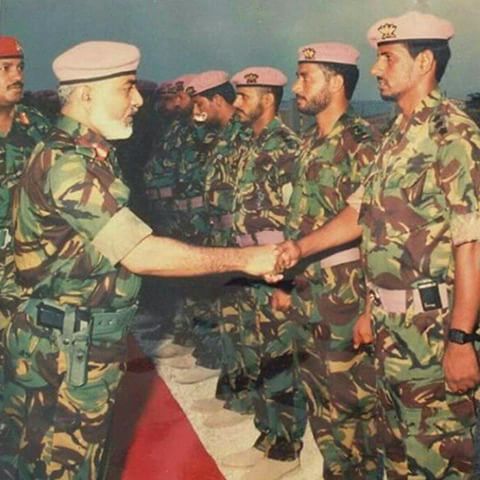
The Royal Omani Armed Forces wears the beret as its standard headgear. Each color divisions are as follows:
| Colour | Wearer | |
|---|---|---|
P
Pakistan
- Rifle green – Frontier Force Regiment, Defence Services Guards
- Rifle green with cherry color patch behind the badge – Baloch Regiment
- Green with green plume – Punjab Regiment
- Cherry Pink with a red feather hackle – Sindh Regiment
- Green with red patch behind badge – Azad Kashmir Regiment
- Chitrali style with white feather – Northern Light Infantry
- Black – Regiments of Armored Corps
- Dark blue – Regiment of Artillery, Corps of Electrical and Mechanical Engineers, Corps of Signals
- Maroon – Army Air Defence, Army Aviation Corps
- Light blue – Pakistan Army Corps of Engineers, Army Services Corps
- Red – Pakistan Army Medical Corps, Military Police
- Dark maroon – Special Service Group (SSG)
- Green with red plume – Pakistan Military Academy Cadets
- Dark blue – Worn by the General Staff officers (rank of Colonel and above) irrespective of their Regimental association.
State of Palestine

The Palestinian Security Services adopted berets as their standard headgear since their establishment in 1994 following the Oslo Accords. The colouring scheme is similar to neighboring Jordan and Egypt.
Each color divisions are as follows:
| Color | Wearer | |
|---|---|---|
Paraguay
The Paraguayan Armed Forces wear berets in the following colours:
Berets in Paraguayan Army:
- Green – Paratroopers
- Dark blue – Presidential Guard Berets in Paraguayan Navy:
- Camouflage – Special Naval Forces Berets in Paraguayan Air Force:
- Red – Air Force Infantry and Airborne personnel
Panama
Berets were widely worn by many units in the Panama Defense Forces (PDF) under Manuel Noriega. The PDF was abolished in February 1990, and with it all of the old military units stood down. Unique beret insignia were never approved, so units authorized to wear berets wore a combination of the approved shoulder insignia, as well as rank and qualification insignia (e.g. parachutist wings) on the berets. The following were being worn at the time of the 1989 invasion:
- Black – 7th Infantry Company "Macho de Monte"; Comando Operacional de Fuerzas Expeciales (COFFEE - Special Forces Command)
- Maroon – Battalion 2000; 2nd Airborne Infantry Company "Puma"; 3rd Infantry Company "Diablo Rojo"
- Lime green – 4th Infantry Company "Urraca"
- Camouflage – 7th Infantry Company "Macho de Monte"; Comando Operacional de Fuerzas Expeciales (Cadre)
Philippines
| Color | Wearer | |
|---|---|---|
| Color | Wearer | |
|---|---|---|
| [[File:British dpm2.jpg | 25px]] | |
| Color | Wearer | |
|---|---|---|
Poland
Black berets were introduced before World War II for tank and armoured car crews. During World War II, berets were widely adopted in the Polish Army on the Western Front, armored troops – black, airborne – grey, commando – green. After the war in the communist era, berets were worn only by armoured units (black), navy for field and work uniform (black), paratroopers (maroon), and marines (light blue). After 1990, the beret became the standard headgear in the Armed Forces of Republic of Poland. Around the year 2000 the design of the Polish Army Beret changed, the beret sewn together from three pieces of material with four air holes, two at each side was changed to a smaller beret molded from one piece of material with no air holes. The following colours are in use:

| Colour | Wearer | |
|---|---|---|
Berets in other ministries:
| Colour | Wearer | |
|---|---|---|
The black beret is also the distinctive headgear of World War II veterans, particularly Armia Krajowa veterans.
The dress code of the Polish armed forces states that when not worn on the head or kept in a locker the beret should be placed under the left shoulder loop. This practice was discontinued due to introducing new field uniform (wz. 2010) with rank insignia placed on chest.
Portugal
The beret was first introduced in the Portuguese Armed Forces in 1956, when the Air Force Paratroopers adopted the green beret. The Portuguese Army adopted the brown beret for its Caçadores Especiais special forces in 1960, generalizing its wear to all units in 1962.
The following colors of berets were or are still worn by the Portuguese Military and Paramilitary forces:
| Colour | Wearer | Army | Navy | Air Force | GNR – National Republican Guard (Portuguese Gendarmerie) | International | Decommissioned | |
|---|---|---|---|---|---|---|---|---|
| Black | Army general use | |||||||
| Moss/dry green | Special Operations Troops (Rangers) | |||||||
| Red | Commandos (worn unofficially by some units since 1966 and officially since 1974) | |||||||
| Green | Paratroopers | |||||||
| Blue | Navy general use | |||||||
| Dark blue (Ferrete) | Marine Corps | |||||||
| Light blue | Air Force Police | |||||||
| Dark green | GNR general use | |||||||
| Beige | GIPS (GNR rescue unit) until 2013 (still worn unofficially since then) | |||||||
| UN blue | Personnel serving with the United Nations on international peacekeeping missions | |||||||
| Brown | Caçadores Especiais in 1960–1962, Army general use 1962–2019 | |||||||
| Yellow | Special Groups of Mozambique until 1975 | |||||||
| Maroon | Paratrooper Special Groups until 1975 | |||||||
| [[File:French lizard pattern camo.jpg | 30px]] | Camouflage | Guinea 3rd and 5th Commando and native caçadores companies (unofficial) in 1966–1968, Flechas until 1975 | |||||
| White | Volunteer Aerial Formations until 1975 | |||||||
| Black | Provincial organization of volunteers and civil defence until 1975 |
File:Capt. Miguel Jorge KFOR Tactical Reserve Maneuver Battalion Liaison Officer Mobile Gun System Battalion, Deputy S3, Braga, - Portuguese Army Cavalry (black beret).jpg|Army black beret File:Portuguese Army Special Operations ( Ranger ) Beret.jpg|Army Special Operations Troops (Rangers) moss/dry green beret File:Portuguese Army Paratrooper green beret.jpg|Army Paratroopers green beret File:Portuguese Navy Marine dark blue beret.jpg|Navy Marines dark blue beret File:Honor-guard.jpg|Air Force Police light blue beret
R
Rhodesia

Zimbabwe-Rhodesia made changes to the army in 1979 and shortly after Zimbabwe disbanded all the regiments Rhodesian Security Forces in favour of the Zimbabwe Defence Forces in 1979–1981.
Up to this point the Security Forces wore the beret as the primary working dress and service dress headgear. Like most countries formerly associated with the British Empire, Berets were coloured according to unit or service branch, with a distinctive regimental cap badge pinned above the left eye. The Rhodesian Security Forces were integrated into the new Zimbabwe Defence Forces in 1980.
Rhodesia introduced the brown beret as a new colour for specialist berets, for use of the Selous Scouts, which has since been used for specialist units in the Finnish and Brazilian forces, and with the New Zealand SAS
Rhodesian beret colours were as follows:
| Colour | Wearer |
|---|---|
| Grey | |
| Brown | |
| Black | |
| Maroon | |
| Beige | |
| Scarlet | |
| Green | |
| Tartan green | |
| Dark blue | |
| Blue grey | |
| Bright blue |
Like the United Kingdom, Rhodesia also used flashes and hackles behind cap badges on their berets, such as:
- The blue, yellow and red shield on the medical corps beret
- The blue diamond flash on the military police beret
- The red outline of the Rhodesian Artillery beret
- The red tombstone of the Grey Scouts beret
- The red diamond hacking of the Rhodesian Regiment beret (similar to that of the KRRC)
- The Blue and White hackle of the 4th Battalion Rhodesian Regiment Beret
Romania
_during_a_Raven_UAV_familiarization_flight_at_the_Romanian_Land_Forces_facility_in_Buzau,_Romania,_June_2,_2011_110602-M-GN320-005.jpg)
| Colour | Wearer | |
|---|---|---|
Russia

The Soviet Union's beret color scheme detailed below (e.g. for airborne troops and naval infantry) remained in effect in post-1991 Russia. In the late 1990s the Russian Ministry of Extreme Situations introduced orange berets for its own troops.
In the Soviet Union berets were sewn together from three pieces of material (top, front, and rear) with four air holes, two at each side, worn with the service badge centered between the eyes and draped to the right in most circumstances. When appearing in public on parade, the berets were draped to the left side so that the insignia shows to observing dignitaries and the public. The multi-piece beret has changed to a smaller beret molded from one piece of material with no air holes.
In 2011 the Russian defence ministry authorised the wearing of berets by all non-naval military personnel as part of their field uniforms.
The current beret colour scheme is:
| Colour | Wearer | |
|---|---|---|
File:Russian paratroopers 106th VDD.JPG|Russian Paratroopers 106th VDD File:27osn Den Pamyati.JPG|Olive and Red beret wearing National Guardsman on the Day of Remembrance File:2018_Moscow_Victory_Day_Parade_43.jpg|National Guard troops wearing maroon berets in the 2018 Moscow Victory Day Parade File:2018 Moscow Victory Day Parade 42.jpg|EMERCOM troops marching in the 2018 Moscow Victory Day Parade.
S
Saudi Arabia
.jpg)
| Colour | Worn by | |
|---|---|---|
Senegal
- Tan/sand – Bataillon de Parachutistes (Army Parachute Battalion)
- Brown – Bataillon de Commandos (Army Commando Battalion)
- Black – Detachment Forces Speciales (Special Forces Detachment)
- Orange – Groupement Mobil d'Intervention (Mobile Intervention Group)
- Blue – Legion de Gendarmerie d'Intervention (Gendarmerie Intervention Unit)
- Green – Compagnie Fusilier de Marine Comandos (COFUMACO)(Navy Marine Commandos)
Serbia
.jpg)
The Serbian Armed Forces are wearing berets as their standard headdress.
| Colour | Wearer | |
|---|---|---|
Singapore

The Singapore Armed Forces have adopted the beret as their standard headdress. The different color divisions are as follows:
| Colour | Wearer | |
|---|---|---|
The berets are all adorned with the Singapore Armed Forces coat of arms, with the exception of the Air Force beret, Military Police beret, navy beret, Digital and Intelligence Service beret which are adorned with their respective cap-badge. Officers in the navy have a different cap-badge from the ratings. Officers of the rank of colonel and above have a different cap-badge.
- Green – National Cadet Corps (Land)
- Blue – National Cadet Corps (Air)
- Black – National Cadet Corps (Sea)
- Dark blue – National Police Cadet Corps
- Black – National Civil Defence Cadet Corps
All berets have the National Cadet Corps, National Police Cadet Corps or National Civil Defence Cadet Corps crest on the front.
Slovakia
| Colour | Wearer | |
|---|---|---|
Slovenia
- Rifle green – Special forces
- Green – Military Police
- Olive green – Signal units
- Black – Armour units
- Maroon – motorised infantry/Paratroopers
- Dark blue – Navy units
- Light blue – Air force
- Grey – Mountain units
- Sand – NBC units
- Red – Guard unit
Somalia
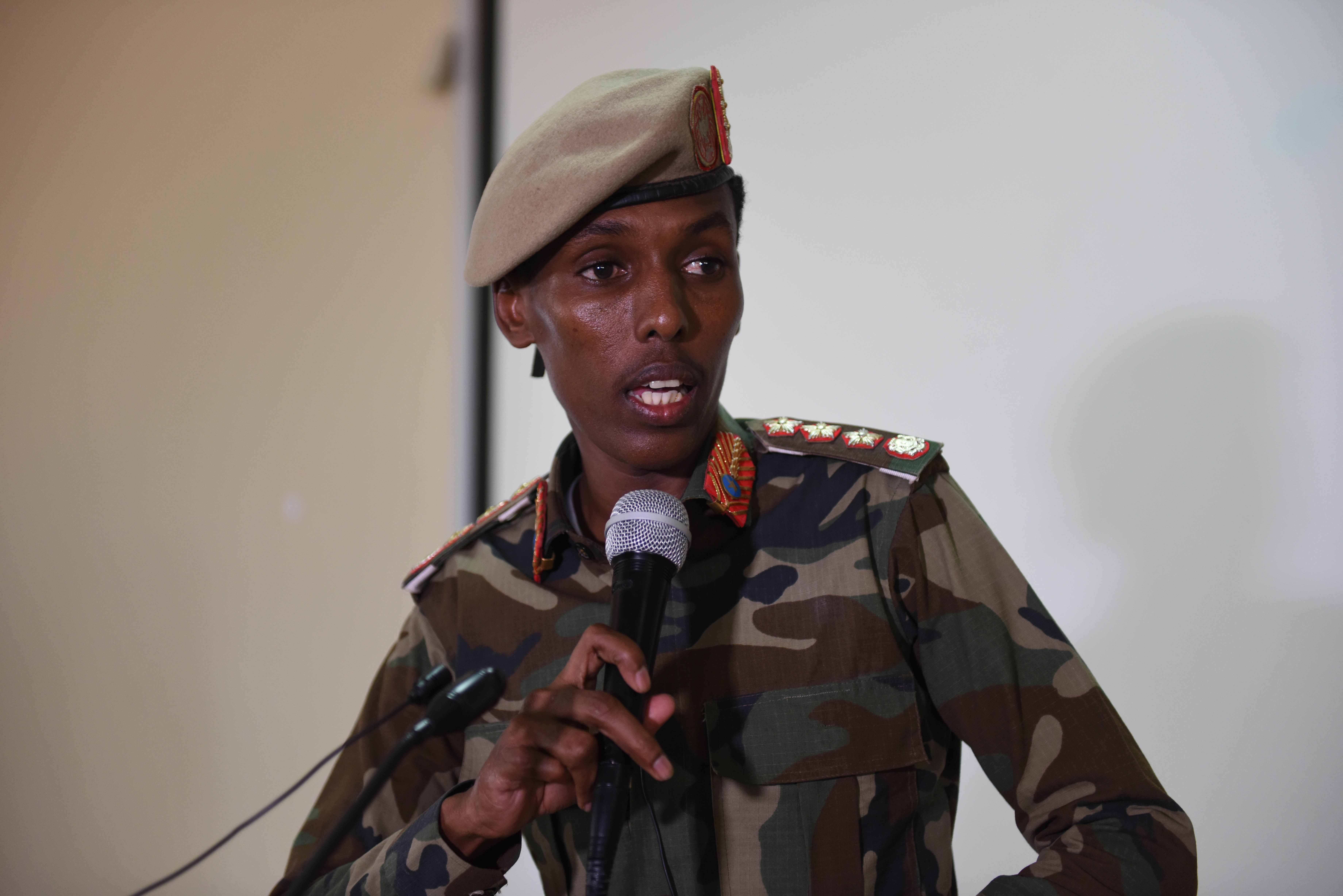
The Somali Armed Forces has the beret has the standard headgear since its inception in 1960. Each function within the security forces of Somalia has a unique colour.
| Colour | Wearer | |
|---|---|---|
South Africa
The South African National Defence Force wears the beret as its standard headgear. The different color divisions are as follows:
| Colour | Wearer | |
|---|---|---|
The berets are all adorned with the unit's insignia. Some of the traditional units wear other headgear - for example, the Cape Town Highlanders Regiment and the band of the South African Military Health Service.
Outside of Army, the South African Military Health Service wear light maroon berets. The South African Special Forces Brigade which is a separate entity, not part of the army, also wear the Maroon beret which is traditional for parachute units in the western world.
South Korea
Berets are worn by members of the Republic of Korea Army and some elite units of the South Korean Military, including:
- Black – Army Republic of Korea Army Special Warfare Command (with yellow backing), Reserve Officer Training Corps, KATUSA (Korean Augmentation to the United States Army)
- Dark green – Army
- Dark blue – Air Force Military Police
- Red – Air Force Combat Control Team (CCT)
- Maroon – Air Force Special Air Rescue Team (SART)
- Green – Marine Corps Force Reconnaissance, Marine Corps armoured units
- Grey – Navy UDT/SEAL Team (Naval Special Warfare Flotilla)
- Camouflage – Army armoured units
- Reddish brown – Army aviation
- UN blue – United Nations peacekeepers
Other than these units, several secret commando units (mostly disbanded in the mid-1990s, among them the "Unit 684" which became infamous for its mutiny) formed to infiltrate North Korea during the Cold War days wore black berets and adorned them with the badges of individual units. Korean liaison soldiers serving in the U.S. Eighth Army (KATUSA) have also been wearing black berets along with American uniforms since that beret became a standard headgear of the U.S. Army in 2001.
South Vietnam
American advisers assigned to these units wore the berets.
- Red – Paratroopers
- Green – Marines, LLDB
- Maroon – Rangers
- Black – Navy Junk Force
- Black – Palace guards
- Tan – political officers
Soviet Union

In the Soviet Union berets were sewn together from three pieces of material (top, front and rear) with four air holes two per side seam, one per each side, worn with the service badge centered between the eyes and draped to the right in most circumstances. When appearing in public on parade, the berets were draped to the left side so that the insignia shows to observing dignitaries and the public. Berets were worn only by:
| Colour | Wearer | |
|---|---|---|
During this period berets were also worn by female personnel of the Armed Forces for everyday and parade uniform. The colour of the beret corresponded with that of the main uniform (e.g. Army and Air Force everyday uniform – olive, Navy uniform – navy blue or white, Army parade uniform – sea green, Air Force parade uniform – dark blue).
Spain

The beret is used in the various armed forces of Spain. The colours used are:
| Colour | Wearer | |
|---|---|---|
Sri Lanka
- Maroon – Army Commando Regiment
- Black – Sri Lanka Armoured Corps, Army Special Forces Regiment, Navy Special Boat Squadron, Air Force Regiment Special Force
- Commando green – Sri Lanka Sinha Regiment, Mechanized Infantry Regiment, Military Intelligence Corps, Sri Lanka Army Women Corps, Sri Lanka Rifle Corps, Special Task Force
- Green – Gajaba Regiment (Infantry)
- Blue – Vijayabahu Infantry Regiment, The Gemunu Watch (Infantry) & All Other Ranks of Artillery, Engineers, Signals, Light Infantry & all Service Corps
- Khaki – All Officers of Sri Lanka Artillery, Corps of Engineers, Corps of Signals, Light Infantry, Service Corps, Corps Engineer Services, General Service Corps, Electrical & Mechanical Engineers, Sri Lanka National Guard, Sri Lanka Army Pioneer Corps
- Red – Military Police
- Dark blue – Sri Lanka Air Force
Sweden

The beret is used in the various armed forces of Sweden.
- 2015 regulations:
| Color | Wearer | |
|---|---|---|
- 2009 regulations:
| Color | Wearer | |
|---|---|---|
Sudan
The beret is worn by all police and military personnel.
- Maroon – Paratroops
- Pink – special police
Switzerland
Since 1995, when it replaced the grey side cap, the beret is worn with the dress uniform and with the personally issued battle dress uniform by all Swiss soldiers. In training, a black beret (without insignia) is worn by mechanised units, otherwise a camouflage-coloured field cap is worn instead.
The colours used are:
- Black — armoured and mechanised units; signals and headquarters troops; rescue troops; NBC specialists; intelligence, military justice and general staff personnel
- Green — infantry, musicians
- Red — artillery
- Deep blue — Air Force
- Blue — medical personnel
- Dark red — logistics troops
- Grey — military police
- Light blue — troops on UN missions
- Tan (Sand) – Special Operation Forces
Syria

The beret was used in the now disbanded (2024) Syrian Arab Armed Forces as a standard patrol cap headgear in all branches of the military. Syria inherited most of their beret colors from Egypt during the period of the United Arab Republic.
- Maroon – Republican Guard
- Forest green – Armour
- Dark blue – Air Force
- Black with red band – Police
- Black – Artillery and Navy
- Red – Military Police
- Green – Engineers
- Sky blue – Paratroopers (inspired from Russian Airborne Forces)
T
Thailand
The beret is used in the various armed forces of Thailand. The colours used are:
| Colour | Wearer | |
|---|---|---|
| [[File:Camouflage.svg | 30px]] | |
The black beret is also worn by ordinary police in certain situations.
Togo
The beret colours worn by the Togolese Army are as follows:
- Black — Armoured Corps
- Maroon — Para-Commando Regiment
- Green — Presidential Guard Commando Regiment.
- Dark blue – All other Arms and Corps
Turkey
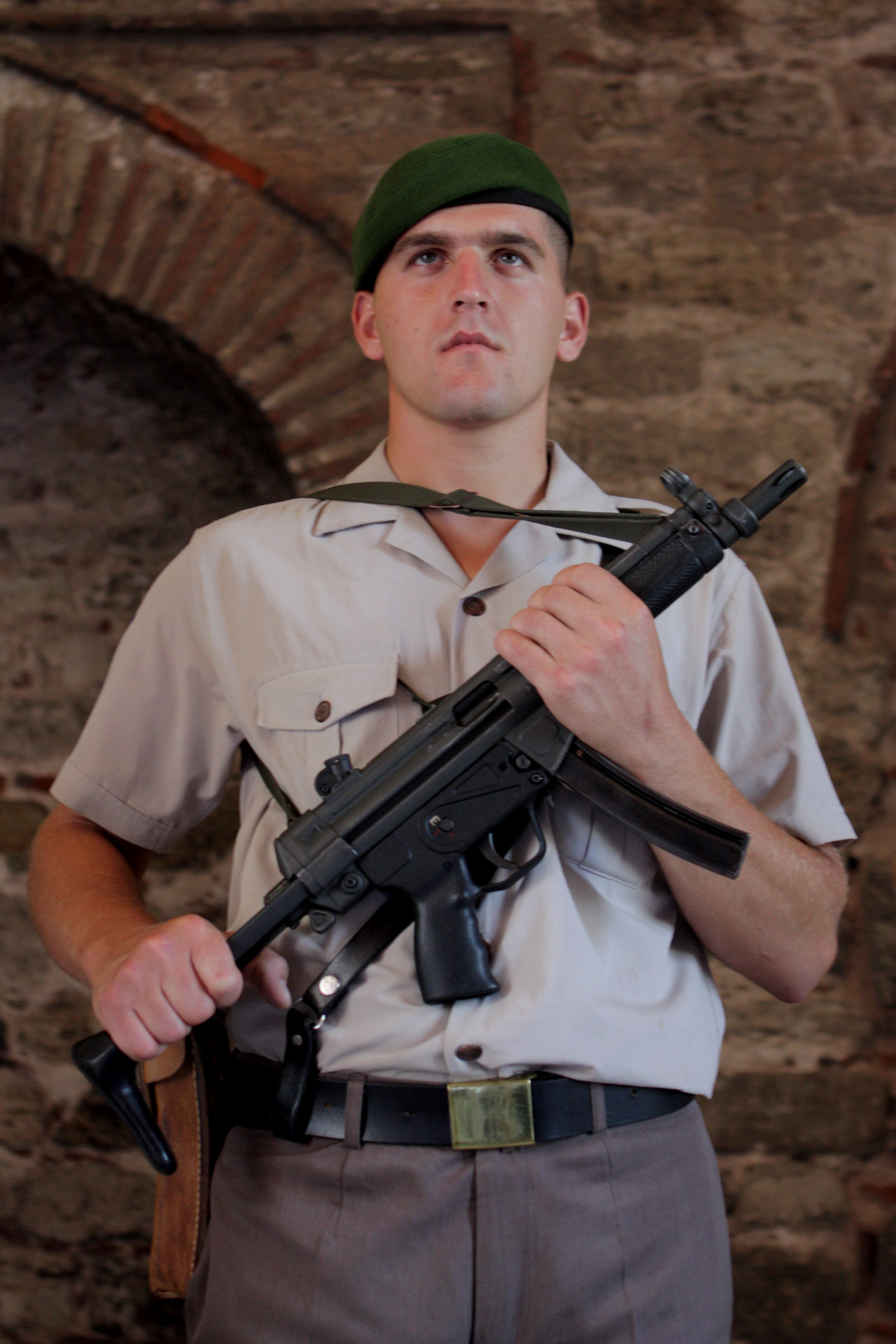
| Colour | Wearer | |
|---|---|---|
U
Ukraine


.jpg)
In the Ukrainian army, the tradition of wearing a beret in uniform begins in 1991 - after the collapse of the USSR. In many respects, the young army imitated and actually continued the traditions of the Soviet Army, in particular, the Airborne Assault Troops and the Marines of the Armed Forces of Ukraine wore the corresponding berets of blue and black colours. The situation changed radically after the beginning of the hybrid war against Russia starting in 2014, when the society, and in particular the Ukrainian servicemen, fundamentally revised their attitude towards the eastern neighbour and their recent past. After fierce battles with Russian special forces, among whom there were paratroopers and marines of the Russian armed forces that fought against Ukrainians in the Donbas during 2014–2015, Ukrainians grew wary of the military traditions that the Russian Army inherited from the Soviet Army. In 2017, new elements of the uniform, including berets, were officially introduced in the Ukrainian Armed Forces to distance them from their Soviet legacy. Thus, the Special Operations Forces created in 2016 started wearing light grey berets. Meanwhile, Ukrainian paratroopers as well as marines of the Armed Forces of Ukraine that joined them later have been willingly wearing the new colours since then.
Since 2017, the Armed Forces have worn berets of the following colours:
| Colour | Wearer | |
|---|---|---|
Other formations:
| Colour | Wearer | |
|---|---|---|
United Arab Emirates
The Armed Forces of the UAE and National Service use berets with distinct colours to display the specific branch of the armed forces. All berets displays the United Arab Emirates Armed Forces emblem.
Emirati military personnel may also choose to wear military camo coloured ghutra in a turban fashion in keeping with traditional Arabic attire.
The colours are as follows:
| Colour | Wearer | |
|---|---|---|
United Kingdom

The British Army beret dates back to 1918 when the French 70th Chasseurs alpins were training with the British Tank Corps. The Chasseurs alpins wore a distinctive large beret and Major-General Sir Hugh Elles, the TC's Colonel, realised this style of headdress would be a practical option for his tank crews, forced to work in a reduced space. He thought, however, that the Chasseur beret was "too sloppy" and the Basque-style beret of the French tank crews was "too skimpy", so a compromise based on the Scottish tam o'shanter was designed and submitted for the approval of King George V in November 1923. It was adopted in March 1924.
During the Second World War, the use of the black beret was extended to all the regiments of the Royal Armoured Corps in 1940. The maroon beret was adopted by British airborne forces in 1941 (the Special Air Service had adopted a sand coloured beret, was subsequently compelled to change to maroon in common with other airborne units, but resumed wear of the sand beret after the Second World War) and the green beret by the Commandos in late 1942. A khaki beret was worn by the Reconnaissance Corps from 1941 until 1944, and the Royal Air Force Regiment adopted a blue-grey beret in 1943. Later in the war, a rather baggier beret-like hat, called the General Service Cap, was issued to all ranks of the British Army (with RAC, parachute, commando, Scottish and Irish units excepted), to replace the earlier Field Service Cap. The GS Cap was not popular, and after the war was replaced with a true beret.
Today most units of the British Army wear a beret, however the Tam o' shanter is worn by the Royal Regiment of Scotland as well as Scottish UOTC units. The caubeen is worn by the Royal Irish Regiment as well as by Queens UOTC, (the Scots Guards and Irish Guards, however, wear berets inline with the rest of the Field Army). Many of these berets are in distinctive colours and all are worn with the cap badge of the service, regiment or corps. The cap badge for all services in the UK is usually worn directly over the left eye, Units who wear the Tam o’ shanter have different rules for the Tam with the cap badge worn on the left side of the head.

.jpg)

.jpg)
.jpg)
.jpg)
Beret colours
The colours are as follows:
| Color | Wearer | |
|---|---|---|
Other adornments
Some regiments and corps wear a coloured backing behind the cap badge. These include:
- Foot Guards: blue-red-blue patch (less the officers of the Scots Guards, who wear a patch of Royal Stewart tartan)
- Honourable Artillery Company: black circle
- Princess of Wales's Royal Regiment: blue-yellow-blue patch
- Royal Anglian Regiment: small black 'tombstone'
- Queen Alexandra's Royal Army Nursing Corps: red patch
- Royal Army Medical Corps: dull cherry oval patch
- Army Air Corps: black patch
- Army Physical Training Corps: patch in corps colours
- Royal Marines: 'red tombstone' (only on dark blue beret worn by those who are not commando-qualified including Royal Marines Cadets)
- Royal Welsh Regiment and Mercian Regiment: green badge outline and square respectively
- Queen's Royal Lancers: red patch
- Household Cavalry: blue-red-blue patch
- The Royal Dragoon Guards: red diamond patch
- Yorkshire Regiment: Brunswick (British racing) green
- Royal Scots Dragoon Guards: black patch (worn in mourning for Emperor Nicholas II of Russia, who was their colonel-in-chief at the time of his murder)
- King's Royal Hussars: red patch
- Royal Wessex Yeomanry: black patch behind the cap badge
- Royal Gibraltar Regiment: red-grey-red patch
- Royal Regiment of Fusiliers: feather hackle on the beret. Other ranks of the Royal Welsh also wear hackles.
- Royal Air Force: Officer cadets wear a white disc behind their cap badge.
Members of the Royal Tank Regiment, 4/73 (Sphinx) Special OP Battery Royal Artillery, Royal Regiment of Fusiliers, Army Air Corps, Parachute Regiment, SAS and Intelligence Corps wear berets in Nos 1, 2, 3 and 6, Dress. Other English and Welsh Regiments and Corps wear peaked caps in these orders of dress.{{cite web |url=http://www.ams.mod.uk/content/docs/jsp336/3rd_ed/vol12/pt3/pam15/s5aa.doc |title=AUTHORISED HEADDRESS |access-date=2009-12-31 |url-status=dead |archive-url=https://web.archive.org/web/20080529123951/http://www.ams.mod.uk/content/docs/jsp336/3rd_ed/vol12/pt3/pam15/s5aa.doc |archive-date=2008-05-29 }} Troops from other services, regiments or corps on attachment to units with distinctive coloured berets often wear those berets (with their own cap badge). Colonels, brigadiers and generals usually continue to wear the beret of the regiment or corps to which they used to belong with the cap badge distinctive to their rank.
Old units
Former regiments and corps, now amalgamated:
- Dark blue – Queens Regiment, Royal Hampshire Regiment
- Khaki – Green Howards, King's Own Royal Border Regiment, Prince of Wales's Own Regiment of Yorkshire, Duke of Wellington's Regiment, Reconnaissance Corps, infantry motor battalions in World War II
- Dark (Rifle) green – Light Infantry, Royal Green Jackets, Devonshire and Dorset Light Infantry, Royal Gloucestershire, Berkshire and Wiltshire Light Infantry, Rifle Brigade, King's Royal Rifle Corps, 2nd King Edward VII's Own Gurkha Rifles (The Sirmoor Rifles), 6th Queen Elizabeth's Own Gurkha Rifles, 7th Duke of Edinburgh's Own Gurkha Rifles, 10th Princess Mary's Own Gurkha Rifles
- Black – All Royal Armoured Corps regiments in World War II (other than officers in Inns of Court Regiment), Royal Observer Corps, Westminster Dragoons
- Maroon – Glider Pilot Regiment and glider-borne units
- Green – Women's Royal Army Corps, women in Officers Training Corps, officers in Inns of Court Regiment
- Brown with a broad crimson headband and NO hat badge – 11th Hussars (PAO)
United States
Main article: Berets of the United States Army
Berets were originally worn by select forces in the United States Army. The first were worn during World War II, when a battalion of the 509th Parachute Infantry Regiment were presented maroon berets by their British counterparts. Though unofficial at first, the green beret of the US Army Special Forces was formally adopted in 1961. Maroon airborne and black US Army Ranger berets were formally authorized in the 1970s.
"D" Troop 17th Cavalry were authorized a maroon beret in Vietnam.
After the Vietnam War, morale in the US Army waned. In response, from 1973 through 1979 HQDA permitted local commanders to encourage morale-enhancing uniform distinctions; however, these distinctions were allowed to be worn only on the post. Consequently, many units embraced various colored berets, for example armor and armored cavalry units often adopted the black beret. Similarly many other units embraced various colored berets in an attempt to improve dwindling morale. In particular, the First Cavalry Division assigned various colored berets to its three-pronged TRICAP approach. In this implementation, armored cavalry, airmobile infantry units, air cavalry units, division artillery units, and division support units all wore different colored berets, including black, light blue, Kelly green, and red. The 101st Airborne Division was authorised a dark-blue beret.
In 1975 all female soldiers of the Women's Army Corps were authorized to wear a black beret variant as standard headgear for the service uniform.
In 1975 the 172nd Light Infantry Brigade at Fort Richardson and Fort Wainwright, Alaska, wore olive-drab berets.
In 2001, Army Chief of Staff Eric Shinseki ordered the black beret worn as standard headgear army-wide, a controversial decision because it was previously reserved for the rangers. The rangers were then authorized to wear a tan beret, exclusive to them. The decision was implemented in hopes of boosting morale among conventional units. However, many soldiers began complaining that the new black beret was not practical with the utility uniform. In June 2011, Army Secretary John McHugh, acting on the recommendations made by Chief of Staff Martin Dempsey and Sergeant Major of the Army Raymond F. Chandler, once again chose the traditional patrol cap to be worn with the utility uniform. The black beret may be authorized with utility uniforms at commander's discretion for special ceremonies. The beret remains part of the Army's dress uniform for all units.
United States Army berets now use the following distinctive colors:
| Color | Wearer | |
|---|---|---|
Special forces, ranger, and airborne unit berets sport distinctive organizational flashes. All other units use a standard pale blue flash bordered with 13 white stars. Officers wear their rank insignia within the flash, while enlisted ranks wear their distinctive unit insignia.
In 2019, the army proposed the creation of a grey beret for USASOC soldiers qualified in Psychological operations, but it did not receive official approval.
| Color | Wearer | |
|---|---|---|
.jpg)
During the Vietnam War, the U.S. Navy created special boat teams, unofficially dubbed the brown-water navy, to patrol coastlines, estuaries and rivers. Naval personnel assigned to these teams wore black berets as part of their uniform, as portrayed in the movie Apocalypse Now. U.S. Navy SEAL teams serving in Vietnam wore camouflage berets in the field, the only beret somewhat standardized in the SEALs.
Starting in the 1970s, a special female beret was authorized for wear as alternate headgear for the Army, Air Force, Navy, and Marine Corps with various service uniforms. The Navy was the last service to remove the female beret from their uniform regulations in 2015. These black (Army and Navy), dark-blue (Air Force), and dark-green (Marine Corps) female berets were of similar design and worn on the crown of the head. These service members wore their traditional cap devices on these female berets but unlike today's Army and Air Force beret flashes, these devices were worn center-forward on the beret with the exception being the Navy who wore their devices centered over the left eye.
Uruguay
- Military
- Grey – Army 14th Parachute Battalion
- Green – Army 13th Armor Battalion (Combined Arms)
- Police
- Black – Police Coraceros Regiment
V
Vatican State

The Pontifical Swiss Guard wears large black berets, draped to the right. The beret badge is a symbol indicating the rank of the wearer, and is worn essentially above the left ear.
Venezuela
Berets are worn by some units in the Venezuelan National Armed Forces, with distinctive colors for some units or functions. The beret colours are as follows:
| Colour | Wearer | Venezuelan Army | Venezuelan Navy | Venezuelan Air Force | Venezuelan National Guard | Berets in inter-service units | |
|---|---|---|---|---|---|---|---|
| Black | Venezuelan Army general issue berets; included, the comandos (Army special forces units). | ||||||
| Green | Army Counter-insurgency troops (caribes). | ||||||
| Red | 311th Infantry Battalion "Simon Bolivar" (Army). Wears the red beret as the first and oldest active infantry battalion of the Army. | ||||||
| Red | 42nd Airborne Brigade (Army). | ||||||
| Dark blue | Army Headquarters and Security Group (Lieutenant General Daniel Florencio O'Leary Headquarters Battalion). | ||||||
| Black | Venezuelan Marine Corps general issue berets (since 2009). | ||||||
| Blue | Venezuelan Air Force Infantry units (Infantería Aérea) and Air Force Police personnel. | ||||||
| Black | 20nd Special Forces Group (since 2016). | ||||||
| Maroon | Venezuelan National Guard general issue berets. | ||||||
| Red | Presidential Honor Guard Brigade (armed forces joint unit). | ||||||
| Red | Armed Forces General Headquarters (Minister Of Defence troops (Caracas Battalion), armed forces joint unit). |
Note: Before the conversion to the red berets, the Caracas Battalion wore dark blue berets similar to those used by the O'Leary Battalion.
Note: Bolivarian National Police general issue red berets (since 2017).
Vietnam
Berets used by the Vietnam Coast Guard and the Vietnam People's Navy are:
- Blue – Enlisted Seamen
- Black – Officers and NCOs
- Dark blue – Marine Commandos and Naval Infantrymen
During the celebration of the 40th Reunification Day, the People's Army of Vietnam presented new models of berets:
- Green and camouflaged berets are worn by Infantry Reconnaissance troopers and Ground Commandos respectively.
- Red berets are worn by airborne forces.
Army's servicemen served within the United Nations will bear the UN blue beret.
Y
Yemen
Berets are worn as standard headgear in the Yemeni Armed Forces, with most beret colors inherited from the South Yemeni armed forces.
| Colour | Wearer | |
|---|---|---|
Z
Zambia
- Black – Armoured troops
- Green – Zambia rifles (Infantry)
- Maroon – Paracommando
- Scarlet – Military police
- Dark blue – Worn by all other Army units
- Khaki – Colonels and general officers with combat uniform
- Grey-blue – Air Force personnel
- Khaki-black – Zambia National Service personnel
Zimbabwe
- Green – Infantry
- Black – Armoured Regiment
- Maroon – Parachute Battalion
- Tartan green – Commando Battalion
- Tan – Special Air Service
- Yellow – Presidential Guard
- Cherry red – Military Police
- Blue-grey – Zimbabwe Air Force
- Dark blue – All other units
International forces
United Nations
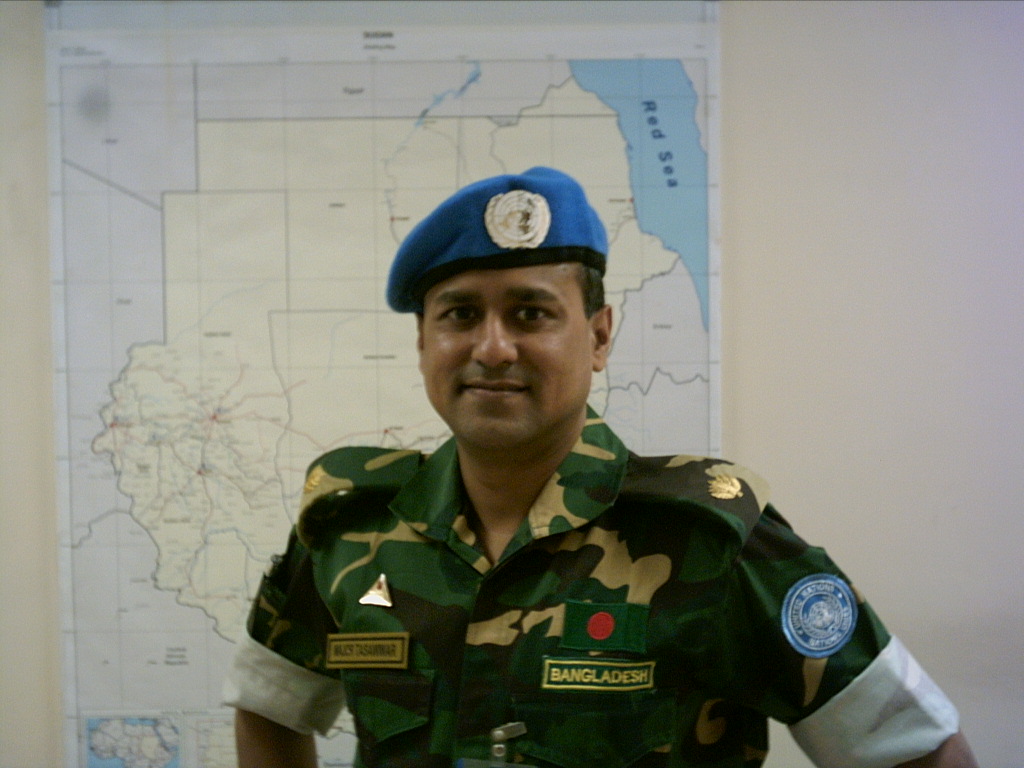
| Colour | Wearer | |
|---|---|---|
Multinational Force and Observers

| Colour | Wearer | |
|---|---|---|
African Union
.jpg)
| Colour | Wearer | |
|---|---|---|
NATO Multinational Corps Northeast

| Colour | Wearer | |
|---|---|---|
European Gendarmerie Force

| Colour | Wearer | |
|---|---|---|
Camouflage berets

A camouflage beret is intended for use on the battlefield when wearing combat fatigues. They are mostly issued to the likes of special forces, particularly in jungle warfare operations.
History
_-_1946-03-12_-_Casarano.jpg)
Camouflage berets possibly originate from the General Service cap "Cap, General Service" issued to the British Army in a Khaki material before the introduction of berets. It was first introduced under "Army Council Instruction 1407" of September 1943. This cap was designed to replace the "Field Service cap" or "FS Cap" that had been worn since the outbreak of war. These caps were issued in priority to units serving overseas. UK based units got theirs later on. It was at first unpopular due to its over large appearance. This cap was not a beret. It was made from several pieces of drab cloth material, whereas a beret was a one piece item. It was based on the Scottish balmoral bonnet in design. First issues were made from the same gaberdine cloth as the old "FS" cap. Badges worn on it were the conventional officers' bronze, and ORs' badges in both plastic and metal. Units which had special distinctions could still wear these on the "GS" cap. The General Service cap was worn by regulation one inch above the eyebrows, with the badge over the left eye and the cap pulled down to the right. But many wartime photos will show it worn pushed back on the head, which seemed to be a fashion with many soldiers late in the war.
Officers could only obtain the cap upon repayment to the RAOC. They were not allowed to buy the cap until their unit had been issued with it wholesale. Higher-ranking officers often got away with wearing a khaki beret, which was against regulations. Fashion conscious ORs would also risk punishment from NCOs/officers buying one of these for "walking out".
Not exactly camouflage, but an early example is the Jungle Beret issued to the Australian Army during WW2.
Users
- Argentina – Jungle Troops (Brigada de Monte XII "General Manuel Obligado")
- Bolivia – Special Forces "Bolivian Condors"
- Brazil – Jungle Troops
- PRC – During the 80s, camo berets were issued to some of the recon forces of PLA. It has no cap badge on it.
- Denmark – Naval Infantry, Armoured forces of Bornholm (Bornholms Værn's Marineinfantery) Disbanded
- Ecuador – IWIA (indigenous tribal members unit) forces
- Israel – Kfir Brigade (Urban Combat)
- Paraguay – Special Naval Forces
- Panama – 7th Infantry Company "Macho de Monte"; Comando Operacional de Fuerzas Expeciales (Cadre)
- Philippines – Philippine Air Force pararescue
- Portugal – "Flechas" and Guinea 3rd Commando Company both wore vertical lizard pattern.
- South Africa – 32 Buffalo Battalion, 61 Mechanised Battalion Group and the Special Task Force
- South Korea – Army armoured units
- Thailand – Royal Thai Marine Corps and Navy SEALs
References
References
- (2017). "Fashion through History: Costumes, Symbols, Communication (Volume II)". Cambridge Scholars Publishing.
- Carman, W.Y.. (1977). "A Dictionary of Military Uniform". Scribner.
- Mollo, John. (1972). "Military Fashion". Barrie and Jenkins.
- "Uniforms", page 587, Volume XXVII ''Encyclopædia Britannica'', 1911 Edition
- (January 1966). "Caps and Unit Pride". Association of the United States Army.
- Forty, George. ''A Pictorial History of the Royal Tank Regiment'', Halsgrove Publishing 1988, {{ISBN. 978-1-84114-124-4
- Krawczyk, Wade. (1999). "Army Panzer Uniforms in Colour Photographs: No.13". The Crowood Press Ltd.
- Skinner, Rebecca. (2010). "British Paratrooper 1940–45". Osprey Publishing.
- Bull, Stephen. (2010). "Commando Tactics: The Second World War". Pen & Sword Military.
- "A Short History of the Use of Berets in the U.S. Army".
- Pictures of the Argentine Armed Forces http://www.taringa.net/comunidades/naiem/7914799/Fuerzas-Especiales-Argentinas.html
- Pictures of the Argentine Armed Forces http://www.taringa.net/posts/imagenes/17507569/Cazadores-del-Ejercito-Argentino.html
- "Army Dress Manual Chapter 3 - Items of Dress, Embellishments and Accoutrements". Australian Army.
- (2019). "Uniform instructions for the Royal Australian Navy". Royal Australian Navy.
- (4 July 2013). "Air Force Vol.55, No.12". Royal Australian Air Force.
- (18 July 2013). "Air Force Vol.55, No.13". Royal Australian Air Force.
- S.A.P, El Mercurio. (8 March 2013). "Militares bolivianos reciben equipo satelital para operar en límite con Chile - Emol.com".
- Government of Canada, National Defence. (2019-04-15). "Article {{!}} Army returns to dark blue or khaki berets for Foot Guards and technical corps".
- "PLA Caps and decorations".
- "TITULO - Historia :: Revista Bohemia".
- "WordPress › Error".
- "40 imágenes aéreas y terrestres de este 2 de enero".
- "Aniversario de Tropas de Prevención - Sitio Web de la defensa de la República de Cuba".
- "La pertinencia de prevenir".
- "Cuba en Marcha y Desfile Militar en la Plaza de la Revolución (+ Video e Infografía) {{!}} Cubadebate". Cubadebate.cu.
- "Edict about military uniforms (in Czech)".
- (30 December 2014). "Legionářské stejnokroje v jedné řadě".
- "Nové khaki barety pro pozemní síly".
- (18 September 2020). "Československý baret pro výsadkáře, 80. léta".
- (2023-01-12). "Armáda mění barvu baretů. Zelenou střídá khaki, odkazuje na tradice".
- (April 2014). "Blå er det nye sort". Forsvarsavisen.
- "Gyldendal's Encyclopedia".
- "Nye myndigheder, nye baretmærker og farver".
- "REGLAMENTO DE UNIFORME".
- Coune, Frederic. (25 June 2012). "Les Coiffures Militaires Francaises 1870-2000". Histoire et Collections.
- Général Voyron, {{lang. fr. Rapport sur l'Expédition de Chine. 1900–1901, Paris, 1902, p. 99.
- Gaujac, Paul. (2012). "{{lang". Histoire & Collections.
- "Mengenal Baret Pada TNI | Website Resmi Kodam XVII Cenderawasih Papua".
- (12 August 2019). "Jenis Jenis Baret TNI".
- Media, Indo Mitra. (2020-03-07). "Warna Warna Baret Pada TNI-AD ini Detailnya..?".
- Pertahanan Strategis, Lembaga Kajian. (14 November 2022). "Komandan Pusat Penerbangan Angkatan Darat (Danpuspenerbad), Mayjen Dwi Wahyu Winarto meresmikan penggunaan baret merah marun khas Penerbad".
- "Peraturan Kapolri Nomor 06 Tahun 2018 tentang Pakaian Dinas Pegawai Negeri Pada Polri".
- (13 November 2015). "UNMISS Japanese Contingent Medal Parade".
- "NZDF - Uniforms and Weapons".
- (17 May 2011). "Bicentenario Paraguayo: Desfile Militar".
- http://www.ctpost.com/news/article/Paraguay-s-Lugo-changes-tack-ahead-of-summit-3664139.php {{dead link. (January 2018)
- "Rozporządzenie Ministra Spraw Wewnętrznych i Administracji z dnia 25 marca 2016 r. w sprawie umundurowania funkcjonariuszy Straży Granicznej". Internet System of Legal Acts.
- "Rozporządzenie Ministra Spraw Wewnętrznych i Administracji z dnia 29 września 2021 r. w sprawie umundurowania strażaków Państwowej Straży Pożarnej". Internet System of Legal Acts.
- "Rozporządzenie Ministra Spraw Wewnętrznych i Administracji z dnia 25 marca 2016 r. w sprawie umundurowania funkcjonariuszy Straży Granicznej". Internet System of Legal Acts.
- "Rozporządzenie Ministra Spraw Wewnętrznych i Administracji z dnia 5 czerwca 2018 r. w sprawie umundurowania funkcjonariuszy Służby Ochrony Państwa". Internet System of Legal Acts.
- "Kimler hangi renk bere takar?".
- "The Tuscaloosa News - Google News Archive Search".
- "Spanish Armed Forces / Fuerzas Armadas Españolas".
- (9 April 2023). "Los colores de las boinas de las distintas unidades del Ejército de Tierra de España".
- (18 December 2014). "El Mando Conjunto de Ciberdefensa estrena prenda de cabeza. Así es la nueva boina de los #cibersoldados".
- link
- (2015). "Reglemente: uniformsbestämmelser 2015 : Unibest FM 2015". Swedish Armed Forces.
- (2010). "INSTRUKTION FÖR FÖRSVARSMAKTEN - UNIFORMSBESTÄMMELSER 2009: KAPITEL 8 AV 8 TJÄNSTETECKEN". Swedish Armed Forces.
- Kommunikation Verteidigung. (2009). "Schweizer Armee". Huber, Verlag.
- (9 March 2024). "Askerlerin taktığı berelerin rengi ne anlam taşır? Mavi, Bordo, Siyah berelerin müthiş anlamı".
- "TSK'da yeni bir dönem başladı".
- "У російських новинах показали морську піхоту РФ у Донецьку".
- link
- link. [[Al Bayan (newspaper). Al-Bayan]]. Wafa Al Suwaidi. (2015-01-05)
- 0-85045-387-9 (p. 22)
- Oliver, Kingsley M (1997), [http://www.forcespublishing.co.uk/pdfs/through_adversity.pdf ''Through Adversity: History of the Royal Air Force Regiment''] {{Webarchive. link. (2015-07-15 , Forces & Corporate Publishing Ltd, {{ISBN). 978-0952959700 (p. 49)
- Hallett, Edward. (24 November 2014). "General Service Cap".
- Gordon, David. ''Uniforms of the World War II Tommy'' (Pictorial Histories Publishing Company, Missoula, MT, 2005). {{ISBN. 1-57510-122-X
- Hallett, Edward. (26 February 2016). "Post War Blue Beret".
- "Edinburgh University Officers' Training Corps {{!}} The British Army".
- "Yorkshire Gunners honoured for Service in Iraq and Afghanistan". Ministry of Defence.
- {{Cite Twitter profile. 47regtra
- "47 Regiment Royal Artillery".
- "Request for a copy of any Army Dress Committee notes that have been issued since the 359th meeting".
- "Dress Regulations: Chapter 40". Royal Navy.
- (18 December 2002). "BBC website on British headdress".
- (December 2024). "Yorkshire Gunners honoured for Service in Iraq and Afghanistan". Ministry of Defence}}{{Dead link.
- Powers, Rod. (2019-01-29). "Army And Air Force Beret Use - Uniform Headgear". Usmilitary.about.com.
- "vhpamuseum.org". vhpamuseum.org.
- Stanton, Shelby (1994). ''US Army Uniforms of the Cold War 1948–1973''. Stackpole Books. p. 223.
- Lopez, C. Todd. (June 15, 2011). "ACU changes make Velcro optional, patrol cap default headgear". United States Army.
- [http://www.usarmyjrotc.com/instructor/doc/instructor/trainingops/cadet_news/Cadet_Uniform_Dos_and_Donts.pdf Cadet News: Uniform Dos and Don’ts] {{Webarchive. link. (2020-10-17 , Official website of the US Army Junior ROTC, last accessed 23 December 2020)
- Rempfer, Kyle. (2019-11-07). "Grey Berets are being considered for PSYOP soldiers in special units".
- [https://www.ucps.k12.nc.us/cms/lib/NC01910453/Centricity/Domain/1980/Uniform%20Guide.pdf Authorized Air Force JRTOC Badges and Insignia]; Union County Public Schools, Monroe, NC; last accessed 23 December 2020
- AFI 36-2903
- "National Blue Beret: Behind the 8-Ball - In a Good Way". Civil Air Patrol.
- (1979-03-01). "Special Boat Teams". Specwarnet.net.
- [https://web.archive.org/web/20190619080154/http://cgsc.cdmhost.com/cdm/ref/collection/p4013coll9/id/602 AR 670–1 1981 (OBSOLETE):Wear and appearance of Army uniforms and insignia], Department of the Army via Ike Skelton Combined Arms Research Library Digital Library, dated 1 November 1981, last accessed 21 November 2020
- [https://www.162wing.ang.af.mil/News/Features/Display/Article/444888/from-the-waf-to-the-guard-a-woman-reflects-on-her-air-force-career/ From the ‘WAF’ to the Guard, a woman reflects on her Air Force career]; US Air Force; by 2nd Lt. Angela Walz, 162nd Fighter Wing Public Affairs; dated 26 February 2010, last accessed 12 April 2019
- [http://www.usmilitariaforum.com/forums/index.php?/topic/185507-usmc-womens-service-dress-caps/ USMC Women's Service & Dress Caps], US Militaria Forum, started by "usmc-collector" on 19 August 2013, last accessed 12 April 2019
- [https://web.archive.org/web/20070521043303/http://buperscd.technology.navy.mil/bup_updt/508/unireg/chapter3/3500_seriesArticles/3501_3.htm U.S. Navy Uniform Regulations (Historical)], dated January 1998, last accessed 30 August 2019
- [https://web.archive.org/web/20180916195314/https://www.public.navy.mil/bupers-npc/reference/messages/Documents/NAVADMINS/NAV2015/NAV15208.txt NAVADMIN 208/15], [[United States Department of the Navy. US Department of the Navy]], dated 1 September 2015, last accessed 30 August 2019
- [http://webdoc.sub.gwdg.de/ebook/p/2005/CMH_2/www.army.mil/cmh-pg/books/wac/appendix-d.htm Appendix–D, Women's Army Corps Uniforms 1942–1978], University of Göttingen, last accessed 12 May 2019
- [https://history.amedd.army.mil/ANCWebsite/uniformpres_files/ClassA70s-2000.html Class A Service and Dress From Uniforms From 1970's-2000]; US Army Medical Department, Office of Medical History; last modified 2 July 2009, last accessed 20 May 2020
- Por redacción NotiTotal · noviembre 27, 2016. (27 November 2016). "Crean nuevo grupo de Fuerzas Especiales para proteger espacios aéreos". NotiTotal.
- "Aviación Militar Bolivariana se fortalece con la creación de un nuevo grupo de Fuerzas Especiales N{{sup".
- (29 January 2008). "UN police into Darfur refugee camp". sudantribune.com.
- (28 December 2007). "Hybrid force for Darfur set to deploy on 31 December – UN".
- (1 July 2013). "International assistance force for Mali transformed into UN peacekeeping mission".
- The Australian Army in World War II - Page 57 Mark Johnson {{ISBN. 1472805224
- "Uniform & Kit issued to the AIF During WW2".
- {{usurped
- The other Cazadores de Monte brigades use Dark Green berets

This article was imported from Wikipedia and is available under the Creative Commons Attribution-ShareAlike 4.0 License. Content has been adapted to SurfDoc format. Original contributors can be found on the article history page.
Ask Mako anything about Military beret — get instant answers, deeper analysis, and related topics.
Research with MakoFree with your Surf account
Create a free account to save articles, ask Mako questions, and organize your research.
Sign up freeThis content may have been generated or modified by AI. CloudSurf Software LLC is not responsible for the accuracy, completeness, or reliability of AI-generated content. Always verify important information from primary sources.
Report