From Surf Wiki (app.surf) — the open knowledge base
Mikoyan MiG-29K
Carrier-based multirole combat aircraft
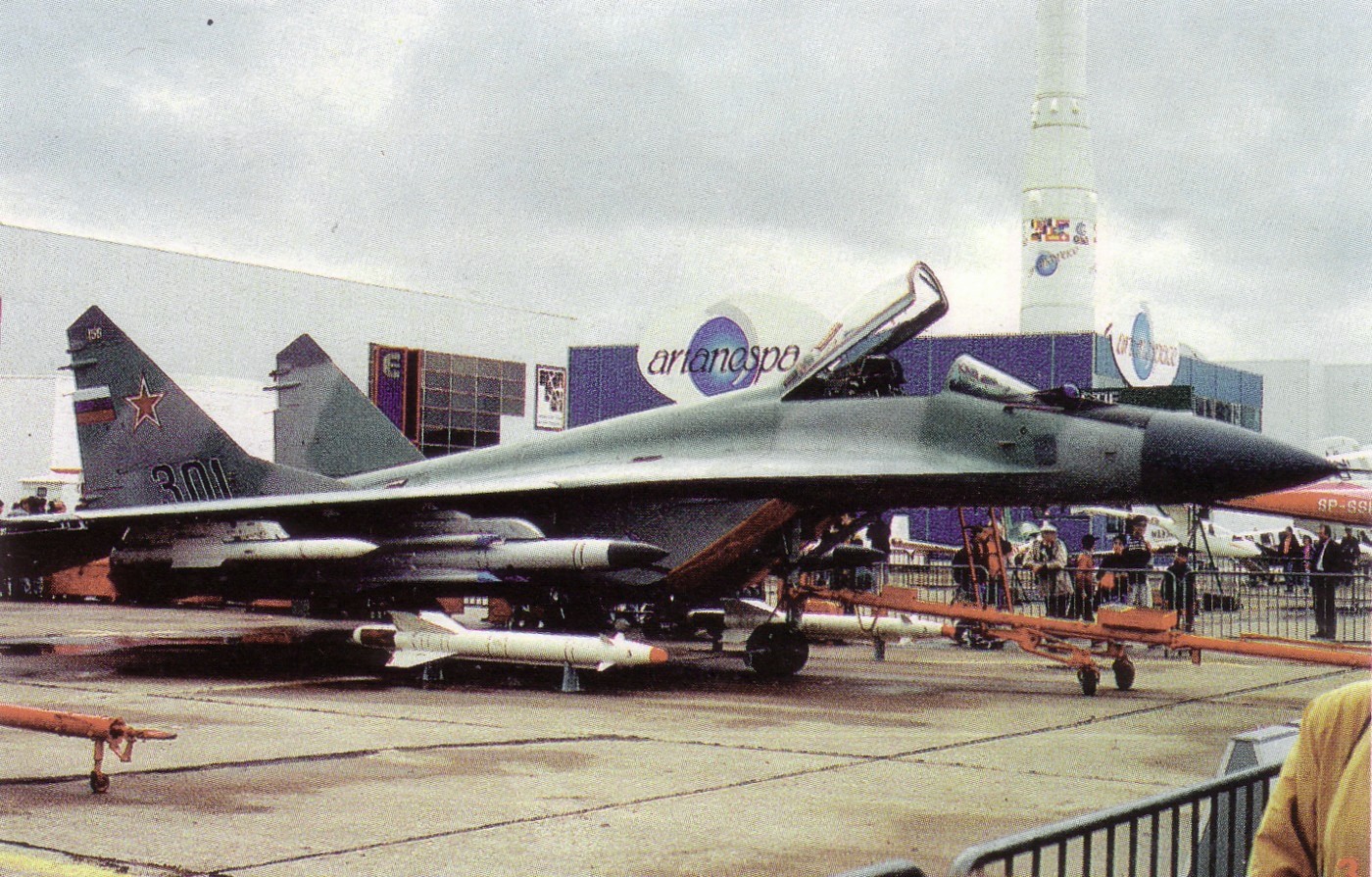
Carrier-based multirole combat aircraft
| Field | Value |
|---|---|
| name | MiG-29K |
| image | MiG-29K at MAKS-2007 airshow.jpg |
| caption | A Russian MiG-29K at MAKS Air Show 2007 |
| type | All-weather carrier-based multirole fighter |
| national_origin | Soviet Union / Russia |
| manufacturer | Mikoyan |
| first_flight | |
| introduction | 19 February 2010 (India) |
| status | In service |
| primary_user | Indian Navy |
| more_users | Russian Navy |
| produced | 2005–present |
| number_built | 89 |
| developed_from | Mikoyan MiG-29M |
| developed_into | Mikoyan MiG-35 |
The Mikoyan MiG-29K (; NATO reporting name: Fulcrum-D) is a Russian all-weather carrier-based multirole fighter aircraft developed by the Mikoyan Design Bureau. The MiG-29K was developed in the late 1980s from the MiG-29M. Mikoyan describes it as a 4+ generation aircraft.
The production standard MiG-29Ks differ from prototypes in features such as a multi-function radar and several new cockpit displays, the integration of RVV-AE (also known as R-77) air-to-air missiles, along with missiles for anti-ship and anti-radar operations, and several ground/strike precision-guided weapons.
In the early 1990s only two MiG-29K prototypes were built because the Russian Navy preferred the Su-27K (later re-designated Su-33). Mikoyan continued its MiG-29K development despite the lack of financing since 1992. The programme received a boost in the late 1990s with India's requirement for a ship-borne fighter following the purchase of a former Soviet aircraft carrier. India received its first MiG-29K by the Indian Naval Air Arm in 2009. The Russian Navy, with their Su-33s nearing the end of their service lives by 2010, has also ordered the MiG-29K as a replacement.
Development
Origins
The MiG-29K project was initiated in the late 1970s when the Soviet Navy developed a requirement for a supersonic carrier-based fighter. As a first step to meet this requirement, the Mikoyan design bureau designed a "proof of concept" version of the MiG-29 fitted with a stronger undercarriage and a reinforced tail section with an arrestor hook, the MiG-29KVP (Korotkii Vzlet i Posadka, or "short take off and landing"). The KVP first flew on 21 August 1982, and was subject to extensive trials which demonstrated it could safely operate from a ski-jump, but ideally a production aircraft needed more power and greater wing area. It was decided to base the definitive naval version on the advanced MiG-29M (izdeliye "Product" 9.15) that was already under development, further modified with new undercarriage and folding wings of greater area, with the new model designated the MiG-29K (Korabelniy – "ship based") or Project 9–31. The MiG-29K differed considerably from the MiG-29 production model, featuring a new multi-function radar, dubbed Zhuk; a cockpit with monochrome display and use of the HOTAS (hands-on-throttle-and-stick) principle; the RVV-AE air-to-air active homing missiles; antiship and antiradar missiles; as well as air-to-ground precision-guided weapons. To protect the engine from foreign object damage (FOD), the engine inlets were fitted with retractable grills for air flow, rather than metal doors and leading-edge extension auxiliary intake louvres used by land-based MiG-29s.
The MiG-29K's first flight was performed on 23 July 1988 at Saky by test pilot Toktar Aubakirov. On 1 November 1989, on the same day as the Sukhoi Su-27K, Aubakirov executed the first carrier landing of MiG-29K on the aircraft-carrying cruiser Tbilisi (now known as Admiral Kuznetsov), the first take-off from the carrier's deck was successfully performed the same day. During 1989–1991, the MiG-29K underwent further tests aboard Admiral Kuznetsov. The project was put on hold with the collapse of the Soviet Union, while the Russian Navy only pursued the rival Su-33. Mikoyan continued work on the MiG-29K despite the lack of funding.
During its tests aboard Admiral Kuznetsov, the aircraft had a springboard-assisted takeoff from strips 195 m and 95 m long. According to the results of the tests, the landing accuracy proved to be very high, which made it possible at a later stage to switch over to a three-cable arrester system on Admiral Gorshkov. The landing accuracy is additionally enhanced through the employment of an autothrottle system. The takeoff characteristics allow for most flights to be possible under tropical conditions at a ship speed of 10 kn.
Revival

The MiG-29K programme was revived in response to the decision of the Indian Navy to acquire the former Soviet Navy aircraft carrier Admiral Gorshkov in 2004. When Admiral Gorshkov was part of the Soviet fleet, it was a hybrid aircraft carrier/cruiser using vertical take-off (V/STOL) aircraft; thus the deck was refurbished with a take-off ramp and arrestor wires for operating MiG-29Ks. The aircraft has an enlarged and folding wing, an arrestor hook and a corrosion-protected reinforced fuselage.
One factor favouring the MiG-29K over the Su-33 in the Indian decision was the larger size of the Su-33, which further limited the number of aircraft on deck. Modifications were made to the MiG-29K for Indian requirements, including the Zhuk-ME radar, RD-33MK engine, a combat payload up to 5500 kg, 13 weapon stations, and updated 4-channel digital fly-by-wire flight control system. It is compatible with the full range of weapons carried by the MiG-29M and MiG-29SMT.
The problem of lack of aircraft-carrier based AWACS platform may be tackled by further development of dual-seat MiG-29KUB. It is theoretically possible to outfit the MiG-29KUB with powerful radar, and encrypted data links, to permit networking of multiple MiG-29KUB aircraft for AEW coverage. The MiG-29KUB may also be enhanced in areas such as electronic warfare and long-range interdiction.
The MiG-29KUB two-seat variant took its first flight on 20 January 2007, followed by the MiG-29K on 25 June 2007.
Design

The MiG-29K is modified from the Mikoyan MiG-29M for naval operations. The airframe and undercarriage are reinforced to withstand the stress experienced upon landing. Folding wings, an arrestor hook, and catapult attachments were added for carrier operations; the aircraft's undercarriage track was also widened. The MiG-29K, unlike the early MiG-29, can both conduct aerial refueling and "buddy" refuel other aircraft.
_-_1.jpg)
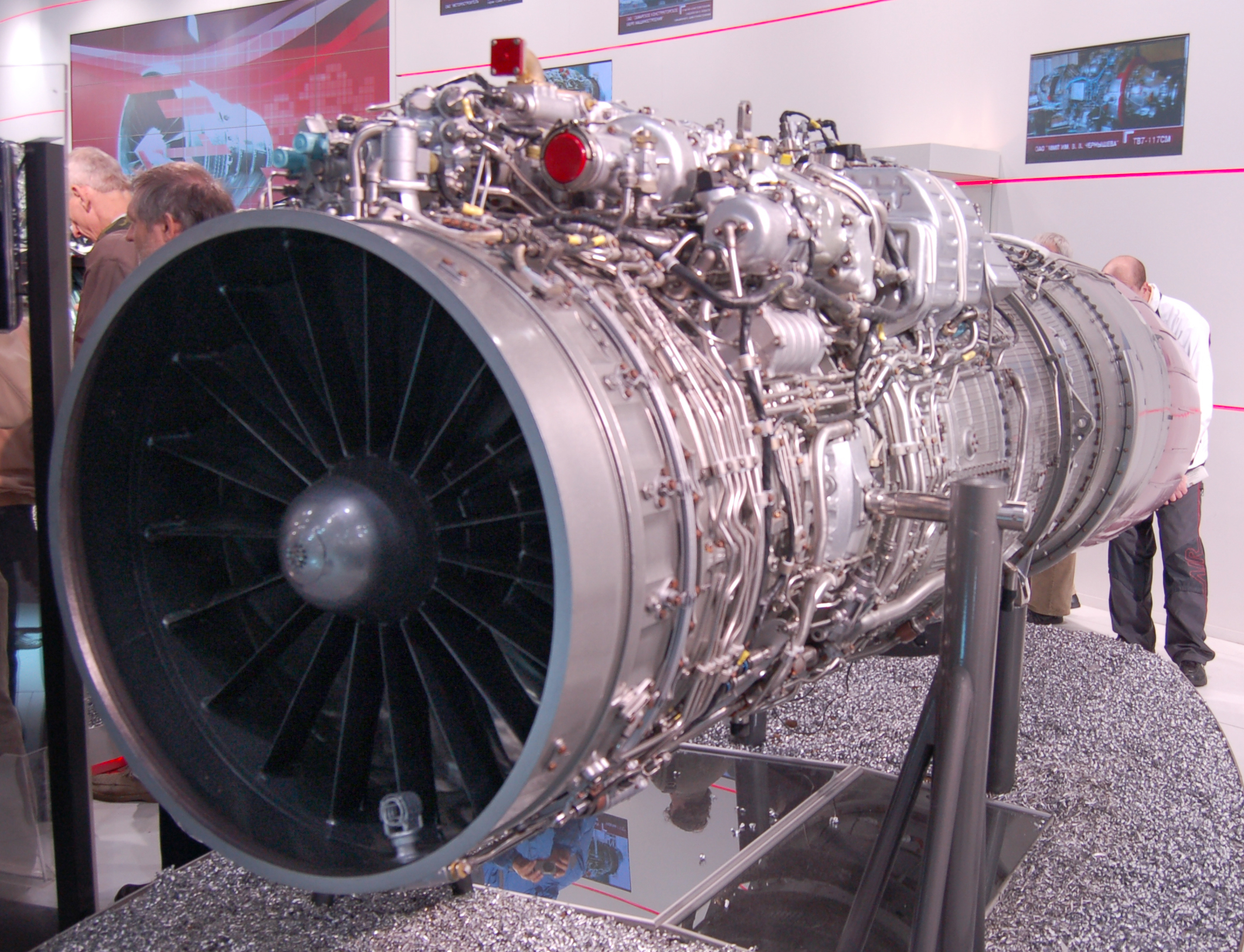
The MiG-29K has two widely spaced RD-33MKs. The early prototypes were fitted with two RD-33K turbofan engines, each with afterburner thrust of 86.3 kN (19,800 lb) and a possible take-off thrust of 92.2 kN (20,723 lbf) for shipborne operations. The RD-33MK engine features 7% higher power over the base RD-33, enabled by the usage of improved materials for the turbine blades.

Internal fuel was increased from 3340 to, to give a combat radius of 850 km (531 mi). The combat radius can be increased to 1300 km with up to four underwing fuel drop tanks. The maximum weight of the aircraft grew from 19.5 to, to allow for increased payloads. The MiG-29KUB two-seat fighter, intended for pilot training, can also conduct combat missions identical to the single-seat fighter. It often takes on the role of a buddy refuelling aircraft.
Cockpit and avionics
The aircraft is equipped with three multifunctional color liquid-crystal displays (seven LCDs on the MiG-29KUB), a four-channel digital fly-by-wire flight control system, passive homing system for anti-radar missiles, Sigma-95 GPS receiver, TopGun helmet-mounted targeting system and electronic countermeasures (ECM). Additionally, an onboard oxygen generating system eliminates the need for heavy oxygen canisters. The types of combat missions undertaken by the MiG-29K can be increased by adding optronic/infrared imaging reconnaissance pods.
The Zhuk-ME is a development of the N010 Zhuk radar, introducing functions such as terrain mapping and following. The radar, weighing 220 kg, features improved signal processing and a detection range of up to 120 km vs a 5 m2 RCS target for the export variant. In the air targeting mode, up to ten targets can be tracked and four targets engaged simultaneously. In air to surface mode the radar can detect a tank from up to 25 km away and a bridge from 120 km away, a naval destroyer could be detected up to 300 km away, while up to two surface targets can be tracked at once. The radar has a scanning area of ±85 degrees in azimuth and +56/-40 in elevation.
The Zhuk-AE radar was developed with modular approach, enabling upgrade of existing Zhuk ME radars deployed in MiG-29 platforms into the active electronically scanned array (AESA) Zhuk-AE standard. India is already operating the Bars phased array radar on its Su-30MKI and has specified AESA as a critical element of the MRCA platform. The MiG-29K can be outfitted with an IRST system integrated with both optical and laser systems. It can provide targeting solutions for ground and air targets at up to 15 km, with all-round 360-degree coverage. The IRST can also provide detailed trajectories of missiles at closer ranges.
Weapons and defensive capabilities
.jpg)
MiG-29K has a GSh-30-1 30 mm cannon in the port wing root. It has provisions for laser-guided and electro-optical bombs, as well as air-to-surface missiles like Kh-25ML/25MP, Kh-29T, Kh-31G/31A, Kh-35U, and rockets. Kh-31P passive radar seeker missiles are used as anti-radiation missiles. Kh-35, Kh-31A antiship missiles are for anti-ship roles; for aerial combat air-to-air missile like RVV-AE, R-27ER/ET and R-73E are fitted. The aircraft is also adaptable to various foreign weapons.
The MiG-29K has a combination of low-observable technology, advanced electronic-warfare capabilities, reduced ballistic vulnerability, and standoff weapons to enhance the fighter's survivability. According to Mikoyan, extensive use of radar-absorbent materials reduce the MiG-29K's radar signature 4–5 times over the basic MiG-29. The RD-33MK turbofan engine was also engineered to reduce infrared signature and improve aircraft camouflage.
Operational history
India

In January 2004, Indian Navy ordered 12 MiG-29K single-seat and 4 MiG-29KUB two-seat fighters. The MiG-29K is to provide both airborne fleet air defence and surface attack capabilities. Deliveries began in December 2009. In January 2010, India and Russia signed a deal worth US$1.2 billion for the Indian Navy to receive an additional 29 MiG-29Ks. The MiG-29K entered operational service with India in February 2010. Six aircraft were delivered by the end of 2010 Further deliveries of five MiG-29Ks and a flight simulator took place in May 2011. Further deliveries are to continue through 2012. The fighters were based at in Goa on India's west coast until joined the navy under the name of in last quarter of 2013. Vikramaditya was expected to carry up to 24 MiG-29K/KUB fighters. , India's first indigenous aircraft carrier, also carries this aircraft, but will be replaced by the Rafale M from 2030.
.jpg)
Further MiG-29K orders by India were frozen after a MiG-29KUB crashed during testing in Russia prior to delivery to India; the Indian Defence Ministry commented that the crash cast a shadow on the credibility of the aircraft. Russia later announced that pilot error had caused the crash, and there was no need to ground the aircraft. In August 2011, MiG's General Director Sergei Korotkov announced that the final five out of the 16 aircraft contracted in 2004 would be delivered by the end of the year; and that deliveries of a second batch of 29 MiG-29Ks would begin in 2012. In November 2012, the MiG-29K/KUB completed sea trials for the Indian Navy. One problem is that Western and Ukrainian sanctions on Russia have prevented Mikoyan importing components for assembly at the factory, instead they have had to be installed "on the flightline" in India.
In a 2016 report, India's national auditor CAG criticized the aircraft due to defects in engines, airframes and fly-by-wire systems. The serviceability of MiG-29K was reported to be 37.63% and that of MiG-29KUB ranging from 21.30% to 47.14%; with 40 engines (62%) being rejected/withdrawn from service due to design defects. These defects are likely to reduce the service life of the aircraft from the stated 6000 hours. However, it was reported that recent efforts made by the two countries have improved serviceability to around 70%. In 2017, the Indian government announced the planned replacement of the MiG-29 with 57 new aircraft, with a competition primarily between the French Dassault Rafale and the American Boeing F/A-18E/F Super Hornet. After conducting trials in 2022, the Rafale M was finalised in 2025, but with only 26 units purchased.

In December 2018 when addressing the press on the eve of Navy Day CNS Admiral Lanba noted regarding the MiG-29K, "there is no issue on supplies of spare parts from Russia at the moment... The MiG-29K fleet has been performing well now." The Indian Navy plans to deploy the MiG-29K onboard its first domestically built carrier, INS Vikrant, and will acquire further combat jets with updated capabilities for this purpose. Indian Navy Chief Admiral Sunil Lanba announced that issues related to maintenance and availability of spare parts for the MiG-29K fleet, which had previously undermined their readiness, had been resolved. On 26 May 2023, a MiG-29K successfully landed on during night sea trials of the ship.
During the 2025 India–Pakistan conflict, 15 MiG-29Ks were also stationed on the INS Vikrant-led Carrier Battle Group deployed in the Arabian Sea.
The Indian Navy has reportedly had multiple Radar failures with the Zhuk-ME radar used on both the MiG-29K/KUB with its serviceability dropping to around 60-hours before becoming defective. This was also confirmed by leaked documents released by Black Mirror Hackers, a Ukrainian hacking group.
Russia
.jpg)
The 279th Shipborne Fighter Aviation Regiment of the Russian Navy has a fleet of 21 Su-33 fighters whose service lives were expected to be reached by 2015. Around 10 to 12 will receive an upgrade including the Gefest SVP-24 bombsight for free-fall bombs, giving them a limited ground attack capability,
The Russian Navy ordered 24 MiG-29Ks in late 2009 for Admiral Kuznetsov. Deliveries of the MiG-29K for the Russian Navy started in 2010. MiG and Russia were in final negotiations for an order for more MiG-29K/KUB aircraft in August 2011. An order for 20 MiG-29KR fighter-bombers and four MiG-29KUBR operational trainers for operation from Admiral Kuznetsov, replacing the Sukhoi Su-33, was officially announced in February 2012. However, in 2015, Major-General Igor Kozhin, the Commander of the Navy's Air and Air Defence Forces, announced that a second fighter regiment would be formed to augment the current force, with the intention that the MiG-29s be used by this new unit, with some existing Su-33s refurbished for further use.
In October 2016, four MiG-29KR/KUBR from the 100th Independent Shipborne Fighter Aviation Regiment formed part of the air group aboard Admiral Kuznetsov as the ship deployed with its battle group to the Mediterranean Sea as part of the Russian campaign in Syria. On 13 November 2016, a MiG-29KUBR on operations in the Mediterranean crashed en route back to Admiral Kuznetsov.
Variants
;MiG-29K (Product 9.41) :Indian single seat variant. ;MiG-29KR (Product 9.41R) :Russian single seat variant, replaces Ukrainian and Indian equipment with Russian. ;MiG-29KUB (Product 9.47) :Indian tandem two-seat operational trainer variant. ;MiG-29KUBR (Product 9.47R) :Russian tandem two-seat operational trainer variant. ;MiG-29KVP :(KVP – Korotkaya Vzlet Posadka – Short take-off landing (STOL)) Several aircraft converted to article 9–12 standard, (or 9–18?), with high-lift systems strengthened undercarriage and arrestor hook, for research into deck landings and pilot training.
Operators

;
- Indian Navy – 37 single seat K and 8 dual seat KUB purchased, 5 subsequently lost in accidents, four K and two KUB. The forty-five aircraft were ordered in two batches, sixteen in January 2004, for delivery from 2009, an option for 29 additional aircraft, for delivery by the end of 2016, being taken in 2010.
- Indian Naval Air Arm
- 300 Indian Naval Air Squadron – , Goa
- 303 Indian Naval Air Squadron – INS Hansa, Goa (embarked in ) ;
- Indian Naval Air Arm
- Russian Navy – ordered 20 MiG-29KR and 4 MiG-29KUBR in 2012. All the aircraft were delivered by early 2016.
- Russian Naval Aviation
- 100th Independent Shipborne Fighter Aviation Regiment – Yeysk (air base), Krasnodar Krai
- Russian Naval Aviation
Accidents
- On 23 June 2011, a MiG-29KUB crashed during testing in Russia, prior to delivery to India, killing its two pilots.
- On 13 November 2016, a MiG-29KUBR crashed in the Mediterranean Sea while returning to the aircraft carrier Admiral Kuznetsov from a mission over Syria. The pilot was reportedly rescued.
- On 3 Jan 2018, an Indian Navy MiG-29K veered off a runway, at Goa, and caught fire, the pilot ejected safely.
- On 16 November 2019, an Indian Navy MiG-29KUB trainer aircraft crashed after bird strike and engine failure; both pilots ejected safely.
- On 23 February 2020, after taking off from INS Hansa, an Indian Navy MiG-29K aircraft crashed, the pilot ejected safely.
- On 26 November 2020, an Indian Navy MiG-29KUB trainer aircraft crashed into sea with one pilot killed.
- On 12 October 2022, an Indian Navy MiG-29K aircraft crashed off the coast of Goa in the sea; the pilot was rescued.
Specifications (MiG-29K - ''Izdeliye'' 9.41)

.jpg)
.jpg)
|prime units?=met
|max takeoff weight kg=24500 |max takeoff weight note=
|eng1 kn-ab= |eng1 lbf-ab=19840
::::1400 km/h / Mach 1.13 at low altitude |never exceed speed kmh= |never exceed speed note= |minimum control speed kmh= |minimum control speed note= ::::700 km at low altitude ::::3000 km with 3 drop tanks ::::5500 km with 3 drop tanks + one aerial refuelling ::::109 m/s average from 0 - |wing loading kg/m2=442 |fuel consumption kg/km= |thrust/weight=0.98
-
Take-off run: m
-
Take-off run to 15 m: m
-
Landing run: m
-
Landing run from 15 m: m-- --
-
S-5
-
S-8
-
S-24
-
Air-to-air missiles:
- 8 × R-73E
- 6 x RVV-AE
- Astra (Indian Navy)
-
Air-to-surface missile:
- Rampage (Indian Navy)
-
Anti-ship missiles:
- 4 x Kh-31A/AD
- 4 x Kh-35U/UE
-
Anti-radiation missiles:
- 4 x Kh-31P/PD
-
4 x KAB-500KR TV-guided bombs
-
4 x KAB-500L laser-guided bombs
-
Khagantak-243 (Indian Navy) Others:
-
-
Flare dispenser pod and chaff pod or
-
Electronic countermeasures (ECM) pod or
-
Targeting pods or
-
Drop tanks
-
Phazotron Zhuk-M radar (export designation Zhuk-ME)
-
OEPS-29 electro-optical targeting system
References
;Notes
;Citations
;Bibliography
- Bangash, M.Y.H. Shock, Impact and Explosion: Structural Analysis and Design. Springer, 2008. .
- Belyakov, R.A. and Marmain, J. MiG: Fifty Years of Secret Aircraft Design. Shrewsbury, UK:Airlife, 1994. .
- Conley, Jerome M. Indo-Russian military and nuclear cooperation: lessons and options for U.S. policy in South Asia. Lexington Books, 2001. .
- Day, Jerry. "Hot Hot Hot!" Air Classics, Volume 45, Issue 4, April 2009.
- Gordon, Yefim and Peter Davison. Mikoyan Gurevich MiG-29 Fulcrum. North Branch, Minnesota: Specialty Press, 2005. .
- Gunston, Bill and Yefim Gordon. MiG aircraft since 1937. North Branch, Minnesota: Naval Institute Press, 1998. .
- Lake, Jon. Jane's How to Fly and Fight in the Mikoyan MiG-29. New York: HarperCollins, 1997. .
- Rininger, Tyson V. Red Flag: Air Combat for the 21st Century. Grand Rapids, Michigan: Zenith Imprint, 2006. .
References
- Parsons, Gary. (19 February 2010). "Indian MiGs enter service". AirForces Monthly.
- (10 August 2016). "29K Fighters Face Problems".
- (29 November 2020). "Engine, design deficiencies — Third crash puts Russian MiG-29K back in focus".
- Brown, Daniel. (3 December 2018). "7 photos of the MiG-35, a highly maneuverable fighter jet that Russia hopes will keep the MiG corporation in business".
- Mader, Georg. (3 July 2019). "What does the MiG-35 bring to air combat? Interview with Anastasia Kravchenko".
- Suciu, Peter. (15 March 2021). "MiG-29K: Why Russia Is Sending This Dangerous Fighter to the Arctic". The National Interest.
- "Mikoyan MiG-29K Infographics".
- "MiG-29K/MiG-29KUB".
- (November 12, 2012). "Mikoyan MiG-29K/KUB Fulcrum-D".
- Belyakov & Marmain 1994, pp. 446–449.
- Belyakov & Marmain 1994, p. 449.
- Gordon & Davison 2005, p. 40.
- Belyakov & Marmain 1994, pp. 449–450.
- (2008-11-19). "Mikoyan MiG-29".
- Belyakov & Marmain 1994, p. 452.
- Ilyin, Vladimir. (2003). "MiGs on the Deck". Aerocosmicheskoye Obozrenie.
- Williams 2002, p. 129.
- Donald and March 2001, pp. 152–153.
- Gunston and Gordon 1998, p. 254.
- Bangash 2008, p. 281.
- Williams 2002, p. 177.
- Eden 2004, p. 462.
- "Fighter Mig-29 Fulcrum".
- Buntin, Nikolai. (July 1999). "MiG-29K to operate from new Aircraft Carriers". Military Parade.
- (3 December 2007). "India owns Admiral Gorshkov: Navy chief". [[The Times of India]].
- Rininger 2006, p. 124.
- Conley 2001, p. 69.
- "4+ MiG-29K/KUB and 4++ MiG-35".
- "MiG Corp. started series production of MiG-29K/KUB for Indian Navy".
- Butowski, Piotr. (22 September 2007). "Wraps come off new Russian fighters: Russia's so-called "intermediate-generation" fighters made their debut at MAKS 2007". Aerospace Media Publishing.
- Williams 2002, p. 128
- Gordon & Davison 2005, pp. 46, 92.
- "RD-33MK".
- (2007). "Perspective Project Developments at the KLIMOV Aero Engine Design Company".
- "Aircraft MiG-29K / KUB".
- "Airforces Catalogue".
- "Phazotron Zhuk AE AESA Radar".
- "MiG-29K".
- Smith, Cody T.. (September 2017). "Century of the Seas: Unlocking Indian Maritime Strategy in the 21st Century".
- (30 September 2009). "Indian MIG-29K Naval fighters undergo tests on Russian carrier". [[The Indian Express]].
- Pandit, Rajat. (18 January 2010). "India, Russia to ink $1.2 bn deal for 29 more MiG-29Ks". The Times of India.
- (19 February 2010). "Indian MiGs enter service".
- (31 May 2011). "Russia delivers new batch of five MiG-29 naval fighters to India". [[The Economic Times]].
- "MiG-29K Carrier-Based Multirole Fighter Aircraft".
- Raghuvanshi, Vivek. (28 June 2011). "MiG Crash in Russia Freezes Further Indian Buys".
- (30 June 2011). "No need to ground MiG 29K fighter jet, Russia tells India". [[Hindustan Times]].
- Karnozov, Vladimir. (1 November 2012). "MiG-29K carrier trials for India completed".
- Johnson, Reuben F.. (7 July 2016). "Indian Navy reports problems with Russian carrier, aircraft". IHS Jane's Defence Weekly.
- Sharma, Aakriti. (2020-11-27). "Third Indian MiG-29 Crashes In A Year - Is It Time To Bid Adieu To Russian Jets & Welcome Western Fighters?".
- (8 August 2017). "Report: India's Russian-made MiG-29K Fighters Face Problems".
- (July 17, 2017). "Indian Navy MiG-29Ks Make Low Approaches To USS Nimitz During "Malabar" Drills".
- Sen, Sudhi Ranjan. (July 27, 2016). "Auditor's Report Card Fails Navy's New Flagship Fighter, MiG-29K".
- (5 December 2018). "All Issues Pertaining to Serviceability of MiG-29K Sorted Out - Indian Navy".
- Bedi, Rahul. (1 February 2017). "India issues RFI for 57 carrier-borne fighters". Jane's Defence Weekly.
- (January 25, 2017). "It's Official: Indian Navy Wants 57 Carrier-borne Fighters".
- "PIB Headquarters".
- (27 May 2023). "MiG-29K Lands On India's Aircraft Carrier At Night For First Time".
- "Russian Zhuk-ME Radar Undermined Combat Capability of Indian MiG-29s".
- (2026-01-06). "Indian Navy Accelerates Push for Indigenous AESA Radars for MiG-29K to Replace Failing Russian Zhuk-ME Systems".
- "It Turned Out russians Deceived India Selling MiG-29K Which Radars Break Down Up to 6 Times More Often {{!}} Defense Express".
- (30 September 2016). "'Sea Flankers' prepare for Syria".
- (24 September 2009). "Russian Navy will probably buy 24 MiG-29K fighters designed for India".
- (25 September 2009). "New fighter jets for Admiral Kuznetsov".
- (5 March 2012). "Russia Orders Bombers and Fighters". McGraw-Hill.
- . (26 August 2015). ["Russian Navy to Form Second Aircraft Carrier Aviation Regiment with MiG-29K/KUB"](http://www.navyrecognition.com/index.php/news/defence-news/year-2015-news/august-2015-navy-naval-forces-defense-industry-technology-maritime-security-global-news/3042-russian-navy-to-form-second-aircraft-carrier-aviation-regiment-with-mig-29kkub.html).
- . ["In 2015 naval aviation to receive more than 20 MiG-29K aircraft"](http://eng.mil.ru/en/news_page/country/more.htm?id=12007494@egNews).
- (14 November 2016). "Russian Navy MiG-29K lost in Mediterranean". Combat Aircraft.
- Mizokami, Kyle. (5 December 2016). "Russia's Sad, Smokey Aircraft Carrier Loses Second Fighter in Two Weeks".
- Gunston, Bill. (1995). "The Osprey Encyclopaedia of Russian Aircraft 1875–1995". Osprey.
- (2022-10-13). "MiG 29K crashes off Goa coast; pilot ejects safely - Herald Goa".
- (2022-10-13). "Indian Navy reports crash of fifth MiG-29K in four years".
- "MIG 29K/ KUB {{!}} Indian Navy".
- (2 December 2014). "РСК "МиГ" выполнила оборонзаказ-2014 по корабельным истребителям".
- (20 January 2016). "МиГ-29КУБ - 9 лет в небе".
- (15 January 2016). "Сформирован 100-й отдельный корабельный истребительный авиационный полк".
- (2011-06-23). "Тела пилотов упавшего под Астраханью МиГ-29 обнаружены".
- (25 June 2011). "Fighter meant for Indian Navy crashes in Russia". The Indian Express.
- (2016-11-14). "Russian Navy MiG-29K lost in Mediterranean".
- (November 14, 2016). "Russian fighter jet crashes into Mediterranean".
- Iddon, Paul. "The Indian Navy's Carrier MiG-29s Keep Crashing. Will New Delhi Seek A Replacement Fighter?".
- (16 November 2019). "Indian Navy's MiG-29K Crashes in Goa; Pilots Eject Safely".
- Pathak, Manish. (2020-11-27). "Navy's MiG-29K trainer jet crashes into Arabian Sea; 1 pilot rescued, search on for the other".
- (27 November 2020). "Another crash brings inherent technical problems with mig 29kub to the fore".
- (27 November 2020). "Indian Navy's MiG-29K trainer aircraft crashes into sea; one pilot rescued, another missing". The Indian Express.
- "MiG-29K crash: When joint effort of Indian Coast Guard and Navy saved the LIFE of fighter jet pilot".
- "MIG-29K".
- Gordon & Davison 2005, pp. 40–44.
- "Mig-29K".
- "MiG-29 Fulcrum Fighter Bomber".
- "Air Force to get 33 new fighter jets, 248 indigenous Astra missiles".
- Gordon 2006, p. 184
- (27 April 2024). "ndian Air Force, Navy induct air-to-surface Rampage missile in its fleet". The Times of India.
- (14 February 2025). "Aero India 2025: BEL secures IAF contract for stand-off glide munitions". Janes.
This article was imported from Wikipedia and is available under the Creative Commons Attribution-ShareAlike 4.0 License. Content has been adapted to SurfDoc format. Original contributors can be found on the article history page.
Ask Mako anything about Mikoyan MiG-29K — get instant answers, deeper analysis, and related topics.
Research with MakoFree with your Surf account
Create a free account to save articles, ask Mako questions, and organize your research.
Sign up freeThis content may have been generated or modified by AI. CloudSurf Software LLC is not responsible for the accuracy, completeness, or reliability of AI-generated content. Always verify important information from primary sources.
Report