From Surf Wiki (app.surf) — the open knowledge base
Miji people
Ethnic group of Arunachal Pradesh, India
Ethnic group of Arunachal Pradesh, India
| Field | Value |
|---|---|
| group | Sajolang (Miji) |
| image | A young Miji man from West Kameng.jpg |
| image_caption | A young Miji man |
| population | 37000 (approx.) |
| popplace | West Kameng, East Kameng & Kurung Kumey districts of Arunachal Pradesh in India and Longzi County, Shannan Prefecture in China |
| languages | Miji, Bengru, Sajolang, Damai |
| religions | Christianity, Animism, Shamanism |
| related_groups | Abotani, Tani people |
The Miji, (or Sajolang) are a social group of Arunachal Pradesh, India. They are located in various districts of Arunachal Pradesh including the West Kameng, East Kameng and Kurung Kumey. Their population of 37,000 are found near the lower parts of the sub-Himalayan hills bordering Assam; they speak the Sajalong language.
Dress

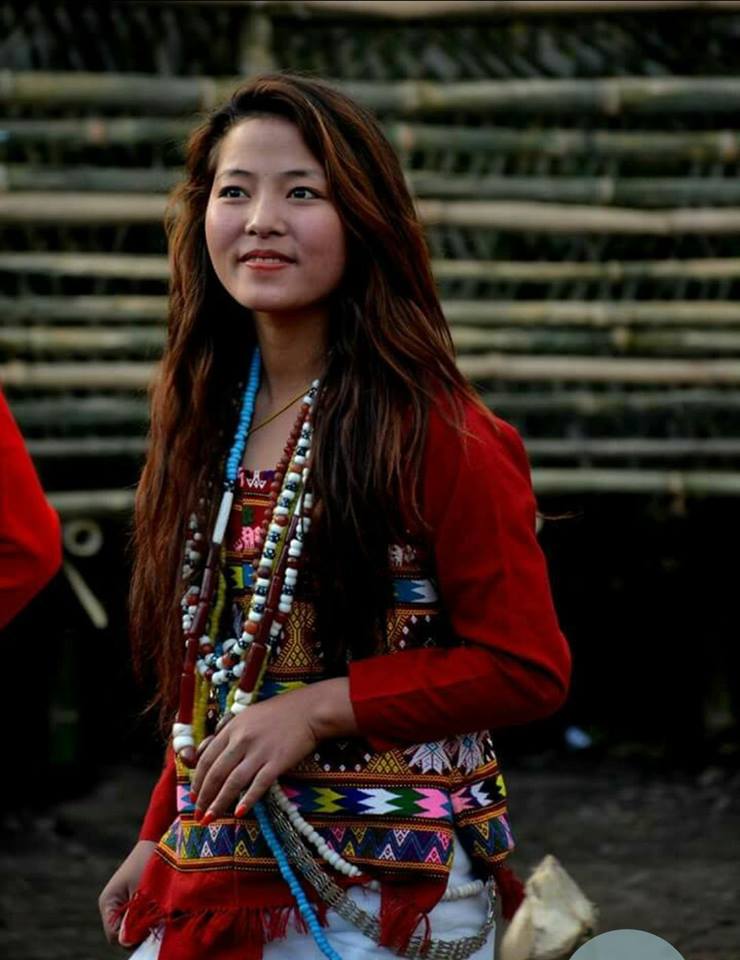
The traditional costume of Miji women consists of an ankle-length white garment with a beautifully decorated red jacket. Unlike the majority of other tribes of Arunachal Pradesh, India; the Miji people wear silver ornaments, and glass/brass based necklaces. Indigenous cosmetics are made from pine resin and coal ( specially during marriage ceremonies).
Religion
Most Miji are adherents of Animism, although a few have adopted Christianity. The Mijis practise a distinct religion which rely entirely on nature and god ( nature- being the replica of god. The supreme deity worshipped is Zhanglhang-Miungzhin; Mijis believe that god prevail in every aspects of nature, such as trees, water tributaries and even stones. Chindang, marked every 15 October, is considered the main festival of the Mijis, inhabiting the Lada circle of the East Kameng district, Sarli region of the Kurung Kumey district and Nafra and Bomdila Sub-Division of the West Kameng district with a few of them also found in the Assam-Arunachal border towns of Sessa and Bhalukpong who settled down there some time ago because of better access to facilities. Culturally and linguistically, the Miji and Hrusso Akas form a cognate group. Their ancestors are called Bor(Robo), or the brother of Tanis, like the Nyishis, Apatanis, Tagins, Galos and the Adis which share common features but are also distinct in themselves. Robo being the elder brother and Nyibo (tani) being younger are actual brothers, who belonged to same father.
There is some Buddhist influence as a result of long-standing cultural contacts with Buddhist tribes to the west, and the celebration of Losar as well as the usage of prayer flags are some indicators of this.
References
References
- Oppi Untracht. (1997). "Traditional Jewelry of India". Harry N. Abrams, Inc..
- Tanka Bahadur Subba, G. C. Ghosh. (2003). "The Anthropology of North-East India: A Textbook". Orient Longman.
This article was imported from Wikipedia and is available under the Creative Commons Attribution-ShareAlike 4.0 License. Content has been adapted to SurfDoc format. Original contributors can be found on the article history page.
Ask Mako anything about Miji people — get instant answers, deeper analysis, and related topics.
Research with MakoFree with your Surf account
Create a free account to save articles, ask Mako questions, and organize your research.
Sign up freeThis content may have been generated or modified by AI. CloudSurf Software LLC is not responsible for the accuracy, completeness, or reliability of AI-generated content. Always verify important information from primary sources.
Report