From Surf Wiki (app.surf) — the open knowledge base
Mie Prefecture
Prefecture of Japan

Prefecture of Japan
| Field | Value | |
|---|---|---|
| <!-- See Template:Infobox settlement for additional fields and descriptions --> | name | Mie Prefecture |
| native_name | 三重県 | |
| settlement_type | Prefecture | |
| translit_lang1 | Japanese | |
| translit_lang1_type | Japanese | |
| translit_lang1_info | 三重県 | |
| translit_lang1_type1 | Rōmaji | |
| translit_lang1_info1 | Mie-ken | |
| image_skyline | Sunrise of the Wedded Rocks03.jpg | |
| image_caption | The pair of Meoto Iwa rocks off the coast of Ise city, Mie Prefecture during sunrise | |
| image_flag | Flag of Mie Prefecture.svg | |
| flag_size | 100px | |
| image_blank_emblem | Emblem of Mie Prefecture.svg | |
| blank_emblem_size | 80px | |
| blank_emblem_type | Symbol | |
| image_map | Map of Japan with highlight on 24 Mie prefecture.svg | |
| coordinates | ||
| subdivision_type | Country | |
| subdivision_name | Japan | |
| subdivision_type1 | Region | |
| subdivision_name1 | Kansai (Tōkai) | |
| subdivision_type2 | Island | |
| subdivision_name2 | Honshu | |
| seat_type | Capital | |
| seat | Tsu | |
| seat1_type | Largest city | |
| seat1 | Yokkaichi | |
| parts_type | Subdivisions | |
| parts_style | para | |
| p1 | Districts: 7 | |
| p2 | Municipalities: 29 | |
| leader_title | Governor | |
| leader_name | Katsuyuki Ichimi | |
| area_total_km2 | 5774.41 | |
| area_water_percent | 0.7 | |
| area_rank | 25th | |
| population_total | 1781948 | |
| population_as_of | 1 June 2019 | |
| population_rank | 22nd | |
| population_density_km2 | auto | |
| demographics_type2 | GDP | |
| demographics2_footnotes | ||
| demographics2_title1 | Total | |
| demographics2_info1 | JP¥ 8,086 billion | |
| US$ 74.2 billion (2019) | ||
| iso_code | JP-24 | |
| website | [www.pref.mie.jp/ | |
| ENGLISH/](http://www.pref.mie.jp/ENGLISH/) | ||
| module | {{Infobox place symbols | embedded=yes |
| country | Japan | |
| bird | Snowy plover | |
| (Charadrius alexandrinus) | ||
| fish | Japanese spiny lobster | |
| (Panulirus japonicus) | ||
| flower | Iris | |
| (Iris ensata) | ||
| tree | Japanese cedar | |
| (Cryptomeria japonica) | ||
| anthem | Mie kenminka |
US$ 74.2 billion (2019) ENGLISH/](http://www.pref.mie.jp/ENGLISH/) (Charadrius alexandrinus) (Panulirus japonicus) (Iris ensata) (Cryptomeria japonica)
Mie Prefecture is a prefecture of Japan located in the Kansai region of Honshu. Mie Prefecture has a population of 1,781,948 () and has a geographic area of 5774 km2. Mie Prefecture is bordered by Gifu Prefecture to the north, Shiga Prefecture and Kyoto Prefecture to the northwest, Nara Prefecture to the west, Wakayama Prefecture to the southwest, and Aichi Prefecture to the east.
Tsu is the capital and Yokkaichi is the largest city of Mie Prefecture, with other major cities including Suzuka, Matsusaka, Ise, and Kuwana. Mie Prefecture is located on the eastern coast of the Kii Peninsula, forming the western side of Ise Bay which features the mouths of the Kiso Three Rivers. Mie Prefecture is a popular tourism destination home to Nagashima Spa Land, Suzuka International Racing Course, and some of the oldest and holiest sites in Shinto, the traditional religion of Japan, including the Ise Grand Shrine and the Tsubaki Grand Shrine.
History
Until the Meiji Restoration, the area that is now Mie Prefecture was made up of Ise Province, Shima Province, Iga Province, and part of Kii Province.
Evidence of human habitation in Mie dates back more than 10,000 years. During the Jōmon and Yayoi periods, agricultural communities began to form along the river and coastal areas of the region. Ise Shrine is said to have been established during the Yayoi period, and in the 7th century the Saikū Imperial Residence was built in what is now Meiwa Town to serve as both a residence and administrative centre for the Saiō, an Imperial Princess who served as High Priestess of Ise Shrine.
During the Edo period, the area now known as Mie Prefecture consisted of several feudal domains, each ruled by an appointed lord. Transport networks, including the Tokaido and Ise Roads, were built. Port towns such as Ohminato, Kuwana and Anōtsu, posting stations and castle towns flourished. Pilgrimages to Ise Shrine also became very popular.
After the Meiji Restoration, the former provinces of Ise, Shima and Iga as well as a portion of eastern Kii, were organized and reorganized repeatedly. In 1871, the area from the Kiso Three Rivers in the north to present-day Tsu became Anōtsu Prefecture, and the area south of that became Watarai Prefecture. In 1872, the Anōtsu prefectural seat moved from Tsu to Yokkaichi, and the prefecture itself was renamed Mie. For a variety of reasons, including the strong likelihood that Mie would eventually merge with Watarai, the prefectural seat returned to Tsu the following year, and Mie Prefecture took its present-day form in 1876, when it merged with its southern neighbor.
The name Mie supposedly was taken from a comment about the region made by Yamato Takeru on his way back from conquering the eastern regions.
In 1959, many people died as parts of Mie were devastated by the Ise-wan Typhoon, the strongest typhoon to hit Japan in recorded history. Crops were destroyed, sea walls ruined, roads and railways damaged and a substantial number of people were injured or left homeless.
In May 2016, the city of Shima hosted the 42nd G7 summit, the third summit without the presence of Russia.
Geography


Mie Prefecture forms the eastern part of the Kii Peninsula, and borders on Aichi, Gifu, Shiga, Kyoto, Nara, and Wakayama. It is considered part of the Kansai and Tōkai regions due to its geographical proximity to Aichi Prefecture and its cultural influence from Kansai, such as the fact that Kansai dialect is spoken in Mie. Traditionally, though, the Iga region of Mie is considered to have always been a part of Kansai.
Mie Prefecture measures 170 km from north to south, and 80 km from east to west, and includes five distinct geographical areas:
- the north-west of Mie consists of the Suzuka Mountains
- along the coast of Ise Bay from the Aichi border to Ise City lies the Ise Plain, where most of the population of Mie live
- south of the Ise Plain is the Shima Peninsula
- bordering Nara in the central-west is the Iga Basin
- running from central Mie to its southern borders is the Nunobiki Mountainous Region.


Mie has a coastline that stretches 1094.9 km and, as of 2000, Mie's 5776.44 km2 landmass is 64.8 percent forest, 11.5 percent agriculture, 6 percent residential area, 3.8 percent roads, and 3.6 percent rivers. The remaining 10.3 percent are not classified.
The Ise Plain has a relatively moderate climate, averaging 14 to for the year. The Iga Basin has more daily temperature variance and averages temperatures 1 to 2 degrees cooler than the Ise Plain. Southern Mie, south of the Shima Peninsula, has a warmer Pacific marine climate, with Owase Region having one of the heaviest rainfall figures for all of Japan.
36% of the total area of the prefecture comprised designated Natural Parks, namely:
- Akame Ichishikyō Prefectural Natural Park
- Ise-no-Umi Prefectural Natural Park
- Ise-Shima National Park
- Kahadakyō Prefectural Natural Park
- Murō-Akame-Aoyama Quasi-National Park
- Okuise Miyagawakyō Prefectural Natural Park
- Suigō Prefectural Natural Park
- Suzuka Quasi-National Park
- Yoshino-Kumano National Park
Municipalities
Since 2006, Mie consists of 29 municipalities: 14 cities and 15 towns.
| Flag, name w/o suffix | Full name | District | |||||||||||||||||
|---|---|---|---|---|---|---|---|---|---|---|---|---|---|---|---|---|---|---|---|
| (-gun) | Area (km2) | Population | Map | Local public entity code | |||||||||||||||
| (w/o checksum) | Japanese | transcription | translation | [[File:Flag of Mie Prefecture.svg | frameless | 25x25px]] Mie | 三重県 | Mie-ken | Mie Prefecture | – | 5,774.41 | 1,781,948 | 24000 | ||||||
| ISO: JP-24 | |||||||||||||||||||
| [[File:Flag of Iga, Mie.svg | frameless | 25x25px]] Iga | 伊賀市 | Iga-shi | Iga City | – | 558.17 | 95,137 | [[File:Iga in Mie Prefecture Ja.svg | frameless | 87x87px]] | 24216 | |||||||
| [[File:Flag of Inabe, Mie.svg | frameless | 25x25px]] Inabe | いなべ市 | Inabe-shi | Inabe City | – | 219.58 | 45,589 | [[File:Inabe in Mie Prefecture Ja.svg | frameless | 87x87px]] | 24214 | |||||||
| [[File:Flag of Ise, Mie.svg | frameless | 25x25px]] Ise | 伊勢市 | Ise-shi | Ise City | – | 208.52 | 123,129 | [[File:Ise in Mie Prefecture Ja.svg | frameless | 87x87px]] | 24203 | |||||||
| [[File:Flag of Kameyama Mie.svg | frameless | 25x25px]] Kameyama | 亀山市 | Kameyama-shi | Kameyama City | – | 190.91 | 50,230 | [[File:Kameyama in Mie Prefecture Ja.svg | frameless | 87x87px]] | 24210 | |||||||
| [[File:Flag of Kumano, Mie.svg | frameless | 25x25px]] Kumano | 熊野市 | Kumano-shi | Kumano City | – | 373.35 | 17,727 | [[File:Kumano in Mie Prefecture Ja.svg | frameless | 87x87px]] | 24212 | |||||||
| [[File:Flag of Kuwana, Mie.svg | frameless | 25x25px]] Kuwana | 桑名市 | Kuwana-shi | Kuwana City | – | 136.68 | 139,587 | [[File:Kuwana in Mie Prefecture Ja.svg | frameless | 87x87px]] | 24205 | |||||||
| [[File:Flag of Matsusaka, Mie.svg | frameless | 25x25px]] Matsusaka | 松阪市 | Matsusaka-shi | Matsusaka City | – | 623.64 | 165,166 | [[File:Matsusaka in Mie Prefecture Ja.svg | frameless | 87x87px]] | 24204 | |||||||
| [[File:Flag of Nabari, Mie.svg | frameless | 25x25px]] Nabari | 名張市 | Nabari-shi | Nabari City | – | 129.77 | 78,190 | [[File:Nabari in Mie Prefecture Ja.svg | frameless | 87x87px]] | 24208 | |||||||
| [[File:Flag of Owase, Mie.svg | frameless | 25x25px]] Owase | 尾鷲市 | Owase-shi | Owase City | – | 192.71 | 17,953 | [[File:Owase in Mie Prefecture Ja.svg | frameless | 87x87px]] | 24209 | |||||||
| [[File:Flag of Shima, Mie.svg | frameless | 25x25px]] Shima | 志摩市 | Shima-shi | Shima City | – | 179.67 | 53,056 | [[File:Shima in Mie Prefecture Ja.svg | frameless | 87x87px]] | 24215 | |||||||
| [[File:Flag of Suzuka, Mie.svg | frameless | 25x25px]] Suzuka | 鈴鹿市 | Suzuka-shi | Suzuka City | – | 194.46 | 196,835 | [[File:Suzuka in Mie Prefecture Ja.svg | frameless | 87x87px]] | 24207 | |||||||
| [[File:Flag of Toba, Mie.svg | frameless | 25x25px]] Toba | 鳥羽市 | Toba-shi | Toba City | – | 107.34 | 19,227 | [[File:Toba in Mie Prefecture Ja.svg | frameless | 87x87px]] | 24211 | |||||||
| [[File:Flag of Tsu, Mie.svg | frameless | 25x25px]] Tsu (capital) | 津市 | Tsu-shi | Tsu City | – | 711.11 | 279,304 | [[File:Tsu in Mie prefecture Ja.svg | frameless | 87x87px]] | 24201 | |||||||
| [[File:Flag of Yokkaichi, Mie.svg | frameless | 25x25px]] Yokkaichi | 四日市市 | Yokkaichi-shi | Yokkaichi City | – | 206.44 | 306,107 | [[File:Yokkaichi in Mie Prefecture Ja.svg | frameless | 87x87px]] | 24202 | |||||||
| [[File:Flag of Asahi, Mie.svg | frameless | 25x25px]] Asahi | 朝日町 | Asahi-chō | Asahi Town | Mie | 5.99 | 9,941 | [[File:Asahi in Mie Prefecture Ja.svg | frameless | 87x87px]] | 24343 | |||||||
| [[File:Flag of Kawagoe Mie.svg | frameless | 25x25px]] Kawagoe | 川越町 | Kawagoe-chō | Kawagoe Town | 8.73 | 14,999 | [[File:Kawagoe in Mie Prefecture Ja.svg | frameless | 87x87px]] | 24344 | ||||||||
| [[File:Flag of Komono, Mie.svg | frameless | 25x25px]] Komono | 菰野町 | Komono-chō | Komono Town | 106.89 | 40,289 | [[File:Komono in Mie Prefecture Ja.svg | frameless | 87x87px]] | 24341 | ||||||||
| [[File:Flag of Kiho Mie.svg | frameless | 25x25px]] Kihō | 紀宝町 | Kihō-chō | Kihō Town | Minami-Muro | |||||||||||||
| (South Muro) | 79.66 | 11,454 | [[File:Kiho in Mie Prefecture Ja.svg | frameless | 87x87px]] | 24562 | |||||||||||||
| [[File:Flag of Mihama.svg | frameless | 25x25px]] Mihama | 御浜町 | Mihama-chō | Mihama Town | 88.28 | 9,089 | [[File:Mihama in Mie Prefecture Ja.svg | frameless | 87x87px]] | 24561 | ||||||||
| [[File:Flag of Kihoku, Mie.svg | frameless | 25x25px]] Kihoku | 紀北町 | Kihoku-chō | Kihoku Town | Kita-Muro | |||||||||||||
| (North Muro) | 257.01 | 17,885 | [[File:Kihoku in Mie Prefecture Ja.svg | frameless | 87x87px]] | 24543 | |||||||||||||
| [[File:Flag of Kisosaki Mie.svg | frameless | 25x25px]] Kisosaki | 木曽岬町 | Kisosaki-chō | Kisosaki Town | Kuwana | 15.72 | 6,730 | [[File:Kisosaki in Mie Prefecture Ja.svg | frameless | 87x87px]] | 24303 | |||||||
| [[File:Flag of Meiwa, Mie.svg | frameless | 25x25px]] Meiwa | 明和町 | Meiwa-chō | Meiwa Town | Taki | 40.92 | 22,726 | [[File:Meiwa in Mie Prefecture Ja.svg | frameless | 87x87px]] | 24442 | |||||||
| [[File:Flag of Odai Mie.svg | frameless | 25x25px]] Ōdai | 大台町 | Ōdai-chō | Ōdai Town | 362.94 | 9,345 | [[File:Odai in Mie Prefecture Ja.svg | frameless | 87x87px]] | 24443 | ||||||||
| [[File:Flag of Taki, Mie.svg | frameless | 25x25px]] Taki | 多気町 | Taki-chō | Taki Town | 103.06 | 14,846 | [[File:Taki in Mie Prefecture Ja.svg | frameless | 87x87px]] | 24441 | ||||||||
| [[File:Flag of Minamiise Mie.svg | frameless | 25x25px]] Minamiise | 南伊勢町 | Minami-Ise-chō | South Ise Town | Watarai | 242.98 | 14,217 | [[File:Minamiise in Mie Prefecture Ja.svg | frameless | 87x87px]] | 24472 | |||||||
| [[File:Flag of Taiki, Mie.svg | frameless | 25x25px]] Taiki | 大紀町 | Taiki-chō | Taiki Town | 233.54 | 9,543 | [[File:Taiki in Mie Prefecture Ja.svg | frameless | 87x87px]] | 24471 | ||||||||
| [[File:Flag of Tamaki, Mie.svg | frameless | 25x25px]] Tamaki | 玉城町 | Tamaki-chō | Tamaki Town | 40.94 | 15,280 | [[File:Tamaki in Mie Prefecture Ja.svg | frameless | 87x87px]] | 24461 | ||||||||
| [[File:Flag of Watarai Mie.svg | frameless | 25x25px]] Watarai | 度会町 | Watarai-chō | Watarai Town | 134.97 | 8,534 | [[File:Watarai in Mie Prefecture Ja.svg | frameless | 87x87px]] | 24470 | ||||||||
| [[File:Flag of Toin Mie.svg | frameless | 25x25px]] Tōin | 東員町 | Tōin-chō | Tōin Town | Inabe | 22.66 | 25,552 | [[File:Toin in Mie Prefecture Ja.svg | frameless | 87x87px]] | 24324 | |||||||
| [[File:Map of Mie Prefecture Ja.svg | frameless | 87x87px]] |
Mergers
Main article: List of mergers in Mie Prefecture
When the modern municipalities were introduced in 1889, Mie initially consisted of 336 municipalities: 1 (by definition: district-level) city and 21 districts with 18 towns and 317 villages. With the Great Shōwa mergers of the 1950s, the number of municipalities in Mie had dropped to 88 by 1956. The Great Heisei mergers of the 2000s reduced the total from 69 to 29 between 2000 and 2006.
Economy
Mie Prefecture has traditionally been a link between east and west Japan, thanks largely to the Tokaido and Ise Pilgrimage Roads. Traditional handicrafts such as Iga Braid, Yokkaichi Banko Pottery, Suzuka Ink, Iga Pottery and Ise Katagami flourished. With 65% of the prefecture consisting of forests and with over 1000 km of coastline, Mie has a long been associated with forestry and seafood industries. Mie also produces tea, beef, cultured pearls and fruit, mainly mandarin oranges. Food production companies include Azuma Foods.
Northern Mie is home to a number of manufacturing industries, mainly transport machinery manufacturing (vehicles and ships) and heavy chemical industries such as oil refineries. As well as this, Mie Prefecture is expanding into more advanced industries including the manufacture of semiconductors and liquid crystal displays. In Suzuka, the Honda Motor Company maintains a factory established in 1960 that built the Honda Civic, as well as other vehicles.
Demographics

| Population density (per km2) | 315.3 |
|---|
Culture
Universities
- Ise
- Kogakkan University
- Matsusaka
- Mie Chukyo University
- Suzuka
- Suzuka International University
- Suzuka National College of Technology
- Suzuka University of Medical Science
- Toba
- Toba National College of Maritime Technology
- Tsu
- Mie Prefectural College of Nursing
- Mie University
- Yokkaichi
- Yokkaichi Nursing and Medical Care University
- Yokkaichi University
Transportation
Rail
- JR Central
- Kansai Line (Nagoya-Kameyama)
- Kisei Line
- Sangu Line
- JR West
- Kansai Line (Kameyama-Nara)
- Kusatsu Line (Tsuge Station)
- Kintetsu
- Nagoya Line
- Osaka Line
- Yamada Line
- Toba Line
- Shima Line
- Yunoyama Line
- Uchibe Line
- Hachioji Line
- Suzuka Line
- Yoro Railway
- Iga Railway
- Ise Railway
- Sangi Railway
Road

Expressways and toll roads
- East Meihan Expressway
- Ise Bayside Expressway
- Ise Expressway
- Ise Futami Toba Road
- Ise Shima Skyline
- Kisei Expressway
- Kumano Owase Road
- Meihan National Highway
- Second Meishin Expressway
National highways
- Route 1
- Route 23 (Ise-Yokkaichi-Nagoya-Gamagori-Toyohashi)
- Route 25 (Meihan Highway)
- Route 42
- Route 163
- Route 164 (Yokkaichi)
- Route 165
- Route 167 (Shima-Toba -Ise)
- Route 258
- Route 301
- Route 311
- Route 365
- Route 421
- Route 422
- Route 425 (Owase-Totsukawa-Gobo)
- Route 477
Ports
- Matsuzaka Port - Hydrofoil ferry route to Centrair
- Toba Port - Ferry route to Ira Cape
- Tsu Port - Hydrofoil ferry route to Centrair airport (Chubu International Airport)
- Yokkaichi Port - International and domestic container and goods hub port
Air
In terms of air travel, the prefecture is served by Chubu International Airport.
Tourism
Notable places
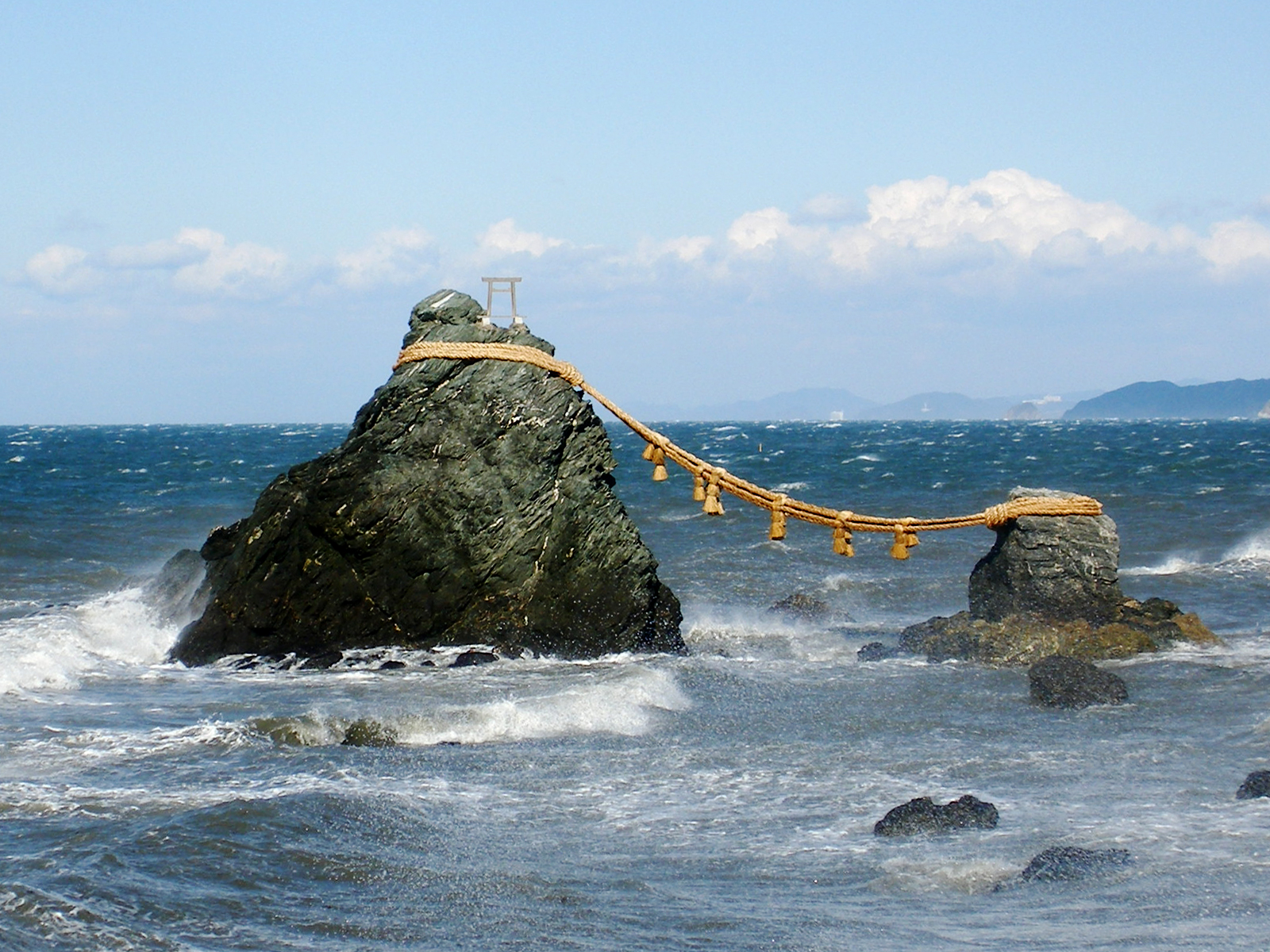
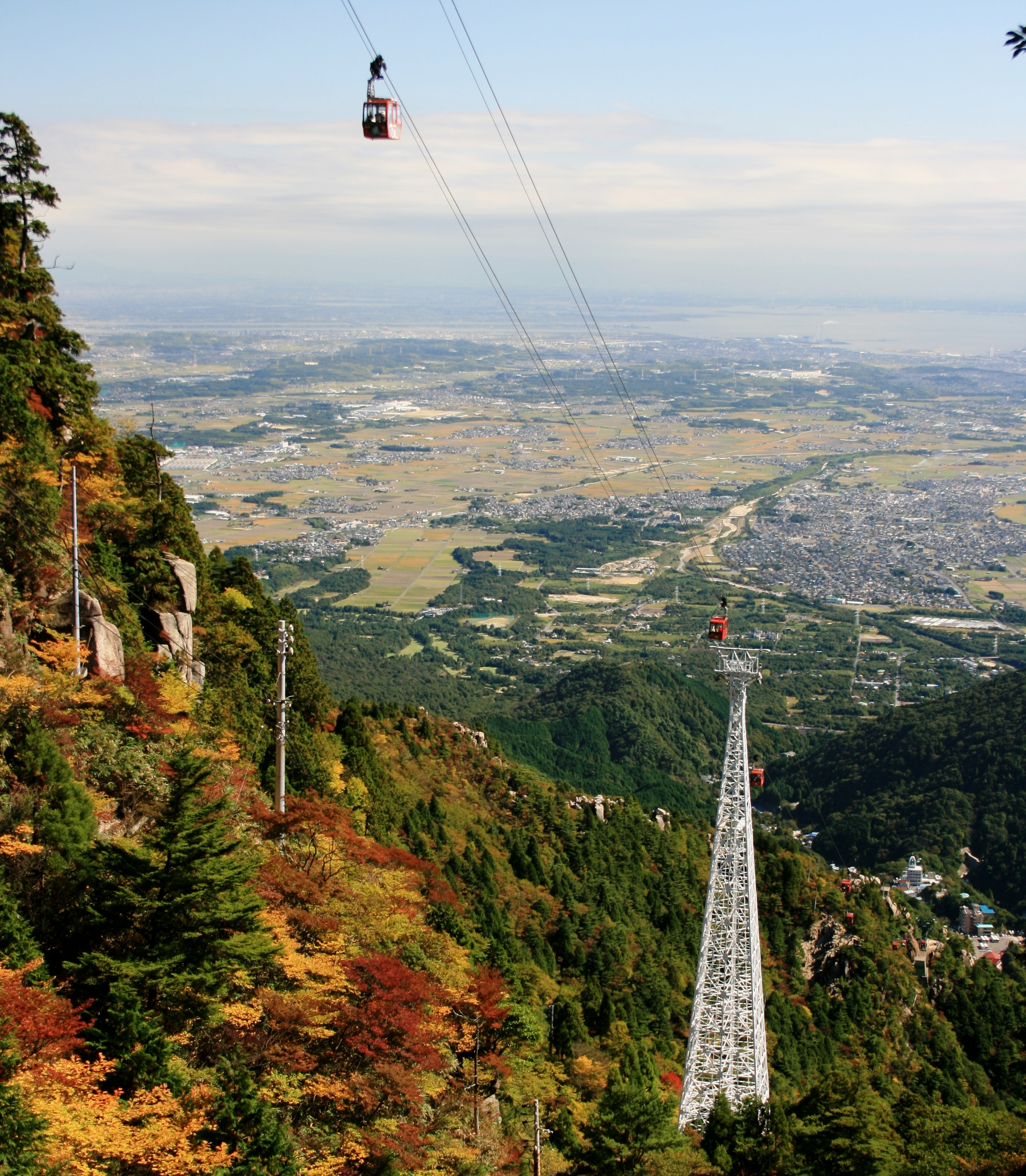


- Ise Grand Shrine - Japan's holiest Shinto shrine.
- Tsubaki Grand Shrine - Japan's oldest Shinto shrine.
- Kumano Kodō - World Heritage Site. Ancient road in southern Mie once used by pilgrims.
- Iga-Ueno - Birthplace of the ninja and home to the Iga Ninja Museum.
- Ise-Shima National Park
- Yoshino-Kumano National Park
- Tage Kitabatakeshi Yakata - Tage Kitabatake clan fortified residence, one of the Continued Top 100 Japanese Castles in 2017.
- Sakakibara Onsen - Famous onsen near Tsu, considered to be the 3rd best onsen in Japan.
- Yunoyama Onsen - Famous onsen near Yokkaichi that sits atop Mount Gozaisho.
- Nagashima Spa Land - One of the largest amusement parks in Japan, located in Kuwana.
- Toba Aquarium
- Mikimoto Pearl Island - Museum in Toba that is dedicated to Kōkichi Mikimoto, inventor of pearl cultivation.
- The Wedded Rocks of Okitama Shrine in Futami (now part of the city of Ise)
- Suzuka Circuit - Japan's most famous motor racetrack.
- Saikū - Site of Heian Imperial residence, with modern museum and reconstructed Heian building.
- A large Sonic the Hedgehog statue in the town of Iga can be found near Kanonji temple which has been the topic of discussion amongst gaming publications.
Notable citizens
- Aoi, guitarist of The GazettE
- Daikokuya Kōdayū, a Japanese castaway who spent eleven years in Russia
- Daisuke Kishio, voice actor
- Die, guitarist of Dir En Grey
- Hakaru Hashimoto, medical scientist
- Hiroshi Okuda, Chairman of the Toyota Motor Corporation, chairman of the Japan Business Federation
- Hiroyuki Ito, a video game designer working for Square Enix
- Jun Maeda, a Japanese writer and co-founder of the software company Key
- Kana Nishino, singer
- Katsuya Okada, former Foreign Minister, and DPJ Secretary General
- Keiichi Yabu, relief pitcher for the San Francisco Giants
- Ken Hirai, Japanese R&B and pop singer
- Kenta Nishimoto, professional badminton player
- Kota Sasaki, racing driver
- Mashiho Takata, a member of Korean-Pop boy group Treasure
- Matsuo Bashō, the most famous poet of the Edo period, renowned for his haiku
- Mikimoto Kōkichi, founder of the cultured pearl industry
- Mitski Miyawaki, Japanese-American singer-songwriter
- Mitsui Takatoshi, founder of the Mitsui Group
- Miwa Asao, beach volleyball player
- Mizuki Noguchi, the gold medalist in the women's marathon event in the 2004 Summer Olympics
- Norinaga Motoori, a Japanese scholar of Kokugaku during the Edo period
- Pocky, Japanese YouTuber
- Ranpo Edogawa, famous mystery novelist
- Yasujirō Ozu, famous filmmaker
- Yukio Ozaki, a politician said to be the father of Japan's constitutional government
Famous products
- Akafuku, a sweet made with mochi and sweet red bean paste
- Ito Ranch, a matsusaka beef farm in the region
- Matsusaka beef
- Spiny lobster, known as Ise ebi (伊勢えび), named after the old province
Government and politics

The prefectural government was briefly moved to Yokkaichi Town in Mie District in 1872 (hence the name Mie), but the capital moved back to Anotsu, Anō District (present-day Tsu City) in 1873 and has remained there since. Ignoring small changes through cross-prefectural municipal mergers, neighbourhood transfers and coastline variations, Mie reached its present borders in 1876 when it absorbed Watarai Prefecture. After the modern reactivation of districts in 1878/79, Mie consisted of 21 districts (merged down to 15 in the 1890s). The first prefectural assembly was elected in March 1879 and convened in April. In the introduction of modern cities, towns and villages in 1889, Anotsu became district-independent as Tsu City and the districts were subdivided into 18 towns and 317 villages (see the List of mergers in Mie Prefecture for changes since then).
As in all prefectures except Okinawa, the governor of Mie is directly elected since 1947. The prefectural assembly has 51 members. Both prefectural elections in Mie are currently held as part of unified local elections. In the last round in 2019, governor Eikei Suzuki easily won a third term with broad support from LDP, Shinsei Mie (see below) and Kōmeitō, against only one, JCP-supported challenger; Suzuki was originally elected narrowly in 2011 as centre-right candidate against centre-left supported Naohisa Matsuda, former mayor of Tsu City. In the Mie assembly, the LDP is strongest party; but it is distributed across several parliamentary groups, and the strongest group is Shisei Mie (新政みえ; "Renewal Mie") around members of several local parties of former Democrats.
In the National Diet, Mie is represented by four directly elected members of the House of Representatives and two (one per class) in the House of Councillors. After the national elections of 2016, 2017 and 2019, Mie's directly elected delegation was evenly split between Liberal Democrats (HR district #1: Norihisa Tamura, #4: Noriyo Mitsuya, HC 2019–25 class: Yūmi Yoshikawa) and ex-Democrats (HR #2: Masaharu Nakagawa, #3: Katsuya Okada, HC 2016–22 class: Hirokazu Shiba) in both houses of the Diet.
Sister states
- China Henan, China
- Brazil São Paulo, Brazil
- Spain Valencia, Spain
Notes
References
- Nussbaum, Louis-Frédéric and Käthe Roth. (2005). Japan encyclopedia. Cambridge: Harvard University Press. ; OCLC 58053128
References
- "2020年度国民経済計算(2015年基準・2008SNA) : 経済社会総合研究所 - 内閣府".
- NHK Publishing. (24 May 2016)
- Nussbaum, Louis-Frédéric. (2005). "Mie prefecture" in {{Google books. p2QnPijAEmEC. ''Japan Encyclopedia'', p. 628. p2QnPijAEmEC. ''Japan Encyclopedia'', p. 477
- Nussbaum, "Tsu" in {{Google books. p2QnPijAEmEC. ''Japan Encyclopedia'', p. 995
- Nussbaum, "Provinces and prefectures" in {{Google books. p2QnPijAEmEC. ''Japan Encyclopedia'', p. 780
- "Mie Prefecture homepage: Mie's Geography and Climate (pdf)".
- link. [[Ministry of the Environment (Japan). Ministry of the Environment]]
- "Azuma Foods Co., Ltd.|Company Profile". Azumafoods.co.jp.
- Hamlin, Suzanne. (13 August 1997). "From Japan, A Big Wave Of Seaweed". The New York Times.
- [http://www.pref.mie.lg.jp/DATABOX/28903004151.htm Mie Prefecture Homepage: Key Statistics]
- (29 November 2017). "続日本100名城". 日本城郭協会.
- "Mysterious Sonic the Hedgehog Statue in Japanese Mountains Gets Refurbished".
- Jung, E. Alex. (2022-01-14). "Mitski in 9 Acts".
- Prefectural government: [https://www.bunka.pref.mie.lg.jp/rekishi/kenshi/asp/meiji/detail.asp?record=483 三重県庁舎(津市下部田)] ("Mie prefectural government building (Tsu City, Lower Heta)"), retrieved June 24, 2020.
- [http://www.tt.rim.or.jp/~ishato/tiri/gun/map/1889/24mie.htm Map of Mie's districts in January 1889, i.e. before the introduction of cities], [http://www.tt.rim.or.jp/~ishato/tiri/gun/map/1900/24mie.htm Map of Mie's two cities and 15 districts in 1900]
- Prefectural assembly: [http://www.pref.mie.lg.jp/KENGIKAI/07663011795.htm history/chronology since 1878] (Japanese), retrieved June 24, 2020.
- [[NHK]]SenkyoWeb: [https://www.nhk.or.jp/senkyo/database/touitsu/2019/24/14218/skh45054.html 2019 unified election results/prefectural governors/Mie], retrieved June 24, 2020.
- [[NHK]]SenkyoWeb: [https://www.nhk.or.jp/senkyo/database/touitsu/2019/24/14219/jyo14219.html 2019 unified election results/prefectural assemblies/Mie] [by nomination in that election, not by party membership, let alone parliamentary group membership, or affiliations at any previous or later point in time] (Japanese), retrieved June 24, 2020.
- Prefectural assembly: [http://www.pref.mie.lg.jp/KENGIKAI/89264000001.htm Members by parliamentary group] (Japanese), retrieved June 24, 2020.
This article was imported from Wikipedia and is available under the Creative Commons Attribution-ShareAlike 4.0 License. Content has been adapted to SurfDoc format. Original contributors can be found on the article history page.
Ask Mako anything about Mie Prefecture — get instant answers, deeper analysis, and related topics.
Research with MakoFree with your Surf account
Create a free account to save articles, ask Mako questions, and organize your research.
Sign up freeThis content may have been generated or modified by AI. CloudSurf Software LLC is not responsible for the accuracy, completeness, or reliability of AI-generated content. Always verify important information from primary sources.
Report