From Surf Wiki (app.surf) — the open knowledge base
Midol
Brand of analgesics for menstrual cramping

Brand of analgesics for menstrual cramping
the pain relief drug
Midol is a brand of over-the-counter analgesic drugs marketed for menstrual cramping and other effects related to premenstrual syndrome and menstruation. Various subbrands are formulated using different active ingredients. Midol is distributed by Bayer.
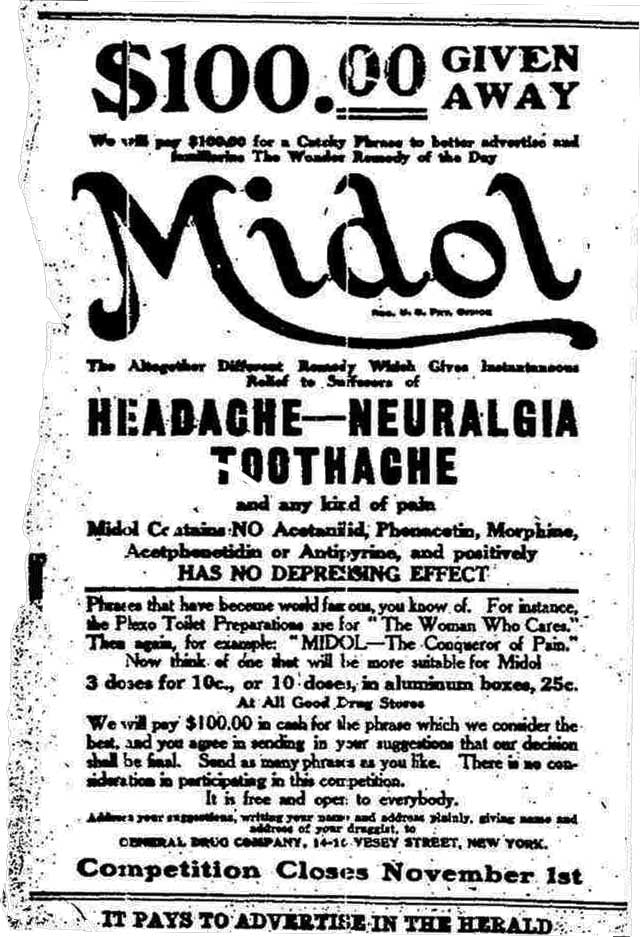
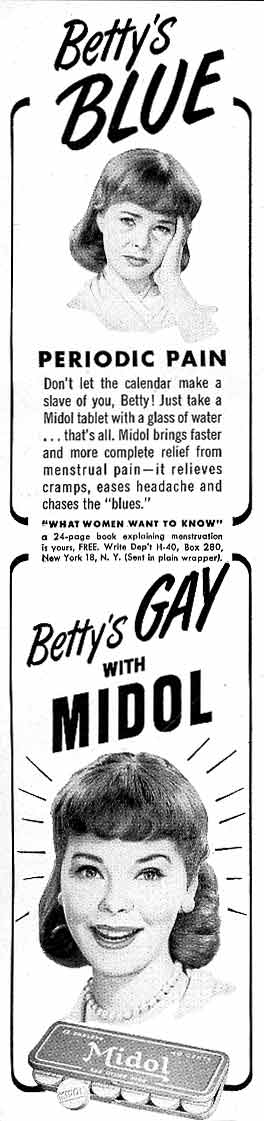
Midol was originally sold in 1911 as a headache and toothache remedy that was considered safer because it did not use the narcotics typically used at the time. It was then promoted as a cure for hiccups claiming it controlled spasms, and finally as a remedy for menstrual cramps and bloating. A formulation sold in the 1980s was made with the sympathomimetic cinnamedrine. It had been reported to have abuse potential as an appetite suppressant and sympathomimetic agent. Midol, like other NSAID class of drugs, may have side effects for some, such as an increased risk of bleeding, kidney damage or negative effects on cardiovascular system.
The "Midol Complete" formulation consists of:
- Acetaminophen 500 mg (pain reliever)
- Caffeine 60 mg (stimulant)
- Pyrilamine maleate 15 mg (antihistamine)
The "Extended Relief" formulation consists of:
- Naproxen sodium 220 mg (NSAID, pain reliever/fever reducer)
The "Teen" formulation consists of:
- Acetaminophen 500 mg (pain reliever)
- Pamabrom 25 mg (diuretic)
The "Liquid Gels" (Labeled MAXIDOL) formulation consists of:
- Ibuprofen 200 mg (NSAID, pain reliever)
The "PM" formulation consists of:
- Acetaminophen 500 mg (pain reliever)
- Diphenhydramine citrate 38 mg (sedative antihistamine)
References
References
- "Midol ad for Headache--Neuralgia, Toothache".
- "Midol for Hiccoughs".
- "News at Museum of Menstruation and women's health".
- "Midol ad for Menstrual problems".
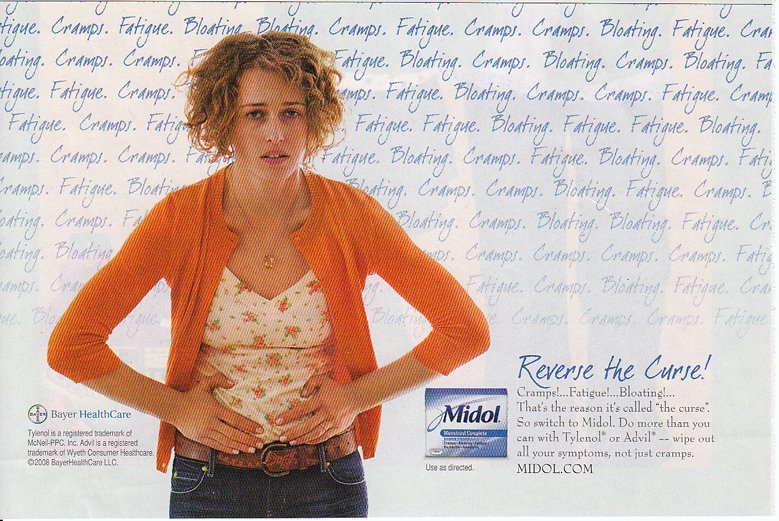
- "Midol "Reverse the Curse" ad".
- KW Fellows, AJ Giannini. Cinnamedrine: Potential for Abuse. Journal of Toxicology:Clinical Toxicology. 20:93–99.1983.
- "Pain relievers connected to heart deaths".
- "MAXIDOL® LIQUID GELS".

This article was imported from Wikipedia and is available under the Creative Commons Attribution-ShareAlike 4.0 License. Content has been adapted to SurfDoc format. Original contributors can be found on the article history page.
Ask Mako anything about Midol — get instant answers, deeper analysis, and related topics.
Research with MakoFree with your Surf account
Create a free account to save articles, ask Mako questions, and organize your research.
Sign up freeThis content may have been generated or modified by AI. CloudSurf Software LLC is not responsible for the accuracy, completeness, or reliability of AI-generated content. Always verify important information from primary sources.
Report