From Surf Wiki (app.surf) — the open knowledge base
Miami metropolitan area
Metropolis in the U.S. state of Florida

Metropolis in the U.S. state of Florida
| Field | Value | |||||||
|---|---|---|---|---|---|---|---|---|
| name | Miami metropolitan area | |||||||
| other_name | Miami–Fort Lauderdale–West Palm Beach, FL Metropolitan Statistical Area | |||||||
| settlement_type | Metropolitan statistical area | |||||||
| image_skyline | File:MiamiMontage1.png | |||||||
| image_size | 325 | |||||||
| image_caption | From top (left to right): Downtown Miami, Fort Lauderdale, Sawgrass Mills, The Square at West Palm Beach, Sunny Isles Beach, and Boca Raton | |||||||
| image_map | {{maplink | frame=yes | plain=yes | frame-align=center | frame-width=375 | frame-height=380 | zoom=7 | frame-coord= |
| type1 | shape | id1=Q468557 | title1=Miami-Dade County | stroke-color1=#720000 | stroke-width1=0.5 | fill1=#720000 | fill-opacity1=0.4 | |
| type2 | shape | id2=Q494624 | title2=Broward County | stroke-color2=#720000 | stroke-width2=0.5 | fill2=#720000 | fill-opacity2=0.4 | |
| type3 | shape | id3=Q484294 | title3=Palm Beach County | stroke-color3=#720000 | stroke-width3=0.5 | fill3=#720000 | fill-opacity3=0.4 | |
| type4 | shape | id4=Q494564 | title4=Saint Lucie County | stroke-color4=#DB8FD9 | stroke-width4=0.5 | fill4=#DB8FD9 | fill-opacity4=0.4 | |
| type5 | shape | id5=Q648752 | title5=Martin County | stroke-color5=#DB8FD9 | stroke-width5=0.5 | fill5=#DB8FD9 | fill-opacity5=0.4 | |
| type6 | shape | id6=Q488528 | title6=Indian River County | stroke-color6=#FBBF00 | stroke-width6=0.5 | fill6=#FBBF00 | fill-opacity6=0.4 | |
| type7 | shape | id7=Q263742 | title7=Monroe County | stroke-color7=#0003FF | stroke-width7=0.5 | fill7=#0003FF | fill-opacity7=0.4 | |
| type8 | shape | id8=Q501123 | title8=Okeechobee County | stroke-color8=#2FD800 | stroke-width8=0.5 | fill8=#2FD800 | fill-opacity8=0.4 | |
| type9 | shape | id9=Q8652 | title9=City of Miami | stroke-color9=#007272 | stroke-width9=0.5 | fill9=#007272 | fill-opacity9=0.4 | |
| map_caption | Miami-Port Saint Lucie-Fort Lauderdale, FL CSA | |||||||
| coordinates | ||||||||
| subdivision_type | Country | |||||||
| subdivision_name | United States | |||||||
| subdivision_type1 | State | |||||||
| subdivision_name1 | Florida | |||||||
| seat_type | Core city | |||||||
| seat | Miami | |||||||
| parts_type | Principal cities | |||||||
| parts_style | list | |||||||
| parts | ||||||||
| unit_pref | U.S. | |||||||
| area_land_sq_mi | 6,137 | |||||||
| elevation_max_footnotes | tags -- | |||||||
| elevation_max_ft | Jupiter | |||||||
| 53 | ||||||||
| elevation_max_m | 16.2 | |||||||
| elevation_min_footnotes | tags -- | |||||||
| elevation_min_ft | Atlantic Ocean | |||||||
| 0 | ||||||||
| elevation_min_m | 0 | |||||||
| population_as_of | 2020 | |||||||
| population_footnotes | ||||||||
| population_total | 6,138,333 | |||||||
| pop_est_as_of | 2024 | |||||||
| population_est | 6,457,988 | |||||||
| pop_est_footnotes | ||||||||
| population_rank | 6th in the United States | |||||||
| 1st in Florida | ||||||||
| population_density_km2 | 386.37 | |||||||
| population_density_sq_mi | 1000.38 | |||||||
| demographics_type2 | GDP | |||||||
| demographics2_footnotes | ||||||||
| demographics2_title1 | MSA | |||||||
| demographics2_info1 | $533.674 billion (2023) | |||||||
| timezone1 | Eastern Standard Time | |||||||
| utc_offset1 | −05:00 | |||||||
| timezone1_DST | Eastern Daylight Time | |||||||
| utc_offset1_DST | −04:00 | |||||||
| website |
- Fort Lauderdale
- West Palm Beach
- Pompano Beach
- Boca Raton
- Sunrise
- Lauderhill
- Deerfield Beach
- Miami Beach
- Kendall
- Doral
- Delray Beach
- Jupiter
- Palm Beach Gardens
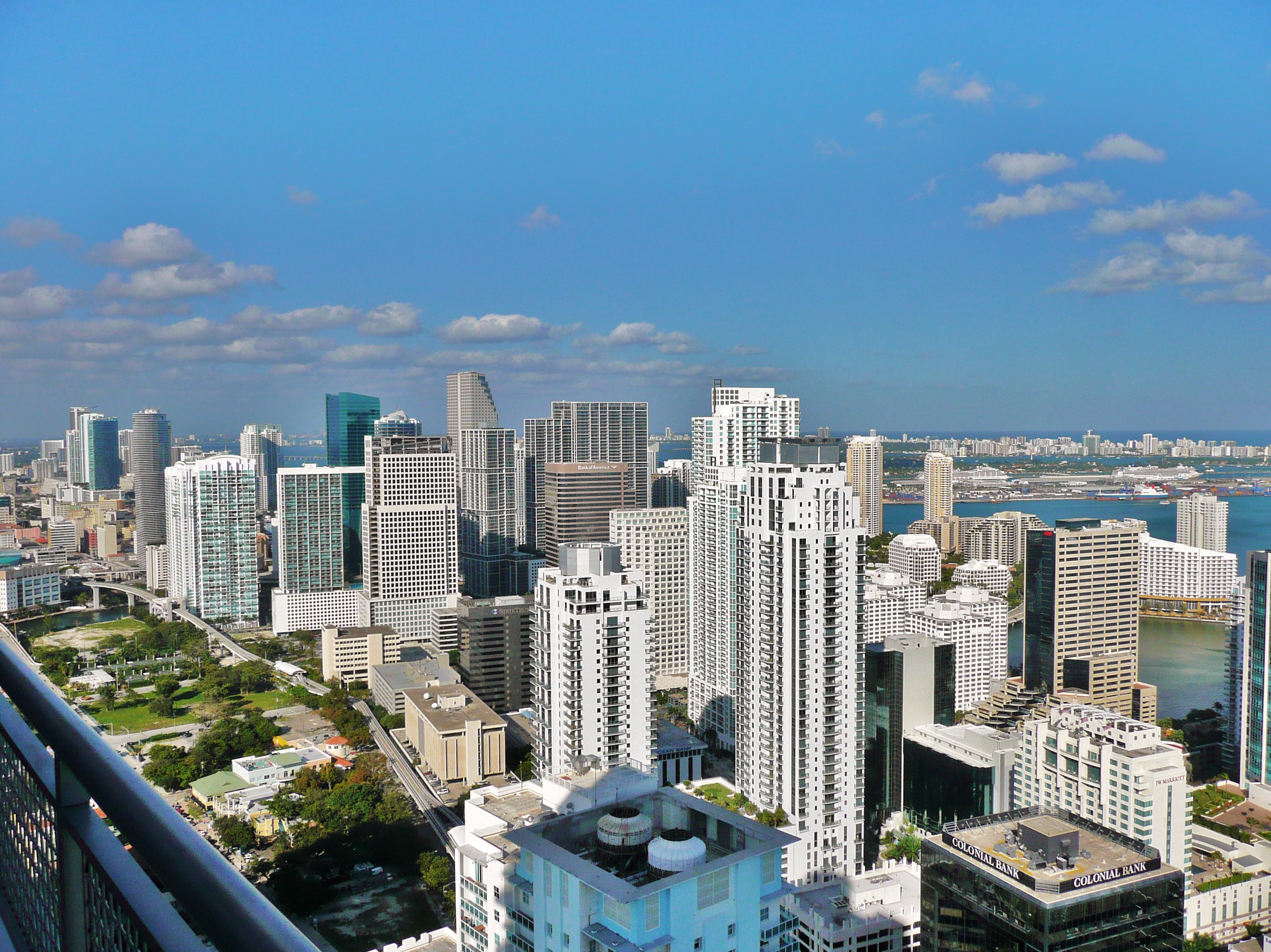
- Pembroke Pines 53 0 1st in Florida The Miami metropolitan area, officially known as the Miami–Fort Lauderdale–West Palm Beach Metropolitan Statistical Area, is a coastal metropolitan area in southeastern Florida. It is the sixth-largest metropolitan statistical area (MSA) in the United States, the third-largest metropolitan area in the Southern United States, and the largest metropolitan area in Florida. It is also known as South Florida, SoFlo, SoFla, the Gold Coast, Southeast Florida, the Tri-County Area, or Greater Miami. With a population of 6.45 million, its population exceeds 31 of the nation's 50 states as of 2023. It comprises the three most populated counties in the state, Miami-Dade County, Broward County, and Palm Beach County. Miami-Dade County, with 2,701,767 people in 2020, is the seventh-most populous county in the United States.
Miami is the region's financial and cultural core and most populous city. According to the Global and World Cities Research Network (GaWC) classification Miami is an "Alpha minus" city and is considered a very important world city that links the major economic region of South Florida into the world economy. The Global Financial Centres Index (GFCI 37) ranked Miami as the world's 26th most important finance center as of May 2025, ranking 7th in the United States only behind New York, San Francisco, Chicago, Los Angeles, Washington D.C. and Boston. Other principal cities, as defined by the Office of Management and Budget, include Fort Lauderdale, West Palm Beach, Pompano Beach, Boca Raton, Sunrise, Deerfield Beach, Miami Beach, Kendall, Doral, Delray Beach, Jupiter, and Palm Beach Gardens. The Miami metropolitan area is part of the larger South Florida region of the state, which also includes the Everglades and the Florida Keys.
With 1279.2 mi2 of urban landmass, the Miami metropolitan area also is one of the world's most populous urban agglomerations.
South Florida is largely confined to a strip of land between the Atlantic Ocean and Everglades, and Miami's urbanized area is about 100 mi long (north to south) and at most 20 mi east to west; in some areas, its east to west width is only 5 mi. The Miami metropolitan statistical area is the second-longest urbanized area in the United States behind the New York metropolitan area. It was the eighth-most densely populated urbanized area in the United States as of the 2000 census.
As of the 2020 census, the Miami-Fort Lauderdale urbanized area had a land area of 1244.18 sqmi, with a population of 6,077,522, for a population density of 4884.78 PD/sqmi. The Miami metropolitan area also had one urban cluster (UC) as of the 2020 census, which is not part of the Miami urbanized area. The Belle Glade urban cluster had a population of 23,009, area of 7.21 sqmi and population density of 3191.41 PD/sqmi. Miami, the largest city in the metropolitan area, had population density of over 10,000/sq mi (more than 3,800/km2) in 2000. The Miami Urbanized Area was the fourth-largest urbanized area in the United States in the 2010 census.
The most notable colleges and universities in the Miami metropolitan area include Barry University, Florida Atlantic University, Florida International University, Nova Southeastern University, St. Thomas University (Florida), and the University of Miami. The region also has three community colleges, Broward College, Miami Dade College, and Palm Beach State College. Some of these institutions, such as Florida International University and Miami Dade College, make up some of the largest institutions of higher learning in the United States.
Other names
The Miami metropolitan area is also known as South Florida, SoFlo, SoFla, the Gold Coast, the Tri-County Area, or Greater Miami, and, for U.S. government statistical purposes, the Miami–Fort Lauderdale–West Palm Beach Metropolitan Statistical Area.
Definitions
Miami metropolitan area
, the Miami metropolitan area is defined by the U.S. Office of Management and Budget as the Miami-Fort Lauderdale-West Palm Beach Metropolitan Statistical Area (MSA), with a 2020 population of 6,138,333. The MSA is made up of three "metropolitan divisions" :
- Miami-Miami Beach-Kendall Metropolitan Division, coterminous with Miami Dade County (2020 population 2,701,767).
- Fort Lauderdale-Pompano Beach-Sunrise Metropolitan Division, coterminous with Broward County (2020 population 1,944,375).
- West Palm Beach-Boca Raton-Delray Beach Metropolitan Division, coterminous with Palm Beach County (2020 population 1,492,191).
The MSA is the second most populous metropolitan area in the Southeastern United States and has an area of 6,137 sq. mi (15,890 km2).
The original MSA for Miami, as defined by the OMB, included only Dade County (now Miami-Dade County). By 1995, the Miami-Hialeah and Fort Lauderdale-Hollywood-Pompano Beach MSAs had been merged into the Miami-Fort Lauderdale Consolidated MSA, consisting of the Miami Primary MSA (Dade County) and the Fort Lauderdale Primary MSA (Broward County). In 2003, the West Palm Beach-Boca Raton-Boynton Beach MSA was merged with the consolidated MSA to form the Miami-Fort Lauderdale-Miami Beach Metropolitan Statistical Area, consisting of: the Fort Lauderdale-Pompano Beach-Deefield Beach Metropolitan Division (Broward County), the Miami-Miami Beach-Kendall Metropolitan Division (Miami-Dade County), and the West Palm Beach-Boca Raton-Boynton Beach Metropolitan Division (Palm Beach County).
Miami-Port Saint Lucie-Fort Lauderdale Combined Statistical Area
The Census Bureau also defines a wider commercial region based on commuting patterns, the Miami-Port Saint Lucie-Fort Lauderdale Combined Statistical Area (CSA), with a population of 6,887,655 in 2020.
, the CSA consists of three component metropolitan statistical areas (MSAs) and one Micropolitan statistical area (μSA):
- The Miami-Fort Lauderdale-West Palm Beach MSA (2020 pop. 6,138,333)
- The Port Saint Lucie MSA (2020 pop. 486,660), consisting of:
- Martin County (2020 pop. 158,431)p. 28
- Saint Lucie County (2020 pop. 329,226)p. 28
- The Sebastian-Vero Beach-West Vero Corridor MSA, coterminous with Indian River County (2020 pop. 159,788)
- The Key West-Key Largo μSA, coterminous with Monroe County (2020 pop. 82,874).
- The Okeechobee μSA, coterminous with Okeechobee County.
When the CSA was defined in 2013, it included the Okeechobee μSA, but not the Key West μSA. In 2018 the Okeechobee μSA was removed from the CSA and the Key West μSA was added. The Okeechobee μSA was re-added to the CSA in 2023.
Gold Coast
The Miami metropolitan area is frequently named the "Gold Coast" in convention with Florida's other coast regions, including the Space Coast, Treasure Coast, Sun Coast, Nature Coast, Forgotten Coast, Emerald Coast, Fun Coast, and First Coast. Like several of the others, it seems to have originated at the time the area first saw major growth. One of the best known of Florida's vernacular regions, the name is a reference to the wealth and ritzy tropical lifestyle that characterizes the area.
Climate and geography
Climate

The region has a tropical climate, similar to the climate found in much of the Caribbean. It is the only metropolitan area in the 48 contiguous states that falls under that category. More specifically, it generally has a tropical monsoon climate (Köppen climate classification, Am). The South Florida metropolis sees most of its rain in the summer (wet season) and is quite dry in the winter (dry season). The wet season, which is hot and humid, lasts from May to October, when daily thunderstorms and passing weak tropical lows bring downpours during the late afternoon. The dry season often starts in late October and runs through late April. During the height of the dry season from February through April, South Florida is often very dry, and often brush fires and water restrictions are an issue. At times cold fronts can make it all the way down to South Florida and provide some modest rainfall in the dry season. The hurricane season largely coincides with the wet season.
In addition to its sea-level elevation, coastal location and position near the Tropic of Cancer and the Caribbean, the area owes its warm, humid climate to the Gulf Stream, which moderates climate year-round. A typical summer day does not see temperatures below 75 °F. Temperatures in the high 80s to low 90s (30–35 °C) accompanied by high humidity are often relieved by afternoon thunderstorms or a sea breeze that develops off the Atlantic Ocean, which then allow lower temperatures, although conditions still remain very muggy.
During winter, dry air often dominates as dew points are often very low. Average daily high temperatures across South Florida during the winter are around 74 -. Although daily highs can sometimes reach 82 - even in January and February. Daily low temperatures during the winter are generally around 55 -. Each winter, cold fronts occasionally make their way down to the northern Bahamas and South Florida. As a result, daytime high temperatures in South Florida may only reach around 65 °F or cooler. When this occurs low temperatures can dip into the 40s during the early morning hours before quickly warming-up toward late morning/early afternoon. It is rare for temperatures to drop below 40 °F, however, low temperatures at or around 35 °F have occurred some years. South Florida only experiences these cold spells about twice each winter and they typically only last a day or two before temperatures return to the mid 70s. On average South Florida is frost-free, although there can be a light frost in the inland communities about once every decade.
Hurricane season officially runs from June 1 through November 30, although hurricanes can develop outside that period. The most likely time for South Florida to be hit is during the peak of the Cape Verde season, mid-August through the end of September. Due to its location between two major bodies of water known for tropical activity, South Florida is also statistically the most likely major area to be struck by a hurricane in the world, trailed closely by Nassau, Bahamas, and Havana, Cuba. Many hurricanes have affected the metropolis, including Betsy in 1965, Andrew in 1992, Irene in 1999, Hurricanes Katrina and Wilma in 2005, and Irma in 2017. In addition, a tropical depression in October 2000 passed over the city, causing record rainfall and flooding. Locally, the storm is credited as the No Name Storm of 2000, though the depression went on to become Tropical Storm Leslie upon entering the Atlantic Ocean.
Component counties, subregions, and cities
Largest cities
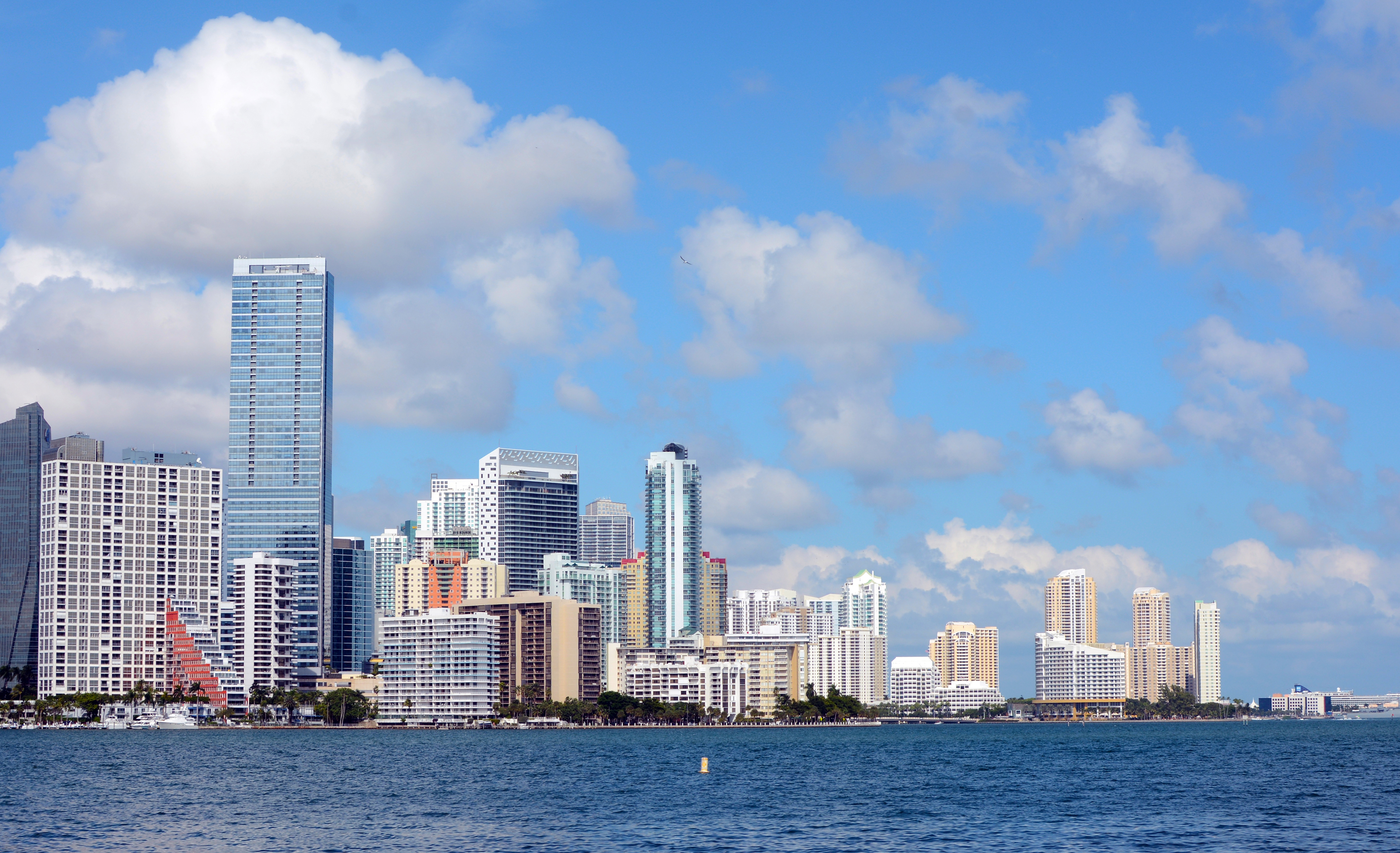
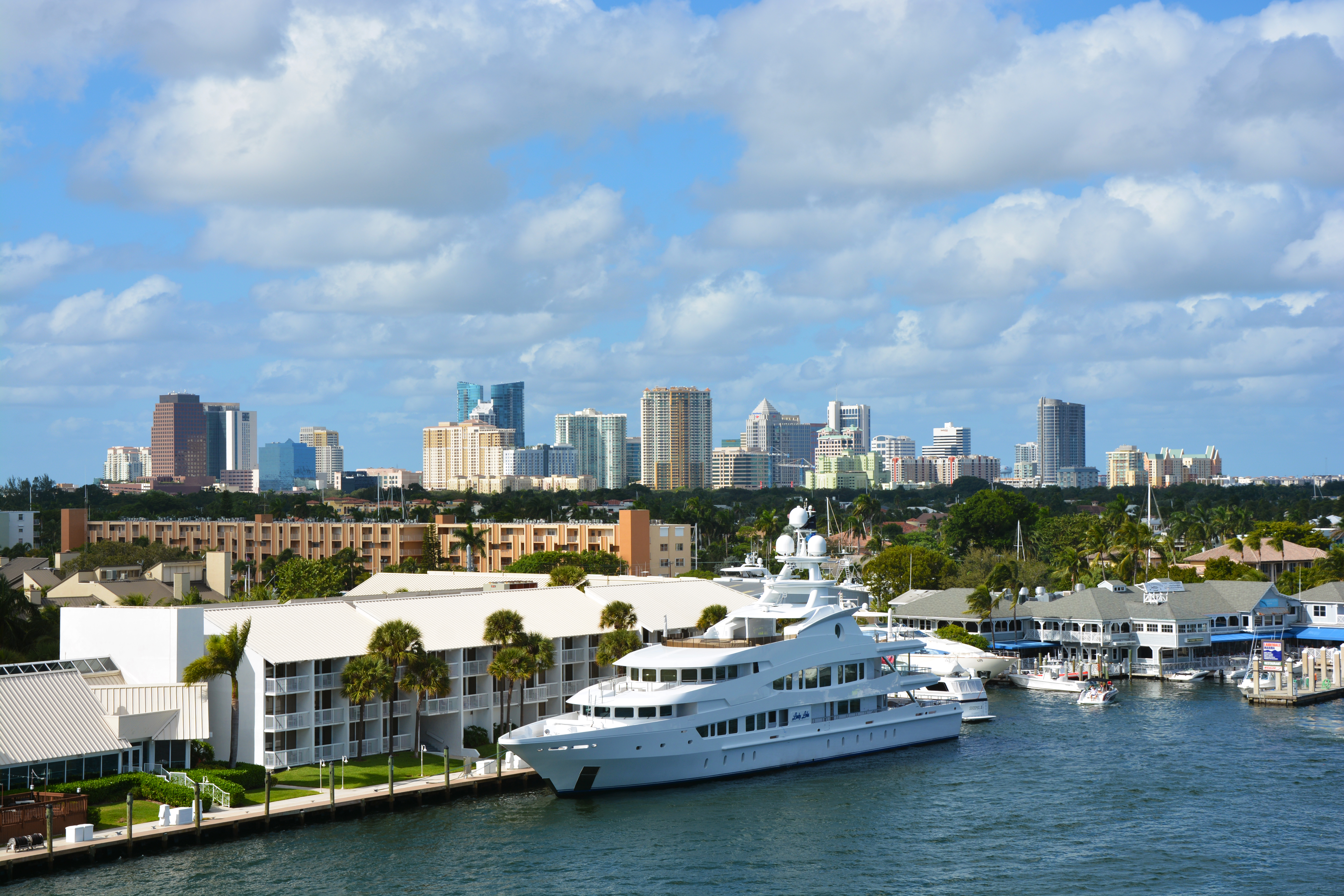
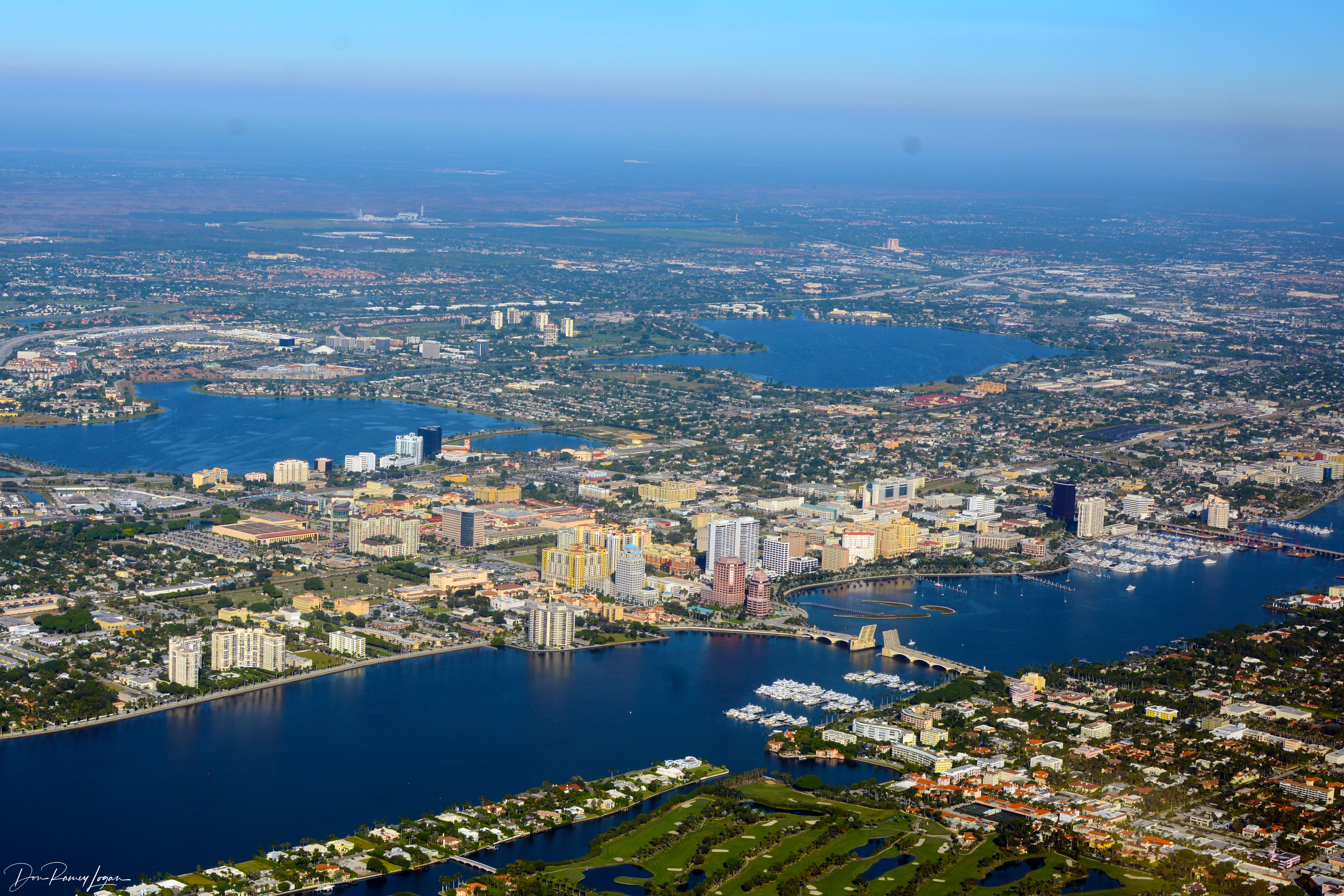
The following is a list of the twenty largest cities in the Miami metropolitan area as ranked by population.
| City | County | 2000 | |||
|---|---|---|---|---|---|
| population | 2010 | ||||
| population | 2020 | ||||
| population | 2010 to 2020 | ||||
| % change | |||||
| Miami | Miami-Dade | 362,470 | |||
| Hialeah | Miami-Dade | 226,419 | |||
| Fort Lauderdale | Broward | 152,397 | |||
| Pembroke Pines | Broward | 137,427 | |||
| Hollywood | Broward | 139,357 | |||
| Miramar | Broward | 72,739 | |||
| Coral Springs | Broward | 117,549 | |||
| Miami Gardens | Miami-Dade | 100,758 | |||
| Pompano Beach | Broward | 78,191 | |||
| West Palm Beach | Palm Beach | 82,103 | |||
| Davie | Broward | 75,720 | |||
| Boca Raton | Palm Beach | 74,764 | |||
| Sunrise | Broward | 85,779 | |||
| Plantation | Broward | 82,934 | |||
| Miami Beach | Miami-Dade | 87,933 | |||
| Deerfield Beach | Broward | 64,583 | |||
| Boynton Beach | Palm Beach | 60,389 | |||
| Lauderhill | Broward | 57,585 | |||
| Doral | Miami-Dade | 20,438 | |||
| Homestead | Miami-Dade | 31,909 |
Areas with between 10,000 and 100,000 inhabitants
- Aventura
- Belle Glade
- Boca Del Mar
- Boca Raton
- Boynton Beach
- Brownsville
- Coconut Creek
- Cooper City
- Coral Gables
- Coral Terrace
- Country Club
- Country Walk
- Cutler Bay
- Dania Beach
- Deerfield Beach
- Delray Beach
- Doral
- Florida City
- Fontainebleau
- Gladeview
- Glenvar Heights
- Goulds
- Greenacres
- Hallandale Beach
- Hamptons at Boca Raton
- Hialeah Gardens
- Homestead
- Ives Estates
- Jupiter
- Kendale Lakes
- Kendall West
- Kendall
- Key Biscayne
- Kings Point
- Lake Worth Corridor
- Lake Worth Beach
- Lauderdale Lakes
- Lauderhill
- Leisure City
- Lighthouse Point
- Margate
- Miami Beach
- Miami Lakes
- Miami Shores
- Miami Springs
- North Lauderdale
- North Miami Beach
- North Miami
- North Palm Beach
- Oakland Park
- Ojus
- Olympia Heights
- Opa-locka
- Palm Beach Gardens
- Palm Beach
- Palm Springs
- Palmetto Bay
- Palmetto Estates
- Parkland
- Pinecrest
- Pinewood
- Plantation
- Princeton
- Richmond West
- Riviera Beach
- Royal Palm Beach
- Sandalfoot Cove
- South Miami Heights
- South Miami
- Sunny Isles Beach
- Sunrise
- Sunset
- Sweetwater
- Tamarac
- Tamiami
- The Crossings
- The Hammocks
- University Park
- Wellington
- West Little River
- West Park
- Westchester
- Weston
- Westwood Lakes
- Wilton Manors
Areas with fewer than 10,000 inhabitants
- Atlantis
- Bal Harbour
- Bay Harbor Islands
- Belle Glade Camp
- Biscayne Park
- Boca Pointe
- Boulevard Gardens
- Briny Breezes
- Broadview Park
- Canal Point
- Century Village
- Cypress Lakes
- Dunes Road
- El Portal
- Fisher Island
- Franklin Park
- Fremd Village-Padgett Island
- Glen Ridge
- Godfrey Road
- Golden Beach
- Golden Lakes
- Golf
- Gulf Stream
- Gun Club Estates
- Haverhill
- High Point
- Highland Beach
- Hillsboro Beach
- Hillsboro Pines
- Homestead Base
- Hypoluxo
- Indian Creek
- Islandia
- Juno Beach
- Juno Ridge
- Jupiter Inlet Colony
- Lake Belvedere Estates
- Lake Clarke Shores
- Lake Harbor
- Lake Park
- Lakeside Green
- Lantana
- Lauderdale-by-the-Sea
- Lazy Lake
- Limestone Creek
- Manalapan
- Mangonia Park
- Medley
- Mission Bay
- Naranja
- North Bay Village
- Ocean Ridge
- Pahokee
- Palm Beach Shores
- Palm Springs North
- Pembroke Park
- Plantation Mobile Home Park
- Richmond Heights
- Roosevelt Gardens
- Royal Palm Estates
- Schall Circle
- Sea Ranch Lakes
- Seminole Manor
- South Bay
- South Palm Beach
- Southwest Ranches
- Stacy Street
- Surfside
- Tequesta
- Three Lakes
- Villages of Oriole
- Virginia Gardens
- Washington Park
- Westlake
- West Miami
- West Perrine
- Westview
- Whisper Walk
Demographics
|align-fn=center
1920–1970 1980 1990 2000 2010 2020 2023
| Historical racial composition | 2020 | 2010 | 2000 | 1990 | 1980 | Population | 6,138,333 | 5,564,635 | 5,007,564 | 4,056,100 | 3,220,844 |
|---|---|---|---|---|---|---|---|---|---|---|---|
| White (non-Hispanic) | 29.1% | 34.8% | 44.1% | 54.5% | 64.6% | ||||||
| Hispanic or Latino | 45.9% | 41.6% | 34.0% | 27.8% | 20.2% | ||||||
| Black or African American (non-Hispanic) | 18.7% | 19.7% | 18.1% | 16.3% | 14.2% | ||||||
| Asian and Pacific Islander (non-Hispanic) | 2.6% | 2.2% | 1.7% | 1.2% | 1.1% | ||||||
| Native American (non-Hispanic) | 0.1% | 0.1% | 0.1% | 0.1% | |||||||
| Other Race (non-Hispanic) | 0.8% | 0.3% | 0.3% | 0.1% | |||||||
| Two or more races (non-Hispanic) | 2.8% | 1.2% | 1.8% | N/A | N/A |
| Demographic characteristics | 2020 | 2010 | 2000 | 1990 | 1980 | Population | 6,138,333 | 5,564,635 | 5,007,564 | 4,056,100 | 3,220,844 |
|---|---|---|---|---|---|---|---|---|---|---|---|
| Households | 2,641,002 | 2,464,417 | 2,149,749 | 1,586,355 | 1,261,686 | ||||||
| Persons per household | 2.32 | 2.26 | 2.33 | 2.56 | 2.55 | ||||||
| Sex Ratio | 92.8 | 93.8 | 93.4 | 92.1 | 90.1 | ||||||
| Ages 0–17 | 19.6% | 21.7% | 23.6% | 22.0% | 22.6% | ||||||
| Ages 18–64 | 61.5% | 62.4% | 59.9% | 59.7% | 59.3% | ||||||
| Ages 65 + | 18.9% | 15.9% | 16.4% | 18.3% | 18.1% | ||||||
| Median age | 42.2 | 39.9 | 37.7 | 36.4 | 36.9 |

| Economic indicators | 2017–21 American Community Survey | Miami metro area | Florida |
|---|---|---|---|
| Median income | $34,644 | $34,367 | |
| Median household income | $62,855 | $61,777 | |
| Poverty Rate | 13.6% | 13.1% | |
| High school diploma | 86.5% | 89.0% | |
| Bachelor's degree | 34.1% | 31.5% | |
| Advanced degree | 13.0% | 11.7% |
| Language spoken at home | 2015 | 2010 | 2000 | 1990 | 1980 |
|---|---|---|---|---|---|
| English | 46.9% | 49.2% | 55.3% | 64.0% | 72.9% |
| Spanish or Spanish Creole | 41.6% | 39.7% | 34.6% | 27.8% | 20.2% |
| French or Haitian Creole | 5.9% | 5.8% | 4.9% | 3.0% | 1.3% |
| Other Languages | 5.5% | 5.3% | 5.3% | 5.1% | 5.7% |
| Nativity | 2015 | 2010 | 2000 | 1990 | 1980 |
|---|---|---|---|---|---|
| % population native-born | 60.0% | 61.8% | 65.0% | 71.0% | 76.7% |
| ... born in the United States | 57.0% | 59.1% | 62.3% | 68.4% | 75.0% |
| ... born in Puerto Rico or Island Areas | 1.8% | 1.7% | 1.9% | 2.2% | 1.8% |
| ... born to American parents abroad | 1.2% | 1.1% | 0.8% | 0.9% | |
| % population foreign-born | 40.0% | 38.2% | 35.0% | 29.0% | 23.3% |
| ... born in Cuba | 13.0% | 12.0% | 11.5% | 11.3% | 10.6% |
| ... born in Haiti | 3.7% | 3.5% | 2.9% | 1.8% | N/A |
| ... born in Colombia | 2.9% | 2.8% | 2.5% | 1.4% | N/A |
| ... born in Jamaica | 2.3% | 2.3% | 2.1% | 1.4% | 0.7% |
| ... born in Venezuela | 1.6% | 1.2% | 0.7% | 0.3% | N/A |
| ... born in Nicaragua | 1.5% | 1.7% | 1.8% | 1.7% | N/A |
| ... born in the Dominican Republic | 1.2% | 1.1% | 1.0% | 0.5% | 0.2% |
| ... born in Mexico | 1.1% | 1.1% | 1.0% | 0.5% | 0.2% |
| ... born in Honduras | 1.1% | 1.1% | 0.9% | 0.4% | N/A |
| ... born in Peru | 1.1% | 1.1% | 0.9% | 0.5% | N/A |
| ... born in Brazil | 0.8% | 0.7% | 0.6% | 0.2% | N/A |
| ... born in Guatemala | 0.7% | 0.7% | 0.4% | 0.2% | N/A |
| ... born in Argentina | 0.7% | 0.6% | 0.5% | 0.3% | N/A |
| ... born in Canada | 0.6% | 0.6% | 0.7% | 0.7% | 0.9% |
| ... born in Ecuador | 0.5% | 0.5% | 0.4% | 0.2% | N/A |
| ... born in El Salvador | 0.5% | 0.5% | 0.4% | 0.2% | N/A |
| ... born in India | 0.4% | 0.3% | 0.2% | 0.1% | 0.1% |
| ... born in Trinidad and Tobago | 0.4% | 0.4% | 0.4% | 0.2% | N/A |
| ... born in the United Kingdom | 0.3% | 0.3% | 0.4% | 0.5% | 0.6% |
| ... born in China | 0.3% | 0.2% | 0.1% | 0.1% | 0.1% |
| ... born in the Philippines | 0.3% | 0.2% | 0.2% | 0.1% | 0.1% |
| ... born in Italy | 0.2% | 0.2% | 0.3% | 0.3% | 0.5% |
| ... born in Chile | 0.2% | 0.2% | 0.3% | 0.2% | N/A |
| ... born in the Bahamas | 0.2% | 0.2% | N/A | 0.3% | N/A |
| ... born in Spain | 0.2% | 0.2% | 0.2% | 0.3% | N/A |
| ... born in Germany | 0.2% | 0.2% | 0.4% | 0.5% | 0.6% |
| ... born in Panama | 0.2% | 0.2% | 0.2% | 0.2% | N/A |
| ... born in Russia | 0.2% | 0.1% | 0.2% | 0.3% | 0.9% |
| ... born in Poland | 0.1% | 0.2% | 0.3% | 0.5% | 0.7% |
| ... born in Hungary | 0.1% | 0.1% | 0.1% | 0.1% | 0.2% |
| ... born in Austria | 0.1% | 0.1% | 0.2% | ||
| ... born in other countries | 3.4% | 3.7% | 3.3% | 3.6% | 6.7% |
There is a strong divide between the northern and southern parts of the region in terms of dominant language. In 2010, English was the household language of 73.1% of Palm Beach County residents and 63.4% of Broward County residents but only 28.1% of Miami-Dade County residents. In contrast, 63.8% of Miami-Dade County residents spoke Spanish at home.
Religion
According to a 2014 study by the Pew Research Center, Christianity is the most prevalent religion in the Miami metropolitan area (68%), with 39% professing attendance at a variety of churches that could be considered Protestant and 27% professing Roman Catholic beliefs. Judaism is second (9%), followed by Islam, Buddhism, Hinduism and a variety of other religions have smaller followings; 21% of the population did not identify with any religion.
The Miami area has one of the largest Jewish communities in the United States. 10.2% of the population identified as Jewish in the 2000 Census. According to a 2011 survey of American Judaism, Palm Beach County had the most Jews of any Florida county both in absolute numbers (205,850) and as a percentage of the overall population (15.8%). Broward County came in second place with 170,700 Jewish residents or 9.8% of the population, and Miami-Dade County came in third with 106,300 or 4.3%.
Housing
Changes in house prices for the area are publicly tracked on a regular basis using the Case–Shiller index; the statistic is published by Standard & Poor's and is also a component of S&P's 10-city composite index of the value of the residential real estate market.
As of 2005, the Miami area had a total of 2.3 million housing units, 13% of which were vacant. Of the total housing units, 52% were in single-unit structures, 45% were in multi-unit structures, and 3% were mobile homes. 25% of the housing units were built since 1990. As of 2019, over 70% of Miami's residents are renters with median rent of $1,355, $180 over the national average.
Households and families: There were 2,338,450 households, The average household size was 2.6 people. Families made up 65% of the households in the Miami area. This figure includes both married-couple families (45%) and other families (20%). Nonfamily households made up 35% of all households in Miami. Most of the nonfamily households were people living alone, but some consisted of people living in households in which no one was related to the householder.
Occupied housing unit characteristics: In 2005, the Miami area had 2.0 million occupied housing units – 1.3 million (66%) owner occupied and 688,000 (34%) renter occupied.
As of 2010, housing costs in the Miami area typically represented 40% of household income, compared to 34% nationwide.
Property tax increase: In March 2009, Miami area lawmakers passed a 5–10% hike in property tax millage rates throughout the metropolitan area to fund the construction of new schools and to fund understaffed schools and educational institutions, resulting in an increase in residents' property tax bills beginning in the 2009 tax year.
Politics
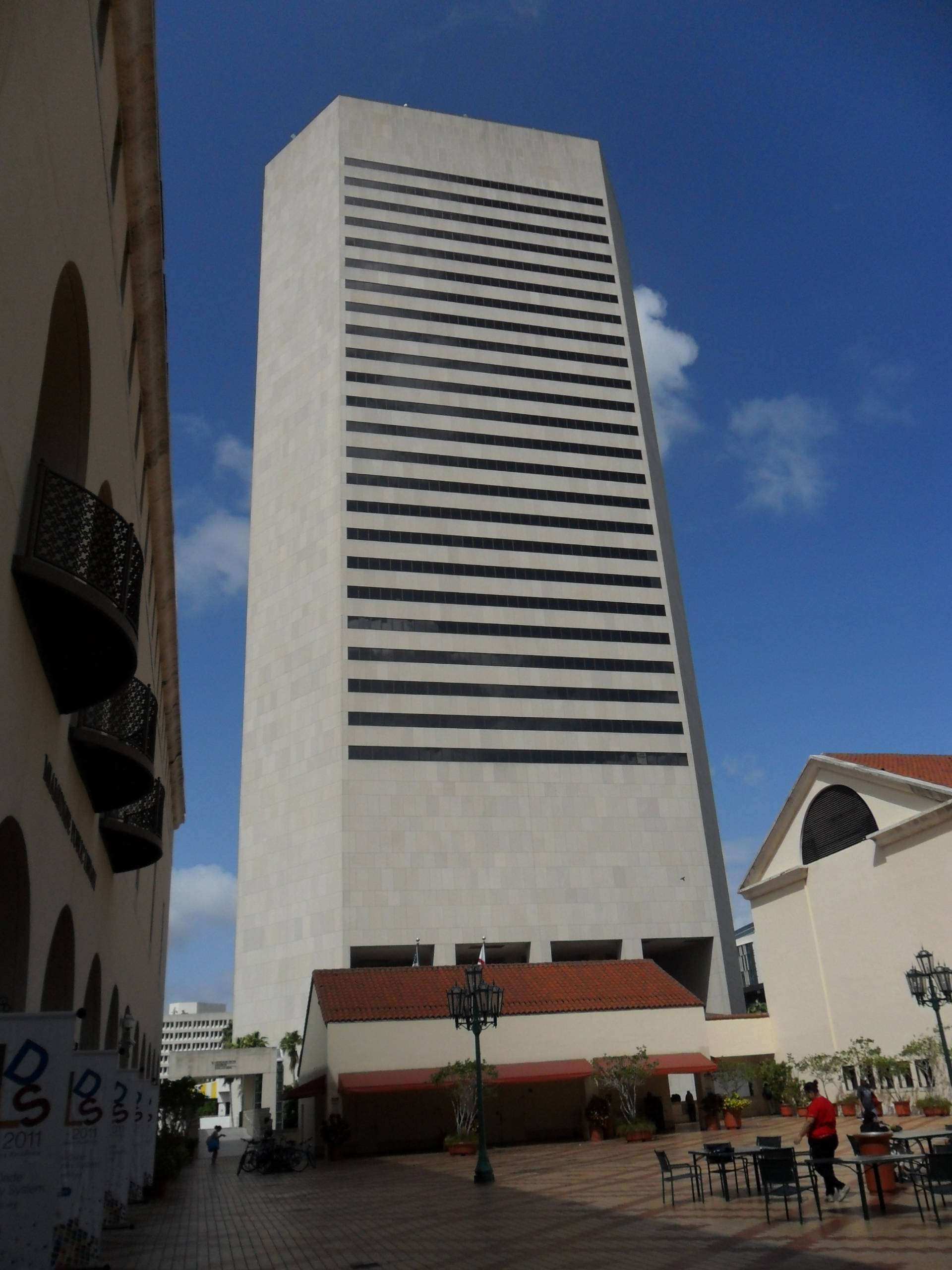
Politically, metropolitan Miami is strongly Democratic, like most large metropolitan regions in the United States. Broward County is the second-most heavily Democratic county in the state, behind only Gadsden County, which is much smaller. This contrasts with most of the rest of Florida, whose heavier Southern influence and high population of elderly voters makes it a swing or Republican-leaning state. Miami-Dade County has a relatively high percentage of Republican voters for an urban county, due partially to its Cuban-American population, which leans Republican as a result of its anti-communist views, but Miami-Dade County still remains very Democratic when compared with most of Florida's other counties. Despite being more suburban and affluent, Palm Beach County is reliably Democratic as well and in the 2020 presidential election voted for Democratic candidate Joe Biden by a higher margin than Miami-Dade County did.

In the 2016 presidential election, 62.3% of voters in the Miami metropolitan area voted Democratic. This was the 6th highest of any metro area in the United States. However, in recent years the area has shifted hard to the Republicans, with former president Donald Trump losing the metro area by 16 points in 2020 compared to losing it by 30 in 2016 (Fueled especially by Miami Dade County shifting 22 points to the right between 2016 and 2020), and Governor Ron DeSantis winning the metro area outright in the 2022 gubernatorial election, winning both Miami Dade and Palm Beach Counties (With the former being won by double digits) while losing Broward only by less than 16 points.
| Year | Democratic | Republican | Third parties |
|---|---|---|---|
| 2024 | 49.95% 1,360,195 | 48.89% 1,331,378 | 1.15% 31,387 |
| 2020 | 57.73% 1,670,188 | 41.51% 1,200,953 | 0.76% 22,014 |
| 2016 | 62.32% 1,552,139 | 34.82% 867,352 | 2.86% 71,300 |
| 2012 | 62.53% 1,399,403 | 36.84% 824,480 | 0.63% 14,089 |
Government
The metropolitan area is governed by 3 counties. In total there are 107 municipalities or incorporated places in the metropolis. Each one of the municipalities has its own city, town or village government, although there is no distinction between the 3 names. Much of the land in the metropolis is unincorporated, which means it does not belong to any municipality, and therefore is governed directly by the county it is located in.
Congressional districts
The Miami metropolitan area contains all or part of nine Congressional districts: the , , , , , , , , and . (the 113th Congress), the Cook Partisan Voting Index listed four as being Republican-leaning: the 18th, 25th, 26th, and 27th, with the 25th being the most Republican-leaning at R+5, and five as being Democratic-leaning: the 20th, 21st, 22nd, 23rd, and 24th, with the 24th being the most Democratic-leaning at D+34, making it the ninth-most Democratic-leaning district in the nation.
Economy
| GDP |
|---|
| (billion US$) |
| Miami-Dade County |
| Broward County |
| Palm Beach County |
| Miami-Fort Lauderdale-West Palm Beach, FL (MSA) |
Among those employed in the Miami metropolitan area, 32% were management, professional, and related occupations, 30% were sales and office occupations, 18% were service occupations, 11% were construction, extraction, maintenance and repair occupations, and 9% were production, transportation, and material moving occupations. 81% of the people employed were Private wage and salary workers; 12% were Federal, state, or local government workers; and 7% were self-employed.
The median income of households in the Miami area was $43,091. 78% of the households received earnings and 13% received retirement income other than Social Security. 30% of the households received Social Security. The average income from Social Security was $13. These income sources are not mutually exclusive; that is, some households received income from more than one source.
In 2005, for the employed population 16 years and older, the leading industries in the Miami area were educational services, health care, and social assistance, which accounted for 18%, and Professional, scientific, and management, and administrative and waste management services, which accounted for 13% of the population. 79% of Miami area workers drove to work alone in 2005, 10% carpooled, 4% took public transportation, and 4% used other means. The remaining 3% worked at home. Among those who commuted to work, it took them on average 28.5 minutes to get to work.
Culture
Miami dialect
Main article: Miami accent
In Miami-Dade County a unique dialect, commonly called the Miami dialect, is widely spoken. The dialect developed among second- or third-generation Hispanics, including Cuban-Americans, whose first language was English, though some non-Hispanic white, black, and other races who were born and raised in Miami-Dade tend to adopt it as well. It is based on a fairly standard American accent but with some changes very similar to dialects in the Mid-Atlantic, especially the New York area dialect, Northern New Jersey English, and New York Latino English. Unlike Virginia Piedmont, Coastal Southern American, and Northeast American dialects and Florida Cracker dialect of the Miami accent is rhotic; it also incorporates a rhythm and pronunciation heavily influenced by Spanish in which rhythm is syllable-timed.
It is possible to differentiate the Miami accent from a variety of interlanguages spoken by second-language speakers. The Miami accent does not generally display addition of before initial consonant clusters with , speakers do not confuse of with , (e.g., Yale with jail), and /r/ and /rr/ are pronounced as alveolar approximant [] instead of alveolar tap [] or alveolar trill [r] in Spanish.
The Miami accent is much less common in Broward County and Palm Beach County, where the majority of the population is non-Hispanic.
Area codes
Main article: List of Florida area codes
- 305: Miami-Dade County and the Florida Keys; overlaid by 786
- 786: Miami-Dade County and the Florida Keys; overlays with 305
- 954: All of Broward County: Fort Lauderdale, Hollywood, Coral Springs, Pompano Beach, overlaid by 754
- 754: All of Broward County: Fort Lauderdale, Hollywood, Coral Springs, Pompano Beach, overlays with 954
- 561: All of Palm Beach County: West Palm Beach, Boca Raton, Boynton Beach, Delray Beach, overlaid by 728
- 728: All of Palm Beach County: West Palm Beach, Boca Raton, Boynton Beach, Delray Beach, overlays with 561
Media
Main article: Media in Miami
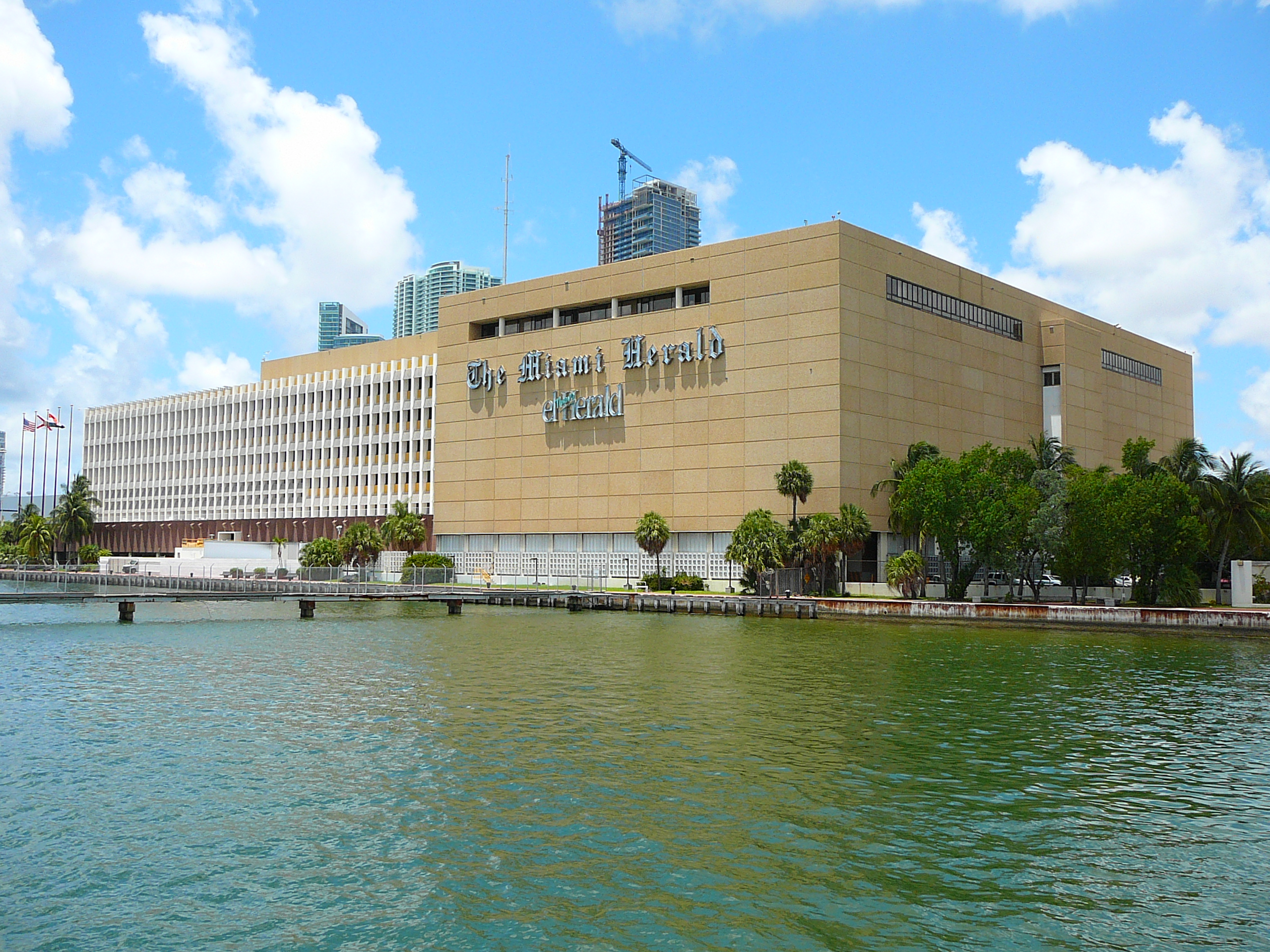
Greater Miami is served by several English-language and two major Spanish-language daily newspapers. The Miami Herald, headquartered in Doral, is Miami's primary newspaper with over a million readers. It also has news bureaus in Broward County, Monroe County, and Nassau, Bahamas. The South Florida Sun-Sentinel circulates primarily in Broward and southern Palm Beach counties and also has a news bureau in Havana, Cuba. The Palm Beach Post serves mainly Palm Beach County, especially the central and northern regions, and the Treasure Coast. The Boca Raton News publishes five days a week and circulates in southern Palm Beach County. El Nuevo Herald, a subsidiary of the Miami Herald, and Diario Las Americas, are Spanish-language daily papers that circulate mainly in Miami-Dade County. La Palma and El Sentinel are weekly Spanish newspapers published by the Palm Beach Post and Sun-Sentinel, respectively, and circulate in the same areas as their English-language counterparts.
There are several university student-run newspapers in the area, including The Miami Hurricane at the University of Miami, University Press at Florida Atlantic University, PantherNOW at Florida International University, and The Current at Nova Southeastern University.
Greater Miami is split into two separate television/radio markets: The Miami-Fort Lauderdale market serves Miami-Dade, Broward and the Florida Keys. The West Palm Beach market serves Palm Beach County and the Treasure Coast region.
Miami-Fort Lauderdale is the 12th largest radio market and the 16th-largest television market in the U.S. television stations serving the Miami-Fort Lauderdale area include WAMI-TV (UniMas), WBFS-TV (The CW), WSFL-TV (Independent), WFOR-TV (CBS), WHFT-TV (TBN), WLTV (Univision), WPLG (Independent), WPXM (ION), WSCV (Telemundo), WSVN (FOX, with ABC on DT2), WTVJ (NBC), WLRN-TV (PBS), and WPBT (also PBS), the latter television station being the only channel to serve the entire metropolitan area.
In addition to the Miami-Fort Lauderdale market, West Palm Beach has its own. It is the 49th largest radio market and the 38th-largest television market in the U.S. Television stations serving the West Palm Beach area include WPTV (NBC), WHDT (Independent), WPEC (CBS), WPBF (ABC), WFLX (FOX), WTVX (The CW), WXEL (PBS), WTCN (MyNetworkTV), and WPXP (ION). The West Palm Beach market shares use of WSCV and WLTV for Telemundo and Univision respectively. Also, both markets cross over and tend to be available interchangeably between both areas. In 2015, WPBT and WXEL merged their operations, to form South Florida PBS, although both stations have maintained separate programming schedules and social media platforms, but share the same subchannel lineup.
Education


In Florida, each county is also a school district. Each district is headed by an elected school board. A professional superintendent manages the day-to-day operations of each district, who is appointed by and serves at the pleasure of the school board.
The Miami-Dade County Public School District is currently the 4th-largest public school district in the nation. The School District of Palm Beach County is the 4th-largest in Florida and the 11th-largest in the United States. Broward County Public School District is the 6th-largest in the United States.
The University of Miami is one of the top-ranked private research institutions in the United States, and has the most selective admissions standards of Florida's 171 colleges and universities.
, Florida International University, with over 55,000 enrolled students, is the eighth-largest public university by enrollment in the nation.
Some colleges and universities in Greater Miami include:
- Barry University (private/Catholic)
- Broward College (public)
- Carlos Albizu University (private)
- Chamberlain University (private)
- Florida Atlantic University (public)
- Florida International University (public)
- Florida Memorial University (private/Baptist)
- Florida National University (private)
- Jersey College (private)
- Keiser University (private)
- Lynn University (private)
- Miami Dade College (public)
- Miami International University of Art & Design (private)
- Nova Southeastern University (private)
- Palm Beach Atlantic University (private/Christian)
- Palm Beach State College (public)
- St. Thomas University (private/Catholic)
- University of Fort Lauderdale (private/Christian)
- University of Miami (private)
In 2005, 82% of people 25 years and over had at least graduated from high school and 28% had a bachelor's degree or higher. Among people 16 to 19 years old, 7% were dropouts; they were not enrolled in school and had not graduated from high school. The total school enrollment in the Miami metro area was 1.4 million in 2005. Nursery school and kindergarten enrollment was 170,000 and elementary or high school enrollment was 879,000. College or graduate school enrollment was 354,000.
Transportation
Main article: Transportation in South Florida
Roads

The Miami metropolitan area is served by five interstate highways operated by the Florida Department of Transportation in conjunction with local agencies. I-95 runs north to south along the coast, ending just south of Downtown Miami at South Dixie Highway (US 1). I-75 runs east to west, turning south in western Broward County and connecting suburban north Miami-Dade to Naples on the Southwest Coast via Alligator Alley, which transverses the Florida Everglades before turning north. I-595 connects the Broward coast and Downtown Fort Lauderdale to I-75 and Alligator Alley. In Miami, I-195 and I-395 relay the main I-95 route east to Biscayne Boulevard (US 1) and Miami Beach across Biscayne Bay via the Julia Tuttle and MacArthur causeways.
In Greater Miami, the Miami-Dade Expressway Authority and Florida's Turnpike Enterprise maintain eight state expressways in conjunction with the Florida Department of Transportation. The Airport Expressway and the Dolphin Expressway relay western Miami-Dade suburbs to the eastern urban coast at I-95, and to Miami Beach via I-195 and I-395 at the Airport and Midtown interchanges. The Gratigny Parkway connects northern Miami suburbs to the southern end of I-75. The Palmetto Expressway is the primary beltway road of urban Miami, relaying I-95 and Florida's Turnpike at the Golden Glades Interchange near northeastern North Miami Beach to the southern inland suburbs of Kendall and Pinecrest. The Don Shula Expressway and the Homestead Extension of Florida's Turnpike form the southernmost end of the beltway, connecting the Palmetto Expressway to the bedroom communities of Homestead and Florida City. The Snapper Creek Expressway relays the Don Shula Expressway to South Dixie Highway (US 1).
The urban bypass expressway in Greater Fort Lauderdale is the Sawgrass Expressway (SR 869), connecting the northern Broward County coast at I-95 and Deerfield Beach to I-595 and I-75 at Alligator Alley in Sunrise.
Express lanes on I-95 start in Miami-Dade County and continue into Broward County. With an increased presence of traffic in South Florida, express lanes have been implemented in southern Palm Beach County.
Major freeways and tollways
- [[File:I-95.svg|25px]] I-95
- [[File:I-75.svg|25px]] I-75
- [[File:I-195.svg|25px]] I-195 / [[File:Toll Florida 112.svg|25px]] SR 112 (Airport Expressway)
- [[File:I-395.svg|25px]] I-395 / [[File:Toll Florida 836.svg|25px]] SR 836 (Dolphin Expressway)
- [[File:I-595.svg|25px]] I-595 (Port Everglades Expressway)
- [[File:Florida's Turnpike shield.svg|25px]] Florida's Turnpike, including the Homestead Extension
- [[File:Toll Florida 924.svg|23px]] SR 924 (Gratigny Parkway)
- [[File:Toll Florida 874.svg|25px]] SR 874 (Don Shula Expressway)
- [[File:Toll Florida 878.svg|24px]] SR 878 (Snapper Creek Expressway)
- [[File:Toll Florida 869.svg|24px]] SR 869 (Sawgrass Expressway)
- [[File:Florida 826.svg|24px]] SR 826 (Palmetto Expressway)
Major airports
The metropolitan area is served by three major commercial airports. These airports combine to make the fourth largest domestic origin and destination market in the United States, after New York City, Los Angeles, and Chicago.
| Airport | IATA code | County | FAA Category |
|---|---|---|---|
| Miami International Airport | MIA | Miami-Dade | Large Hub |
| Fort Lauderdale–Hollywood International Airport | FLL | Broward | Large Hub |
| Palm Beach International Airport | PBI | Palm Beach | Medium Hub |
The following smaller general aviation airports are also in the metro area:
| Airport | IATA code | ICAO code | County |
|---|---|---|---|
| Dade-Collier Training and Transition Airport | TNT | KTNT | Miami-Dade |
| Miami Homestead General Aviation Airport | Miami-Dade | ||
| Homestead Joint Air Reserve Base | HST | KHST | Miami-Dade |
| Miami Executive Airport | TMB | KTMB | Miami-Dade |
| Miami-Opa Locka Executive Airport | OPF | KOPF | Miami-Dade |
| Fort Lauderdale Executive Airport | FXE | KFXE | Broward |
| North Perry Airport | HWO | KHWO | Broward |
| Pompano Beach Airpark | PPM | KPMP | Broward |
| North Palm Beach County General Aviation Airport | Palm Beach | ||
| Palm Beach County Park Airport | LNA | KLNA | Palm Beach |
| Boca Raton Airport | BCT | KBCT | Palm Beach |
Seaports
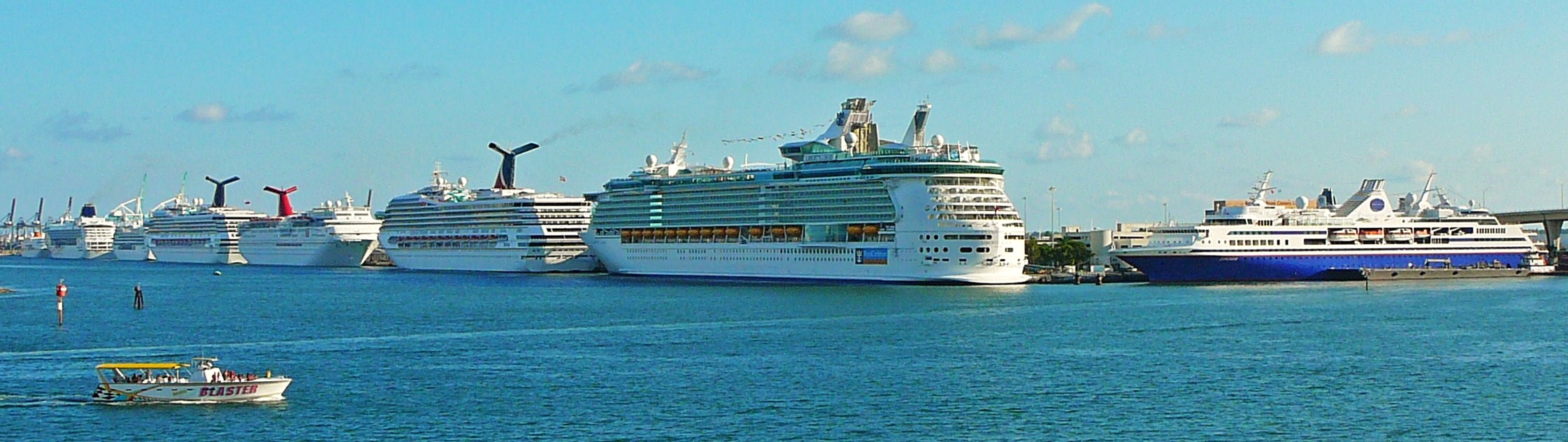
The metropolis also has four seaports, the largest and most important being the Port of Miami. Others in the area include Port Everglades, Port of Palm Beach and the Miami River Port. On August 21, 2012, PortMiami and the U.S. Army Corps of Engineers signed the Partnership Agreement construction agreement that will allow the Deep Dredge project to go out for bid. The Deep Dredge will deepen the Port's existing channels to minus 50/52 feet to prepare for the Panama Canal expansion, now scheduled for completion in early 2015. PortMiami's deeper channel will provide ships with an economically efficient, reliable and safe navigational route into the Port. PortMiami will be the only U.S. Port south of Norfolk, Virginia to be at the minus 50 foot depth in sync with the opening of the expanded Canal. Deep Dredge is expected to create more than 30,000 direct, indirect, and induced jobs in Florida and allow the Port to meet its goal to double its cargo traffic over the next decade.
Public transportation
Miami-Dade Transit is the largest public transit agency in Florida, operating rapid transit, people movers, and an intercity bus system. Metrorail is Florida's only rapid transit, currently with 23 stations on a 24.4 mi track. The Downtown Miami people mover, Metromover, operates 20 stations and three lines on a 4.4 mi track through the Downtown neighborhoods of the Arts & Entertainment District, the Central Business District, and Brickell. Metrobus serves the entirety of Miami-Dade County, also serving Monroe County as far south as Marathon, and Broward County as far north as Downtown Fort Lauderdale. In Broward County, Broward County Transit runs public buses, as does Palm Tran in Palm Beach County. Additionally, the South Florida Regional Transportation Authority operates Tri-Rail, a commuter rail train that connects the three of the primary cities of South Florida (Miami, Fort Lauderdale, and West Palm Beach), and most intermediate points. Brightline provides service to Miami, Aventura, West Palm Beach, Fort Lauderdale, Boca Raton, and Central Florida's Orlando, with talks to expand to Tampa and Jacksonville.
Sports
Main article: Sports in Miami
Professional
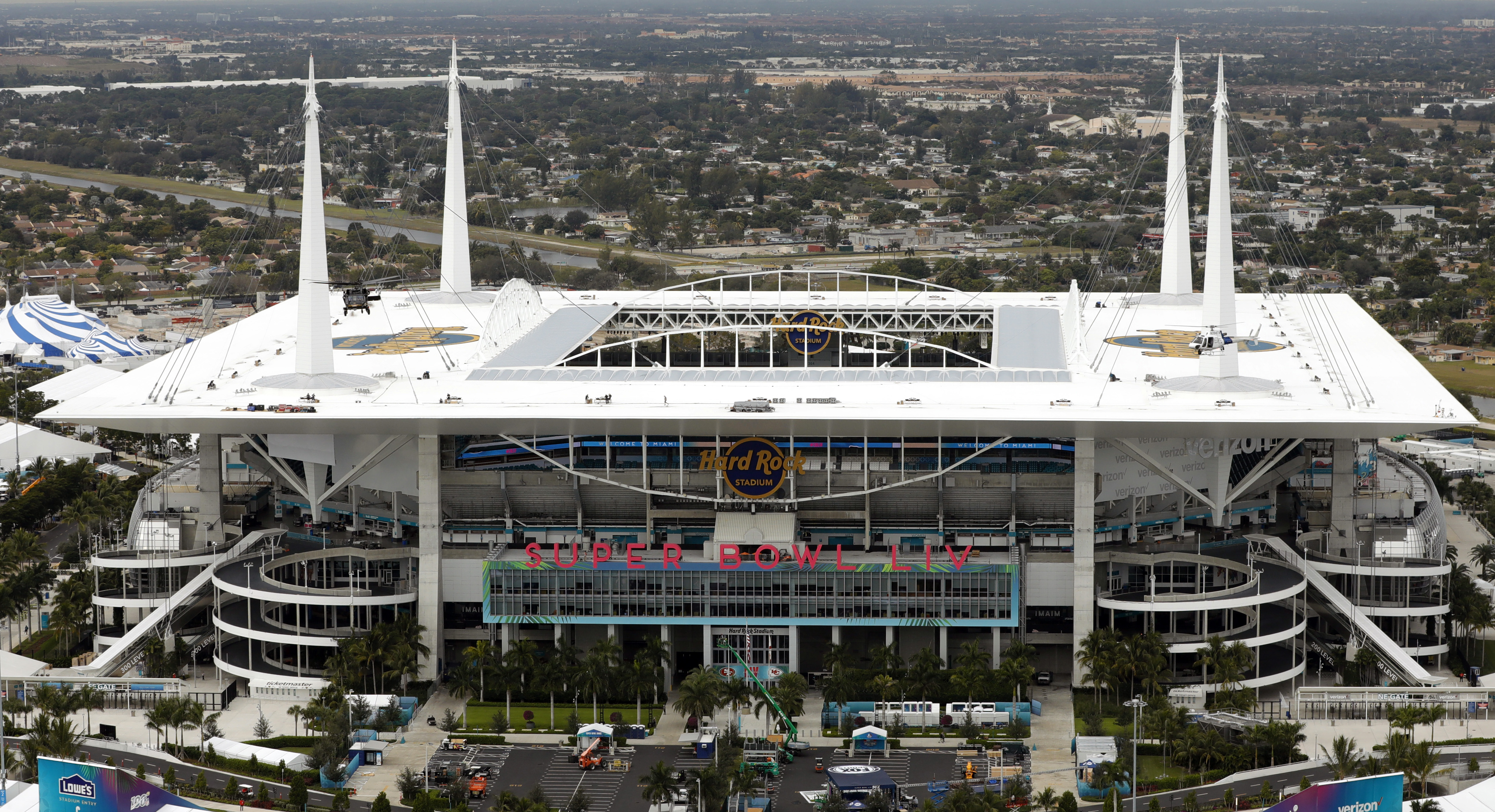
The Miami metro area is home to five major league professional sports teams.
| Professional team | League | Sport | Venue | City | Established | Championships |
|---|---|---|---|---|---|---|
| Miami Dolphins | National Football League (NFL) | Football | Hard Rock Stadium | Miami Gardens | 1965 | 2 |
| Inter Miami CF | Major League Soccer (MLS) | Soccer | Chase Stadium | Fort Lauderdale | 2018 | 1 |
| Miami Heat | National Basketball Association (NBA) | Basketball | Kaseya Center | Downtown Miami | 1988 | 3 |
| Miami Marlins | Major League Baseball (MLB) | Baseball | LoanDepot Park | Little Havana | 1993 | 2 |
| Florida Panthers | National Hockey League (NHL) | Hockey | Amerant Bank Arena | Sunrise | 1993 | 2 |
College sports
The most prominent college sports program in the Miami metropolitan area are the Miami Hurricanes of the University of Miami in Coral Gables, who compete in Division I of the National Collegiate Athletic Association, the highest level of collegiate athletics. The University of Miami's football team has won five national championships since 1983 and its baseball team has won four national championships since 1982.
Other collegiate sports programs in the metropolitan area include the Florida Atlantic Owls of Florida Atlantic University in Boca Raton, the FIU Panthers of Florida International University in University Park, the Nova Southeastern Sharks of Nova Southeastern University in Davie, and the Barry Buccaneers of Barry University in Miami Shores.
Minor league and other sports
The Miami area is also host to minor league sports teams, including:
- The Miami Marlins and St. Louis Cardinals conduct spring training in Jupiter at Roger Dean Stadium.
- The Houston Astros and Washington Nationals conduct spring training in West Palm Beach at Cacti Park of the Palm Beaches.
- Inter Miami CF have a reserve team that plays in MLS Next Pro.
- The Homestead-Miami Speedway oval has hosted NASCAR Cup Series and IndyCar Series events. Temporary street circuits at Museum Park hosted several CART, IMSA GT, and American Le Mans Series races between from 1986 to 1995, as well as a Formula E race in 2015. The Palm Beach International Raceway is a minor road course.
- The Miami Sharks of Major League Rugby play at AutoNation Sports Field in Fort Lauderdale.
| Club | Sport | League | Venue (Capacity) | Attendance | League Championships |
|---|---|---|---|---|---|
| Miami Dolphins | Football | National Football League | Hard Rock Stadium (64,767) | 70,035 | Super Bowl (2) — 1972, 1973 |
| Miami Heat | Basketball | National Basketball Association | Kaseya Center (19,600) | 19,710 | NBA Finals (3) — 2006, 2012, 2013 |
| Miami Marlins | Baseball | Major League Baseball | LoanDepot Park (36,742) | 21,386 | World Series (2) — 1997, 2003 |
| Inter Miami CF | Soccer | Major League Soccer | Chase Stadium (21,550) | 21,550 | MLS Cup (1) — 2025 |
| Florida Panthers | Hockey | National Hockey League | Amerant Bank Arena (19,250) | 19,250 | Stanley Cup (2) — 2024, 2025 |
| Miami Hurricanes | Football | NCAA D-I (ACC) | Hard Rock Stadium (64,767) | 53,837 | National titles (5) — 1983, 1987, 1989, 1991, 2001 |
| Florida Atlantic Owls | Football | NCAA D-1 (AAC) | Flagler Credit Union Stadium (29,571) | 18,948 | None |
| FIU Panthers | Football | NCAA D-I (Conference USA) | Pitbull Stadium (23,500) | 15,453 | None |
File:DRV PNK Stadium (51704895544) (cropped).jpg|Chase Stadium, home stadium of Inter Miami of MLS File:American Airlines Arena, Miami, FL, jjron 29.03.2012.jpg|Kaseya Center, home of the Miami Heat of the NBA File:Marlins First Pitch at Marlins Park, April 4, 2012 (cropped).jpg|LoanDepot Park, home of the Miami Marlins of MLB File:BankAtlantic Center2.jpg|Amerant Bank Arena, home of the Florida Panthers File:FAUStadium night.jpg|Flagler Credit Union Stadium, home of the Florida Atlantic Owls File:FIU Stadium, October 13, 2012.jpg|Pitbull Stadium, home of the FIU Panthers
Notes
References
References
- (July 21, 2023). "Revised Delineations of Metropolitan Statistical Areas, Micropolitan Statistical Areas, and Guidance on the Uses of the Delineations of These Areas".
- "P2: HISPANIC OR LATINO, AND NOT ... - Census Bureau Table". U.S. Census Bureau.
- (March 14, 2024). "Metropolitan and Micropolitan Statistical Areas Population Totals: 2020-2023". United States Census Bureau.
- "Total Gross Domestic Product for Miami-Fort Lauderdale-West Palm Beach, FL (MSA)". [[Federal Reserve Bank of St. Louis]].
- (30 March 2023). "County Population Totals and Components of Change: 2020-2023". U.S. Census Bureau.
- [[PDF]][http://www.rentalcartours.net/rac-mia.pdf Miami-Fort Lauderdale-Pompano Beach: Linear & Visionless] – retrieved August 2, 2006
- [http://www.demographia.com/db-ua2000r.htm USA Urbanized Areas Over 500,000: 2000 Rankings – Rank by Density] – URL retrieved September 5, 2006
- "2020 Census ua list all (spreadsheet)".
- [https://www.census.gov/geo/www/ua/ua2k.txt Lists of Census 2000 Urbanized Areas and Urban Clusters] {{webarchive. link. (June 13, 2002 – URL retrieved August 27, 2006)
- NOTE: large (2.8 MB) [[PDF]] file – [http://ftp2.census.gov/geo/maps/urbanarea/uaoutline/UA2000/ua56602/ua56602_00.pdf UMiami, Florida Urbanized Area Outline Map, 2000 Census] – URL retrieved August 27, 2006
- "The NCES Fast Facts Tool provides quick answers to many education questions (National Center for Education Statistics)".
- (2021). "Florida Population: Census Summary 2020".
- (June 30, 1995). "List II - Consolidated Metropolitan Statistical Areas and Primary Metropolitan Statistical Areas".
- (June 6, 2003). "OMB Bulletin No. 03-04 - Attachment".
- (July 21, 2023). "Revised Delineations of Metropolitan Statistical Areas, Micropolitan Statistical Areas, and Guidance on the Uses of the Delineations of These Areas".
- (February 28, 2013). "OMB Bulletin No. 13-1: Revised Delineations of Metropolitan Statistical Areas, Micropolitan Statistical Areas, and Combined Statistical Areas, and Guidance on Uses of the Delineations of These Areas".
- (September 14, 2018). "OMB Bulletin No. 18-04 - Revised Delineations of Metropolitan Statistical Areas, Micropolitan Statistical Areas, and Combined Statistical Areas, and Guidance in the Uses of These Areas".
- (November 2007). "Spinning a New Geography of Vernacular Regional Identity: Florida in the Twenty-First Century". Southeastern Geographer.
- "2020 U.S. Census data".
- "Köppen Climate Classification Map: South Florida=Aw=tropical wet & dry".
- [https://web.archive.org/web/20030411034559/http://www.nationalgeographic.com/xpeditions/activities/03/popup/climate.html Climate Zones of the World, under Koppen's System]. Retrieved August 8, 2006.
- [http://www.weather.com/newscenter/specialreports/hurricanes/vulnerablecities/miami.html Weather.com Vulnerable cities: Miami, Florida] {{webarchive. link. (April 27, 2006 . Retrieved February 19, 2006.)
- Mean monthly maxima and minima (i.e. the highest and lowest temperature readings during an entire month or year) calculated based on data at said location from 1981 to 2010.
- link. "NOWData - NOAA Online Weather Data". [[National Oceanic and Atmospheric Administration]]
- "Station Name: FL WEST PALM BEACH INTL AP".
- "Best Times to Visit Ft Lauderdale". USNews.
- "Climate Fort Lauderdale, FL". US Climate Data.
- "Avg Monthly Temps & Rainfall in Fort Lauderdale, FL".
- [https://www.census.gov/population/metro/about/ Census Bureau – About Metropolitan and Micropolitan Statistical Areas] {{webarchive. link. (April 1, 2013 – retrieved Dec. 19, 2013)
- [https://www.census.gov/geo/reference/gtc/gtc_cbsa.html Census Bureau Geographic Terms and Concepts – Core Based Statistical Areas and Related Statistical Areas] – retrieved Dec. 19, 2013
- [https://www.census.gov/population/www/metroareas/lists/2009/List2.txt Metropolitan and micropolitan statistical areas defined by the Office of Management and Budget, December 2009] – retrieved July 22, 2011
- (2023). "Census Counts: 1830-2020". Office of Economic and Demographic Research, The Florida Legislature.
- "General Population Characteristics FLORIDA 1980 Census of Population". U.S. Census Bureau.
- "1990 Census of Population General Population Characteristics Florida Section 1 of 2". U.S. Census Bureau.
- "PL002: HISPANIC OR LATINO, AND NOT ... - Census Bureau Table". U.S. Census Bureau.
- "P2: HISPANIC OR LATINO, AND NOT ... - Census Bureau Table". U.S. Census Bureau.
- "H1 | OCCUPANCY STATUS". U.S. Census Bureau.
- "P12 | SEX BY AGE FOR SELECTED AGE CATEGORIES". U.S. Census Bureau.
- "P13 | MEDIAN AGE BY SEX". U.S. Census Bureau.
- "H1 | OCCUPANCY STATUS". U.S. Census Bureau.
- "P12 | SEX BY AGE". U.S. Census Bureau.
- "P13 | MEDIAN AGE BY SEX". U.S. Census Bureau.
- "H003 | OCCUPANCY STATUS [3]". U.S. Census Bureau.
- "P012 | SEX BY AGE [49]". U.S. Census Bureau.
- "P013 | MEDIAN AGE BY SEX [3]". U.S. Census Bureau.
- "General Population Characteristics FLORIDA 1980 Census of Population". U.S. Census Bureau.
- "S2001: EARNINGS IN THE PAST 12 ... - Census Bureau Table". U.S. Census Bureau.
- "S1901: INCOME IN THE PAST 12 MONTHS ... - Census Bureau Table". U.S. Census Bureau.
- "S1701: POVERTY STATUS IN THE PAST ... - Census Bureau Table". U.S. Census Bureau.
- "S1501: EDUCATIONAL ATTAINMENT - Census Bureau Table". U.S. Census Bureau.
- "C16001: LANGUAGE SPOKEN AT HOME FOR ... - Census Bureau Table". U.S. Census Bureau.
- "B16001: LANGUAGE SPOKEN AT HOME BY - Census Bureau Table". U.S. Census Bureau.
- "PCT010: AGE BY LANGUAGE SPOKEN AT ... - Census Bureau Table". U.S. Census Bureau.
- "1990 Census of Population General Social and Economic Characteristics Florida Section 1 of 3". U.S. Census Bureau.
- "General Social and Economic Characteristics FLORIDA 1980 Census of Population". U.S. Census Bureau.
- "B05001: NATIVITY AND CITIZENSHIP ... - Census Bureau Table". U.S. Census Bureau.
- "B05006: PLACE OF BIRTH FOR THE ... - Census Bureau Table". U.S. Census Bureau.
- "B05001: NATIVITY AND CITIZENSHIP ... - Census Bureau Table". U.S. Census Bureau.
- "B05006: PLACE OF BIRTH FOR THE ... - Census Bureau Table". U.S. Census Bureau.
- "P021: PLACE OF BIRTH BY CITIZENSHIP ... - Census Bureau Table". U.S. Census Bureau.
- "PCT019: PLACE OF BIRTH FOR THE ... - Census Bureau Table". U.S. Census Bureau.
- "Adults in the Miami metro area". [[Pew Research Center]].
- [http://www.pewresearch.org/fact-tank/2015/07/29/major-u-s-metropolitan-areas-differ-in-their-religious-profiles/ Major U.S. metropolitan areas differ in their religious profiles], Pew Research Center
- (May 12, 2015). "America's Changing Religious Landscape". [[Pew Research Center]]: Religion & Public Life.
- "Greater Miami Jewish Federation Releases New Study on Miami Jewish Population".
- Comenetz, Joshua. "Jewish Maps of the United States by Counties, 2011". [[Berman Jewish DataBank]].
- Hanks, Douglas. (October 29, 2010). "Housing costs higher in South Florida". [[The Miami Herald]].
- [http://www.sptimes.com/2002/04/28/news_pf/State/Broward_Power.shtml State:Broward Power]. [[St. Petersburg Times]]. Retrieved November 14, 2006.
- [http://www.sun-sentinel.com/news/politics/elections/orl-elections-nationalmap-ap,0,5015729.htmlpage 2008 General Election Results] {{webarchive. link. (October 11, 2012 . [[South Florida Sun-Sentinel]]. Retrieved November 11, 2008.)
- "South Florida Sun-Sentinel.com Election 2008 (Florida Presidential election results): 2008". Sun-sentinel.com.
- (April 13, 1970). "Election 2004 (Florida Presidential election results): 2004". CNN.
- "Election 2006 (Florida Gubernatorial election results): 2006". CNN.
- (December 1, 2016). "Mapping How America's Metro Areas Voted". CityLab.
- "DRA 2020".
- (2013). "National Atlas of the United States". [[United States Geological Survey]].
- "Partisan Voting Index Districts of the 113th Congress".
- "Gross Domestic Product: All Industries in Miami-Dade County, FL". Federal Reserve Bank of St. Louis.
- "Gross Domestic Product: All Industries in Broward County, FL".
- "Gross Domestic Product: All Industries in Palm Beach County, FL".
- "Total Gross Domestic Product for Miami-Fort Lauderdale-West Palm Beach, FL (MSA)".
- (August 27, 2013). "Miami Accents: Why Locals Embrace That Heavy "L" Or Not". WLRN ([[WLRN-TV]] and [[WLRN-FM]]).
- (June 13, 2004). "'Miami Accent' Takes Speakers By Surprise". Articles – [[Sun-Sentinel]].com.
- (August 26, 2013). "Miami Accents: How 'Miamah' Turned Into A Different Sort Of Twang". WLRN ([[WLRN-TV]] & [[WLRN-FM]]).
- Haggin, Patience. (August 27, 2013). "Miami Accents: Why Locals Embrace That Heavy "L" Or Not".
- Watts, Gabriella. (August 26, 2013). "Miami Accents: How 'Miamah' Turned Into A Different Sort Of Twang".
- "English in the 305 has its own distinct Miami sound".
- link. (May 17, 2013 – URL retrieved August 19, 2006)
- (August 2, 2010). "Diario Las Americas". Diario Las Americas.
- [https://www.niche.com/colleges/university-of-miami/ University of Miami] {{Webarchive. link. (July 11, 2022 at Niche)
- "Top 200 U.S. Airports Ranked By Domestic O&D Traffic, Year Ended March 2007".
- Davis, Ennis. "Virgin Trains expands in Florida. Will it ever reach Jacksonville?".
- Newspapers, Joshua Solomon, Treasure Coast. "Virgin Trains OKs 3 new stations in South Florida, so when will it build stations here?".
- "Miami (Florida)". National Collegiate Athletic Association.
- Rorabaugh, Dan. "Looking for St. Louis Cardinals spring training tickets? Here's a look at the schedule".
- Pugliese, Nick. "Miami Marlins Spring Training: What to know before heading to see them in Jupiter".
- "New first name for Ballpark of the Palm Beaches: Fitteam".
- Janes, Chelsea. (February 16, 2018). "Nationals and Astros reach naming rights deal for Ballpark of the Palm Beaches".
- "Astros, Nats rename FITTEAM Ballpark".
This article was imported from Wikipedia and is available under the Creative Commons Attribution-ShareAlike 4.0 License. Content has been adapted to SurfDoc format. Original contributors can be found on the article history page.
Ask Mako anything about Miami metropolitan area — get instant answers, deeper analysis, and related topics.
Research with MakoFree with your Surf account
Create a free account to save articles, ask Mako questions, and organize your research.
Sign up freeThis content may have been generated or modified by AI. CloudSurf Software LLC is not responsible for the accuracy, completeness, or reliability of AI-generated content. Always verify important information from primary sources.
Report