From Surf Wiki (app.surf) — the open knowledge base
Methoxsalen
Chemical compound

Chemical compound
| Drugs.com =
| elimination_half-life = ~2 hours
Methoxsalen (or Xanthotoxin, 8-methoxypsoralen) sold under the brand name Oxsoralen and Melanocyl among others, is a medication used to treat psoriasis, eczema, vitiligo, and some cutaneous lymphomas in conjunction with exposing the skin to ultraviolet (UVA) light from lamps or sunlight. Methoxsalen modifies the way skin cells receive the UVA radiation, allegedly clearing up the disease. Levels of individual patient PUVA exposure were originally determined using the Fitzpatrick scale. The scale was developed after patients demonstrated symptoms of phototoxicity after oral ingestion of methoxsalen followed by PUVA therapy. Chemically, methoxsalen is a derivative of psoralen and belongs to a class of organic natural molecules known as furanocoumarins. They consist of coumarin annulated with furan. It can also be injected and used topically.
Natural sources
In 1947, methoxsalen was isolated (under the name "ammoidin") from the plant Ammi majus, bishop's weed.
In 1970, Nielsen extracted 8-methoxypsoralen from four species of the genus Heracleum in the carrot family Apiaceae, including Heracleum mantegazzianum and Heracleum sphondylium. An additional 32 species of the genus Heracleum were found to contain 5-methoxypsoralen (bergapten) or other furanocoumarins.
Biosynthesis
The biosynthetic pathway is a combination of the shikimate pathway, which produces umbelliferone, and the mevalonate pathway.
Synthesis of umbelliferone
Umbelliferone is a phenylpropanoid and as such is synthesized from L-phenylalanine, which in turn is produced via the shikimate pathway. Phenylalanine is lysated into cinnamic acid, followed by hydroxylation by cinnamate 4-hydroxylase to yield 4-coumaric acid. The 4-coumaric acid is again hydroxylated by cinnamate/coumarate 2-hydroxylase to yield 2,4-dihydroxy-cinnamic acid (umbellic acid) followed by a bond rotation of the unsaturated bond adjacent to the carboxylic acid group. Finally an intramolecular attack from the hydroxyl group of C2' to the carboxylic acid group closes the ring and forms the lactone umbelliferone.
Synthesis of methoxsalen
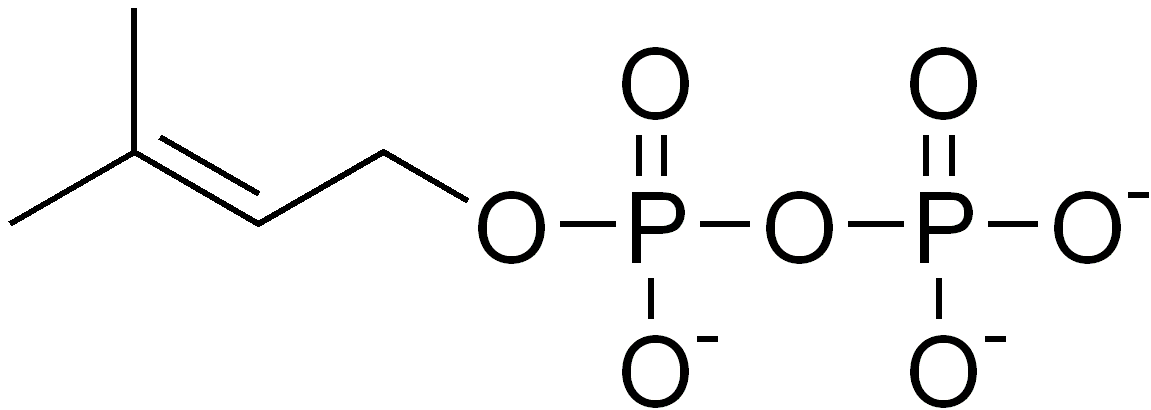
The biosynthetic route then continues with the activation of dimethylallyl pyrophosphate (DMAPP), produced via the mevalonate pathway, to form a carbo-cation via the cleavage of the diphosphates. Once activated, the enzyme umbelliferone 6-prenyltransferase catalyzes a C-alkylation between DMAPP and umbelliferone at the activated position ortho to the phenol, yielding demethylsuberosin. This is then followed by a hydroxylation catalyzed by the enzyme marmesin synthase to yield marmesin. Another hydroxylation is catalyzed by psoralen synthase to yield psoralen. A third hydroxylation by the enzyme psoralen 8-monooxygenase yields xanthotoxol which is followed by a methylation via the enzyme xanthotoxol O-methyltransferase and S-adenosyl methionine to yield methoxsalen.
Risks and side effects
Patients with high blood pressure or a history of liver problems are at risk for inflammation and irreparable damage to both liver and skin. The eyes must be protected from UVA radiation. Side effects include nausea, headaches, dizziness, and in rare cases insomnia.
Methoxsalen has also been classified as an IARC Group 1 carcinogen (known to cause cancer) but is only cancerous when combined with light - UVA radiation.
Society and culture
Author John Howard Griffin (1920–1980) used the chemical to darken his skin in order to investigate racial segregation in the American South. He wrote the book Black Like Me (1961) about his experiences.
References
References
- (13 December 2019). "Uvadex".
- (12 December 2019). "AusPAR: Methoxsalen".
- "Uvadex- methoxsalen injection, solution". U.S. National Library of Medicine.
- "Oxsoralen-Ultra- methoxsalen capsule, liquid filled". U.S. National Library of Medicine.
- (1947). "Ammi majus Linn.; pharmacognostical study and isolation of a crystalline constituent, ammoidin". Quarterly Journal of Pharmacy and Pharmacology.
- (June 2006). "Technology insight: ECP for the treatment of GvHD--can we offer selective immune control without generalized immunosuppression?". [[Nature Publishing]].
- (1970). "Coumarins of Umbelliferous plants". Royal Danish School of Pharmacy.
- (1979). "Botanical Dermatology: Plants and Plant Products Injurious to the Skin". Greengrass.
- (2009). "Medicinal Natural Products: A Biosynthetic Approach". John Wiley & Sons.
- "Known and Probable Human Carcinogens". American Cancer Society.
- (27 July 2003). "Death of John Howard Griffin". Snopes Media Group Inc..
This article was imported from Wikipedia and is available under the Creative Commons Attribution-ShareAlike 4.0 License. Content has been adapted to SurfDoc format. Original contributors can be found on the article history page.
Ask Mako anything about Methoxsalen — get instant answers, deeper analysis, and related topics.
Research with MakoFree with your Surf account
Create a free account to save articles, ask Mako questions, and organize your research.
Sign up freeThis content may have been generated or modified by AI. CloudSurf Software LLC is not responsible for the accuracy, completeness, or reliability of AI-generated content. Always verify important information from primary sources.
Report