From Surf Wiki (app.surf) — the open knowledge base
Metallic fiber
Thread wholly or partly made from metal

Thread wholly or partly made from metal
Non-wovens or felts can be produced with metal fibers, just like with traditional textile fibers. In a very limited number of cases, needle punching can be applied to entangle the fibers and obtain needle-punched felt.
Metal yarns
Main article: Novelty yarn
Bundles of stainless steel fibers can be converted into yarns by textile spinning processes. There are two forms of yarn: one with a low amount of fibers and one with a high amount of fibers. The former, with a number of filaments of around 275, can be converted into a filament yarn by adding twist to the bundle. Bundles with several thousands of fibers are typically used to convert fibers into spun yarn. That can be done by stretch breaking and subsequent traditional yarn spinning technologies. This results in 100% metal yarns. During the spinning process, tows can be blended and blended yarns can also be produced. Blends with cotton, polyester and wool are possible.
Subsequently, metal yarns can be further converted into various textile products using textile processes. Knitting (circular, flat, warp) and weaving are possible, as well as braiding. Blended textile products can be obtained by combining metal yarns with other yarns, or by using yarns that have two kinds of fibers inside and hence are already blends by themselves.
Electrical cables
Main article: Electrical wiring
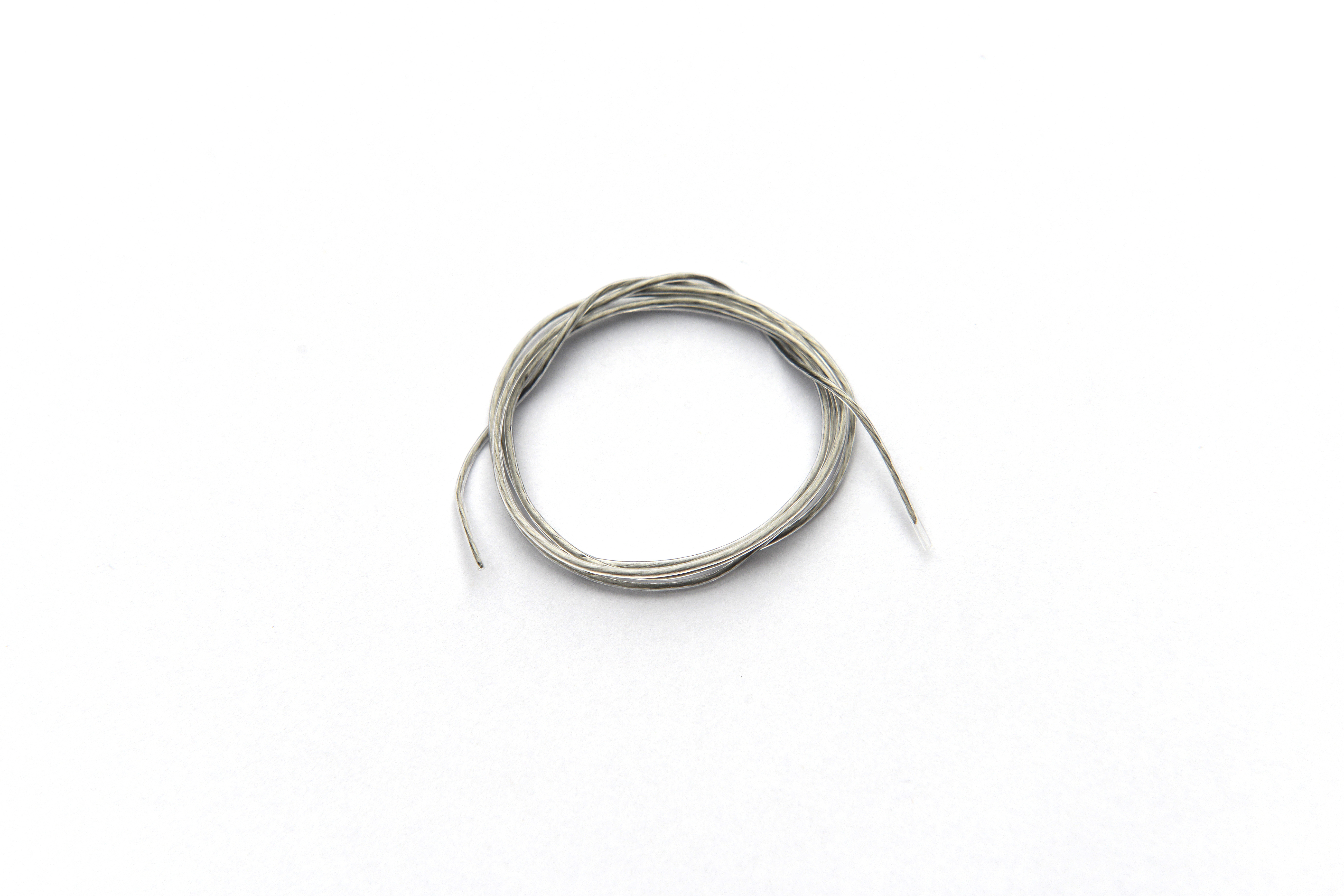
To make cables, two or more filaments are twisted together a number of times. During the process, a cable's torsion and straightness are monitored. The cable can be fine-tuned for a certain application by combining different filament strengths, diameters or the number of twists, or by preforming.
Fiber Reinforced Composites
Main article: Fiber-reinforced composite

Metal fiber can be used as reinforcement fiber for composite materials, improving breaking behavior upon impact and electrical conductivity. Traditional carbon or glass fiber reinforcement fibers have very limited elongation possibilities, which results in a brittle and explosive breaking behavior, whereas metal fibers can absorb much more energy before breaking. Processing is no different from any other reinforcement fiber for composite material. It is also possible to combine metal fibers with other fibers into a hybrid composite structure, which combines properties of its components (carbon, glass, or steel).
Producers
Metallic fibers are manufactured primarily in Europe. The largest and most integrated metal fiber producer worldwide is the multinational company Bekaert, headquartered in Belgium, but with manufacturing footprint in Europe, Asia, and the Americas. Three manufacturers are still producing metallic yarn in the United States. Metlon Corporation is one of the remaining manufacturers in the U.S. that stocks a wide variety of laminated and non-laminated metallic yarns. Brightex Corporation, Reiko. Co of Japan and South Korea, such as Hwa Young, is also manufacturing metallic fibers. China also produces metallic yarns; the city of Dongyang contains more than 100 factories, though some of these are home-based production sites rather than conventional factories. Two of the more popular factories are Salu Metallic Yarn and Aoqi Textile. Kyoto, the former capital of Japan, is also a significant manufacturing base for metallic yarn. Suncoco is a worldwide distributor of metallic yarn.
In 2020, Fibrecoat, a German startup from Aachen, started producing aluminium-coated basalt fibres in Germany.
Trademarks
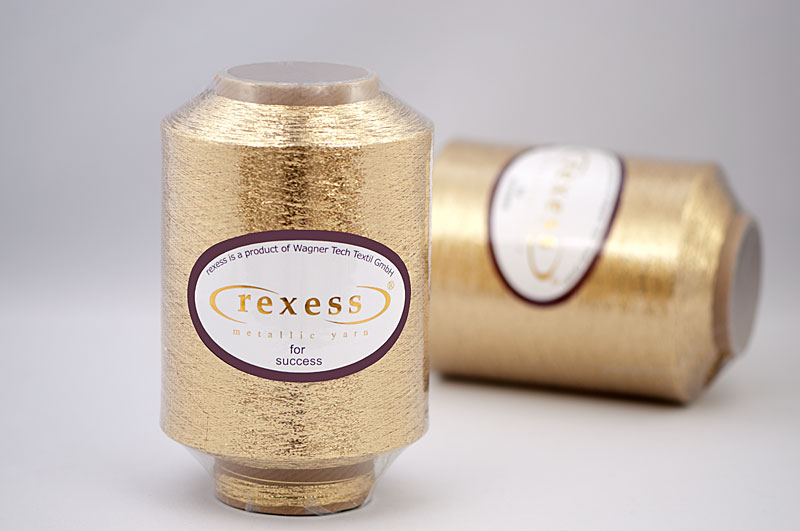
The Lurex Company has manufactured metallic fibers in Europe for over fifty years. They produce a wide variety of metallic fiber products including fibers used in apparel fabric, embroidery, braids, knitting, military regalia, trimmings, ropes, cords, and lace surface decoration. The majority of Lurex fibers have a polyamide film covering the metal strand but polyester and viscose are also used. The fibers are also treated with a lubricant called P.W., a mineral-based oil, which helps provide ease of use.
Metlon Corporation is a trademark of Metallic Yarns in the United States and has been producing metallic yarns for over sixty years. Metlon produces their metallic yarn by wrapping single slit yarns with two ends of nylon. One end of nylon is wrapped clockwise and the other end is wrapped counterclockwise around the metallic yarn. The most commonly used nylon is either 15 denier or 20 denier, but heavier deniers are used for special purposes.
Uses
Source:
Metallic fibers are used in a wide range of sectors and segments.
Automotive
Metal fiber sintered sheets are used for diesel and gasoline particulate filtration and crankcase ventilation filters.
Heat-resistant textile materials are made from metal fibers for automotive glass bending processes. These metal fiber cloths protect the glass during the bending process with highly elevated temperatures and high pressures.
Metal fibers are used for heating cables for car seat heating and selective catalytic reduction tubes, and adblue tanks. Metal fiber heating cables show an extremely high flexibility and durability when compared to copper wire.
Aerospace
Metal fiber filters are used for hydraulic fluid filtration in aircraft hydraulic systems. When compared to glass fiber filtration media, metal fibers show excellent durability, as the fibers are metallically bonded together by sintering, instead of kept together by a binder material.
Metal fiber sintered porous sheets are used as a sound attenuation medium in aircraft cabins, reducing HVAC sounds, and auxiliary power unit noise.
Technical textiles
Metal fibers can serve as antistatic fibers for textiles, which can be used in electrical protective clothing or antistatic bags.
Metal fibers can also be used for shielding from electromagnetic interference (EMI).
Stainless steel fiber textiles can be heated by passing electrical current through them and can also be used for cut resistant clothing (gloves).
Filtration
Metal fiber filters can reach very high porosity, at very low pore sizes, which makes them suitable for HEPA and ULPA filtration. These filters are used in nuclear power plants as a safety measure to prevent eventual release of radioactive steam.
Marine
Metal fiber filters are used for the purification of marine fuel and lube oil.
Other
Another common use for metallic fibers is upholstery fabric and textiles such as lamé and brocade. Many people also use metallic fibers in weaving and needlepoint. Metal fibers are used in clothing. Metallic yarns are twisted with other fibers such as wool, nylon, cotton, and synthetic blends to produce yarns.
Stainless steel and other metal fibers are used in communication lines such as phone lines and cable television lines.
Stainless steel fibers are also used in carpets. They are dispersed throughout the carpet with other fibers so they are not detected. The presence of the fibers helps to conduct electricity so that the static shock is reduced. These types of carpets are often used in computer-use areas or other areas where static build-up could damage equipment. Other uses include tire cord, missile nose cones, work clothing such as protective suits, space suits, and cut resistant gloves for butchers and other people working near bladed or dangerous machinery.
Metal fibers can be used as a reinforcement or electrical conductivity fiber for fiber reinforced composites.
References
References
- (August 2009). "Code of Federal Regulations (CFR); Title 16: Commercial Practices; Chapter I: Federal Trade Commission; Subchapter B: Guides and Trade Practice Rules".
- "Metal fiber products".
- An introduction to Metal Fiber Technology - White Paper - https://www.bekaert.com/en/product-catalog/content/Metal-fibers/replacement-of-glass-fiber-media-by-metal-fiber-media
- "The Costume Gallery's Research Library".
- Smithsonian National Museum of Natural History
- "AllRefer - Fun Facts & Trivia".
- Kim, Caroline "Humanities" The Treasures of Genghis Khan: Sept - Oct 2002 Vol. 23 #5
- "An Overview of Metal Fiber Applications" - White paper - J.De Baerdemaeker, J.Vleurinck - https://www.bekaert.com/en/product-catalog/content/Metal-fibers/replacement-of-glass-fiber-media-by-metal-fiber-media
- Kadolph, Sara J. and Langford, Anna L. "Textiles Ninth Edition" pg. 129-130.
- "Metlon Corporation - Metallic Yarns".
- "Suncoco Products".
This article was imported from Wikipedia and is available under the Creative Commons Attribution-ShareAlike 4.0 License. Content has been adapted to SurfDoc format. Original contributors can be found on the article history page.
Ask Mako anything about Metallic fiber — get instant answers, deeper analysis, and related topics.
Research with MakoFree with your Surf account
Create a free account to save articles, ask Mako questions, and organize your research.
Sign up freeThis content may have been generated or modified by AI. CloudSurf Software LLC is not responsible for the accuracy, completeness, or reliability of AI-generated content. Always verify important information from primary sources.
Report