From Surf Wiki (app.surf) — the open knowledge base
Metal Gear
Video game franchise

Video game franchise
| Field | Value | ||||
|---|---|---|---|---|---|
| title | Metal Gear | ||||
| image | [[File:Metal Gear franchise logo.svg | frameless | class=skin-invert]] | ||
| caption | Logo of the Metal Gear franchise | ||||
| genre | {{plainlist | ||||
| developer | Konami (1987–2005) | ||||
| Kojima Productions (2005–2015) | |||||
| Digital Dialect (2000) | |||||
| Silicon Knights (2004) | |||||
| Ideaworks Game Studio (2008) | |||||
| Genki (2010) | |||||
| Bluepoint Games (2011) | |||||
| GREE (2012) | |||||
| PlatinumGames (2013) | |||||
| Nvidia Lightspeed Studios (2016) | |||||
| Konami Digital Entertainment (2018–present) | |||||
| Rocket Studio (2023) | |||||
| M2 (2023) | |||||
| Virtuos | |||||
| publisher | |||||
| creator | Hideo Kojima | ||||
| platforms | {{collapsible list | title=Various | titlestyle=font-weight:normal;font-size:12px;background:transparent;text-align:left | {{plainlist | |
| first release version | Metal Gear | ||||
| first release date | July 13, 1987 | ||||
| latest release version | Metal Gear Solid Delta: Snake Eater | ||||
| latest release date | August 28, 2025 |
the media franchise
- Action-adventure
- Stealth
- Third-person shooter
- Hack and slash Kojima Productions (2005–2015) Digital Dialect (2000) Silicon Knights (2004) Ideaworks Game Studio (2008) Genki (2010) Bluepoint Games (2011) GREE (2012) PlatinumGames (2013) Nvidia Lightspeed Studios (2016) Konami Digital Entertainment (2018–present) Rocket Studio (2023) M2 (2023) Virtuos
- Commodore 64
- Game Boy Color
- GameCube
- Microsoft Windows
- Mobile
- MS-DOS
- MSX2
- N-Gage
- Nintendo 3DS
- Nintendo Entertainment System
- Nintendo Switch
- Nvidia Shield TV
- OS X
- PlayStation
- PlayStation 2
- PlayStation 3
- PlayStation 4
- PlayStation 5
- PlayStation Portable
- PlayStation Vita
- Wii Virtual Console
- Xbox
- Xbox 360
- Xbox One
- Xbox Series X/S
Metal Gear is a Japanese franchise of action-adventure stealth games created by Hideo Kojima. Developed and published by Konami, the first game, Metal Gear, was released in 1987 for MSX home computers. The player often takes control of a special forces operative, usually Solid Snake, who is (typically) assigned the task of finding the titular superweapon, "Metal Gear", a bipedal walking tank with the ability to launch nuclear weapons.
Several sequels have been released for multiple consoles, which have expanded the original game's plot, adding characters opposing and supporting Snake, while several prequels have explored the origins of Metal Gear and recurring characters. The third game in the series, Metal Gear Solid for the PlayStation, marked a transition to 3D graphics and gained the series international fame.
The series is credited for pioneering and popularizing stealth video games and "cinematic video games". Notable traits of the series include cinematic cutscenes, intricate storylines, offbeat and fourth-wall humor, and exploration of cyberpunk, dystopian, political and philosophical themes, as well as references to Hollywood films. Individual installments have been critically acclaimed, as well as receiving several awards. The series has sold 63.3 million units as of the end of June 2025. The franchise has also been adapted into other media, such as comics, novels, and drama CDs. Solid Snake has also gone on to appear in other games, such as the Super Smash Bros. series, Ape Escape 3, LittleBigPlanet, and Fortnite.
Games
Hideo Kojima designed the original Metal Gear, which debuted in Japan and Europe in 1987 for the MSX2 computer platform. A separate team created a heavily modified Nintendo Entertainment System (NES) port of the game that was released in Japan on December 22, 1987, North America in June 1988, and Europe and Australia sometime in 1989. Konami produced an NES sequel, Snake's Revenge, again without Kojima, released in North America and Europe in 1990. One of that game's designers became acquainted with Kojima and asked him to create a "real Metal Gear sequel". In reaction, Kojima began development of Metal Gear 2: Solid Snake, which was released in Japan in 1990 for the MSX2.
Following Metal Gear 2s completion, Kojima worked on other projects before directing his third Metal Gear game, Metal Gear Solid, for the PlayStation. It began development in 1994 and debuted at the 1996 Tokyo Game Show, before being released in 1998. The success of Metal Gear Solid resulted in a series of sequels, prequels, spin-offs, ports, and remakes for Microsoft Windows, the Game Boy Color, PlayStation 2, Xbox, GameCube, PlayStation 3, PlayStation Portable, PlayStation Vita, Xbox 360, Nintendo 3DS, PlayStation 4, and Xbox One. Metal Gear Solid was followed up by the sequel Metal Gear Solid 2: Sons of Liberty released in November 2001 for the PlayStation 2. A remake of the original Metal Gear Solid called Metal Gear Solid: The Twin Snakes was released for the Nintendo GameCube in early 2004. Later that year, the third numbered entry, Metal Gear Solid 3: Snake Eater, was released on the PlayStation 2. This is the first prequel which was set prior to all the previously released Metal Gear games and which acted as an origin to the franchise. These games were followed by a sequel to Snake Eater, Metal Gear Solid: Portable Ops, which was released on the PlayStation Portable in 2006. The series' main storyline was concluded in Metal Gear Solid 4: Guns of the Patriots for the PlayStation 3 in 2008. The game featured a multiplayer spin-off called Metal Gear Online.
In April 2010, another sequel to Snake Eater, Metal Gear Solid: Peace Walker, was released for the PlayStation Portable and was set shortly after the events of Portable Ops. The spin-off game, Metal Gear Rising: Revengeance, was released in 2013 on the PlayStation 3 and Xbox 360, and in Jan 2014 on Steam (PC). The game is set after Guns of the Patriots and stars Raiden, the protagonist of Sons of Liberty who turned into a cyborg ninja.
Expanded re-releases of games in the series were produced as well, such as Integral (Metal Gear Solid), Substance (Metal Gear Solid 2: Sons of Liberty), and Subsistence (Metal Gear Solid 3: Snake Eater). The series' portable installments are usually set outside the main storyline. Metal Gear: Ghost Babel was released for the Game Boy Color, and several games were released for Sony's PlayStation Portable. In a departure from the series' style, Metal Gear Acid and its sequel used turn-based strategy mechanics based on collectible cards.
On May 18, 2009, a teaser site for the following installment in the Metal Gear series was uploaded by Kojima Production. The site initially consisted of a series of countdowns leading to several flashing letters and the images of two characters looking like a middle-aged Big Boss and a cyborg Raiden. An article published in the July 2009 issue of Famitsu PSP + PS3 covers the content of the site and features an interview with Hideo Kojima. The interview, revealing many details, is heavily censored and was published that way as a request by Kojima, who was directing and designing the new game. Famitsu was to publish the full interview in its following issue. The new game was eventually revealed to be Metal Gear Rising: Revengeance, which was announced on June 1, 2009, at E3, during the Microsoft Press Conference.
At E3 2010, a demo, "Metal Gear Solid 3D: Snake Eater – The Naked Sample", was shown on the Nintendo 3DS. The official E3 Kojima site later released screenshots and official art for the demo. Kojima did state, however, that this was not a preview for a full game but just a sample of what could be done on the 3DS hardware. Another mobile port of a previously released game was shown at Sony's PlayStation Meeting on January 27, 2011, where Hideo Kojima demonstrated a possible portable version of Metal Gear Solid 4: Guns of the Patriots for the upcoming PlayStation Vita.
On June 2, 2011, Konami announced the Metal Gear Solid HD Collection which was released in November 2011 for both the PlayStation 3 and Xbox 360. The collection features remastered versions of Metal Gear Solid 2: Sons of Liberty, Metal Gear Solid 3: Snake Eater, and Metal Gear Solid: Peace Walker, rendered in 720p and running at 60fps, including Trophies/Achievements, and remastered audio. On August 15, 2011, UK retailer Zavvi secured the exclusive right to sell the Metal Gear Solid: Ultimate HD Collection only available for the PlayStation 3, which was released on November 25.
In November 2011, Kojima discussed with PlayStation Official Magazine (UK) the series' future commenting an upcoming Metal Gear Solid 5. Kojima said: "I think we'll probably have to make it [a sequel to MGS4] at some point, but what that will be, we have no idea". Kojima stated that when Konami does get around to building the game, he will have less influence than he had on previous iterations in the series. After the mixed fan reactions of the reveal of the rebooted action gameplay focused spin-off Metal Gear Rising: Revengeance, Hideo Kojima reassured fans that an "authentic stealth Metal Gear Solid" sequel would be coming in the future.
During a discussion panel at the Smithsonian American Art Museum in March 2012, Kojima stated: "I am working on something that I think will become the shining moment" for his career and the Metal Gear series. During the franchise's 25th anniversary, Konami revealed a demo for a new game in the Metal Gear series, Metal Gear Solid: Ground Zeroes. A social game for the GREE, Metal Gear Solid: Social Ops, was released in December 2012.
On December 7, 2012, a teaser for The Phantom Pain was revealed on the Spike Video Game Awards. Following the teaser trailer, numerous video game-related websites and fansites reported the trailer's seemed connection to the Metal Gear series of video games.
On March 27, 2013, Kojima announced at GDC 2013 that Metal Gear Solid: Ground Zeroes and The Phantom Pain were two different portions of one work, Metal Gear Solid V: The Phantom Pain, with Metal Gear Solid: Ground Zeroes serving as the prologue and The Phantom Pain serving as the main story. Snake's usual English-language voice actor David Hayter was not cast for the role. Instead, Hollywood actor and producer Kiefer Sutherland portrayed the character through voice acting and facial capture.
In 2015, Konami revealed that they were recruiting new staff members to develop a new Metal Gear game as Kojima left the company. On August 17, 2016, Konami announced during Gamescom 2016 that a new Metal Gear game was in the works, known as Metal Gear Survive. It is a spin-off game as well as a supplemental to Metal Gear Solid V as a whole, taking place between Ground Zeroes and The Phantom Pain.
On May 24, 2023, during Sony's PlayStation Showcase event, a remake of Snake Eater, titled Metal Gear Solid Delta: Snake Eater was announced, as well as the Metal Gear Solid: Master Collection Vol. 1, which was released on October 24 of that year. It includes the first five mainline Metal Gear games, as well as extra content including the NES version of Metal Gear, Snake's Revenge, Metal Gear Solid: Digital Graphic Novel, and Bande Dessinée, as well as additional content such as screenplay books, master books, character profiles, story summaries, strategy guides, and a playable soundtrack.
Storyline
In the Metal Gear universe, history had diverged at some point during World War II, with the fictional Cobra Unit, led by The Boss, being instrumental in the defeat of the Axis Powers. Cloning, AI and robotics technology of the 1970s are more advanced. The eleven games in the main Metal Gear series continuity reveal a narrative that spans five and a half decades, from the Cold War, until the near future. Big Boss is the most relevant character within the story of the series and, of the canonical 11 games, five are prequels centering on his story, set decades before the events of the original Metal Gear. However, Solid Snake is still depicted as the primary main character of the series, as the prequels create context of his purpose and him being the antithesis of his father.
Plot
Metal Gear Solid 3: Snake Eater which is chronologically the first game in the series, introduces Naked Snake (or Snake for short), an operative working for the fictional Force Operation X (FOX) unit of the CIA during the Cold War. The game focuses on the rise of Snake from an apprentice to a legendary soldier, as well as the downfall of his mentor and matriarchal figure, The Boss. After The Boss defects to the Soviet Union, Snake is sent into Russia to kill her and end the threat posed by Yevgeny Borisovitch Volgin, a GRU colonel with plans to overthrow the Soviet government. Snake's heroics during the game earn him the nickname "Big Boss" at the end. The origins of The Patriots, an organization founded by Zero, are also explored.
Metal Gear Solid: Portable Ops serves as a direct sequel to Metal Gear Solid 3: Snake Eater and follows Naked Snake's life after disbanding from FOX. With Snake not yet accepting the Big Boss codename, the plot features the origins of his mercenary unit as he attempts to escape the San Hieronymo Peninsula and battles his old unit. The canonicity of Portable Ops is disputed, with Kojima having stated that "the main story of Portable Ops is part of the Saga, is part of the official Metal Gear timeline, while some of the small details that are in Portable Ops are outside the Saga, not part of the main timeline of the game."
The next game, Metal Gear Solid: Peace Walker, is set ten years after the events of Snake Eater and returns to the story of the young Big Boss. Now the head of the mercenary corporation Militaires Sans Frontières (MSF), Big Boss discovers that nuclear warheads are being transported to Latin America and decides that he must put a stop to it. Peace Walker features a new cast of characters to provide both aid and intelligence for Big Boss. A few characters from later games, such as a younger Kazuhira Miller, make appearances in the game.
Metal Gear Solid V: The Phantom Pain, serves as the direct sequel to Peace Walker and is composed of two chapters. The prologue, Ground Zeroes, is set a few weeks after the final mission in Peace Walker, as Big Boss is tasked with rescuing two VIPs from a U.S. military black site on the coast of Cuba. Big Boss' mission coincides with a visit to Mother Base by the IAEA, which turns out to be a cover for an attack on Mother Base orchestrated by the mysterious organization XOF. In the chaos, Big Boss' helicopter first gets disabled by a bomb implanted inside of Paz, then collides with a following helicopter, and he is then sent to the hospital for nine years, which leads to the events of the main chapter, The Phantom Pain. The basis of the main story revolves around Big Boss forming a new private military company, the Diamond Dogs to retaliate for the destruction of MSF and the loss of his comrades. However, this "Big Boss" is revealed to be a part of the medical staff who survived the helicopter crash, who was brainwashed to believe himself to be Big Boss, while the real Big Boss went into hiding to create Outer Heaven, a place where soldiers can live without having to abide by any particular ideology.
The first Metal Gear game for the MSX follows Solid Snake, a rookie of the FOXHOUND special operations unit. He is sent by his superior Big Boss to the fortress in South Africa known as Outer Heaven, with the goal of finding the missing squad member Gray Fox and investigating a weapon known as Metal Gear. However, after Snake unexpectedly completes his goals, Big Boss is revealed to be the leader of Outer Heaven, which he has created as a place for soldiers to fight free of any ideology that he believes has been forced upon them by governments. He fights Snake and is killed. However, it turns out that this was actually the body double from Metal Gear Solid V: The Phantom Pain. In Metal Gear 2: Solid Snake the real Big Boss has established a new military nation, Zanzibar Land, and he and Snake face off again, with Snake achieving victory and seemingly killing Big Boss for good.
Metal Gear Solid elaborates on the storyline of the earlier games and reveals that Solid Snake is a genetic clone of Big Boss, created as part of a secret government project. An antagonist is introduced in the form of Liquid Snake, Snake's twin brother who takes control of FOXHOUND after Snake's retirement. Liquid and FOXHOUND take control of a nuclear weapons disposal facility in Alaska and commandeer REX, the next-generation Metal Gear weapons platform being tested there. They threaten to detonate REX's warhead unless the government turns over the remains of Big Boss. Solid Snake destroys Metal Gear REX and kills the renegade FOXHOUND members, with the exception of Revolver Ocelot.
A third Snake brother known as Solidus Snake is introduced as the United States President at the end of Metal Gear Solid and serves as the main antagonist of Metal Gear Solid 2: Sons of Liberty. During his time as president, Solidus became aware of a secretive cabal known as "The Patriots" who were steadily manipulating the course of history. After his tenure as president is over, Solidus takes control of the "Big Shell" offshore facility, which is being used to develop Arsenal Gear, a mobile undersea fortress designed to house and protect a network of AIs created to influence human development by filtering the availability of information across the Internet. The game is set four years after Liquid's death in Metal Gear Solid, and it puts the player in control of Raiden, a soldier who fights against Solidus, who is revealed to be his former commander during his time as a child soldier. Raiden joins forces with Snake and learns that they are being manipulated by Revolver Ocelot, who has been working for the Patriots. At the end of the game, Ocelot seemingly becomes possessed by Liquid Snake as the nanomachines from Liquid's arm (which Ocelot took to replace his own arm after Gray Fox slices it off in Metal Gear Solid) work their way into Ocelot's thought process.
Metal Gear Solid 4: Guns of the Patriots deals with a rapidly aging Solid Snake (now branded "Old Snake") who is on a mission to find and defeat Revolver Ocelot, now known as Liquid Ocelot. Despite the destruction of the Arsenal Gear in Sons of Liberty, the Patriots have continued in their plans to influence the course of human history, installing artificial intelligence systems around the world. Ocelot, opposed to this, has assembled armies with which to fight back and intends to hijack their entire operating system for his own ends. Solid Snake's objective later changes to destroying the AIs of the Patriots and stop their oppression. After he and his allies succeed, Snake decides to live out his life peacefully.
Metal Gear Rising: Revengeance is set four years after Guns of the Patriots and it stars Raiden as a cyborg ninja mercenary. Raiden joins the private military firm, Maverick Security Consulting, and is tasked with defending the prime minister of an unspecified African country. However, the situation goes awry and the prime minister is killed by a rival PMC company named Desperado Enforcement LLC. Raiden is defeated in the battle, but decides to re-avenge his failure and is sent out with a brand new cyborg body to fight the mysterious military group.
Tone and themes
The original Metal Gear, which was released in 1987 during the Cold War, dealt with the manipulation of soldiers by politicians of the East and West, countered by the concept of "Outer Heaven", a country without politics. Its sequel Metal Gear 2: Solid Snake, which was released in 1990 at the end of the Cold War, expanded on this with themes regarding political intrigue, battlefield ethics, military history, and the negative effects of warfare.
The overarching theme of the Metal Gear Solid series is that of the "gene, meme, scene, sense, peace, revenge and race," and how people are affected by these factors according to the game's producer Kojima—Metal Gear Solid deals with genetics and the moral implications of genetic engineering, Metal Gear Solid 2: Sons of Liberty deals with how identity can be affected by the philosophies of one's society (a "meme") and the effects of censorship on society, Metal Gear Solid 3: Snake Eater deals with how the time and place one lives in (a "scene") affects their identity, how politics change along with the times and hyperreality, the inability to distinguish fact and fiction in an information-saturated world.
Metal Gear Solid 4: Guns of the Patriots deals with "sense", which is a person's understanding of the world that is lost when they die. It also encompasses how some things cannot be passed down to future generations and be misinterpreted as well as the artificially controlled (and globally shared) sense-data of the new era's nanotech-enhanced soldiers. With Metal Gear Solid: Peace Walker the plot deals with the true nature of 'peace', and the concept of conflict in human societies. Metal Gear Solid V: The Phantom Pain deals with the themes "race" and "revenge" and how the latter can make one lose their humanity. Following the initial Metal Gear, each game has been a deconstruction of action movies and video games, using tropes to invoke the themes and ideas especially those of spy movies - it examines what kind of mind and complete control of a situation would be needed to pull off the absurdly complex and convoluted plans that rely on events completely within the realm of chance yet comes off without a hitch. Furthermore, it examines what happens to a child soldier forced to take up a normal life through the characters Eli (also known as Liquid Snake) in Metal Gear Solid V: The Phantom Pain and Jack (primarily known as Raiden) in Metal Gear Solid 4: Guns of the Patriots.
Metal Gear Rising: Revengeance also deals with "revenge". Raiden is defeated in the beginning and feels a deep sense of vengeance, and as such exacts his 'revenge' on the group who sabotaged him, as well as coming to terms with his own past and embracing his true nature. The games carry many implicit parallels to Nietzschean philosophy. Solid Snake serves as a deconstruction of the action hero archetype, as his wartime experiences have turned him into a bitter, broken-down soldier who wishes to retire, but cannot escape the life of conflict that had entwined him for so long. This concept is further explored through Raiden, who is put through the same torments as Snake in explicit detail. Big Boss is similarly not immune to this theme: as Naked Snake, he does not resemble a suave, impeccable secret agent that would otherwise fit into the 1960s spy film pastiche of Metal Gear Solid 3: Snake Eater, but is instead an everyman character. Only after undergoing immense psychological and physical scarring does he begin to resemble the ultimate soldier known as Big Boss.
Although the series takes place in a realistic military setting, the Metal Gear video games also feature a strong focus on supernatural elements, leading the series to be commonly described as magic realism.
Characters
Main article: List of characters in the Metal Gear series{{!}}List of characters in the ''Metal Gear'' series
In games, players control a character who has to infiltrate into his enemy's area alone to complete his mission. Across the mission, the player receives assistance from a supporting team communicated by Codec. While the team tells the player hints about the mission, it also helps expand the characters through their interactions. During their debuts, player characters Solid Snake and Raiden are meant to represent the player while in the following games they acquire more defined personalities. A common motif in the series is the use of powerful enemies. As games were released, new concepts were given to the bosses to make them innovative and notice their strength. As the first games used humans with supernatural abilities, for Metal Gear Solid 4, the designers decided to use monsters rather than humans as enemies. Another common motif has been the transformation of a previously normal character returning as a ninja. It started with Kyle Schneider in Metal Gear 2: Solid Snake when he fought against Snake as "Black Ninja". Several other characters have done the same, including Gray Fox, Olga Gurlukovich, and Raiden.
Much as Metal Gear began as partially a pastiche of action movies of the time, characters were sometimes pastiches of contemporary action movie heroes. Metal Gear Solid characters have been designed by Yoji Shinkawa. Several of their real names and aliases are references to various Hollywood films. Because of the time skip between games, a few of the characters have been redesigned to fit in the game's year. With the improvements from new video game consoles like the PlayStation and PlayStation 2, the staff gave the characters a more realistic look although they initially had doubts about it. Kojima's thoughts regarding Snake's improved abilities by the time of Metal Gear Solid led to the concept of cloned characters who would be able to match him in combat. By Metal Gear Solid 2, Kojima was inspired by the Sherlock Holmes novels to introduce a sidekick character in order to view Snake from a different perspective.
Development
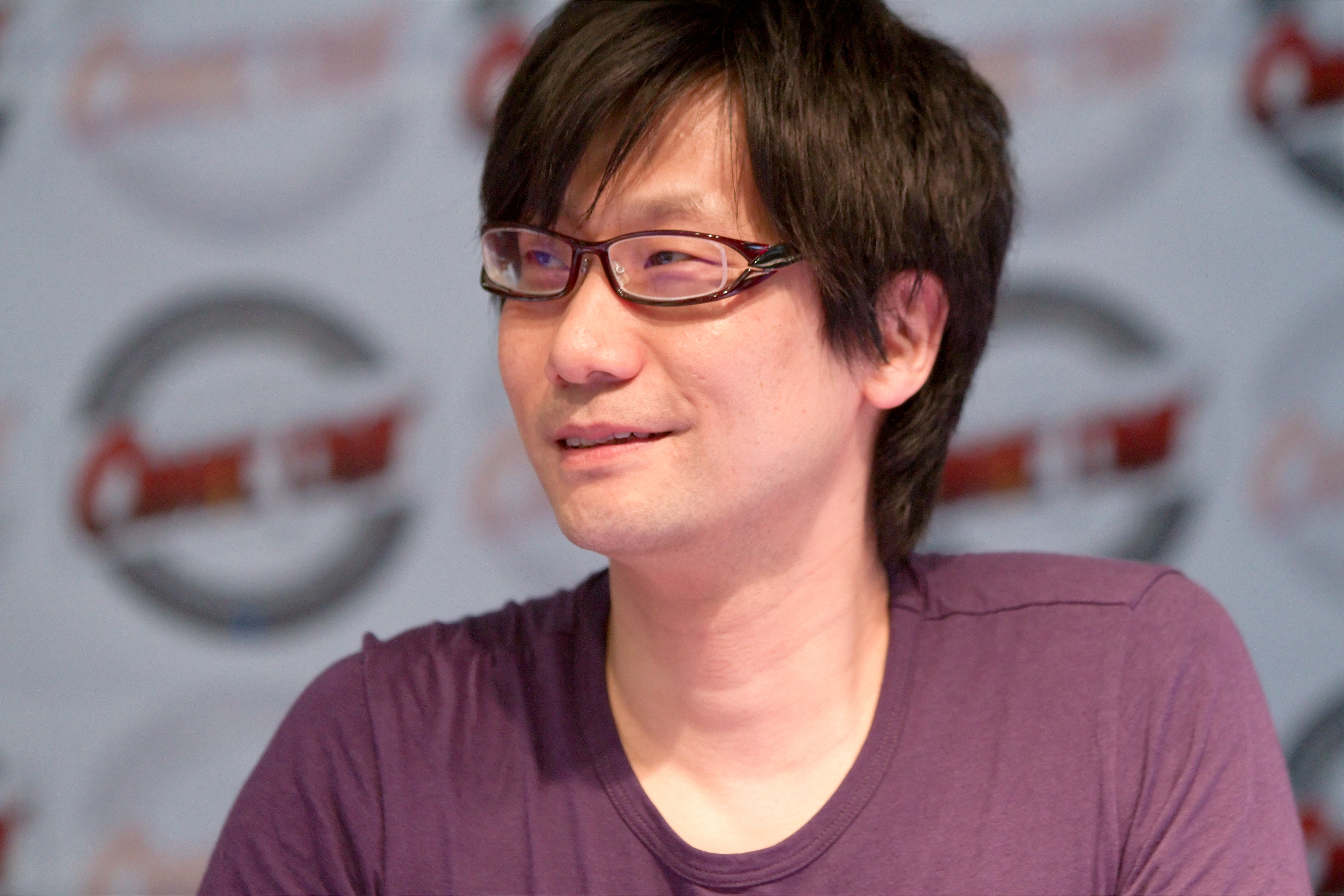
The first Metal Gear game was intended to be an action game that featured modern military combat. However, the MSX2's hardware limited the number of on-screen bullets and enemies, which Hideo Kojima felt impeded the combat aspect. Inspired by The Great Escape, he altered the gameplay to focus on a prisoner escaping. In a series of articles written for Official PlayStation 2 Magazine, Hideo Kojima identified several Hollywood films as the primary sources of inspiration for the storylines and gameplay of the Metal Gear series. He further noted that the James Bond series is what influenced him the most regarding the creation of Metal Gear Solid. The original plot has references to the nuclear war paranoia during the mid-1980s that resulted from the Cold War. Following games would revolve around nuclear weapon inspections in Iraq and Iran, but this idea was left out due to growing concern regarding the political situation in the Middle East. Other changes to the series were made in Metal Gear Solid 2 as a result of the September 11 attacks.
After Metal Gear 2: Solid Snake, Kojima planned to release the third Metal Gear game for the 3DO Interactive Multiplayer in 1994. Besides changing the game's platform to the PlayStation, the game was renamed, and its subsequent sequels were given the word "Solid" as the series started using 3D computer graphics. Since then, the games were designed to be more realistic to further entertain the players. Metal Gear Solid 3 was initially meant to be made for the PlayStation 3, but due to the long wait for the console, the game was developed for the PlayStation 2 instead. As previous game's settings were indoors areas due to difficulties with the consoles, since Metal Gear Solid 3, Kojima wished to drastically change it despite difficulties. Since Metal Gear Solid 2: Sons of Liberty had several plot points unresolved, it was originally meant to leave it to players to discuss them to come to their own conclusions. This has led to consistency issues in the English versions of Metal Gear Solid and Metal Gear Solid 2 as they mentioned plot elements that were further explored in Metal Gear Solid 4.
Reception and legacy
(PC) 83 (PS2) 87 (PC) 77 (PS3) 89 (Vita) 81 (X360) 82 (PS3) 80 (XONE) 76 (PS4) 75 (PS3) 66 (PS4) 93 (XONE) 95 (PS4) 60 (XONE) 62 (PS5) 85 (XSXS) 83
The Metal Gear franchise has sold over 62.9 million copies . By February 2007, the series had grossed more than (equivalent to between adjusted for inflation) from 20 million copies sold, in addition to having sold ancillary merchandise including 3 million strategy guides, 1.5 million action figures and 200,000 comic books. , the franchise has grossed about worldwide.
Metal Gear Solid 2: Sons of Liberty sold 7.03 million copies worldwide, and is followed in sales by Metal Gear Solid with over 7 million copies sold, and then Metal Gear Solid 4: Guns of the Patriots and Metal Gear Solid V: The Phantom Pain, each with over 6 million copies sold. According to Chart-Track, Metal Gear Solid 4: Guns of the Patriots was the second fastest-selling PlayStation 3 game in the United Kingdom after Grand Theft Auto IV. The Phantom Pain grossed on release day, higher than the combined opening day box office of the films Avengers: Age of Ultron and Jurassic World. The PlayStation Portable games were met with notably lower sales, but it has been analyzed that this was because of the low sales of the console when the games were released. Metal Gear Survive, the first Metal Gear game to be developed since series creator Hideo Kojima left Konami, sold only a fraction of the sales made by Metal Gear Solid V: The Phantom Pain.
The series as a whole (namely concerning the Kojima-directed titles) is often regarded as one of the most influential of all time and has received largely critical acclaim from critics and players. Most of the numbered installments are considered to be some of the greatest video games of all time. Metal Gear Solid 2: Sons of Liberty currently possesses 95.09% on GameRankings and 96/100 on Metacritic, making it the highest-scoring game of the series to date. In 2002, IGN's editors ranked Metal Gear Solid as the best PlayStation game ever. In Game Informer Magazines list of top 200 games of all time, Metal Gear Solid 2 ranked at No. 50 on the list. Metal Gear Solid 3: Snake Eater was also voted as the fifth greatest PlayStation game in a poll from PlayStation Official Magazine (UK). Metal Gear Solid and Metal Gear Solid 2 were featured in the Smithsonian American Art Museum's "The Art of Video Games" exhibition taking place from March 16 to September 30, 2012. Games have won multiple awards such as Metal Gear Solid, which won the "Excellence Award for Interactive Art" by the Japan Media Arts Festival, and Metal Gear Solid 2, which was given the Game of the Year award by Game Informer.
Metal Gear was the first mainstream stealth game, with the player starting the game unarmed, and sold over a million copies in the United States. Metal Gear 2: Solid Snake evolved the stealth gameplay of its predecessor and is considered one of the best 8-bit games of all time. Metal Gear Solid, which debuted at the 1996 Tokyo Game Show, was the first 3D stealth game, and is credited with popularizing the stealth game genre, as well as the hiding-behind-cover mechanic. The series pioneered the integration of cinematic techniques into video games, especially Metal Gear Solid which Eurogamer considers the "first modern video game".
Several boss fights have been praised for their variety and strategy required to beat them. The series is notorious for its fourth wall breaking scenes. The storyline has been commented to maintain "rich characterization" while touching on some controversial themes. Hideo Kojima's ambitious script in Metal Gear Solid 2 has been praised, some calling it the first example of a postmodern video game, while others have argued that it anticipated concepts such as post-truth politics, fake news, echo chambers and alternative facts. The series' storytelling in general has received praise for being among "the most fascinating science fiction stories in any medium". The series' cutscenes have often been praised for their graphics and the characters' stunt performances. Nevertheless, a common criticism has been the scenes' lengthiness, as well as some parts of the storyline. Raiden's unexpected introduction as the main protagonist in Metal Gear Solid 2, due to his lack of appearances in the games' trailers and how he replaces fan-favorite character Solid Snake, has been deemed as one of the most controversial parts of the entire series. The series' audio has been acclaimed to the point of receiving awards for its use of sound and music.
The Metal Gear series inspired numerous video game developers. Splinter Cell and Far Cry 2 designer Clint Hocking stated that every stealth-action game "owes its existence to the success of Metal Gear" and that, "Without Metal Gear, there would be no stealth games." Splinter Cell producer Mathieu Ferland said "Metal Gear Solid was a huge inspiration for Splinter Cell" and it "was a pioneer for both the genre and the quality of directing". Silicon Knights founder Denis Dyack said Metal Gear Solids "story, script, characters, voice acting, and cinemas" were "a landmark" and "guiding light to the future of videogames." Unreal and Gears of War creator Cliff Bleszinski cited the military themes and action gameplay of Metal Gear as a major influence on his work, and he named Gears of War in homage to Metal Gear. Tenchu creator Takuma Endo cited the early 2D Metal Gear games as an influence. Thief creator Tom Leonard said Metal Gear Solids success convinced them that experimental stealth gameplay could be marketable and "revitalized the team" in "the closing months of the project." Sumo Digital designer Emily Knox cited Metal Gear Solid as an early formative influence on their work. Crysis 2 animator Luke Kelly said the game's animations were inspired by Metal Gear Solid 4. Neil Druckmann cited the revelation of Raiden in Metal Gear Solid 2 as an influence on The Last of Us Part II (2020).
Beyond video games, filmmaker Jordan Peele cited the series as an inspiration, particularly Metal Gear Solid 2. Several critics have also drawn comparisons between the Metal Gear Solid series, especially Metal Gear Solid 2, and the Marvel Cinematic Universe film Captain America: The Winter Soldier (2014).
Notes
References
References
- (April 10, 2013). "The Darkest Cyberpunk Worlds In Japanese Video Games".
- Burke, Addie. (January 28, 2014). "How well did Metal Gear Solid predict the future of warfare?".
- "Metal Gear (MSX2)".
- (March 25, 2009). "GDC 2009: Hideo Kojima Keynote Address Part 1". [[GameSpot]].
- Chen, David. (December 14, 2005). "Retro/Active: Metal Gear: Kojima's Productions". [[1UP.com]].
- "Snake's Revenge".
- [https://www.unseen64.net/2008/04/11/metal-gear-solid-psx-tech-demo-proto/ Metal Gear Solid (Beta + Tech Demo – PSX)] {{Webarchive. link. (November 25, 2018, Unseen64, April 11, 2008)
- IGN staff. "Game Details for Metal Gear Solid".
- (September 3, 1998). "Metal Gear Solid Hits Japan".
- "Metal Gear Solid: The Twin Snakes – Related Games".
- "Metal Gear Solid 2: Sons of Liberty – Related Games".
- IGN staff. "Game Details for MGS3: Snake Eater".
- "Metal Gear Solid: Portable Ops – Related Games".
- IGN staff. "Game Details for MGS: Portable Ops".
- "Metal Gear Solid 4: Guns of the Patriots – Related Games".
- IGN staff. "Game Details for MGS4: Guns of the Patriots".
- IGN staff. "Game Details for Metal Gear Online".
- (June 1, 2009). "Metal Gear Solid: Peace Walker Listed For PSP".
- Hasset, Hian. (June 22, 2010). "Metal Gear Solid: Peace Walker Review".
- (December 13, 2011). "INTERVIEW: The Truth Behind RISING".
- IGN staff. "Game Details for MGS: Integral (PlayStation)".
- "Metal Gear Solid VR Missions – Related Games".
- "Metal Gear Solid 2: Substance (PlayStation 2) – Related Games".
- "Metal Gear Solid 3: Subsistence – Related Games".
- IGN staff. "Game Details for Metal Gear Acid".
- IGN staff. "Game Details for Metal Gear Acid 2".
- (May 26, 2009). "KOJIMA PRODUCTION "NEXT"". Konami.
- "MGS4". Famitsu PSP + PS3.
- (May 26, 2009). "First Big Boss, and then Raiden (With Censored Kojima Interview)".
- (May 26, 2009). "Raiden Appears in New Metal Gear; Hideo Kojima directing and designing new title".
- (May 27, 2009). "Metal Gear Next Update; The censors win this round".
- (June 2009). "E3: New Metal Gear confirmed for 360 News – Xbox 360 – Page 1".
- (June 15, 2009). "Kojima Pro E3 2010 Special Site". Konami.
- Wesley Yin-Poole. (July 6, 2010). "MGS 3DS "just testing the grounds"".
- (January 27, 2011). "MGS4 on PSP2". Kotau.
- (June 2, 2011). "Metal Gear, Zone of the Enders Return With HD Collections".
- (August 15, 2011). "MGS HD Collection will include the original game in Japan". Gadgets Gizmos.
- (August 15, 2011). "PS3 secures exclusive Metal Gear Solid HD: Ultimate box". Computer And Video Games.
- (November 17, 2011). "PlayStation UK Mag: Kojima to Discuss Metal Gear Solid 5". Anime News Network.
- Yin-Poole, Wesley. (November 21, 2011). "Kojima: "We'll probably have to make Metal Gear Solid 5"".
- Yin, Wesley. (December 13, 2011). "Kojima promises "authentic stealth Metal Gear Solid" sequel is coming • News •". Eurogamer.net.
- Jackson, Leah. (June 20, 2012). "Metal Gear Solid 5 Confirmed – Solid Snake Is Back with the Fox Engine".
- Gantayat, Anoop. (August 30, 2012). "First Metal Gear Solid Ground Zeroes Artwork". Andriasang.
- Gantayat, Anoop. (August 30, 2012). "Social Metal Gear Announced for GREE". Andriasang.
- Mallory, Jordan. (December 8, 2012). "The Phantom Pain speculation round-up: Metal Gear?!". [[Joystiq]].
- Goldfarb, Andrew. (April 2013). "David Hayter Comments on Metal Gear Solid V Absence".
- . (June 6, 2013). ["Konami's pre-E3 stream: Kiefer Sutherland Playing Snake in Metal Gear Solid 5"](http://www.vg247.com/2013/06/06/metal-gear-solid-5-castlevania-los-2-pes-2014-to-feature-in-konamis-pre-e3-stream-tonight/). *VG24/7*.
- Skrebels, Joe. (August 17, 2016). "Gamescom 2016: Konami Announces Metal Gear Survive". [[IGN]].
- Peters, Jay. (24 May 2023). "It's Metal Gear Solid Delta, not Metal Gear Solid Triangle".
- (May 25, 2023). "Metal Gear Solid 3 Snake Eater Remake, Metal Gear Solid Collection Revealed".
- Croft, Liam. (2023-05-24). "Metal Gear Solid 1, 2, and 3 Launch on PS5 in the Master Collection".
- Nightingale, Ed. (2023-05-26). "Metal Gear Solid: Master Collection Vol. 1 also includes Metal Gear 1 and 2". [[Eurogamer]].
- Hosie, Ewen. (2015). "The Technological Alt-History of 'Metal Gear Solid'". GameSpot.
- Kasavin, Greg. (2004). "Metal Gear Solid 3: Snake Eater Review". GameSpot.
- IGN site staff. "Metal Gear Solid: Portable Ops First Look Game Profile". IGN.
- "Myth: Hideo Kojima said that Portable Ops and Rising are canonical :: THE SNAKE SOUP".
- (2001). "Metal Gear Solid 2: Sons of Liberty". Konami.
- (May 16, 2008). "GameSpy's Top MGS Moments: Metal Gear Solid 2 (Day Two)". [[GameSpy]].
- Kojima, Hideo. (September 9, 2012). "Gene→Meme→Scene→Sense→Peace→?".
- Kojima, Hideo. (January 24, 2013). "N/A". TwitLonger.
- Kojima, Hideo. "Answer to the question". Twitter.
- "GameSetWatch Analysis: What Metal Gear Solid 3 Teaches Us About Hyperreality".
- (2005). "HIDEOBLOG 2005.09.26". Hideoblog.
- Gwaltney, Javy. (October 12, 2017). "The Virtual Life – Trauma And The Futility Of Revenge In Metal Gear Solid V".
- (2004). "Metal Gear Solid 3: Snake Eater, The Official Guide". Konami.
- Adams, Aubrie. (2017). "100 greatest video game characters". Rowman & Littlefield Publishers Lanham.
- Moira, Hicks. (August 3, 2019). "How Metal Gear Eschewed Realism to Convey the Horror of Imperial Violence". Gematsu.
- Keogh, Brendan. (September 18, 2015). "On Metal Gear Solid V: The Phantom Pain". Brkeogh.com.
- Davenport, James. (August 27, 2015). "Become a Metal Gear expert before The Phantom Pain comes out". [[PC Gamer]].
- Valle, Nathaniel. (April 29, 2014). "Marquez, Vamp, and Me – Metal Gear Solid and the Supernatural". Christ and Pop Culture.
- GamePro site staff. (2003). "Feature: Metal Gear Solid 3: Snake Eater Interview".
- (2002). "The Document of Metal Gear Solid 2". Konami.
- "METAL GEAR SOLID 4 INTEGRATED SITE".
- Matthew Weise. (2003). "How Videogames Express Ideas". [[Massachusetts Institute of Technology]].
- Lewis, Ed. (December 2004). "The Snake Eater Interview". IGN.
- Scheeden, Jeese. (June 11, 2008). "Top 10 Metal Gear Villains".
- (2006). "Metal Gear Saga Vol. 1". Konami Digital Entertainment, Inc..
- Kent, Steven. "Hideo Kojima: Game Guru, Movie Maniac". Gamers Today.
- Williamson, Colin. (December 12, 2000). "Yoji Shinkawa interview".
- "TGS '07: Kojima speaks".
- "The Final Hours of Metal Gear Solid 2".
- Szczepaniak, John. "Before They Were Famouos". [[Imagine Publishing]].
- (March 2003). "Hideo Kojima at the Movies: 007". [[Future Publishing]].
- (2002). "The Document of Metal Gear Solid 2". Konami.
- "KOJIMA PRODUCTIONS – HIDECHAN RADIO – Episode 148". Konami.
- Hogdson, David. "Metal Gear Solid: Official Mission Handbook".
- IGN staff. (April 28, 1998). "More News From Metal Gear Solid Creator".
- (2008). "Metal Gear Solid 4: Sons of Liberty Limited Edition Blu-ray DVD". Konami.
- Hivner, Brendon. "Metal Gear Solid 3: Snake Eater (First Look) Preview". GamingWorldX.
- Kris Pigna. (April 15, 2010). "Kojima: 'I'll Have to Leave the Industry' if Next Game Goes Wrong".
- "Kojima wanted to end Metal Gear but now wants to meet fan demand".
- (November 9, 2008). "Metal Gear Solid 4 Afterthoughts with Ryan Payton".
- Frost, Alexander. (1990). "Metal Gear". Scholastic.
- "Metal Gear".
- Benson, Raymond. (2008). "Metal Gear Solid". Del Rey.
- Benson, Raymond. (2009). "Metal Gear Solid 2: Sons of Liberty". Del Rey.
- Bruce Grossman. (June 16, 2008). "''Metal Gear Solid''". Bookgasm.com.
- Gaming. (September 24, 2009). "Raymond Benson's ''Sons of Liberty'', a novelization of ''Metal Gear Solid'' | Video Games". Mishmash Magazine.
- Project Itoh. (June 2008). "Metal Gear Solid – Guns of the Patriots". 角川書店.
- "Metal Gear Solid: Guns of the Patriot". Barnesandnoble.com.
- George, Richard. (July 6, 2007). "Metal Gear Solid: Sons of Liberty #10 Preview".
- (June 15, 2010). "Metal Gear Solid Omnibus". Amazon.com.
- Haynes, Jeff. (June 13, 2006). "Metal Gear Solid: Digital Graphic Novel".
- Miller, Greg. (July 24, 2007). "Metal Gear Solid 2: Bande Dessinee Announced".
- "DRAMA CDメタルギア ソリッド Vol.1". Konami.
- "DRAMA CD メタルギア ソリッド Vol.2". Konami.
- "IGN: Metal Gear Saga Vol. 1 DVD".
- McElroy, Griffin. (March 29, 2008). "MGS4 pre-order DVDs shipping with MGO beta keys, beta to begin April 21". Joystiq.
- "SPAWN.COM >> TOYS >> GAMES AND ANIMATION >> METAL GEAR SOLID". TMP International, Inc.
- "SPAWN.COM >> TOYS >> GAMES AND ANIMATION >> METAL GEAR SOLID 2: SONS OF LIBERTY". TMP International, Inc.
- "MGS REX".
- "ThreeA's Metal Gear Rex on sale tonight".
- Plunkett, Luke. "The Most Amazing Portal, Halo & Metal Gear Toys You'll Ever See".
- "『MGS PW』フィギュア発売決定!『FRONT MISSION EVOLVED』とコラボも/ゲーム情報ポータル:ジーパラドットコム". Gpara.com.
- (April 7, 2010). "これまでにない作品が誕生! 『MGS PW』完成披露会で小島秀夫監督が熱弁 – 電撃オンライン". News.dengeki.com.
- "Kotobukiya Unveils Their Own Metal Gear Masterpiece With The Rex Model Kit!".
- (May 15, 2000). "E3: Hideo Kojima Interview".
- Harry Gregson-Williams' interview in The Making of Documentary in the Bonus Making of DVD.
- (2006). "TGS 06:Kojima on Metal Gear". [[GameSpot]].
- Aoife Ní Fhearraigh. "My Albums". Aoife Ní Fhearraigh.
- Tom Bramwell. (May 2, 2006). "Kojima confirms MGS movie".
- Tor Thorsen. (May 10, 2006). "E3 06: Live-action Metal Gear Solid movie confirmed".
- Stax. (May 14, 2007). "''Metal Gear Solid'' Movie Exclusive".
- (March 13, 2008). "EXCL: Kurt Wimmer Adapting Metal Gear Solid?". ComingSoon.net.
- "Mike De Luca Exclusive Interview".
- Brian Ashcraft. (May 13, 2008). "''Metal Gear'' Movie Update". Kotaku.com.
- (February 3, 2006). "Kojima on Uwe Boll "It's impossible"".
- (April 30, 2006). "Metal Gear Solid: The Movie". JeuxFrance.com.
- (September 27, 2012). "Who Kojima Wants to Play Snake in MGS Movie".
- (June 24, 2009). "MTV Multiplayer: Christian Bale Likes 'Metal Gear,' Doesn't Like Talking". Multiplayerblog.mtv.com.
- (January 11, 2010). "'Metal Gear Solid' Film Unlikely To Happen in the Near Future". MTV.
- "Metal Gear Movie Dead".
- Snyder, Daniel D.. (March 21, 2012). "How Hideo Kojima Became a Legendary Video-Game Designer". theatlantic.com.
- Carmichael, Stephanie. "Hideo Kojima spoke at the Smithsonian's 'The Art of Video Games' exhibition". gameszone.com.
- "'Metal Gear Solid' Movie Announced".
- Fleming, Mike Jr.. (June 3, 2014). "Sony In Talks With Jordan Vogt-Roberts To Helm 'Metal Gear Solid'". Deadline.
- (30 March 2015). "Sony Taps Jay Basu To Write 'Metal Gear Solid'".
- Chitwood, Adam. (February 20, 2017). "'Metal Gear Solid' Movie Director Jordan Vogt-Roberts Offers Extensive Update, Talks Rating". Collider.com.
- (August 6, 2018). "Jordan Vogt-Roberts Wants R-Rated 'Metal Gear Solid' Movie".
- (November 8, 2017). "''Jurassic World'' Scribe To Write ''Metal Gear Solid'' Film (Exclusive)".
- (July 16, 2018). "Metal Gear Solid Movie Script Is Finished, More Art Revealed".
- "Jordan Vogt-Roberts: New Draft Script Turned In for Metal Gear Solid Film".
- Kroll, Justin. (2020-12-04). "Oscar Isaac To Star As Solid Snake In Sony's 'Metal Gear Solid' Movie".
- (March 4, 2019). "Oscar Isaac Wants to be Solid Snake for Vogt-Roberts' 'Metal Gear Solid' Film".
- (February 9, 2024). "Oscar Isaac is reportedly no longer hiding under a cardboard box as Snake for the Jordan Vogt-Roberts Metal Gear Solid movie".
- (23 March 2022). "Oscar Isaac Gives an Update on Metal Gear Solid Movie: 'We're Searching Like Solid Snake'".
- (1 July 2024). "Metal Gear Solid Movie Script Still Being Worked On, Producer Says".
- "''Metal Gear Solid'' Reviews".
- "''Metal Gear Solid'' Reviews".
- "''Metal Gear Solid 2: Sons of Liberty'' Reviews".
- "''Metal Gear Solid 2: Substance'' Reviews".
- "''Metal Gear Solid 2: Substance'' Reviews".
- "''Metal Gear Solid 2: Substance'' Reviews".
- "''Metal Gear Solid: The Twin Snakes'' Reviews".
- "''Metal Gear Solid 3: Snake Eater'' Reviews".
- "''Metal Gear Solid 3: Subsistance'' Reviews".
- "''Metal Gear Acid'' Reviews".
- "''Metal Gear Acid 2'' Reviews".
- "''Metal Gear Solid: Digital Graphic Novel'' Reviews".
- "''Metal Gear Solid: Portable Ops'' Reviews".
- "''Metal Gear Solid: Portable Ops Plus'' Reviews".
- "''Metal Gear Solid 4: Guns of the Patriots'' Reviews".
- "''Metal Gear Solid: Peace Walker'' Reviews".
- "''Metal Gear Solid HD Collection'' Reviews".
- "''Metal Gear Solid HD Collection'' Reviews".
- "''Metal Gear Solid HD Collection'' Reviews".
- "''Metal Gear Solid: Snake Eater 3D'' Reviews".
- "''Metal Gear Rising: Revengeance'' Reviews".
- "''Metal Gear Rising: Revengeance'' Reviews".
- "''Metal Gear Rising: Revengeance'' Reviews".
- "Metal Gear Solid: The Legacy Collection".
- "''Metal Gear Solid V: Ground Zeroes'' Reviews".
- "''Metal Gear Solid V: Ground Zeroes'' Reviews".
- "''Metal Gear Solid V: Ground Zeroes'' Reviews".
- "''Metal Gear Solid V: Ground Zeroes'' Reviews".
- "''Metal Gear Solid V: The Phantom Pain'' Reviews".
- "''Metal Gear Solid V: The Phantom Pain'' Reviews".
- "''Metal Gear Solid V: The Phantom Pain'' Reviews".
- "''Metal Gear Survive'' Reviews".
- "''Metal Gear Survive'' Reviews".
- "''Metal Gear Survive'' Reviews".
- "''Metal Gear Solid Delta: Snake Eater'' For PC Reviews".
- "''Metal Gear Solid Delta: Snake Eater'' for PlayStation 5 Reviews".
- "''Metal Gear Solid Delta: Snake Eater'' for Xbox Series X Reviews".
- (June 2025). "KONAMI HOLDINGS CORPORATION".
- (9 February 2007). "'Metal Gear Solid' film being forged at Columbia". [[The Hollywood Reporter]].
- (April 7, 2019). "Fate/GO Has Earned in Four Years What Metal Gear Solid Has in 32". [[Crunchyroll]].
- (December 31, 2004). "Million-Seller Genealogy". [[Konami]].
- Big Gaz. "Metal Gear Solid 3 Exclusive For Sony". GamePlanet.
- (July 22, 2005). "Form 20-F (For the fiscal year ended March 31, 2005)". [[Konami Corporation]].
- Big Gaz. (May 15, 2003). "Metal Gear Solid 3 Exclusive For Sony". [[Gameplanet]].
- (February 4, 2010). "FY 2010 3rd quarter Financial Results". [[Konami]].
- Alexander, Leigh. (May 21, 2014). "Republique, and the fight for narrative games in a modern market". [[UBM TechWeb]].
- (January 29, 2016). "METAL GEAR SOLID 5: THE PHANTOM PAIN SHIPPED OVER 6 MILLION COPIES".
- Minkley, Johnny. (June 17, 2008). "Chart-Track: MGS4 had "minimal" impact on UK PS3 sales". [[GamesIndustry.biz]].
- (2015-10-14). "Metal Gear Solid V's opening day beats Jurassic World, Avengers combined".
- (July 17, 2010). "Peace Walker Sales Difficult To Judge".
- (February 26, 2018). "Metal Gear Survive UK week 1 sales down considerably compared to The Phantom Pain, Metal Gear Rising".
- "''Metal Gear Solid 2: Sons of Liberty'' Reviews". [[GameRankings]].
- IGN staff. (January 22, 2002). "Top 25 Games of All Time: Complete List".
- (December 2009). "Top 200 Games".
- PlayStation Official Magazine issue 50, [[Future Publishing]], October 2010
- "The Art of Video Games".
- "1998 Japan Media Arts Festival Digital Art (Interactive Art) Excellence Prize Metal Gear Solid". Japan Media Arts Plaza.
- "Games of 2001." ''[[Game Informer]]''. January 2002: p. 52
- Shane Patterson. (February 3, 2009). "The sneaky history of stealth games: Hide and seek through the ages". [[GamesRadar]].
- (March 14, 2006). "Metal Gear Saga, Vol. 1". [[Konami]].
- (August 12, 2015). "Metal Gear Solid: The first modern video game".
- (2015). "Gamification: Concepts, Methodologies, Tools, and Applications: Concepts, Methodologies, Tools, and Applications". IGI Global.
- "Sneak Attack". 1up.
- link. (November 27, 2018 , GamesFirst)
- (2012). "Encyclopedia of Video Games: The Culture, Technology, and Art of Gaming". [[ABC-CLIO]].
- Dodson, Joe. (July 28, 2007). "Metal Gear 20 Years of Boss Battles".
- Jones, Nick. "Metal Gear Solid – My Top Five Moments". Play.
- Sharkey, Scott. (June 3, 2011). "Metal Gear's Top 5 Awkward Moments".
- Paul Soth. "GOTW: Metal Gear 2: Solid Snake". [[GameSpy]].
- Mark Ryan Sallee. (June 29, 2006). "Kojima's Legacy".
- James Howell & Ryan Payton. (March 20, 2008). "The Kojima Productions Report Session 084". [[Kojima Productions]].
- (July 31, 2007). "Games as Art: The videogames that prove Rogert Ebert wrong".
- "Flashback: How 'Metal Gear Solid 2' Foretold Our Post-Truth Future". [[Rolling Stone]].
- "Super News Live – Latest News".
- (January 20, 2017). "The Scary Political Relevance of 'Metal Gear Solid 2'". VICE.
- (March 30, 2018). "How Metal Gear Solid manipulated its players, warning us of an age of Fake News, Cambridge Analytica and data surveillance". [[GamesRadar]].
- Whitbrook, James. (August 31, 2015). "Metal Gear Solid Is One Of The Most Fascinating Science Fiction Stories in Any Medium".
- Shaw, Pattrick. (June 11, 2009). "Feature: Metal Gear Solid Rising: 6 Things to Expect from the Game".
- "The Top Ten Video Game Openings," ''Game Informer'' 187 (November 2008): 38.
- Reparaz, Mikel. (November 10, 2009). "5 reasons to hate Metal Gear Solid". GamesRadar.
- Jensen, K. Thor. (December 3, 2010). "The 11 Weirdest Game Endings". UGO.com.
- Meli, Marissa. (June 3, 2011). "Trolled: The Biggest Disappointments in Video Games". UGO.com.
- Newman, James. (2008). "Playing with Videogames". [[Taylor & Francis]].
- "IGN.com's Overall Best of 2004 Awards – Best Use of Sound".
- "Special Achievement Awards".
- [https://gamecritics.com/thom-moyles/3651/ Interview with Clint Hocking] {{Webarchive. link. (November 26, 2018 , GameCritics, May 24, 2005)
- (September 21, 2009). "EGM's Final Milestone: The Legendary 200th Issue (Part 2)".
- "DualShock Nexus: Hideo Kojima's Huge Influence on Cliffy B".
- (March 4, 2013). "Cliffy B toast Hideo Kojima Hard Rock Cafe Seattle MGS25th Anniversary party". [[San Diego Comic-Con]].
- Mielke, James. (2008-12-29). "Exclusive Tenchu: Shadow Assassins Interview".
- Leonard, Tom. (July 9, 1999). "Postmortem: ''Thief: The Dark Project''". [[Gamasutra]].
- (September 25, 2018). "Metal Gear Solid was ahead of its time".
- "Metal Gear Solid 4 is an Inspiration to Crysis 2 Animator - Meodia".
- "MyCrysis | the Official Community Portal | Dev Corner Articles | Inside Crytek - Luke Kelly - Community Answers!".
- (June 25, 2020). "The Last of Us 2 director explains its strict review embargo and sneaky trailers". [[GameRevolution]].
- (8 December 2023). "Hideo Kojima announces OD with Jordan Peele: 'It is a game... but it's at the same time a movie, but at the same time a new form of media'". [[PC Gamer]].
- Parkinson, Matthew. (March 19, 2018). "Top 10 Movies for Fans of Metal Gear Solid". [[Complex Media]].
- Franich, Darren. (April 6, 2014). "The real, subversive politics of 'Captain America: The Winter Soldier'".
- Crawford, Max. (March 21, 2014). "Captain America: The Winter Soldier (2014) Movie Review".
This article was imported from Wikipedia and is available under the Creative Commons Attribution-ShareAlike 4.0 License. Content has been adapted to SurfDoc format. Original contributors can be found on the article history page.
Ask Mako anything about Metal Gear — get instant answers, deeper analysis, and related topics.
Research with MakoFree with your Surf account
Create a free account to save articles, ask Mako questions, and organize your research.
Sign up freeThis content may have been generated or modified by AI. CloudSurf Software LLC is not responsible for the accuracy, completeness, or reliability of AI-generated content. Always verify important information from primary sources.
Report