From Surf Wiki (app.surf) — the open knowledge base
Meshuggah
Swedish extreme metal band

Swedish extreme metal band
| Field | Value | |
|---|---|---|
| name | Meshuggah | |
| image | Meshuggah - Rock am Ring 2023-44531.jpg | |
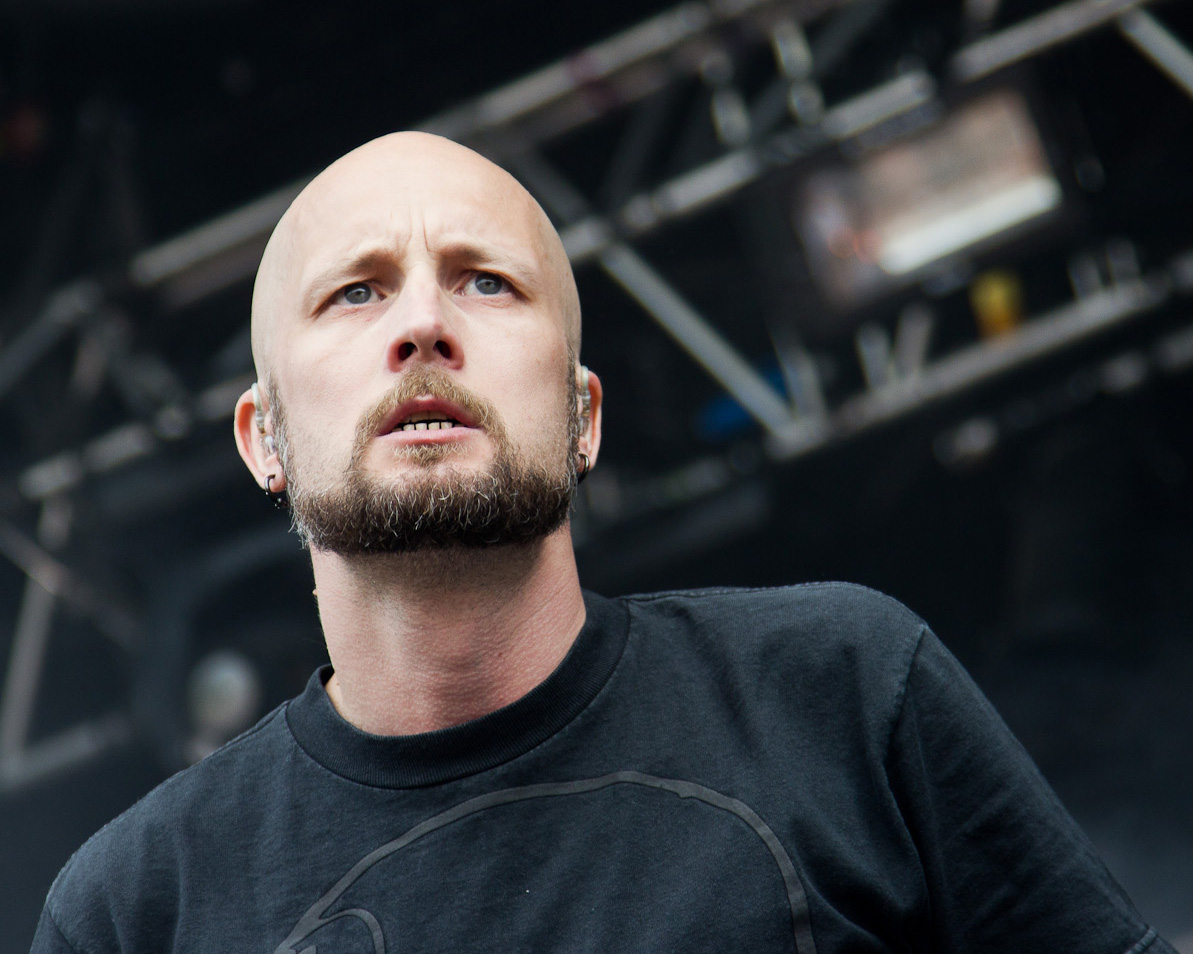
| caption | Meshuggah performing at Rock am Ring 2023 | |
| landscape | yes | |
| origin | Umeå, Sweden | |
| genre | {{flatlist | |
| years_active | 1987–present | |
| label | {{flatlist | |
| website | ||
| module | {{Infobox | |
| child | yes | |
| headerstyle | background:#b0c4de | |
| data2 | [[File:Meshuggah logo.svg | 240px]] |
- Progressive metal
- avant-garde metal
- technical death metal
- groove metal
- djent
- Nuclear Blast
- Fractured Transmitter
- Atomic Fire
- Reigning Phoenix
- Jens Kidman
- Fredrik Thordendal
- Tomas Haake
- Mårten Hagström
- Dick Lövgren
- Niklas Lundgren
- Peter Nordin
- Gustaf Hielm
Meshuggah () is a Swedish extreme metal band formed in Umeå in 1987. Since 2004, the band's lineup consists of founding members Jens Kidman (lead vocals) and Fredrik Thordendal (lead guitar), alongside rhythm guitarist Mårten Hagström, drummer Tomas Haake and bassist Dick Lövgren. Since its formation, the band has released nine studio albums, six EPs and eight music videos. Their latest studio album, Immutable, was released in April 2022 via Atomic Fire Records.
Meshuggah has become known for their innovative musical style and their complex, polymetered song structures and polyrhythms. They rose to fame as a significant act in extreme underground music, became an influence for modern metal bands, and gained a cult following. The band was labelled as one of the ten most important hard rock and heavy metal bands by Rolling Stone and as the most important band in metal by Alternative Press. In the late 2000s, the band was an inspiration for the djent subgenre.
In 2006 and 2009, Meshuggah was nominated for two Swedish Grammis Awards for their albums Catch Thirtythree and obZen, respectively. In 2018, the band was nominated for a Grammy Award for their song "Clockworks" under the "Best Metal Performance" category. The band has performed in various international festivals, including Ozzfest and Download, and embarked on the obZen world tour from 2008 to 2010, and also the "Ophidian Trek".
History
Formation and ''Contradictions Collapse'' (1987–1994)
In 1985, guitarist Fredrik Thordendal formed a band in Umeå, a university town in northern Sweden with a population of 105,000. The band, originally named Metallien, recorded a number of demo tapes, after which it disbanded. Thordendal, however, continued playing under a different name with new band members.
Meshuggah was formed in 1987 by lead vocalist and rhythm guitarist Jens Kidman, and took the name Meshuggah from the Yiddish word for "crazy" (ultimately derived from the Hebrew word ). Kidman found the word in an American street slang dictionary. The band recorded several demos before Kidman left, which prompted the remaining members to disband. Kidman then formed a new band, Calipash, with guitarist Thordendal, bassist Peter Nordin and drummer Niklas Lundgren. Kidman, who also played guitar, and Thordendal decided to restore the name Meshuggah for the new band.
In 1989, Meshuggah released the self-titled, three-song EP Meshuggah, which is commonly known as Psykisk Testbild{{cite web |access-date=27 July 2008 |url-status=dead |archive-url=https://web.archive.org/web/20081218195401/http://www.rockdetector.com/artist/sweden/umea/meshuggah |archive-date=18 December 2008
After replacing drummer Niklas Lundgren with Tomas Haake in 1990, Meshuggah signed a contract with German heavy metal record label Nuclear Blast and recorded its debut full-length album, Contradictions Collapse. {{cite web |access-date=27 July 2008 |url-status=dead |archive-url=https://web.archive.org/web/20081218195401/http://www.rockdetector.com/artist/sweden/umea/meshuggah |archive-date=18 December 2008 |access-date=27 July 2008 |url-status=dead |archive-url=https://web.archive.org/web/20081218195401/http://www.rockdetector.com/artist/sweden/umea/meshuggah |archive-date=18 December 2008
During this period, Thordendal, who was working as a carpenter, severed the tip of his left middle finger, while Haake injured his hand in a router accident. As a result, the band was unable to perform for several months. Thordendal's fingertip was later reattached, and he went on to make a full recovery. The Selfcaged EP was recorded in April and May 1994, but its release was delayed to later in 1995 due to the accidents.
''Destroy Erase Improve'' (1995–1997)

In January 1995, Meshuggah undertook a short European tour organized by its record label Nuclear Blast. Afterwards, the band returned to the studio in February of that year to record the album Destroy Erase Improve at Soundfront Studios in Uppsala, with Daniel Bergstrand as a producer. Shortly thereafter, the band went on a European tour supporting Machine Head for two months. During the tour, Nordin became ill and experienced balance disorder with his inner ear. Due to the resulting chronic dizziness and vertigo, Nordin was forced to leave the tour and travel to Sweden. Machine Head's bassist Adam Duce offered to cover his absence; however, Meshuggah decided to continue as a four-piece. Sometimes Thordendal played bass, while other times the band performed with two guitars. In this lineup, Hagström would use a pitch shifter to play his guitar at an octave lower than usual.
Destroy Erase Improve was released in May 1995, with positive response from critics for the "heady tempos and abstract approach". Kidman described the album cover: "The title fits the pictures we cut out and stole from reference books in the library."
In mid-1995, Meshuggah had a short tour with Swedish band Clawfinger in Scandinavia and Germany. Nordin had to leave the band because of his sickness and was replaced by bassist Gustaf Hielm during the tour. In late 1995, Meshuggah went on a month-long tour with Hypocrisy.
During 1996 and 1997, Thordendal worked on his solo album Sol Niger Within, which was released in March 1997 in Scandinavia and in April in Japan. He also hosted Mats/Morgan Band's debut. In 1997, Meshuggah recorded an unreleased demo, toured occasionally, and played a few concerts in its hometown. In May, Meshuggah moved to Stockholm to be closer to its management and the record industry in general.
The EP The True Human Design was recorded and released in late 1997. It contained one new song entitled "Sane", and one live and two alternate versions of Destroy Erase Improves opening track "Future Breed Machine". Thordendal's solo album Sol Niger Within was simultaneously released in the United States, and Meshuggah started to plan its next album at the end of the year.
''Chaosphere'' and ''Nothing'' (1998–2002)

Hielm officially joined the band in January 1998 after more than two years as a session member. Nuclear Blast re-released Contradictions Collapse with the addition of songs from the None EP. In May 1998, the title of the next album, Chaosphere, was reported and recording was done throughout May and June. Immediately after recording the album, Meshuggah went on a short US tour, and the album was released later in November 1998. Chaosphere's sound is an almost complete departure from the thrash metal style of the band's previous releases. Shortly after the release, Meshuggah toured Scandinavia with Entombed.
In early 1999, Meshuggah joined Slayer on their U.S. tour. After the new album and the live performances, Meshuggah was beginning to be recognized by mainstream music, guitar, drum and metal magazines. In mid-1999, Meshuggah performed in several Swedish concerts. The band started to write some new material but reported in mid-2000 that "songwriting isn't that dramatic, but we're getting there slowly". While fans were waiting for the next album, a collection of demos (from the Psykisk Testbild EP), remixes and unreleased songs from the Chaosphere sessions were released as the Rare Trax album. Hielm left the band in July 2001 for unclear reasons. Meshuggah joined Tool on a lengthy tour, playing for more than 100,000 people total.
In March 2002, Meshuggah recorded three-track demos with programmed drums in their home studio, which were based on Haake's sample Drumkit from Hell. The upcoming album was recorded in five to six weeks in May and was produced by the band at Dug-Out Studios in Uppsala and at its home studio in Stockholm. The last-minute decision to join 2002's Ozzfest tour forced the band to mix the album in two days and master it in one. Meshuggah immediately went on another US tour after finishing the recording.
The album Nothing was released in August 2002, selling 6,525 copies during its first week in the US and reaching No. 165 on the Billboard 200. With this album, Meshuggah became the first band in the history of Nuclear Blast Records to crack the Billboard 200 and also became the first band signed to Nuclear Blast to be reviewed in Rolling Stone magazine. Meshuggah's previous two releases, 1998's Chaosphere and 1995's Destroy Erase Improve, had sold 38,773 and 30,712 copies to that date, respectively. The CD booklet of Nothing has no liner notes, lyrics, or credits, only a hint of one word: ingenting, which is Swedish for nothing. All of this information is available on the CD-ROM.{{cite magazine|url = http://www.popmatters.com/music/reviews/m/meshuggah-nothing.shtml
''I'' and ''Catch Thirtythree'' (2003–2006)
In 2003, Hagström hinted at the direction of the band's next album by saying, "There's only one thing I really feel that is important. We've never measured our success in terms of sales, because we're quite an extreme band. It's more that people understand where we're coming from. I get more out of a fan coming up and saying that we've totally changed their way of looking on metal music, than having like 200 kids buy it. I mean, it would be nice for the money, but that's not why we're in it. So what I'd like to see is that we keep progressing. Keeping the core of what Meshuggah has always been, but exploring the bar, so to speak. Destroy Erase Improve was like exploring the dynamics of the band, Chaosphere was exploring the aggressiveness, the all-out side, and Nothing is more of a sinister, dark, pretty slow album, actually. So honestly, now I don't know where we're going. It might be a mix of all of them."

In February 2004, bassist Dick Lövgren joined Meshuggah. The band then recorded and released the I EP, which contains a single, 21-minute track, released on Fractured Transmitter Records.{{cite magazine|url = http://www.popmatters.com/music/reviews/m/meshuggah-i.shtml|magazine = PopMatters
In December 2005, 10 years after signing its first record deal with the publishing company Warner/Chappell Music Scandinavia, Meshuggah extended its cooperation with the company. In November 2005, Haake said in an interview that the band was not content with the productions of Chaosphere and Nothing, because, being on tour, they had little time to devote to them.{{cite web | access-date = 16 November 2008
A remixed and remastered version of Nothing with rerecorded guitars was released in a custom-shaped slipcase featuring a three-dimensional hologram card on 31 October 2006, via Nuclear Blast Records. The release also includes a bonus DVD featuring the band's appearance at the Download 2005 festival and the official music videos of "Rational Gaze", "Shed" and "New Millennium Cyanide Christ".{{cite news |access-date=8 June 2008 |url-status=dead |archive-url=https://web.archive.org/web/20081226000512/http://www.roadrunnerrecords.com/blabbermouth.net/news.aspx?mode=Article&newsitemID=60691 |archive-date=26 December 2008
''obZen'' and ''Koloss'' (2007–2013)

Meshuggah returned to the studio in March 2007 to record obZen, with recording concluding in October 2007, and the album being released in March 2008. The band spent almost a year on the album, its longest recording session yet. A significant portion of the year was spent learning to perform the songs they wrote; the recording itself took six months. obZen reached No. 59 on the Billboard 200 chart, selling 11,400 U.S. copies in its first week of release and 50,000 copies after six months.{{cite news |archive-url=https://web.archive.org/web/20080918063844/http://www.roadrunnerrecords.com/blabbermouth.net/news.aspx?mode=Article&newsitemID=104986 |url-status=dead |archive-date=18 September 2008 |access-date=24 September 2008 | access-date = 11 November 2008 | access-date = 30 January 2009
In May 2008, Meshuggah published a music video for the song "Bleed", which was produced by Ian McFarland and was written, directed and edited by Mike Pecci and Ian McFarland. Killswitch Productions said: "It's extremely cool to work with a band who is willing to allow the music and imagery to speak for itself and who does not insist on themselves being the prominent focus of the video."{{cite news |access-date=7 June 2008 |url-status=dead |archive-url=https://web.archive.org/web/20080519105929/http://www.roadrunnerrecords.com/blabbermouth.net/news.aspx?mode=Article&newsitemID=96996 |archive-date=19 May 2008 }}
In January 2009, obZen was nominated for the Swedish Grammis award in the "Best Hard Rock" category. In February 2009, Haake announced that the band was planning a concert DVD and a studio album.{{cite news |access-date=8 February 2009 |url-status=dead |archive-url=https://web.archive.org/web/20090206103922/http://www.roadrunnerrecords.com/Blabbermouth.net/news.aspx?mode=Article&newsitemID=113746 |archive-date=6 February 2009 |archive-url=https://archive.today/20130201122554/http://www.roadrunnerrecords.com/blabbermouth.net/news.aspx?mode=Article&newsitemID=117325 |url-status=dead |archive-date=1 February 2013 |access-date=4 April 2009
The concert DVD entitled Alive was released on 5 February 2010 in Europe and 9 February in North America.{{cite news |access-date=11 December 2009 |url-status=dead |archive-url=https://web.archive.org/web/20091213005216/http://www.roadrunnerrecords.com/blabbermouth.net/news.aspx?mode=Article&newsitemID=131611 |archive-date=13 December 2009 |archive-date= 3 October 2011 |archive-date= 3 October 2011
The seventh studio album, Koloss, was released on 23 March 2012 in Germany, on 26 March in the rest of Europe, and 27 March in North America. Koloss reached No. 17 on the Billboard Top 200, and sold 18,342 copies in its first week. In Sweden, it reached No. 12.
''Pitch Black'' and ''The Violent Sleep of Reason'' (2013–2018)

On 5 February 2013, Meshuggah released a free two-track EP entitled Pitch Black with Scion A/V. The EP features a previously unreleased track, "Pitch Black", that was recorded by Fredrik Thordendal in 2003 at Fear and Loathing, in Stockholm Sweden. The second track is a live recording of "Dancers to a Discordant System" from obZen. The track was recorded at Distortion Fest in Eindhoven, Netherlands, on 9 December 2012.
On 12 May 2016, Meshuggah released a teaser video on their YouTube page and confirmed that their next studio album was to be released in late 2016. On 28 July 2016, the title was revealed to be The Violent Sleep of Reason, and was given a 7 October release date. The Violent Sleep of Reason was shortlisted by IMPALA (The Independent Music Companies Association) for the Album of the Year Award 2016, which rewards on a yearly basis the best album released on an independent European label.
On 2 June 2017, Meshuggah announced that Thordendal would take a leave from touring with the band; he would be temporarily replaced by Per Nilsson from Scar Symmetry. In 2018, Meshuggah received a Grammy nomination for their song "Clockworks" under the "Best Metal Performance" category.
''Immutable'' (2019–present)
In a November 2019 interview, Hagström hinted that the band had begun working on a new album. Recording started in March 2021. Later that month the band stated that Fredrik Thordendal had ended his hiatus and would be participating fully in the recording of the new album. On 28 January 2022, Meshuggah released a new song titled "The Abysmal Eye" taken from the band's ninth album Immutable, which was later released on 1 April 2022 via Atomic Fire.
The band announced a spring 2025 North American tour with support from Cannibal Corpse and Carcass.
Musical style

Meshuggah's experimentation, stylistic variation and changes during its career cross several musical subgenres. Heavy metal subgenres experimental metal or avant-garde metal are umbrella terms that enable description of the career of the band in general. Extreme metal crosses both thrash metal and death metal (or technical death metal), which are at root of the sound of Meshuggah's music, which has also been described as groove metal. The band has also been labelled as math metal and progressive metal. Meshuggah also incorporates elements of experimental jazz. In its review of Nothing, AllMusic describes Meshuggah as "masterminds of cosmic calculus metal—call it Einstein metal if you want". Meshuggah's early output was also considered alternative metal. Meshuggah creates a recognizable sonic imprint and distinct style.{{cite magazine |access-date=5 July 2008 |url-status=dead |archive-url=https://web.archive.org/web/20081220114927/http://www.exclaim.ca/articles/multiarticlesub.aspx?csid2=4&fid1=3907&csid1=70 |archive-date=20 December 2008
Trademarks and characteristics that define Meshuggah's sound and songwriting include polyrhythms, polymetered riff cycles, rhythmic syncopation, rapid key and tempo changes and neo-jazz chromatics. Hagström notes that "it doesn't really matter if something is hard to play or not. The thing is, what does it do to your mind when you listen to it? Where does it take you?" A trademark of Thordendal is jazz fusion-like soloing and improvisation. He is also known for the usage of a "breath controller" device. Haake is known for his cross-rhythm drumming with "jazzlike cadence". The vocal style of Jens Kidman varies between hardcore-style shouts and "robotic" death metal vocals.
In polymeters typically used by Meshuggah, the guitars might play in odd meters such as or , while drums play in . One particular example of Haake's use of polymeter is against bimeter, in which he keeps the hi-hat or china cymbal in time but uses the snare and double bass drums in time. On "Rational Gaze" (from Nothing), Haake plays simple time, hitting the snare on each third beat, for 16 bars. At the same time, the guitars and bass are playing the same quarter notes, albeit in a different time signature; eventually both sides meet up again at the 64th beat. Hagström notes about the polymeters, "We've never really been into the odd time signatures we get accused of using. Everything we do is based around a core. It's just that we arrange parts differently around that center to make it seem like something else is going on."
''Contradictions Collapse'', ''Destroy Erase Improve'' and ''Chaosphere''
The early work of Meshuggah, influenced mainly by Metallica, is "simpler and more straightforward than their more recent material, but some of their more progressive elements are present in the form of time-changes and polyrhythmics, and Fredrik Thordendal's lead playing stands out". According to AllMusic, their debut album is a relatively immature, but original, release. Double bass drums and "angular" riffing also defined the early work of Meshuggah.
With the groundbreaking Destroy Erase Improve, Meshuggah showed fusion of death metal, thrash metal, progressive metal.{{cite magazine|url = http://www.popmatters.com/music/reviews/m/meshuggah-catch.shtml|magazine = PopMatters|title = Meshuggah Catch Thirtythree | access-date = 30 January 2009
Chaosphere incorporates typically fast, still tempo changing death metal. AllMusic compares the genre also with grindcore fathers Napalm Death.{{cite web|url =
''Nothing'', ''I'' and ''Catch Thirtythree''
On Nothing, Meshuggah abandons the fast tempos of Chaosphere and concentrates on slow, tuned down tempos and grooves. The album was intended to be recorded using custom-made Nevborn eight-string guitars, but the prototypes were faulty so Thordendal and Hagström used down tuned Ibanez seven-string guitars instead. This technique caused the instruments to slip out of tune during the sessions, which created additional problems. When Ibanez provided Meshuggah with special eight-string guitars with two extra-low strings that worked properly after the initial release, the band re-recorded the guitar parts for Nothing and re-released it in 2006. Hagström notes that this allowed the band to go lower sonically and to attain bass sounds on guitars.
The I EP contains a single, 21-minute song of complex arrangements and was a hint of the forthcoming album, 2005's Catch Thirtythree. The EP, which has never been played live by the band, was written and recorded during jamming sessions of Haake and Thordendal. On Catch Thirtythree, Meshuggah again used eight-string guitars, but utilized programmed drums for the first time also for the release, with the exception of two songs from 2001's compilation Rare Trax. The album was self-produced by the band and was recorded at the studio that Meshuggah shares with Clawfinger. Hagström notes, "The eight-strings really have given us a whole new musical vocabulary to work with. Part of it is the restrictions they impose: you really can't play power chords with them; the sound just turns to mush. Instead, we concentrated on coming up with really unusual single-note parts, new tunings and chord voicings. We wanted to get as far away from any kind of conventions and traditions as we could on the album, so the guitars worked out beautifully."
Catch Thirtythree is one 47-minute song divided into 13 sections. It is more mid-tempo guitar riff based, and a more straightforward and experimental full-length album than Chaosphere or Nothing.{{cite news |access-date=8 June 2008 |url-status=dead |archive-url=https://web.archive.org/web/20081226000756/http://www.roadrunnerrecords.com/blabbermouth.net/news.aspx?mode=Article&newsitemID=30372 |archive-date=26 December 2008
''obZen'' and ''Koloss''

With 2008's obZen, Meshuggah moved away from the experimentation of 2002's Nothing and 2005's Catch Thirtythree to return to the musical style of its previous albums, such as Contradictions Collapse, Destroy Erase Improve and Chaosphere,{{cite web |access-date=5 July 2008 |url-status=dead |archive-url=https://web.archive.org/web/20081220114822/http://www.exclaim.ca/musicreviews/generalreview.aspx?csid2=846&fid1=30305&csid1=121 |archive-date=20 December 2008
For obZen, Haake returned to the drum kit most notably with his performance on the song "Bleed". In an interview for Gravemusic.com, Haake stated, "['Bleed'] was a big effort for me to learn, I had to find a totally new approach to playing the double bass drums to be able to do that stuff. I had never really done anything like that before like the fast bursts that go all the way through the song basically. So I actually spent as much time practicing that track alone as I did with all of the other tracks combined. It's kind of a big feat to change your approach like that and I'm glad we were able to nail it for the album. For a while though we didn't even know if it was going to make it to the album." Hagström also stated, "obZen is one of the most highly technical offerings the band has ever put to tape". Revolver Magazine confirms this statement: "At first listen, obZen seems less challenging to the listener than some of the band's other records, and most of the songs flow smoothly from one syncopated passage to the next. However, careful examination reveals that the material is some of the group's most complicated".
A common quality in Koloss identified by multiple critics and outlets is the album's relatively straightforward, more groove-oriented sound, summed up by Metal Sucks as the band having "streamlined their compositions to a great extent." The broad style of the record has been described as "primal" and featuring "less jazzy virtuosity" than the band's previous output. Pitchfork noted that the record's rawer production style advanced this "tribal" sound further. The album invokes a greater sound of menace and "darkness" according to Metal Injection; additionally, Jens Kidman's vocals were described as "exponentially more anguished" than previous works. Metal Injection further compared the sound of the album's closing track "The Last Vigil" to works by the instrumental band Godspeed You! Black Emperor. SPIN further elaborated on the guitar leads, comparing the solos in "The Demon's Name is Surveillance" and "Marrow" to the (non-metal) works of experimental composer Philip Glass and jazz-guitarist Allan Holdsworth respectively.
''The Violent Sleep of Reason''
For their eighth album, the band recorded live in studio, a production style they hadn't pursued in reportedly "20, 25 years". On rejecting the computerized format of recording of their previous albums, Haake said "Obzen and Koloss are great albums, but, to me, they are a little too perfect. It didn't really capture what we sounded like honestly. But where we recorded live, you get to hear the push and pull, one person might be a little ahead and the other might be a little behind. If you kill that, you can kill the energy." It is the first album to have no writing credit from Thordendal; the majority of the album was written by Haake and Lövgren.
Method and lyrical themes

Meshuggah's music is written by Thordendal, Hagström and Haake with assistance from Kidman and Lövgren. During songwriting, a member programs the drums, and records the guitar and bass via computer. He presents his idea to the other members as a finished work. Meshuggah typically adheres to the original idea and rarely changes the song afterwards. Hagström explains that each member has an idea of what the others are doing conceptually, and nobody thinks exclusively in terms of a particular instrument. Kidman does not play guitar in the band anymore, but he is involved in writing riffs. Except for when Hagström needs a soloist, he and Thordendal rarely record together. Both play guitar and bass while composing. Haake says about his songwriting, "Sometimes I'll sample guitar parts, cut them up, pitch-shift and tweak them until I've built the riffs I want, just for demoing purposes. But most of the time I'll just present the drums, and explain my ideas for the rest of the song, sing some riffs." The band uses Cubase to record the tracks, and the guitars are routed through software amplifier modeling, because it allows them to change the amp settings even after the song was fully recorded.

Approximately once a year, Haake writes most of the band's lyrics, with the exception of finished tracks. His lyrical inspirations are derived from books and films. Aside from their album Catch Thirtythree, Meshuggah does not usually record concept albums, although the band prefers strong conceptual underpinnings in the background.{{cite news | access-date = 30 January 2009 Often esoteric and conceptual, Meshuggah's lyrics explore themes such as existentialism. AllMusic describes Destroy Erase Improve's lyrical focus as "the integration of machines with organisms as humanity's next logical evolutionary step". PopMatters' review of Nothing singles out the lyrics from "Rational Gaze": "Our light-induced image of truth—filtered blank of its substance / As our eyes won't adhere to intuitive lines / Everything examined. Separated, one thing at a time / The harder we stare the more complete the disintegration." Haake explains that Catch Thirtythree's cover, title and lyrics deal with "the paradoxes/negations/contradictions of life and death (as we see it in our finest moments of unrestrained metaphoric interpretation)". The main theme of obZen is "human evil", according to Haake. The title is a play on the words "obscene" and "Zen"; in addition, "ob" means "anti" in Latin. Therefore, the title suggests that the human species has found harmony and balance in warfare and bloodshed.{{cite magazine |access-date=5 July 2008 |url-status=dead |archive-url=https://web.archive.org/web/20081220114817/http://www.exclaim.ca/musicreviews/generalreview.aspx?csid2=846&fid1=30229&csid1=120 |archive-date=20 December 2008
Analysis

Meshuggah has become known for its innovative musical style that evolves between each release and pushes heavy metal into new territory, and for its technical prowess. Hagström commented: "We try never to repeat ourselves." RockDetector stated about Destroy Erase Improve: "[T]he band...stripped Metal down to the bare essentials before completely rebuilding it in a totally abstract form". The official Meshuggah biography comments on Chaosphere by noting that "Some fans felt that Meshuggah had left their dynamic and progressive elements behind; while others thought they were only progressing naturally and focusing on their original sound." The band's website also describes Nothing as displaying "a very mature and convincing Meshuggah, now focusing on groove and sound...Meshuggah once again divided their fans into the 'ecstatic' and the 'slightly disappointed'". The polyrhythms can make the music sound cacophonous, like band members are playing different songs simultaneously.{{cite magazine|url = http://www.popmatters.com/pm/review/meshuggah-nothing|magazine = PopMatters|title = Nothing (Special Edition)|author = Adrien Begrand|access-date = 10 June 2008 |author-link = Edwin Boring
Olivia R. Lucas argues that obZen highlights Meshuggah’s characteristic tension between rigid, -based hypermetrical song segments and riffs whose internal lengths and accent patterns cycle out of alignment with that grid. Focusing on tracks including “Lethargica”, “Pineal Gland Optics”, and “Pravus”, she describes how looping riffs are frequently cut off at the end of larger segments, producing the album’s lurching sense of propulsion as grooves cohere, destabilise, and then reset at formal boundaries. Lucas also identifies riffs that can seem to “begin in the middle” through rotated attack and accent patterns, which can retroactively shift a listener’s sense of where a repeating riff starts and ends. She suggests that this interplay between rhythmic freedom and structural containment is central to obZen and to how listeners engage its rhythmic complexity.
Legacy
Rolling Stone labeled Meshuggah as "one of the ten most important hard and heavy bands,"{{cite web | access-date = 30 January 2009
Band members
Current
- Jens Kidman – lead vocals (1987–present), rhythm guitar (1987–1993)
- Fredrik Thordendal – lead guitar (1987–present), backing vocals (1993–present), lead vocals (1987–1993), keyboards (1992–2001), bass (2001–2004)
- Tomas Haake – drums, backing and spoken vocals (1989–present)
- Mårten Hagström – rhythm guitar, backing vocals (1993–present); bass (2001–2004)
- Dick Lövgren – bass (2004–present)
Former
- Peter Nordin – bass (1987–1995)
- Niklas Lundgren – drums (1987–1989)
- Gustaf Hielm – bass (1995–2004; touring only 2001–2004)
Former touring musicians
- Per Nilsson – lead guitar, backing vocals (2017–2019; substitute for Fredrik Thordendal)
Timeline ImageSize = width:900 height:auto barincrement:20 PlotArea = left:100 bottom:100 top:0 right:15 Alignbars = justify DateFormat = dd/mm/yyyy Period = from:01/01/1987 till: TimeAxis = orientation:horizontal format:yyyy Legend = orientation:vertical position:bottom columns:3 ScaleMajor = increment:2 start:1987 ScaleMinor = increment:1 start:1988
Colors = id:LVocals value:red legend:Lead_vocals id:BVocals value:pink legend:Backing_vocals id:LGuitar value:teal legend:Lead_guitar,_keyboards id:RGuitar value:brightgreen legend:Rhythm_guitar id:Keys value:purple legend:Keyboards id:Bass value:blue legend:Bass id:Drums value:orange legend:Drums,_spoken_vocals id:Studio value:black legend:Studio_album id:Other value:gray(0.7) legend:Other_release id:bars value:gray(0.95)
BackgroundColors = bars:bars
LineData = layer:back at:01/07/1988 color:Other at:03/02/1989 color:Other at:01/05/1991 color:Studio at:08/11/1994 color:Other at:05/05/1995 color:Other at:12/05/1995 color:Studio at:19/07/1997 color:Other at:09/11/1998 color:Studio at:21/08/2001 color:Other at:06/08/2002 color:Studio at:13/07/2004 color:Other at:16/05/2005 color:Studio at:07/03/2008 color:Studio at:05/02/2010 color:Other at:23/03/2012 color:Studio at:04/02/2013 color:Other at:26/09/2014 color:Other at:07/10/2016 color:Studio at:01/04/2022 color:Studio
BarData = bar:Kidman text:"Jens Kidman" bar:Thordendal text:"Fredrik Thordendal" bar:Hagström text:"Mårten Hagström" bar:Nordin text:"Peter Nordin" bar:Hielm text:"Gustaf Hielm" bar:Lövgren text:"Dick Lövgren" bar:Lundgren text:"Niklas Lundgren" bar:Haake text:"Tomas Haake"
PlotData= width:11 textcolor:black align:left anchor:from shift:(10,-4) bar:Kidman from:start till:31/12/1992 color:LVocals bar:Kidman from:01/01/1993 till:end color:LVocals bar:Thordendal from:start till:end color:LGuitar bar:Nordin from:start till:01/12/1995 color:Bass bar:Lundgren from:start till:01/10/1989 color:Drums bar:Haake from:01/10/1989 till:end color:Drums bar:Hagström from:01/01/1993 till:end color:RGuitar bar:Hielm from:01/12/1995 till:20/02/2004 color:Bass bar:Lövgren from:20/02/2004 till:end color:Bass
width:7 bar:Thordendal from:01/07/2001 till:20/02/2004 color:Bass bar:Hagström from:01/07/2001 till:20/02/2004 color:Bass
width:3 bar:Kidman from:start till:31/12/1992 color:RGuitar bar:Thordendal from:start till:31/12/1992 color:LVocals bar:Nordin from:01/10/1989 till:31/12/1992 color:BVocals bar:Thordendal from:01/01/1993 till:end color:BVocals bar:Hagström from:01/01/1993 till:end color:BVocals bar:Haake from:01/10/1989 till:end color:BVocals
Discography
Main article: Meshuggah discography
- Contradictions Collapse (1991)
- Destroy Erase Improve (1995)
- Chaosphere (1998)
- Nothing (2002)
- Catch Thirtythree (2005)
- obZen (2008)
- Koloss (2012)
- The Violent Sleep of Reason (2016)
- Immutable (2022)
Awards and nominations
Loudwire Music Awards |- | 2012 || Meshuggah || Death Match Hall of Fame ||
Metal Hammer Golden Gods Awards |- | 2005 || Meshuggah || Best Underground Band || |- | 2012 || Meshuggah || Best International Band || |- | 2015 || Meshuggah || Best Live Band || |- | 2018 || Meshuggah || Inspiration ||
Revolver Music Awards |- | 2012 || Meshuggah || Best International Band || |- | 2016 || The Violent Sleep of Reason || Album of the year ||
Decibel Magazine |- | 2006 || Destroy Erase Improve || Hall of Fame ||
IMPALA |- | 2016 || The Violent Sleep of Reason || Independent Album of the Year Award ||
Grammy Awards |- | 2018 || "Clockworks" || Best Metal Performance ||
Notes
:a. Heavy metal subgenres such as avant-garde metal or experimental metal{{cite web| url = http://www.mtv.com/news/articles/1503040/20050526/as_i_lay_dying.jhtml| archive-url = https://web.archive.org/web/20070715150451/http://www.mtv.com/news/articles/1503040/20050526/as_i_lay_dying.jhtml| url-status = dead| archive-date = 15 July 2007| publisher = MTV.com| title = Metal File: As I Lay Dying, Meshuggah And Ill Nino In This Week's Hard News| author = Chris Harris, with additional reporting by Jon Wiederhorn| access-date = 20 January 2009 :b. Extreme metal{{cite web | access-date = 16 November 2008 :c. The band is also often labelled as math metal (for using elements of math rock) and progressive metal. :d. Trademarks and characteristics that define Meshuggah's sound and songwriting include polyrhythms, polymetered riff cycles, and rhythmic syncopation, rapid key and tempo changes and neo-jazz chromatics. :e. A trademark of Thordendal is free jazz-like soloing and lead guitar. He is also known for the usage of a "breath controller" device. Haake is known for his precise cross-rhythm drumming with "jazz-like cadence". :f. Meshuggah has become known for its innovative style that evolves between each release{{cite news | access-date = 16 November 2008 :g. Meshuggah have been described as virtuoso or genius-bordering musicians.
References
References
- "Meshuggah". [[Merriam-Webster]].
- (28 November 2017). "Grammys 2018: See the Complete List of Nominees".
- Jason Ankeny and Bradley Torreano. "Meshuggah Biography".
- Smith, Rod. (June 2005). "Cover History: Meshuggah". [[Decibel Magazine]].
- Jon Wiederhorn. (1 April 2008). "Inside 'obZen': How Meshuggah pushed themselves to the limit to make a masterpiece".
- Ryan J. Downey, with additional reporting by Iann Robinson. "Swedish metal outfit enjoys being the hardest band on the Ozzfest bill.". [[MTV.com]].
- K, Enes. (30 March 2019). "Meshuggah Guitarist Reveals Why Did They Chose A Yiddish Band Name".
- Espn. "A short biography". meshuggah.net.
- "Contradictions Collapse - 1991". meshuggah.net.
- "None overview".
- "None - 1994". meshuggah.net.
- John Serba. "Destroy Erase Improve review".
- (29 September 2006). "Meshuggah's 'Destroy Erase Improve' Inducted Into Decibel's 'Hall Of Fame'". [[Blabbermouth.net]].
- "The True Human Design - 1997". meshuggah.net.
- Greg Pratt. "Meshuggah Are Breaking the Silence".
- (5 October 2001). "Archive News". [[Blabbermouth.net]].
- Cosmo Lee. "Meshuggah Nothing".
- John Serba. "Nothing review".
- (14 August 2002). "Meshuggah: "Nothing" First-Week Sales Numbers Revealed". [[Blabbermouth.net]].
- (8 September 2002). "Meshuggah Breaking New Ground With 'Nothing'". [[Blabbermouth.net]].
- (26 June 2002). "Meshuggah Complete Work On "Nothing", August Release Expected". [[Blabbermouth.net]].
- (11 August 2002). "Meshuggah To Open For Tool In The Fall". [[Blabbermouth.net]].
- (8 February 2003). "Meshuggah Prepare For Scandinavian Tour". [[Blabbermouth.net]].
- (24 June 2003). "Meshuggah: Off Nuclear Blast, Weighing Their Options". [[Blabbermouth.net]].
- (19 February 2004). "Meshuggah Split With Bassist, Announce Replacement". [[Blabbermouth.net]].
- "Catch 33 - 2005". meshuggah.net.
- (28 June 2005). "Meshuggah: 'Shed' Video Posted Online". [[Blabbermouth.net]].
- [http://www.blabbermouth.net/news/meshuggah-apocalyptica-remix-rammstein-s-benzin-for-new-single-release/ Meshuggah, Apocalyptica Remix Rammstein's 'Benzin' For New Single Release]. 16 September 2005. [[Blabbermouth.net]].
- (12 January 2006). "Meshuggah Extend Publishing Deal". [[Blabbermouth.net]].
- (20 November 2005). "Meshuggah Drummer Talks About Upcoming Studio Album, Possible DVD". [[Blabbermouth.net]].
- "Meshuggah "Bleed" Video Hits The Web".
- (7 January 2009). "In Flames Wins Swedish Grammis Award For 'Best Hard Rock' Album; Video Available". [[Blabbermouth.net]].
- (4 June 2009). "Meshuggah Forced To Pull Out Of Finland's Sauna Open Air Festival". [[Blabbermouth.net]].
- "Meshuggah News". meshuggah.net.
- (18 May 2010). "Soilwork Drummer Collaborating With Meshuggah Guitarist". Roadrunnerrecords.com.
- (4 January 2012). "Meshuggah: New Album Release Date Announced".
- Metal Mark. (4 April 2012). "Meshuggah makes nuclear blast history with ''Koloss''!".
- "Charts Entries". nuclearblast.de.
- Moore, Doug. (5 February 2013). "Meshuggah release new 'Pitch Black' EP for free".
- "Meshuggah - New Track Streaming Online". [[Metal Storm (webzine).
- "25 artists up for best independent album of the year in Europe". IMPALA.
- (2 June 2017). "MESHUGGAH Guitarist FREDRIK THORDENDAL To Miss MEGADETH Tour; SCAR SYMMETRY's PER NILSSON To Step In". [[Blabbermouth.net]].
- (1 December 2019). "Meshuggah are Writing a New Album".
- @meshuggah. "Instagram post from 19 March 2021". [[Instagram]].
- Kennelty, Greg. (25 March 2021). "Meshuggah Rejoined By Fredrik Thordendal Full-Time".
- Brannigan, Paul. (28 January 2022). "Listen to the new Meshuggah single, The Abysmal Eye".
- Kennelty, Greg. (3 December 2024). "Meshuggah, Cannibal Corpse & Carcass Announce North American Tour".
- Huey, Steve. "Contradictions Collapse/Nothing Overview".
- Rivadavia, Eduardo. "Catch Thirty-Three review".
- (11 July 2007). "Meshuggah: Prague Concert Footage Available". [[Blabbermouth.net]].
- Jason Ankeny. "Napalm Death Biography".
- Adrien Begrand. "Shining in its Evil Splendor".
- "Gear". meshuggah.net.
- (6 August 2002). "Meshuggah Showcase "Ballsier" Sound On "Nothing"". [[Blabbermouth.net]].
- (19 May 2005). "Meshuggah To Return To 'More Traditional' Songwriting Approach On Next Album". [[Blabbermouth.net]].
- "Rare Trax - 2001". meshuggah.net.
- Terry, Nick. (July 2005). "Meshuggah, catch 33, A futurist symphony in the key of Sleep". Decibel Magazine.
- Smith, Rod. (April 2008). "obZen and the Art of Happiness, Tomas Haake and Mårten Hagström's experimental wisdom takes Meshuggah to higher ground". Decibel Magazine.
- Chris Steffen. "Meshuggah – obZen".
- Aaron Burgess. "Meshuggah Obzen (Nuclear Blast)". [[The A.V. Club]].
- Rosenberg, Axl. (15 March 2012). "Review: Meshuggah's ''Koloss'' is a Giant".
- Heller, Jason. (27 March 2012). "Meshuggah: ''Koloss''".
- Reyes-Kulkarni, Saby. (1 August 2016). "Meshuggah: 25 years of Musical Deviance".
- Brown, Kit. (20 March 2012). "Album Review: Meshuggah ''Koloss''".
- Grow, Kory. (26 March 2012). "Meshuggah, 'Koloss'".
- (19 August 2016). "MESHUGGAH Recorded 'The Violent Sleep Of Reason' Live In The Studio".
- (6 October 2008). "Meshuggah Guitarist On Songwriting, Touring And Influencing Younger Bands". [[Blabbermouth.net]].
- (21 February 2005). "Meshuggah: 'Catch 33' Cover Art Posted Online". [[Blabbermouth.net]].
- Lucas, Olivia R.. (September 2018). ""So Complete in Beautiful Deformity": Unexpected Beginnings and Rotated Riffs in Meshuggah's obZen". Music Theory Online.
- (2007). "Re-casting Metal: Rhythm and Meter in the Music of Meshuggah". Music Theory Spectrum.
- Greg Kot. [https://www.chicagotribune.com/2002/08/09/meshuggah-makes-its-mark/ Meshuggah makes its mark]. ''[[Chicago Tribune]]''. 9 August 2002.
- Vik Bansal. [https://www.musicomh.com/reviews/albums/meshuggah-catch-thirty-three Meshuggah – Catch Thirty Three]. ''[[musicOMH]]''. 23 May 2005.
- Brad Angle (23 July 2011). [http://www.guitarworld.com/interview-meshuggah-guitarist-fredrik-thordendal-answers-reader-questions Interview: Meshuggah Guitarist Fredrik Thordendal Answers Reader Questions]. ''[[Guitar World]]''.
- (2003). "The Top 500 Heavy Metal Songs of All Time". ECW Press.
- "The best metal albums from 40 subgenres".
- (3 February 2014). "What the Hell Is Djent Metal Anyway?".
- (23 July 2018). "MESHUGGAH's MÅRTEN HAGSTRÖM On 'Djent': 'We're Very Sorry For Creating That Genre; We Didn't Intend To – Our Bad'".
- Camp, Zoe. (24 July 2018). "Meshuggah Apologize for Djent: It Was "Drunk Misunderstanding"".
- Hartmann, Graham. (3 April 2012). "Meshuggah Enter Death Match Hall of Fame".
- (21 April 2006). "Metal Hammer Golden Gods Awards: Nominees Announced".
- Morton, Luke. (8 March 2012). "2012 Metal Hammer Golden God's Nominees Revealed Video".
- (15 June 2015). "2015 Metal Hammer 'Golden Gods Awards' Winners Revealed".
- Morton, Luke. (11 June 2018). "Golden Gods 2018: Judas Priest, Code Orange, Maynard James Keenan amongst winners".
- Hart, Josh. (16 February 2012). "2012 Revolver Golden Gods: Nominees, Performers Announced".
- (13 December 2016). "Here's Who Won At The 2016 'Revolver Music Awards'".
- (29 September 2006). "Meshuggah's 'Destroy Erase Improve' Inducted Into Decibel's 'Hall Of Fame'".
- (7 March 2017). "25 Artists Up For Best Independent Album Of The Year In Europe".
- "Meshuggah Artist".
- (4 October 2008). "Meshuggah Guitarist On Songwriting Process, 'Math Metal' Tag". [[Blabbermouth.net]].
- Mike Galaboff. "Meshuggah "I"". [[The Western Courier]].
- Jon Wiederhorn. "Meshuggah Deliver Something For Nothing". [[MTV.com]].
- Brad Angle. (1 April 2013). "Interview: Meshuggah Discuss Their New Album, 'Koloss'".
- Rob Ortenzi. "We just like saying, "the AC/DC of math-metal."".
- Burgess, Aaron. (October 2004). "Meshuggah, I, Swedish math-metal gods enjoy their temporary free-agent status". Decibel Magazine.
- Ben Ratliff. "Meshuggah obZen".
- Adrien Begrand. "Best music of 2002".
- Ben Mitchell. "Meshuggah Nothing".
- Greg Kot. "Meshuggah – Nothing".
- (11 January 2002). "Meshuggah: The Evil Eight-String!". [[Blabbermouth.net]].
This article was imported from Wikipedia and is available under the Creative Commons Attribution-ShareAlike 4.0 License. Content has been adapted to SurfDoc format. Original contributors can be found on the article history page.
Ask Mako anything about Meshuggah — get instant answers, deeper analysis, and related topics.
Research with MakoFree with your Surf account
Create a free account to save articles, ask Mako questions, and organize your research.
Sign up freeThis content may have been generated or modified by AI. CloudSurf Software LLC is not responsible for the accuracy, completeness, or reliability of AI-generated content. Always verify important information from primary sources.
Report