From Surf Wiki (app.surf) — the open knowledge base
Mercury sulfide

the mercuric salt
Vermilion | NFPA-H = 4 | NFPA-F = 0 | NFPA-R = 0 mercury selenide mercury telluride cadmium sulfide
Mercury sulfide or mercury(II) sulfide is a chemical compound composed of the chemical elements mercury and sulfur. It is represented by the chemical formula HgS. It is virtually insoluble in water.
Crystal structure
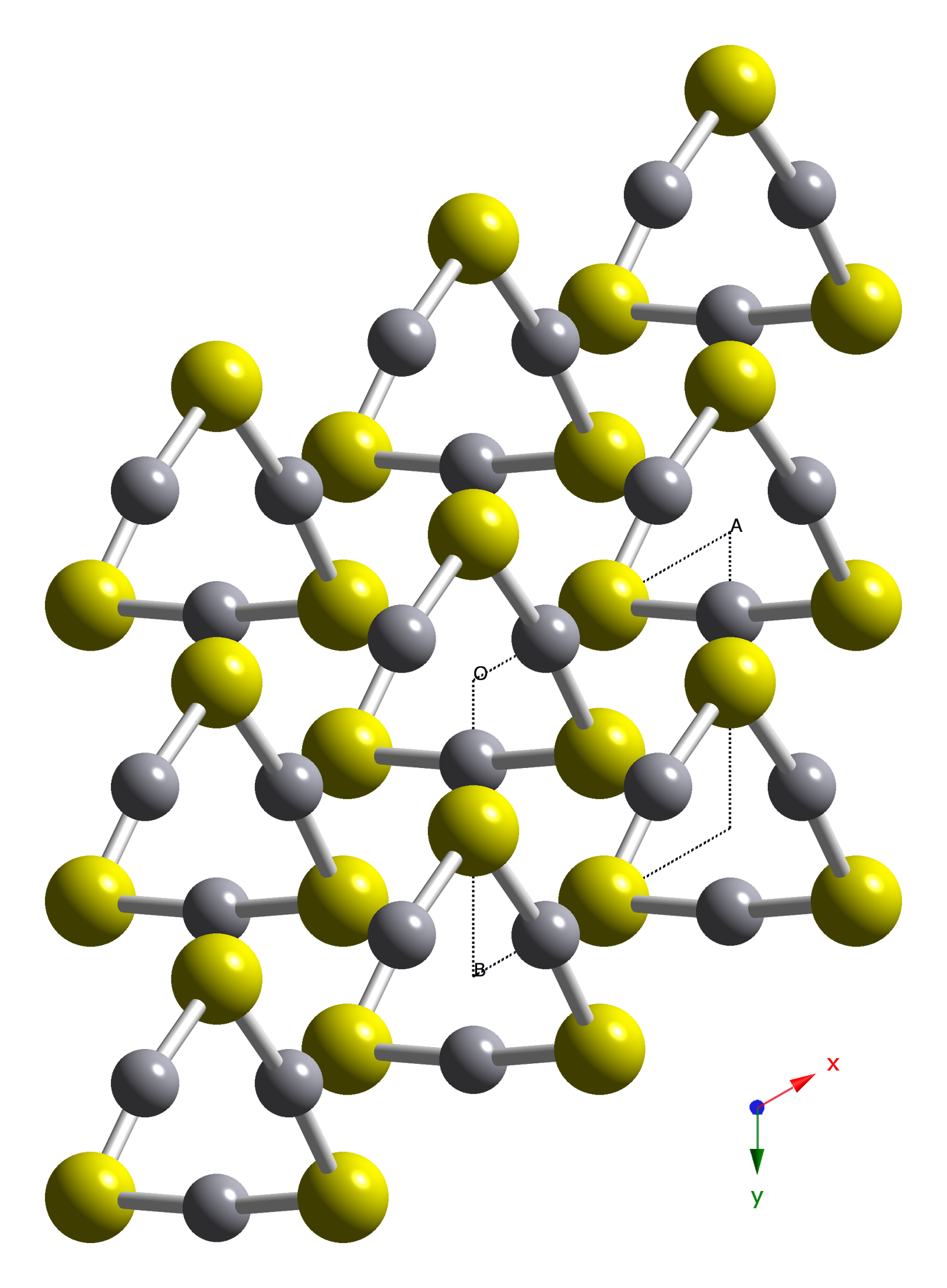
HgS is dimorphic with two crystal forms:
- red cinnabar (α-HgS, trigonal, hP6, P3221) is the form in which mercury is most commonly found in nature. Cinnabar has rhombohedral crystal system. Crystals of red are optically active. This is caused by the Hg-S helices in the structure.
- black metacinnabar (β-HgS) is less common in nature and adopts the zinc blende crystal structure (T2d-F3m).
Preparation and chemistry
β-HgS precipitates as a black solid when Hg(II) salts are treated with H2S. The reaction is conveniently conducted with an acetic acid solution of mercury(II) acetate. With gentle heating of the slurry, the black polymorph converts to the red form. β-HgS is unreactive to all but concentrated acids.
Mercury is produced from the cinnabar ore by roasting in air and condensing the vapour. :HgS → Hg + S
Uses

When α-HgS is used as a red pigment, it is known as cinnabar. The tendency of cinnabar to darken has been ascribed to conversion from red α-HgS to black β-HgS. However β-HgS was not detected at excavations in Pompeii, where originally red walls darkened, and was attributed to the formation of Hg-Cl compounds (e.g., corderoite, calomel, and terlinguaite) and calcium sulfate, gypsum.
As the mercury cell as used in the chlor-alkali industry (Castner–Kellner process) is being phased out over concerns over mercury emissions, the metallic mercury from these setups is converted into mercury sulfide for underground storage.
With a band gap of 2.1 eV and its stability, it is possible to be used as photoelectrochemical cell.
Neutralization with sulfur has been suggested to clean mercury spills, but the reaction does not proceed rapidly and completely enough for emergencies.
References
References
- L. I. Berger, ''Semiconductor Materials'' (1997) CRC Press {{ISBN. 0-8493-8912-7
- [http://webmineral.com/data/Cinnabar.shtml Webminerals]
- Zumdahl, Steven S.. (2009). "Chemical Principles 6th Ed.". Houghton Mifflin Company.
- {{Greenwood&Earnshaw1st
- A. M. Glazer, K. Stadnicka. (1986). "On the origin of optical activity in crystal structures". J. Appl. Crystallogr..
- (1939). "Inorganic Syntheses".
- (2006). "Blackening of Pompeian Cinnabar Paintings: X-ray Microspectroscopy Analysis". Anal. Chem..
- (March 1979). "Mercury(II) sulphide: a photo-stable semiconductor". Nature.
- Hegedüs, Kristof. (20 Dec 2014). "How NOT to clean up mercury....". [[Tumblr]].
This article was imported from Wikipedia and is available under the Creative Commons Attribution-ShareAlike 4.0 License. Content has been adapted to SurfDoc format. Original contributors can be found on the article history page.
Ask Mako anything about Mercury sulfide — get instant answers, deeper analysis, and related topics.
Research with MakoFree with your Surf account
Create a free account to save articles, ask Mako questions, and organize your research.
Sign up freeThis content may have been generated or modified by AI. CloudSurf Software LLC is not responsible for the accuracy, completeness, or reliability of AI-generated content. Always verify important information from primary sources.
Report