From Surf Wiki (app.surf) — the open knowledge base
Mercedes Sosa
Argentine singer (1935–2009)

Argentine singer (1935–2009)
| Field | Value | |
|---|---|---|
| image | Mercedes Sosa, by Annemarie Heinrich.jpg | |
| caption | Portrait by Annemarie Heinrich, 1960s | |
| birth_name | Haydée Mercedes Sosa | |
| birth_date | ||
| birth_place | San Miguel de Tucumán, Tucumán, Argentina | |
| death_date | ||
| death_place | Buenos Aires, Argentina | |
| occupation | Singer | |
| years_active | 1950–2009 | |
| module | {{Infobox musical artist | embed=yes |
| genre | ||
| instruments | Vocals |
Haydée Mercedes Sosa (9 July 1935 – 4 October 2009) was an Argentine singer who was popular throughout Latin America and many countries outside the region. With her roots in Argentine folk music, Sosa became one of the preeminent exponents of El nuevo cancionero. She gave voice to songs written by many Latin American songwriters. Her music made people hail her as the "voice of the voiceless ones". She was often called "the conscience of Latin America".
Sosa performed in venues such as the Lincoln Center in New York City, the Théâtre Mogador in Paris, the Sistine Chapel in Vatican City, as well as sold-out shows in New York's Carnegie Hall and the Roman Colosseum during her final decade of life. Her career spanned four decades and she was the recipient of six Latin Grammy awards (2000, 2003, 2004, 2006, 2009, 2011), including a Latin Grammy Lifetime Achievement Award in 2004 and two posthumous Latin Grammy Award for Best Folk Album in 2009 and 2011. She won the Premio Gardel in 2000, the main musical award in Argentina. She served as an ambassador for UNICEF.
Life
Sosa was born on 9 July 1935, in San Miguel de Tucumán, in the northwestern Argentine province of Tucumán, of mestizo ancestry. She was of French, Spanish and Diaguita descent. Her nickname "la negra", which is a common nickname in Argentina for people with darker complexion, is a reference to her indigenous heritage. Her parents, a day laborer and a washerwoman, were Peronists, although they never registered in the party, and she started her career as a singer for the Peronist Party in Tucuman under the name Gladys Osorio. In 1950, at age fifteen, she won a singing competition organized by a local radio station and was given a contract to perform for two months. She recorded her first album, La Voz de la Zafra, in 1959. A performance at the 1965 Cosquín National Folklore Festival—where she was introduced and brought to the stage while sitting in the audience by fellow folk singer Jorge Cafrune— brought her to the attention of the Argentine public. Sosa and her first husband, Manuel Oscar Matus, with whom she had one son, were key players in the mid-60s nueva canción movement (which was called nuevo cancionero in Argentina). Her second record was Canciones con Fundamento, a collection of Argentine folk songs.
Sosa "spent the late 1960s building her audience in Europe and among the cosmopolitan middle class in Buenos Aires, becoming in the process a much bigger star" than her contemporaries. In 1967, Sosa toured the United States and Europe with great success. In later years, she performed and recorded extensively, broadening her repertoire to include material from throughout Latin America.
In the early 1970s, Sosa released two concept albums in collaboration with composer Ariel Ramírez and lyricist Félix Luna: Cantata Sudamericana and Mujeres Argentinas (Argentine Women). She also recorded a tribute to Chilean musician Violeta Parra in 1971, including what was to become one of Sosa's signature songs, Gracias a la vida. During the 1970s she was a part of two films by the director Leopoldo Torre Nilsson: El Santo de la Espada in 1970 and Güemes, la tierra en armas in 1971, in which she portrayed Juana Azurduy de Padilla, the guerrilla military leader who fought for Argentine independence.

After the military junta of Jorge Videla came to power in 1976, the atmosphere in Argentina grew increasingly oppressive. Sosa faced death threats against both her and her family, but refused for many years to leave the country. At a concert in La Plata in 1979, Sosa was searched and arrested on stage, along with all those attending the concert. Their release came about through international intervention. Despite attempts to hold more concerts, she was officially barred from performing by the military regime. Banned in her own country, she moved to Paris and then to Madrid. She has spoken publicly about her artistic and emotional struggles during this period of her life. While in exile, she released the album A Quien Doy in 1981. The album included a recording of the song "Cuando Me Acuerdo de Mi Pais" which was originally written by the prolific Chilean singer/songwriter, Patricio Manns. The song, which he wrote while also in political exile, expresses the sorrow he felt from being separated from his homeland. She related to this feeling and struggled to continue recording and performing. In an interview with the New York Times, she said, “It was a mental problem, a problem of morale...It wasn’t my throat, or anything physical".
Sosa returned to Argentina from her exile in Europe in February 1982, several months before the military regime collapsed as a result of the Falklands War, and gave a series of concerts at the Teatro Ópera in Buenos Aires, where she invited many of her younger colleagues to share the stage. A double album of recordings, Mercedes Sosa en Argentina, from these performances became an instant best seller. She then traveled to perform in her home province of Tucuman. However, these performances were largely ignored by mainstream media in the country. In subsequent years, Sosa continued to tour both in Argentina and abroad, performing in such venues as the Lincoln Center in New York City and the Théâtre Mogador in Paris. In poor health for much of the 1990s, she performed a comeback show in Argentina in 1998. In 1994, she played in the Sistine Chapel in Vatican City. In 2002, she sold out both Carnegie Hall in New York and the Colosseum in Rome in the same year.
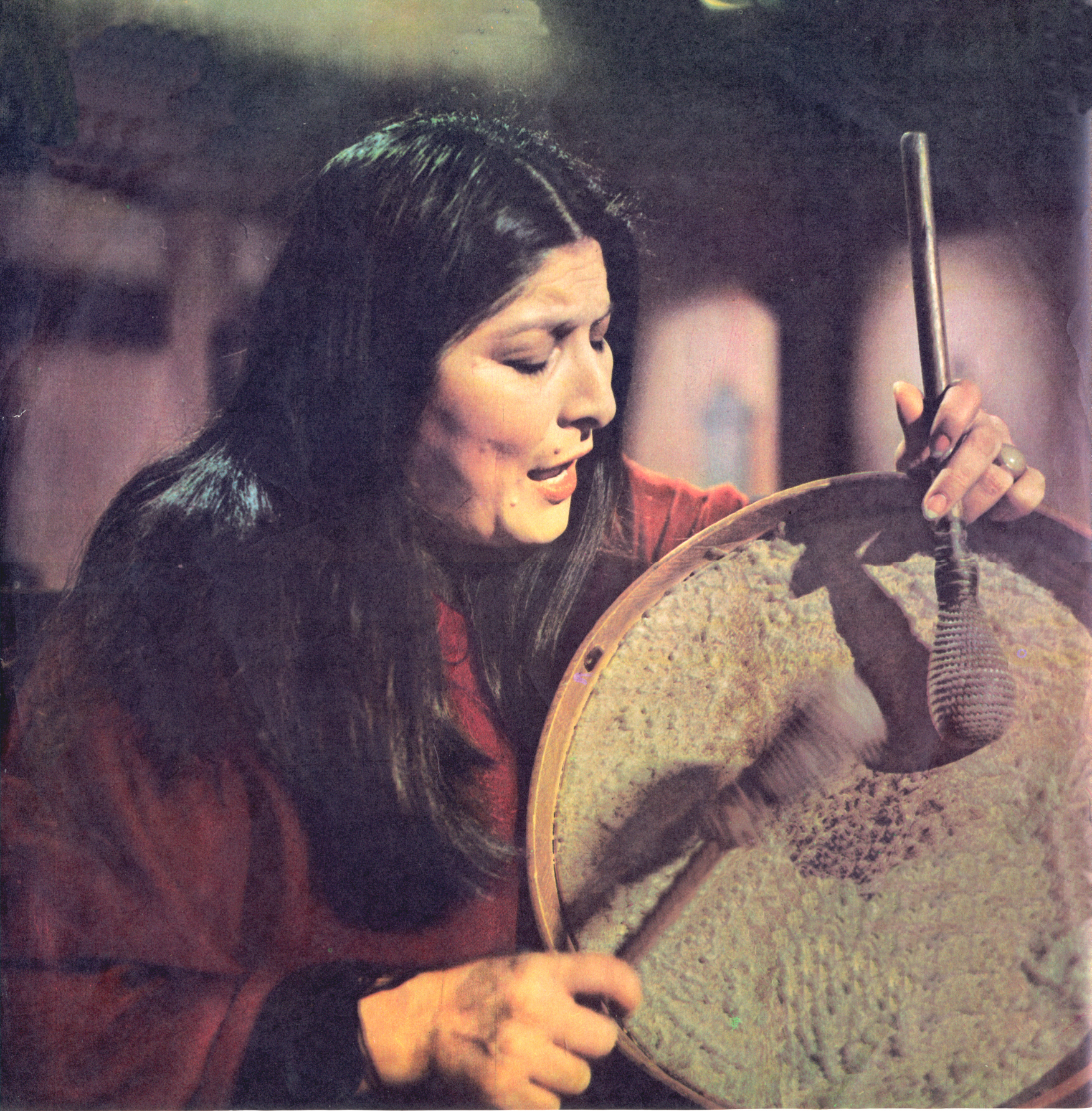
A supporter of Perón, she favored leftist causes throughout her life. She supported President Raul Alfonsin in the election of 1983 which marked the return of democracy in Argentina following the dictatorship. She referred to this election as "Argentina's Spring" She opposed President Carlos Menem, who was in office from 1989 to 1999, and supported the election of Néstor Kirchner, who became president in 2003. Sosa was a UNESCO Goodwill Ambassador for Latin America and the Caribbean.
Sosa disliked being identified as a protest singer. While she was outright in her political stances, Sosa said the following on the position of the artist:
In a career spanning four decades, she worked with performers across several genres and generations, folk, opera, pop, rock, including Martha Argerich, Andrea Bocelli, David Broza, Franco Battiato, Jaime Roos, Joan Baez, Francis Cabrel, Gal Costa, Luz Casal, Lila Downs, Lucio Dalla, Maria Farantouri, Lucecita Benitez, Nilda Fernández, Charly Garcia, León Gieco, Gian Marco, Nana Mouskouri, Pablo Milanés, Holly Near, Milton Nascimento, Pata Negra, Fito Páez, Franco De Vita, Lourdes Pérez, Luciano Pavarotti, Silvio Rodríguez, Ismael Serrano, Shakira, Sting, Caetano Veloso, Julieta Venegas, Gustavo Cerati and Konstantin Wecker
Sosa participated in a 1999 production of Ariel Ramírez's Misa Criolla. Her song Balderrama is featured in the 2008 movie Che, starring Benicio del Toro as the Argentine Marxist revolutionary Che Guevara.
Sosa was the co-chair of the Earth Charter International Commission.
Awards
Sosa won the Latin Grammy Award for Best Folk Album in 2000 (Misa Criolla), 2003 (Acústico), 2006 (Corazón Libre), 2009 (Cantora 1, which also won Best Recording Package and was nominated for Album of the Year), and 2011 (Deja La Vida Volar), as well as several international awards.
In 1995, Konex Foundation from Argentina granted her the Diamond Konex Award, one of the most prestigious awards in Argentina, as the most important personality in the popular music of her country in the last decade.
Death
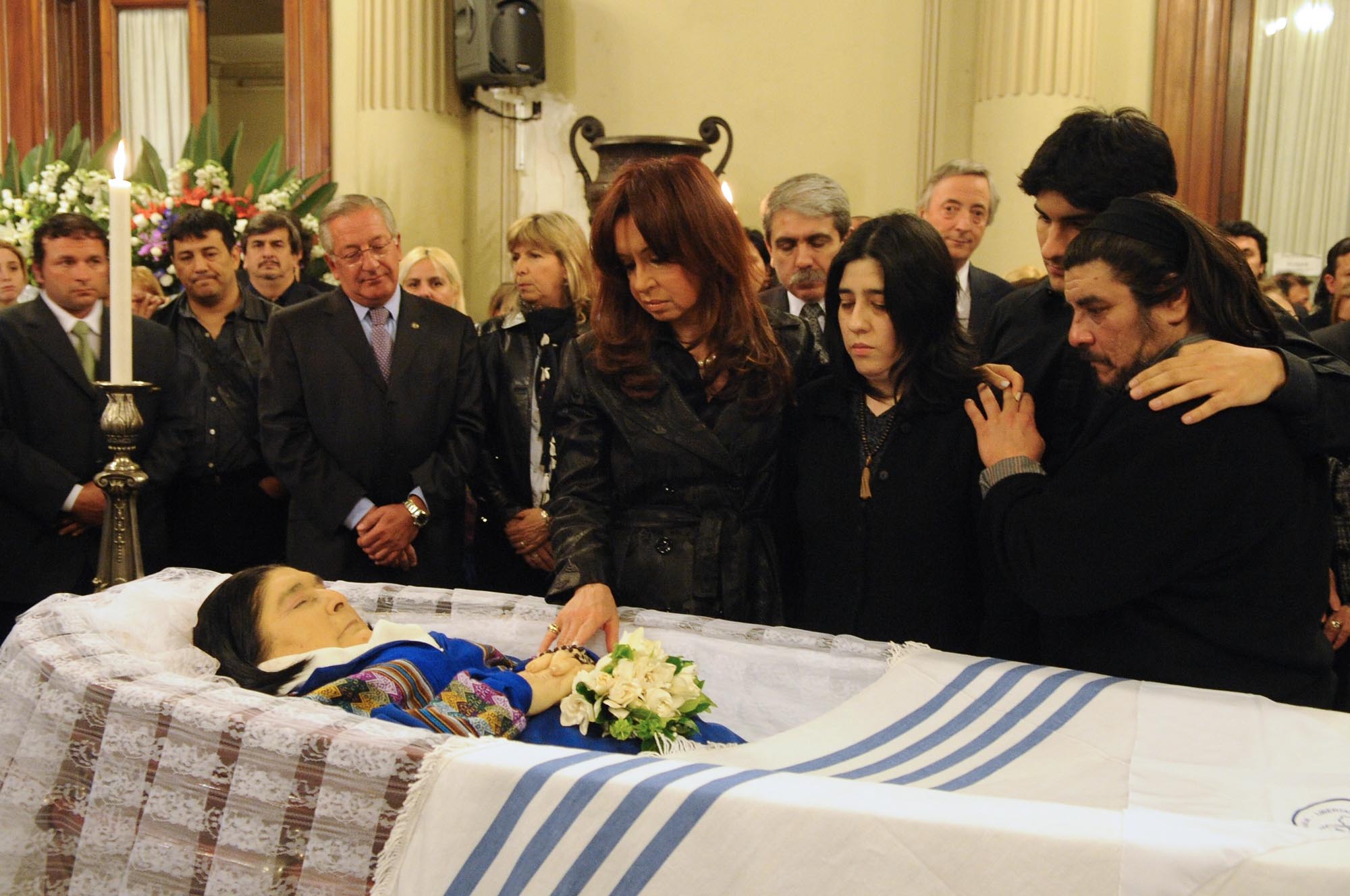
Suffering from recurrent endocrine and respiratory problems in later years, the 74-year-old Sosa was hospitalized in Buenos Aires on 18 September 2009. She died from multiple organ failure on 4 October 2009, at 5:15 am. She was survived by one son, Fabián Matus (d. 15 March 2019), born of her first marriage. He said: "She lived her 74 years to the fullest. She had done practically everything she wanted, she didn't have any type of barrier or any type of fear that limited her". The hospital expressed its sympathies to her relatives. Her website featured the following: "Her undisputed talent, her honesty and her profound convictions leave a great legacy to future generations".
Her body was placed on display at the National Congress building in Buenos Aires for the public to pay their respects, and President Fernández de Kirchner ordered three days of national mourning. Thousands had queued by the end of the day.
Sosa's obituary in The Daily Telegraph said she was "an unrivalled interpreter of works by her compatriot, the Argentine Atahualpa Yupanqui, and Chile's Violeta Parra". Helen Popper of Reuters reported her death by saying she "fought South America's dictators with her voice and became a giant of contemporary Latin American music". Sosa received three Latin Grammy nominations for her album, in 2009 . She went on to win Best Folk Album about a month after her death.
Tributes
In 2019, Sosa was celebrated by a Google Doodle. The doodle was showcased in Argentina, Chile, Uruguay, Paraguay, Bolivia, Peru, Ecuador, Cuba, Iceland, Sweden, Serbia, Greece, Israel and Vietnam.
In 2023, Rolling Stone ranked Sosa at number 160 on its list of the 200 Greatest Singers of All Time.
Discography
Sosa recorded forty albums.
Studio albums
| Year | Album details |
|---|---|
| 1962 | La Voz de la Zafra |
| 1965 | Canciones Con Fundamento |
| 1966 | Hermano |
| 1966 | Yo No Canto Por Cantar |
| 1967 | Para Cantarle a Mi Gente |
| 1968 | Con Sabor a Mercedes Sosa |
| 1969 | Mujeres Argentinas |
| 1970 | El Grito de la Tierra |
| 1970 | Navidad con Mercedes Sosa |
| 1971 | Homenaje a Violeta Parra |
| 1972 | Hasta la Victoria |
| 1972 | Cantata Sudamericana |
| 1973 | Traigo un Pueblo en Mi Voz |
| 1975 | A Que Florezca Mi Pueblo |
| 1976 | En Dirección Del Viento |
| 1977 | Mercedes Sosa Interpreta a Atahualpa Yupanqui |
| 1979 | Serenata Para la Tierra de Uno |
| 1981 | A Quien Doy / Cuando Me Acuerdo de Mi País |
| 1982 | Como Un Pájaro Libre |
| 1983 | Mercedes Sosa |
| 1984 | ¿Será Posible el Sur? |
| 1985 | Vengo a Ofrecer Mi Corazón |
| 1986 | Mercedes Sosa '86 |
| 1987 | Mercedes Sosa '87 |
| 1993 | Sino |
| 1994 | Gestos de Amor |
| 1996 | Escondido en Mi País |
| 1997 | Alta Fidelidad (w/Charly García) |
| 1998 | Al Despertar |
| 1999 | Misa Criolla |
| 2005 | Corazón Libre |
| 2009 | Cantora 1 (w/various artists) |
| 2009 | Cantora 2 (w/various artists) |
| 2011 | Censurada |
| 2015 | Lucerito |
EPs
| Year | EP details |
|---|---|
| 1975 | Niño de Mañana |
Live albums
| Year | Album details |
|---|---|
| 1973 | Si Se Calla El Cantor (with Gloria Martin) |
| 1980 | Gravado Ao Vivo No Brasil |
| 1982 | Mercedes Sosa en Argentina |
| 1985 | Corazón Americano (with Milton Nascimento & León Gieco) |
| 1989 | Live in Europe |
| 1991 | De Mí |
| 2002 | Acústico en Vivo |
| 2003 | Argentina Quiere Cantar (with Víctor Heredia & León Gieco) |
| 2010 | Deja la Vida Volar (En Gira) |
| 2014 | Angel |
| 2024 | En vivo en el Gran Rex 2006 |
| Mercedes Sosa en Nueva York, 1974 |
Compilation albums
| Year | Album details |
|---|---|
| 1975 | Disco de Oro |
| 1983 | Recital |
| 1988 | Amigos Míos |
| 1993 | 30 Años |
| 1995 | Oro |
| 1997 | The Best of Mercedes Sosa |
| 2013 | Siempre en Ti |
Filmography
- Güemes, la tierra en armas (1971)
- Argentinísima (1972)
- Esta es mi Argentina (1974)
- Mercedes Sosa, como un pájaro libre (1983)
- Será possible el sur: Mercedes Sosa (1985)
- Historias de Argentina en vivo (2001)
References
References
- [http://www.brainyhistory.com/events/1935/july_9_1935_93941.html Mercedes Sosa] at BrainyHistory.com
- "Singer Mercedes Sosa: The voice of the 'voiceless ones' outlasts South American dictatorships".
- Heckman, Don. (29 October 1995). "POP MUSIC : The Voice Heard Round the World : Mercedes Sosa, a compelling figure in world music and a social activist, will make a rare L.A. appearance.".
- Bernstein, Adam. (5 October 2009). "Argentine folk singer who championed social justice".
- ''Mercedes Sosa: The Voice of Latin America''. Dir. Rodrigo H. Villa. First Run Features, 2013. Web.
- {{YouTube. QzwL8C2hE6c. The presentation by Jorge Cafrune and the song Mercedes Sosa sang. Retrieved 3 March 2010.
- Karush, Matthew. (2017). "Musicians in Transit: Argentina and the Globalization of Popular Music". Duke.
- "Biografía".
- "El folclore argentino llora la muerte de Daniel Toro - Notas - Viva la Radio".
- Nilsson, Leopoldo Torre. (7 April 1971). "Güemes - la tierra en armas". Producciones Cinematográficas Cerrillos.
- Rodrigo. (10 September 2020). "Patricio Manns: Cuando me acuerdo de mi país (1983) {{!}} PERRERAC: La canción, un arma de la revolución".
- Lopez, Vicente F.. (18 January 1983). "ARTISTAS EXILIADOS HAN REGRESADO A ARGENTINA". El Nuevo Herald.
- (4 October 2009). "Legendary folk singer Mercedes Sosa dies at 74". [[France 24]].
- Drosdoff, Daniel. (30 October 1983). "ARGENTINIAN VOTE TO END DICTATORSHIP PERONIST AND RADICAL IN LEAD FOR PRESIDENCY". Miami Herald.
- [http://www.berlinonline.de/berliner-zeitung/archiv/.bin/dump.fcgi/2003/1025/magazin/0001/ Interview with Mercedes Sosa] {{Webarchive. link. (16 October 2009 , ''Magazin Berliner Zeitung'', 25 October 2003. {{in lang). de
- [http://chicago.cervantes.es/Cultura/Fichas/Ficha41728_47_2.htm Mercedes Sosa in concert] {{webarchive. link. (4 January 2008)
- Meyer, Bill. (7 October 2009). "A U.S. musician pays tribute to Mercedes Sosa".
- (4 October 2009). "Latin artist Mercedes Sosa dies". [[BBC]].
- (26 August 2010). "In Profile: Mercedes Sosa".
- {{YouTube. k4LJDTlviKw. ''Balderrama'' by Mercedes Sosa – a tribute to [[Che Guevara]]
- "Latin Grammys: Ganadores – Años Anteriores (2000)". The Latin Recording Academy.
- "Latin Grammys: Ganadores – Años Anteriores (2003)". The Latin Recording Academy.
- "Latin Grammys: Ganadores – Años Anteriores (2006)". The Latin Recording Academy.
- "Latin Grammys: Ganadores – Años Anteriores (2009)". The Latin Recording Academy.
- "Latin Grammys: Ganadores – Años Anteriores (2011)". The Latin Recording Academy.
- "Premios Konex 1995: Música Popular".
- (October 2009). ""En ningún momento sufrió", dijo el hijo de Mercedes Sosa".
- [https://www.google.com/hostednews/ap/article/ALeqM5iBSb5ZdEJ8MI6_qzWccZNZQITnMAD9B47Q8G1 Associated Press]{{dead link. (June 2024)
- (4 October 2009). "Argentine folk legend Mercedes Sosa dead at 74". [[Bangkok Post]].
- "Continúa la procesión en el Congreso para despedir a Mercedes Sosa".
- (4 October 2009). "Argentine folk icon Sosa dies at 74". [[Al Jazeera Arabic.
- Helen Popper. (4 October 2009). "Argentine singer Mercedes Sosa dies at 74". [[Reuters]].
- (4 October 2009). "Mercedes Sosa: Obituary". [[The Daily Telegraph]].
- (31 January 2019). "Celebrating Mercedes Sosa". Doodles Archive, Google.
- (1 January 2023). "The 200 Greatest Singers of All Time".
This article was imported from Wikipedia and is available under the Creative Commons Attribution-ShareAlike 4.0 License. Content has been adapted to SurfDoc format. Original contributors can be found on the article history page.
Ask Mako anything about Mercedes Sosa — get instant answers, deeper analysis, and related topics.
Research with MakoFree with your Surf account
Create a free account to save articles, ask Mako questions, and organize your research.
Sign up freeThis content may have been generated or modified by AI. CloudSurf Software LLC is not responsible for the accuracy, completeness, or reliability of AI-generated content. Always verify important information from primary sources.
Report