From Surf Wiki (app.surf) — the open knowledge base
Mercedes-Benz W108/W109
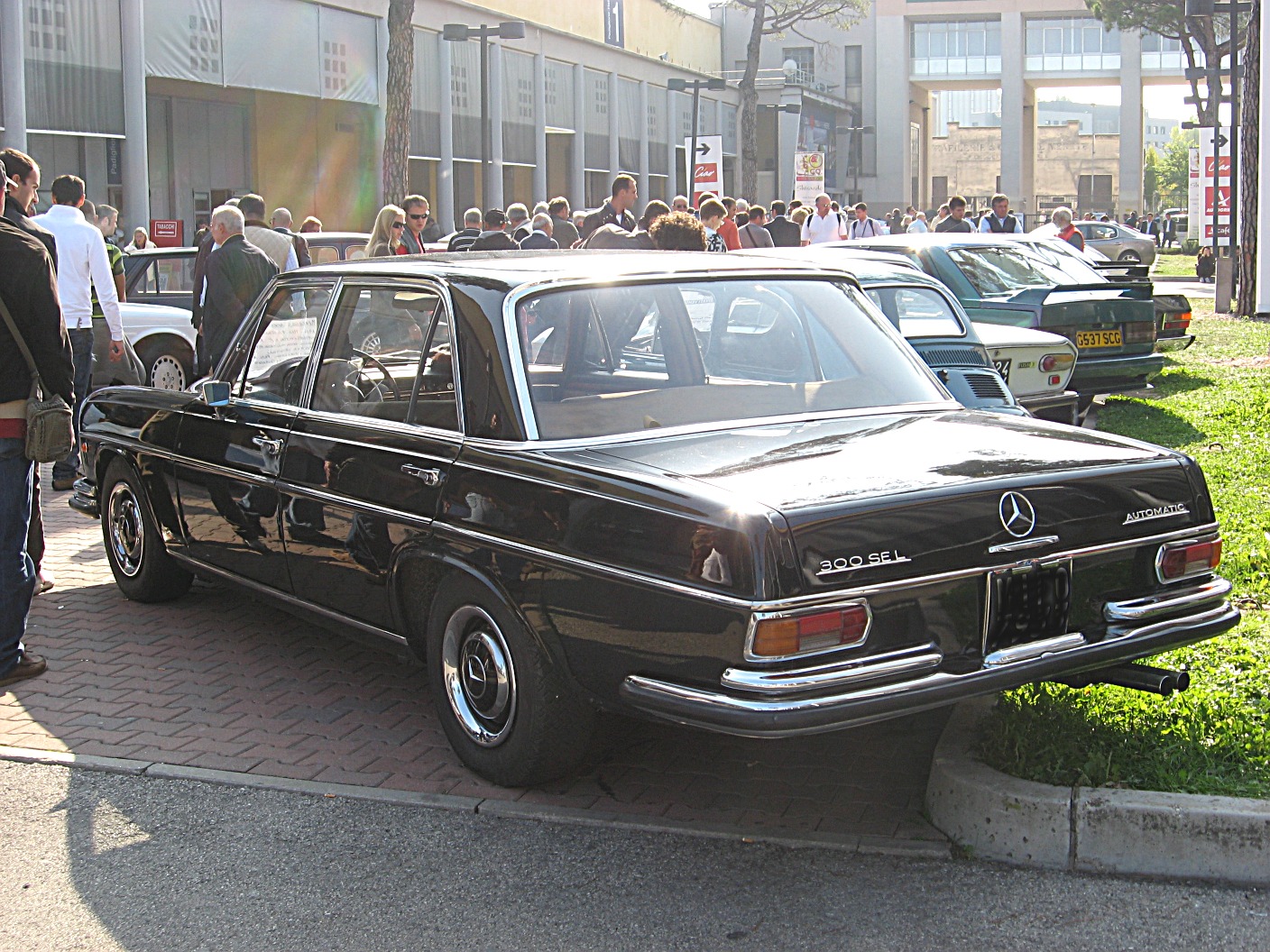
| Field | Value |
|---|---|
| name | Mercedes-Benz W 108 • W 109 |
| image | 1970 Mercedes-Benz 280 SE (W 108) sedan (2015-07-09) 01.jpg |
| manufacturer | Daimler-Benz |
| assembly | West Germany: Stuttgart |
| production | 1965–1972 |
| 383,072 built | |
| W 108: 359,522 | |
| W 109: 23,550 | |
| (incl. 300 SEL 6.3: 6,526) | |
| predecessor | W 108: W 111 |
| W 109: W 112 | |
| successor | W 116 |
| class | Full-size luxury car (F) |
| body_style | 4-door sedan |
| engine | {{ubl |
| related | W 113 |
| W 114/W 115 | |
| designer | Paul Bracq, Friedrich Geiger (1963) |
| transmission | 4-speed manual |
| 5-speed manual | |
| 4-speed automatic K4A 025 | |
| K4B 050 | |
| K4C 025 | |
| K4A 040 | |
| 3-speed automatic | |
| W3A 040 | |
| layout | FR layout |
383,072 built W 108: 359,522 W 109: 23,550 (incl. 300 SEL 6.3: 6,526) W 109: W 112 | 2.5 L I6 M 108 | 2.5 L I6 M 129 | 2.8 L I6 M 130 | 3.0 L I6 M 189 | 3.5 L V8 M 116 | 4.5 L V8 M 117 | 6.3 L V8 M 100 W 114/W 115 5-speed manual 4-speed automatic K4A 025 K4B 050 K4C 025 K4A 040 3-speed automatic W3A 040
The Mercedes-Benz W 108 and W 109 are luxury cars produced by Mercedes-Benz from 1965 through to 1972 to succeed the W 111 and W 112 "fintail" () sedans. The cars were successful in West Germany and in export markets including North America and Southeast Asia. During the seven-year run, a total of 383,072 units were manufactured. Some publications mention 383,361 units.
As the W 108 and W 109 were only available as 4-door models, similarly squarish Bracq-designed 2-door W 111 and W 112 coupés and cabriolets filled those niches, and are often mistaken for W 108/W 109 two-doors.
Model history
Chassis (platform)
The car's predecessors, the W 111 (1959–71) and W 112 (1961–67), helped Mercedes-Benz develop better sales and achieve economy of scale production, reducing both manufacture time and cost. Throughout the 1950s, Mercedes-Benz had been producing the coachwork 300 S and 300 SL and all but hand-built 300 "Adenauer" (W 189) alongside conveyor assembled Pontons (190, 190 SL and 220) etc. Unifying the entire Mercedes-Benz range into the "fintail" () reduced production onto a single automobile platform.
Body design
Fashion trends in the early 1960s changed rapidly. By the time the Paul Bracq-designed 2-door coupé and cabriolet W 111 were launched, the predecessor W 111 sedan's fins lost their chrome trim and sharp appearance. The arrival of the W 113 'Pagoda' coupé and cabriolet in 1963 saw them further buried into the trunk's contour. Finally, they disappeared completely on the 600 (W 100) in 1963.
The evolution of the W 108 began under the leadership of Bracq in 1961 and ended in 1963. Although the fins' departure was the most visible change, the W 108 had a lower body waist line and increased glass area – the windscreen alone was 17% larger than W 111's – prominent enough to be referred to as a "greenhouse". The cars had a 60 mm lower ride and 15 mm wider doors. The result was a visibly newer-looking, sleeker car with an open and spacious interior.
Differences between W 108 and W 109
Originally, the W 108 was seen as a combined successor to the W 111 and the short wheelbase sedans in the W 112 line lacking air suspension.
The W 111 had been a successor to the six-cylinder Ponton models of the mid 1950s; the W 112 derived from it was a stopgap to replace the hand-built body-on-frame 300 "Adenauer" (W 189) state car (built through the spring of 1962) pending the 1963 introduction of the 600 "Grand Mercedes" (W 100; ). In addition to being lavishly decorated with additional chrome trim, the W 112 inherited the alloy block M 189 engine of the W 189, and featured a self-levelling air suspension. A long-wheelbase version was offered from March 1963 through July 1965.
This introduction of two lines (standard and luxury) emerged the W 108 and W 109 models, with the dividing line running between luxury, performance and air suspension. Thus that expensive feature was kept on the long wheelbase W 109 300 SEL, while models from the 300 SEb down retained their steel coil springs and oil-filled shock absorbers.
1965: 250 and 300 series
The initial 1965 product line was the W 108 series' 250 S, 250 SE, and 300 SEb, and only the 300 SEL produced as a W 109. As before, the 300 series were more luxuriously appointed than the 250 series, featuring burled walnut dashboards and power windows along with optional automatic transmission and air conditioning. The W 109 also featured door window frames and a-pillars fully finished with polished metal bright trim.
1968: 280 and 300 series
In 1968 Mercedes-Benz retired the M189 engine in favor of the new 2.8L M130. As a result, the long wheelbase W108 280 SEL and W109 300 SEL (which shared a 2850 mm wheelbase) also ended up sharing the 2.8L engine through the end of production in 1972. Similarly, the M116 V8 powered W108 280 SE/SEL 3.5 and W109 300 SEL 3.5, and the M117 V8 powered W108 280 SE/SEL 4.5 and W109 300 SEL 4.5, shared wheelbases and engines through the end of production in 1972.
Mercedes-Benz refused to name these models 350 SEL and 450 SEL to avoid upsetting the release of the W116 S-Class.
First Series (1965–1967)
Market introduction
The W 108/W 109 premiered at the Frankfurt Auto Show in 1965. The initial model range consisted of three W 108s (250 S, 250 SE, and 300 SEb) and a sole W 109 (300 SEL). The inline-six engines were carried over from the previous generation with mechanical refinements. The 2.2 L M 180 engine was enlarged to 2.5 L while the fuel-injected 3.0 L M 189 version was carried over from 300 "Adenauer".
250 series
The 250 S was fitted with 2497 cc M 108 engine with 2 compound downdraft carburetors producing 130 PS at 5,400/min. The 250 SE had the same engine as 250 S except for fuel injection system and different engine designation (M 129) with increased engine output of 150 PS at 5,500/min.
300 series
Both 300 SEb and 300 SEL were fitted with 2996 cc M 189 engine. The engine was an updated version of M 186, originally developed in 1951 for the 300 "Adenauer", with Bosch 6-point mechanical fuel injection system that calibrated the optimal fuel mixture automatically based on throttle pedal position and movement, engine speed, atmospheric pressure, water temperature, and driving conditions. The engine's output was 170 PS at 5,400/min.
Production figures
The production figures for the first series from 1965 to 1967 showed 129,858 of 250 S/250 SE and 5,106 of 300 SEb/300 SEL. The tiny production figure of 300 SEb/300 SEL reflected the higher sales price with luxurious appointments, exclusivity, and smaller global market share.
300 SEL 6.3
Main article: Mercedes-Benz 300 SEL 6.3
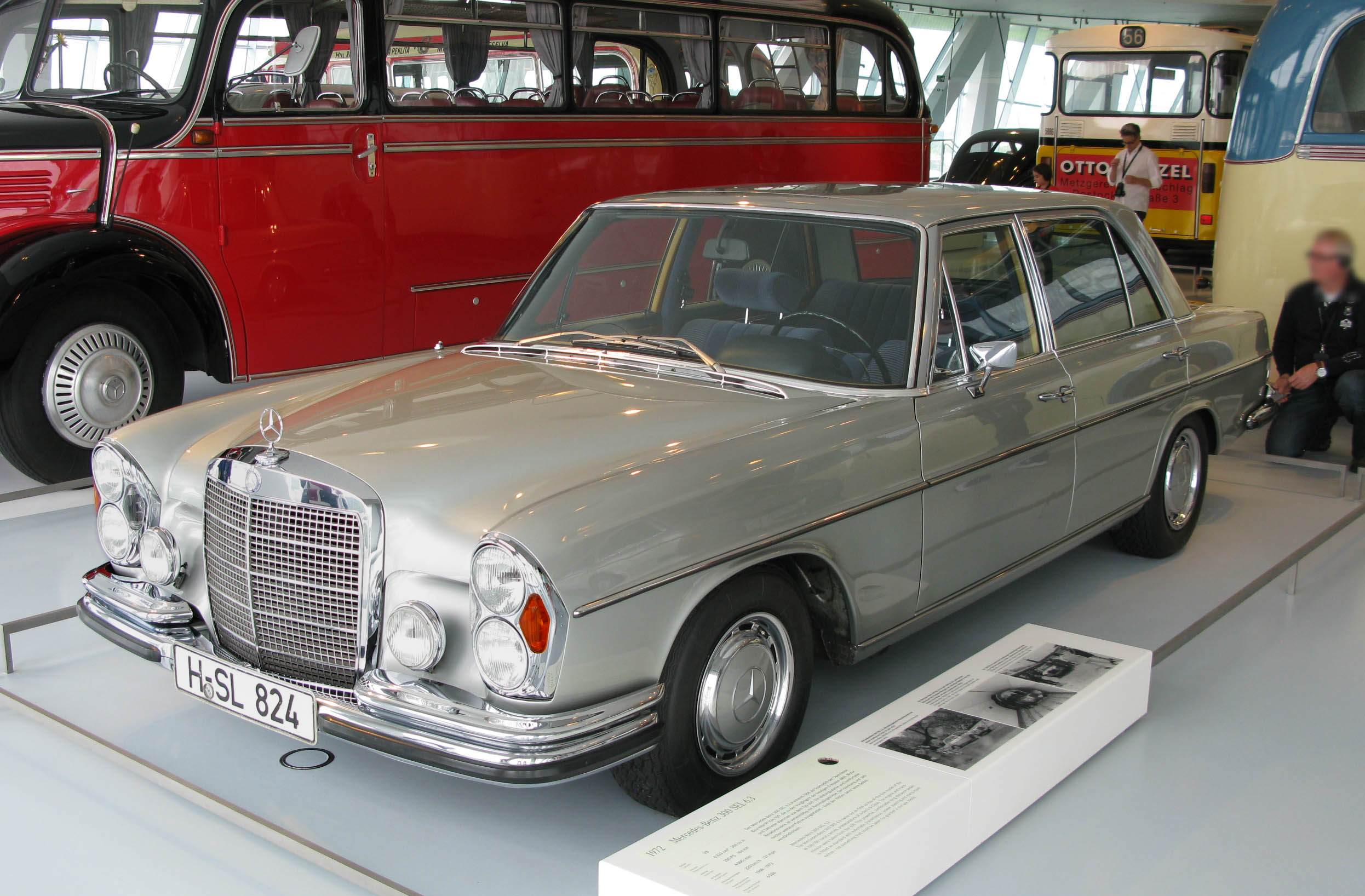
In 1966, company engineer Erich Waxenberger transplanted a massive 6333 cc M 100 V8 from the company's flagship 600 (W 100) with 250 PS at moderate 4,000/min and 51 kpm at 2,800/min for superior power delivery into a W 109 chassis, creating the first Q-car from Mercedes-Benz. Full-scale production of 300 SEL 6.3 began in December 1967. 300 SEL 6.3 could reach 100 km/h in 6.5 seconds and the top speed of 221 km/h, making it the quickest production sedan, a title it held for many years.
Second Series (1967–1972)
Market introduction


To coincide with the launch of new cheaper executive, W 114/W 115 "/8" (Stroke Eight); ) models, slotted below MB's W 108 and W 109, the inline six engine range was revised in 1967. The 2.5 L engine was enlarged to 2778 cc and renamed as M 130 for both carburetted 140 PS at 5,200/min and fuel injected 160 PS at 5,500/min versions.
2.8 L I6 models
250 S and 250 SE were renamed as 280 S and 280 SE in November 1967 while 250 S was still offered in some export markets until March 1969. In January 1968, a long wheelbase variation, 280 SEL, was introduced for the first time.
The standard wheelbase 300 SEb was dropped while 300 SEL 2.8 obtained the 2.8 L engine with higher output 170 PS at 5,750/min, replacing the M189 engine.
3.5 L V8 models
Following the strong reception of the limited production 6333 cc M 100 V8-powered 300 SEL 6.3 in 1967, Mercedes-Benz offered the all-new 3.5 L M 116 V8 engine with new Bosch D-Jetronic electronic fuel injection in 1969. The V8 engine would move W 108/W 109 further upmarket in many export markets and allow them to be more competitive in the United States where many passenger vehicles, especially the American luxury marques, were fitted with V8 engines. The new 200 PS at 5,800/min V8 engine was first fitted to W 109 in August 1969 as 300 SEL 3.5 then to W 108 in July 1970 as 280 SE/SEL 3.5.
4.5 L V8 models
With a different crankshaft the 3499 cc V8 engine was enlarged to 4520 cc as to compensate for the loss of power following the changes in emission control regulations and due to lower fuel octane rating in the United States while increase torque for the use with a three-speed automatic with torque converter to suit the US market. The 4.5 L V8 engine was designated as M 117 and had with 195 hp almost the same power as the domestic 3.5 L V8 engine. It was initially exclusive for the United States, introduced in the spring of 1971, as the 280 SE/SEL 4.5 and the 300 SEL 4.5, until the new, 1973 model year W 116, MB's first generation of distinct S-Class platform 450 SE/SEL models, which went on sale worldwide in September 1972, alongside the V8 powered 350/450 SL (R 107) 2-seat cabrios and the 350/450 SLC (C 107) 4-seat luxury coupes.
Production figures
The production figures for the second series from 1967 to 1972 showed 184,717 of 280 S/280 SE and 10,769 of 280 SEL/300 SEL. 52,622 units sold with V8 engine reflect that it was right to switch to V8 engines in the luxury car segment.
Discontinuation
The 300 SEL 2.8 was dropped in January 1970 since the 300 SEL 3.5 was selling better and had better performance. The production of 280 SEL ended in April 1971, leaving 280 S and 280 SE as sole models with six-cylinder inline engines until the end of W 108/W 109 production in 1972, following the introduction of W 116.
Transmission
In-house developing and production
Unusual among mainstream European automakers of the time, Mercedes developed and built their own automatic transmission system, first went into production in 1961.
I6 models
The standard transmission for Europe was a four-speed manual gearbox. As an option a four-speed automatic with fluid coupling was available. For the first series it was the K4A 025; for the second series the more reliable and smoother shifting all new K4C 025 was introduced in May 1969. A five-speed manual gearbox was offered for six-cylinder 2.8 L and 3.0 L engines, though a few customers opted for it.
Big block V8 model
As a pilot the first model of the more reliable and smoother shifting all new four-speed automatic with fluid coupling layout was the K4B 050, 1963 introduced for the 600 and later the 300 SEL 6.3 respectively. Beside the new layout the number of pinions is doubled from 3 to 6 to handle the much higher torque of the big block V8 engine M 100.
In-house automatic transmission family
After the satisfactory experience with the new design, it was adopted for the new core model K4C 025 for 4- to 6-cylinder engines. With the small block V8 engine M 116, the K4A 040 was launched as a reinforced version of the same design. With the small block V8 engine for the United States M 117, the three-speed automatic with torque converter W4A 040 was derived from this design. It was the first automatic with torque converter Mercedes-Benz offered.
Small block V8 models
When the 3.5 L V8 engine was introduced in 1969, the sole transmission choice was the K4A 040. Customers could request the four-speed manual transmission with price reduction if they inclined so. For 4.5 L V8 engine for the United States, the sole transmission choice was the W3A 040.
Models
| Name | Chassis code | Production period | Units built | Engine model | Total | 359,522 | 250 S | 250 SE | 300 SEb | 280 S | 280 SE | 280 SEL | 280 SE 3.5 | 280 SEL 3.5 | 280 SE 4.5 | 280 SEL 4.5 |
|---|---|---|---|---|---|---|---|---|---|---|---|---|---|---|---|---|
| 108.012 | 07/65–03/69 | 74,677 | 2.5 L I6 M 108 | |||||||||||||
| 108.014 | 08/65–01/68 | 55,181 | 2.5 L I6 M 129 | |||||||||||||
| 108.015 | 08/65–12/67 | 2,737 | 3.0 L I6 M 189 | |||||||||||||
| 108.016 | 11/67–09/72 | 93,666 | 2.8 L I6 M 130 | |||||||||||||
| 108.018 | 11/67–09/72 | 91,051 | 2.8 L I6 M 130 | |||||||||||||
| 108.019 | 01/68–04/71 | 8,250 | 2.8 L I6 M 130 | |||||||||||||
| 108.057 | 07/70–09/72 | 11,309 | 3.5 L V8 M 116 | |||||||||||||
| 108.058 | 06/70–08/72 | 951 | 3.5 L V8 M 116 | |||||||||||||
| 108.067 | 04/71–11/72 | 13,527 | 4.5 L V8 M 117 | |||||||||||||
| 108.068 | 05/71–11/72 | 8,173 | 4.5 L V8 M 117 |
| Name | Chassis code | Production period | Units built | Engine model | Total | 23,550 | 300 SEL | 300 SEL 6.3 | 300 SEL 3.5 | 300 SEL 4.5 |
|---|---|---|---|---|---|---|---|---|---|---|
| 109.015 | 09/65–12/67 | 2,369 | 3.0 L I6 M 189 | |||||||
| 109.016 | 12/67–01/70 | 2,519 | 2.8 L I6 M 130 | |||||||
| 109.018 | 12/67–09/72 | 6,526 | 6.3 L V8 M 100 | |||||||
| 109.056 | 08/69–09/72 | 9,583 | 3.5 L V8 M 116 | |||||||
| 109.057 | 05/71–10/72 | 2,553 | 4.5 L V8 M 117 |
Timeline
| Type | Chassis | 1965 | 1966 | 1967 | 1968 | 1969 | 1970 | 1971 | 1972 |
|---|---|---|---|---|---|---|---|---|---|
| Sedan | W 108 | 250 S | |||||||
| 250 SE | |||||||||
| 280 S | |||||||||
| 280 SE | |||||||||
| 280 SEL | |||||||||
| 300 SEb | |||||||||
| 280 SE 3.5 | |||||||||
| 280 SEL 3.5 | |||||||||
| 280 SE 4.5 | |||||||||
| 280 SEL 4.5 | |||||||||
| W 109 | 300 SEL M 189 | 300 SEL M 130 | |||||||
| 300 SEL 3.5 | |||||||||
| 300 SEL 4.5 | |||||||||
| 300 SEL 6.3 |
Technical info
| Name | 250 S | 250 SE | 300 SEb | 280 S | 280 SE | ||||||||||||||||||||||||||||||||||||||||
|---|---|---|---|---|---|---|---|---|---|---|---|---|---|---|---|---|---|---|---|---|---|---|---|---|---|---|---|---|---|---|---|---|---|---|---|---|---|---|---|---|---|---|---|---|---|
| 280 SEL | 280 SE 3.5 | ||||||||||||||||||||||||||||||||||||||||||||
| 280 SEL 3.5 | 280 SE 4.5 | ||||||||||||||||||||||||||||||||||||||||||||
| 280 SEL 4.5 | Model | Chassis code | Production period | Units built | Engine model | Engine type | Engine layout | Bore x | |||||||||||||||||||||||||||||||||||||
| Stroke | Displacement | Max. Power | |||||||||||||||||||||||||||||||||||||||||||
| at 1/min | Max. Torque | ||||||||||||||||||||||||||||||||||||||||||||
| at 1/min | Compression Ratio | Fuel feed | Fuel tank capacity | Valvetrain | Cooling | Gearbox | Final drive | Final ratio | Electrical system | Body structure | Length | Width | Height | Wheelbase | Track front/ | ||||||||||||||||||||||||||||||
| rear | Front suspension | Rear suspension | Brakes | Steering | Wheel sizes | Tyre/Tire sizes | Curb weight | ||||||||||||||||||||||||||||||||||||||
| manual | |||||||||||||||||||||||||||||||||||||||||||||
| automatic | Gross weight | Top speed | |||||||||||||||||||||||||||||||||||||||||||
| manual | |||||||||||||||||||||||||||||||||||||||||||||
| automatic | 0–100 km/h | ||||||||||||||||||||||||||||||||||||||||||||
| manual | |||||||||||||||||||||||||||||||||||||||||||||
| automatic | Fuel Consumption (estimate) | ||||||||||||||||||||||||||||||||||||||||||||
| manual | |||||||||||||||||||||||||||||||||||||||||||||
| automatic | Price Germany | ||||||||||||||||||||||||||||||||||||||||||||
| USA | |||||||||||||||||||||||||||||||||||||||||||||
| W 108 II | W 108 III | W 108 IV | W 108 V 28 | W 108 E 28 | W 108 E 35/1 | W 108 E 45 | |||||||||||||||||||||||||||||||||||||||
| 108.012 | 108.014 | 108.015 | 108.016 | 108.018 | |||||||||||||||||||||||||||||||||||||||||
| 108.019 | 108.057 | ||||||||||||||||||||||||||||||||||||||||||||
| 108.058 | 108.067 | ||||||||||||||||||||||||||||||||||||||||||||
| 108.068 | |||||||||||||||||||||||||||||||||||||||||||||
| 07/65 – 03/69 | 08/65 – 01/68 | 08/65 – 12/67 | 11/67 – 09/72 | ||||||||||||||||||||||||||||||||||||||||||
| SEL: 01/68 – 04/71 | 07/70 – 09/72 | ||||||||||||||||||||||||||||||||||||||||||||
| 06/70 – 08/72 | 04/71 – 11/72 | ||||||||||||||||||||||||||||||||||||||||||||
| 05/71 – 11/72 | |||||||||||||||||||||||||||||||||||||||||||||
| 74,677 | 55,181 | 2,737 | 93,666 | 91,051 | |||||||||||||||||||||||||||||||||||||||||
| 8,250 | 11,309 | ||||||||||||||||||||||||||||||||||||||||||||
| 951 | 13,527 | ||||||||||||||||||||||||||||||||||||||||||||
| 8,173 | |||||||||||||||||||||||||||||||||||||||||||||
| M 108 I | M 129 I | M 189 VII | M 130 V 28 | M 130 E 28 | M 116 E 35 | M 117 E 45 | |||||||||||||||||||||||||||||||||||||||
| 108.920 | 129.980 | 189.989 | 130.920 | 130.980 | 116.980 | 117.984 | |||||||||||||||||||||||||||||||||||||||
| I6 | V8 | ||||||||||||||||||||||||||||||||||||||||||||
| 82 mm x | |||||||||||||||||||||||||||||||||||||||||||||
| 78.8 mm | 85 mm x | ||||||||||||||||||||||||||||||||||||||||||||
| 88 mm | 86.5 mm x | ||||||||||||||||||||||||||||||||||||||||||||
| 78.8 mm | 92 mm x | ||||||||||||||||||||||||||||||||||||||||||||
| 65.8 mm | 92 mm x | ||||||||||||||||||||||||||||||||||||||||||||
| 85 mm | |||||||||||||||||||||||||||||||||||||||||||||
| 2497 cc | 2996 cc | 2778 cc | 3499 cc | 4520 cc | |||||||||||||||||||||||||||||||||||||||||
| 130 PS | |||||||||||||||||||||||||||||||||||||||||||||
| 5,400 | 150 PS | ||||||||||||||||||||||||||||||||||||||||||||
| 5,500 | 170 PS | ||||||||||||||||||||||||||||||||||||||||||||
| 5,400 | 140 PS | ||||||||||||||||||||||||||||||||||||||||||||
| 5,200 | 160 PS | ||||||||||||||||||||||||||||||||||||||||||||
| 5,500 | 200 PS | ||||||||||||||||||||||||||||||||||||||||||||
| 5,800 | 195 hp | ||||||||||||||||||||||||||||||||||||||||||||
| 4,500 | |||||||||||||||||||||||||||||||||||||||||||||
| 19.8 kpm | |||||||||||||||||||||||||||||||||||||||||||||
| 4,000 | 22 kpm | ||||||||||||||||||||||||||||||||||||||||||||
| 4,200 | 25.4 kpm | ||||||||||||||||||||||||||||||||||||||||||||
| 4,000 | 22.8 kpm | ||||||||||||||||||||||||||||||||||||||||||||
| 3,600 | 24.5 kpm | ||||||||||||||||||||||||||||||||||||||||||||
| 4,250 | 29.2 kpm | ||||||||||||||||||||||||||||||||||||||||||||
| 4,000 | 36.5 kpm | ||||||||||||||||||||||||||||||||||||||||||||
| 3,000 | |||||||||||||||||||||||||||||||||||||||||||||
| 9.0: 1 | 9.3: 1 | 8.8: 1 | 9.0: 1 | 9.5: 1 | 8 0: 1 | ||||||||||||||||||||||||||||||||||||||||
| 2 Zenith 35/40 compound downdraft carburetors | Bosch 6-point mechanical fuel injection | 2 Zenith 35/40 compound downdraft carburetors | Bosch 6-point mechanical fuel injection | Bosch D-Jetronic | |||||||||||||||||||||||||||||||||||||||||
| 82 L | |||||||||||||||||||||||||||||||||||||||||||||
| SOHC, duplex chain | |||||||||||||||||||||||||||||||||||||||||||||
| Water | |||||||||||||||||||||||||||||||||||||||||||||
| 4-speed manual w/ column or floor shifter | 3-speed automatic W4A 040 (type 722.0) w/ column or floor shifter | ||||||||||||||||||||||||||||||||||||||||||||
| optional 5-speed manual w/ column or floor shifter | optional 4-speed automatic K4A 040 (type 722.2) w/ column or floor shifter | ||||||||||||||||||||||||||||||||||||||||||||
| optional 4-speed automatic K4A 025 (w/o type) w/ column or floor shifter | optional 4-speed automatic K4C 025 (type 722.1) w/ column or floor shifter | ||||||||||||||||||||||||||||||||||||||||||||
| rear wheel drive | |||||||||||||||||||||||||||||||||||||||||||||
| 3.92 (47:12) | 3.92 or 3.69 | 3.69 (48:13) | 3.46 (45:13) | 3.23 (42:13) | |||||||||||||||||||||||||||||||||||||||||
| 12 volt | |||||||||||||||||||||||||||||||||||||||||||||
| Sheet steel, monocoque (unibody) construction | |||||||||||||||||||||||||||||||||||||||||||||
| S/SE: 4900 mm | |||||||||||||||||||||||||||||||||||||||||||||
| SEL: 5000 mm | |||||||||||||||||||||||||||||||||||||||||||||
| 1810 mm | |||||||||||||||||||||||||||||||||||||||||||||
| 1440 mm | |||||||||||||||||||||||||||||||||||||||||||||
| S/SE: 2750 mm | |||||||||||||||||||||||||||||||||||||||||||||
| SEL: 2850 mm | |||||||||||||||||||||||||||||||||||||||||||||
| 1482 mm / 1485 mm | |||||||||||||||||||||||||||||||||||||||||||||
| Double wishbones, coil springs, stabilising bar | |||||||||||||||||||||||||||||||||||||||||||||
| Low-pivot swing axle, radius arms, coil springs | |||||||||||||||||||||||||||||||||||||||||||||
| Disc brakes (Ø 273 mm front, 279 mm rear), power assisted | |||||||||||||||||||||||||||||||||||||||||||||
| Recirculating ball steering, manual or servo-assisted | |||||||||||||||||||||||||||||||||||||||||||||
| 6J x 14 | |||||||||||||||||||||||||||||||||||||||||||||
| 7.35 H 14 or 185 HR 14 | 185 VR 14 | 7.35 V 14 | |||||||||||||||||||||||||||||||||||||||||||
| 1470 kg | 1510 kg | 1575 kg | 1520 kg | 1560 kg | |||||||||||||||||||||||||||||||||||||||||
| 1575 kg | 1610 kg | ||||||||||||||||||||||||||||||||||||||||||||
| 1640 kg | |||||||||||||||||||||||||||||||||||||||||||||
| 1510 kg | 1550 kg | 1615 kg | 1560 kg | 1600 kg | |||||||||||||||||||||||||||||||||||||||||
| 1615 kg | 1650 kg | ||||||||||||||||||||||||||||||||||||||||||||
| 1680 kg | 3695 lb | ||||||||||||||||||||||||||||||||||||||||||||
| 3755 lb | |||||||||||||||||||||||||||||||||||||||||||||
| 1940 kg | 1980 kg | 2060 kg | 1960 kg | 1985 kg | |||||||||||||||||||||||||||||||||||||||||
| 2000 kg | 2055 kg | ||||||||||||||||||||||||||||||||||||||||||||
| 2085 kg | 4720 lb | ||||||||||||||||||||||||||||||||||||||||||||
| 4780 lb | |||||||||||||||||||||||||||||||||||||||||||||
| 182 km/h | 190 km/h | 200 km/h | 185 km/h | 193 km/h | 210 km/h | ||||||||||||||||||||||||||||||||||||||||
| 177 km/h | 185 km/h | 195 km/h | 180 km/h | 188 km/h | 205 km/h | ||||||||||||||||||||||||||||||||||||||||
| 13 sec. | 12 sec. | 11 sec. | 10 sec. | ||||||||||||||||||||||||||||||||||||||||||
| 14 sec. | 13 sec. | 12 sec. | 11 sec. | 12 sec. | |||||||||||||||||||||||||||||||||||||||||
| 15.5 L/100 km | 17.5 L/100 km | 16 L/100 km | 18.5 L/100 km | ||||||||||||||||||||||||||||||||||||||||||
| 16.5 L/100 km | 18.5 L/100 km | 17 L/100 km | 19.5 L/100 km | 16.3 L/100 km | |||||||||||||||||||||||||||||||||||||||||
| first=Mike | last=Covello | title=Standard Catalog of Imported Cars 1946-2002 | publisher=Krause Publication | location=Iola | year=2002 | isbn=0-87341-605-8 | pages=533–536}} | DM 16,850 | |||||||||||||||||||||||||||||||||||||
| $ 6,385 | DM 21,500 | ||||||||||||||||||||||||||||||||||||||||||||
| $ 8,048 | DM 17,000 | ||||||||||||||||||||||||||||||||||||||||||||
| $ 5,897 | DM 18,600 | ||||||||||||||||||||||||||||||||||||||||||||
| $ 6,222 | |||||||||||||||||||||||||||||||||||||||||||||
| DM 21,230 | |||||||||||||||||||||||||||||||||||||||||||||
| $ 6,622 | DM 24,920 | ||||||||||||||||||||||||||||||||||||||||||||
| $ 10,076 | |||||||||||||||||||||||||||||||||||||||||||||
| DM 27,310 | |||||||||||||||||||||||||||||||||||||||||||||
| $ n/a | DM n/a | ||||||||||||||||||||||||||||||||||||||||||||
| $ tbd | |||||||||||||||||||||||||||||||||||||||||||||
| DM n/a | |||||||||||||||||||||||||||||||||||||||||||||
| $ tbd |
| Name | 300 SEL | 300 SEL 3.5 | 300 SEL 4.5 | 300 SEL 6.3 | Model | Chassis code | Production period | Units built | Engine model | Engine type | Engine layout | Bore x Stroke | Displacement | Max. Power | ||||||||||||||||||||||||||||
|---|---|---|---|---|---|---|---|---|---|---|---|---|---|---|---|---|---|---|---|---|---|---|---|---|---|---|---|---|---|---|---|---|---|---|---|---|---|---|---|---|---|---|
| at 1/min | Max. Torque | |||||||||||||||||||||||||||||||||||||||||
| at 1/min | Compression Ratio | Fuel feed | Fuel tank capacity | Valvetrain | Cooling | Gearbox | Final drive | Final ratio | Electrical system | Body structure | Length | Width | Height | Wheelbase | Track front/ | |||||||||||||||||||||||||||
| rear | Front suspension | Rear suspension | Brakes | Steering | Wheel sizes | Tyre/Tire sizes | Curb weight | |||||||||||||||||||||||||||||||||||
| manual | ||||||||||||||||||||||||||||||||||||||||||
| automatic | Gross weight | Top speed | ||||||||||||||||||||||||||||||||||||||||
| manual | ||||||||||||||||||||||||||||||||||||||||||
| automatic | 0–100 km/h | |||||||||||||||||||||||||||||||||||||||||
| manual | ||||||||||||||||||||||||||||||||||||||||||
| automatic | Fuel Consumption (estimate) | |||||||||||||||||||||||||||||||||||||||||
| manual | ||||||||||||||||||||||||||||||||||||||||||
| automatic | Price Germany | |||||||||||||||||||||||||||||||||||||||||
| USA | ||||||||||||||||||||||||||||||||||||||||||
| W 109 III | W 109 E 28 | W 109 E 35/1 | W 109 E 45 | W 109 E 63 | ||||||||||||||||||||||||||||||||||||||
| 109.015 | 109.016 | 109.056 | 109.057 | 109.018 | ||||||||||||||||||||||||||||||||||||||
| 09/65 – 12/67 | 12/67 – 01/70 | 08/69 – 09/72 | 05/71 – 10/72 | 12/67 – 09/72 | ||||||||||||||||||||||||||||||||||||||
| 2,369 | 2,519 | 9,583 | 2,553 | 6,526 | ||||||||||||||||||||||||||||||||||||||
| M 189 VII | M 130 E 28 | M 116 E 35 | M 117 E 45 | M 100 E 63 | ||||||||||||||||||||||||||||||||||||||
| 189.988 | 130.981 | 116.981 | 117.981 | 100.981 | ||||||||||||||||||||||||||||||||||||||
| I6 | V8 | |||||||||||||||||||||||||||||||||||||||||
| 85 mm x 88 mm | 86.5 mm x 78.8 mm | 92 mm x 65.8 mm | 92 mm x 85 mm | 103 mm x 95 mm | ||||||||||||||||||||||||||||||||||||||
| 2996 cc | 2778 cc | 3499 cc | 4520 cc | 6333 cc | ||||||||||||||||||||||||||||||||||||||
| 170 PS | ||||||||||||||||||||||||||||||||||||||||||
| 5,400 | 170 PS | |||||||||||||||||||||||||||||||||||||||||
| 5,750 | 200 PS | |||||||||||||||||||||||||||||||||||||||||
| 5,800 | 195 hp | |||||||||||||||||||||||||||||||||||||||||
| 4,500 | 250 PS | |||||||||||||||||||||||||||||||||||||||||
| 4,000 | ||||||||||||||||||||||||||||||||||||||||||
| 25.4 kpm | ||||||||||||||||||||||||||||||||||||||||||
| 4,000 | 24.5 kpm | |||||||||||||||||||||||||||||||||||||||||
| 4,500 | 29.2 kpm | |||||||||||||||||||||||||||||||||||||||||
| 4,000 | 36.5 kpm | |||||||||||||||||||||||||||||||||||||||||
| 3,000 | 51 kpm | |||||||||||||||||||||||||||||||||||||||||
| 2,800 | ||||||||||||||||||||||||||||||||||||||||||
| 8.8: 1 | 9.5: 1 | 8.0: 1 | 9.0: 1 | |||||||||||||||||||||||||||||||||||||||
| Bosch 6-point mechanical fuel injection | Bosch D-Jetronic | Bosch 8-point mechanical fuel injection | ||||||||||||||||||||||||||||||||||||||||
| 82 L | 105 L | |||||||||||||||||||||||||||||||||||||||||
| SOHC, duplex chain | ||||||||||||||||||||||||||||||||||||||||||
| Water | ||||||||||||||||||||||||||||||||||||||||||
| 4-speed manual w/ column or floor shifter | 4-speed automatic K4A 040 (type 722.2) w/ column or floor shifter | 3-speed automatic W3A 040 (type 722.0) w/ column or floor shifter | 4-speed automatic K4B 050 (w/o type) w/ column or floor shifter | |||||||||||||||||||||||||||||||||||||||
| optional 5-speed manual w/ column or floor shifter | ||||||||||||||||||||||||||||||||||||||||||
| optional 4-speed automatic K4A 025 (w/o type) w/ column or floor shifter | ||||||||||||||||||||||||||||||||||||||||||
| rear wheel drive | ||||||||||||||||||||||||||||||||||||||||||
| 3.92 (47:12) or 3.69 (48:13) | 3.46 (45:13) | 3.23 (42:13) | 2.85 (37:13) | |||||||||||||||||||||||||||||||||||||||
| 12 volt | ||||||||||||||||||||||||||||||||||||||||||
| Sheet steel, monocoque (unibody) construction | ||||||||||||||||||||||||||||||||||||||||||
| 5000 mm | ||||||||||||||||||||||||||||||||||||||||||
| 1810 mm | ||||||||||||||||||||||||||||||||||||||||||
| 1410 mm | 1420 mm | |||||||||||||||||||||||||||||||||||||||||
| 2850 mm | ||||||||||||||||||||||||||||||||||||||||||
| 1482 mm | ||||||||||||||||||||||||||||||||||||||||||
| 1485 mm | 1482 mm | |||||||||||||||||||||||||||||||||||||||||
| 1490. mm | ||||||||||||||||||||||||||||||||||||||||||
| Double wishbones, air springs, rubber springs, stabilising bar | ||||||||||||||||||||||||||||||||||||||||||
| Swing axle, radius arms, air and additional rubber springs | ||||||||||||||||||||||||||||||||||||||||||
| Disc brakes (Ø 273 mm front, 279 mm rear), power assisted | ||||||||||||||||||||||||||||||||||||||||||
| Recirculating ball steering, servo-assisted | ||||||||||||||||||||||||||||||||||||||||||
| 6J x 14 | 6 1/2J x 14 | |||||||||||||||||||||||||||||||||||||||||
| 7.35 H 14 or 185 HR 14 | 185 VR 14 | 7.35 V 14 | 195 VR 14 or | |||||||||||||||||||||||||||||||||||||||
| 205/70 VR 14 | ||||||||||||||||||||||||||||||||||||||||||
| 1655 kg | 1730 kg | |||||||||||||||||||||||||||||||||||||||||
| 1695 kg | 1770 kg | 3875 lb | 1830 kg | |||||||||||||||||||||||||||||||||||||||
| 2140 kg | 2120 kg | 2170 kg | 4900 lb | 2265 kg | ||||||||||||||||||||||||||||||||||||||
| 200 km/h | 210 km/h | |||||||||||||||||||||||||||||||||||||||||
| 195 km/h | 205 km/h | 220 km/h | ||||||||||||||||||||||||||||||||||||||||
| 221 km/h | ||||||||||||||||||||||||||||||||||||||||||
| 11 sec. | 10 sec. | |||||||||||||||||||||||||||||||||||||||||
| 12 sec. | 11 sec. | 12 sec. | 8 sec. | |||||||||||||||||||||||||||||||||||||||
| 6.5 sec. | ||||||||||||||||||||||||||||||||||||||||||
| 17.5 L/100 km | 16.5 L/100 km | 18.5 L/100 km | ||||||||||||||||||||||||||||||||||||||||
| 18.5 L/100 km | 17.5 L/100 km | 19.5 L/100 km | 16.3 L/100 km | 21.0 L/100 km | ||||||||||||||||||||||||||||||||||||||
| DM 28,000 | ||||||||||||||||||||||||||||||||||||||||||
| $ 9,910 | DM 25,740 | |||||||||||||||||||||||||||||||||||||||||
| $ 9,400 | DM 29,640 | |||||||||||||||||||||||||||||||||||||||||
| $ n/a | DM n/a | |||||||||||||||||||||||||||||||||||||||||
| $ 11,327 | DM 39,160 | |||||||||||||||||||||||||||||||||||||||||
| $ 15,122 |
References
Notes
Bibliography
General
Workshop manuals
References
- Koehling, Bernd S.. "Mercedes 250S, SE W108: Mercedes elegance at its best".
- (March 13, 1967). "X-ray of Mercedes-Benz 250S fails to find an ounce of fat.". Eugene Register-Guard.
- (2 February 1967). "Autocar Road Test: Mercedes-Benz 250 SE". [[Autocar (magazine).
- Covello, Mike. (2002). "Standard Catalog of Imported Cars 1946-2002". Krause Publication.
This article was imported from Wikipedia and is available under the Creative Commons Attribution-ShareAlike 4.0 License. Content has been adapted to SurfDoc format. Original contributors can be found on the article history page.
Ask Mako anything about Mercedes-Benz W108/W109 — get instant answers, deeper analysis, and related topics.
Research with MakoFree with your Surf account
Create a free account to save articles, ask Mako questions, and organize your research.
Sign up freeThis content may have been generated or modified by AI. CloudSurf Software LLC is not responsible for the accuracy, completeness, or reliability of AI-generated content. Always verify important information from primary sources.
Report