From Surf Wiki (app.surf) — the open knowledge base
Men in feminism
Men's approach to feminism
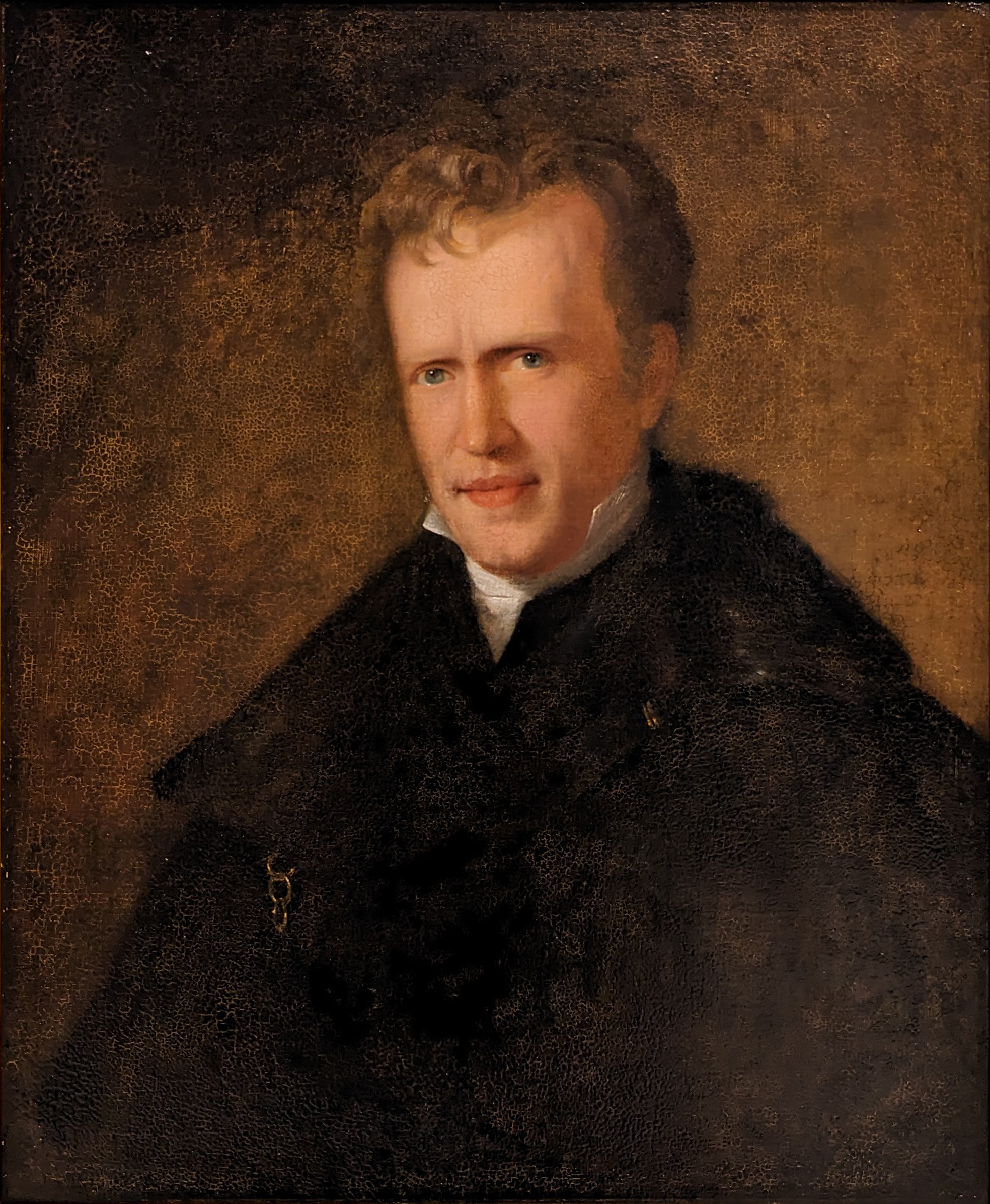
Men's approach to feminism
Men in feminism involves the participation, contribution, and theoretical engagement of men in the feminist movement from its outset to modern day. Historically, men have both supported and critiqued feminist causes. Although some feminists argue that men, because of their social privilege or inability to experience sexism in the same way as women, cannot fully identify as feminists, others view their engagement as essential to dismantling patriarchy and bringing about gender equality.
History
Throughout the seventeenth and eighteenth centuries, the majority of pro-feminist authors emerged from France, including François Poullain de La Barre, Denis Diderot, Paul Henri Thiry d'Holbach, and Charles Louis de Montesquieu. Montesquieu introduced female characters, like Roxana in Persian Letters, who subverted patriarchal systems, and represented his arguments against despotism. The 18th century saw male philosophers attracted to issues of human rights, and men such as the Marquis de Condorcet championed women's education. Liberals, such as the utilitarian Jeremy Bentham, demanded equal rights for women in every sense, as people increasingly came to believe that women were treated unfairly under the law.
In the 1820s, John Neal wrote feminist essays that filled an intellectual gap between female scholars in the 1790s and those surrounding the 1848 Seneca Falls Convention. As a male writer insulated from many common forms of attack against female feminist thinkers, Neal's advocacy was crucial in bringing the field back into the mainstream in England and the US. He delivered America's first women's rights lecture in 1832 and reached his peak in the field circa 1843, though he continued writing and organizing on feminist issues into the 1870s. The British legal historian, Sir Henry Maine, criticized the inevitability of patriarchy in his Ancient Law (1861).
Parker Pillsbury and other abolitionist men held feminist views and openly identified as feminist, using their influence to promote the rights of women and slaves respectively. Pillsbury helped draft the constitution of the feminist American Equal Rights Association in 1865 serving as vice-president of the New Hampshire Woman Suffrage Association. In 1868 and 1869, Parker edited The Revolution with Elizabeth Cady Stanton.
In 1840, women were refused the right to participate at the World Anti-Slavery Convention in London. Supporters of the women attending argued that it was hypocritical to forbid women and men from sitting together at this convention to end slavery; they cited similar segregationist arguments in the United States that were used to separate whites and blacks. When women were still denied to join in the proceedings, abolitionists William Lloyd Garrison, Charles Lenox Remond, Nathaniel Peabody Rogers, and Henry Stanton, all elected to sit silently with the women.
Abolitionist Thomas Wentworth Higginson argued: I do not see how any woman can avoid a thrill of indignation when she first opens her eyes to the fact that it is really contempt, not reverence, that has so long kept her sex from an equal share of legal, political, and educational rights... [a woman needs equal rights] not because she is man's better half, but because she is his other half. She needs them, not as an angel, but as a fraction of humanity.
American sociologist Michael Kimmel categorized American male responses to feminism at the turn of the twentieth century into three categories: pro-feminist, masculinist, and antifeminist. Pro-feminist men, believing that changes would also benefit men, generally welcomed women's increased participation in the public sphere, and changes in the division of labour in the home; in contrast, anti-feminists opposed women's suffrage and participation in public life, supporting a traditional patriarchal family model. Finally, the masculinist movement was characterized by men's groups, and developed as an indirect reaction to the perceived femininization of manhood.
Men's liberation movement
The link between the biological male sex and the social construction of masculinity was seen by some scholars as a limitation on men's collaboration with the feminist movement. Thus, second-wave pro-feminist writers
- Reprinted in: were able to explore the interactions between social practices and institutions, and ideas of gender.
Men's rights movement
The men's rights movement was formed in the 1980s as a splinter breaking away from the men's liberation movement, as part of a backlash to feminism. This group claimed that men's rights were being reduced by feminism, that feminist advances had not been balanced by the elimination of traditional feminine privileges, and that the men should empower themselves by revitalizing their masculinity.
Male feminism and pro-feminism
The feminist movement is divided on whether or not men can be considered feminists. Male-exclusionary feminists believe that men can not be true feminists because they do not have the experience of living as a woman, such as facing the discrimination and stereotyping that women do.
As feminist writer Shira Tarrant has argued, a number of men have engaged with and contributed to feminist movements throughout the history. Today, academics like Michael Flood, Michael Messner, and Michael Kimmel are involved with men's studies and pro-feminism. Further citations:
- Flood, Michael (2004), "Backlash: Angry men's movements", in
- Kimmel, Michael S. (2013) [1998], "Who's afraid of men doing feminism?", in
Some feminists, like Simone de Beauvoir in her seminal text The Second Sex, argue that men cannot be feminists because of the intrinsic differences between the sexes. Separatist feminists also hold this view, arguing that only by rejecting the masculine perspective entirely can feminism allow women to define themselves on their own terms, and that the involvement of men in the feminist movement will inculcate the values of patriarchy into any social change. Some writers For example Paul Smith and Alice Jardine:
- Smith, Paul (2012) [1985], "Men in feminism: men in feminist theory", in Pdf of original text.
- Jardine, Alice (2012) [1985], "Men in feminism: odor di uomo or compagnons de route?", in Pdf of original text. hold that men do not suffer the same oppression as women, and as such cannot comprehend women's experience, and as such cannot constructively contribute to feminist movements or concepts.
.jpg)
Others argue that men's identification with the feminist movement is necessary for furthering the feminist causes. A number of feminist writers maintain that identifying as a feminist is the strongest stand men can take in the struggle against sexism against women. They have argued that men should be allowed, or even encouraged, to participate in the feminist movement. For some, the participation of men in the feminist movement is seen as part of a process of the universalization of the feminist movement, necessary for its continued relevance. One challenge of motivating men to participate, or promoting their inclusion, in feminism has been linked to the disconnect between gender and intersecting components of identity. One example of this is that some African American men have been unable to carry over the fundamental principles and lessons of the struggle for civil rights into a meaningful contribution to the struggle to end sexist oppression. However, at a more primary level, the bonds formed in the civil rights movement established valuable solidarity among African American women and men. This is an approach that may be transferable and equally useful to the feminist movement. Making these important connections understood by women and men might greatly benefit feminism. As described in the theory of strategic intersectionality, utilizing the experiences of one part of our identity that intersects with another provides insightful tools to further improve the available tactics of the feminist movement. Other female feminists argue that men cannot be feminists simply because they are not women, cannot understand women's issues, and are collectively members of the class of oppressors against women. They assert that men are granted inherent privileges that prevent them from fundamentally identifying with feminist struggles and thus make it impossible for them to identify with feminists.
One idea supporting men's inclusion as "feminists" is that excluding men from the feminist movement labels it as solely a female task, which could be argued to be sexist in itself. This idea asserts that until men share equal responsibility for struggling to end sexism against women, the feminist movement will reflect the very sexist contradiction it wishes to eradicate. The term "profeminist" occupies the middle ground in this semantic debate, because it offers a degree of closeness to feminism without using the term itself. Also, the prefix "pro" characterizes the term as more proactive and positive. There has been some debate regarding the use of the hyphen (identifying as a "pro-feminist" as opposed to a profeminist), claiming that it distances the term too much from feminism proper.
Feminist men in popular culture
Justin Trudeau
In 2015 Canadian Prime Minister Justin Trudeau made international headlines for establishing the first gender-balanced cabinet in Canada. In response to a media question asking his reason for doing so, Trudeau said, "Because it's 2015." At the World Economic Forum in 2016, Trudeau again made headlines when he spoke about raising his sons to be feminists and urged men not to be afraid of using the word "feminist". A few months later at a United Nations conference, Trudeau said "I'm going to keep saying, loud and clearly, that I am a feminist. Until it is met with a shrug." He explained further what that meant for him:
Many canadians are not impressed with Trudeau's selection of cabinet, arguing that Trudeau's actions were clearly politically motivated, selecting for gender over competence.
If Trudeau had appointed women proportionately based on the pool of MPs, there would be eight female cabinet members, not 15.
Contemporary Academics and Acitivists
Michael Kimmel
An American sociologist in the field of Gender Studies, specializing in men and masculinities. He self describes as a longtime feminist. Kimmel is known for articulating the concept of "Masculinity as Homophobia," arguing that men's fear of being perceived as gay is the driving force behind much of their rigid, dominant, and often violent behavior. This drive is a constant quest to prove one's "manhood."
Notable Works
Guyland: The Perilous World Where Boys Become Men (2008) - Focuses on the transitional period between adolescence and adulthood.
Manhood in America: A Cultural History (2011, 3rd ed.) - A historical examination of the changing ideals of American manhood.
- Article: "Masculinity as Homophobia: Fear, Shame and Silence in the Construction of Gender Identity" (1994) - A foundational paper in the field.
Men's studies
Masculinity scholars seek to broaden the academic discourse of gender through men's studies. While some feminists argue that most academic disciplines, except women's studies, can be considered "men's studies" because they claim that the content of the curriculum consists of primarily male subjects, masculinity scholars assert that men's studies specifically analyzes men's gendered experiences. Central to men's studies is the understanding that "gender" does not mean "female", the same way "race" does not mean "black". Men's studies are typically interdisciplinary, and incorporate the feminist conception that "the personal is political." Masculinity scholars strive to contribute to the existing dialogue about gender created through women's studies.
There are various arguments and movements that support the cause for gender equality as it relates to feminism. Jackson Katz suggests that we have a responsibility to help youths to create a society that will prevent future generations from experiencing the current issues regarding gender equality. Gender studies is often referred to as women's issues. Women's issues are sometimes viewed as issues that men contribute to. Katz argues that women's issues should be men's issues as well. Katz believes that when both genders work together, there is a change that the next generation can use to avoid suffering similar tragedies.
Polls
In 2001, a Gallup poll found that 20% of American men considered themselves feminists, with 75% saying they were not. A 2005 CBS poll found that 24% of men in the United States claim the term "feminist" is an insult. Four in five men refused to identify themselves as feminist, but when a specific definition is given the number fell to two in five. An increasing number of men said that feminism had improved their lives, in comparison to polls taken in 1983 and 1999, with an unprecedented, but marginal plurality of 47% agreeing. 60% believed that a strong women's movement is no longer needed. However, a YouGov Poll of Britain in 2010 found that only 16% of men described themselves as feminist with 54% stating they were not and 8% specifically claiming to be antifeminist.
Recent studies
In 2001, a qualitative study of men's perception of feminism showed pervasive patterns of binary reasoning. Researchers found that the participants identified two genres of feminism and two strains of feminists, and dubbed it the 'Jekyll and Hyde' binary. The participants would classify feminism and feminists as either "good" or "monstrous". In 2016 the study was repeated by a new team of researchers to find that the binary persisted, as "unreasonable feminism" and "fair feminism" were both studies were inconclusive as to whether or not men supported feminism.
References
References
- "Men Feminism: Understanding the Role of Men in Feminism Today".
- Sutanto, Cynthia. (2023-12-12). "Feminism is for Men, Too".
- Sweet, Paige L.. (2016-12-04). "Some Men: Feminist Allies and the Movement to End Violence Against Women". Social Forces.
- (2004). "Feminism and masculinities". Oxford University Press.
- Campos Boralevi, Lea. (1984). "Bentham and the oppressed". Walter De Gruyter Inc..
- Weyler, Karen A.. (2012). "John Neal and Nineteenth Century American Literature and Culture". Bucknell University Press.
- Weyler, Karen A.. (2012). "John Neal and Nineteenth Century American Literature and Culture". Bucknell University Press.
- Sears, Donald A.. (1978). "John Neal". Twayne Publishers.
- Fleischmann, Fritz. (2012). "John Neal and Nineteenth Century American Literature and Culture". Bucknell University Press.
- Fleischmann, Fritz. (1985). "Myth and Enlightenment in American Literature: In Honor of Hans-Joachim Lang". University of Erlangen-Nuremberg University Library.
- Sumner Maine, Henry. (1861). "Ancient law". J.M. Dent.
- Robertson, Stacey. (2000). "Parker Pillsbury : radical abolitionist, male feminist". Cornell University Press.
- DuBois, Ellen. (1999). "Feminism and suffrage: the emergence of an independent women's movement in America, 1848-1869". Cornell University Press.
- "Parker Pillsbury". American Abolitionism.
- (1992). "Against the tide: pro-feminist men in the United States, 1776-1990: a documentary history". Beacon Press.
- (1997-03-20). "Politics of masculinities: men in movements". [[SAGE Publications.
- (2006-11-22). "Handbook of the sociology of gender". Springer.
- (1996). "Men's bodies, men's gods: male identities in a (post- ) Christian culture". New York University Press.
- (Autumn 1980). "The Double-Bind of the Middle Class Male: Men's Liberation and the Male Sex Role". Journal of Comparative Family Studies.
- (June 1998). "The Limits of 'The Male Sex Role': An Analysis of the Men's Liberation and Men's Rights Movements' Discourse". Gender and Society.
- (September 1985). "Toward a New Sociology of Masculinity". Theory and Society.
- Elliot, Cath. (23 April 2008). "Can Men Be Feminists?". The Guardian.
- Tarrant, Shira. (2009). "Men and feminism". Seal Press.
- Messner, Michael. (2002). "Taking the field: women, men, and sports". University of Minnesota Press.
- (2015). "The second sex". Vintage Books.
- Carbado, Devon. (1999). "Black men on race, gender, and sexuality: a critical reader". New York University Press.
- (31 March 2014). "Men in feminism". Routledge.
- (2013-10-28). "Men doing feminism". Routledge.
- (2015). "Feminist theory: from margin to center". Routledge.
- Owens, Lisa Lucile. (2021-03-09). "Coerced parenthood as family Policy: Feminism, the moral agency of women, and men's 'right to choose'". [[University of Alabama School of Law]].
- hooks, bell. (2015). "Feminist theory: from margin to center". Routledge.
- (2007). "Feminist politics: identity, difference, and agency". Rowman & Littlefield Publishers.
- Ervin Funk, Russ. (1997). "The power of naming: men in feminism". Feminista! The Journal of Feminist Construction.
- Murphy, Jessica. (4 November 2015). "Trudeau gives Canada first cabinet with equal number of men and women". [[The Guardian]].
- Browne, Rachel. (4 November 2015). "'Because It's 2015': why Justin Trudeau pushed for gender parity in his cabinet". [[Vice News.
- Staff writer. (22 January 2016). "Justin Trudeau talks about raising sons 'to be a feminist, just like dad' at World Economic Forum". [[National Post]].
- Panetta, Alexander. (16 March 2016). "'I am a feminist,' Trudeau tells UN crowd". [[Toronto Star]].
- Brog, Annabel. (30 October 2014). "Call yourself a feminist?". [[Elle (magazine).
- Katebi, Hoda. "This Is What A Feminist Looks Like: the feminist shirt controversy". Conscious magazine.
- Lim, Clarissa-Jan. (15 June 2016). "Obama reveals something about himself he's never shared before, but many have suspected". [[A Plus (aplus.com).
- Lim, Clarissa-Jan. (8 March 2017). "It's 2017, and this is what feminists look like". [[A Plus (aplus.com).
- "This is what a feminist looks like". Shameless Photography.
- Carey Purcell, Mic. (3 March 2017). "Here's how much money the cast of the 'Big Bang Theory' makes per episode". INSIDER.
- Brunner, Jeryl. (31 December 2016). "Why Emmy Rossum was wise to demand pay equality on 'Shameless' - and the real issue for TV actresses". [[Forbes]].
- (13 December 2016). "William H. Macy says Emmy Rossum deserves equal pay". [[TMZ]].
- Ruiz, Michelle. (19 October 2015). "The Bradley Cooper effect: why women should share their salary information". [[Vogue (magazine).
- (23 January 2017). "Celebrities attend Women's Marches around the world". [[CBS News]].
- (22 January 2017). "John Legend at Women's March". The Red Carpet Awards via [[YouTube]].
- (22 January 2017). "Bernie Sanders - Women's March Speech in Vermont (01/21/17)". spreadthebern via [[YouTube]].
- Reilly, Katie. (21 January 2017). "John Kerry joins Women's March on Washington while walking his dog".
- Macleod, Duncan. (26 September 2014). "Emma Watson launches He For She movement". The Inspiration Room.
- "Our Mission". HeforShe.
- (18 February 2016). "Emma Watson and bell hooks talk feminism, confidence and the importance of reading". [[Paper (magazine).
- (2002). "Masculinity studies & feminist theory: new directions". Columbia University Press.
- Brod, Harry. (1987). "The New Men's Studies: From Feminist Theory to Gender Scholarship". Hypatia.
- Lindsey, T. M.. (3 June 2008). "Jackson Katz: Violence against women is a men's issue". [[Rewire (website).
- (30 November 2012). "Violence against women—it's a men's issue". [[TED (conference)#Other programs.
- (2002). "The Gallup poll: public opinion 2001". Scholarly Resources Inc.
- Alfano, Sean. (October 22, 2005). "Poll: Women's Movement Worthwhile". [[CBS News]].
- (October 4, 2010). "YouGov Survey Results: Women + equality". [[YouGov]].
- (November 2001). "Jekyll and Hyde: men's constructions of feminism and feminists". [[Feminism & Psychology]].
- (November 2016). "Jekyll and Hyde revisited: Young people's constructions of feminism, feminists and the practice of "reasonable feminism"". [[Feminism & Psychology]].
This article was imported from Wikipedia and is available under the Creative Commons Attribution-ShareAlike 4.0 License. Content has been adapted to SurfDoc format. Original contributors can be found on the article history page.
Ask Mako anything about Men in feminism — get instant answers, deeper analysis, and related topics.
Research with MakoFree with your Surf account
Create a free account to save articles, ask Mako questions, and organize your research.
Sign up freeThis content may have been generated or modified by AI. CloudSurf Software LLC is not responsible for the accuracy, completeness, or reliability of AI-generated content. Always verify important information from primary sources.
Report